
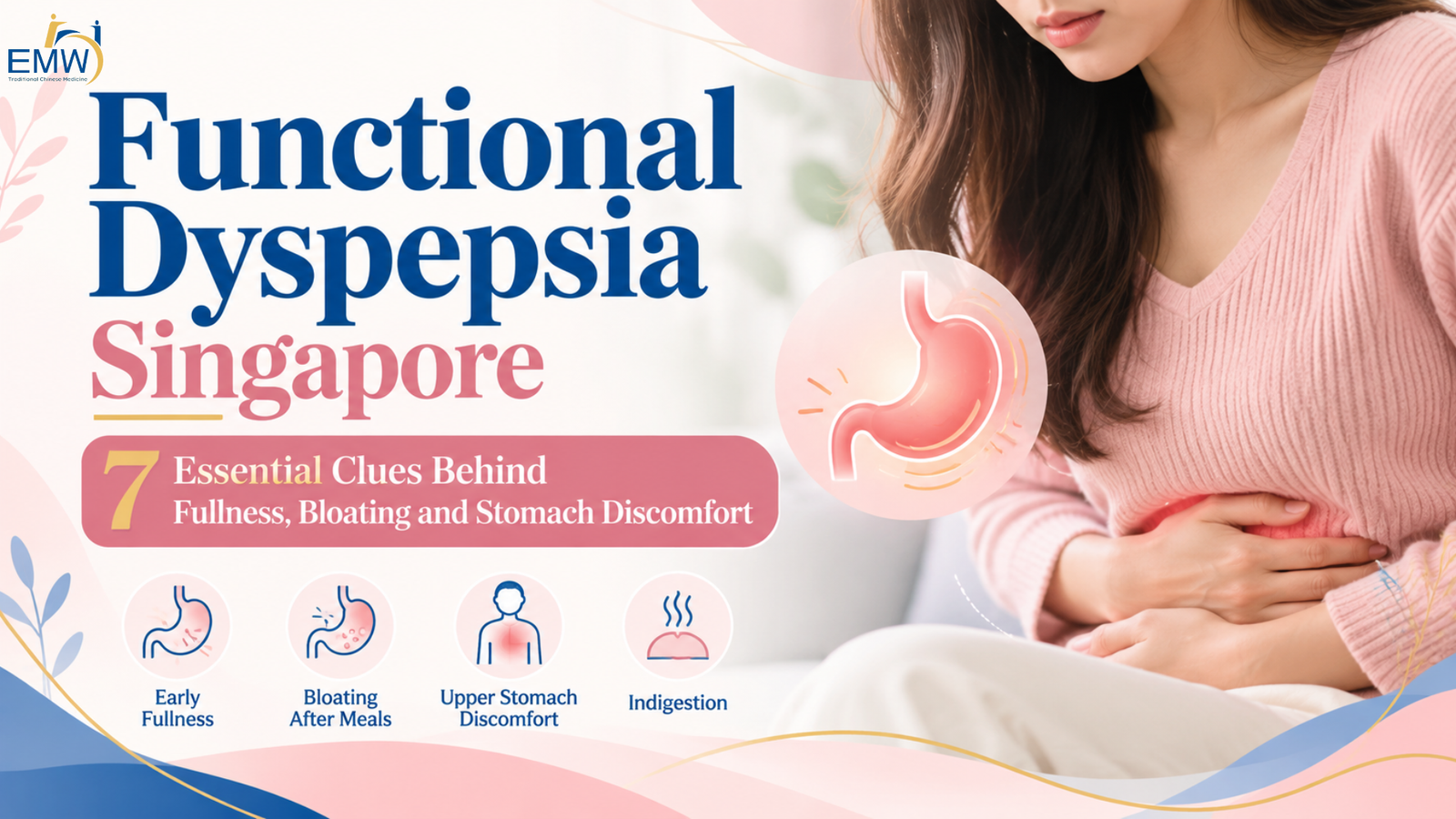
Functional Dyspepsia Singapore: 7 Essential Clues Behind Fullness, Bloating and Stomach Discomfort
You sit down for a normal meal.
A few mouthfuls later, you already feel full.
You keep eating because technically you have barely started.
Then comes the pressure.
The bloating.
Perhaps some burping.
Maybe a burning or uncomfortable sensation in the upper abdomen.
And two hours later, you still feel as though lunch is sitting in your stomach.
You may have already tried antacids.
Perhaps an ultrasound was normal.
Maybe even an endoscopy showed no ulcer or obvious structural problem.
Yet the symptoms are real.
For people searching for functional dyspepsia Singapore, this is one of the most important things to understand:
Normal tests do not mean the symptoms are imaginary.
Functional dyspepsia is a recognised disorder of gut-brain interaction involving persistent or recurrent upper digestive symptoms without a structural disease that adequately explains them.
NUHS describes functional dyspepsia as the most common form of dyspepsia and lists early fullness, bloating, upper abdominal discomfort and nausea among its typical symptoms.
It can overlap with reflux or IBS.
It can fluctuate.
Food can trigger it.
Stress can amplify it.
And treating it effectively often requires looking beyond the simple question:
“Do I have too much stomach acid?”

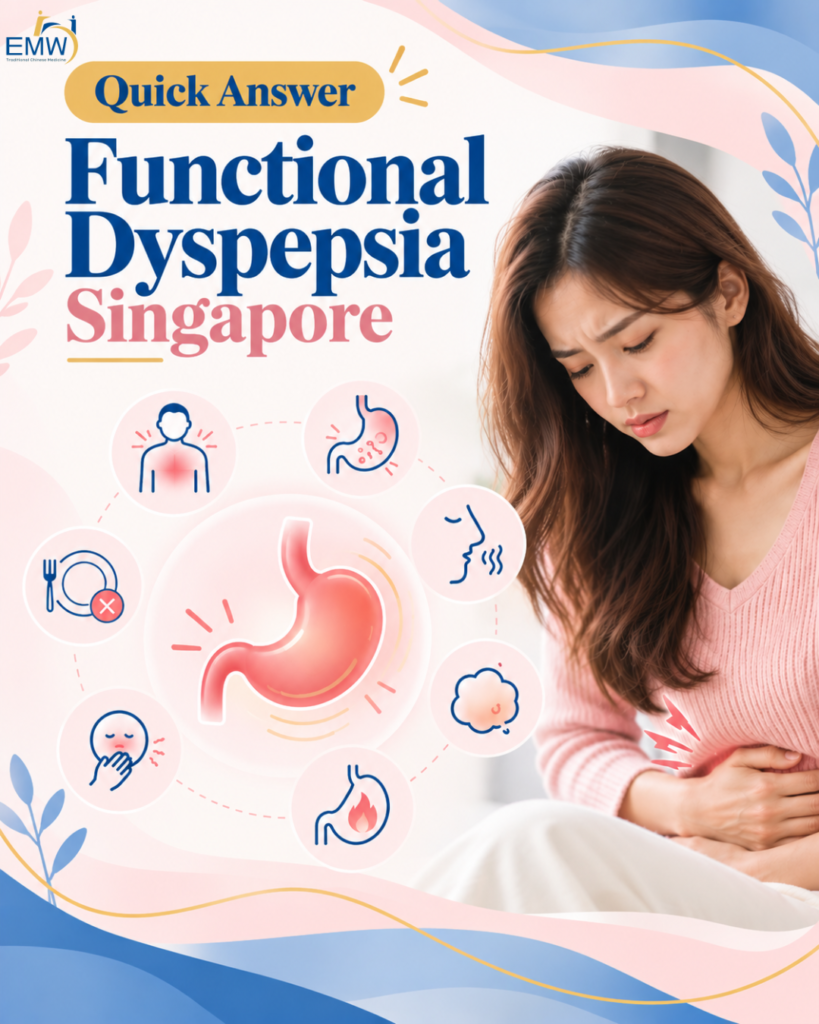
Quick answer: What is functional dyspepsia?
Functional dyspepsia is persistent or recurrent discomfort arising mainly from the stomach and upper digestive tract when no structural condition adequately explains the symptoms.
Typical symptoms include:
- feeling full unusually quickly
- uncomfortable fullness after meals
- upper abdominal pain
- upper abdominal burning
- bloating
- nausea
- belching
Current gastroenterology guidance describes functional dyspepsia as a disorder of gut-brain interaction, meaning symptoms may involve altered stomach function, visceral sensitivity, gut-brain signalling and responses to food or stress rather than one visible lesion.
Importantly, doctors still need to consider other causes of dyspepsia first, particularly when warning signs are present.
Here are seven clues that the problem may be more than ordinary occasional indigestion.
Functional Dyspepsia Singapore: 7 Essential Clues Behind Fullness, Bloating and Stomach Discomfort
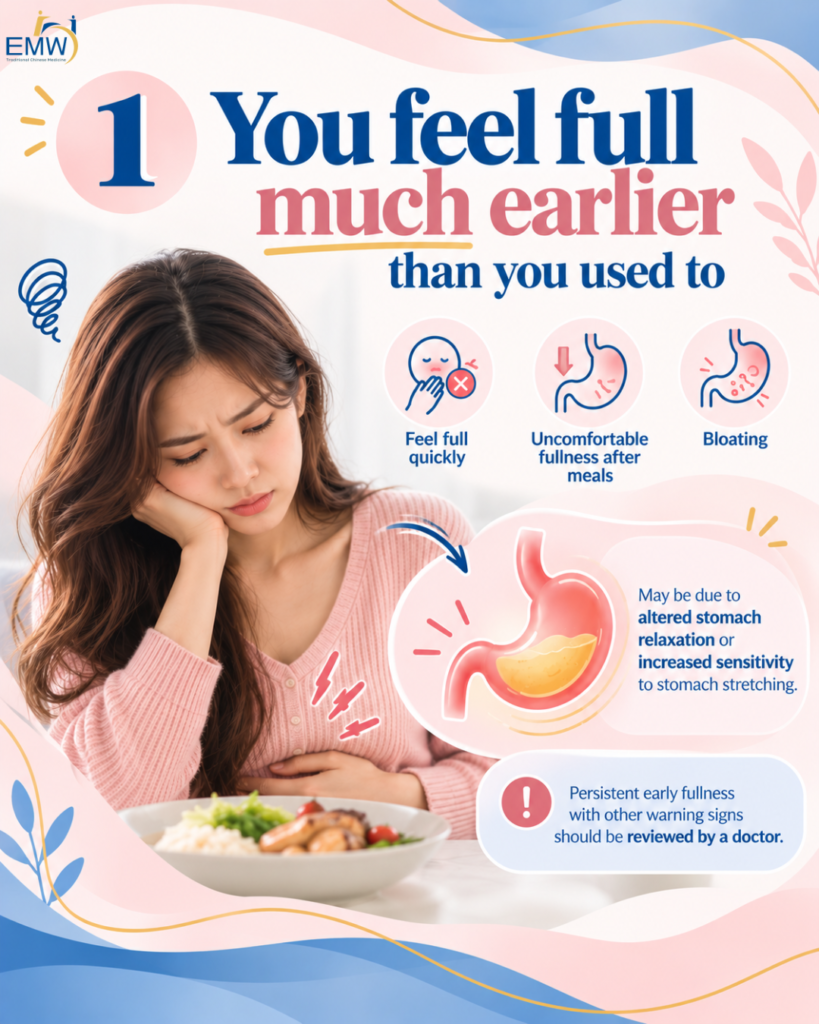
1. You feel full much earlier than you used to
You order your usual meal.
But after a few mouthfuls, something feels different.
You are not simply satisfied.
You feel:
“I cannot fit any more food.”
This is called early satiety or early satiation.
It is one of the hallmark symptoms of functional dyspepsia.
NUHS specifically lists an early sense of fullness with food among the key symptoms.
Current British Society of Gastroenterology guidance also identifies bothersome early satiation as one of the central symptoms used to recognise functional dyspepsia.
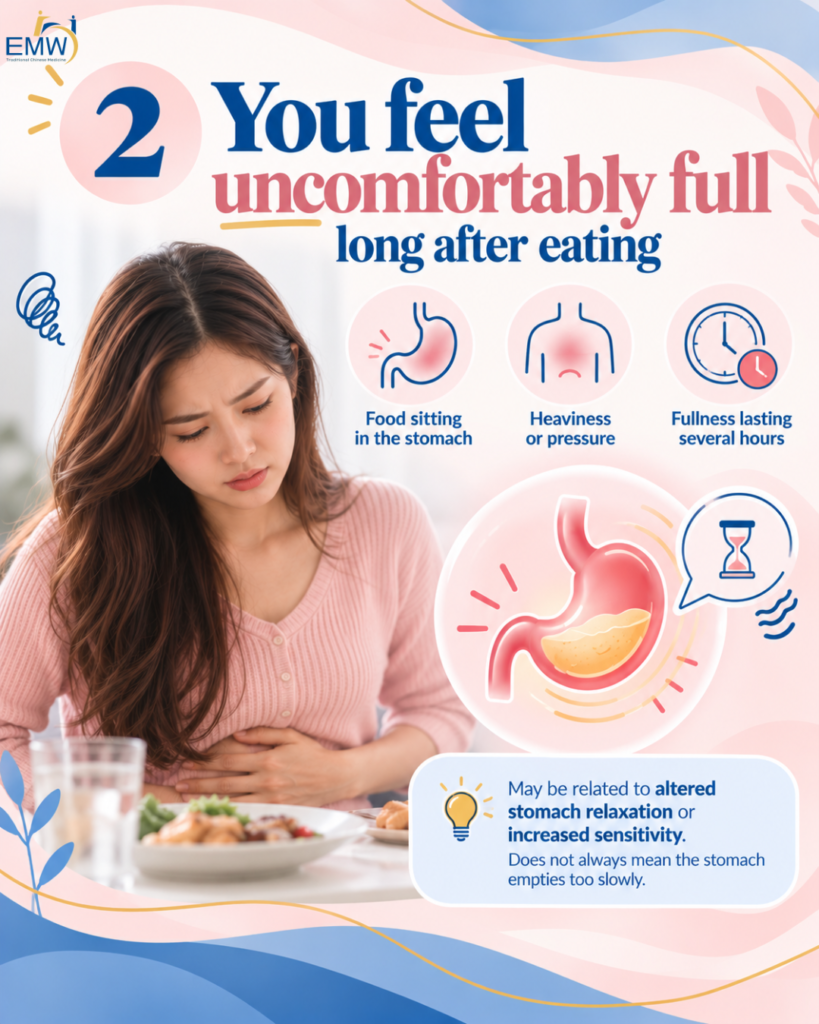
2. You feel uncomfortably full long after eating
There is a difference between:
“That was a satisfying lunch.”
and:
“It is 4 pm and lunch still feels stuck in my upper abdomen.”
This prolonged heaviness after eating is called postprandial fullness.
It is another major feature of functional dyspepsia.
You may describe it as:
- food sitting in the stomach
- heaviness
- pressure under the ribs
- fullness lasting several hours
- discomfort after a normal-sized meal
- needing to loosen your waistband
This pattern is sometimes grouped under postprandial distress syndrome, or PDS.
PDS is characterised mainly by:
- early satiety
- troublesome fullness after eating
Food frequently triggers symptoms in people with this subtype. British Society of Gastroenterology guidance notes that meal-related symptoms are extremely common in functional dyspepsia.
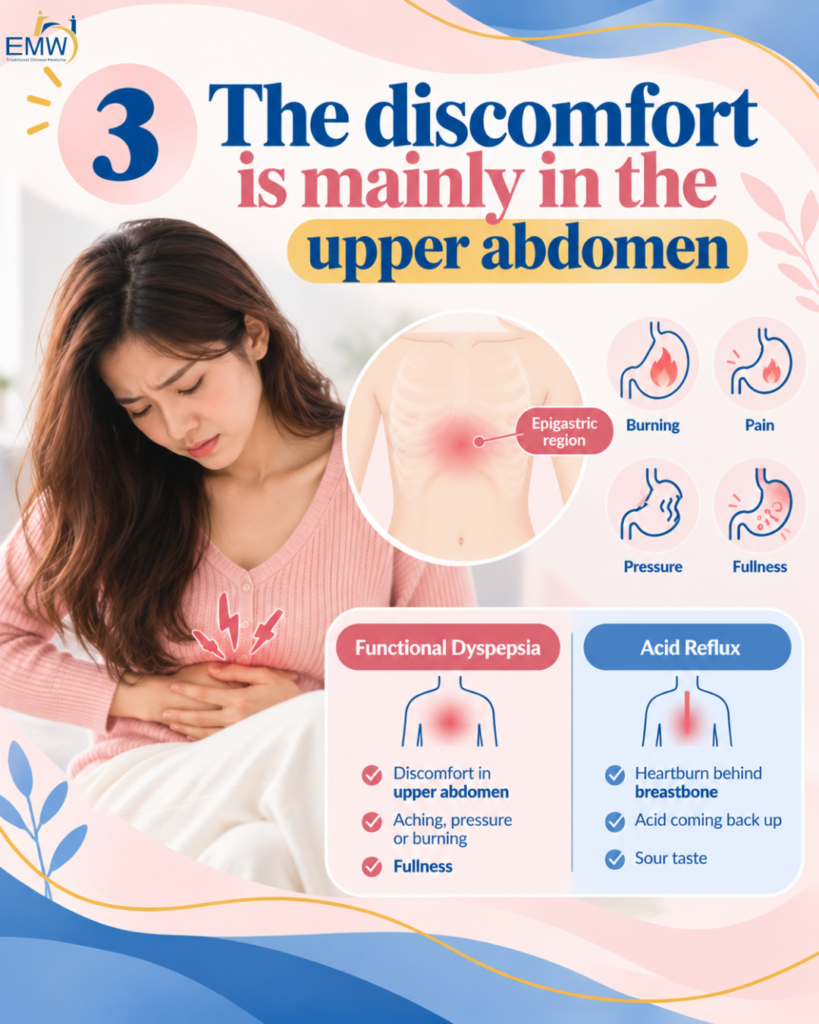
3. The discomfort is mainly in the upper abdomen
Location matters.
Functional dyspepsia typically involves the epigastric region, which is the upper central abdomen beneath the breastbone.
Symptoms may include:
- aching
- pressure
- burning
- soreness
- discomfort
- fullness
Another recognised subtype is epigastric pain syndrome, or EPS.
This is characterised mainly by:
- epigastric pain
- epigastric burning
Some people have predominantly PDS.
Some predominantly EPS.
And many have symptoms of both.
4. You are bloated, but the problem feels higher than typical IBS
Bloating is not one single condition.
Some people describe:
- lower abdominal swelling
- gas
- bowel urgency
- constipation
Others experience:
- upper stomach expansion
- pressure after food
- excessive fullness
- belching
The second pattern can fit functional dyspepsia.
This is one reason functional dyspepsia Singapore can easily be confused with IBS.
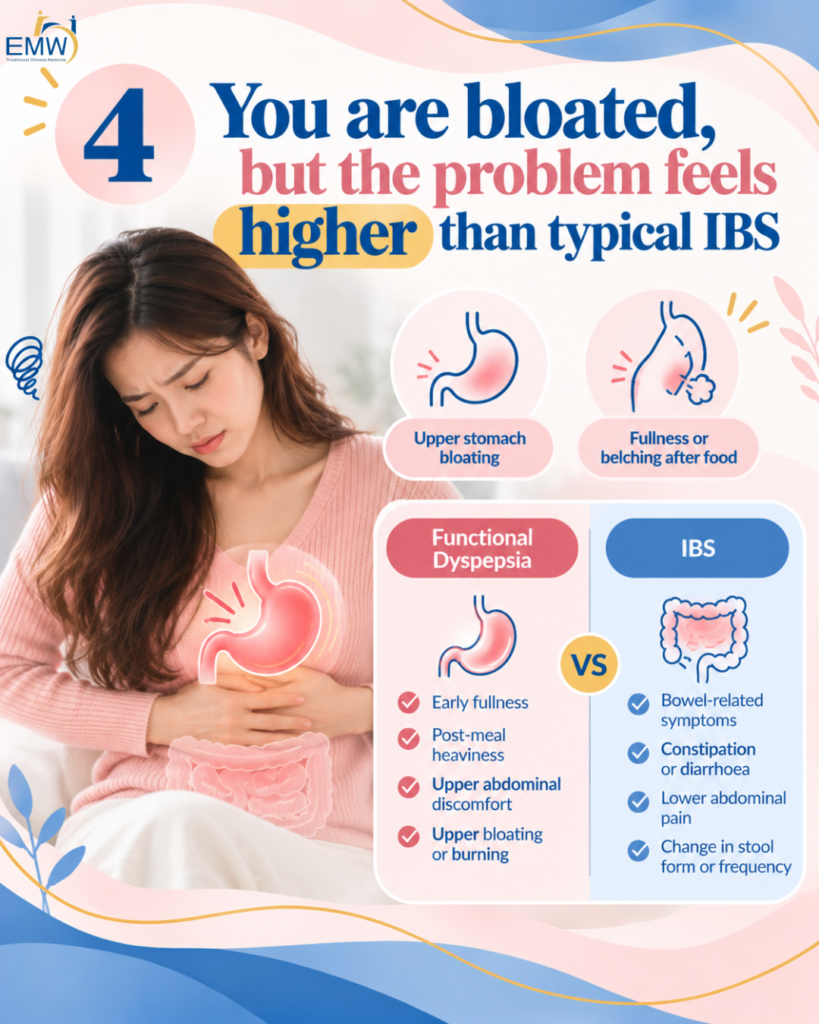
Functional dyspepsia versus IBS
A simplified distinction is:
Functional dyspepsia
Primarily upper digestive symptoms, such as:
- early fullness
- post-meal heaviness
- epigastric discomfort
- upper abdominal burning
IBS
Primarily bowel-related symptoms, particularly:
- abdominal pain associated with bowel movements
- constipation
- diarrhoea
- changing stool form or frequency
But real patients do not always fit neatly into one box.
Functional dyspepsia and IBS commonly overlap.
Someone can have:
early satiety + upper bloating + constipation + lower abdominal pain
at the same time.
This is why the location, timing and relationship of symptoms to eating and bowel movements matter.
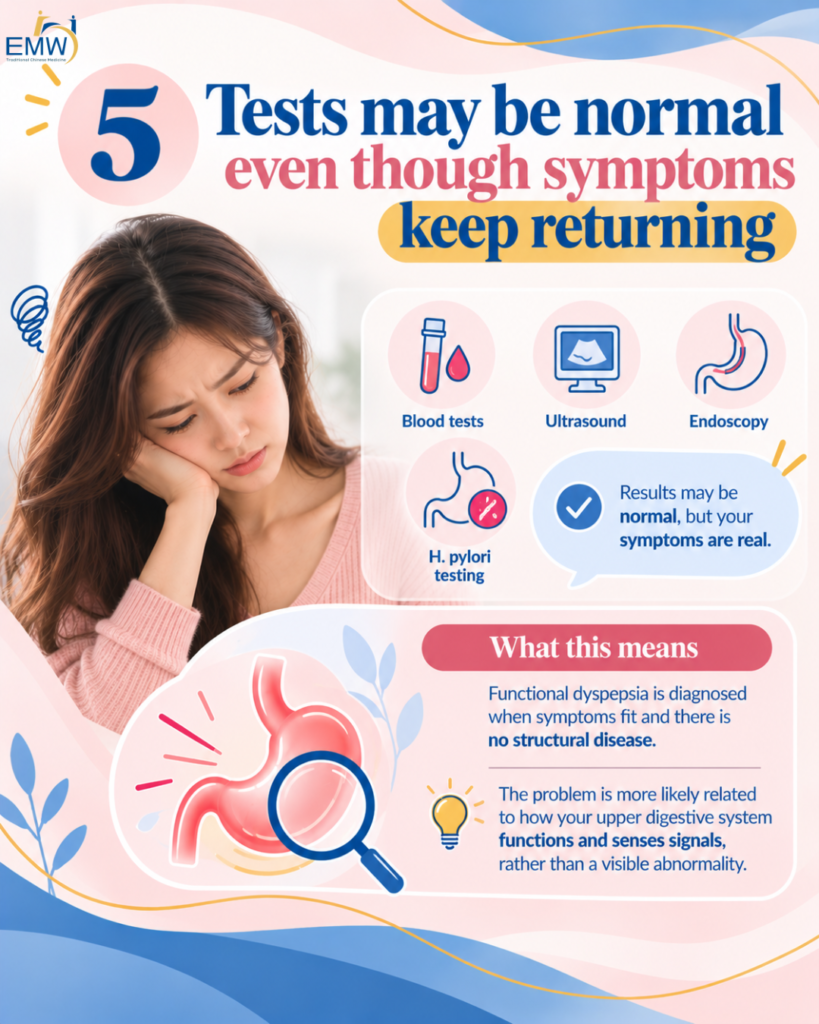
5. Tests may be normal even though symptoms keep returning
This is where people become frustrated.
You may have had:
- blood tests
- ultrasound
- H. pylori testing
- endoscopy
and hear:
“Everything looks normal.”
Then you go home still unable to eat a normal dinner comfortably.
Functional dyspepsia is diagnosed when the symptoms fit and there is no structural disease that adequately explains them.
That does not mean:
“Nothing is wrong.”
It means the problem is more likely related to how the upper digestive system functions and senses signals rather than a visible ulcer, tumour or obvious structural abnormality.
The British Society of Gastroenterology states that most people investigated for dyspepsia ultimately have functional dyspepsia rather than a structural gastrointestinal disease.
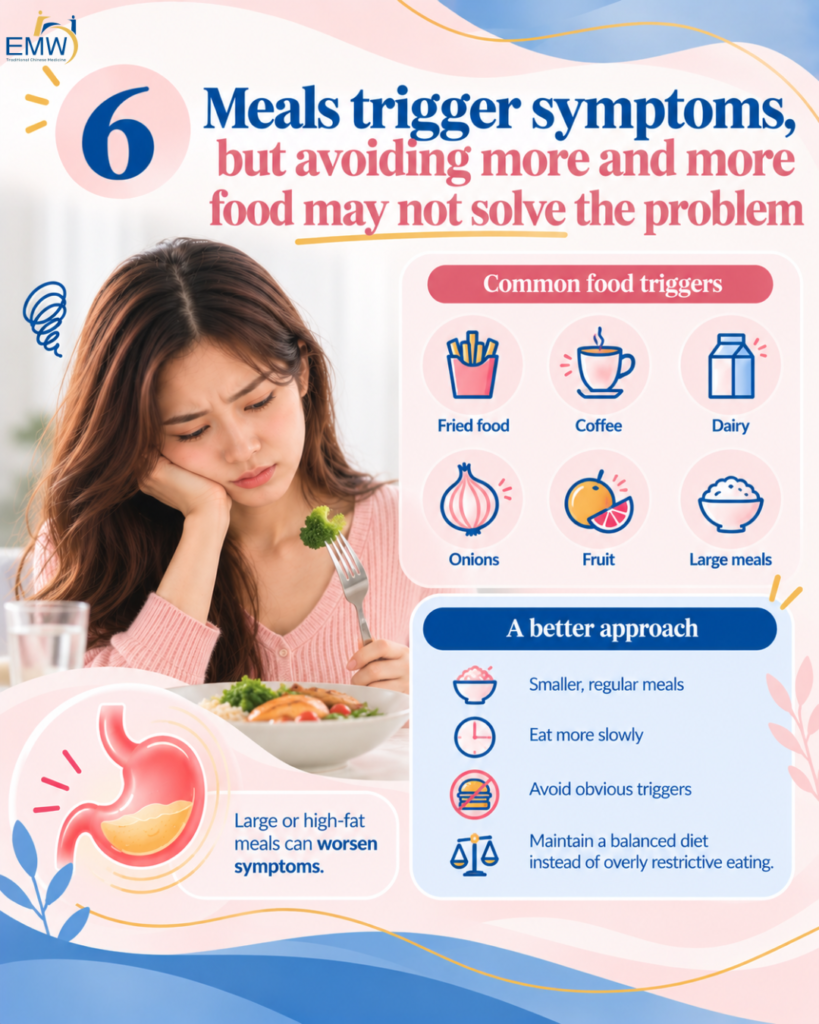
6. Meals trigger symptoms, but avoiding more and more food may not solve the problem
This pattern is extremely common.
At first:
“I feel uncomfortable after fried food.”
So you stop eating fried food.
Then:
“Coffee makes it worse.”
Coffee disappears.
Then dairy.
Then gluten.
Then onions.
Then fruit.
Then rice.
Six months later, you have a very short list of “safe foods”, but the stomach is still unpredictable.
Food does matter.
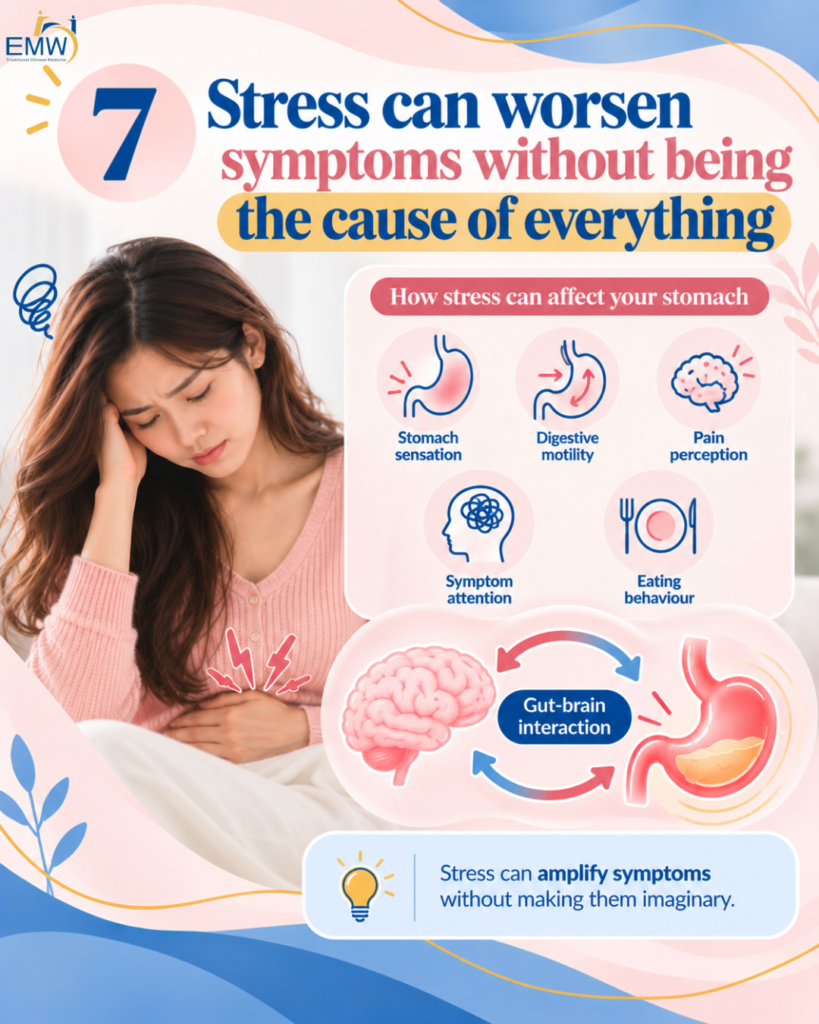
7. Stress can worsen symptoms without being the cause of everything
This is where gut conversations can become unhelpful.
A patient says:
“My stomach hurts whenever I eat.”
And someone replies:
“You’re probably just stressed.”
That is dismissive.
Functional dyspepsia is a genuine gastrointestinal condition.
But the gut and brain communicate continuously through the nervous system, hormones, immune pathways and behavioural responses.
Stress can therefore affect:
- stomach sensation
- digestive motility
- symptom attention
- eating behaviour
- pain perception
Could it be H. pylori instead?
Yes.
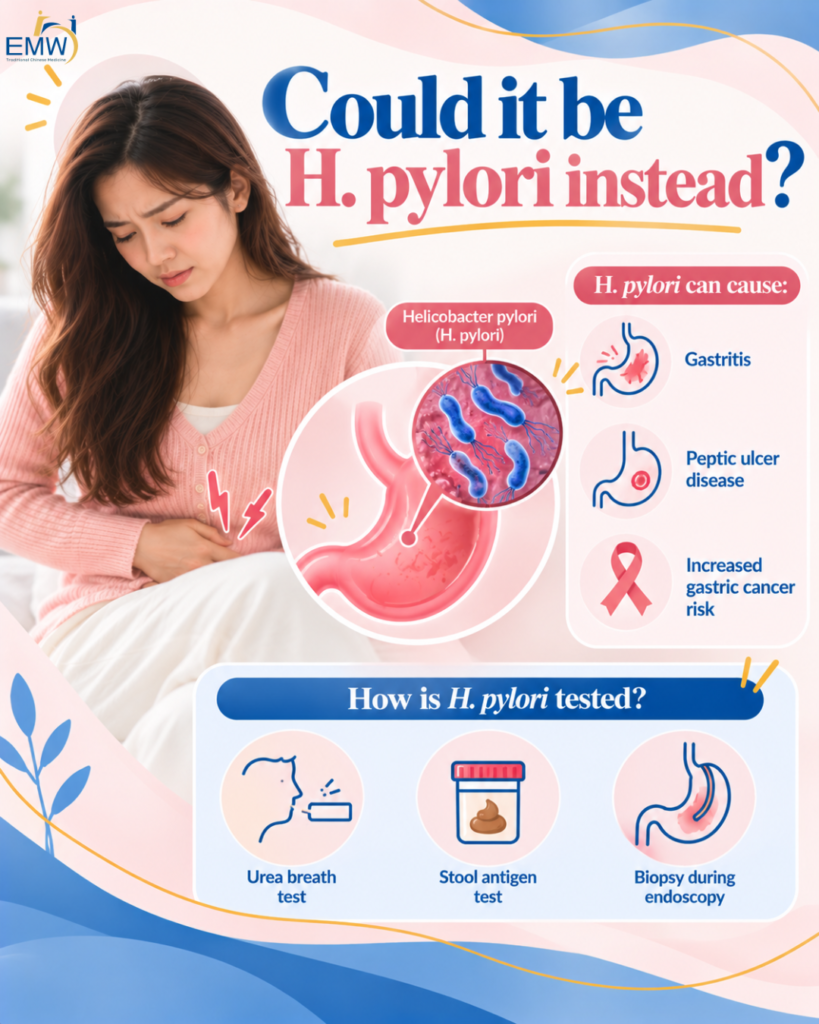
Helicobacter pylori, or H. pylori, is a bacterium that can infect the stomach.
It is associated with:
- gastritis
- peptic ulcer disease
- increased gastric cancer risk
And it can cause dyspeptic symptoms.
This is why persistent indigestion should not automatically be labelled functional dyspepsia without appropriate medical assessment.
Current dyspepsia guidance recommends non-invasive H. pylori testing in many patients without alarm features, with eradication treatment when infection is found.
Testing methods may include:
- urea breath test
- stool antigen test
- biopsy during endoscopy
Certain medicines can interfere with testing, so follow your doctor’s preparation instructions.
Functional dyspepsia versus GERD
There is overlap, but the dominant symptoms tend to differ.
| Functional dyspepsia | GERD |
|---|---|
| Early fullness | Heartburn |
| Fullness after meals | Acid regurgitation |
| Upper abdominal discomfort | Burning behind breastbone |
| Epigastric burning | Sour taste in mouth |
| Upper bloating | Symptoms when lying down may be prominent |
You can have both.
If you mainly experience:
food coming up + sour taste + chest burning
reflux may be more prominent.
If you mainly experience:
very early fullness + heavy upper stomach + post-meal discomfort
functional dyspepsia may be more relevant.
Functional dyspepsia versus gastroparesis
This is another common confusion.
Both can involve:
- early satiety
- post-meal fullness
- nausea
- bloating
Gastroparesis specifically involves objectively delayed stomach emptying without a mechanical obstruction.
Functional dyspepsia does not require delayed gastric emptying.
And the severity of symptoms does not always accurately predict how quickly food actually leaves the stomach.
Routine gastric-emptying testing is therefore not recommended for every person with typical functional dyspepsia.
Persistent vomiting or other atypical features may make the investigation different.
What can you do if you have functional dyspepsia?
Management depends on symptom pattern.
There is no single “functional dyspepsia diet”.
Start with practical basics.
1. Reduce meal size if fullness is dominant
Instead of:
two enormous meals
you may tolerate:
three moderate meals with smaller snacks
better.
You do not necessarily need to graze continuously.
The idea is simply not to overload the stomach if large volumes predictably trigger symptoms.
2. Eat more slowly
Rapid eating can make it easier to overshoot the point where fullness becomes uncomfortable.
Slow down enough to notice when symptoms begin.
3. Maintain regular meals
Skipping breakfast, barely eating at lunch and then consuming an enormous dinner is not an ideal strategy for someone with meal-related dyspepsia.
HealthHub recommends regular meal timing and avoiding overeating.
4. Look at fat quantity
High-fat foods can aggravate fullness in some people.
This does not mean you need a fat-free diet.
Observe whether very rich meals predictably worsen symptoms.
5. Move
Regular aerobic exercise is recommended as part of functional dyspepsia management in current BSG guidance.
Even a gentle walk after eating may feel better than immediately lying on the sofa.
6. Address constipation if it coexists
If constipation is severe, abdominal bloating may feel worse overall.
Treating overlapping bowel problems may improve the whole digestive experience.
How EMW TCM approaches upper digestive symptoms
At EMW TCM, we do not treat everybody who says:
“I have gastric”
with the same formula.
For patients with functional dyspepsia Singapore concerns, the consultation starts by clarifying the actual pattern.
We may ask:
- Is the main problem fullness, pain or burning?
- How soon after eating does it begin?
- Do you become full after only a few mouthfuls?
- Does burping relieve the pressure?
- Is there nausea?
- Is there acid reflux?
- Are bowel movements regular?
- Is bloating mainly upper or lower abdominal?
- What foods clearly trigger symptoms?
- Does stress change symptoms?
- Has H. pylori been assessed?
- Have you undergone gastroscopy?
- What medication are you currently taking?
From a TCM perspective, similar Western symptoms can reflect different presentations.
Patterns may involve concepts such as:
- 脾胃气虚 Spleen and Stomach Qi deficiency
- 肝胃不和 Liver and Stomach disharmony
- 食积 food stagnation
- 湿阻中焦 dampness obstructing the middle burner
- 胃阴不足 Stomach Yin deficiency
This does not replace the medical diagnosis.
A patient with persistent early satiety and weight loss still needs appropriate medical investigation even if the tongue and pulse appear to fit a familiar TCM pattern.
Depending on the individual, complementary treatment may involve:
- acupuncture
- Chinese herbal medicine
- dietary guidance
- meal-timing advice
- stress and lifestyle support
The objective is not simply to suppress bloating for a few hours.
It is to understand the pattern producing the symptoms while conventional investigations exclude important structural disease.
Frequently Asked Questions
Is functional dyspepsia serious?
Functional dyspepsia is generally not dangerous in itself, but symptoms can significantly affect eating and quality of life.
The important step is ensuring that warning symptoms and other digestive conditions have been appropriately assessed.
Does a normal gastroscopy mean nothing is wrong?
No.
A normal gastroscopy can be reassuring because it excludes many structural abnormalities.
Functional dyspepsia is a recognised condition involving digestive function and gut-brain signalling even when no ulcer or obvious structural lesion is seen.
Why do I get full after only a few bites?
Early satiety can occur in functional dyspepsia and may relate to altered gastric accommodation or increased sensitivity to stomach distension.
However, persistent new early satiety, especially with weight loss, should be medically evaluated.
Can functional dyspepsia cause bloating?
Yes.
Upper abdominal bloating and post-meal fullness commonly accompany functional dyspepsia.
Is functional dyspepsia caused by stress?
Not simply.
It is a disorder of gut-brain interaction with several possible biological mechanisms.
Stress can increase symptom severity in some patients but should not be used to dismiss genuine gastrointestinal symptoms.
Should I follow a low-FODMAP diet?
Not automatically.
Low-FODMAP diets have a stronger evidence base in IBS. Current guidance says evidence is insufficient to routinely recommend restrictive diets such as low FODMAP specifically for functional dyspepsia.
Can functional dyspepsia and IBS occur together?
Yes.
Overlap is common.
A patient may experience both upper digestive symptoms and bowel-related symptoms such as abdominal pain, constipation or diarrhoea.
Should I test for H. pylori?
Depending on your age, symptoms, medical history and previous testing, your doctor may recommend non-invasive H. pylori testing.
Do not assume recurrent “gastric” symptoms are automatically functional without appropriate assessment.
When the tests are normal but eating still feels wrong
Digestive symptoms do not have to show up dramatically on a scan to affect daily life.
If every meal involves:
early fullness → pressure → bloating → belching → discomfort
the answer is not necessarily to keep removing foods until only five “safe” ingredients remain.
And it is not necessarily to keep increasing antacids without understanding the symptom pattern.
For patients researching functional dyspepsia Singapore, the important distinction is this:
The stomach can look structurally normal while its function and sensitivity are still altered.
Start by excluding important medical causes.
Then look at:
- what you feel
- where you feel it
- when it begins
- how meals affect it
- whether bowel symptoms coexist
- what medication helps
- how sleep and stress influence symptoms
The goal is not simply to eat less and tolerate the discomfort.
It is to find a management strategy that allows you to eat more normally and live with fewer symptoms.
Continue reading
We publish evidence-informed guides on gut health, IBS, SIBO, reflux, fertility, postpartum recovery and paediatric health.
👉 Read more on the EMW TCM blog:
This article is educational and does not replace assessment by your doctor or gastroenterologist. Persistent or worsening symptoms, unexplained weight loss, swallowing difficulty, gastrointestinal bleeding or recurrent vomiting require medical assessment.
References
- National University Health System. Dyspepsia: What It Is, Signs/Symptoms, Diagnosis and Treatment. 2025.
- HealthHub Singapore. Dyspepsia. Pharmaceutical Society of Singapore.
- Black CJ, Paine PA, Agrawal A, et al. British Society of Gastroenterology guidelines on the management of functional dyspepsia. Gut. 2022;71:1697-1723.
Practical Guidance for Singapore Lifestyles


When to Seek Professional TCM Help
Your gut is the first organ to receive, transform, and deliver nourishment to every cell. If you experience chronic bloating, constipation, acid reflux, or fatigue, these may be early signs that your digestion needs attention.
Healing the gut restores energy, improves hormonal communication, and creates the internal harmony required for general health.
At EMW TCM Singapore, our physicians guide you through this process with care, evidence, and empathy. Whether you are addressing IBS or GERD or fertility, TCM offers a gentle yet powerful pathway to holistic wellness.
Check out our links below to book your consultation and begin your holistic journey toward better health ahead.
EMW TCM Clinics
International Building Branch
360 Orchard Road, International Building #02-05/06
Singapore 238869
Book Your Appointment With Us Here: +65 89585869
Our Physicians

Principal TCM Physician
- M.Med(TCM Gynaecology)
- B.Sc(Hons) Biomedical Sciences
- Dip. Naturopath
- Ayurvedic Therapist(500hrs)
- Registered TCM Physician (Singapore MOH)

Senior TCM Physician
- M.Med(TCM Acupuncture & Moxibustion)
- B.Sc(Hons) Biomedical Sciences
- Certified Aromatherapist
- Registered TCM Physician (Singapore MOH)

TCM Physician
- M.Med(TCM Gynaecology)
- B.Sc(Hons) Biomedical Sciences
- Registered TCM Physician (Singapore MOH)

TCM Physician
- M.Med(TCM Acupuncture & Moxibustion)
- B.Sc(Hons) Biomedical Sciences
- Registered TCM Physician (Singapore MOH)

TCM Physician
- B.Med(TCM)
- B.Sc(Hons) Biomedical Sciences
- International Board-Certified Lactation Consultant (IBCLC)
- Registered TCM Physician (Singapore MOH)