TCM Support for Children’s Hearing Concerns in Singapore: Paediatric Tuina, Gentle Needling and Integrative Care
Hearing is not only about the ear receiving sound. For a child, hearing is closely connected to speech development, learning, emotional confidence, social interaction and safety.
When a child is diagnosed with mild to moderate hearing loss, fluctuating hearing, delayed sound response or unclear listening behaviour, it can be very worrying for parents. Some children may have hearing difficulties due to earwax, middle ear fluid, repeated ear infections, nasal congestion or eustachian tube dysfunction. Others may have hearing loss related to the inner ear, cochlea, auditory nerve or the way sound signals travel from the ear to the brain.
At EMW TCM in Singapore, we approach children’s hearing concerns carefully and collaboratively. The first step should always be proper assessment by an ENT specialist and audiologist. TCM treatment, including paediatric tuina and gentle, light needling techniques, does not replace hearing aids, cochlear implants, speech therapy, auditory-verbal therapy or medical review.
Instead, TCM may be considered as supportive care when the goal is to improve the child’s overall regulation, circulation, mucus tendency, nervous system calmness and functional responsiveness to sound.
Can TCM Help Children With Hearing Loss?
TCM cannot promise to reverse all forms of childhood hearing loss. It cannot regenerate damaged cochlear hair cells or replace medical treatment when hearing loss is structural, genetic, severe or permanent.
However, TCM may have a supportive role when a child has functional hearing concerns, fluctuating hearing, recurrent congestion, middle ear fluid tendency, poor circulation around the head and neck, nervous system dysregulation or partial auditory responsiveness.
In practical terms, TCM support aims to help the child’s body become more regulated, less congested and more responsive, while the family continues appropriate ENT, audiology and speech therapy care.
What Is Hearing Loss in Children?
Hearing loss means there is a reduced ability to detect, process or understand sound. It may affect one ear or both ears, and it may range from mild to profound.
In children, even mild hearing loss can matter because the brain is still developing speech, language, auditory processing and social communication skills. A child who does not hear clearly may appear inattentive, delayed in speech, easily frustrated, withdrawn or more tired in noisy environments.
Hearing loss is commonly grouped into four main categories:
- Conductive hearing loss
- Sensorineural hearing loss
- Mixed hearing loss
- Auditory neuropathy spectrum disorder
Understanding the type of hearing loss is important because each type requires a different management plan.
Download Our Cough Relief Pediatric Acupressure Handbook!

Conductive Hearing Loss in Children
Conductive hearing loss happens when sound cannot travel efficiently through the outer ear or middle ear to reach the inner ear.
This may happen because of:
- Earwax blockage
- Fluid behind the eardrum
- Repeated middle ear infections
- Eustachian tube dysfunction
- Eardrum problems
- Issues with the small bones in the middle ear
- Nasal congestion or allergy-related mucus
In children, one common cause is otitis media with effusion, often known as “glue ear.” This type of hearing loss may be temporary or fluctuating. Parents may notice that the child hears better on some days and worse on others.
If the blockage, mucus or fluid improves, hearing may also improve. This is why ENT review and audiology testing are important. Some conductive causes can be medically treated, monitored or managed with procedures when necessary.
From a TCM perspective, children with conductive or fluctuating hearing concerns may also show signs of phlegm-dampness, weak digestion, recurrent mucus, nasal congestion, enlarged turbinates, mouth breathing or a tendency toward repeated upper respiratory issues.
Sensorineural Hearing Loss in Children
Sensorineural hearing loss happens when there is an issue within the inner ear, cochlea, sensory hair cells or hearing nerve.
In this situation, sound may reach the inner ear, but the inner ear or nerve pathway may not convert or transmit the sound signal clearly to the brain.
Sensorineural hearing loss may be related to congenital factors, genetic causes, inner ear injury, infection, noise exposure, certain medications or nerve-related conditions. Compared with conductive hearing loss, sensorineural hearing loss is more likely to be long-term or permanent, depending on the cause.
A child with sensorineural hearing loss may hear that sound is present, but speech may not be clear enough, especially in noisy environments or when someone speaks softly. Hearing aids, speech therapy, auditory-verbal therapy and regular audiology follow-up are often recommended to support sound access and speech development.
TCM should be positioned carefully here. The role of TCM is not to “cure” sensorineural hearing loss, but to support the child’s overall constitution, circulation, sleep, nervous system regulation and ability to participate in listening and speech therapy.
Mixed Hearing Loss in Children
Mixed hearing loss means there is a combination of conductive and sensorineural hearing loss.
For example, a child may already have an underlying sensorineural hearing loss, but during a period of middle ear fluid, mucus, allergy or congestion, hearing becomes worse because there is also a conductive component.
When the conductive part improves, the hearing test may improve, but some hearing loss may remain because of the inner ear or nerve component.
This type of hearing loss requires careful follow-up because both layers need to be considered. ENT care, audiology, hearing support and rehabilitation remain important. TCM may be considered as supportive care for the functional, inflammatory, mucus or circulation-related component.
Auditory Neuropathy Spectrum Disorder
Auditory neuropathy spectrum disorder is different from typical conductive or sensorineural hearing loss.
In this condition, the inner ear may detect sound, but the signal from the ear to the brain may not be transmitted in a clear, synchronised or well-timed way. This can affect speech clarity and listening ability, even if the child appears to respond to some sounds.
Management is highly individualised. Some children may benefit from hearing aids, while others may need cochlear implant assessment, speech therapy, auditory training and close developmental follow-up.
For these children, TCM should only be used as supportive care, with the aim of improving regulation, sleep quality, stress load, circulation and overall responsiveness. It should never delay medical or audiological intervention.
The TCM View of the Ear and Hearing
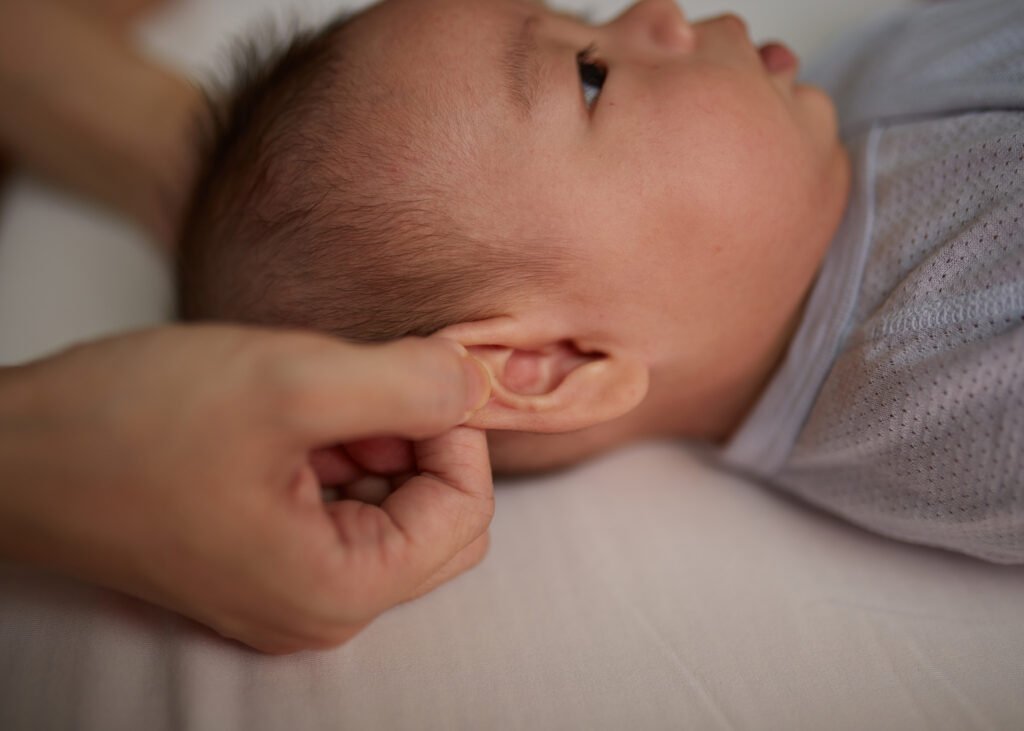
In TCM, the ear is not viewed as an isolated organ. Hearing reflects the nourishment of Essence, Qi and Blood, the smooth circulation of the meridians around the head and neck, and the harmonious function of the internal organs.
Classical TCM texts describe the ear as closely related to the Kidney:
耳者,肾之官也。
“The ear is the orifice of the Kidney.”
《黄帝内经·灵枢·五阅五使》
肾气通于耳,肾和则耳能闻五音矣。
“The Kidney Qi communicates with the ears; when the Kidney is harmonious, the ears can hear the five sounds.”
《黄帝内经·灵枢·脉度篇》
In TCM, the Kidney stores Essence, supports growth and development, and nourishes the brain, marrow and sensory function. For children, this is especially important because hearing, speech, brain development and auditory processing are still maturing.
However, not every hearing concern is simply “Kidney deficiency.” In paediatric TCM, we also consider the Spleen, Lung, Liver, Heart and Shaoyang channels.
The Spleen, Lung and Phlegm-Damp Connection
The Spleen and Stomach transform food into Qi and Blood. The Lung supports breathing, clear Qi and the movement of fluids.
When digestion is weak, children may accumulate phlegm-dampness more easily. This may show up as:
- Frequent mucus
- Nasal congestion
- Phlegmy cough
- Poor appetite
- Bloating
- Loose stools
- Recurrent colds
- Middle ear fluid tendency
- Heavy or greasy tongue coating
In children with conductive or fluctuating hearing concerns, this Spleen-Lung phlegm-damp pattern may be clinically relevant. When the body produces less mucus and drains fluid more effectively, the middle ear environment may become clearer, especially if the original hearing issue has a conductive component.
The Liver, Heart and Circulation Around the Ear
The Liver stores Blood and supports the smooth movement of Qi. When Liver Qi is stagnant, circulation around the head, neck and ear region may be affected. This may contribute to ear fullness, blocked sensation, tinnitus, tension, jaw tightness or reduced clarity.
The Heart governs Blood and vessels. When Blood does not nourish the sensory orifices well, a child may appear less focused, tired, unsettled or less responsive.
In modern language, some of these TCM ideas may overlap with microcirculation, nervous system regulation, stress response and functional communication between the ear and brain.
The Shaoyang Channels and Ear Symptoms
The ear is closely related to the Shaoyang channels, especially the Gallbladder and San Jiao meridians. These channels travel around the side of the head, neck and ear region.
In TCM, the Shaoyang system acts like a pivot. It supports the smooth movement of Qi between the exterior and interior and helps regulate circulation around the head, neck and sensory openings.
When this pivot is not moving smoothly, Qi may become blocked around the ear. Dampness, phlegm, heat or stagnation may disturb the clear orifices. This may present as ear fullness, tinnitus, blocked sensation, fluctuating hearing, head tension or reduced hearing clarity.
This is why TCM treatment for hearing-related concerns does not focus only on the ear. At EMW TCM, the child is assessed as a whole.
EMW TCM’s Supportive Approach for Children’s Hearing Concerns
At EMW TCM, treatment is personalised based on the child’s constitution, age, tolerance, medical diagnosis and current symptoms.
Depending on the child’s presentation, care may focus on:
- Supporting Kidney Essence and developmental strength
- Strengthening Spleen and Lung function
- Reducing phlegm-damp tendency
- Supporting nasal and middle ear fluid regulation
- Improving Qi and Blood circulation around the head and neck
- Regulating the Shaoyang channels around the ear
- Releasing tension around the scalp, jaw, neck and shoulders
- Calming the nervous system
- Improving sleep and emotional regulation
For children, treatment should always be gentle, consistent and age-appropriate.
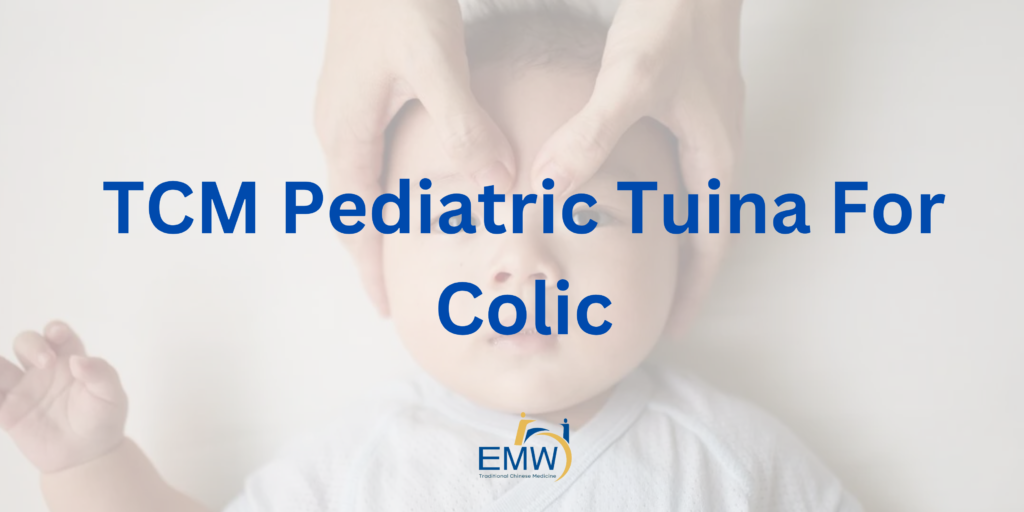
How Paediatric Tuina May Support Children With Hearing Concerns
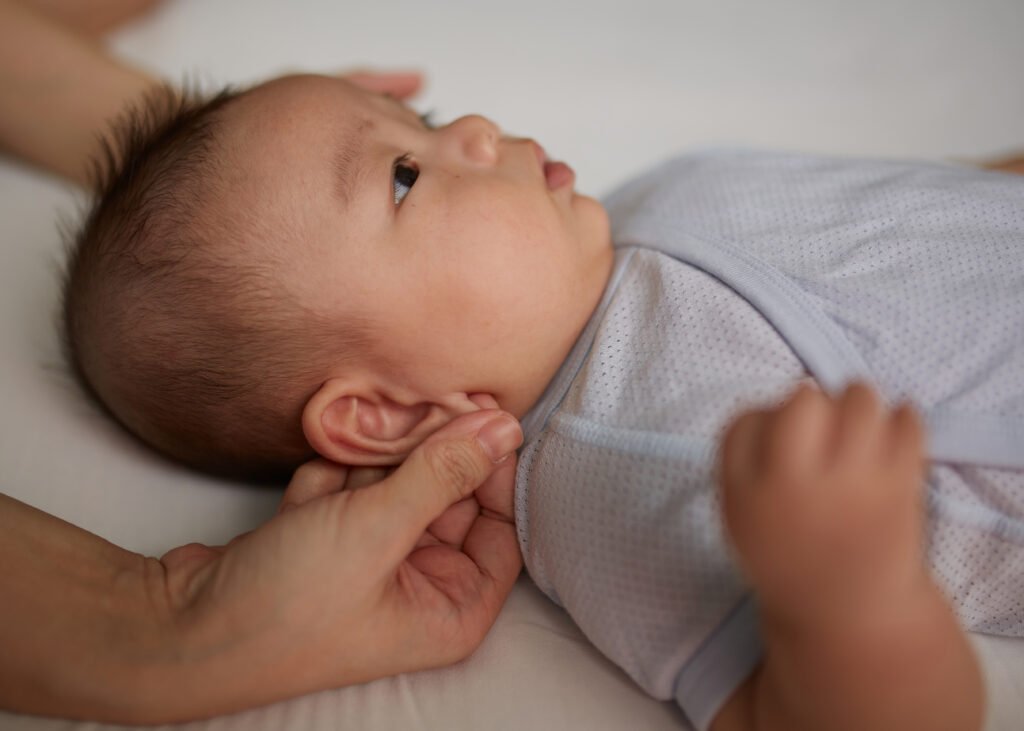
Paediatric tuina is a gentle form of Chinese medical bodywork using specific massage techniques along meridians and acupoints.
It does not directly “repair” cochlear hair cells. However, it may support hearing-related function in several indirect ways.
Supporting the Head, Neck,Jaw and Ear Region
Tension around the neck, jaw, scalp and peri-auricular region may affect comfort, circulation and drainage around the ear.
Gentle tuina around the head, neck, shoulders and related channels may help the child relax, reduce muscular tension and improve local flow.
Supporting ChildrenWithMucus, Sinus Congestion or Middle Ear Fluid Tendency
Some children with hearing fluctuations also have recurrent mucus, allergic tendency, nasal congestion or middle ear fluid.
From a TCM perspective, this often involves strengthening the Spleen and Lung while helping phlegm-dampness clear more effectively.
If the hearing issue is partly conductive or fluctuating, improving the child’s mucus and fluid tendency may support clearer hearing function over time.
Calming the Nervous System
Children with hearing difficulty may become more startled, tired, frustrated or withdrawn because listening requires more effort.
Gentle tuina may help calm the nervous system, support sleep, reduce stress load and make the child more receptive during speech therapy, auditory training or daily communication.
Why Gentle Needling May Be Considered
Acupuncture involves stimulating specific points using very fine needles. In children, the technique should be light, quick and minimal.
Often, the needle is inserted and removed quickly, with little or no retention, depending on the child’s age, comfort and constitution.
For hearing-related cases, acupuncture may be used with the intention of:
- Improving Qi and Blood flow around the ear
- Supporting neurological signalling
- Reducing local stagnation
- Supporting the body’s response to inflammation or stress
- Regulating the head, neck and Shaoyang channels
- Calming the nervous system
Points around the ear, scalp, neck, hands and legs may be selected depending on the child’s presentation.
Paediatric acupuncture should only be performed by a properly trained practitioner who is experienced with children.
The technique should be clean, gentle, age-appropriate and adapted to the child’s tolerance.
How EMW TCM Works Alongside ENT, Audiology and Speech Therapy
At EMW TCM, we prefer an integrative approach.
This means the child may continue ENT review, audiology follow-up, hearing aids, speech therapy, auditory-verbal therapy or school support while receiving gentle TCM care.
The purpose of TCM is to support the child’s whole-body readiness. This may include better sleep, digestion, mucus regulation, circulation, emotional calmness and responsiveness.
When a child is more regulated, less congested and more comfortable, they may be better able to participate in listening, learning and speech development.
Frequently Asked Questions About TCM for Children’s Hearing Support
Can TCM cure hearing loss in children?
No. TCM should not be presented as a cure for childhood hearing loss. It may be used as supportive care in selected cases, especially when there is fluctuating hearing, mucus, congestion, poor circulation, stress sensitivity or functional responsiveness.
Should my child still see an ENT or audiologist?
Yes. ENT and audiology assessment should come first. TCM should work alongside medical care, not replace it.
Can paediatric tuina help with glue ear or middle ear fluid?
Paediatric tuina does not directly remove middle ear fluid. However, it may support the child’s Spleen, Lung, mucus regulation and overall fluid metabolism from a TCM perspective. If the hearing issue is conductive and related to mucus or fluid tendency, this support may be helpful as part of a broader care plan.
Is acupuncture safe for children?
When performed by a properly trained practitioner experienced with children, paediatric acupuncture should be gentle, minimal and age-appropriate. At EMW TCM, comfort, safety and suitability are always considered before needling is used.
What if my child is afraid of needles?
Needling is not always necessary. Many children may begin with paediatric tuina, lifestyle advice, dietary guidance and non-invasive support. Treatment should never be forced.
How long does it take to see improvement?
This depends on the child’s diagnosis, severity, constitution and consistency of care. Some changes may first appear as better sleep, calmer behaviour, less congestion or improved responsiveness. Hearing should still be monitored through repeat audiology testing when appropriate.
Can TCM replace hearing aids or speech therapy?
No. Hearing aids, cochlear implants, speech therapy and auditory training are important when recommended by your child’s medical team. TCM may support the child’s body condition, but it should not replace these interventions.
A Gentle, Honest Approach to Children’s Hearing Support
For parents, hearing concerns can feel overwhelming. It is natural to want to do everything possible to support your child.
At EMW TCM, we believe the safest and most responsible approach is integrative care. First, understand the diagnosis clearly through ENT and audiology. Then, support the child’s functional health with the right medical, speech, hearing and supportive therapies.
Paediatric tuina and gentle needling may help selected children by supporting circulation, mucus regulation, sleep, nervous system calmness and overall responsiveness. The aim is not to force the ear to “work,” but to create a better internal environment for the child to listen, respond, communicate and develop with more confidence.
If your child has hearing concerns, fluctuating hearing, recurrent congestion, glue ear tendency or delayed sound response, you may contact EMW TCM to discuss whether gentle paediatric TCM support is suitable as part of your child’s broader care plan.
Our TCM Physicians

Principal TCM Physician
- M.Med(TCM Gynaecology)
- B.Sc(Hons) Biomedical Sciences
- Dip. Naturopath
- Ayurvedic Therapist(500hrs)
- Registered TCM Physician (Singapore MOH)

Senior TCM Physician
- M.Med(TCM Acupuncture & Moxibustion)
- B.Sc(Hons) Biomedical Sciences
- Certified Aromatherapist
- Registered TCM Physician (Singapore MOH)

TCM Physician
- M.Med(TCM Gynaecology)
- B.Sc(Hons) Biomedical Sciences
- Registered TCM Physician (Singapore MOH)

TCM Physician
- M.Med(TCM Acupuncture & Moxibustion)
- B.Sc(Hons) Biomedical Sciences
- Registered TCM Physician (Singapore MOH)
TCM Physician
- B.Med(TCM)
- B.Sc(Hons) Biomedical Sciences
- International Board-Certified Lactation Consultant (IBCLC)
- Registered TCM Physician (Singapore MOH)