Can TCM help with fertility?
TCM can be used as complementary care during a fertility journey through approaches such as acupuncture, individualised herbal medicine where appropriate, and lifestyle guidance.
Evidence differs according to the treatment and outcome being studied, so TCM should not be presented as a guaranteed way of achieving pregnancy.
It also should not replace fertility investigation or medically indicated treatment.
Can I use TCM while trying to conceive naturally?
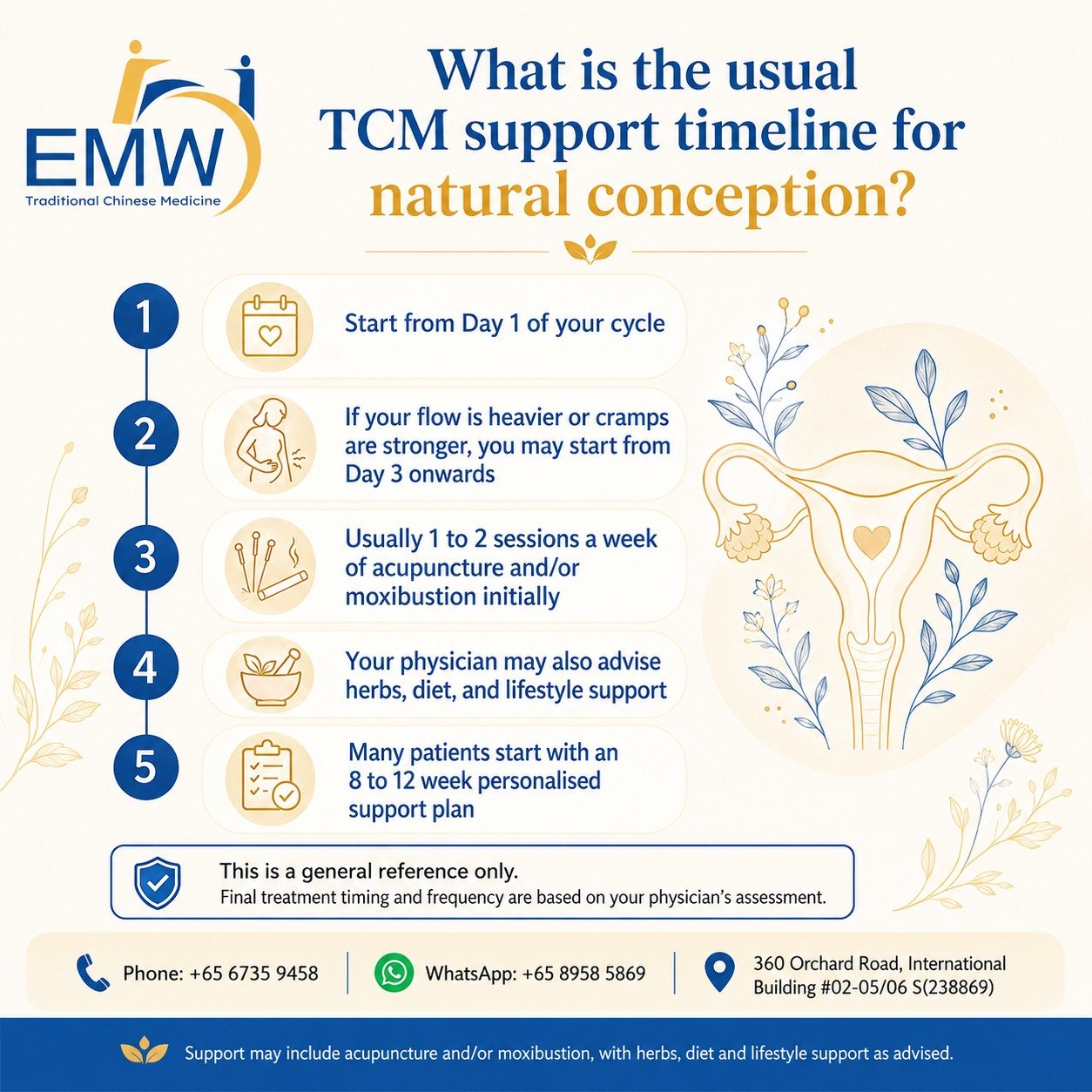
Yes. Many patients use TCM while trying naturally.
Your physician may discuss menstrual patterns, fertile-window timing, relevant fertility investigations and general health before recommending appropriate TCM care.
However, TCM should not delay medical fertility assessment when one is already indicated.
When should I start TCM before IVF?
Patients come to EMW at different stages.
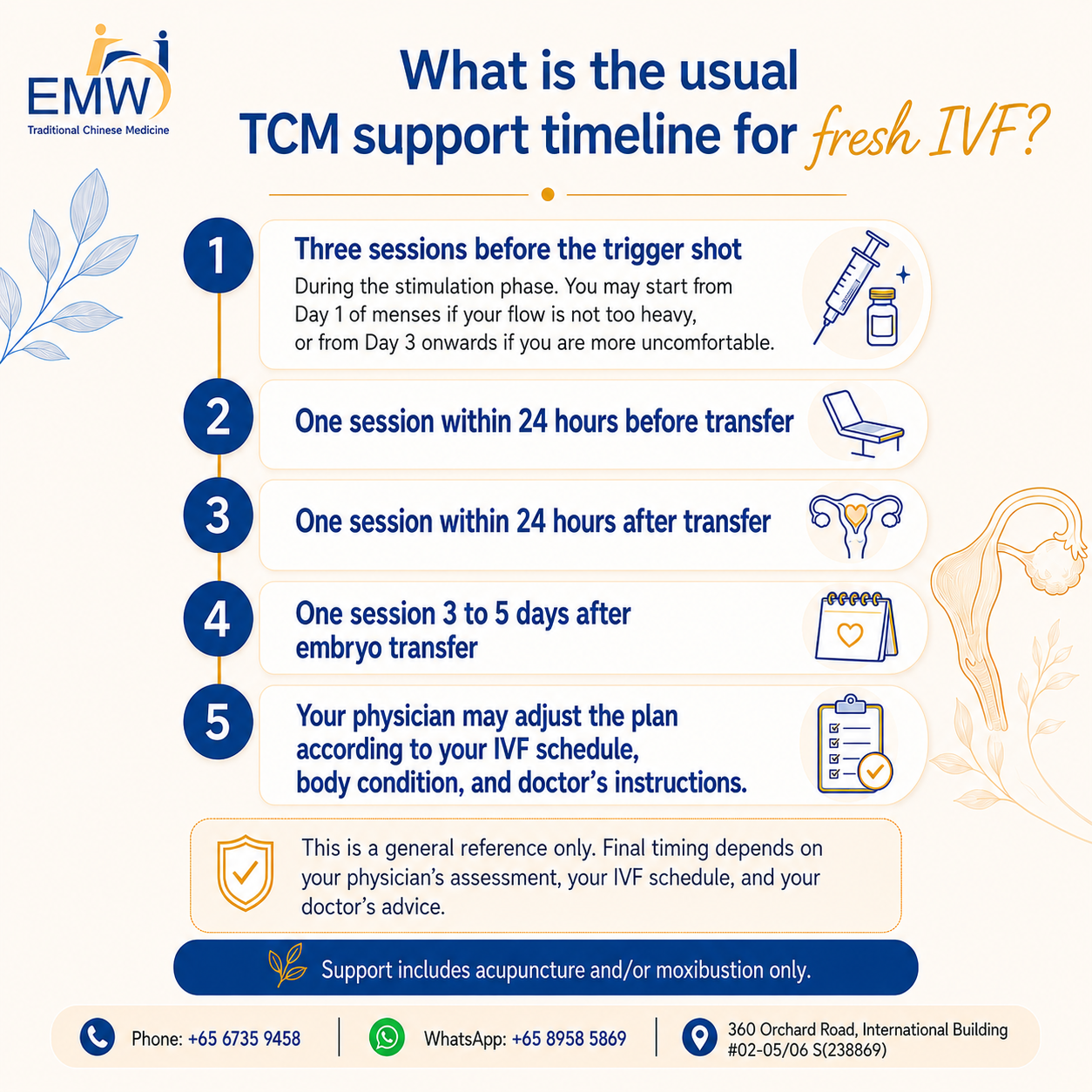
Some begin several weeks or months before IVF, while others first attend during an active treatment cycle.
Starting earlier can allow more time to understand your health, fertility history and treatment plan, but we do not claim that a specific number of weeks of acupuncture is required for IVF success.
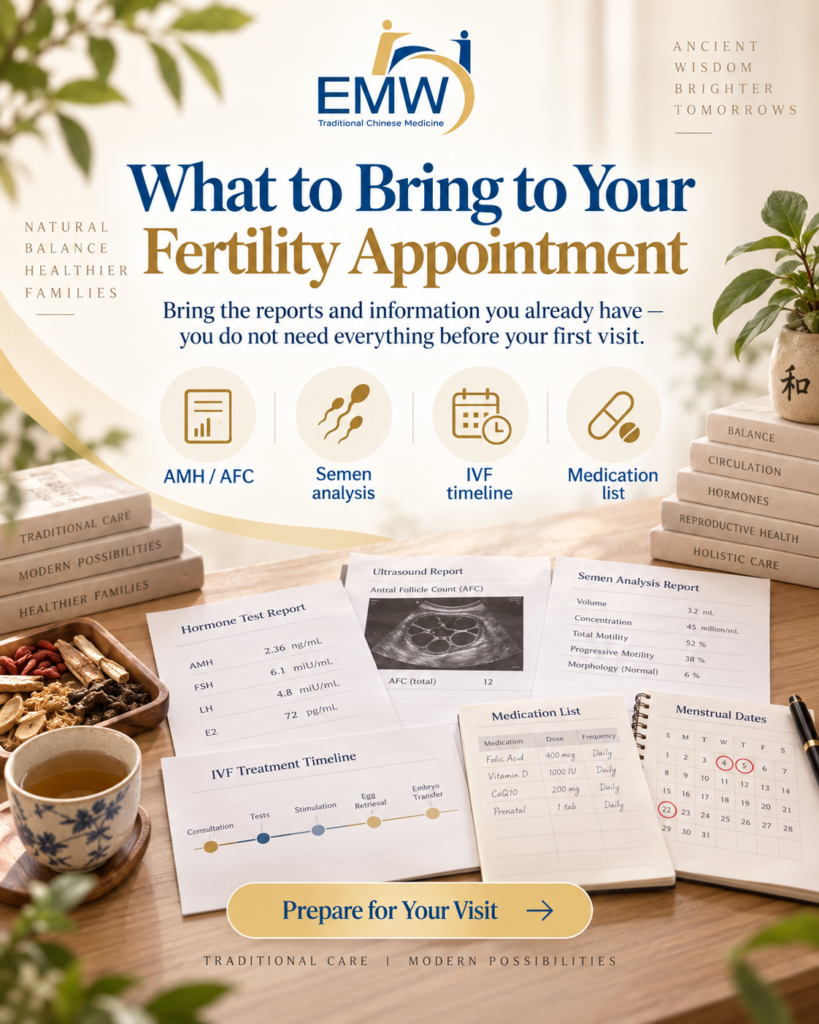
If IVF has already started, bring your current treatment schedule and medications.
Does fertility acupuncture improve IVF success?
Research has not established that acupuncture reliably improves IVF live-birth rates.
Studies have produced mixed results and differ substantially in design and acupuncture protocols.
For this reason, EMW uses acupuncture as complementary TCM care rather than presenting it as a proven IVF-success treatment.
Can TCM improve egg quality?
Egg quality is strongly influenced by age and biology, and there is currently no clinical test that directly measures the “quality” of every egg before fertilisation.
TCM should not be presented as capable of reversing reproductive ageing or guaranteeing better-quality eggs.
Where patients are concerned about egg quality, we prefer to review the wider fertility picture, including age, ovarian reserve, previous IVF response, lifestyle and other relevant factors.
Can TCM increase AMH?
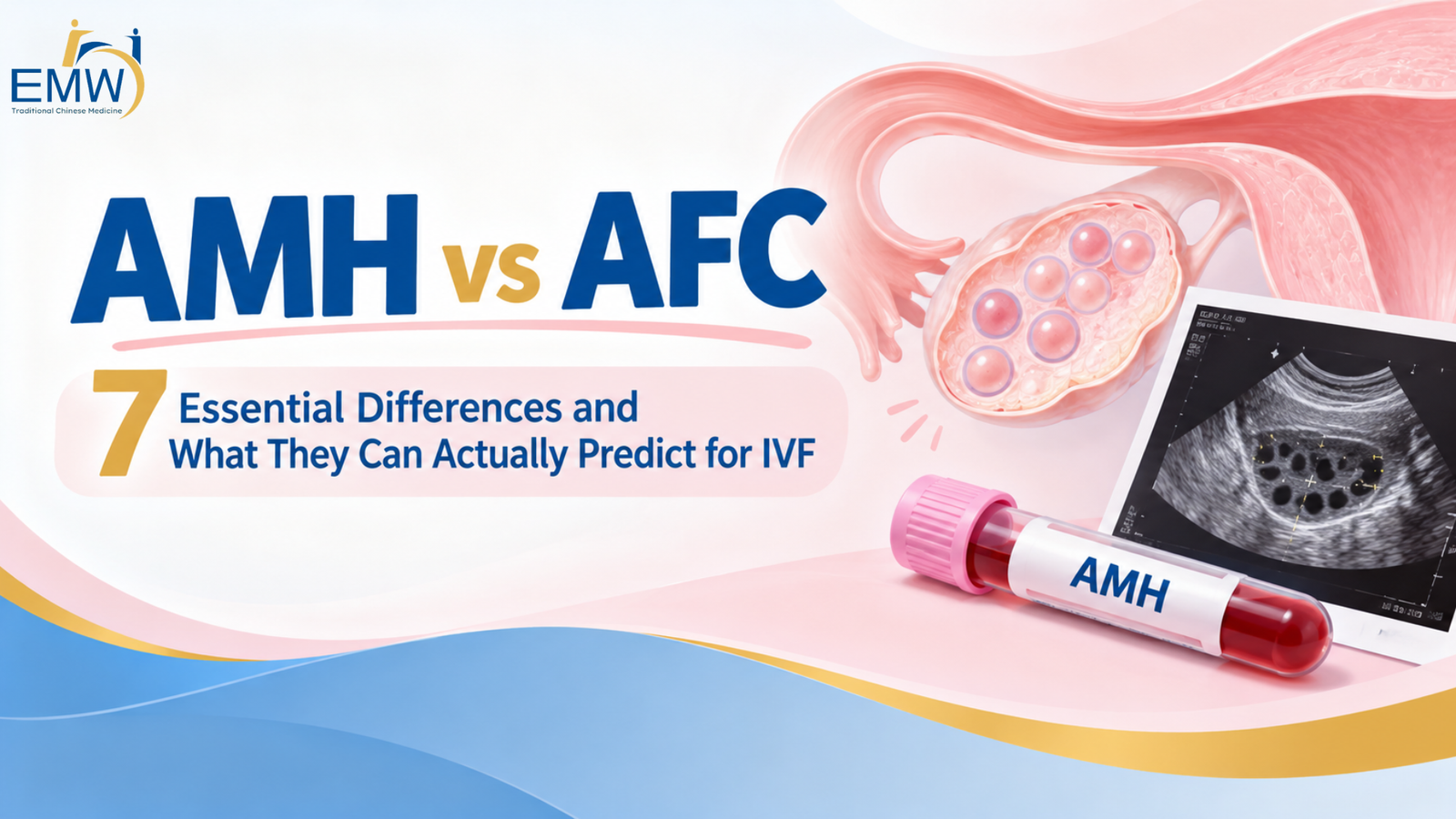
We do not recommend using AMH as a score that must be “boosted”.
AMH is primarily used as a marker of ovarian reserve and can help predict ovarian response during fertility treatment.
There is no established complementary treatment that reliably restores ovarian reserve or reverses age-related decline.
Our aim is therefore not simply to chase a higher AMH number.
Can TCM help male fertility?
TCM can be used as complementary care for men during a fertility journey.
However, abnormal semen parameters should be appropriately evaluated. Men with significant abnormalities may require specialist investigation in addition to complementary treatment.
Male fertility should ideally be considered alongside female fertility rather than only after repeated unsuccessful attempts.
Do both partners need to attend?
Not necessarily, but fertility involves both partners where a couple is trying together.
If semen analysis is abnormal or there are male fertility concerns, we encourage the male partner to be assessed rather than placing the entire fertility plan on the female partner.
Are Chinese fertility herbs always safe?
No treatment should automatically be considered safe for everyone.
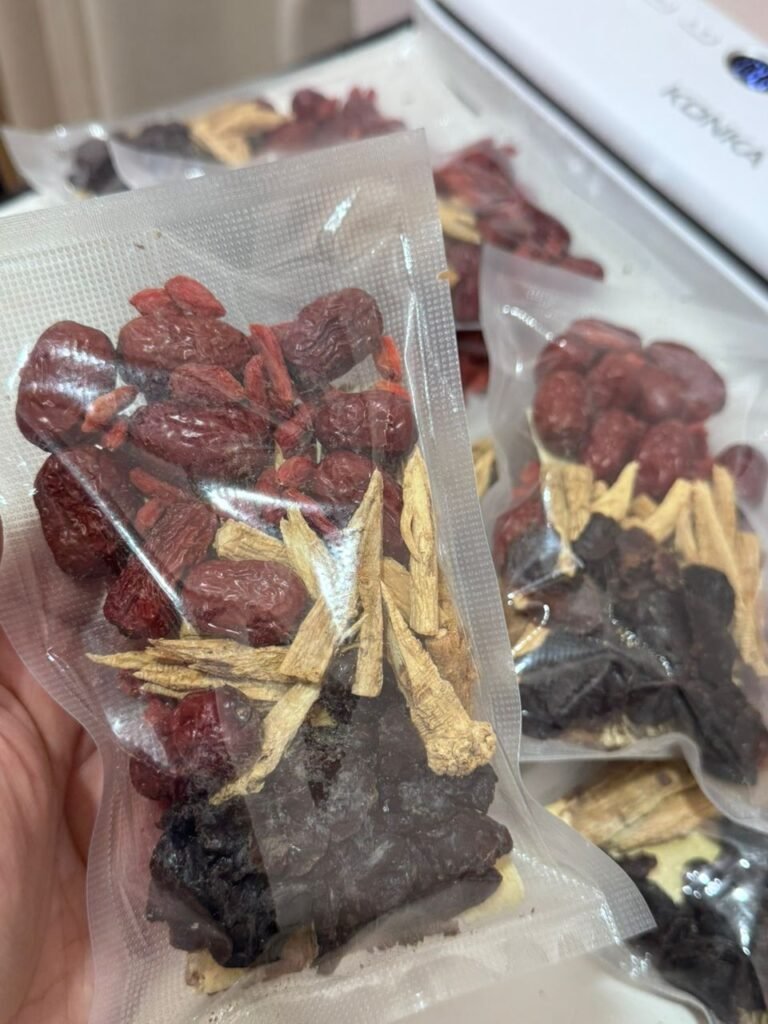
Herbal prescriptions must take into account your medical history, medications, fertility treatment and possibility of pregnancy.
Always tell your TCM physician and fertility specialist about herbs, supplements and medications you are taking.
Can I receive TCM after a miscarriage?
Complementary preconception care may be considered after pregnancy loss depending on your medical condition and recovery.
However, an active or suspected miscarriage requires appropriate medical assessment. TCM should not be used as a substitute for medical management of miscarriage or emergency care.
Repeated pregnancy loss should also be appropriately investigated.
When should I see a fertility specialist rather than only using TCM?
As a general guide, fertility evaluation is recommended after approximately 12 months of trying when the female partner is under 35 and after six months from age 35 onwards.
Earlier evaluation may be appropriate where there are known risk factors, irregular or absent periods, endometriosis, previous reproductive surgery, repeated pregnancy loss or known male fertility concerns.
If you are over 40, discussing fertility sooner is particularly important.