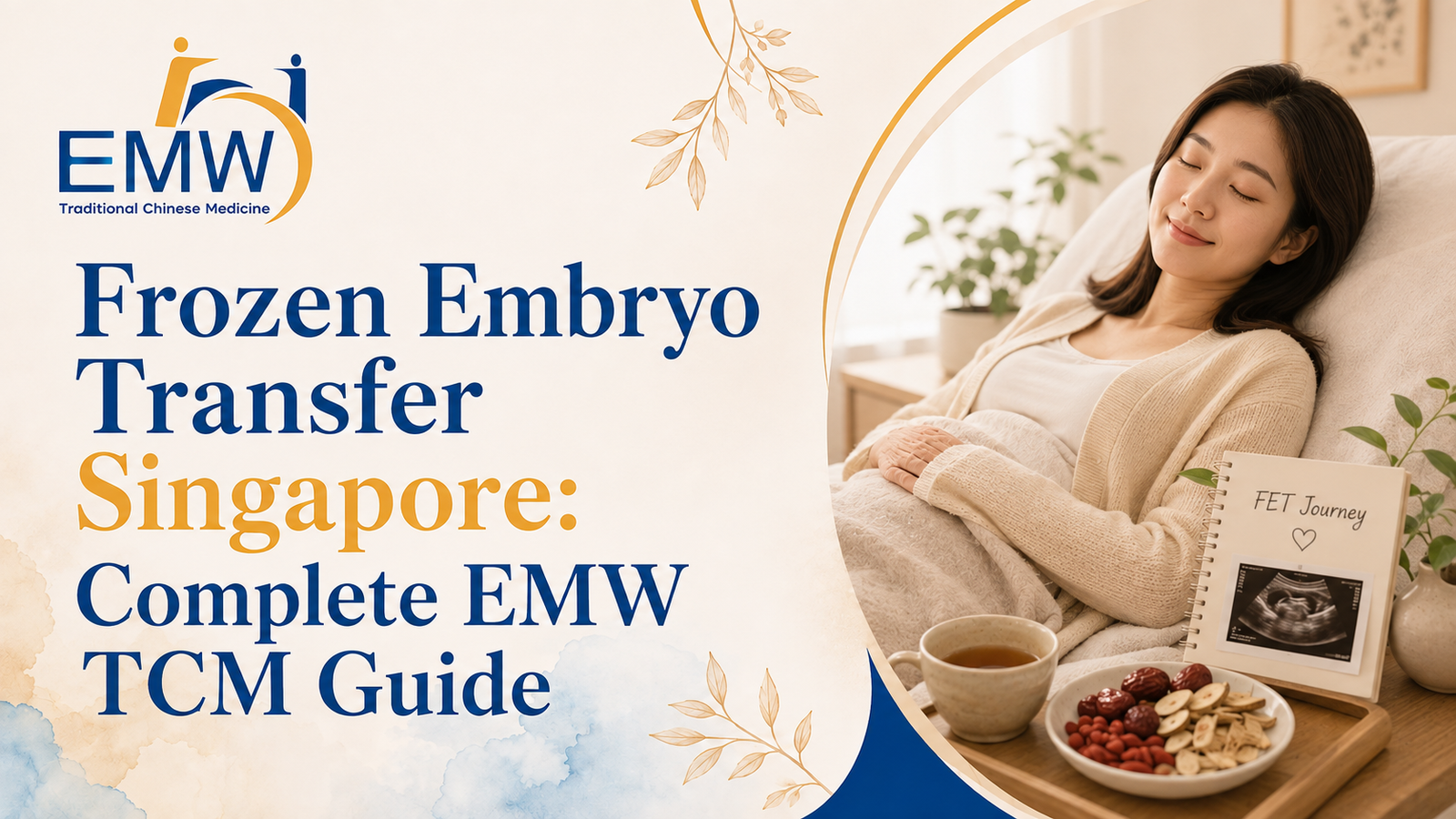
Frozen Embryo Transfer Singapore: Everything You Need to Know About FET With EMW TCM
You have already made it through ovarian stimulation and egg retrieval.
You waited to hear how many eggs were collected, how many were mature, how many fertilised and whether any embryos continued developing.
Now one or more embryos have been frozen, and the next stage is approaching: frozen embryo transfer.
For many patients, FET initially sounds simpler than egg retrieval. There are usually fewer injections, no procedure to collect eggs and less physical discomfort from enlarged ovaries.
Emotionally, however, it can feel even more intense.
You may have only one or two embryos available. You may have waited months for your body to recover, for genetic testing results or for the uterine lining to become suitable. You may have experienced previous failed transfers, chemical pregnancies or miscarriages.
Every scan can therefore feel like a verdict.
Is the lining thick enough?
Is it triple-layered?
Is the progesterone timing correct?
Should I have acupuncture before and after transfer?
Can I walk afterwards?
Should I take leave from work?
What if I feel cramps?
What if I feel absolutely nothing?
This frozen embryo transfer Singapore guide explains the process from both a biomedical and Traditional Chinese Medicine perspective. It covers FET preparation, uterine lining, cycle types, acupuncture timing, food, activity, herbs, transfer-day care and the two-week wait.
TCM does not replace IVF or guarantee implantation. Your fertility specialist remains responsible for your medication, scans, ovulation timing, progesterone exposure, embryo thawing, transfer and pregnancy testing.
At EMW TCM, treatment is designed to complement this medical plan through individualised acupuncture, appropriate pre-transfer herbal support, nutrition, sleep, digestion and stress management.
The Quick Answer
A frozen embryo transfer places a previously frozen embryo into the uterus during a carefully prepared menstrual cycle.
The cycle may be:
- A natural ovulatory cycle
- A modified natural cycle using a trigger injection
- A hormone replacement or medicated cycle
- A stimulated cycle in selected patients
The endometrium must be exposed to oestrogen and progesterone in the correct sequence so that its implantation window is synchronised with the embryo’s developmental stage.
For example, the progesterone timing for a Day 5 blastocyst is planned differently from that of a Day 3 embryo. This is why medication and transfer timing must be followed precisely.
EMW TCM’s frozen embryo transfer Singapore support is generally organised around three stages:
- Preparing the body and uterine environment before the FET cycle
- Supporting the lining and patient during the active transfer cycle
- Providing gentle support around transfer and during the early implantation period
The goal is not to “force” implantation. The goal is to support the patient’s overall health and create a calm, well-prepared environment while the IVF team manages the embryo and hormonal timing.
What Is a Frozen Embryo Transfer?
A frozen embryo transfer, commonly shortened to FET, is a procedure in which an embryo created during an earlier IVF cycle is thawed and placed into the uterus.
Embryos may be frozen because:
- More than one suitable embryo developed after retrieval
- The fertility clinic recommended a freeze-all cycle
- There was a high risk of ovarian hyperstimulation syndrome
- The uterine lining was not suitable for fresh transfer
- Progesterone rose earlier than expected
- Preimplantation genetic testing was performed
- The patient required medical treatment or recovery time
- A previous fresh or frozen transfer did not lead to pregnancy
- The couple is returning to try for another child
Modern embryo freezing commonly uses vitrification, a rapid-freezing method designed to minimise damaging ice crystal formation. Most embryos survive thawing, but survival is not guaranteed, and the embryology laboratory will assess the embryo before transfer.
FET does not simply involve thawing an embryo and placing it into the uterus on any convenient date. The embryo and endometrium must be developmentally synchronised.
This timing is one of the most important parts of the cycle.
Natural Versus Medicated Frozen Embryo Transfer
One of the first questions patients ask is whether a natural or medicated cycle is better.
There is no single answer for everyone.
Natural-cycle FET
A natural FET relies on the patient’s own follicle development and ovulation.
The clinic monitors the cycle through ultrasound, urine testing or blood tests. Transfer timing is then planned according to the natural LH surge or confirmed ovulation.
A natural cycle may suit patients who:
- Ovulate regularly
- Have predictable menstrual cycles
- Prefer fewer medications
- Can attend monitoring appointments
- Do not have a medical reason to suppress ovulation
The main limitation is that timing can be less predictable. The cycle may also be cancelled if ovulation cannot be confirmed or occurs before the clinic can schedule the transfer.
Modified natural-cycle FET
In a modified natural cycle, the patient develops a follicle naturally, but the clinic uses a trigger injection to control ovulation timing more precisely.
Progesterone support may also be prescribed.
This approach combines the patient’s natural hormonal activity with greater scheduling predictability.
Medicated or hormone-replacement FET
A medicated FET uses oestrogen to build the uterine lining and progesterone to create the appropriate implantation window.
Because the cycle does not rely on spontaneous ovulation, it may be easier to schedule.
It may be considered for patients with:
- Irregular or absent ovulation
- PCOS with unpredictable cycles
- Scheduling constraints
- Previous cancelled natural cycles
- Specific clinic or medical indications
Medication instructions are critical. Missing or mistiming progesterone can affect synchronisation between the embryo and endometrium.
Which cycle has the best success rate?
Success depends on embryo quality, age at egg retrieval, uterine factors, hormonal timing, diagnosis and other clinical variables.
Research has not established one universally superior FET preparation method for every ovulatory patient. Natural and programmed cycles may produce similar reproductive outcomes in appropriately selected patients, although their medication burden, monitoring needs and pregnancy-related risks may differ.
Your fertility specialist should choose the protocol according to your cycle regularity, medical history, previous response and clinic practices.
What Determines Whether an Embryo Implants?
Patients are often told to “improve implantation”, but implantation is not controlled by one factor.
It depends on the interaction between:
- Embryo competence
- Chromosomal status
- Endometrial receptivity
- Progesterone timing
- Uterine anatomy
- Hormonal support
- Inflammatory and immune factors
- General medical health
- Chance
Even a chromosomally normal embryo does not guarantee a pregnancy.
Similarly, a lining that reaches a particular thickness does not guarantee implantation.
This is important because patients often blame themselves after an unsuccessful transfer.
They may assume they walked too much, ate the wrong food, felt too stressed or failed to lie down long enough.
In most cases, an unsuccessful transfer cannot be traced to one minor action on transfer day.
A responsible frozen embryo transfer Singapore plan should optimise what can reasonably be addressed without creating the illusion that perfect behaviour controls the outcome.
How Important Is Uterine Lining Thickness?
Endometrial thickness is one part of FET assessment.
Many clinics prefer a lining of approximately 7 mm or above before transfer, although pregnancies can occur with thinner linings and the threshold varies between clinics.
The ultrasound may also describe the lining as trilaminar or triple-layered. This appearance is commonly assessed during the oestrogen-dominant phase before progesterone begins.
However, lining quality is not defined by thickness alone.
Other relevant factors may include:
- The pattern seen on ultrasound
- Response to oestrogen
- Uterine blood flow
- The presence of intracavity fluid
- Polyps, fibroids or adhesions
- Adenomyosis
- Chronic endometritis
- Progesterone timing
- Previous implantation history
A lining of 9 mm does not automatically mean the embryo will implant. A lining of 6.8 mm does not automatically mean the cycle will fail.
The number must be interpreted within the full clinical picture.
Read more:
How EMW TCM Supports Frozen Embryo Transfer Singapore Patients
EMW TCM does not use one standard FET treatment for every patient.
The plan may be influenced by:
- Natural or medicated FET protocol
- Cycle length and ovulation
- Lining thickness and pattern
- Previous transfer outcomes
- Endometriosis or adenomyosis
- PCOS or insulin resistance
- Fibroids or polyps
- Recurrent miscarriage
- Menstrual flow and clots
- Sleep and stress
- Digestion and bowel movements
- Tongue and pulse findings
- Medication and transfer date
Treatment is also changed as the cycle progresses.
Pre-transfer care may involve more active circulation or lining support. Once progesterone starts and transfer approaches, treatment becomes gentler and focuses on stability, relaxation and appropriate luteal support.
Eight to twelve weeks before FET
Where time permits, preparation may begin two to three months before the transfer cycle.
This can be useful for patients with:
- Thin lining
- Repeated implantation failure
- Adenomyosis
- Endometriosis
- Fibroids
- Irregular cycles
- Significant menstrual clots or pain
- Poor sleep
- Chronic stress
- Digestive problems
- Previous miscarriage
- A long interval since egg retrieval
Treatment may focus on:
- Menstrual regulation
- Pelvic circulation
- Blood nourishment
- Digestion and nutrient intake
- Sleep
- Stress regulation
- Metabolic health
- Appropriate exercise
- Reviewing the previous failed cycle
This preparation period also allows time to address structural or medical concerns with the fertility specialist.
Acupuncture cannot remove an endometrial polyp, correct a hydrosalpinx or replace treatment for chronic endometritis. Patients need the appropriate medical investigation when indicated.
During lining preparation
During the active FET cycle, acupuncture may be scheduled according to the scan and transfer timeline.
Before ovulation or progesterone exposure, the TCM plan may focus on:
- Supporting pelvic circulation
- Addressing Blood deficiency
- Regulating Liver Qi
- Supporting Spleen digestion
- Managing stress and sleep
- Reducing constipation or bloating
- Supporting the patient’s response to the cycle
Patients with thin lining may require more preparation before progesterone begins. However, acupuncture cannot guarantee a specific increase in millimetres.
Where the lining remains below the fertility clinic’s preferred threshold, decisions about extending oestrogen, changing medication or cancelling the transfer remain with the IVF specialist.
Around embryo transfer
EMW generally recommends three treatment sessions before the implantation procedure where feasible.
For an FET or IUI transfer, EMW may also recommend:
- One acupuncture session within 24 hours before transfer
- One acupuncture session within 24 hours after transfer
- One additional session approximately three to five days after transfer
This schedule is adjusted according to clinic timing, transfer-day logistics, patient symptoms and medical advice.
The purpose is supportive. Treatment may focus on relaxation, nervous-system regulation and a calm uterine environment.
Research into acupuncture around IVF embryo transfer remains mixed. Some meta-analyses report possible improvements in pregnancy outcomes depending on timing and treatment dose, but study quality, treatment protocols and control methods vary. The evidence does not justify guaranteeing implantation or live birth.
Learn more through EMW TCM IVF acupuncture support and how EMW times acupuncture during IVF and IUI.
Can Chinese Herbs Be Taken Before FET?
Chinese herbal medicine may be used before a transfer cycle when prescribed by a registered TCM physician who understands the patient’s IVF plan.
Herbs may be considered for issues such as:
- Menstrual regulation
- Blood deficiency
- Blood stasis
- Digestive weakness
- Cold patterns
- Sleep
- Stress
- Pre-transfer lining preparation
However, formulas are adjusted as the transfer approaches.
Herbs that strongly move Blood, purge, heat or stimulate are generally avoided around implantation unless there is a clear clinical reason and appropriate professional supervision.
EMW may pause herbal medicine before transfer or once progesterone starts, depending on the formula, medical history and fertility specialist’s instructions.
Do not take fertility herbs purchased online or reuse a previous prescription without reassessment.
The same formula that was suitable during menstruation may not be appropriate during the implantation window.
What Should You Eat Before Frozen Embryo Transfer?
No food can make an embryo implant on command.
Pineapple, Brazil nuts, pomegranate juice, bone broth and beetroot are often promoted online, but none can guarantee a successful FET.
A better strategy is to support:
- Adequate protein
- Stable blood sugar
- Micronutrient intake
- Bowel regularity
- Healthy digestion
- Overall metabolic health
- Sustainable eating
Useful meals may include:
- Eggs, fish, chicken, tofu, tempeh or legumes
- Cooked vegetables
- Whole grains and root vegetables
- Berries and fruits
- Nuts and seeds
- Olive oil and other unsaturated fats
- Soups and broths
- Iron- and folate-containing foods
- Fermented foods when tolerated
Patients with bloating, reflux, loose stools or cold digestive symptoms may feel better with warm cooked meals rather than large amounts of raw food and iced drinks.
Avoid beginning a strict detox, prolonged fast or elimination diet immediately before transfer.
Read the EMW fertility nutrition and IVF guide for a more complete framework.
Can You Drink Coffee Before FET?
Moderate caffeine intake is generally considered acceptable during preconception and pregnancy, but some patients choose to reduce it.
Consider lowering caffeine if it causes:
- Palpitations
- Anxiety
- Insomnia
- Reflux
- Shakiness
- Reduced appetite
Avoid suddenly replacing coffee with high-sugar drinks or unregulated herbal beverages.
Discuss caffeine intake with your fertility specialist if you have additional medical concerns.
Exercise Before and After Embryo Transfer
Exercise does not need to stop entirely during an FET cycle unless your fertility clinic gives specific restrictions.
Before transfer, suitable activity may include:
- Walking
- Light strength training
- Gentle yoga
- Mobility exercises
- Comfortable cycling
- Breathwork
After transfer, normal gentle movement is generally acceptable.
The embryo cannot fall out when you stand, walk, cough, sneeze or use the toilet. The uterine cavity is not an open container.
Bed rest after embryo transfer has not been shown to improve outcomes and may increase anxiety, stiffness and physical discomfort.
Avoid suddenly starting strenuous exercise, contact sports, overheating or activities that cause pain. Patients with bleeding, severe cramps or medical complications should seek individual advice.
EMW generally advises avoiding intense lower-abdominal massage, forceful moxibustion and strenuous exercise during the implantation window.
What Happens on Frozen Embryo Transfer Day?
Transfer-day procedures vary, but you may be asked to:
- Take medication at specific times
- Arrive with a comfortably full bladder
- Bring identification
- Avoid perfume or strong fragrances
- Continue progesterone
- Confirm the number and stage of embryos being transferred
The embryo is placed into the uterus through a thin catheter passed through the cervix.
The procedure is usually brief and does not normally require sedation.
Afterwards, the clinic may ask you to rest for a short period before leaving.
Questions to confirm include:
- Did the embryo survive thawing?
- What stage and grade was transferred?
- When should medication continue?
- When is the pregnancy blood test?
- Who should you contact for bleeding or severe pain?
- Are there restrictions specific to your case?
What Should You Do After FET?
After transfer:
- Continue medication exactly as prescribed
- Eat normally
- Walk gently
- Maintain regular hydration
- Avoid smoking and alcohol
- Sleep at a reasonable time
- Avoid overheating
- Do not begin new supplements or herbs
- Follow the fertility clinic’s activity advice
- Attend acupuncture if already planned and medically appropriate
You do not need to:
- Lie flat all day
- Keep your legs elevated
- Avoid using the toilet
- Remain completely motionless
- Eat only warm foods
- Search for symptoms every hour
- Test for pregnancy immediately
Normal daily movement does not dislodge an embryo.
Understanding the Two-Week Wait
The waiting period after transfer can be the hardest part of the IVF journey.
Patients may monitor every sensation:
- Mild cramps
- Breast tenderness
- Fatigue
- Bloating
- Increased discharge
- Feeling warm
- Feeling cold
- Spotting
- No symptoms at all
Unfortunately, these symptoms cannot reliably confirm whether implantation has occurred.
Progesterone and oestrogen can produce symptoms that resemble early pregnancy. Some pregnant patients feel nothing, while some non-pregnant patients experience multiple symptoms.
Do not stop medication based on symptoms or a home pregnancy test unless your fertility clinic instructs you to do so.
The most reliable answer comes from the scheduled beta-hCG blood test.
Is spotting normal after FET?
Light spotting can occur for several reasons, including cervical irritation from the catheter, vaginal progesterone or early pregnancy-related changes.
Spotting does not automatically mean the transfer has failed.
Contact your clinic if bleeding is heavy, pain is severe, you feel faint or you are otherwise unwell.
When can you take a pregnancy test?
Testing too early may produce:
- A false negative because hCG is still low
- A false positive if a recent hCG trigger remains in the body
Follow your fertility clinic’s scheduled test date.
What If the FET Does Not Work?
An unsuccessful transfer can be devastating, especially when the embryo was considered good quality.
But one unsuccessful FET does not automatically prove:
- Your uterus rejected the embryo
- Your immune system is attacking embryos
- Your lining was inadequate
- Stress caused failure
- You need every available implantation test
- You should immediately change clinics
A review may consider:
- Embryo stage and quality
- Age when the eggs were retrieved
- Genetic testing results, if any
- Embryo survival after thawing
- Transfer difficulty
- Lining development
- Progesterone timing and level
- Uterine cavity findings
- Adenomyosis or endometriosis
- Hydrosalpinx
- Thyroid or metabolic health
- Whether further investigation is clinically justified
Not every failed transfer has an identifiable cause.
Additional tests and treatments should be selected carefully rather than added automatically after one unsuccessful attempt.
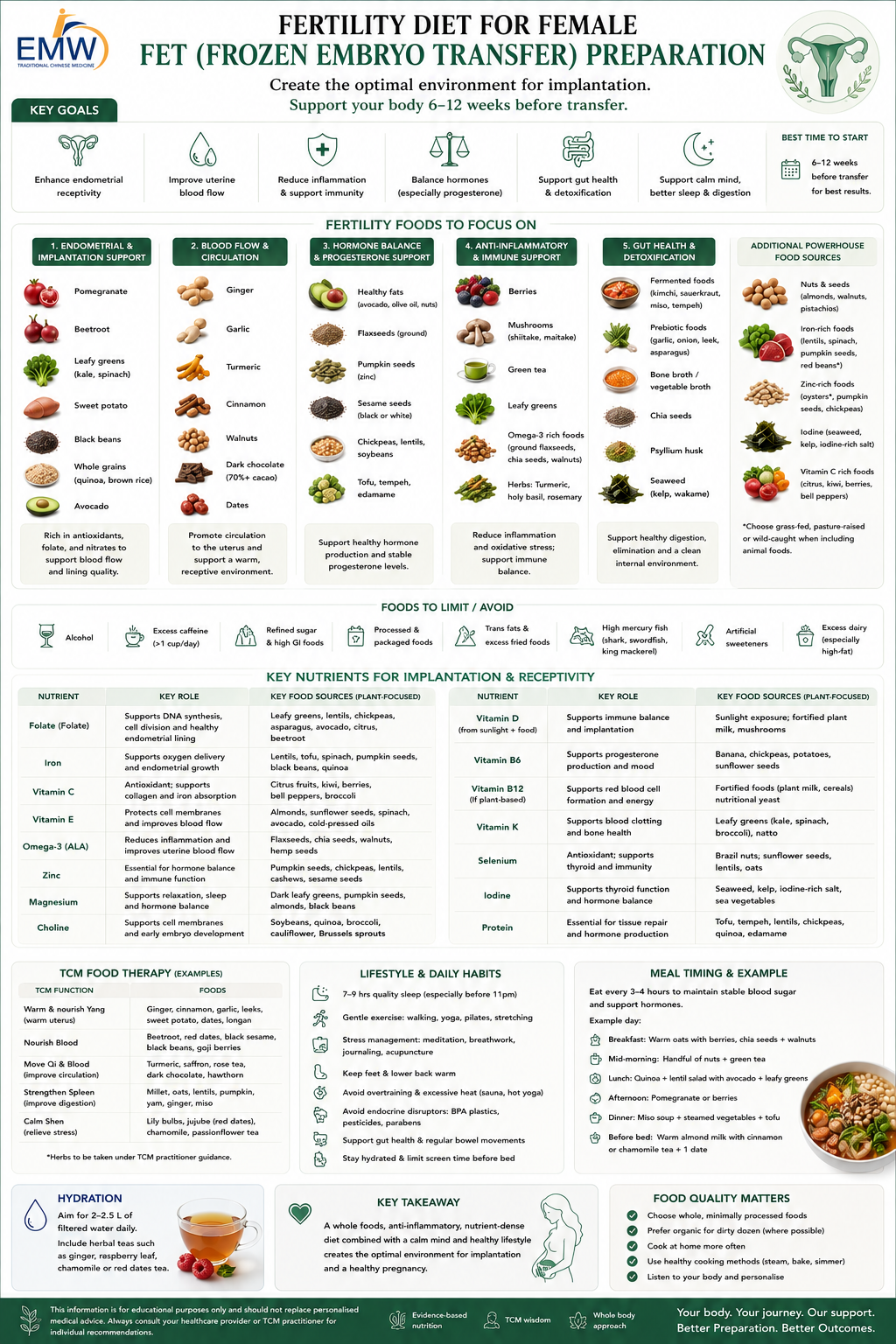
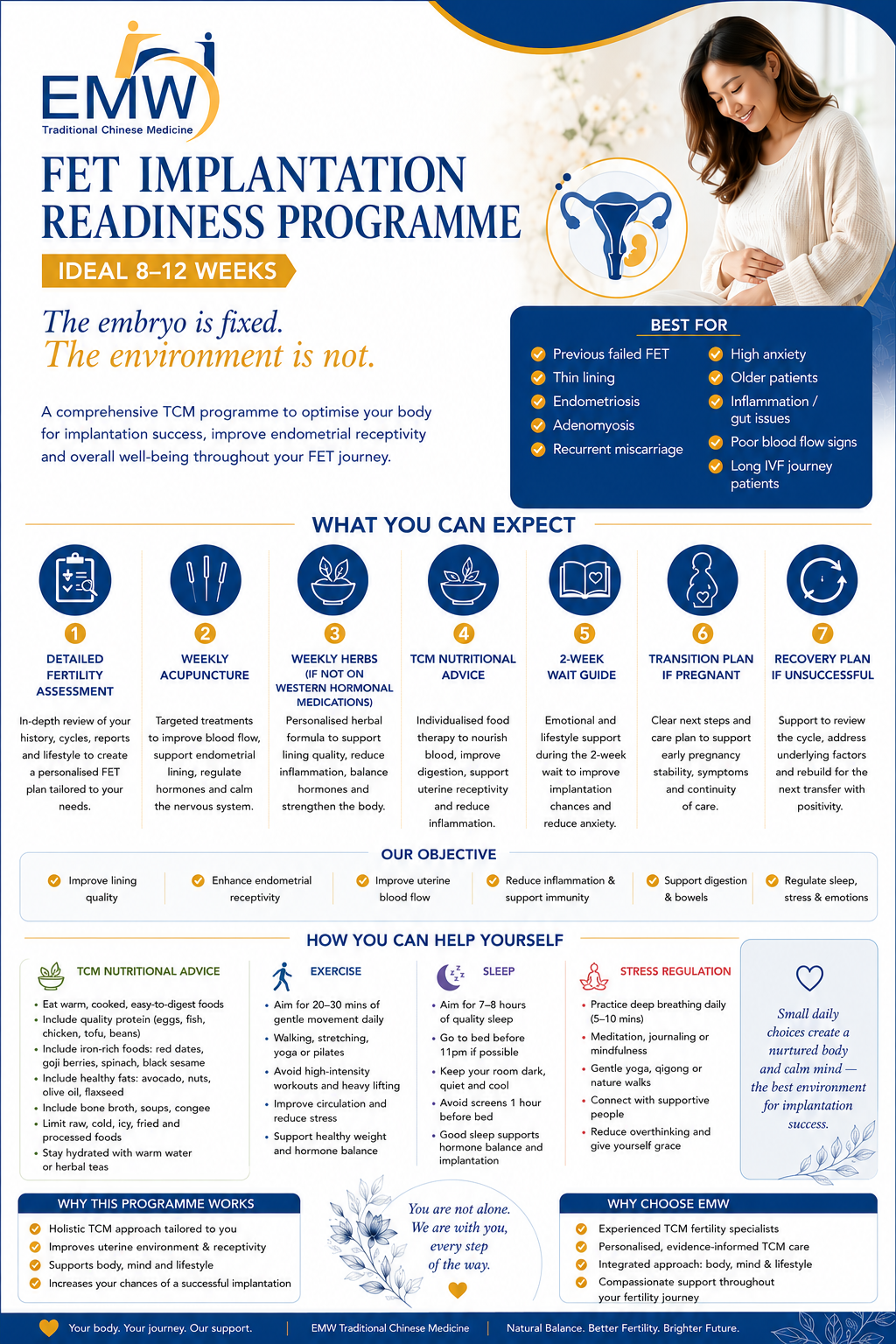
FET TCM Master Guide
Press the image to zoom in. If you like such infographics, we have a ‘3 ways to superboost your fertility’ PDF guide – Actionable steps that can help to support your reproductive health right away. You can sign up for free here: https://emwtcm.podia.com/3-ways-to-boost-your-fertility
Why Choose EMW TCM for Frozen Embryo Transfer Singapore Support?
IVF-aligned care
Treatment follows the FET timeline rather than using one standard protocol throughout the cycle.
Registered TCM physicians
Patients receive assessment based on their IVF protocol, medical history, symptoms, tongue and pulse findings.
Individualised treatment
A patient with thin lining and light periods may need a different approach from someone with adenomyosis, painful periods and heavy clotting.
Conservative treatment around implantation
Acupuncture intensity, herbs, moxibustion and lifestyle advice are adjusted as the transfer approaches.
Whole-person support
EMW considers sleep, digestion, bowel movements, stress, menstrual history, nutrition and previous IVF outcomes.
Realistic communication
EMW does not guarantee implantation or pregnancy. The aim is evidence-informed complementary care alongside the fertility specialist.
Frozen Embryo Transfer Singapore Checklist
Before the cycle
- Review your previous IVF and transfer outcome
- Confirm whether the cycle is natural or medicated
- Review uterine findings
- Address significant digestive or sleep problems
- Begin TCM preparation early where possible
- Check all supplements and herbs
- Follow medical advice for thyroid, blood sugar and other conditions
During lining preparation
- Take oestrogen or other medication correctly
- Attend scans
- Update your TCM physician after each scan
- Eat regular balanced meals
- Keep bowel movements regular
- Continue gentle movement
- Avoid starting new fertility products
Before transfer
- Confirm progesterone timing
- Confirm transfer time and bladder instructions
- Schedule acupuncture within 24 hours where appropriate
- Avoid strong herbs or treatments
- Prepare medication for the following days
After transfer
- Continue all medication
- Walk and move normally
- Avoid overheating and strenuous new exercise
- Attend the planned post-transfer session
- Do not interpret every symptom
- Wait for the scheduled pregnancy test
- Contact the clinic for heavy bleeding, severe pain or feeling unwell
Frequently Asked Questions
How long does a frozen embryo transfer cycle take?
A natural or medicated FET cycle commonly takes several weeks from the first day of menstruation to transfer. The exact duration depends on lining response, ovulation and medication timing.
Is frozen embryo transfer painful?
The procedure is usually brief and may feel similar to a cervical screening procedure. Some patients experience mild cramping or discomfort from the full bladder.
Is a natural or medicated FET better?
Neither is universally better. The appropriate protocol depends on ovulation, cycle regularity, medical history and clinic preference.
What lining thickness is needed for FET?
Many clinics prefer approximately 7 mm or more, but thresholds vary and successful pregnancies can occur with thinner linings. Thickness is only one part of endometrial assessment.
Can acupuncture improve uterine lining?
Some research suggests acupuncture may influence pelvic blood flow and stress regulation, but it cannot guarantee that the lining will reach a particular thickness.
When should acupuncture begin before FET?
Where possible, begin several weeks before transfer. During the active cycle, treatment is adjusted according to lining scans and transfer timing.
Should I have acupuncture before and after transfer?
EMW may recommend treatment within 24 hours before and after transfer when practical and appropriate, followed by another session three to five days later.
Can acupuncture guarantee implantation?
No. Implantation depends on the embryo, endometrium, timing and other biological factors.
Can I take TCM herbs during FET?
Only under individual supervision. Herbs may be used before transfer but are often adjusted or paused as progesterone begins and implantation approaches.
Can I walk after embryo transfer?
Yes, unless your fertility specialist has given a specific restriction. Normal gentle movement does not cause the embryo to fall out.
Should I take bed rest?
Routine prolonged bed rest has not been shown to improve embryo-transfer outcomes.
What should I eat after FET?
Eat balanced, digestible meals with protein, vegetables, whole-food carbohydrates and healthy fats. No particular food guarantees implantation.
Can I drink cold water after transfer?
Cold water does not directly dislodge an embryo or cause transfer failure. Patients with digestive sensitivity may personally tolerate room-temperature or warm drinks better.
Can I shower after FET?
Yes. Avoid extreme heat, hot tubs and saunas unless your fertility clinic advises otherwise.
Can I work after FET?
Many patients can return to normal work. Consider taking leave if your work is physically strenuous or the break would support your emotional wellbeing.
Is cramping after FET normal?
Mild cramping may occur. Severe or worsening pain requires medical advice.
Does spotting mean the transfer failed?
No. Light spotting can occur after transfer. Heavy bleeding or significant pain should be reported to your clinic.
Why do I feel no symptoms after FET?
Many successful pregnancies have no early symptoms. Symptoms are not a reliable measure of implantation.
When should I test for pregnancy?
Test on the date given by your IVF clinic. Testing too early may produce misleading results.
Should I stop progesterone if my home test is negative?
No. Continue medication until your fertility clinic tells you to stop.
Conclusion
A frozen embryo transfer may look simple on a calendar, but it carries the weight of everything that came before it.
The injections.
The retrieval.
The embryology updates.
The waiting.
The hope attached to every frozen embryo.
A thoughtful frozen embryo transfer Singapore plan should help you understand the process without making you feel responsible for controlling every biological outcome.
You can prepare your body, follow your medication carefully, support your sleep and digestion, attend acupuncture appropriately and seek treatment for medical concerns.
But you do not need to lie perfectly still, eat perfectly or remain calm every second for your embryo to have a chance.
At EMW TCM, FET support is individualised, physician-led and aligned with your fertility clinic’s plan.
The purpose is not to promise implantation.
It is to help you enter transfer feeling informed, supported and as well prepared as reasonably possible.
Explore more:
- EMW TCM IVF acupuncture support
- How TCM supports IVF and IUI
- How to support thin uterine lining
- TCM and uterine lining for implantation
- How TCM may help with implantation
- EMW fertility success stories
- EMW fertility articles
- Fertility Optimisation Bundle
For an individual assessment, arrange an in-clinic consultation with an EMW registered TCM physician.
Extended Readings
Failed IVF Cycle: 7 Critical Questions to Ask Before Trying Again
Failed IVF Cycle: 7 Critical Questions to Ask Before Trying Again IVF did not work. But what does “did not work” actually mean? Was the cycle cancelled because only…
Read More
No Blastocyst After IVF: 7 Critical Reasons Embryos May Stop Developing
No Blastocyst After IVF: 7 Critical Reasons Embryos May Stop Developing Egg retrieval is finished. You may have started with what seemed like a reasonable number of eggs. Some…
Read More
Recurrent Implantation Failure: 7 Critical Reasons IVF Transfers May Fail in Singapore
Recurrent Implantation Failure: 7 Critical Reasons IVF Transfers May Fail in Singapore You went through the injections. The scans. Egg retrieval. Fertilisation. Embryo development. Perhaps even genetic testing. Then came…
Read More
Poor Ovarian Response in IVF: 7 Critical Facts to Know Before Your Next Cycle
Poor Ovarian Response in IVF: 7 Critical Facts to Know Before Your Next Cycle Going through ovarian stimulation only to find that fewer follicles are developing than expected can be…
Read MoreHow EMW TCM Help Your Fertility
From a biomedical perspective, acupuncture for fertility improves ovarian and uterine blood flow, regulates the hypothalamic-pituitary-ovarian axis, lowers cortisol, reduces inflammation, and supports hormonal balance. These effects complement TCM principles and help enhance egg development, implantation, and reproductive function.
1. Comprehensive Assessment
Your first consultation includes:
Cycle assessment
Digestion and hormonal review
Energy and stress evaluation
Sleep and lifestyle factors
Male fertility screening when relevant
2. Evidence-Based TCM Diagnosis
Qi stagnation
Blood deficiency
Spleen Qi weakness
Kidney Yin/Yang imbalance
Liver Qi constraint
Dampness and inflammation
3. Personalised Fertility Treatment Plan
Weekly fertility acupuncture
Customised herbal formulas
Stress reduction strategies
Lifestyle recommendations
TCM Acupuncture for Fertility Treatments
Acupuncture, one of the most researched TCM fertility tools, has been found to influence several physiological pathways related to reproduction.
A review published in Fertility and Sterility (2019) reported that acupuncture may improve blood flow to the uterus and ovaries, modulate stress hormones, and enhance endometrial receptivity. Another meta-analysis in Integrative Medicine Research (2021) concluded that acupuncture used alongside conventional fertility treatment can improve pregnancy outcomes and reduce anxiety levels in women undergoing IVF.
From a clinical standpoint, acupuncture helps regulate the hypothalamic-pituitary-ovarian axis, improving hormone balance and menstrual regularity. It can also reduce cortisol levels, encouraging the parasympathetic or “rest-and-rebuild” state which supports implantation and early pregnancy.
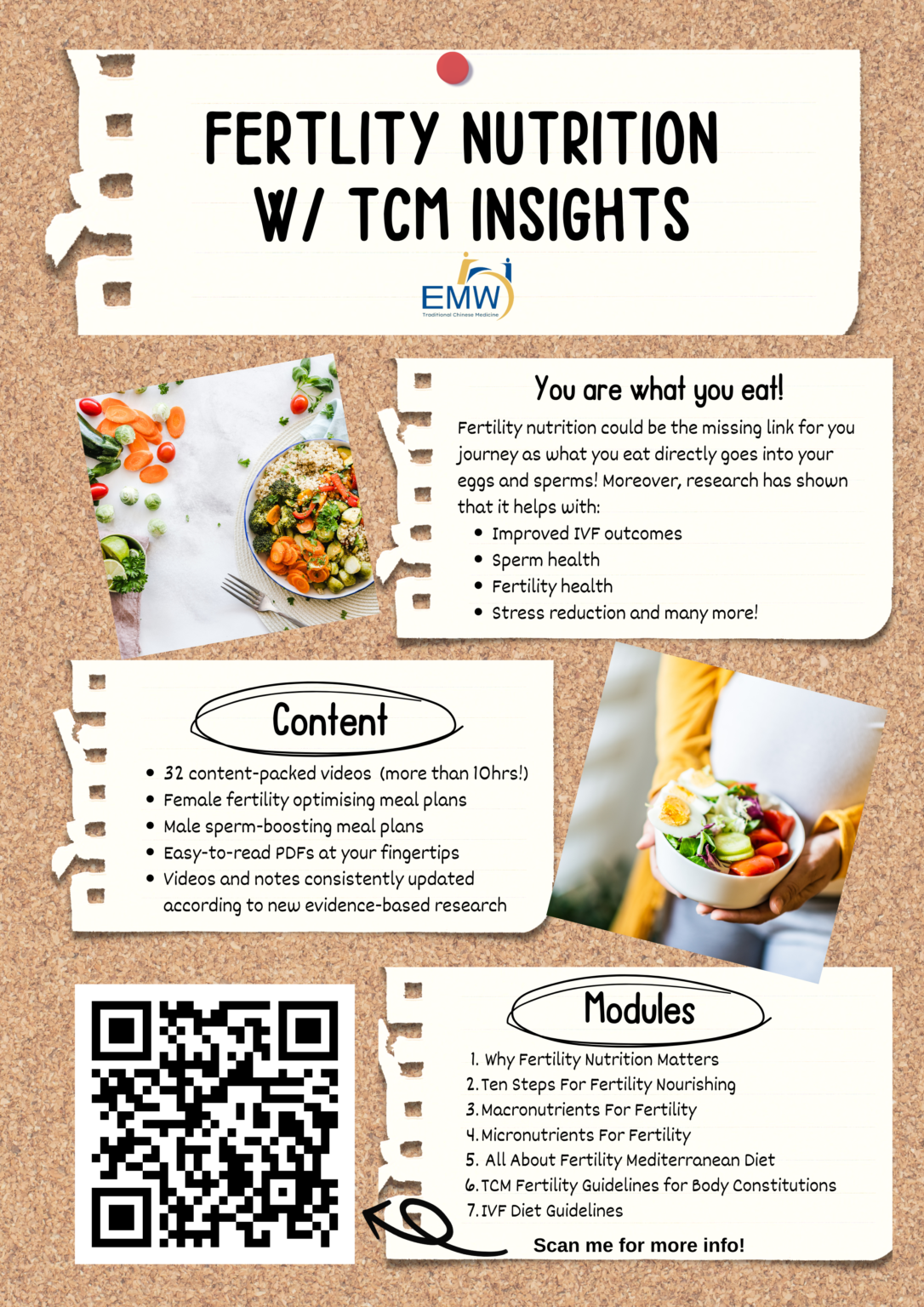
Our Flagship Ebook & Video Course
When to Seek Professional TCM Fertility Help
Fertility is not just a matter of age or hormones. It is a reflection of the body’s internal harmony. Traditional Chinese Medicine provides an integrative and natural way to restore this balance, supporting both physical and emotional readiness for conception.
At EMW TCM Singapore, our team of experienced physicians brings together centuries-old wisdom and modern evidence to guide your fertility journey. Whether you are trying naturally or preparing for IVF, we are here to help you create the best internal environment for new life to begin.
If you have been trying to conceive for more than six to twelve months, experience irregular menses, painful periods, or have been diagnosed with PCOS, endometriosis, or low sperm count, consider a consultation. Professional TCM fertility care aims to correct the underlying imbalance rather than simply forcing ovulation or hormone production.
Check out our links below to book your fertility consultation and begin your holistic journey toward conception.
EMW TCM Clinics
International Building Branch
360 Orchard Road, International Building #02-05/06
Singapore 238869
Book Your Appointment With Us Here: +65 89585869
Our Physicians
Principal TCM Physician
- M.Med(TCM Gynaecology)
- B.Sc(Hons) Biomedical Sciences
- Dip. Naturopath
- Ayurvedic Therapist(500hrs)
- Registered TCM Physician (Singapore MOH)
Senior TCM Physician
- M.Med(TCM Acupuncture & Moxibustion)
- B.Sc(Hons) Biomedical Sciences
- Certified Aromatherapist
- Registered TCM Physician (Singapore MOH)

TCM Physician
- M.Med(TCM Gynaecology)
- B.Sc(Hons) Biomedical Sciences
- Registered TCM Physician (Singapore MOH)
TCM Physician
- B.Med(TCM)
- B.Sc(Hons) Biomedical Sciences
- International Board-Certified Lactation Consultant (IBCLC)
- Registered TCM Physician (Singapore MOH)
References
- Chao JC et al. Antioxidant effects of Lycium barbarum polysaccharides. J Sci Food Agric. 2006. DOI: 10.1002/jsfa.2362
- Stener-Victorin E et al. Reduction of uterine artery blood flow impedance. Hum Reprod. 1996. DOI: 10.1093/oxfordjournals.humrep.a019187
- May-Panloup P et al. Mitochondrial biogenesis and oocyte quality. Hum Reprod Update. 2016. DOI: 10.1093/humupd/dmw006
- Stener-Victorin E & Wu X. Acupuncture effects on the reproductive system. Auton Neurosci. 2010. DOI: 10.1016/j.autneu.2009.12.001
- Tamura H et al. Melatonin and female reproduction. J Obstet Gynaecol Res. 2014. DOI: 10.1111/jog.12317