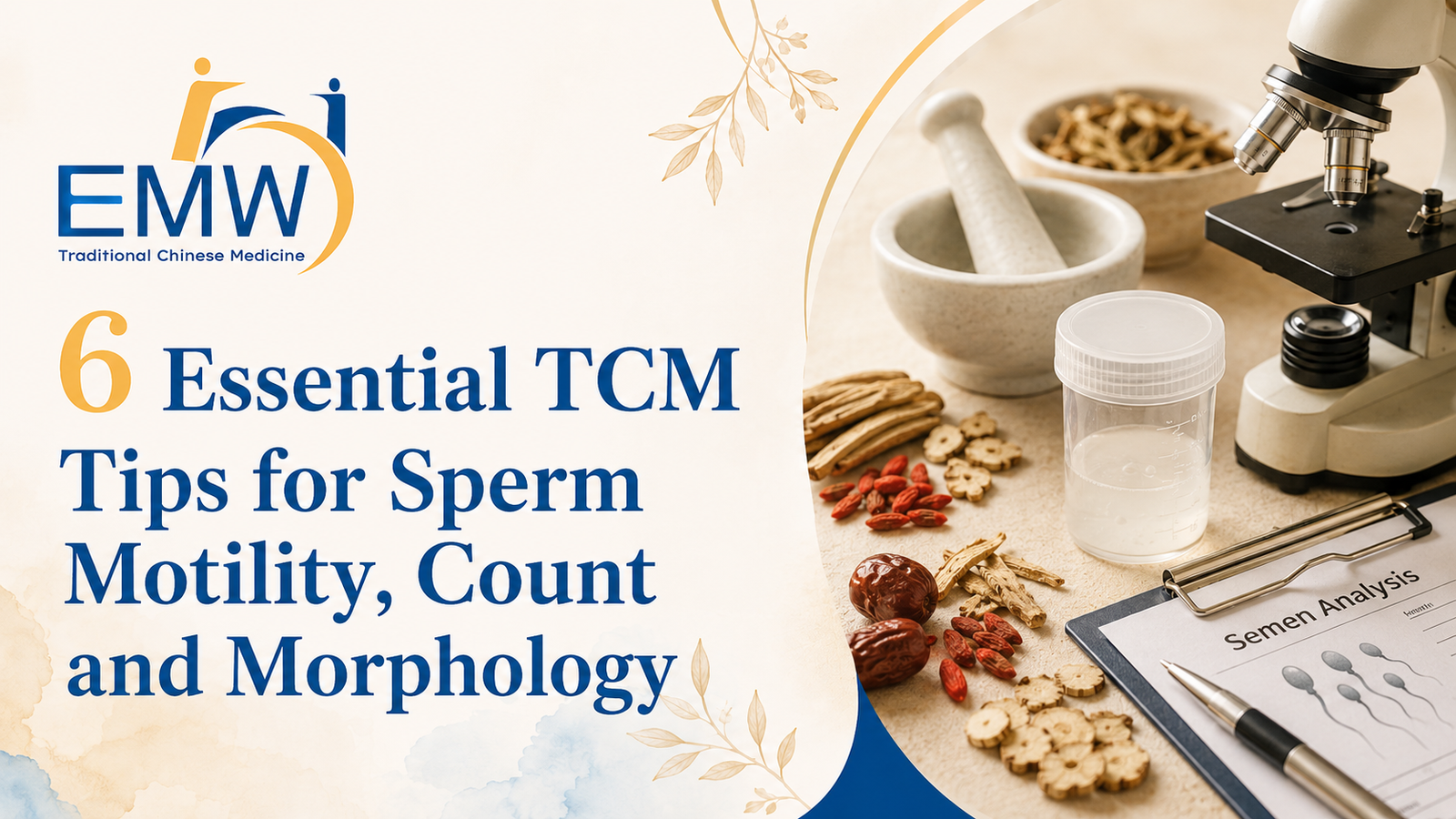
6 Essential TCM Tips for Sperm Motility, Count and Morphology
Male fertility is often reduced to one semen analysis report: sperm count, motility and morphology. But for many couples trying to conceive in Singapore, the report is only the beginning of the conversation.
A semen analysis can show whether sperm concentration, movement and shape fall within expected laboratory ranges, but it does not always explain why the sperm parameters are suboptimal. This is where a structured Traditional Chinese Medicine approach can be helpful, especially when it is aligned with modern fertility testing, nutrition, lifestyle medicine and assisted reproductive treatment such as IUI, IVF or ICSI.
At EMW TCM’s male fertility clinic in Singapore, male fertility is not treated as a separate or secondary issue. It is assessed as part of a couple-based fertility plan, because sperm health directly influences fertilisation potential, embryo development and overall reproductive outcomes.
These TCM Tips for Sperm Motility are written for men and couples who want a realistic, evidence-informed approach to improving sperm count, motility and morphology without miracle claims or generic formulas.
Understanding Sperm Motility, Count and Morphology
Before looking at treatment, it helps to understand what the three main sperm parameters mean.
Sperm count refers to the number of sperm cells present in the semen sample. A low count may reduce the chance that enough healthy sperm reach and fertilise the egg.
Sperm motility refers to how well sperm move. Progressive motility is especially important because sperm need forward movement to travel through the female reproductive tract or perform well in assisted reproduction.
Sperm morphology refers to sperm shape and structure. Abnormal morphology can affect how sperm interact with the egg, although morphology must always be interpreted alongside count, motility, DNA integrity and the couple’s full fertility picture.
The World Health Organization’s 6th edition semen manual remains a key reference for semen examination and laboratory standardisation. It also reminds clinicians that semen analysis is only one part of fertility assessment, not a complete diagnosis by itself. (World Health Organization)
From a TCM perspective, sperm quality reflects the strength of the Kidney system, Liver system, Spleen system, Blood circulation, Jing, Qi and fluid metabolism. In modern biomedical language, these patterns may overlap with hormonal regulation, testicular function, oxidative stress, inflammation, digestion, nutrient status, metabolic health and mitochondrial energy production.
This is why a good male fertility plan should not simply ask, “What herb improves sperm?” A better question is: “What is affecting this man’s sperm production, movement and quality over the 72 to 90-day sperm development cycle?”
Why the 90-Day Sperm Cycle Matters
Sperm are not produced overnight. Spermatogenesis takes roughly three months, which means sperm health usually responds best to consistent treatment over at least one full sperm cycle.
For couples preparing for IVF or ICSI, this timing is especially important. Starting male fertility support only a few days before sperm collection is often too late to make meaningful biological changes.
At EMW TCM, fertility care is planned around this biological timeline. Where appropriate, acupuncture, Chinese herbal medicine, nutrition and lifestyle strategies are aligned with natural conception windows, semen retesting, IVF stimulation, egg retrieval and sperm collection.
This is one reason EMW TCM differs from many general TCM clinics. The treatment is not only symptom-based. It is structured around fertility physiology, test results, cycle timing and the couple’s reproductive plan.
1. Strengthen Kidney Jing to Support Sperm Production
In TCM, the Kidney system governs reproduction, Jing, growth and fertility potential. For men, Kidney weakness may show up as low sperm count, poor vitality, reduced libido, fatigue, cold intolerance, lower back weakness, frequent urination or long-term constitutional depletion.
In biomedical terms, this may overlap with reproductive hormone signalling, testicular function, sperm production, mitochondrial energy and age-related decline.
A Kidney-focused fertility plan may include:
- Individualised Chinese herbal medicine
- Acupuncture to support reproductive regulation
- Sleep restoration
- Strength-supportive nutrition
- Stress and overwork reduction
- Avoidance of excessive heat exposure around the testes
This is not about “boosting” the body aggressively. In TCM, the goal is to rebuild the foundation gradually so that sperm production can become more stable over time.
For men with low sperm count, Kidney deficiency is often assessed together with other patterns such as Blood deficiency, Damp Heat, Qi stagnation or Spleen weakness. This is why generic formulas are rarely ideal. Two men may have the same semen result but need very different TCM strategies.
At EMW TCM’s fertility service, physician-led assessment helps identify which TCM pattern is most relevant and how it connects with the semen report, medical history, IVF timeline and lifestyle factors.
2. Improve Liver Qi Flow to Support Sperm Motility
One of the most clinically useful TCM Tips for Sperm Motility is to look beyond sperm cells and assess the internal environment that affects movement.
In TCM, the Liver system regulates Qi flow, emotional stress processing and smooth circulation. When Liver Qi stagnates, men may experience irritability, poor sleep, tight muscles, digestive discomfort, pelvic tension or stress-related fatigue. From a modern perspective, chronic stress may influence reproductive hormones, inflammation, oxidative stress and autonomic nervous system balance.
Sperm motility is energy-dependent. Sperm need healthy mitochondrial function, balanced oxidative stress and adequate seminal fluid quality to move effectively. Oxidative stress has been strongly linked with male infertility, reduced sperm motility and sperm DNA damage. (PMC)
A Liver-regulating plan may include:
- Acupuncture for stress regulation and circulation
- Breathing practices or gentle movement
- Earlier sleep timing
- Reducing alcohol and smoking exposure
- Addressing work stress and chronic tension
- Anti-inflammatory, plant-forward nutrition
For couples undergoing ART, this can be especially relevant. IVF and ICSI can assist fertilisation, but sperm quality still matters for fertilisation potential, embryo development and overall reproductive planning.
At EMW TCM’s IVF acupuncture service, treatment timing can be aligned with IVF phases instead of being delivered randomly. This is important because male fertility support should work with the couple’s ART schedule, not sit outside it.
3. Clear Damp Heat and Inflammation That May Affect Morphology
In TCM, Damp Heat is a common pattern seen when there is inflammation, heaviness, heat, irritation, poor fluid metabolism or reproductive tract imbalance. In male fertility, Damp Heat may be considered when there are signs such as abnormal semen parameters, genital discomfort, urinary symptoms, thick or yellowish discharge, acne, oily skin, body heaviness, poor digestion or a history of infection.
From a biomedical perspective, inflammation and oxidative stress can affect sperm membrane integrity, motility, morphology and DNA quality. Excess reactive oxygen species can impair sperm function, especially because sperm cells are vulnerable to oxidative damage. (OUP Academic)
This is where morphology needs careful interpretation. Poor morphology does not always mean fertilisation is impossible, but it can be a clue that the sperm development environment needs attention.
TCM support for Damp Heat may include:
- Pattern-specific herbal medicine
- Acupuncture to support circulation and regulation
- Reducing fried, greasy and highly processed foods
- Improving bowel regularity
- Supporting liver and gut function
- Avoiding overheating, saunas and tight heat-trapping clothing
- Coordinating with medical doctors if infection, varicocele or hormonal issues are suspected
EMW TCM’s approach is cautious and integrative. Men are not told that TCM replaces semen analysis, urology review or fertility specialist care. Instead, TCM is used to support the terrain in which sperm are produced, while respecting the role of conventional investigations.
For men who have not yet done a recent semen analysis, it is often useful to do one before starting a three-month fertility support plan, then repeat testing later to monitor change.
4. Strengthen the Spleen and Digestion for Better Nutrient Absorption
Another important part of TCM Tips for Sperm Motility is digestion. In TCM, the Spleen system governs transformation and transportation. Put simply, it helps convert food into Qi and Blood.
For fertility, this matters because sperm development depends on adequate nutrition, stable energy, micronutrients, antioxidants, protein, healthy fats and metabolic balance. A man may be eating “healthy” foods, but if digestion is weak, nutrient absorption may still be poor.
Signs of Spleen Qi weakness may include:
- Bloating
- Loose stools
- Fatigue after meals
- Sugar cravings
- Brain fog
- Heaviness
- Poor appetite
- Low muscle tone
- Recurrent phlegm or dampness
In Singapore, many men eat irregularly because of work schedules, late dinners, takeaway meals and high caffeine intake. From a TCM fertility perspective, this can weaken digestion and contribute to Dampness, inflammation and unstable energy.
A Spleen-supportive fertility diet is usually warm, cooked, fibre-rich and easy to digest. It may include:
- Soups and broths with vegetables
- Steamed or lightly stir-fried greens
- Lentils, beans and tofu if well tolerated
- Pumpkin, sweet potato and root vegetables
- Brown rice, oats, millet or other whole grains
- Nuts and seeds in moderate amounts
- Berries and colourful fruits
- Adequate hydration
The goal is plant-forward, not extreme. For many men, fertility nutrition is not about restrictive dieting. It is about improving digestion, reducing inflammatory load and providing the nutrients needed for sperm production.
Research on dietary patterns and semen quality increasingly supports this direction. Mediterranean-style diets rich in vegetables, fruit, whole grains, legumes, nuts, fish and healthy fats have been associated with better semen parameters in several studies. (PMC)
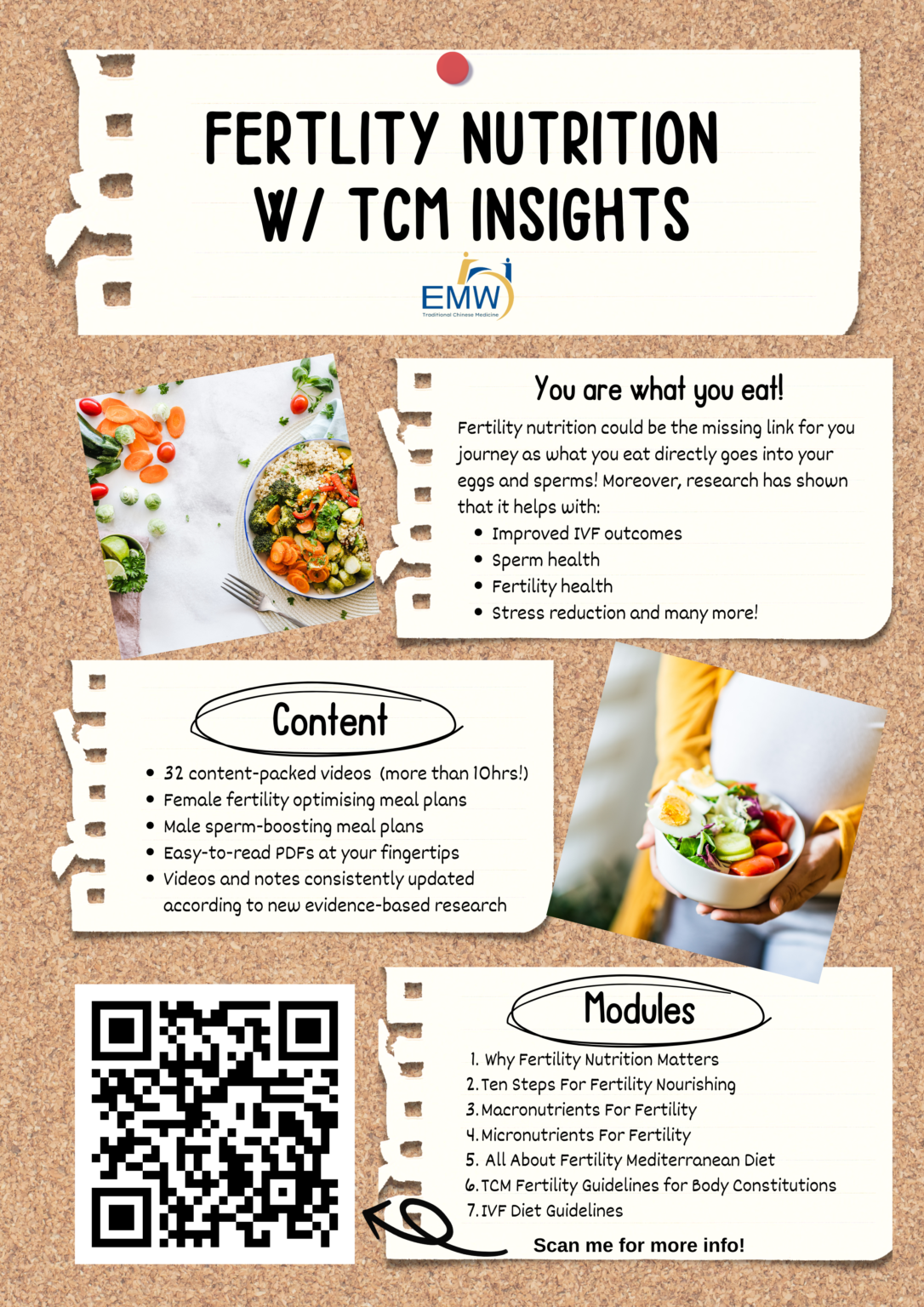
For a deeper fertility nutrition framework, EMW also offers Fertility Nutrition with TCM Insights, which may be useful for couples who want structured food-first guidance.
5. Use Acupuncture Strategically, Not Randomly
Acupuncture is often discussed for female fertility, but it may also be relevant for male fertility when used appropriately.
Studies on acupuncture for poor semen parameters show mixed but interesting findings. A 2014 systematic review found that acupuncture may improve sperm motility and concentration, although evidence quality and pregnancy outcome data remain limited. (PMC) A placebo-controlled trial also reported improved motile sperm percentage after acupuncture in men with severe oligoasthenozoospermia, but not a significant effect on sperm concentration. (fertstert.org)
This means acupuncture should not be presented as a guaranteed sperm cure. A more accurate position is that acupuncture may support sperm health as part of a broader, medically informed plan, especially when stress, circulation, inflammation, sleep and autonomic regulation are relevant.
At EMW TCM, acupuncture is not treated as a one-size-fits-all protocol. Treatment may be adjusted based on:
- Semen analysis findings
- TCM pulse and tongue assessment
- Sleep and stress patterns
- Digestive strength
- IVF or ICSI timeline
- Presence of heat, dampness, stagnation or deficiency
- Whether the couple is trying naturally or undergoing ART
For men preparing for IVF, acupuncture should ideally begin at least three months before sperm collection when possible. If time is shorter, treatment may still support stress regulation and overall wellbeing, but expectations should remain realistic.
You can read more about fertility acupuncture timing at When During the Cycle Should You Do Fertility Acupuncture?.
6. Build a Male Fertility Lifestyle That Protects Sperm Daily
The final section of TCM Tips for Sperm Motility is about daily consistency. Sperm quality reflects repeated inputs over time. A man’s sleep, heat exposure, stress, food, alcohol, smoking, exercise and environmental exposures all matter.
From a TCM view, fertility lifestyle should protect Kidney Jing, regulate Liver Qi, strengthen Spleen Qi and reduce Damp Heat. From a biomedical view, the same habits may support mitochondrial function, hormone balance, antioxidant status, blood flow and inflammatory regulation.
A practical male fertility lifestyle plan may include:
Prioritise sleep before midnight where possible
In TCM, late nights deplete Yin, Blood and Kidney reserves. Biomedically, poor sleep may affect hormone regulation, stress physiology and recovery.
Avoid repeated testicular heat exposure
Sperm production is temperature-sensitive. Men trying to conceive should be cautious with frequent sauna use, hot baths, laptop heat on the lap and prolonged tight heat-trapping clothing.
Exercise moderately, not excessively
Regular exercise supports circulation, insulin sensitivity and stress regulation. However, overtraining without recovery may worsen fatigue and hormonal stress.
Reduce smoking and alcohol exposure
Smoking and heavy alcohol intake are associated with poorer fertility health. Men preparing for conception should reduce or avoid these exposures where possible and seek medical support if needed.
Choose antioxidant-rich foods daily
Colourful vegetables, berries, legumes, nuts, seeds, herbs and whole foods provide antioxidants and phytonutrients that support the sperm environment.
Manage stress as a fertility factor
Stress is not “just emotional”. It can affect sleep, digestion, inflammation, hormones and sexual function. Acupuncture, breathing practices, walking, counselling and improved work boundaries can all be part of fertility care.
These habits may sound simple, but they are often the difference between a plan that looks good on paper and one that changes the internal environment over a full sperm cycle.
Why Choose EMW TCM for Male Fertility Support in Singapore?
Many TCM clinics offer fertility herbs or acupuncture. EMW TCM’s difference lies in the structure behind the treatment.
At EMW TCM, male fertility care is:
Root-cause focused
The goal is not only to label low sperm count, poor motility or abnormal morphology. EMW looks at why sperm parameters may be affected, including TCM constitution, stress, digestion, inflammation, lifestyle, sleep and ART timing.
Integrative and fertility-aware
Treatment is designed to complement medical fertility care, not replace it. This is especially important for couples undergoing IVF, ICSI or IUI.
Physician-led and individualised
Men with similar semen reports may need different treatment strategies. EMW avoids generic formulas and instead builds care around the patient’s constitution, symptoms, test results and fertility timeline.
Nutrition and lifestyle integrated
Food, digestion, metabolic health and inflammation are considered part of fertility care, not optional extras.
Couple-based
Male fertility is not treated as an afterthought. EMW supports both partners because fertility outcomes depend on the health of the couple as a whole.
Couples can also explore EMW’s Fertility Support Guide for structured education before or during treatment.
When Should Men Seek Fertility Support?
Men should consider fertility assessment and support if:
- A couple has been trying to conceive for 12 months, or 6 months if the female partner is 35 or older
- A semen analysis shows low count, poor motility or abnormal morphology
- There is a history of varicocele, infection, surgery or hormonal issues
- IVF, IUI or ICSI is being planned
- There are signs of chronic fatigue, stress, poor sleep or digestive weakness
- Previous IVF cycles had fertilisation or embryo development concerns
- The couple wants to optimise sperm health before conception
A semen analysis should ideally be interpreted by a fertility specialist or doctor. TCM can then be used as a complementary strategy to improve the broader reproductive environment.
Frequently Asked Questions
Can TCM improve sperm motility?
TCM may help support sperm motility when poor motility is linked with stress, oxidative stress, circulation issues, inflammation, digestion, constitutional weakness or lifestyle factors. However, results vary and TCM should not be presented as a guaranteed cure. These TCM Tips for Sperm Motility work best when applied consistently over at least one sperm cycle.
How long does it take to improve sperm count and morphology?
A realistic timeline is usually three months or more, because sperm production takes roughly 72 to 90 days. Some men may need longer depending on age, baseline semen results, medical issues and lifestyle factors.
Is acupuncture enough for male fertility?
Acupuncture may be useful, but it is rarely the whole plan. For sperm count, motility and morphology, the best results usually come from a structured combination of acupuncture, individualised herbs, nutrition, sleep, stress regulation and lifestyle changes.
Can TCM be used with IVF or ICSI?
Yes, TCM can be used alongside IVF or ICSI when managed professionally. At EMW TCM IVF support, treatment is aligned with the couple’s ART timeline rather than replacing conventional fertility care.
Should both partners come for fertility support?
In many cases, yes. Even when the female partner is undergoing IVF, sperm quality still matters. Couple-based care helps ensure both egg and sperm health are being supported.
Conclusion
Male fertility is not only about one semen analysis number. Sperm motility, count and morphology reflect a wider biological system involving hormones, oxidative stress, inflammation, digestion, circulation, sleep, stress and daily habits.
A TCM approach can be valuable when it is specific, evidence-informed and aligned with modern fertility care. The key is not to chase quick fixes, but to support the body consistently over the sperm development cycle.
For men and couples in Singapore, EMW TCM offers a structured, physician-led approach that integrates TCM diagnosis, acupuncture, Chinese herbal medicine, fertility nutrition, lifestyle strategy and IVF-aware timing.
To explore personalised male fertility support, visit EMW TCM Male Fertility or book an in-clinic consultation through WhatsApp at +65 8958 5869.
You may also explore:
References
- World Health Organization. WHO Laboratory Manual for the Examination and Processing of Human Semen, Sixth Edition. Geneva: World Health Organization, 2021. (World Health Organization)
- Alahmar AT. Role of oxidative stress in male infertility: An updated review. Journal of Human Reproductive Sciences. 2019. DOI: 10.4103/jhrs.JHRS_150_18. (PMC)
- Tremellen K. Oxidative stress and male infertility: A clinical perspective. Human Reproduction Update. 2008. DOI: 10.1093/humupd/dmn004. (OUP Academic)
- Jerng UM, Jo JY, Lee S, Lee JM, Kwon O. The effectiveness and safety of acupuncture for poor semen quality in infertile males: A systematic review and meta-analysis. Asian Journal of Andrology. 2014. DOI: 10.4103/1008-682X.129130. (PMC)
- Dieterle S, Li C, Greb R, Bartzsch F, Hatzmann W, Huang D. A prospective randomized placebo-controlled study of the effect of acupuncture in infertile patients with severe oligoasthenozoospermia. Fertility and Sterility. 2009. DOI: 10.1016/j.fertnstert.2009.02.041. (fertstert.org)
- Piera-Jordan CÁ, et al. Influence of the Mediterranean diet on seminal quality. Nutrients. 2024. DOI: 10.3390/nu16030391. (PMC)
How EMW TCM Help Your Fertility
From a biomedical perspective, acupuncture for fertility improves ovarian and uterine blood flow, regulates the hypothalamic-pituitary-ovarian axis, lowers cortisol, reduces inflammation, and supports hormonal balance. These effects complement TCM principles and help enhance egg development, implantation, and reproductive function.
1. Comprehensive Assessment
Your first consultation includes:
Cycle assessment
Digestion and hormonal review
Energy and stress evaluation
Sleep and lifestyle factors
Male fertility screening when relevant
2. Evidence-Based TCM Diagnosis
Qi stagnation
Blood deficiency
Spleen Qi weakness
Kidney Yin/Yang imbalance
Liver Qi constraint
Dampness and inflammation
3. Personalised Fertility Treatment Plan
Weekly fertility acupuncture
Customised herbal formulas
Stress reduction strategies
Lifestyle recommendations
TCM Acupuncture for Fertility Treatments
Acupuncture, one of the most researched TCM fertility tools, has been found to influence several physiological pathways related to reproduction.
A review published in Fertility and Sterility (2019) reported that acupuncture may improve blood flow to the uterus and ovaries, modulate stress hormones, and enhance endometrial receptivity. Another meta-analysis in Integrative Medicine Research (2021) concluded that acupuncture used alongside conventional fertility treatment can improve pregnancy outcomes and reduce anxiety levels in women undergoing IVF.
From a clinical standpoint, acupuncture helps regulate the hypothalamic-pituitary-ovarian axis, improving hormone balance and menstrual regularity. It can also reduce cortisol levels, encouraging the parasympathetic or “rest-and-rebuild” state which supports implantation and early pregnancy.
Our Flagship Ebook & Video Course
When to Seek Professional TCM Fertility Help
Fertility is not just a matter of age or hormones. It is a reflection of the body’s internal harmony. Traditional Chinese Medicine provides an integrative and natural way to restore this balance, supporting both physical and emotional readiness for conception.
At EMW TCM Singapore, our team of experienced physicians brings together centuries-old wisdom and modern evidence to guide your fertility journey. Whether you are trying naturally or preparing for IVF, we are here to help you create the best internal environment for new life to begin.
If you have been trying to conceive for more than six to twelve months, experience irregular menses, painful periods, or have been diagnosed with PCOS, endometriosis, or low sperm count, consider a consultation. Professional TCM fertility care aims to correct the underlying imbalance rather than simply forcing ovulation or hormone production.
Check out our links below to book your fertility consultation and begin your holistic journey toward conception.
EMW TCM Clinics
Scotts Medical Centre Branch
9 Scotts Road #10-04, Scotts Medical Centre @ Pacific Plaza,
Singapore 228210
Book Your Appointment With Us Here: +65 89585869
International Building Branch
360 Orchard Road, International Building #02-05/06
Singapore 238869
Book Your Appointment With Us Here: +65 89585869
Our Physicians
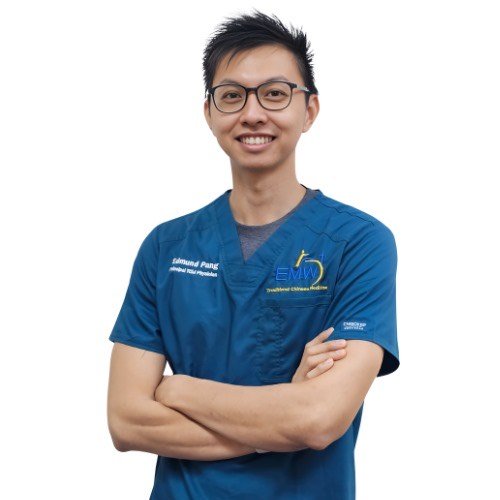
Principal TCM Physician
- M.Med(TCM Gynaecology)
- B.Sc(Hons) Biomedical Sciences
- Dip. Naturopath
- Ayurvedic Therapist(500hrs)
- Registered TCM Physician (Singapore MOH)
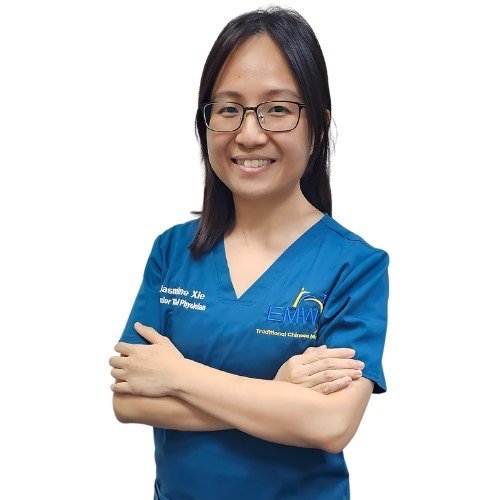
Senior TCM Physician
- M.Med(TCM Acupuncture & Moxibustion)
- B.Sc(Hons) Biomedical Sciences
- Certified Aromatherapist
- Registered TCM Physician (Singapore MOH)

TCM Physician
- M.Med(TCM Gynaecology)
- B.Sc(Hons) Biomedical Sciences
- Registered TCM Physician (Singapore MOH)
TCM Physician
- B.Med(TCM)
- B.Sc(Hons) Biomedical Sciences
- International Board-Certified Lactation Consultant (IBCLC)
- Registered TCM Physician (Singapore MOH)
References
- Chao JC et al. Antioxidant effects of Lycium barbarum polysaccharides. J Sci Food Agric. 2006. DOI: 10.1002/jsfa.2362
- Stener-Victorin E et al. Reduction of uterine artery blood flow impedance. Hum Reprod. 1996. DOI: 10.1093/oxfordjournals.humrep.a019187
- May-Panloup P et al. Mitochondrial biogenesis and oocyte quality. Hum Reprod Update. 2016. DOI: 10.1093/humupd/dmw006
- Stener-Victorin E & Wu X. Acupuncture effects on the reproductive system. Auton Neurosci. 2010. DOI: 10.1016/j.autneu.2009.12.001
- Tamura H et al. Melatonin and female reproduction. J Obstet Gynaecol Res. 2014. DOI: 10.1111/jog.12317

Pingback: Male Fertility Singapore: Complete EMW TCM Guide - EMW TCM