Sperm DNA Fragmentation and IVF: 7 Critical Facts Couples Should Know Before Treatment

Sperm DNA Fragmentation and IVF 7 Critical Facts Couples Should Know Before Treatment

Sperm DNA Fragmentation and IVF: 7 Critical Facts Couples Should Know Before Treatment

A semen analysis can look reassuring, yet fertilisation, embryo development or pregnancy may still not go as expected. This is why sperm DNA fragmentation and IVF has become an increasingly discussed topic among couples experiencing unexplained infertility, recurrent pregnancy loss or disappointing assisted reproduction outcomes.

Sperm DNA fragmentation testing looks beyond sperm count, movement and shape to assess damage within the sperm’s genetic material. However, it is not a routine test that every man undergoing fertility treatment automatically needs.

Understanding when it may be useful is more important than simply adding another fertility test.

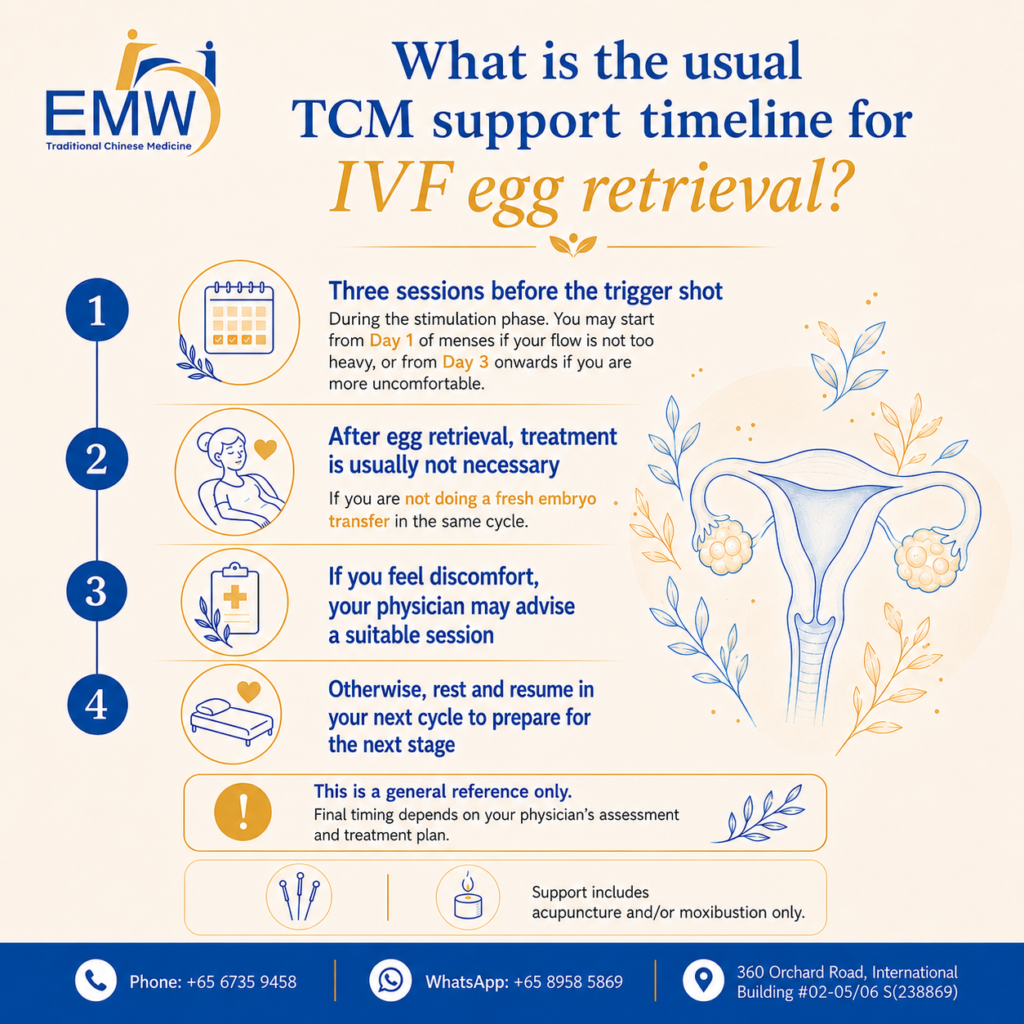
TCM Egg Retrieval
TCM in Egg Retrieval

Sperm DNA Fragmentation and IVF: 7 Critical Facts Couples Should Know Before Treatment

Quick answer: What is sperm DNA fragmentation?

Sperm DNA fragmentation refers to breaks or damage within the DNA carried by sperm.

A conventional semen analysis mainly evaluates:

  • sperm concentration
  • total sperm number
  • motility
  • morphology
  • semen volume

It does not directly measure DNA integrity.

Therefore, a man may have apparently normal sperm concentration, motility and morphology while still having a higher level of sperm DNA fragmentation.

For couples investigating sperm DNA fragmentation and IVF, this distinction is important because semen analysis and DNA fragmentation testing answer different questions.

The AUA/ASRM guideline does not recommend sperm DNA fragmentation testing as part of the initial routine infertility assessment, but it recommends considering it in specific situations such as recurrent pregnancy loss.

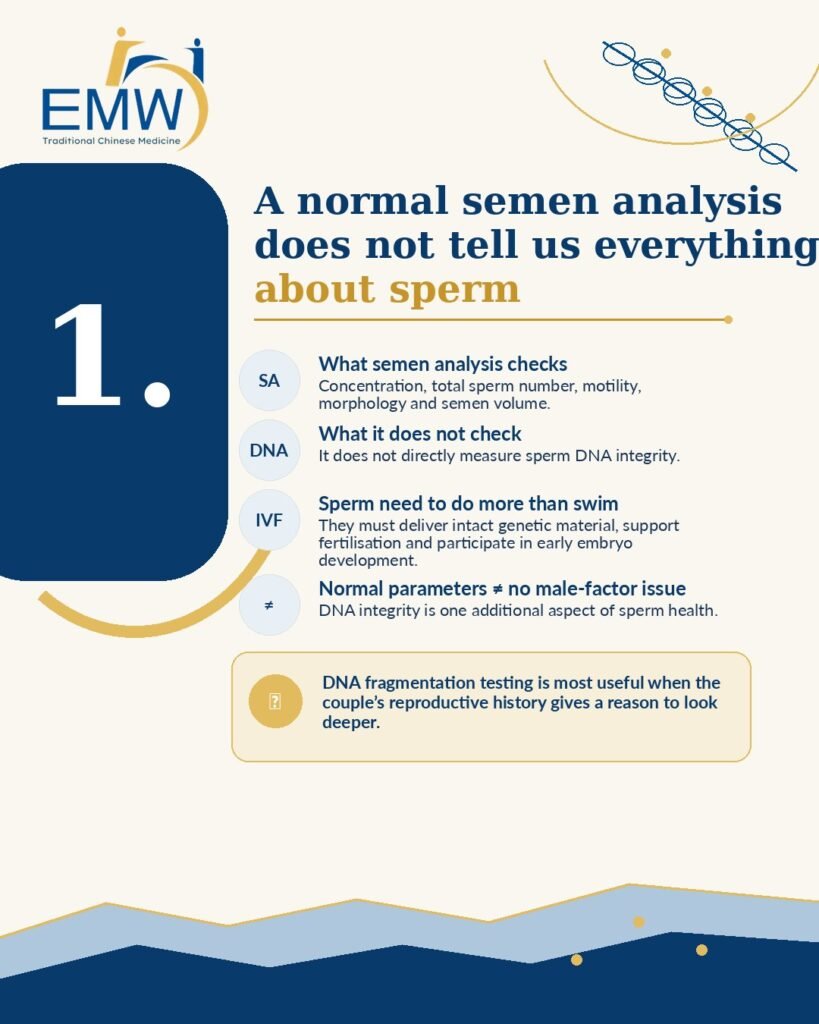
1. A normal semen analysis does not tell us everything about sperm

Many couples assume that if the semen analysis is normal, male fertility has been completely cleared.

That is not quite how fertility works.

A routine semen analysis is an important first-line assessment, but individual sperm parameters are not highly predictive of whether conception will occur.

Sperm need to do much more than simply swim.

They must:

  1. reach the egg
  2. interact appropriately with the egg
  3. contribute intact genetic material
  4. support fertilisation
  5. participate in early embryo development

DNA integrity is therefore one additional aspect of sperm health that conventional semen analysis does not directly measure.

This does not mean every man with normal semen parameters needs DNA fragmentation testing.

Instead, testing is usually most useful when the couple’s reproductive history gives a reason to look deeper.

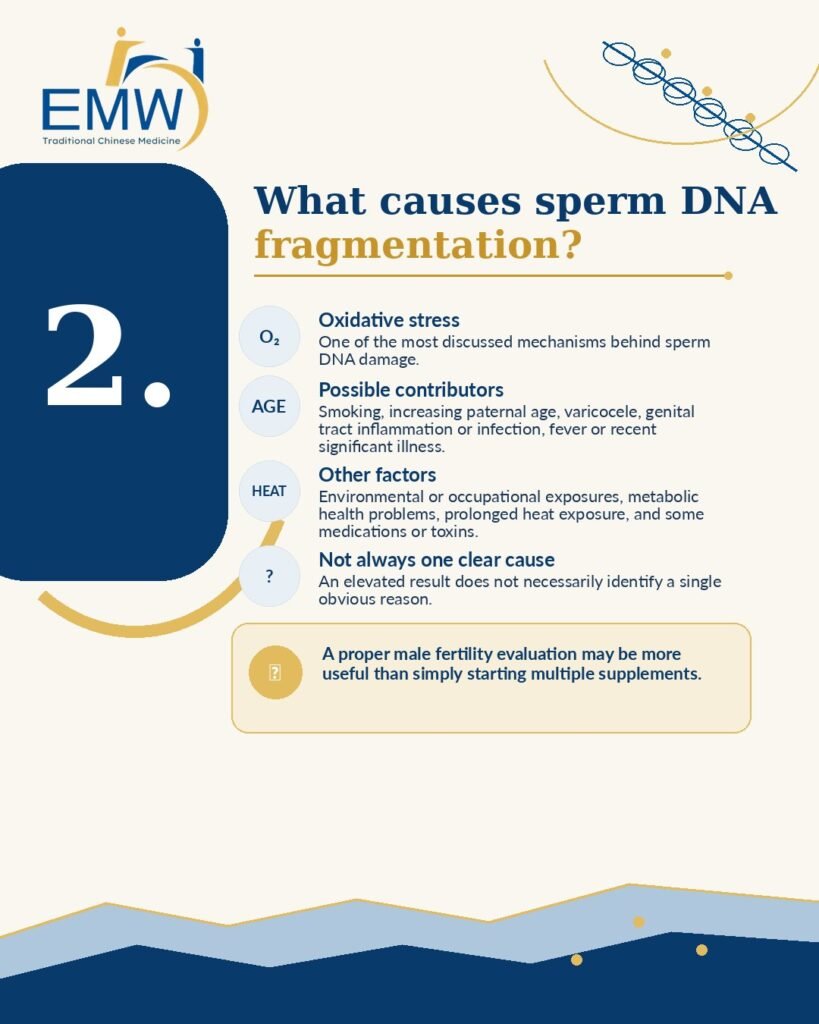
2. What causes sperm DNA fragmentation?

Sperm DNA damage can arise through several pathways.

One of the most discussed mechanisms is oxidative stress, where reactive oxygen species overwhelm the sperm’s protective systems.

Factors associated with increased sperm DNA fragmentation may include:

  • cigarette smoking
  • increasing paternal age
  • varicocele
  • genital tract inflammation or infection
  • fever or recent significant illness
  • certain environmental or occupational exposures
  • metabolic health problems
  • prolonged heat exposure
  • oxidative stress
  • some medications or toxins

The 2026 ASRM recurrent pregnancy loss guidance also identifies factors such as smoking, environmental toxins, febrile illness, varicocele and increasing paternal age as potential contributors to sperm DNA damage.

Importantly, finding elevated DNA fragmentation does not always reveal one obvious cause.

A proper male fertility evaluation may therefore be more useful than simply starting multiple supplements.

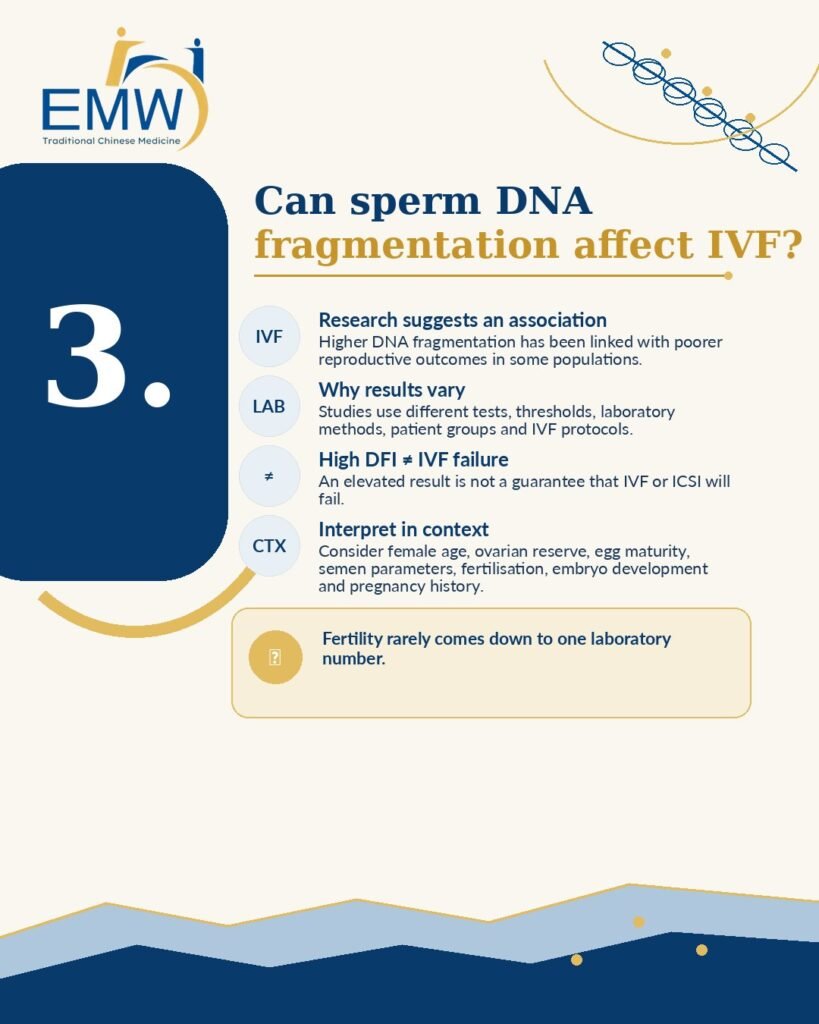
3. Can sperm DNA fragmentation affect IVF?

This is where sperm DNA fragmentation and IVF becomes particularly relevant.

Research has linked higher levels of sperm DNA fragmentation with poorer reproductive outcomes in some populations, including lower chances of natural conception and potentially poorer outcomes during assisted reproduction.

However, the evidence is not perfectly consistent.

Different studies use different:

  • sperm DNA tests
  • laboratory techniques
  • thresholds
  • patient populations
  • IVF protocols

This makes it difficult to give one universal DNA fragmentation percentage that predicts whether IVF will or will not work.

The Global Andrology Forum guidelines report an association between elevated sperm DNA fragmentation and poorer IVF outcomes, while acknowledging limitations surrounding testing methods and threshold values.

Does high sperm DNA fragmentation mean IVF will fail?

No.

An elevated result is not a guarantee of IVF failure.

It is one potential male-factor finding that should be interpreted alongside:

  • female age
  • ovarian reserve
  • egg maturity
  • sperm concentration and motility
  • fertilisation rate
  • embryo development
  • previous pregnancy history
  • previous IVF or ICSI outcomes

Fertility rarely comes down to one laboratory number.

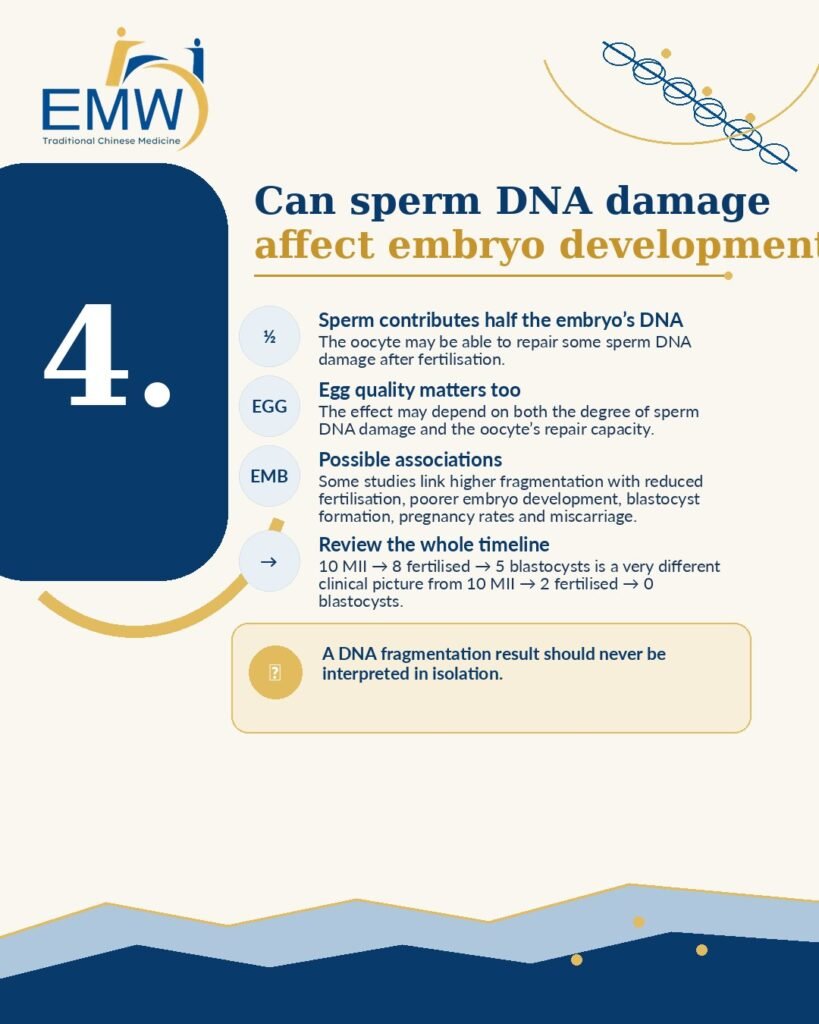
4. Can sperm DNA fragmentation affect embryo development?

Possibly.

The sperm contributes half of the embryo’s genetic material.

Once fertilisation occurs, the egg has some ability to repair sperm DNA damage. The ability to compensate may depend partly on the degree of damage and on oocyte quality.

This creates an important interaction between male and female fertility.

For example, the same degree of sperm DNA damage may not necessarily have the same reproductive effect in every couple.

Higher sperm DNA fragmentation has been associated in some studies with:

  • reduced fertilisation
  • impaired embryo development
  • poorer blastocyst formation
  • reduced pregnancy rates
  • miscarriage

But these associations are not equally strong across every IVF and ICSI population.

This is why a couple should avoid interpreting a DNA fragmentation test in isolation.

If an IVF cycle resulted in:

10 mature eggs → 8 fertilised → 5 good blastocysts

the clinical question is very different from:

10 mature eggs → 2 fertilised → no blastocysts.

The entire embryo-development timeline matters.

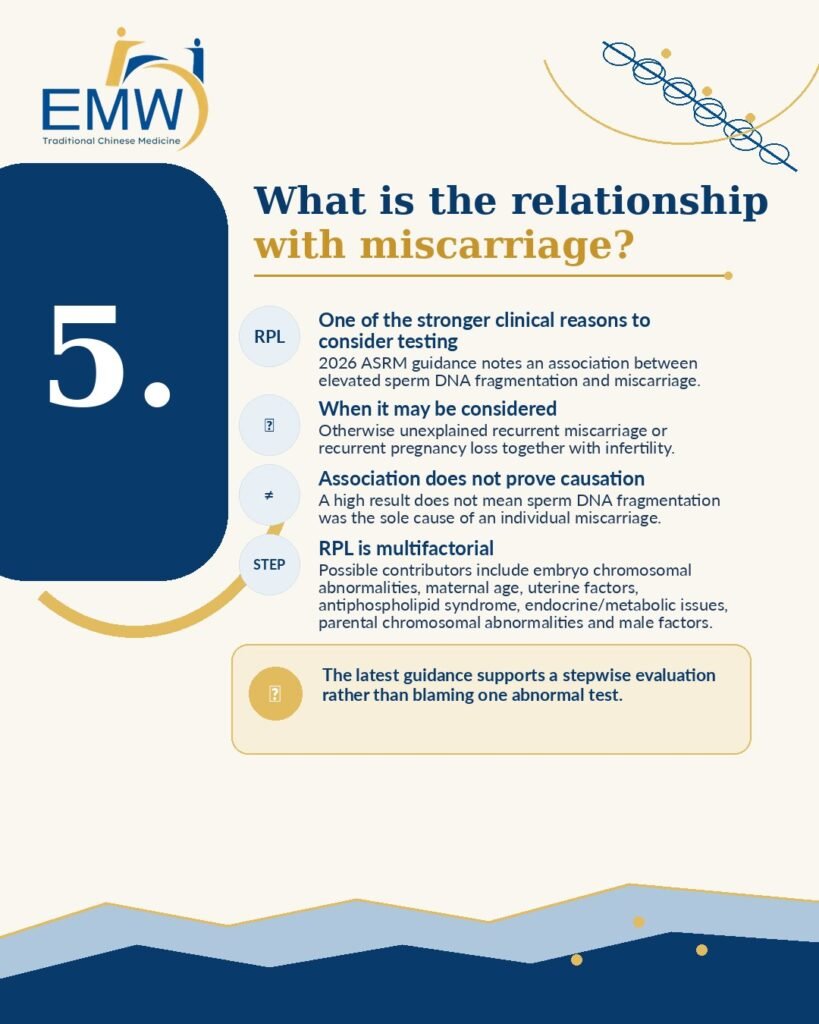
5. What is the relationship between sperm DNA fragmentation and miscarriage?

This is currently one of the stronger clinical reasons to consider testing.

The updated 2026 ASRM recurrent pregnancy loss guidance states that elevated sperm DNA fragmentation is associated with miscarriage and that testing may be considered in couples experiencing otherwise unexplained recurrent miscarriage or recurrent pregnancy loss together with infertility.

A meta-analysis cited in that guideline found a higher subsequent miscarriage rate among couples with high versus low sperm DNA fragmentation.

However, an association does not prove that sperm DNA fragmentation was the sole cause of an individual miscarriage.

Recurrent pregnancy loss can involve many factors, including:

  • embryo chromosomal abnormalities
  • maternal age
  • uterine factors
  • antiphospholipid syndrome
  • endocrine or metabolic conditions
  • parental chromosomal abnormalities
  • male factors

The latest guidance therefore supports a stepwise evaluation, rather than blaming one abnormal test result.

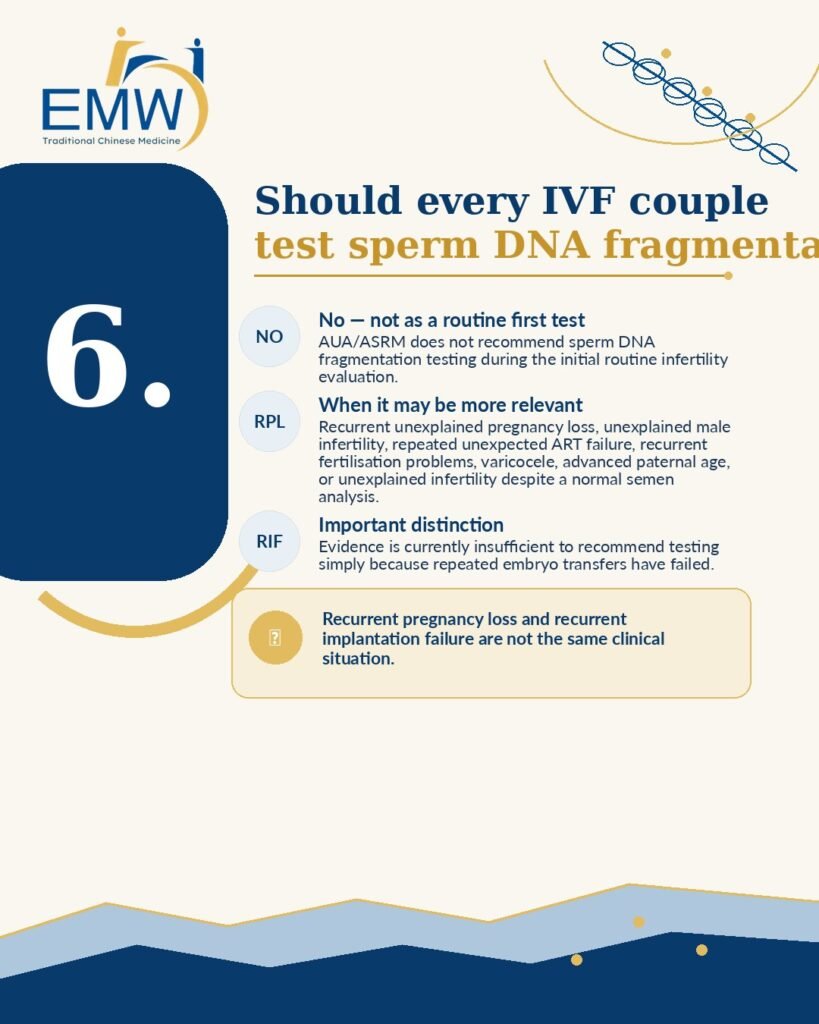
6. Should every IVF couple test sperm DNA fragmentation?

No.

Despite growing interest in sperm DNA fragmentation and IVF, major professional guidance does not support routine testing for every infertile couple at the beginning of fertility investigation.

The AUA/ASRM male infertility guideline specifically states that sperm DNA fragmentation testing is not recommended during the initial routine evaluation of an infertile couple.

Testing may become more relevant when there is:

  • recurrent unexplained pregnancy loss
  • unexplained male infertility
  • repeated unexpected ART failure
  • recurrent fertilisation problems
  • relevant male risk factors
  • a significant varicocele
  • advanced paternal age
  • unexplained infertility despite an apparently normal semen analysis

There remains debate regarding its role in recurrent implantation failure specifically.

For example, ASRM’s 2026 guidance on recurrent implantation failure states that evidence is currently insufficient to recommend sperm DNA fragmentation testing simply because repeated embryo transfers have failed.

That is an important distinction.

Recurrent miscarriage and recurrent implantation failure are not the same clinical situation.

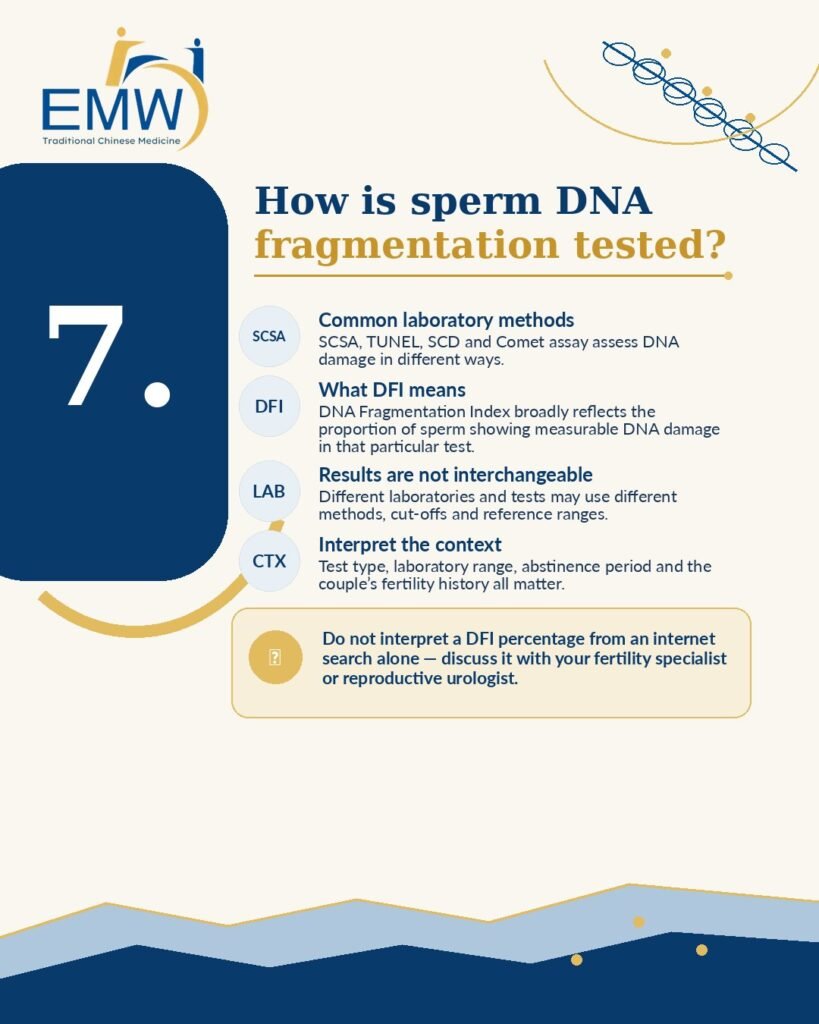
7. How is sperm DNA fragmentation tested?

Several laboratory techniques are available.

Common tests include:

  • SCSA — sperm chromatin structure assay
  • TUNEL
  • SCD — sperm chromatin dispersion test
  • Comet assay

These tests assess DNA damage differently.

This is why two DNA fragmentation results from different laboratories are not always directly interchangeable.

There is also no universally accepted cut-off that applies equally to every test and every reproductive outcome.

The Global Andrology Forum notes that the lack of standardised outcome-specific thresholds remains one of the major limitations of sperm DNA fragmentation testing.

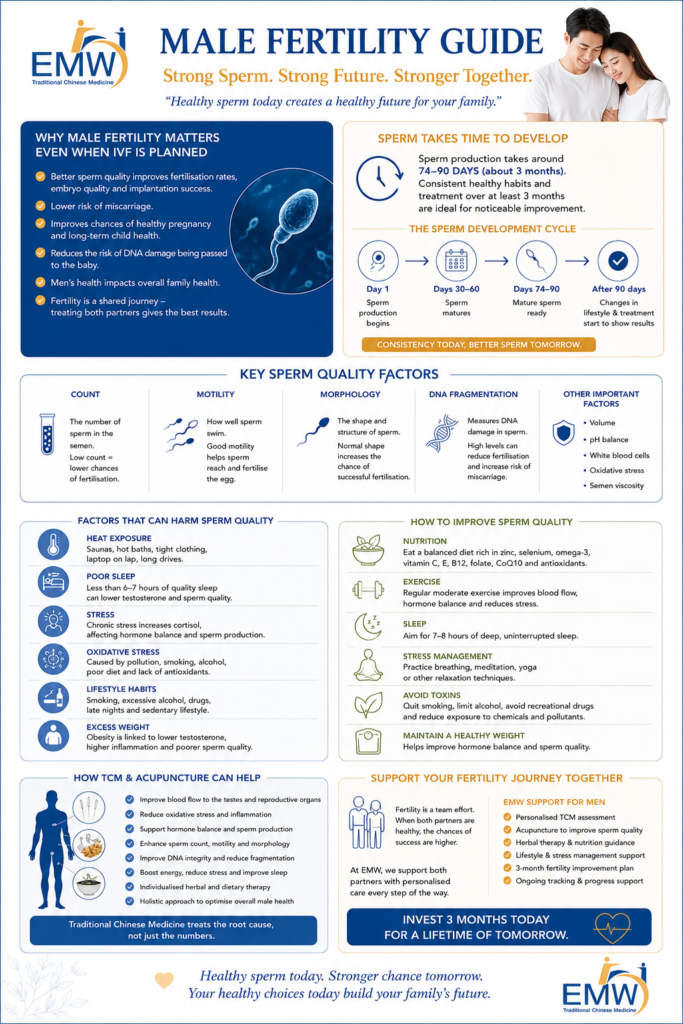
Male Fertility TCM Master Guide

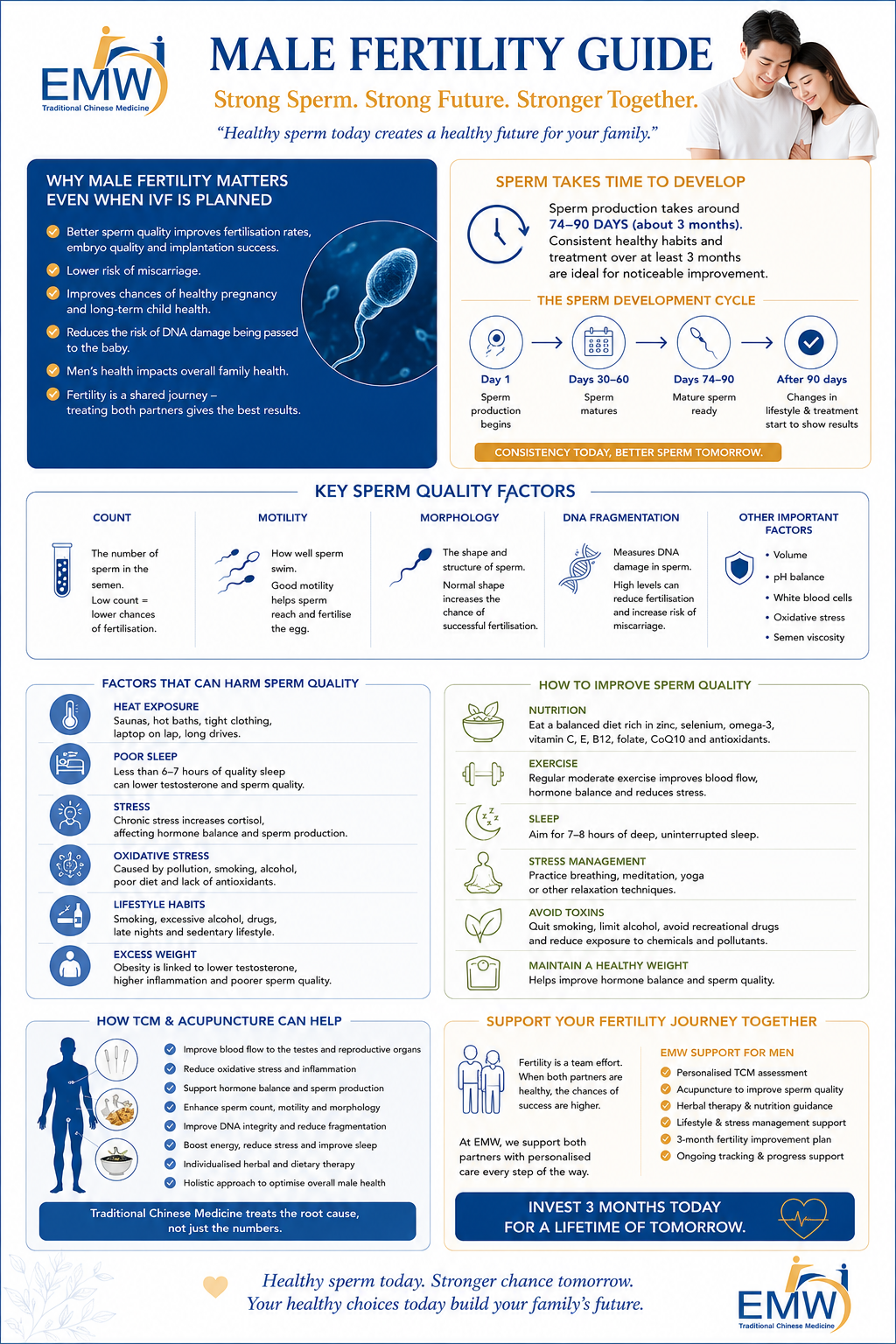
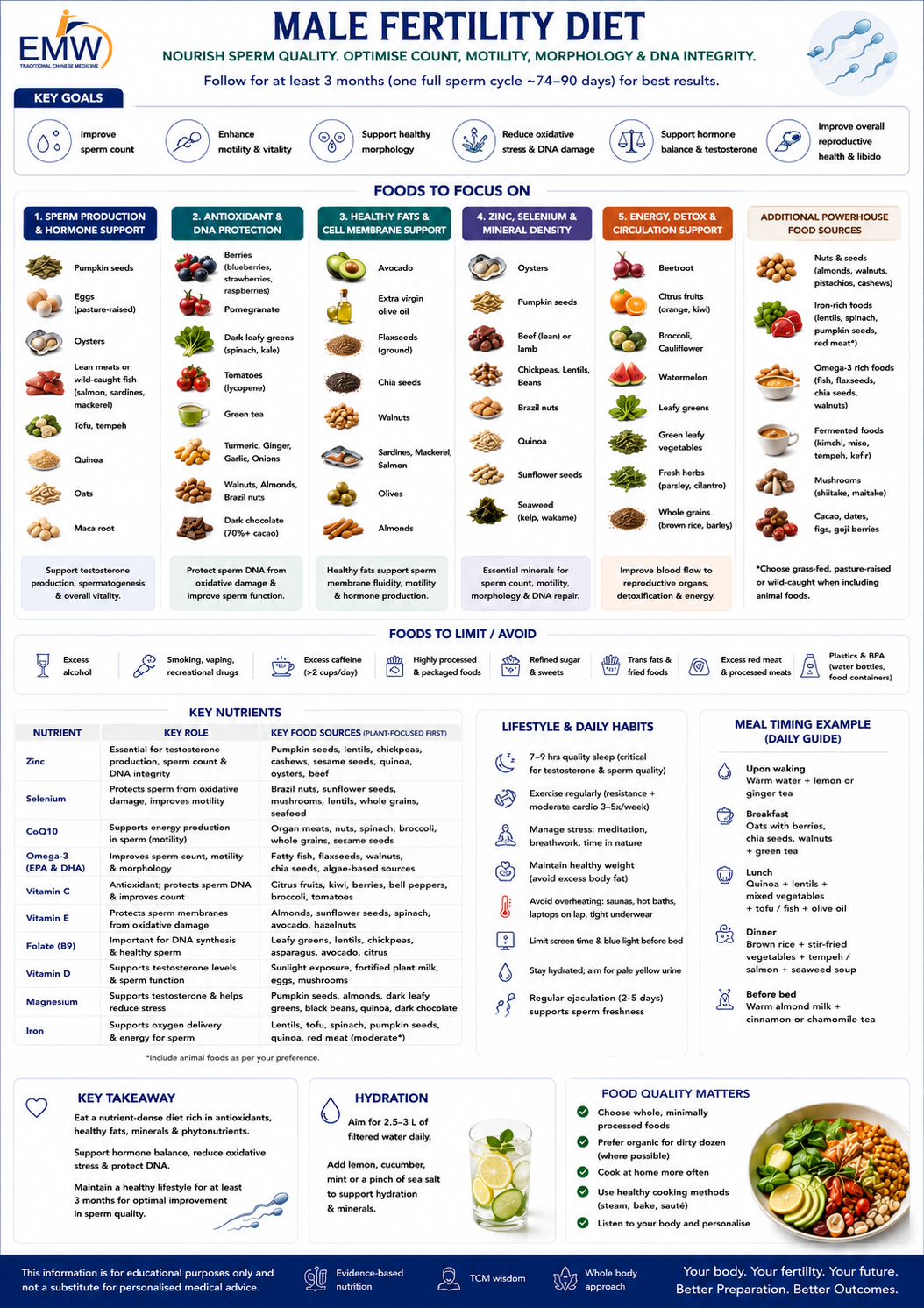
Press the image to zoom in. If you like such infographics, we have a ‘3 ways to superboost your fertility’ PDF guide – Actionable steps that can help to support your reproductive health right away. You can sign up for free here:  https://emwtcm.podia.com/3-ways-to-boost-your-fertility

Can sperm DNA fragmentation improve?

Sometimes potentially modifiable factors can be identified.

If DNA fragmentation is elevated, the first question should not automatically be:

“Which antioxidant should I buy?”

Instead ask:

Why might the DNA fragmentation be high?

A reproductive urologist or andrologist may review:

  • varicocele
  • smoking
  • recent fever or illness
  • medications
  • occupational heat or toxin exposure
  • genital infection or inflammation
  • metabolic health
  • weight
  • lifestyle
  • ejaculation frequency

Correcting a relevant underlying problem may improve sperm health in some men.

Smoking

Stopping smoking is one of the clearest fertility-health interventions when applicable.

Smoking is associated with oxidative stress and poorer sperm quality.

Heat exposure

The testes function best below core body temperature.

Men trying to optimise fertility may want to avoid unnecessary prolonged testicular heat exposure.

That does not mean one hot shower destroys fertility.

It means repeated, sustained exposure may be worth reviewing in someone with abnormal sperm parameters or elevated DNA fragmentation.

Ejaculation frequency

Very long abstinence may increase sperm DNA fragmentation in some men.

However, the ideal ejaculation interval depends on the individual clinical context and planned fertility treatment.

Follow the collection instructions provided by your fertility laboratory rather than changing abstinence timing immediately before IVF on your own.

Antioxidants

Antioxidant supplements are widely marketed for male fertility.

Evidence is mixed, products vary considerably, and more is not automatically better.

Supplements should ideally be chosen according to the man’s medical and fertility assessment rather than combining numerous high-dose antioxidants without professional guidance.

Does ICSI overcome sperm DNA fragmentation?

This question commonly arises when discussing sperm DNA fragmentation and IVF.

ICSI allows an embryologist to inject a selected sperm directly into an egg, bypassing several steps required during conventional fertilisation.

But ICSI does not directly repair damaged sperm DNA.

Some evidence suggests ICSI may help overcome certain sperm-related fertilisation problems, but elevated DNA fragmentation may still be relevant to reproductive outcomes in some couples.

This is why ICSI should not be viewed as:

“DNA fragmentation doesn’t matter because the embryologist picks the best-looking sperm.”

Appearance under a microscope does not necessarily reveal DNA integrity.

The choice between IVF and ICSI should remain with the fertility team based on the couple’s specific circumstances.

What about testicular sperm for high DNA fragmentation?

You may encounter online discussions suggesting that testicular sperm always has lower DNA fragmentation than ejaculated sperm.

Some research has examined surgically retrieved testicular sperm in selected men with persistently elevated sperm DNA fragmentation and previous ICSI failure.

However, surgical sperm retrieval is invasive and is not a routine treatment simply because a DNA fragmentation test is elevated.

Professional evaluation is required to weigh potential benefits against procedure-related risks and the limitations of current evidence.

How can TCM support male fertility?

When couples investigate sperm DNA fragmentation and IVF, attention often suddenly shifts toward the male partner after months or years of focusing primarily on the woman’s fertility.

That broader male assessment is useful.

At EMW TCM, male fertility care may involve reviewing:

  • semen analysis
  • fertility history
  • sleep
  • stress
  • digestion
  • exercise
  • smoking and alcohol
  • heat exposure
  • reproductive or urinary symptoms
  • IVF history

A TCM physician may then consider acupuncture or Chinese herbal medicine according to the individual’s TCM presentation.

However, the claims need to remain realistic.

TCM should not be presented as a proven treatment that repairs sperm DNA fragmentation.

An elevated DNA fragmentation result may warrant investigation by a fertility specialist, reproductive urologist or andrologist to identify potentially correctable male factors.

Complementary TCM care can sit alongside that process rather than replacing it.

When should a couple consider discussing sperm DNA fragmentation testing?

It may be reasonable to ask your fertility specialist about it if:

  • you have experienced recurrent unexplained miscarriages
  • repeated fertility investigations have not identified a cause
  • the male partner has risk factors for increased DNA damage
  • previous IVF cycles showed unexpected fertilisation or embryo-development problems
  • there has been repeated ART failure and male-factor assessment has been incomplete
  • the fertility specialist or reproductive urologist believes the result could change management

The key question is:

Will knowing the result change what we do next?

If the answer is no, another test may simply create more anxiety without improving treatment decisions.

Frequently Asked Questions

Can sperm DNA fragmentation be high with normal sperm count and morphology?

Yes. Conventional semen parameters and DNA integrity measure different aspects of sperm health.

Does high sperm DNA fragmentation cause miscarriage?

Elevated sperm DNA fragmentation is associated with a higher risk of miscarriage in some studies, particularly in recurrent pregnancy loss populations, but it cannot be assumed to be the sole cause of an individual miscarriage.

Should sperm DNA fragmentation be tested before the first IVF cycle?

Not routinely. Current AUA/ASRM guidance does not recommend it as part of every couple’s initial fertility evaluation.

Can ICSI solve high DNA fragmentation?

ICSI can bypass some fertilisation barriers but does not repair sperm DNA. Its usefulness depends on the couple’s fertility situation.

Can lifestyle changes lower sperm DNA fragmentation?

Correcting factors such as smoking, significant heat exposure, varicocele or other identifiable contributors may help in some men, although improved test results do not guarantee pregnancy.

How long does sperm health take to change?

Sperm production occurs over several weeks, so meaningful biological changes generally are not assessed after only a few days. Your fertility specialist may recommend repeating semen-related testing after an appropriate interval depending on the situation.

Key takeaway

The biggest lesson about sperm DNA fragmentation and IVF is that male fertility involves more than sperm count, motility and morphology.

DNA fragmentation testing can provide useful additional information in selected couples, particularly where there is recurrent unexplained pregnancy loss or a reason to investigate male fertility more deeply.

But it is not a universal fertility screening test, and an elevated result should not be treated as a diagnosis by itself.

The most useful approach is to interpret sperm DNA fragmentation alongside the couple’s entire fertility story: semen analysis, female age, egg quality, fertilisation, embryo development, previous pregnancies and previous IVF outcomes.

For couples using TCM alongside fertility treatment, the goal should remain the same: integrated, evidence-informed care rather than replacing reproductive medicine with a single test or treatment.

Extended Readings

References

  • World Health Organization. WHO Laboratory Manual for the Examination and Processing of Human Semen, Sixth Edition. Geneva: World Health Organization, 2021. (World Health Organization)
  • Alahmar AT. Role of oxidative stress in male infertility: An updated review. Journal of Human Reproductive Sciences. 2019. DOI: 10.4103/jhrs.JHRS_150_18. (PMC)
  • Tremellen K. Oxidative stress and male infertility: A clinical perspective. Human Reproduction Update. 2008. DOI: 10.1093/humupd/dmn004. (OUP Academic)
  • Jerng UM, Jo JY, Lee S, Lee JM, Kwon O. The effectiveness and safety of acupuncture for poor semen quality in infertile males: A systematic review and meta-analysis. Asian Journal of Andrology. 2014. DOI: 10.4103/1008-682X.129130. (PMC)
  • Dieterle S, Li C, Greb R, Bartzsch F, Hatzmann W, Huang D. A prospective randomized placebo-controlled study of the effect of acupuncture in infertile patients with severe oligoasthenozoospermia. Fertility and Sterility. 2009. DOI: 10.1016/j.fertnstert.2009.02.041. (fertstert.org)
  • Piera-Jordan CÁ, et al. Influence of the Mediterranean diet on seminal quality. Nutrients. 2024. DOI: 10.3390/nu16030391. (PMC)

How EMW TCM Help Your Fertility

From a biomedical perspective, acupuncture for fertility improves ovarian and uterine blood flow, regulates the hypothalamic-pituitary-ovarian axis, lowers cortisol, reduces inflammation, and supports hormonal balance. These effects complement TCM principles and help enhance egg development, implantation, and reproductive function.

1. Comprehensive Assessment

Your first consultation includes:

  • Cycle assessment

  • Digestion and hormonal review

  • Energy and stress evaluation

  • Sleep and lifestyle factors

  • Male fertility screening when relevant

2. Evidence-Based TCM Diagnosis

  • Qi stagnation

  • Blood deficiency

  • Spleen Qi weakness

  • Kidney Yin/Yang imbalance

  • Liver Qi constraint

  • Dampness and inflammation

3. Personalised Fertility Treatment Plan

  • Weekly fertility acupuncture

  • Customised herbal formulas

  • Moxibustion

  • Dietary therapy

  • Stress reduction strategies

  • Lifestyle recommendations

TCM Acupuncture for Fertility Treatments

Acupuncture, one of the most researched TCM fertility tools, has been found to influence several physiological pathways related to reproduction.

A review published in Fertility and Sterility (2019) reported that acupuncture may improve blood flow to the uterus and ovaries, modulate stress hormones, and enhance endometrial receptivity. Another meta-analysis in Integrative Medicine Research (2021) concluded that acupuncture used alongside conventional fertility treatment can improve pregnancy outcomes and reduce anxiety levels in women undergoing IVF.

From a clinical standpoint, acupuncture helps regulate the hypothalamic-pituitary-ovarian axis, improving hormone balance and menstrual regularity. It can also reduce cortisol levels, encouraging the parasympathetic or “rest-and-rebuild” state which supports implantation and early pregnancy.

Our Flagship Ebook & Video Course

Fertility Guide 1
This comprehensive eBook gives you the clarity, confidence, and gentle structure you need to stop second-guessing and finally move forward. Instead of wasting precious months on trial and error, you will learn how to create the best internal environment for conception, naturally or alongside treatments like IUI and IVF.
newsletter subscribe
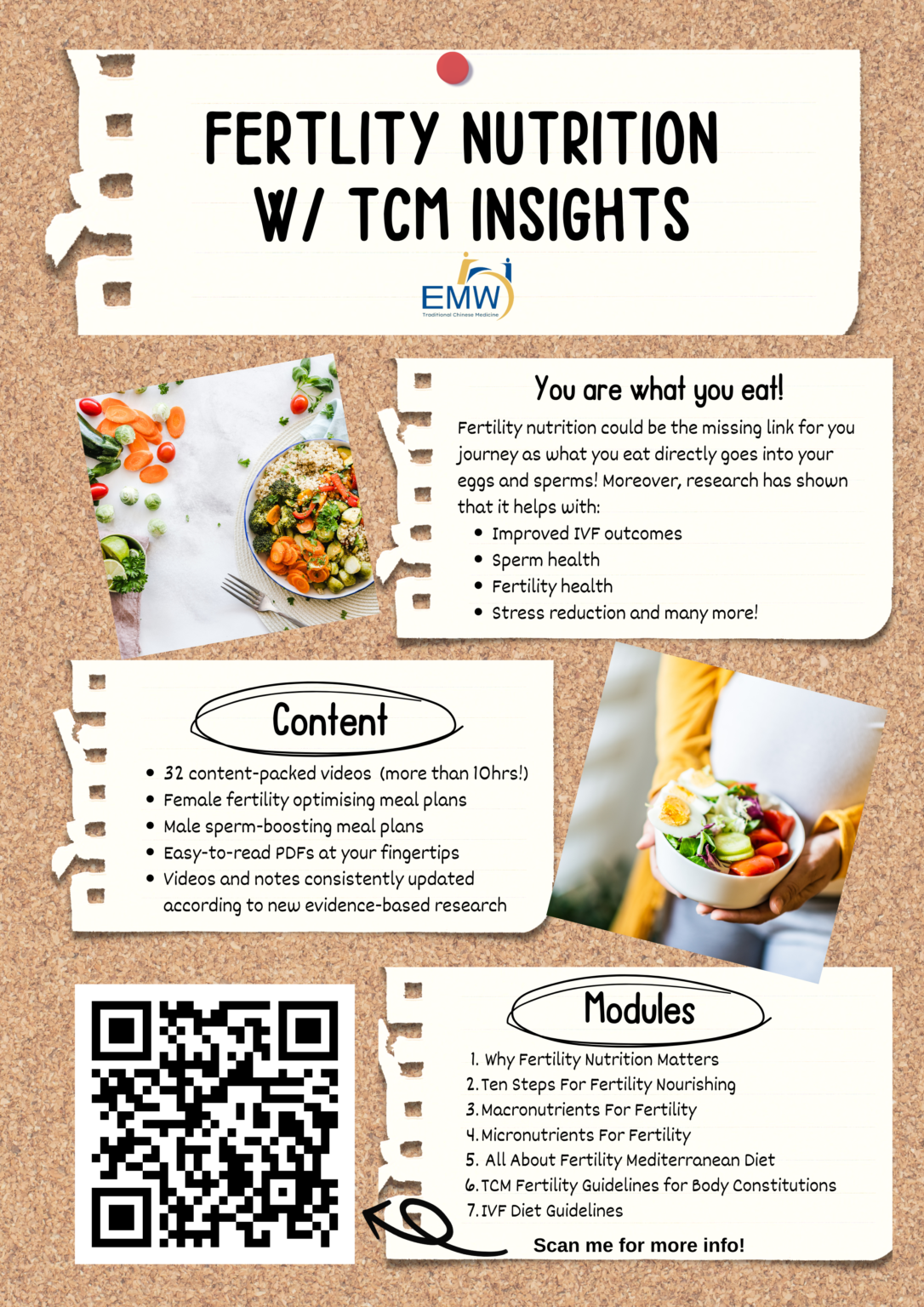
You understand the significance of nutrition and lifestyle, showcasing a conscientious approach. (You’re definitely on the right track!) Embarking on the Fertility Nutrition With TCM Insights course opens up a world of simple yet transformative actions that can reshape your journey, starting from the moment you decide to join.

When to Seek Professional TCM Fertility Help

Fertility is not just a matter of age or hormones. It is a reflection of the body’s internal harmony. Traditional Chinese Medicine provides an integrative and natural way to restore this balance, supporting both physical and emotional readiness for conception.

At EMW TCM Singapore, our team of experienced physicians brings together centuries-old wisdom and modern evidence to guide your fertility journey. Whether you are trying naturally or preparing for IVF, we are here to help you create the best internal environment for new life to begin.

If you have been trying to conceive for more than six to twelve months, experience irregular menses, painful periods, or have been diagnosed with PCOS, endometriosis, or low sperm count, consider a consultation. Professional TCM fertility care aims to correct the underlying imbalance rather than simply forcing ovulation or hormone production.

Check out our links below to book your fertility consultation and begin your holistic journey toward conception.

EMW TCM Clinics

International Building Branch

360 Orchard Road, International Building #02-05/06
Singapore 238869
Book Your Appointment With Us Here: +65 89585869

Our Physicians

Principal TCM Physician

  • M.Med(TCM Gynaecology)
  • B.Sc(Hons) Biomedical Sciences
  • Dip. Naturopath
  • Ayurvedic Therapist(500hrs)
  • Registered TCM Physician (Singapore MOH)

Senior TCM Physician

  • M.Med(TCM Acupuncture & Moxibustion)
  • B.Sc(Hons) Biomedical Sciences
  • Certified Aromatherapist
  • Registered TCM Physician (Singapore MOH)

TCM Physician

  • M.Med(TCM Gynaecology)
  • B.Sc(Hons) Biomedical Sciences
  • Registered TCM Physician (Singapore MOH)

TCM Physician

  • M.Med(TCM Acupuncture & Moxibustion)
  • B.Sc(Hons) Biomedical Sciences
  • Registered TCM Physician (Singapore MOH)

TCM Physician

  • B.Med(TCM)
  • B.Sc(Hons) Biomedical Sciences
  • International Board-Certified Lactation Consultant (IBCLC)
  • Registered TCM Physician (Singapore MOH)

References

  1. Chao JC et al. Antioxidant effects of Lycium barbarum polysaccharides. J Sci Food Agric. 2006. DOI: 10.1002/jsfa.2362
  2. Stener-Victorin E et al. Reduction of uterine artery blood flow impedance. Hum Reprod. 1996. DOI: 10.1093/oxfordjournals.humrep.a019187
  3. May-Panloup P et al. Mitochondrial biogenesis and oocyte quality. Hum Reprod Update. 2016. DOI: 10.1093/humupd/dmw006
  4. Stener-Victorin E & Wu X. Acupuncture effects on the reproductive system. Auton Neurosci. 2010. DOI: 10.1016/j.autneu.2009.12.001
  5. Tamura H et al. Melatonin and female reproduction. J Obstet Gynaecol Res. 2014. DOI: 10.1111/jog.12317

Comments

No comments yet. Why don’t you start the discussion?

Leave a Reply

Your email address will not be published. Required fields are marked *