Male Fertility Singapore: Everything You Need to Know About Sperm Health With EMW TCM
When a couple has difficulty conceiving, attention often turns first to the woman.
Is she ovulating?
Are her fallopian tubes open?
Is her ovarian reserve low?
Is her uterine lining thick enough?
These are important questions, but fertility is a couple’s health issue.
The male partner contributes half of the embryo’s genetic material. Sperm quality can affect natural fertilisation, IUI outcomes, IVF fertilisation, embryo development and potentially pregnancy loss.
Yet many men only begin looking at their reproductive health after months or years of trying, an unsuccessful IUI, failed fertilisation or poor embryo development.
Sometimes they have been told that their semen result is “slightly below normal” and that IVF with ICSI can bypass the problem.
ICSI can help a sperm enter an egg, but it does not make the sperm biologically healthier. It also does not mean that the male partner’s health can be ignored.
This male fertility Singapore guide explains:
- How semen analysis is interpreted
- What sperm count, motility and morphology mean
- When DNA fragmentation may be considered
- What affects sperm production
- Which lifestyle changes have the strongest practical value
- The limitations of supplements
- How varicocele and medical conditions are assessed
- How TCM and acupuncture may be integrated
- When to prepare before natural conception, IUI, IVF or ICSI
At EMW TCM, male fertility is treated as part of a couple-based plan. TCM does not replace semen testing, urology, hormone assessment, surgery or assisted reproductive treatment. It is used as complementary care to support the man’s overall reproductive environment.
The Quick Answer
A male fertility assessment should include a reproductive and medical history together with at least one semen analysis.
If the test is abnormal, it may need to be repeated because semen parameters can vary between samples. Men with abnormal results should be assessed for possible medical causes rather than being given supplements alone.
The AUA and ASRM recommend evaluating both partners concurrently. Their male-infertility guideline states that the initial male assessment should include a reproductive history and one or more semen analyses, while men with abnormal parameters should receive further evaluation from a male reproductive specialist.
EMW TCM’s male fertility Singapore approach may include:
- Reviewing semen-analysis results
- Assessing lifestyle and occupational risks
- Acupuncture
- Chinese herbal medicine where appropriate
- Fertility nutrition
- Sleep and stress support
- Digestive and metabolic assessment
- Preparation for natural conception, IUI, IVF or ICSI
Because sperm development takes time, a treatment plan commonly needs at least approximately three months before meaningful reassessment.
What Is Male Infertility?
Male infertility refers to difficulty achieving a pregnancy because of factors affecting sperm production, sperm delivery, sexual function or male reproductive health.
Possible causes include:
- Low sperm production
- Poor sperm movement
- Abnormal sperm morphology
- Blockage in the reproductive tract
- Hormonal disorders
- Varicocele
- Testicular injury
- Genetic conditions
- Infection or inflammation
- Ejaculatory or erectile dysfunction
- Medication or anabolic-steroid use
- Cancer treatment
- Heat or toxin exposure
- Unexplained factors
A semen analysis is an important starting point, but it does not provide a complete diagnosis by itself.
A “normal” result does not guarantee fertility, and an abnormal result does not mean natural conception is impossible.
The World Health Organization’s semen manual is designed to standardise how laboratories collect, process and assess semen. Its reference limits describe the distribution of results among fertile men rather than drawing a sharp line between fertile and infertile.
Understanding a Semen Analysis
A semen report may initially look like a page of percentages and unfamiliar terms.
The most commonly discussed measurements are:
- Semen volume
- Sperm concentration
- Total sperm number
- Total motility
- Progressive motility
- Morphology
- Vitality
- White blood cells
- Liquefaction
- pH
These measurements should be interpreted together.
A single low number should not automatically be treated as the entire explanation for infertility.
Sperm concentration and total sperm count
Sperm concentration describes how many sperm are present in each millilitre of semen.
Total sperm count considers the concentration together with the total semen volume.
A man can have a reasonable concentration but low total count because the semen volume is low. Another may have a lower concentration but a more favourable total count because the volume is higher.
Low sperm concentration is called oligozoospermia.
Azoospermia means that no sperm are identified in the ejaculated sample. This requires medical assessment because causes can include obstruction, impaired production, hormonal disorders or genetic conditions.
TCM should not be used as the only treatment when no sperm are found. The man needs appropriate medical and reproductive evaluation.
Sperm motility
Motility refers to how sperm move.
Progressive motility describes sperm moving forward effectively rather than vibrating or moving without meaningful progression.
Low motility is known as asthenozoospermia.
Motility can be influenced by:
- Oxidative stress
- Varicocele
- Infection or inflammation
- Fever
- Heat exposure
- Smoking
- Metabolic health
- Long abstinence intervals
- Sample collection and transport
- Mitochondrial function
A motility result should be considered alongside concentration and total motile sperm count.
For example, a moderate motility percentage may still provide a useful number of moving sperm if the total count is high. A similar percentage may be more significant when the sperm concentration is also low.
Sperm morphology
Morphology refers to sperm shape.
The laboratory examines features of the head, midpiece and tail. Under strict assessment methods, only a relatively small proportion of sperm may be classified as normally shaped.
Poor morphology is called teratozoospermia.
A morphology result of 1% can sound alarming, but it does not mean that 99% of sperm are genetically abnormal or incapable of fertilisation.
Morphology assessment is also partly subjective and may vary between laboratories.
It should be interpreted with:
- Count
- Motility
- Fertilisation history
- Embryo development
- Female-partner factors
- DNA fragmentation where relevant
Isolated low morphology may have a different clinical significance from low morphology combined with severely reduced count and motility.
Semen volume
Low semen volume may be related to:
- Incomplete sample collection
- Short abstinence interval
- Retrograde ejaculation
- Ejaculatory-duct obstruction
- Hormonal issues
- Absence or dysfunction of seminal vesicles
- Dehydration in some circumstances
The whole sample should be collected where possible. Missing the first portion can significantly affect the result because it may contain a high concentration of sperm.
White blood cells
Elevated white blood cells may suggest inflammation or infection, although interpretation is not always straightforward.
This is not a reason to self-prescribe antibiotics or cooling herbs. Further medical assessment may be required.
Why One Semen Analysis May Not Be Enough
Semen quality fluctuates.
A result may be affected by:
- Recent fever or illness
- Abstinence duration
- Stress
- Poor sleep
- Alcohol
- Heat exposure
- Medication
- Sample collection
- Laboratory handling
- Natural biological variation
A fever can affect sperm produced weeks earlier, and the impact may continue to appear in later samples.
When a result is abnormal, the fertility doctor may recommend repeating the test under standardised conditions.
It is useful to compare the actual reports rather than relying on statements such as “better”, “worse” or “still low”.
Review:
- Volume
- Concentration
- Total count
- Progressive and total motility
- Morphology
- Total motile sperm count
- White blood cells
- Abstinence period
- Laboratory method
A meaningful change should be interpreted in the context of the full report.
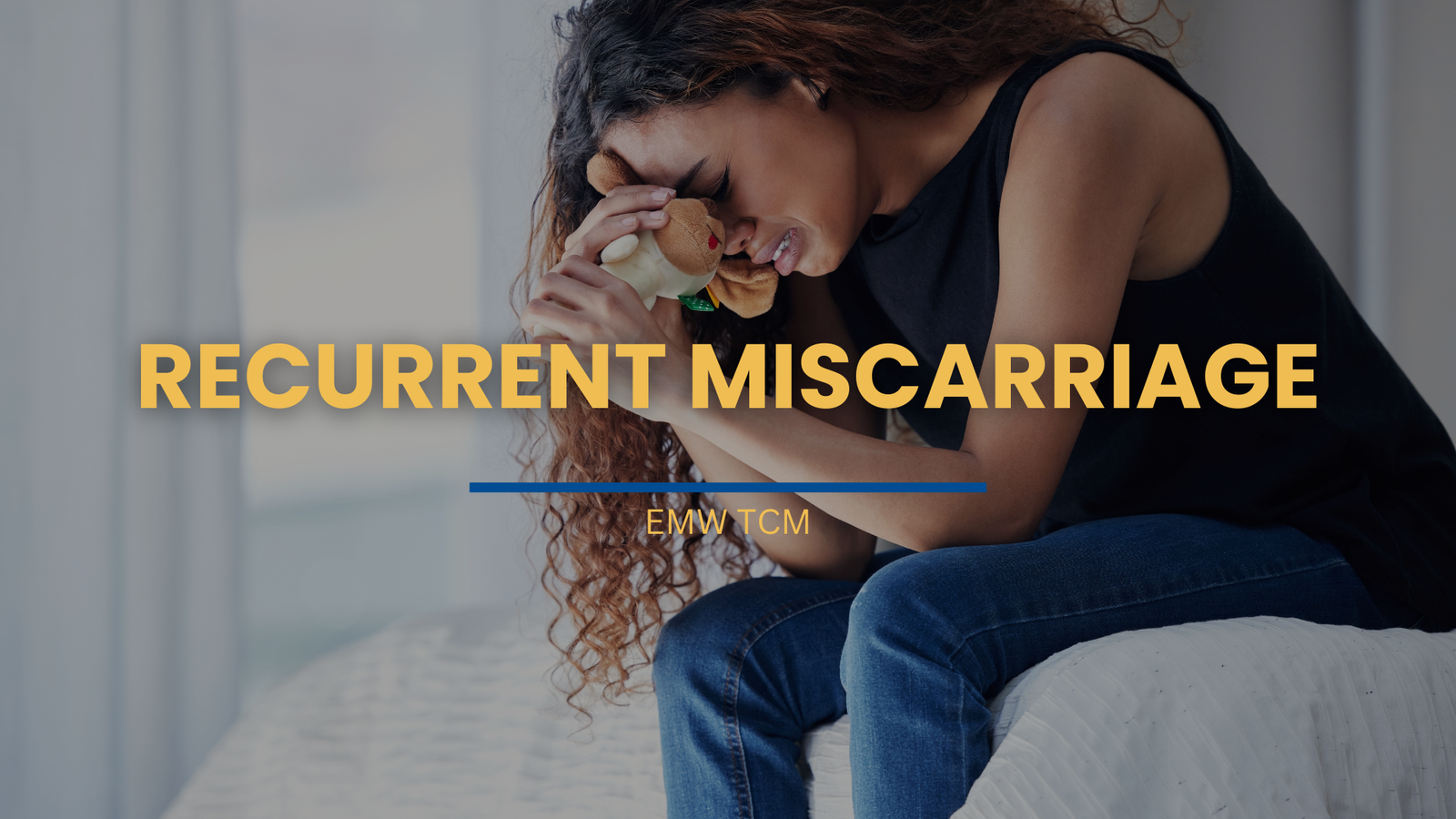
What Is Sperm DNA Fragmentation?
A standard semen analysis evaluates sperm number, movement and appearance. It does not directly assess the integrity of the DNA carried by the sperm.
Sperm DNA fragmentation testing measures damage or breaks within sperm DNA.
Higher fragmentation has been associated in some studies with:
- Infertility
- Poor embryo development
- Lower ART outcomes
- Recurrent pregnancy loss
However, DNA-fragmentation testing is not required for every man.
It may be considered when there is:
- Recurrent miscarriage
- Repeated IVF failure
- Poor embryo development
- Unexplained infertility
- Varicocele
- Smoking
- Older paternal age
- Significant oxidative stress
- Previous abnormal results
The AUA and ASRM advise considering male evaluation in couples with failed assisted-reproduction cycles or recurrent pregnancy loss.
A DNA-fragmentation result must be interpreted according to the test method and laboratory range.
It should not be used to sell a generic supplement package.
Male Age and Fertility
Men can produce sperm throughout adult life, but that does not mean male reproductive ageing is irrelevant.
With increasing paternal age, there may be changes in:
- Semen volume
- Motility
- DNA integrity
- Time to conception
- New genetic mutations
- Pregnancy and offspring risks
The relationship is gradual rather than a sudden fertility cliff.
Older men do not need to panic, but paternal age should not be completely excluded from fertility discussions, particularly when both partners are older or there has been recurrent pregnancy loss.
How EMW TCM Approaches Male Fertility Singapore
In TCM, male reproductive health is closely related to the Kidney system, particularly Kidney Essence or Jing.
The Liver and Spleen systems may also be relevant.
This does not mean that a low sperm count proves anatomical kidney, liver or spleen disease.
TCM organ systems describe functional patterns rather than direct biomedical diagnoses.
Kidney deficiency patterns
Possible features may include:
- Low libido
- Fatigue
- Lower-back weakness
- Coldness
- Poor sperm count or motility
- Reduced reproductive vitality
Kidney Yang deficiency may present with more coldness, low energy and reduced movement.
Kidney Yin deficiency may present with heat sensations, dryness, poor sleep or depletion-type symptoms.
Damp-Heat
Possible features may include:
- Heaviness
- Genital discomfort
- Yellow or sticky coating
- Urinary symptoms
- Inflammation
- Poor morphology in some clinical presentations
Damp-Heat is not automatically treated with very cold herbs, especially when fertility treatment is approaching.
Liver Qi stagnation
Possible features may include:
- Stress
- Irritability
- Chest or abdominal tension
- Poor sleep
- Digestive disruption
- Sexual-performance anxiety
Spleen Qi deficiency and Dampness
Possible features may include:
- Bloating
- Irregular bowel movements
- Fatigue
- Poor appetite
- Heaviness
- Metabolic imbalance
EMW uses these patterns to individualise treatment rather than giving every man the same “Kidney tonic”.
Acupuncture for Male Fertility
Acupuncture may be included to support:
- Stress regulation
- Sleep
- Circulation
- Digestive function
- Sexual wellbeing
- Individual TCM patterns
Some small studies have reported changes in sperm concentration or motility, but the evidence remains limited.
A systematic review found possible improvements in certain semen parameters, but no clear improvement in pregnancy rate. The authors judged the evidence insufficient because the studies were small, heterogeneous and at risk of bias.
EMW therefore does not promise that acupuncture will normalise semen results or guarantee pregnancy.
Treatment is used as one part of a broader plan that includes appropriate testing, medical referral, lifestyle and nutrition.
Chinese Herbal Medicine for Male Fertility
Chinese herbal medicine may be prescribed according to:
- Semen-analysis findings
- Medical history
- TCM diagnosis
- Digestion
- Sleep
- Sexual function
- Heat or Cold patterns
- Natural-conception or ART timeline
There is no single formula for low count, poor motility or morphology.
Two men with the same motility result may receive different prescriptions because their broader clinical patterns are different.
Herbal treatment should also be reviewed when:
- IVF or ICSI is approaching
- The man is taking medication
- Liver or kidney disease is present
- There is a bleeding disorder
- Surgery is planned
- Supplements are already being taken
“Natural” does not mean interaction-free.
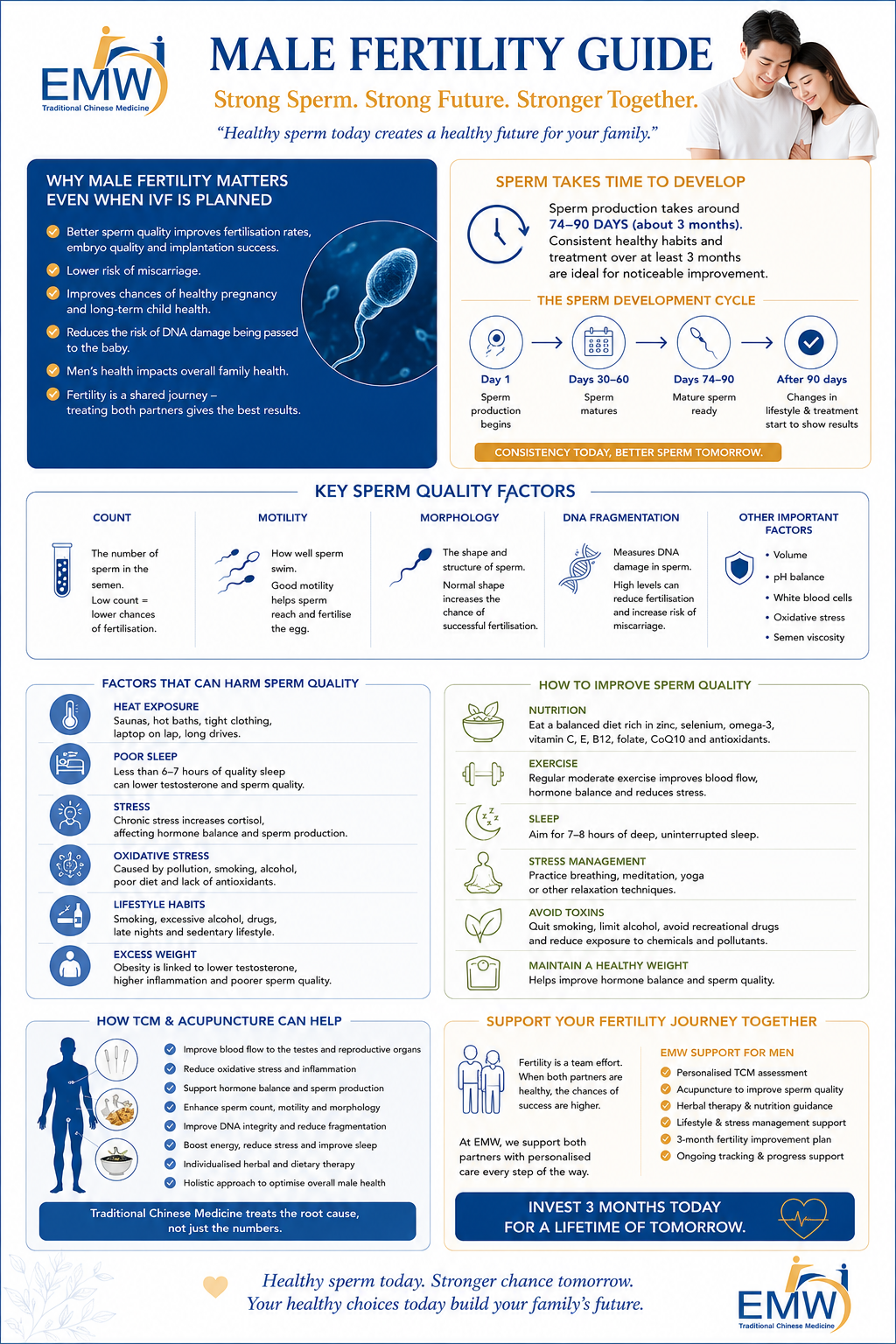
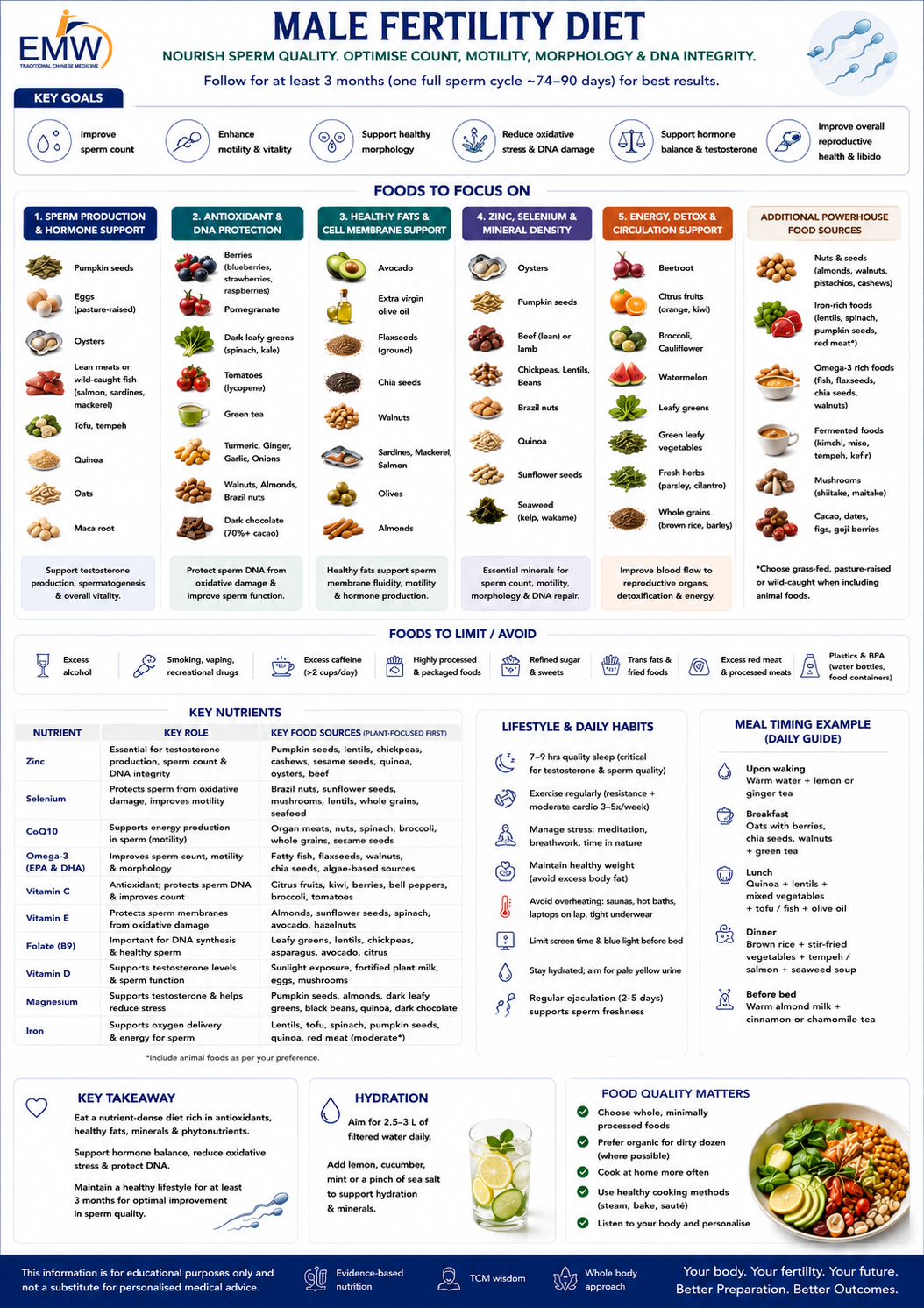
Male Fertility TCM Master Guide
Press the image to zoom in. If you like such infographics, we have a ‘3 ways to superboost your fertility’ PDF guide – Actionable steps that can help to support your reproductive health right away. You can sign up for free here: https://emwtcm.podia.com/3-ways-to-boost-your-fertility
Fertility Nutrition for Men
A male fertility diet does not require exotic superfoods.
A strong foundation includes:
- Vegetables of different colours
- Fruit
- Whole grains
- Legumes
- Nuts and seeds
- Fish
- Eggs
- Lean proteins
- Healthy unsaturated fats
- Adequate fibre
- Sufficient total energy
Foods that may fit a sperm-health eating pattern include:
- Tomatoes
- Berries
- Citrus fruit
- Leafy greens
- Broccoli
- Pumpkin
- Walnuts
- Almonds
- Pumpkin seeds
- Oily fish
- Eggs
- Beans
- Lentils
- Whole grains
- Olive oil
Read more through:
- Nine foods for sperm health
- Six TCM tips for sperm motility, count and morphology
- How to improve sperm health naturally
- TCM male fertility and sperm parameters
Food is most useful as a consistent pattern, not a one-week intervention before semen collection.
Do Male Fertility Supplements Work?
Supplements are one of the most confusing parts of male fertility care.
Common products contain combinations of:
- Coenzyme Q10
- Carnitine
- Zinc
- Selenium
- Vitamins C and E
- Folic acid
- Lycopene
- Omega-3 fatty acids
- N-acetylcysteine
Oxidative stress is biologically relevant to sperm, but that does not mean more antioxidants always produce better fertility outcomes.
Recent evidence is sobering.
The large SUMMER randomised trial involving more than 1,100 men found that an antioxidant supplement did not improve ongoing pregnancy rates, semen parameters or DNA fragmentation compared with placebo.
The MOXI trial similarly found no improvement in semen parameters, DNA fragmentation or live birth with a multi-antioxidant formula.
A 2025 systematic review found that some supplements improved individual semen measurements, but there was no demonstrated overall effect on pregnancy or live birth.
This does not mean every supplement is useless.
It means supplements should not replace:
- Diagnosis
- Smoking cessation
- Varicocele assessment
- Metabolic treatment
- Sleep
- Appropriate nutrition
- Urology
- ART where indicated
Avoid stacking multiple high-dose products without reviewing duplicated ingredients.
More pills are not automatically more fertility.
Why Choose EMW TCM for Male Fertility Singapore Support?
Couple-based fertility care
Male fertility is assessed alongside the female partner’s fertility plan rather than treated as an afterthought.
Review of actual semen results
Treatment considers concentration, count, motility, morphology, DNA fragmentation and previous ART outcomes where available.
Individualised TCM care
Men are treated according to their full presentation rather than one laboratory number.
ART-aligned planning
Treatment may be coordinated with natural conception, IUI, egg retrieval, sperm collection, IVF or ICSI.
Nutrition and lifestyle integration
EMW considers diet, sleep, digestion, stress, exercise, heat exposure, smoking and alcohol.
Realistic timelines
Patients are advised that sperm development takes time and that no therapy guarantees normal results.
Appropriate referral
Medical conditions such as azoospermia, varicocele, hormonal problems or testicular disease require conventional assessment.
Male Fertility Singapore Three-Month Checklist
Medical
- Obtain a semen analysis
- Repeat abnormal testing when advised
- Seek specialist evaluation for severe abnormalities
- Review medication and hormone use
- Assess a clinical varicocele
- Discuss DNA fragmentation when appropriate
Lifestyle
- Stop smoking and vaping
- Reduce heavy alcohol intake
- Avoid anabolic steroids
- Improve sleep
- Exercise regularly without chronic overtraining
- Reduce repeated high-heat exposure
- Use workplace protective equipment
Nutrition
- Eat vegetables and fruit daily
- Include adequate protein
- Choose whole grains and legumes
- Include nuts, seeds and fish
- Avoid relying on ultra-processed food
- Correct deficiencies based on professional advice
- Review supplement duplication
Fertility planning
- Know the female partner’s timeline
- Confirm natural conception, IUI, IVF or ICSI plans
- Follow semen-collection instructions
- Plan at least three months ahead where time permits
- Repeat testing at a meaningful interval
Frequently Asked Questions
What is the best focus for male fertility?
Begin with a semen analysis, reproductive history and medical assessment. Treatment should address the underlying cause rather than relying only on supplements.
How long does it take to improve sperm quality?
Sperm development takes approximately two to three months, so lifestyle or treatment changes are usually reassessed after a meaningful interval rather than after a few days.
Can low sperm count improve?
It may improve when the cause is modifiable, such as heat exposure, smoking, recent fever, medication, metabolic health or a treatable varicocele. Some causes cannot be fully reversed.
Can poor motility improve?
Motility may change with time and treatment, but the response depends on the cause. A repeat test should be interpreted alongside count and total motile sperm.
Does 1% morphology mean natural pregnancy is impossible?
No. Morphology should be interpreted with concentration, motility, female-partner factors and the couple’s history.
Can a man have infertility with a normal semen analysis?
Yes. A standard semen analysis does not assess every aspect of sperm function or DNA integrity.
When is DNA-fragmentation testing needed?
It may be considered after recurrent miscarriage, repeated IVF failure, poor embryo development, varicocele or unexplained infertility. It is not required for every man.
Can acupuncture improve sperm quality?
Small studies suggest possible changes in some semen parameters, but the evidence is limited and pregnancy benefit has not been established.
Can TCM herbs improve sperm count?
Herbal medicine may be prescribed as complementary care, but results are not guaranteed. Severe abnormalities require medical assessment.
Do antioxidants improve male fertility?
Some supplements may affect individual sperm measurements, but large randomised trials have not shown consistent improvements in pregnancy or live birth.
Is CoQ10 useful for sperm?
Some studies report changes in motility, but it should not be treated as a guaranteed fertility treatment. Review the dose, indications and other supplements with a professional.
Does smoking affect sperm?
Smoking is associated with oxidative and reproductive harm. Stopping is more useful than attempting to offset smoking with antioxidants.
Does alcohol affect male fertility?
Heavy or frequent alcohol consumption may affect reproductive hormones, sexual function and semen quality.
Do hot baths lower sperm count?
Repeated significant heat exposure may affect sperm production. An occasional warm shower is unlikely to be the main cause of infertility.
Can laptops affect sperm?
Placing a hot laptop directly on the lap for prolonged periods may increase local heat. Use a desk or barrier where practical.
Does cycling affect fertility?
Moderate recreational cycling is not automatically harmful. Very prolonged or intense cycling may contribute to heat, pressure or discomfort in some men.
Does abstinence improve sperm count?
Longer abstinence may increase volume and count but can affect motility or DNA quality. Follow the fertility clinic’s instructions for semen collection.
Does frequent ejaculation reduce fertility?
Frequent ejaculation may temporarily reduce the amount in an individual sample but does not permanently deplete sperm. Intercourse timing should be practical and sustainable.
Does varicocele always need surgery?
No. Management depends on whether it is clinically significant, semen findings, symptoms and the couple’s fertility situation.
Can ICSI solve all sperm problems?
ICSI can assist fertilisation by injecting a sperm into an egg, but it does not guarantee embryo development or pregnancy and does not treat the man’s underlying health.
Should both partners prepare for IVF?
Yes. Egg and sperm health both contribute to fertilisation and embryo development.
Conclusion
Male fertility should not be reduced to one sperm-count result, and it should not be treated as secondary to female fertility.
A semen report is the beginning of the assessment, not the end.
Count, motility and morphology must be interpreted together with medical history, female-partner factors, fertilisation outcomes and the couple’s treatment timeline.
Some causes of poor sperm quality can improve.
Others require urology, surgery, hormonal treatment, IVF, ICSI or sperm-retrieval procedures.
TCM may support men through acupuncture, herbal medicine, nutrition, sleep, digestion and lifestyle care, but it should be used honestly and alongside appropriate medical treatment.
At EMW TCM, the aim of male fertility Singapore care is not to promise perfect sperm.
It is to help each man understand his results, address modifiable risks and enter natural conception or assisted treatment with a clearer, more structured plan.
Explore:
- EMW male fertility service
- TCM male fertility and sperm parameters
- Six TCM tips for sperm motility
- How to improve sperm health naturally
- Nine foods for sperm health
- EMW TCM fertility Singapore
- EMW fertility blog
- Fertility Optimisation Bundle
For an individual assessment, arrange an in-clinic consultation and bring any previous semen analyses, hormone tests and fertility reports.
Extended Readings
Sperm DNA Fragmentation and IVF: 7 Critical Facts Couples Should Know Before Treatment
Sperm DNA Fragmentation and IVF: 7 Critical Facts Couples Should Know Before Treatment A semen analysis can look reassuring, yet fertilisation, embryo development or pregnancy may still not go as…
Read More
Male Fertility Singapore: Complete EMW TCM Guide
Male Fertility Singapore: Everything You Need to Know About Sperm Health With EMW TCM When a couple has difficulty conceiving, attention often turns first to the woman. Is she ovulating?…
Read More
9 Smart Foods for Sperm Health in TCM Fertility Nutrition
9 Smart Foods for Sperm Health in TCM Fertility Nutrition When couples are trying to conceive, nutrition is often discussed as a “female fertility” topic. Egg quality, ovulation, implantation and…
Read More
6 Essential TCM Tips for Sperm Motility, Count and Morphology
6 Essential TCM Tips for Sperm Motility, Count and Morphology Male fertility is often reduced to one semen analysis report: sperm count, motility and morphology. But for many couples trying…
Read MoreReferences
- World Health Organization. WHO Laboratory Manual for the Examination and Processing of Human Semen, Sixth Edition. Geneva: World Health Organization, 2021. (World Health Organization)
- Alahmar AT. Role of oxidative stress in male infertility: An updated review. Journal of Human Reproductive Sciences. 2019. DOI: 10.4103/jhrs.JHRS_150_18. (PMC)
- Tremellen K. Oxidative stress and male infertility: A clinical perspective. Human Reproduction Update. 2008. DOI: 10.1093/humupd/dmn004. (OUP Academic)
- Jerng UM, Jo JY, Lee S, Lee JM, Kwon O. The effectiveness and safety of acupuncture for poor semen quality in infertile males: A systematic review and meta-analysis. Asian Journal of Andrology. 2014. DOI: 10.4103/1008-682X.129130. (PMC)
- Dieterle S, Li C, Greb R, Bartzsch F, Hatzmann W, Huang D. A prospective randomized placebo-controlled study of the effect of acupuncture in infertile patients with severe oligoasthenozoospermia. Fertility and Sterility. 2009. DOI: 10.1016/j.fertnstert.2009.02.041. (fertstert.org)
- Piera-Jordan CÁ, et al. Influence of the Mediterranean diet on seminal quality. Nutrients. 2024. DOI: 10.3390/nu16030391. (PMC)
How EMW TCM Help Your Fertility
From a biomedical perspective, acupuncture for fertility improves ovarian and uterine blood flow, regulates the hypothalamic-pituitary-ovarian axis, lowers cortisol, reduces inflammation, and supports hormonal balance. These effects complement TCM principles and help enhance egg development, implantation, and reproductive function.
1. Comprehensive Assessment
Your first consultation includes:
Cycle assessment
Digestion and hormonal review
Energy and stress evaluation
Sleep and lifestyle factors
Male fertility screening when relevant
2. Evidence-Based TCM Diagnosis
Qi stagnation
Blood deficiency
Spleen Qi weakness
Kidney Yin/Yang imbalance
Liver Qi constraint
Dampness and inflammation
3. Personalised Fertility Treatment Plan
Weekly fertility acupuncture
Customised herbal formulas
Stress reduction strategies
Lifestyle recommendations
TCM Acupuncture for Fertility Treatments
Acupuncture, one of the most researched TCM fertility tools, has been found to influence several physiological pathways related to reproduction.
A review published in Fertility and Sterility (2019) reported that acupuncture may improve blood flow to the uterus and ovaries, modulate stress hormones, and enhance endometrial receptivity. Another meta-analysis in Integrative Medicine Research (2021) concluded that acupuncture used alongside conventional fertility treatment can improve pregnancy outcomes and reduce anxiety levels in women undergoing IVF.
From a clinical standpoint, acupuncture helps regulate the hypothalamic-pituitary-ovarian axis, improving hormone balance and menstrual regularity. It can also reduce cortisol levels, encouraging the parasympathetic or “rest-and-rebuild” state which supports implantation and early pregnancy.
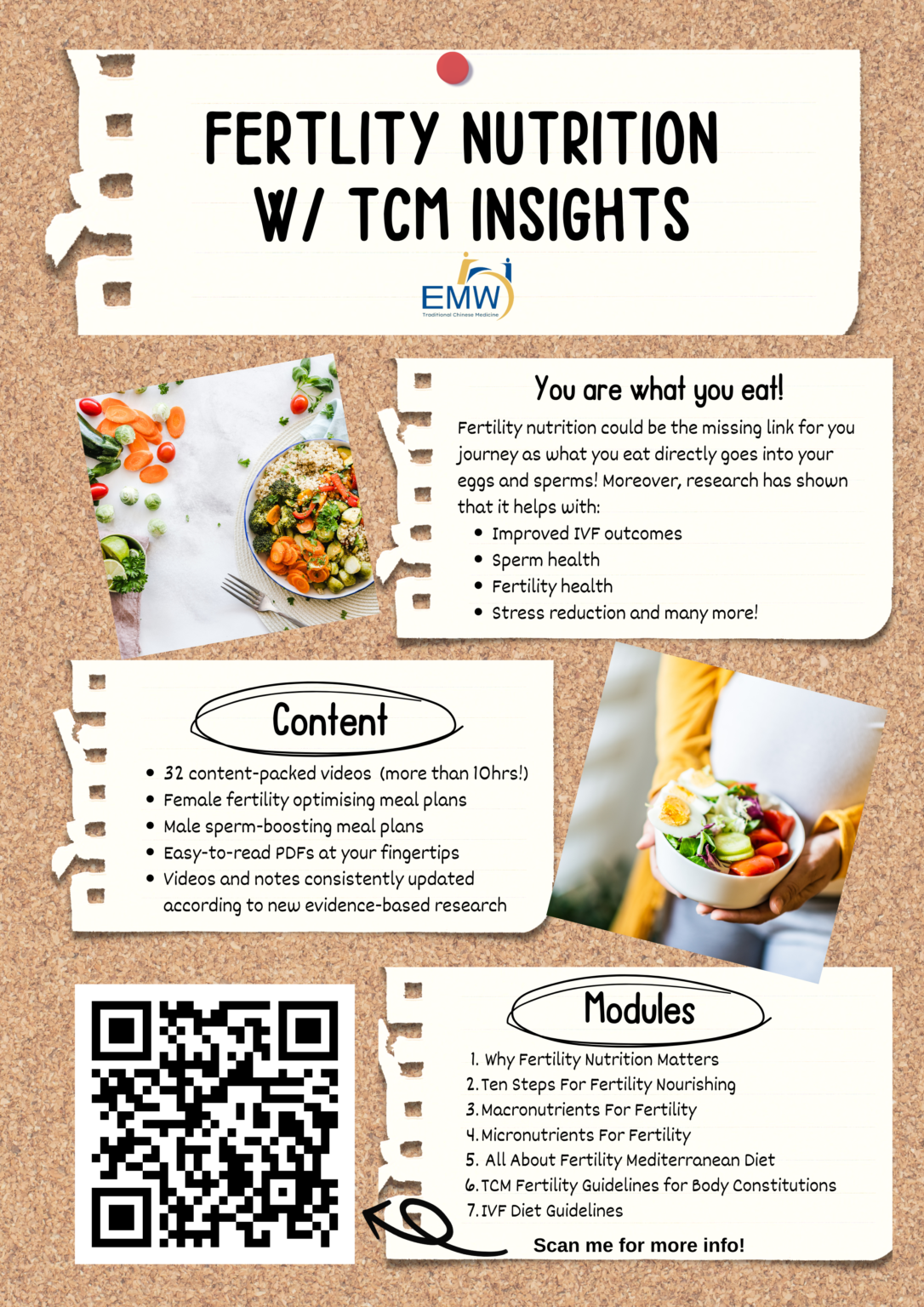
Our Flagship Ebook & Video Course
When to Seek Professional TCM Fertility Help
Fertility is not just a matter of age or hormones. It is a reflection of the body’s internal harmony. Traditional Chinese Medicine provides an integrative and natural way to restore this balance, supporting both physical and emotional readiness for conception.
At EMW TCM Singapore, our team of experienced physicians brings together centuries-old wisdom and modern evidence to guide your fertility journey. Whether you are trying naturally or preparing for IVF, we are here to help you create the best internal environment for new life to begin.
If you have been trying to conceive for more than six to twelve months, experience irregular menses, painful periods, or have been diagnosed with PCOS, endometriosis, or low sperm count, consider a consultation. Professional TCM fertility care aims to correct the underlying imbalance rather than simply forcing ovulation or hormone production.
Check out our links below to book your fertility consultation and begin your holistic journey toward conception.
EMW TCM Clinics
International Building Branch
360 Orchard Road, International Building #02-05/06
Singapore 238869
Book Your Appointment With Us Here: +65 89585869
Our Physicians

Principal TCM Physician
- M.Med(TCM Gynaecology)
- B.Sc(Hons) Biomedical Sciences
- Dip. Naturopath
- Ayurvedic Therapist(500hrs)
- Registered TCM Physician (Singapore MOH)

Senior TCM Physician
- M.Med(TCM Acupuncture & Moxibustion)
- B.Sc(Hons) Biomedical Sciences
- Certified Aromatherapist
- Registered TCM Physician (Singapore MOH)

TCM Physician
- M.Med(TCM Gynaecology)
- B.Sc(Hons) Biomedical Sciences
- Registered TCM Physician (Singapore MOH)
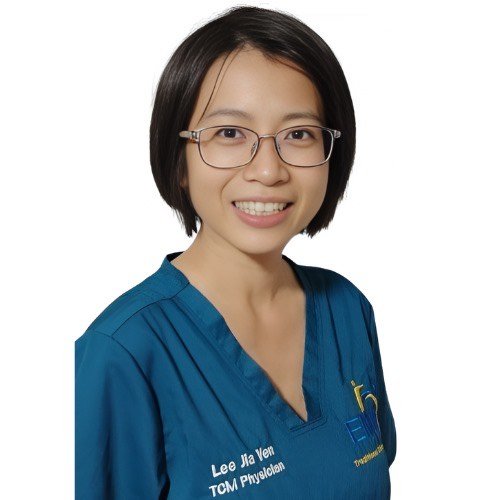
TCM Physician
- B.Med(TCM)
- B.Sc(Hons) Biomedical Sciences
- International Board-Certified Lactation Consultant (IBCLC)
- Registered TCM Physician (Singapore MOH)
References
- Chao JC et al. Antioxidant effects of Lycium barbarum polysaccharides. J Sci Food Agric. 2006. DOI: 10.1002/jsfa.2362
- Stener-Victorin E et al. Reduction of uterine artery blood flow impedance. Hum Reprod. 1996. DOI: 10.1093/oxfordjournals.humrep.a019187
- May-Panloup P et al. Mitochondrial biogenesis and oocyte quality. Hum Reprod Update. 2016. DOI: 10.1093/humupd/dmw006
- Stener-Victorin E & Wu X. Acupuncture effects on the reproductive system. Auton Neurosci. 2010. DOI: 10.1016/j.autneu.2009.12.001
- Tamura H et al. Melatonin and female reproduction. J Obstet Gynaecol Res. 2014. DOI: 10.1111/jog.12317

Pingback: Sperm DNA Fragmentation and IVF: 7 Critical Facts Couples Should Know Before Treatment - EMW TCM