Day 5 vs Day 6 Blastocysts: 7 Differences That Matter for IVF Transfer
Comparing day 5 vs day 6 blastocysts can feel overwhelming, especially when every embryo is precious. You have completed your IVF egg retrieval, and your embryologist calls with an update.
Out of eight fertilised eggs, three embryos have developed into blastocysts.
One reached the blastocyst stage on Day 5. The other two reached it on Day 6.
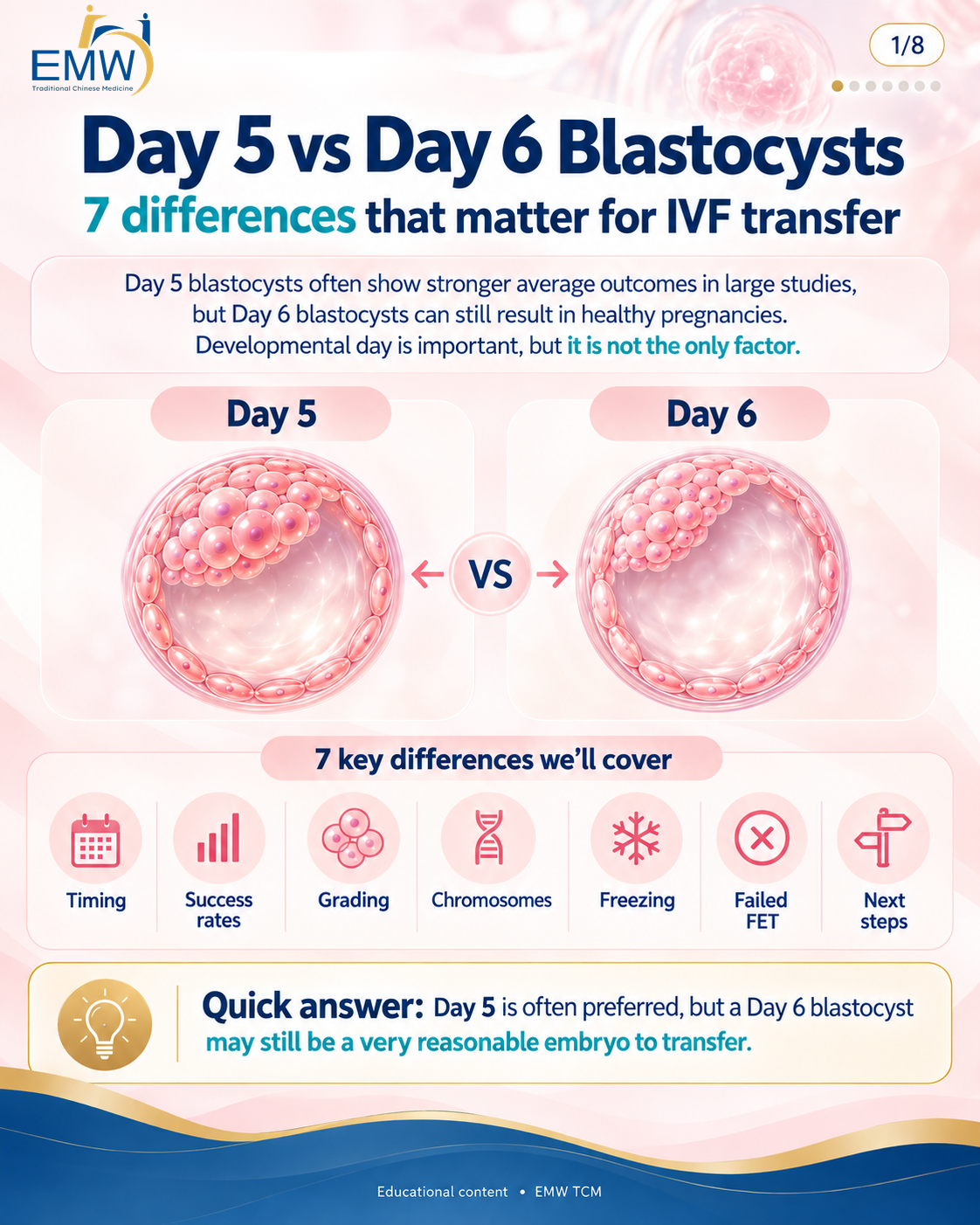
Understanding what your embryology update means
You are relieved to have embryos available for freezing, but there is one thing you cannot stop thinking about.
Are my Day 6 embryos less likely to result in pregnancy?
Perhaps you have been reading IVF forums where couples compare their 4AA, 5AB and 4BB embryos.
Some say Day 5 embryos are better. Others share successful pregnancies from Day 6 blastocysts.
It can be confusing, especially when every embryo feels precious.
When patients compare day 5 vs day 6 blastocysts, there is more to understand than which embryo developed first.
Embryo grading, chromosome status, maternal age and the circumstances of your frozen embryo transfer (FET) also matter.
Here are seven important differences to understand before your next transfer.
Quick Answer: Are Day 5 Embryos Better Than Day 6 Embryos?
Day 5 blastocysts generally show higher average pregnancy and live birth rates than Day 6 blastocysts in large observational studies. However, a Day 6 blastocyst can still result in a healthy pregnancy.
Some studies have found that the difference becomes smaller after considering embryo grading, chromosome status and other factors.
The most suitable embryo for transfer cannot always be determined by developmental day alone.
If you only have Day 6 embryos available, this does not mean your IVF cycle has failed or that another egg retrieval is automatically necessary.
Your fertility specialist and embryologist can help you understand the potential of your available embryos.
Seven Differences That Matter for IVF Transfer
Each infographic sits next to the key points, with longer explanations continuing underneath for easy reading.
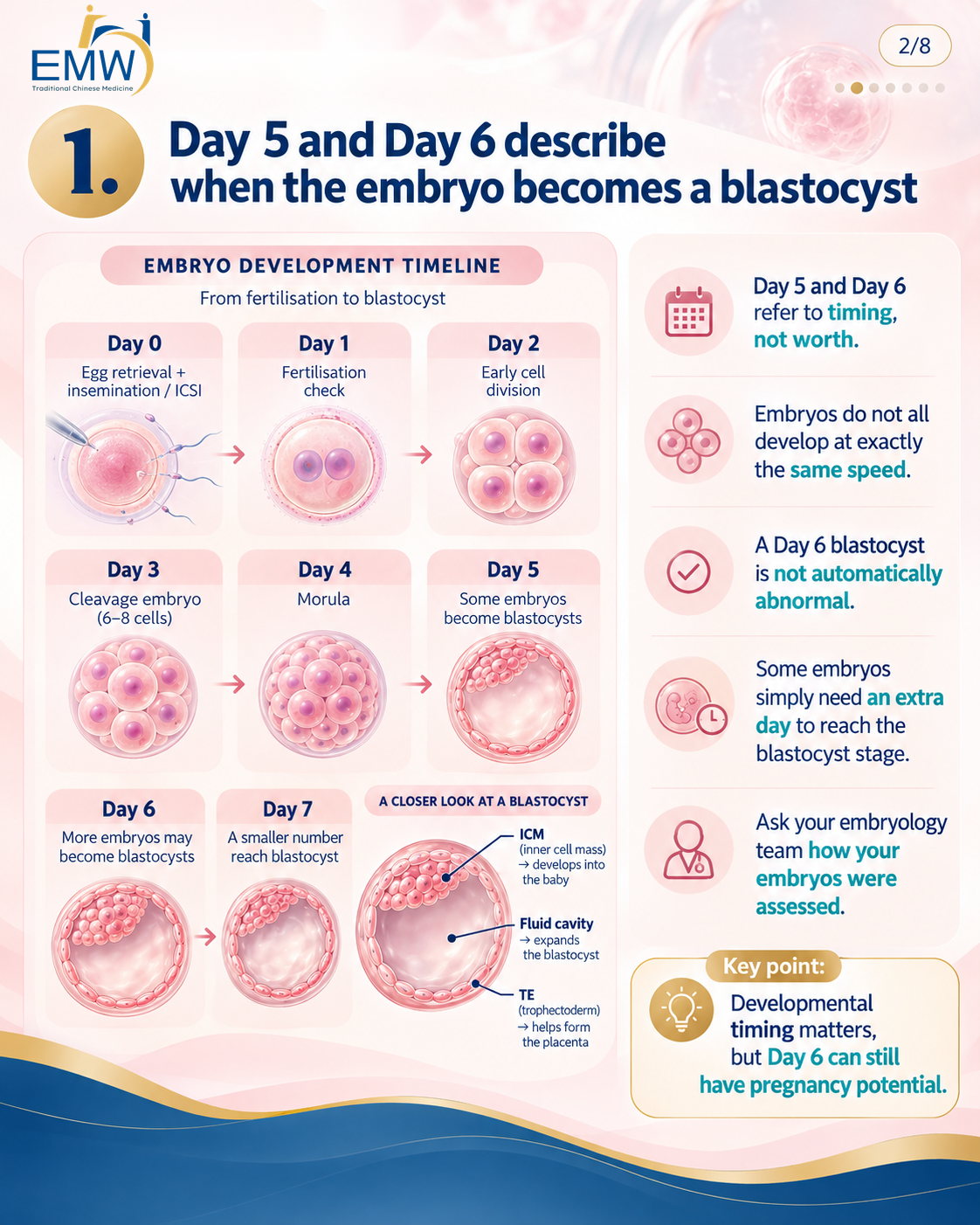
1. Day 5 and Day 6 Describe When the Embryo Reaches the Blastocyst Stage
After an egg has been fertilised, the embryo undergoes several stages of development in the laboratory.
A simplified timeline looks like this:
Day 5 or Day 6 describes the timing of development, not whether an embryo is worth transferring.
| Day | Typical Embryo Development |
|---|---|
| Day 0 | Egg retrieval and insemination or ICSI |
| Day 1 | Fertilisation assessment |
| Day 2 | Early cell division |
| Day 3 | Cleavage-stage embryo, often around 6 to 8 cells |
| Day 4 | Morula stage, when cells begin compacting |
| Day 5 | Some embryos reach the blastocyst stage |
| Day 6 | Additional embryos may reach the blastocyst stage |
| Day 7 | A smaller number of embryos may become blastocysts |
A blastocyst contains two important groups of cells.
Inner cell mass (ICM): These cells eventually contribute to the development of the baby.
Trophectoderm (TE): These cells contribute to the placenta and other supporting structures.
The blastocyst also develops a fluid-filled cavity as it expands.
Why Do Some Embryos Take an Extra Day?
Embryos do not all develop at exactly the same speed.
Some reach the blastocyst stage on Day 5, while others need another day.
This difference may reflect aspects of the embryo's developmental biology.
However, developing on Day 6 does not automatically mean an embryo is abnormal.
An embryo may reach the blastocyst stage slightly later and still have the ability to implant and support a healthy pregnancy.
It is also important to distinguish an embryo that only became suitable for freezing on Day 6 from one that had already reached the blastocyst stage earlier but was cultured longer according to laboratory practice.
The embryology team can clarify how your embryos were assessed.
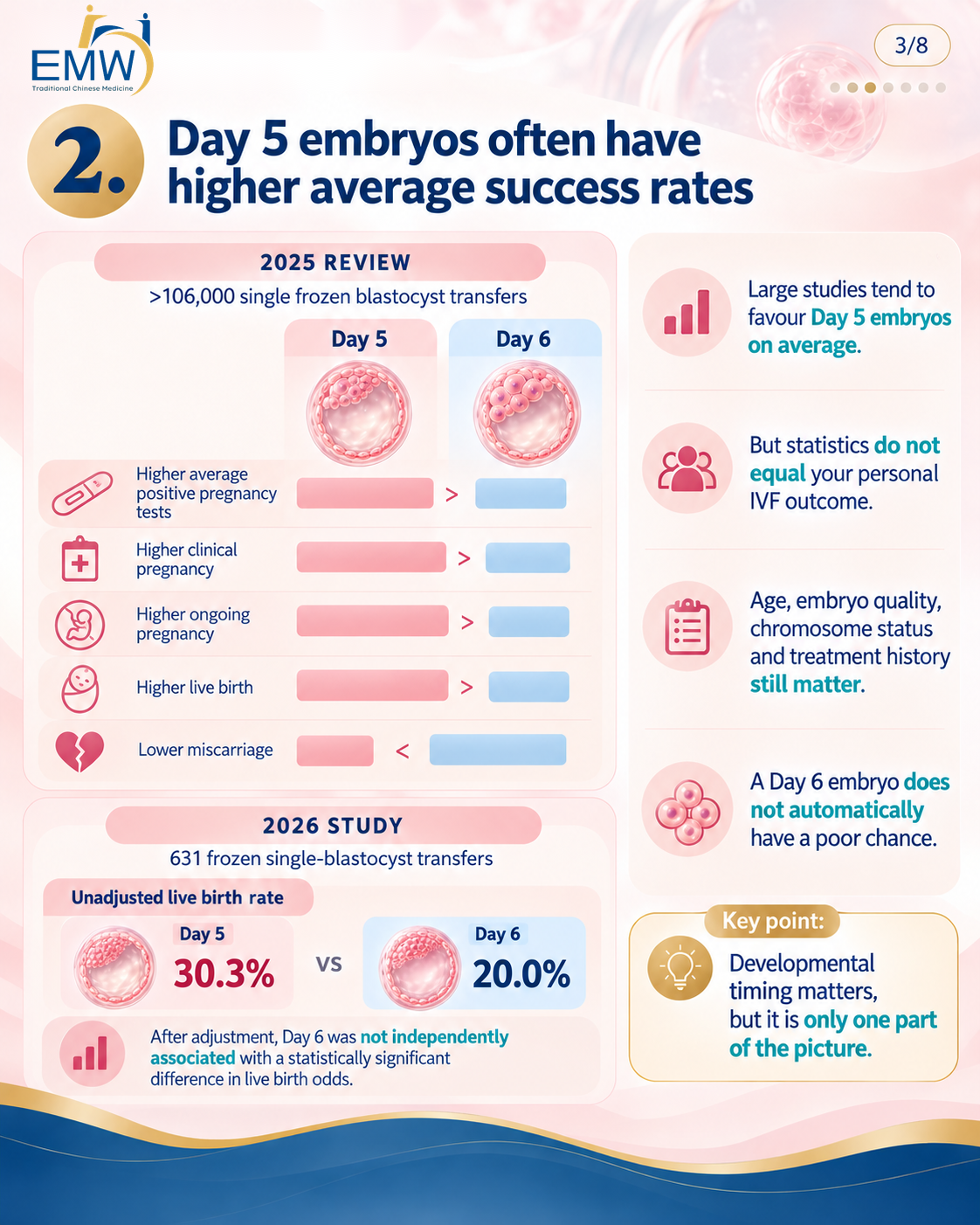
2. Day 5 Embryos Often Have Higher Average Success Rates
One reason fertility clinics frequently prioritise Day 5 blastocysts is that they tend to perform better in large studies.
A systematic review and meta-analysis published in November 2025 examined more than 106,000 single frozen blastocyst transfers.
The researchers found that Day 5 transfers were associated with higher average rates of:
Large studies often favour Day 5, but the averages do not determine an individual's outcome.
- Positive pregnancy tests
- Clinical pregnancy
- Ongoing pregnancy
- Live birth
The study also reported lower miscarriage rates in the Day 5 group.
However, the authors acknowledged limitations in the available evidence.
Most studies were observational, meaning differences in patients, embryo quality and treatment selection may have influenced the results.
Does That Mean My Day 6 Embryo Has a Poor Chance?
No.
A more recent 2026 study examined 631 frozen single-blastocyst transfers.
The unadjusted live birth rates were:
- Day 5: 30.3%
- Day 6: 20.0%
However, after the researchers adjusted for relevant patient, treatment and embryo characteristics, Day 6 development was not independently associated with a statistically significant difference in live birth odds.
The smaller number of Day 6 transfers also limits how confidently these findings can be interpreted.
These results do not cancel out the findings of larger studies.
Instead, they highlight an important point.
Developmental timing matters, but it is not the only factor that determines whether an embryo will lead to pregnancy.
The results of a research study also cannot be used as your personal IVF success rate.
Your age, embryo characteristics and fertility history may be very different from those of the women included in the studies.
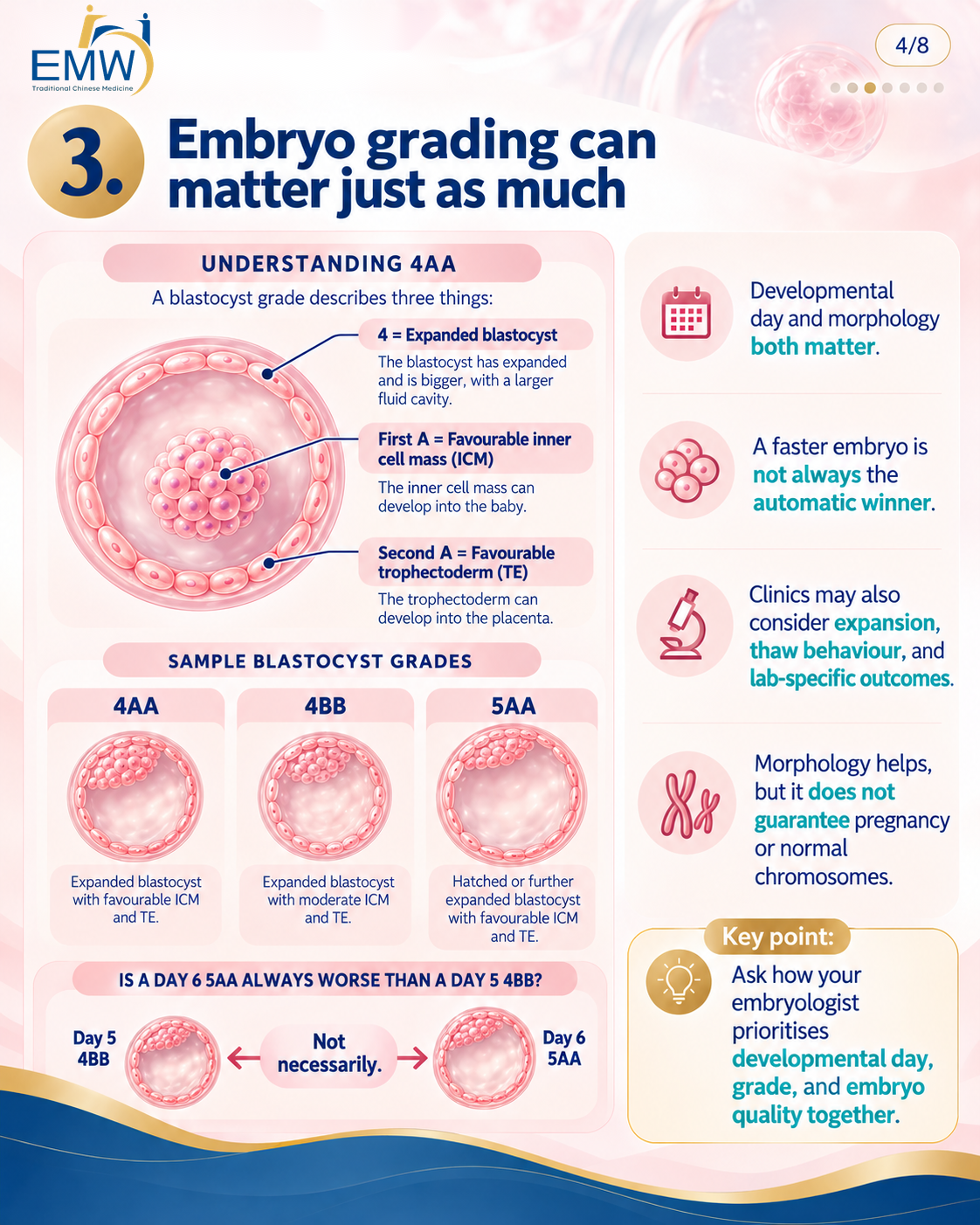
3. Embryo Grading Can Be Just as Important as the Developmental Day
You may have received an embryology report showing results such as:
Developmental day and morphological grade are interpreted together.
- Day 5, 4BB
- Day 6, 5AA
- Day 6, 4AB
But what do these numbers and letters mean?
Many fertility laboratories use a grading system based on the Gardner classification.
Understanding Blastocyst Grading
Take the example of a 4AA blastocyst.
The number and letters describe different features of the embryo.
| Grade Component | Meaning |
|---|---|
| 4 | Expanded blastocyst |
| First A | Inner cell mass has a favourable appearance |
| Second A | Trophectoderm has a favourable appearance |
The number generally describes the degree of blastocyst expansion, while the letters describe the appearance of the inner cell mass and trophectoderm.
For example:
4AA: An expanded blastocyst with favourable appearance of both cell groups.
4BB: An expanded blastocyst with intermediate morphological grades.
5AA: A hatching blastocyst with favourable appearance of both cell groups.
Different laboratories may use slightly different grading conventions.
Is a Day 6 5AA Better Than a Day 5 4BB?
This is where embryo selection becomes more complicated.
A Day 5 embryo developed faster, but a Day 6 embryo may have a more favourable morphological grade.
There is no universal rule that automatically makes one of these embryos the better choice.
The fertility specialist and embryologist may consider:
- Developmental day
- Embryo morphology
- Degree of expansion
- Chromosome testing results, if available
- Embryo behaviour after thawing
- Laboratory-specific outcomes
A higher morphological grade can be helpful, but it does not guarantee normal chromosomes or pregnancy.
If your frozen embryos have different grades, ask your embryologist how they would prioritise them and why.
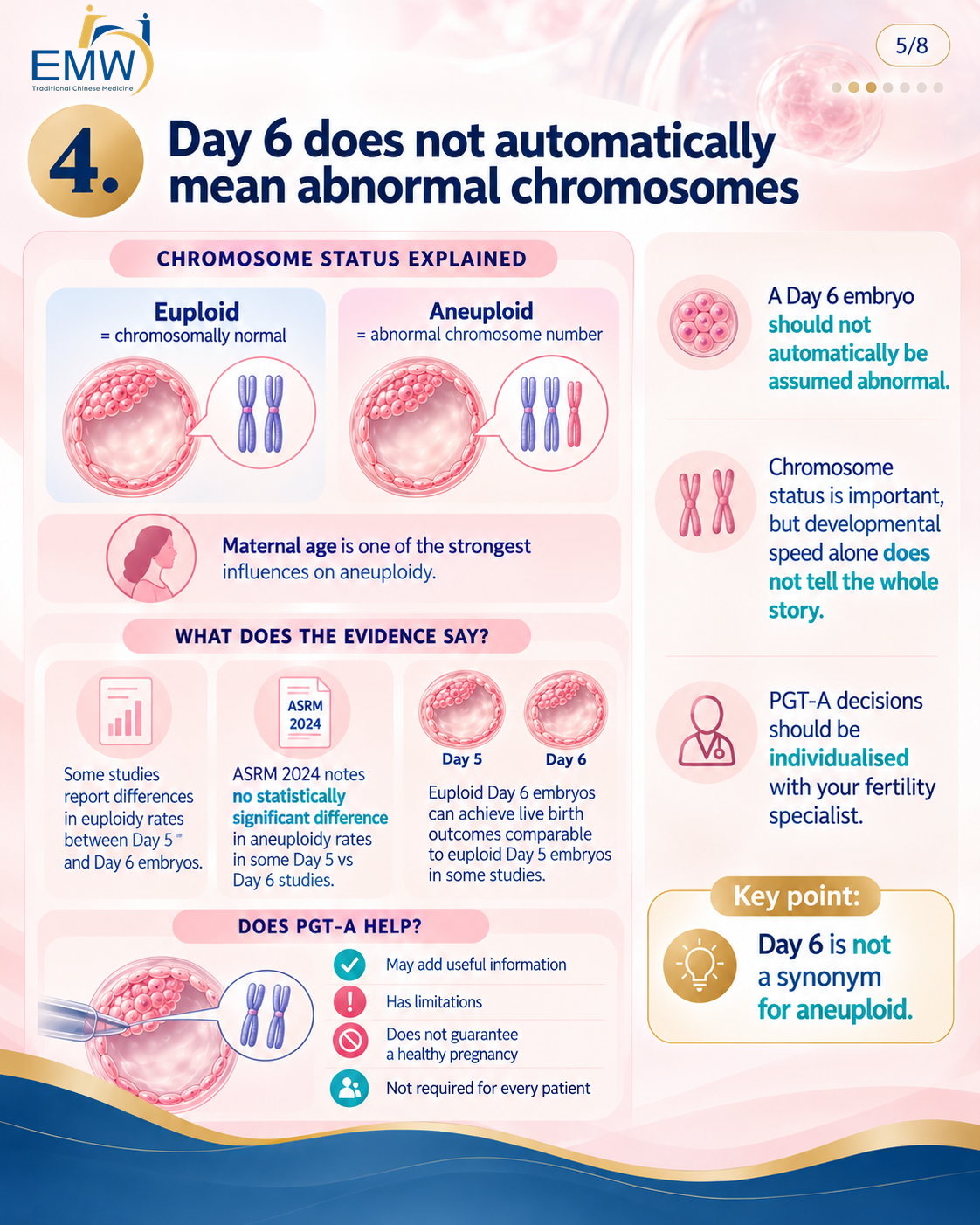
4. Do Day 5 vs Day 6 Blastocysts Have Different Chromosome Abnormality Rates?
Embryo chromosome status is another important consideration in IVF.
A chromosomally normal embryo is commonly described as euploid.
An embryo with an abnormal number of chromosomes is described as aneuploid.
A Day 6 embryo is not automatically chromosomally abnormal.
Chromosomal abnormalities can contribute to implantation failure, miscarriage or abnormal embryo development.
Maternal age is one of the strongest factors associated with aneuploidy.
Are Day 6 Embryos More Likely to Be Abnormal?
Some studies have reported differences in euploidy rates between embryos developing on different days.
However, the findings are not completely consistent.
The American Society for Reproductive Medicine's 2024 committee opinion discusses research in which Day 5 and Day 6 embryos had no statistically significant difference in aneuploidy rates.
The same guidance notes evidence that euploid Day 6 embryos can achieve live birth outcomes comparable to euploid Day 5 embryos in some studies.
This does not mean the two groups always perform identically.
What it does mean is that a Day 6 embryo should not automatically be considered chromosomally abnormal simply because it developed more slowly.
Does PGT-A Help?
Preimplantation genetic testing for aneuploidy (PGT-A) examines chromosome copy numbers in a sample of embryo cells.
It may provide additional information when selecting among embryos.
However, PGT-A has limitations.
It does not examine every cell in the embryo, cannot guarantee a healthy pregnancy and has not been shown to improve cumulative live birth outcomes for every IVF patient.
The decision to use PGT-A should be made with your fertility specialist based on your individual circumstances.
It is not something every couple needs simply because they have Day 6 embryos.
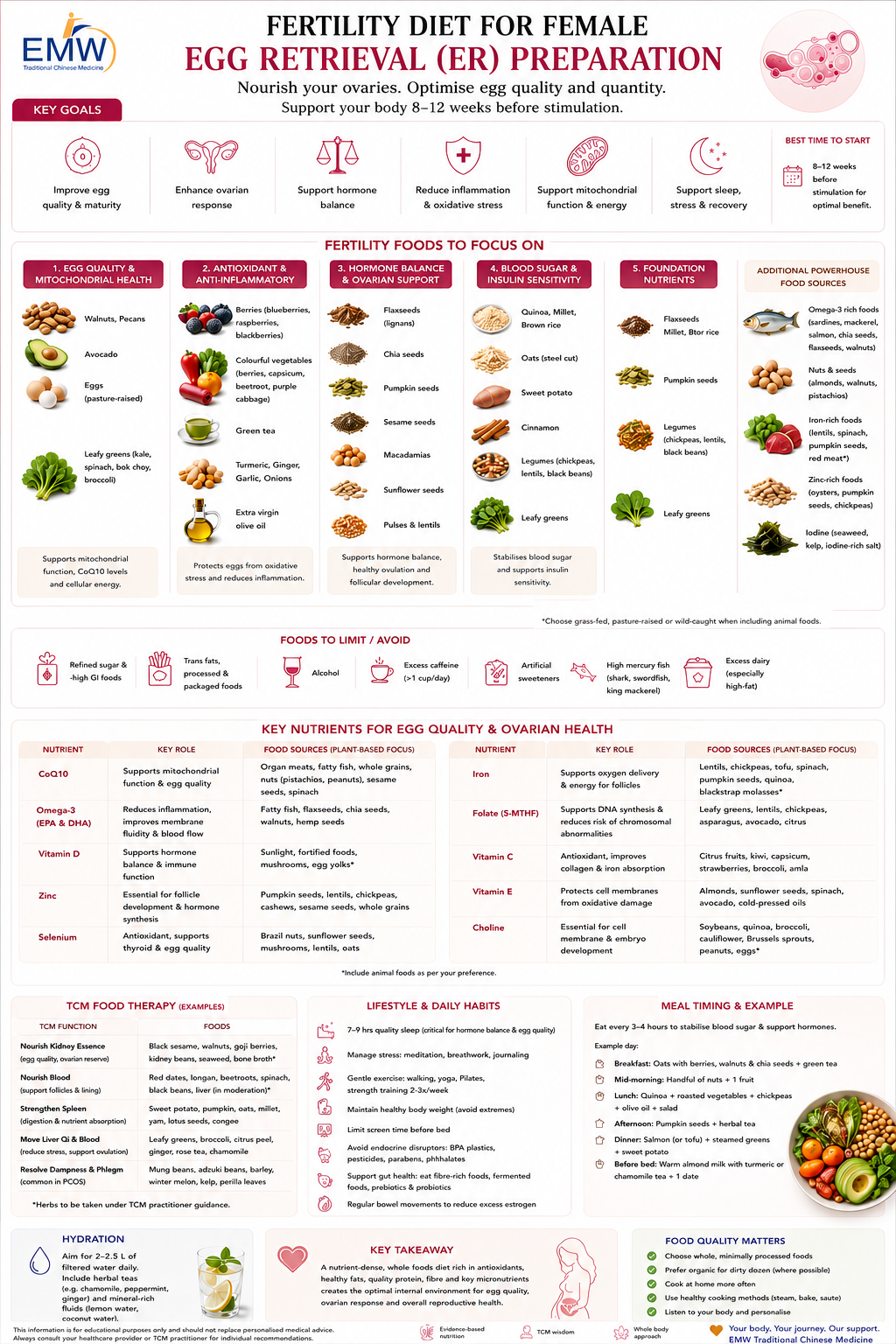
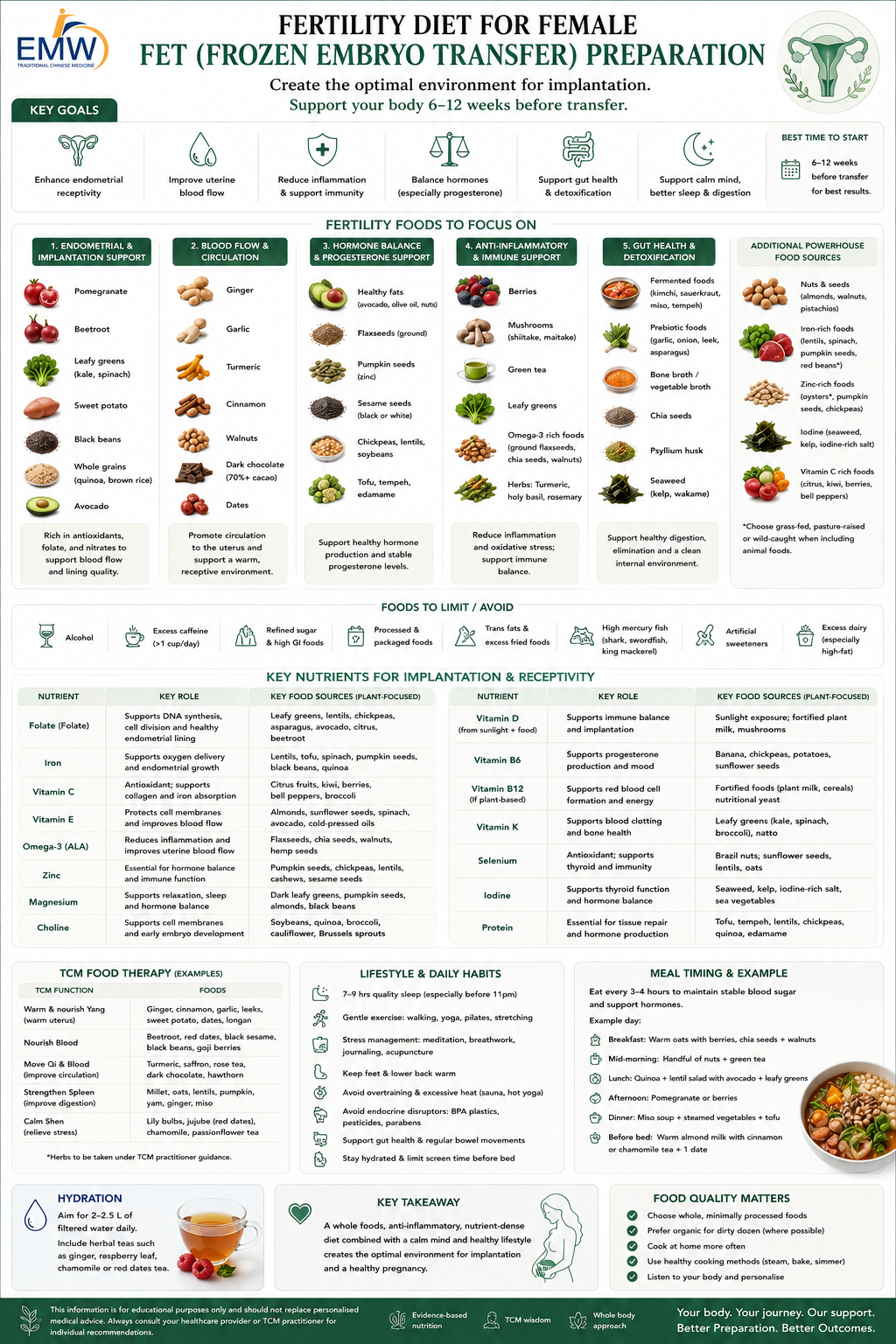
Select the poster to see it at full size
More than embryo grading. Build your fertility knowledge.
Want to feel better informed throughout your fertility journey? Explore the EMW Fertility Optimisation Bundle, a practical collection of nutrition and fertility education designed to support preparation for natural conception, IUI and IVF.
Educational support only. The bundle does not replace personalised medical advice or guarantee fertility outcomes.
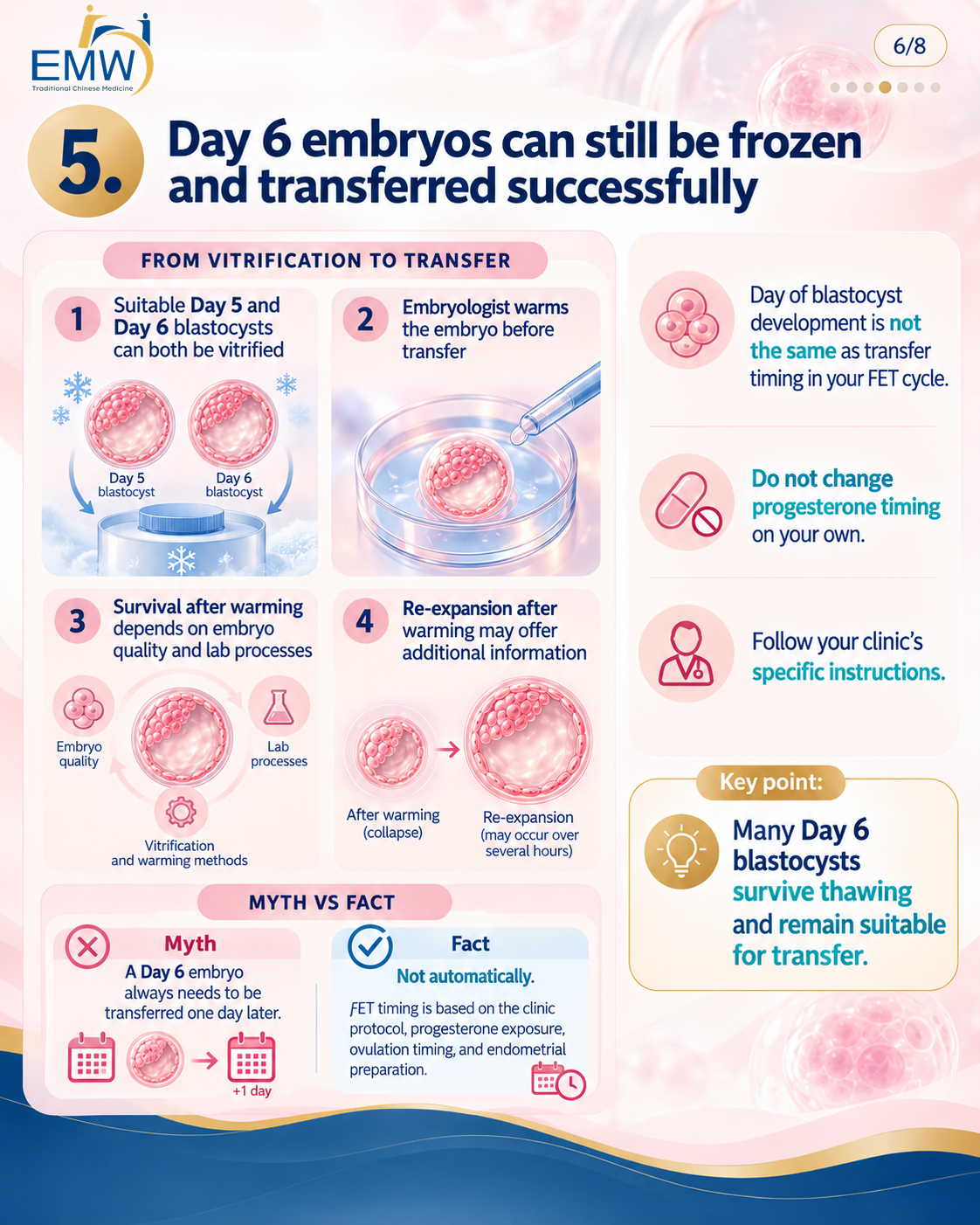
5. Day 6 Embryos Can Be Frozen and Transferred Successfully
Some patients assume that because an embryo developed on Day 6, it must be transferred differently or is less suitable for freezing.
This is not necessarily true.
Modern IVF laboratories commonly use vitrification, a rapid freezing technique that allows suitable blastocysts to be stored for future transfer.
Suitable blastocysts from both days can be frozen and transferred.
Both Day 5 and Day 6 blastocysts can be vitrified.
When preparing for FET, the embryologist warms the selected embryo and assesses its condition before transfer.
Does a Day 6 Embryo Survive Thawing?
Many Day 6 blastocysts survive warming and remain suitable for transfer.
However, survival depends on the embryo's characteristics, freezing and warming procedures, and laboratory conditions.
Your fertility clinic can provide information about its own embryo survival rates.
After warming, the embryologist may also observe whether the blastocyst begins to re-expand.
This can provide additional information about embryo viability, although re-expansion alone cannot guarantee implantation.
Does a Day 6 Embryo Need to Be Transferred One Day Later?
Not automatically.
This is a common misunderstanding.
The day an embryo reached the blastocyst stage in the laboratory is not the same as the day it should be transferred within your FET cycle.
For a medicated FET, the fertility specialist carefully coordinates progesterone exposure and embryo transfer.
For a natural or modified natural FET, timing is related to ovulation and the clinic's protocol.
Day 6 blastocysts are not universally transferred after one extra day of progesterone compared with Day 5 blastocysts.
Follow your fertility clinic's specific instructions.
Do not independently change progesterone timing or medication doses.
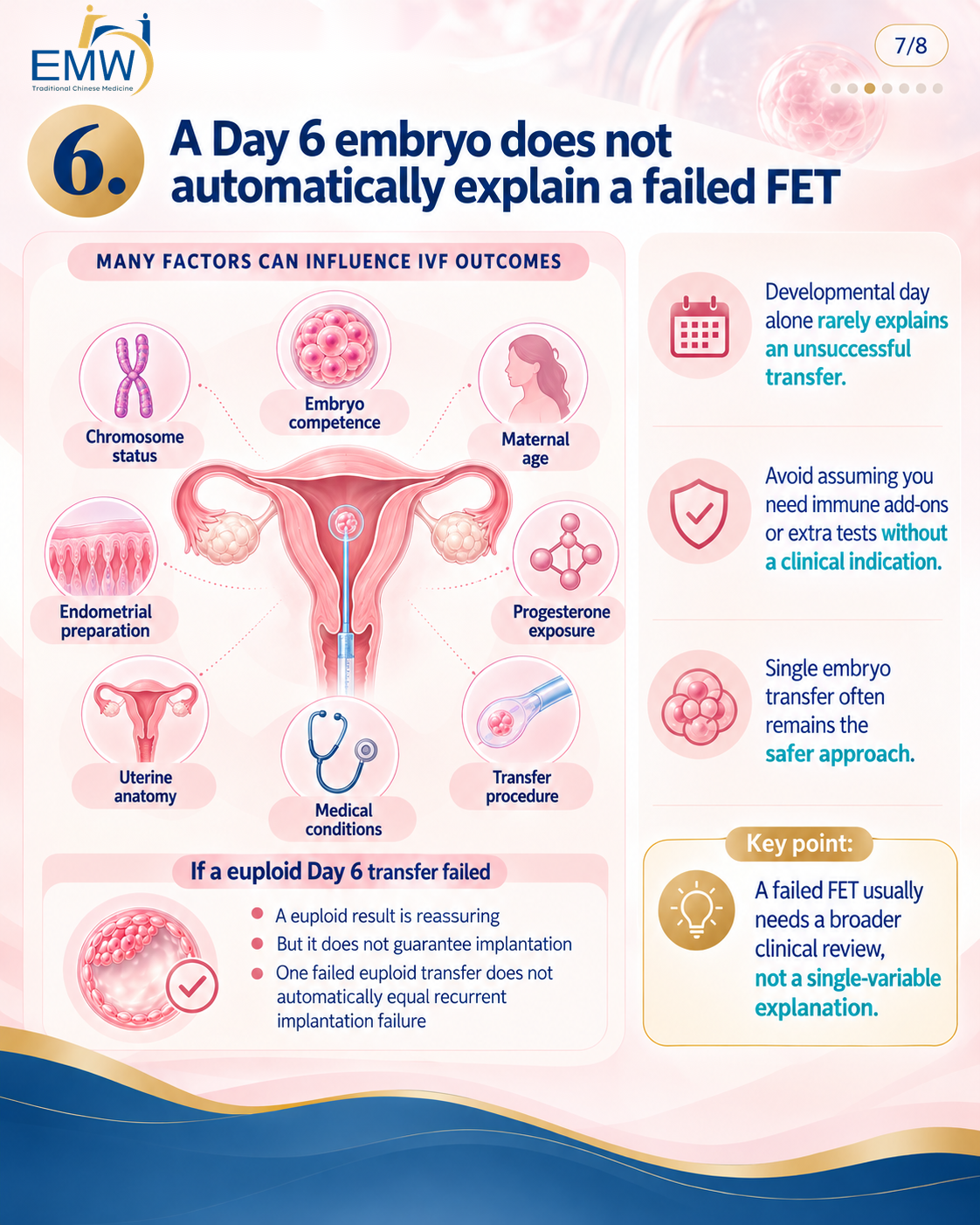
6. A Day 6 Embryo Does Not Automatically Explain a Failed FET
If you have experienced an unsuccessful embryo transfer, it is natural to look back at every detail.
Perhaps you transferred a Day 6 blastocyst and now wonder whether its slower development caused the result.
But an unsuccessful transfer cannot usually be explained by developmental day alone.
A failed FET usually requires a broader clinical review than the embryo day alone.
IVF pregnancy depends on several factors.
These include:
- Embryo developmental competence
- Chromosome status
- Maternal age
- Endometrial preparation
- Appropriate progesterone exposure
- Uterine anatomy
- Relevant medical conditions
- Embryo transfer procedure
Conditions such as adenomyosis, significant uterine cavity abnormalities and certain endocrine disorders may also deserve attention, particularly after repeated unsuccessful transfers.
However, additional tests and procedures should be chosen based on a clinical indication rather than added automatically.
What if My Day 6 Embryo Was Euploid but Failed to Implant?
A euploid result is reassuring regarding the chromosome abnormalities assessed, but even a euploid embryo does not guarantee implantation.
If a transfer fails, your fertility specialist may review the previous protocol, embryo information and relevant medical history.
One failed euploid transfer does not automatically establish recurrent implantation failure.
It also does not necessarily justify routine immune testing, intralipid therapy or other IVF add-ons.
For more information, read our EMW TCM article on recurrent implantation failure.
Should I Transfer Two Day 6 Embryos Together?
Not simply because they are Day 6 embryos.
Transferring more than one embryo increases the possibility of multiple pregnancy, which carries additional risks for both mother and babies.
The decision should take into account maternal age, embryo quality, previous IVF history and the fertility clinic's recommendations.
For many patients, single embryo transfer remains the safer approach.
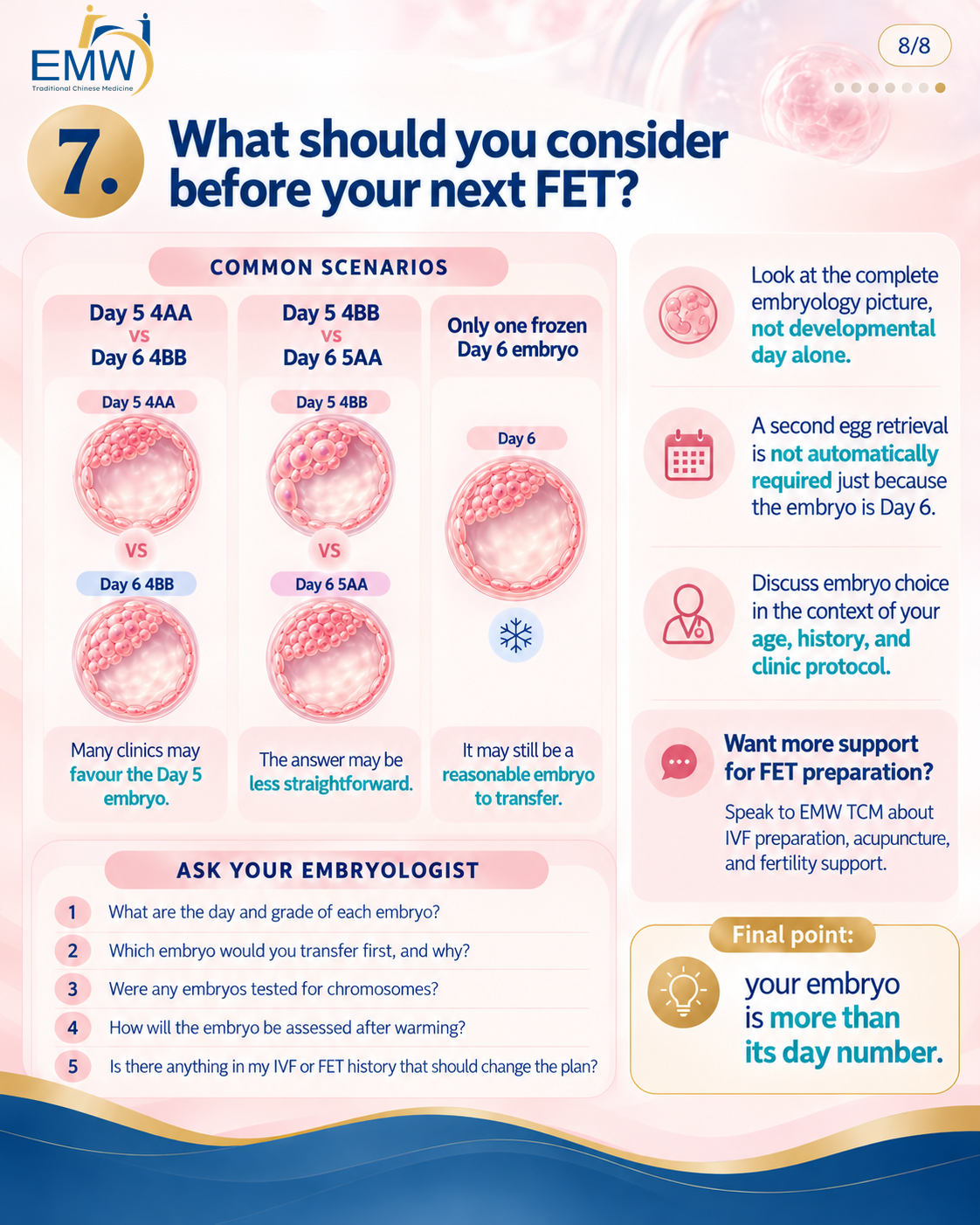
7. What Should You Consider Before Your Next FET?
If you are deciding which frozen embryo to transfer, begin with a discussion with your fertility specialist and embryologist.
Ask about the complete embryology picture rather than looking at developmental day alone.
For example:
Ask your embryologist to evaluate all embryo information alongside your history.
If you have a Day 5 4AA and a Day 6 4BB
Your clinic may favour the Day 5 embryo based on its developmental timing and morphological characteristics.
If you have a Day 5 4BB and a Day 6 5AA
The decision may be less straightforward because embryo grading and developmental speed point in different directions.
If you have one frozen Day 6 embryo
It may still be a reasonable embryo to transfer, depending on its quality and your clinical circumstances.
A second egg retrieval is not automatically required just because your available embryo reached the blastocyst stage on Day 6.
Seven Questions Worth Asking Your Embryologist
- What is the developmental day and grade of each frozen embryo?
- Were the embryos already blastocysts earlier, or did they first become suitable for freezing on Day 6?
- Which embryo would you recommend transferring first, and why?
- Were the embryos tested for chromosome abnormalities?
- What are your laboratory's outcomes for embryos of similar grades?
- How will the selected embryo be assessed after warming?
- Is there anything about my previous IVF or FET history that should change the plan?
These questions can help you make a more informed decision without relying solely on online comparisons.
How Does Traditional Chinese Medicine Support IVF and Embryo Transfer?
While embryo selection is the responsibility of your fertility clinic, many couples also consider Traditional Chinese Medicine as part of their preparation.
In TCM, reproductive health is traditionally associated with the Kidney, Liver and Spleen systems, together with the balance of Qi, Blood, Yin and Yang.
The Chong and Ren meridians are also associated with menstrual and reproductive function.
However, these traditional concepts should not be confused with modern medical measurements such as progesterone levels, uterine blood flow or embryo grading.
Can TCM Change a Day 6 Embryo Into a Better-Quality Embryo?
No.
Once an embryo has developed and been frozen, acupuncture or Chinese herbal medicine cannot change its developmental day, morphological grade or chromosome status.
There is also insufficient evidence that TCM can reliably improve embryo grading during laboratory culture.
This is an important distinction.
TCM care before FET focuses on the patient, not on altering the frozen embryo.
The aim is to manage relevant symptoms, support general wellbeing and provide complementary care during fertility treatment.
Common TCM Patterns Considered During Fertility Preparation
Kidney Deficiency (肾虚)
In TCM theory, the Kidney system is closely associated with reproductive function.
Patients with relevant deficiency patterns may experience fatigue, lower back soreness, menstrual irregularities or other constitutional symptoms.
The physician may consider treatment principles such as nourishing Kidney Yin or supporting Kidney Yang, depending on the assessment.
Liver Qi Stagnation (肝气郁结)
Some patients experience premenstrual breast tenderness, abdominal distension, sleep disturbance or irritability.
TCM treatment may focus on regulating Liver Qi and managing associated symptoms.
Spleen Qi Deficiency (脾气虚)
Patients with poor appetite, bloating, loose stools and fatigue may have features consistent with Spleen Qi Deficiency.
Treatment may focus on supporting digestion and addressing the patient's nutritional and digestive concerns.
Blood Stasis (血瘀)
Blood Stasis may be considered when there are relevant signs such as significant menstrual cramps, dark blood or clots.
Treatment approaches that involve moving Blood are generally restricted or avoided when pregnancy is possible.
These patterns are not diagnoses of embryo quality or implantation failure.
At EMW TCM, each patient receives an individualised assessment rather than a standard treatment based on whether their embryo is Day 5 or Day 6.
How EMW TCM Supports Patients Preparing for Frozen Embryo Transfer
At EMW TCM Singapore, our physicians work with patients preparing for natural and medicated FET cycles.
Some patients come to us several months before their transfer.
Others already have a frozen embryo and a confirmed transfer date.
Our approach depends on the time available, fertility history and current symptoms.
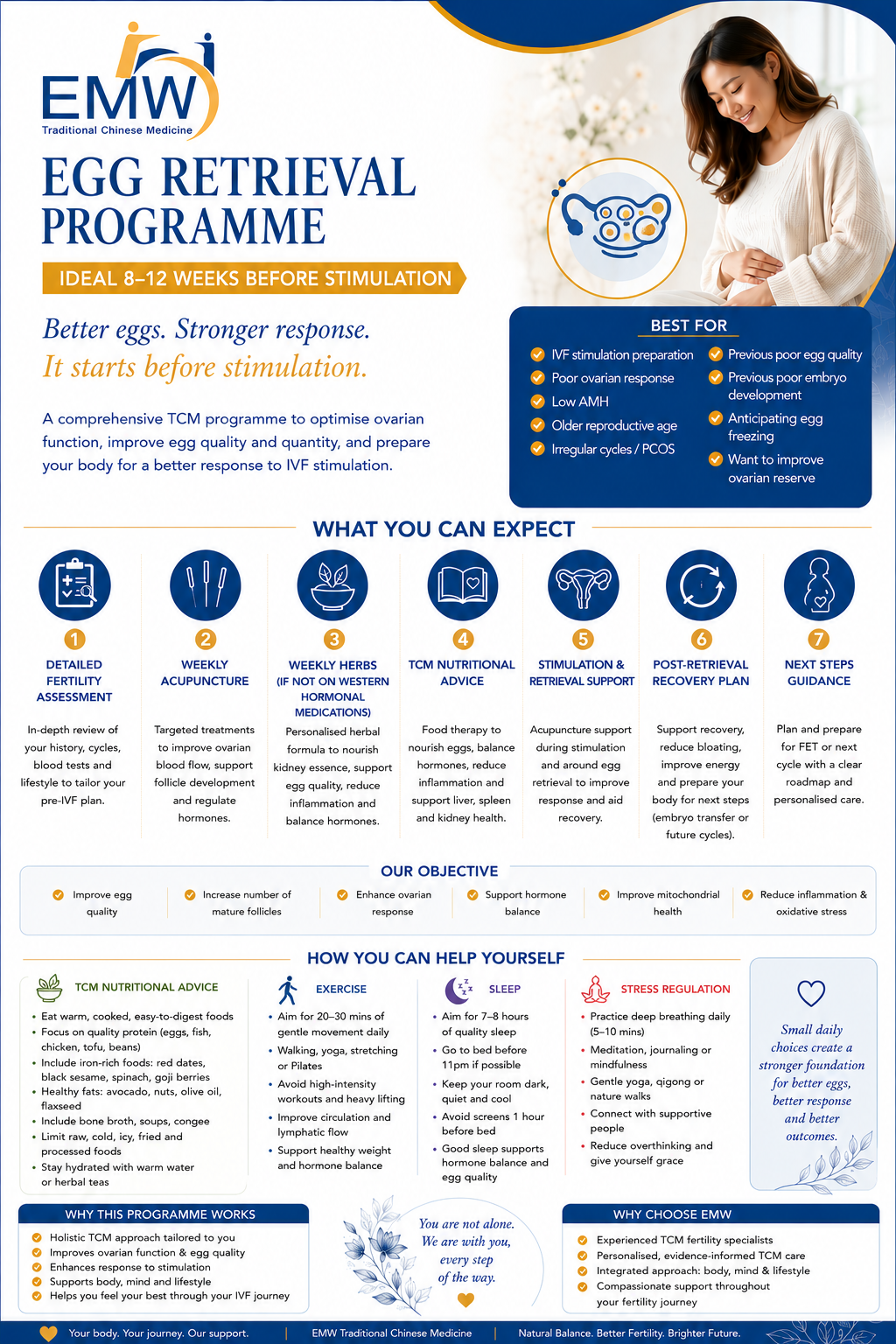
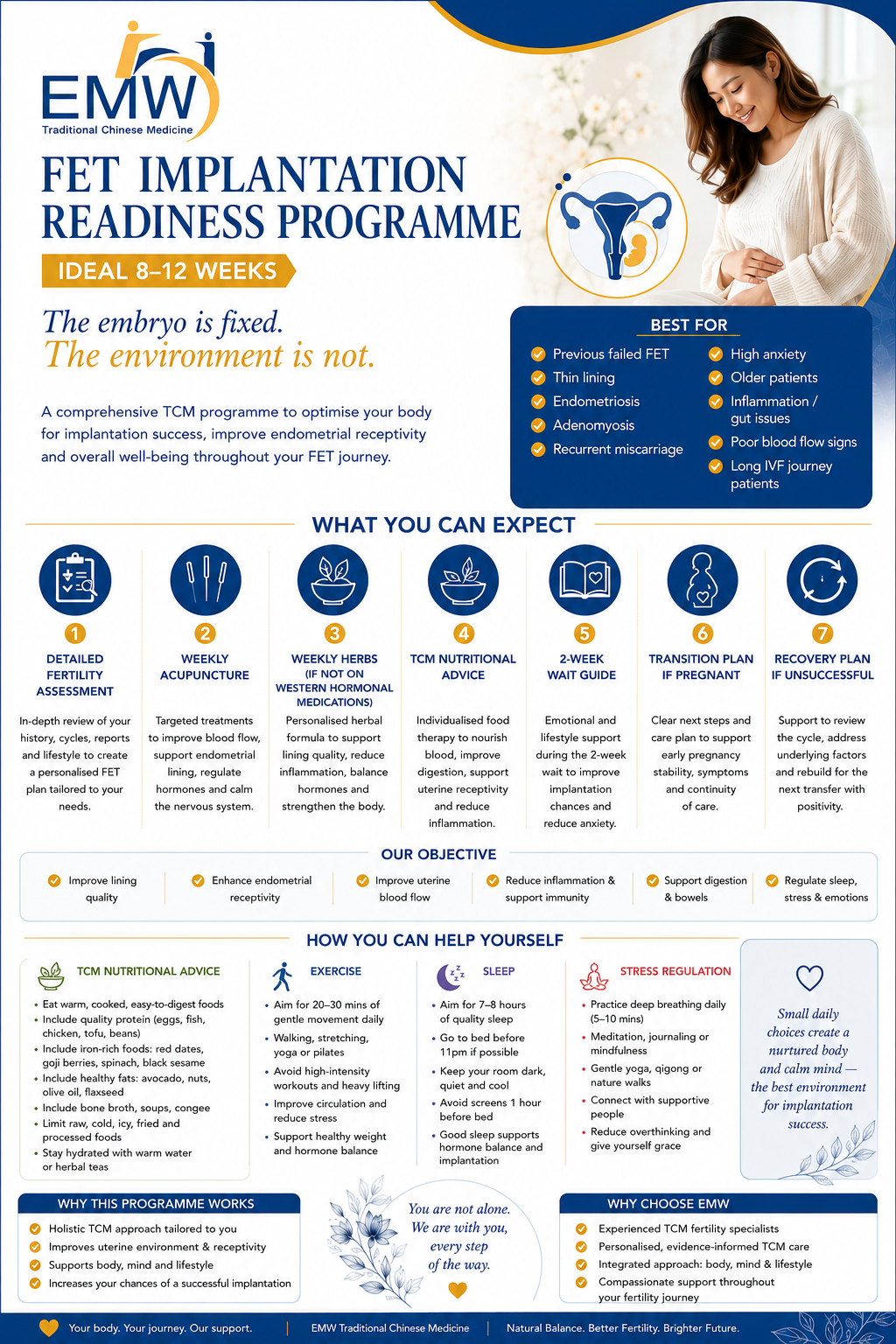
The two illustrated guides below are paired with concise summaries. Longer instructions continue underneath each image.
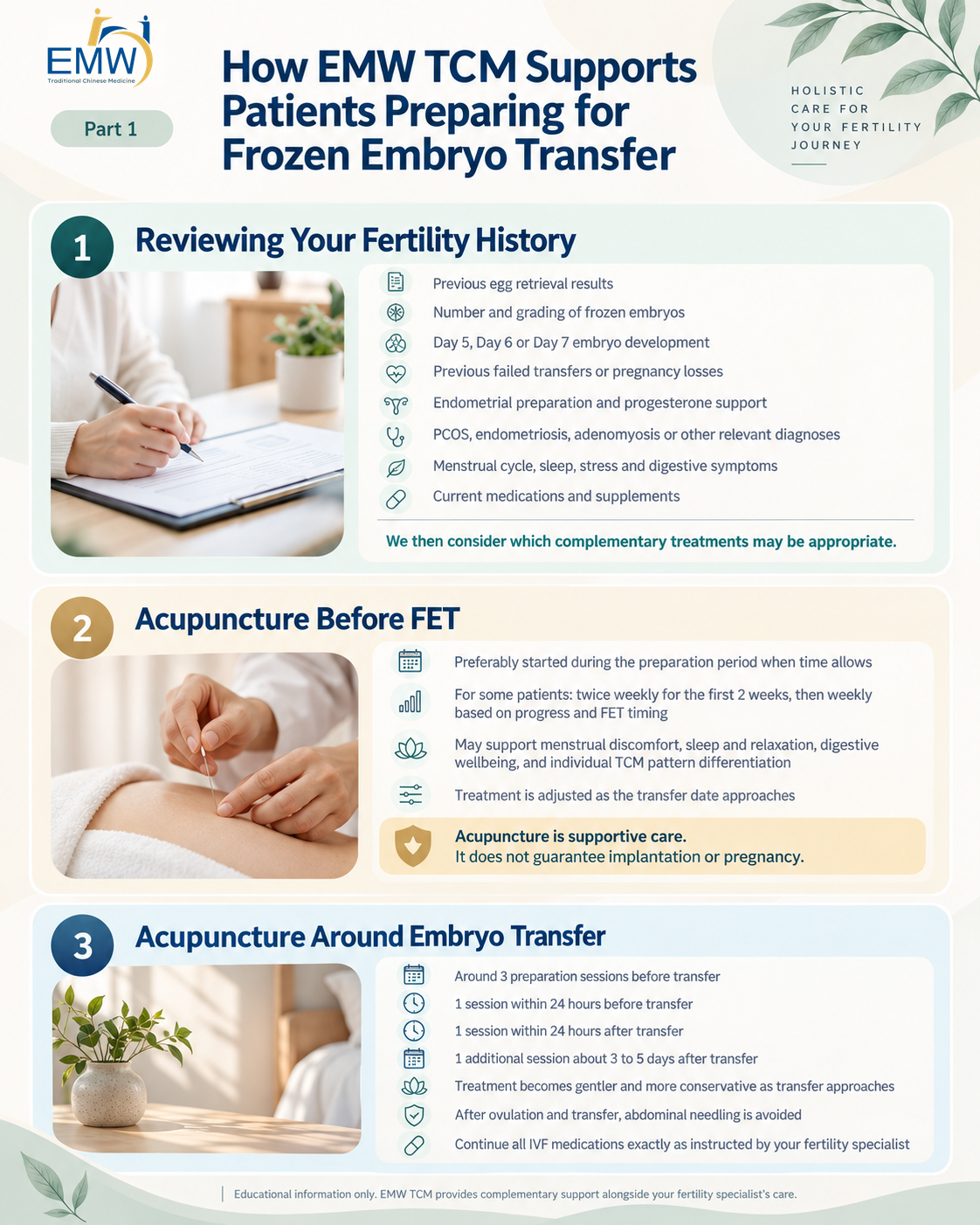
Your history and acupuncture plan
1. Reviewing Your Fertility History
During the first consultation, our physician may review:
2. Acupuncture Before FET
When time permits, we generally prefer to begin acupuncture during the preparation period rather than relying only on treatment immediately before embryo transfer.
3. Acupuncture Around Embryo Transfer
Depending on the patient's condition and schedule, an EMW TCM FET acupuncture plan may include:
More detail: Reviewing Your Fertility History
- Previous egg retrieval results
- Number and grading of frozen embryos
- Day 5, Day 6 or Day 7 embryo development
- Previous failed transfers or pregnancy losses
- Endometrial preparation and progesterone support
- PCOS, endometriosis, adenomyosis or other relevant diagnoses
- Menstrual cycle and symptoms
- Sleep, stress and digestive health
- Current medications and supplements
We then consider which complementary treatments may be appropriate.
More detail: Acupuncture Before FET
For some patients, we may recommend acupuncture twice weekly during the first two weeks, followed by weekly appointments according to symptoms, treatment progress and the scheduled FET.
The focus may include:
Menstrual discomfort
Patients with cramps or other menstrual symptoms may benefit from an individualised approach to symptom management.
Sleep and relaxation
IVF can be physically and emotionally demanding.
Some patients experience disrupted sleep, muscle tension or anxiety as the transfer approaches.
Acupuncture may be used as one component of supportive care.
Digestive wellbeing
Bloating, constipation and poor appetite are concerns we often address during TCM consultations.
Managing these symptoms can make the preparation period more comfortable.
Individual TCM pattern differentiation
Acupuncture points are selected according to the patient's constitution, symptoms and IVF stage.
Treatment is adjusted as the transfer date approaches.
Although research has investigated acupuncture during IVF, high-quality evidence has not consistently demonstrated improved live birth rates compared with sham acupuncture.
We therefore do not promise that acupuncture will make a Day 6 embryo implant or guarantee a successful pregnancy.
More detail: Acupuncture Around Embryo Transfer
- Approximately three preparation sessions before transfer
- One session within 24 hours before embryo transfer
- One session within 24 hours after embryo transfer
- One additional session approximately three to five days after transfer
This is a clinic treatment approach, not a scientifically established minimum number of sessions needed for implantation.
As the embryo transfer approaches, acupuncture becomes gentler and more conservative.
After ovulation and embryo transfer, abdominal needling and techniques considered inappropriate during possible early pregnancy are avoided.
Patients should continue all IVF medications exactly as instructed by their fertility specialist.
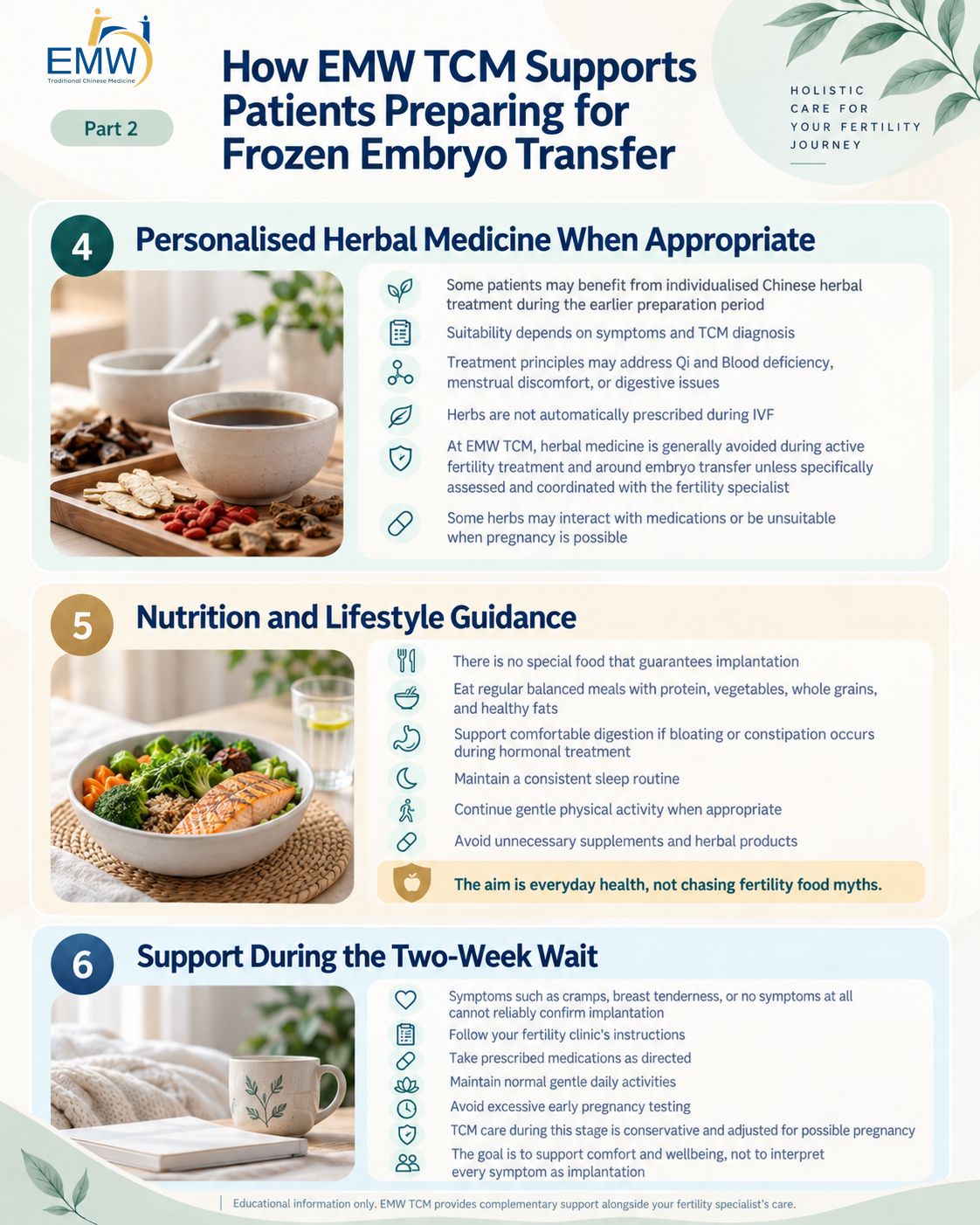
Lifestyle, herbal considerations and the two-week wait
4. Personalised Herbal Medicine When Appropriate
Some patients may benefit from individualised Chinese herbal treatment during the earlier preparation period, depending on their symptoms and TCM diagnosis.
5. Nutrition and Lifestyle Guidance
We encourage patients to keep their preparation manageable.
6. Support During the Two-Week Wait
After embryo transfer, patients often become very conscious of every sensation.
More detail: Personalised Herbal Medicine When Appropriate
For example, the physician may consider treatment principles aimed at supporting Qi and Blood deficiency, managing menstrual discomfort or addressing digestive problems.
However, herbs are not automatically prescribed during IVF.
At EMW TCM, Chinese herbs may be considered during preparation months, but herbal medicine is not prescribed during ovarian stimulation or embryo transfer cycles. Herbs may interact with medications or be unsuitable when pregnancy is possible.
Some herbs may interact with medications or be unsuitable when pregnancy is possible.
More detail: Nutrition and Lifestyle Guidance
There is no special food that makes a Day 6 embryo implant successfully.
Likewise, eating pineapple core, beetroot or Brazil nuts does not guarantee better implantation.
Instead, we recommend focusing on everyday health.
Eat regular, balanced meals
Include sufficient protein, vegetables, whole grains and healthy fats.
Support comfortable digestion
If you experience bloating or constipation during hormonal treatment, discuss suitable dietary adjustments.
Maintain a consistent sleep routine
Try to get adequate rest without becoming overly anxious about sleeping at an exact time.
Continue gentle physical activity
Walking and comfortable movement are generally suitable, subject to your fertility clinic's advice.
Avoid unnecessary supplements and herbal products
More supplements do not necessarily improve pregnancy outcomes, and some may interact with prescribed medications.
More detail: Support During the Two-Week Wait
A mild cramp.
A pulling sensation.
Breast tenderness.
Or perhaps no symptoms at all.
These sensations cannot reliably tell you whether implantation has occurred.
We encourage patients to follow their fertility clinic's instructions, take their prescribed medications, maintain normal gentle daily activities and avoid excessive early pregnancy testing.
TCM care during this stage is conservative and adjusted for possible pregnancy.
Our aim is to support comfort and wellbeing, not to interpret every symptom as a sign of implantation.
Related EMW Fertility Articles
Further guidance on embryo development, IVF preparation and transfer decisions.
Frequently Asked Questions
Is a Day 6 Blastocyst Still a Good Embryo?
Yes. A Day 6 blastocyst may still be suitable for freezing and transfer. Its potential depends on embryo quality, chromosome status where known and individual clinical factors.
Is a Day 6 5AA Better Than a Day 5 4BB?
There is no universal answer. The Day 5 embryo developed sooner, while the Day 6 embryo has a more favourable morphological grade. Your embryologist should consider the complete embryo information when advising which to transfer first.
Can a Day 6 Embryo Result in a Healthy Baby?
Yes. Healthy babies are born following Day 6 blastocyst transfers. A slower developmental day does not automatically mean an embryo is abnormal.
Are Day 6 Embryos More Likely to Miscarry?
Some studies report higher miscarriage rates in Day 6 transfers, but findings vary after adjusting for embryo quality and patient characteristics. An individual Day 6 embryo does not necessarily carry a high miscarriage risk.
Does a Day 6 Embryo Need More Progesterone?
Not automatically. The dose and timing of progesterone depend on the FET protocol and fertility clinic's assessment. Developmental day alone does not establish that more progesterone is needed.
Can Acupuncture Improve Day 6 Blastocyst Success Rates?
There is insufficient evidence that acupuncture specifically improves live birth rates after Day 6 embryo transfer. At EMW TCM, acupuncture is offered as complementary treatment for suitable symptoms and general wellbeing during fertility preparation.
Should I Do Another Egg Retrieval if I Only Have Day 6 Embryos?
Not necessarily. If your Day 6 embryos are considered suitable for transfer, another retrieval may not be needed. The decision depends on your age, embryo availability, family-building goals and fertility specialist's advice.
Final Thoughts: Your Embryo Is More Than Its Day Number
When you are going through IVF, every result can feel significant.
The number of eggs retrieved.
How many fertilised.
How many reached blastocyst.
And whether your embryo was frozen on Day 5 or Day 6.
It is natural to want to know which embryo offers the best chance of pregnancy.
But if you are comparing day 5 vs day 6 blastocysts, remember that the developmental day is only one part of the picture.
A Day 5 embryo may have an advantage on average, but a Day 6 embryo can still lead to a healthy pregnancy.
Your embryologist can help you understand the quality and potential of your available embryos.
At EMW TCM Singapore, we support patients preparing for IVF and frozen embryo transfer through personalised acupuncture, appropriate TCM treatment and lifestyle guidance.
Our physicians review your fertility history, current health concerns and treatment timeline to develop a complementary care plan that works alongside your fertility specialist.
Preparing for your next embryo transfer?
Read more fertility articles at www.emw.sg/blog.
Explore our IVF Master Guide gallery above for fertility nutrition and practical lifestyle guidance.
TCM treatment is complementary and does not replace fertility specialist care, prescribed IVF medications or embryo laboratory assessment. IVF and pregnancy outcomes vary between individuals.
Preparing for your next frozen embryo transfer?
Our physicians can review your treatment timeline, symptoms and wellbeing to recommend complementary care alongside your fertility team.
References
- Hou W, et al. (2025). Pregnancy and perinatal outcomes after Day 5 versus Day 6 blastocyst-stage embryo transfer: A systematic review and meta-analysis. Acta Obstetricia et Gynecologica Scandinavica. Research article
- Carullo G, et al. (2026). Comparable live births for single vitrified blastocyst transfer from Day 5 compared with Day 6: A retrospective analysis. Reproductive BioMedicine Online. Research article
- American Society for Reproductive Medicine (2024). The Use of Preimplantation Genetic Testing for Aneuploidy: A Committee Opinion. ASRM guidance
- Human Fertilisation and Embryology Authority. Decisions to Make About Your Embryos. HFEA guidance
- Smith CA, et al. (2018). Effect of Acupuncture vs Sham Acupuncture on Live Births Among Women Undergoing IVF: A Randomized Clinical Trial. JAMA. Clinical trial
Educational information only. IVF decisions, medications and laboratory embryo selection remain under the treating fertility specialist.