5 Reasons Acupuncture May Help With Recurrent Miscarriage: A TCM Perspective

5 Reasons Acupuncture May Help With Recurrent Miscarriage: A TCM Perspective

5 Reasons Acupuncture May Help With Recurrent Miscarriage: A TCM Perspective

Recurrent miscarriage is one of the most painful and confusing fertility experiences a couple can go through.

It is not just the loss of a pregnancy. It is the loss of hope, timing, plans, and emotional safety. Many women tell us that after one miscarriage, they feel sad. After repeated miscarriages, they begin to feel afraid of being pregnant again.

Medically, definitions vary. ACOG defines recurrent pregnancy loss as two or more miscarriages and recommends evaluation after two losses, while RCOG defines recurrent miscarriage as three or more first-trimester miscarriages. ESHRE also uses the definition of two or more pregnancy losses.

At EMW TCM Singapore, we always encourage patients with recurrent miscarriage to work closely with their gynaecologist or fertility specialist. Important causes such as chromosomal factors, uterine structural issues, thyroid imbalance, antiphospholipid syndrome, clotting issues, uncontrolled diabetes, autoimmune patterns, infections, and male sperm factors should be properly assessed.

TCM and acupuncture are not replacements for medical investigation.

However, they may play a supportive role in preparing the body before conception, supporting the nervous system, improving uterine receptivity, regulating cycle patterns, and helping the body rebuild after loss.

This article explains 5 Reasons Acupuncture May Help With Recurrent Miscarriage: A TCM Perspective, especially for women in Singapore who want a more holistic way to prepare for their next pregnancy.

tcm natural fertility
At EMW TCM, we believe fertility is not just about reproduction, it’s about the health of your whole body. Our experienced physicians work with you closely, teaching you how to understand your body’s signals and co-create a plan that aligns with your unique constitution. Every session is designed to bring you closer to balance, vitality, and the possibility of new life.

First, What Does TCM Look At After Recurrent Miscarriage?

In TCM, recurrent miscarriage is rarely viewed as a single isolated event.

Instead, we ask deeper questions:

Why is the body able to conceive but unable to hold the pregnancy?

Is the uterine environment sufficiently warm, nourished, and stable?

Is there enough Qi and Blood to support early pregnancy?

Is Kidney Essence strong enough to support conception and maintenance?

Is Liver Qi stagnation causing stress, tension, and hormonal disruption?

Is Spleen Qi weak, affecting nutrient transformation and Blood production?

Is there Blood stagnation, Cold, Dampness, or inflammation affecting receptivity?

EMW’s fertility guide explains that TCM does not view fertility as only egg quality or sperm count. It views fertility through whole-body harmony, including Qi, Blood, Yin, Yang, digestion, mental wellbeing, and reproductive balance.

This is why acupuncture support for recurrent miscarriage is usually not only done after pregnancy is confirmed. Ideally, we start before conception.

The aim is to prepare the body before the next pregnancy happens.

15
TCM for recurrent miscarriage

5 Reasons Acupuncture May Help With Recurrent Miscarriage: A TCM Perspective

Reason 1: Acupuncture May Support Uterine Blood Flow and Lining Receptivity

For implantation and early pregnancy maintenance, the uterus needs good blood flow, healthy endometrial development, and a calm uterine environment.

In TCM, Blood nourishes the womb. Qi moves Blood. Yang warms and transforms. Yin nourishes and anchors.

When Qi and Blood are not flowing well, patients may present with:

  • Dark menstrual blood
  • Clots during menstruation
  • Painful periods
  • Cold lower abdomen
  • Thin endometrial lining
  • Spotting before the period
  • History of implantation failure
  • Repeated early loss

From a TCM perspective, this may involve Blood stagnation, Cold in the womb, Kidney deficiency, or Blood deficiency.

Acupuncture may support reproductive circulation by helping regulate vascular tone, reduce sympathetic overactivity, and encourage better pelvic blood flow. In the EMW fertility guide, acupuncture is discussed as part of fertility support for uterine receptivity, blood flow, implantation support, and early pregnancy preparation.

This does not mean acupuncture can “prevent miscarriage” on its own.

It means acupuncture may help improve the internal environment before conception, especially when poor circulation, tension, Cold, or thin lining patterns are present.

This is one of the most important clinical ideas behind 5 Reasons Acupuncture May Help With Recurrent Miscarriage: A TCM Perspective: the goal is not to force pregnancy to stay. The goal is to improve the terrain so the body is more ready to receive and support pregnancy.

Reason 2: Acupuncture May Help Calm the Nervous System After Pregnancy Loss

After recurrent miscarriage, many women live in a state of fear.

They may become anxious before every scan, panic at every cramp, check symptoms repeatedly, or feel unable to trust their body.

This is understandable.

Loss changes the nervous system. The body may remain in a fight-or-flight state long after the medical event is over.

In TCM, this often appears as Liver Qi stagnation, Heart Shen disturbance, or Kidney deficiency. Symptoms may include:

  • Insomnia
  • Palpitations
  • Anxiety
  • Chest tightness
  • Frequent sighing
  • Irritability
  • Waking between 1am and 3am
  • Feeling emotionally fragile
  • PMS worsening after loss

From a biomedical lens, chronic stress can affect cortisol rhythm, sleep quality, inflammation, digestion, and reproductive hormone communication. The ESHRE guideline update also recognises that recurrent pregnancy loss care is not only about tests and treatments, but also about proper care organisation and support.

Acupuncture may help support parasympathetic tone. Many patients describe feeling calmer, sleeping better, breathing more deeply, or feeling less physically tense after treatment.

In fertility care, this matters.

A calmer nervous system does not guarantee pregnancy success, but it creates a better physiological state for ovulation, implantation, digestion, hormone rhythm, and early pregnancy support.

At EMW TCM, we do not tell patients to “just relax.”

Instead, we help the body remember how to feel safe again.

Reason 3: Acupuncture May Support Hormonal Rhythm and Luteal Phase Stability

Many recurrent miscarriages happen very early.

Some women describe a positive pregnancy test followed by bleeding days later. Others experience repeated chemical pregnancies. Some have short luteal phases, premenstrual spotting, low progesterone signs, or unstable basal body temperature after ovulation.

In TCM, the luteal phase is strongly associated with Yang, warmth, Kidney support, and the ability to hold.

If Yang is weak, the body may struggle to sustain warmth and stability after ovulation. EMW’s fertility guide describes Yang as the warming and transformative energy that supports ovulation, warms the uterus, and provides energy needed for implantation; signs of Yang deficiency may include cold hands and feet, weak ovulation, luteal phase issues, or unexplained infertility.

Acupuncture may support the menstrual cycle by regulating the hypothalamic-pituitary-ovarian axis, reducing stress-mediated disruption, and helping the body move through the cycle more smoothly.

A TCM plan may support different phases differently:

During menstruation, treatment may focus on clearing stagnation.

After menstruation, treatment may nourish Blood and Yin.

Around ovulation, treatment may support Qi movement and egg release.

After ovulation, treatment may support Yang, warmth, and stability.

This is why timing matters.

For recurrent miscarriage, acupuncture is often most useful as part of a preconception plan, not only after a positive pregnancy test.

Reason 4: Acupuncture May Support TCM Root Patterns Linked to Recurrent Loss

In TCM, recurrent miscarriage is often associated with one or more root patterns.

Common patterns include:

Kidney Deficiency
This may show as lower back soreness, cold limbs, fatigue, low libido, weak ovulation, reduced ovarian reserve, repeated early loss, or age-related fertility decline.

Spleen Qi Deficiency
This may show as bloating, loose stools, fatigue, poor appetite, spotting, pale tongue, and difficulty producing enough Blood.

Blood Deficiency
This may show as light periods, dizziness, pale complexion, dry skin, poor sleep, and a thin or poorly nourished uterine lining.

Blood Stagnation
This may show as clots, sharp cramps, endometriosis, fibroids, dark menstrual blood, and poor pelvic circulation.

Cold in the Womb
This may show as cold lower abdomen, cramps relieved by heat, long cycles, delayed ovulation, and low basal body temperature.

Liver Qi Stagnation
This may show as PMS, breast tenderness, mood swings, emotional tension, disrupted ovulation, and stress-related cycle changes.

EMW’s fertility guide highlights Kidney, Spleen, and Liver as the three key fertility systems in TCM: Kidney governs reproductive essence and vitality, Spleen supports digestion and Blood production, and Liver supports hormone flow, ovulation, emotional balance, and menstrual regularity.

This is where TCM becomes personalised.

Two women may both have recurrent miscarriage, but one may need warming and Yang support, another may need Blood nourishment, another may need Qi movement, and another may need Spleen strengthening.

Acupuncture points are selected based on constitution, not just diagnosis.

This is central to 5 Reasons Acupuncture May Help With Recurrent Miscarriage: A TCM Perspective. TCM does not treat the label alone. It treats the person, the cycle, the constitution, and the pattern.

Reason 5: Acupuncture May Help Prepare the Body Before the Next Pregnancy

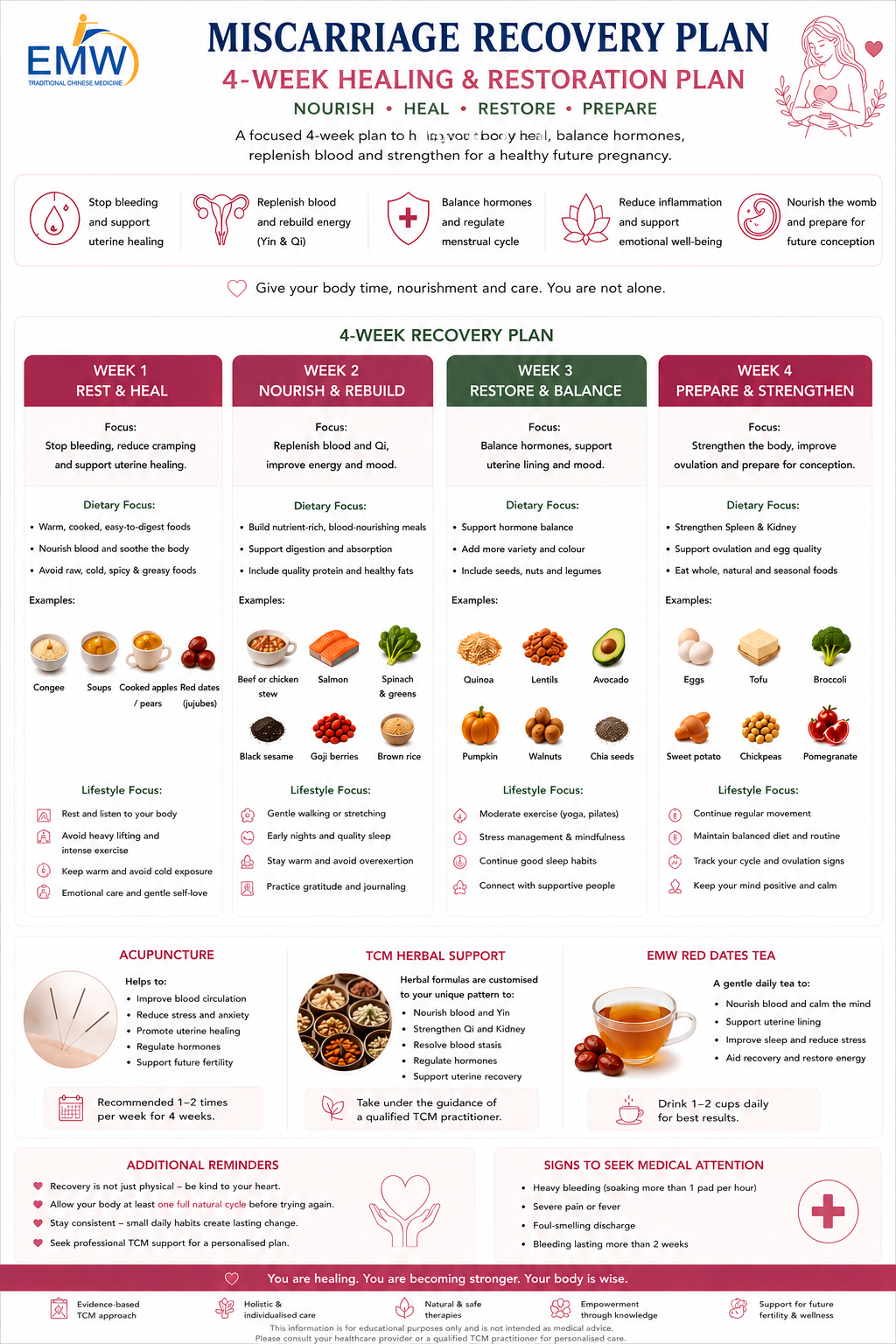
One of the biggest mistakes after miscarriage is rushing into the next cycle without recovery.

Some couples want to try immediately because they feel time pressure. This is especially common if the woman is above 35 or has low AMH.

Emotionally, this is understandable.

But physically, the body may still need rebuilding.

After miscarriage, TCM looks at:

  • Blood loss
  • emotional shock
  • uterine recovery
  • sleep quality
  • digestion
  • inflammation
  • menstrual reset
  • Kidney and Spleen support
  • whether the next cycle looks strong enough

A good preconception plan may include acupuncture, nutrition, sleep regulation, stress support, cycle tracking, and coordination with medical care.

For some patients, herbs may be considered before conception, but this must be individualised. During pregnancy, herbal decisions must be made carefully and professionally.

At EMW TCM, we usually prefer a structured preparation window rather than random treatment. Depending on the case, we may support the body for 2–3 cycles before actively trying again, while also encouraging medical investigations when appropriate.

The goal is not delay for the sake of delay.

The goal is readiness.
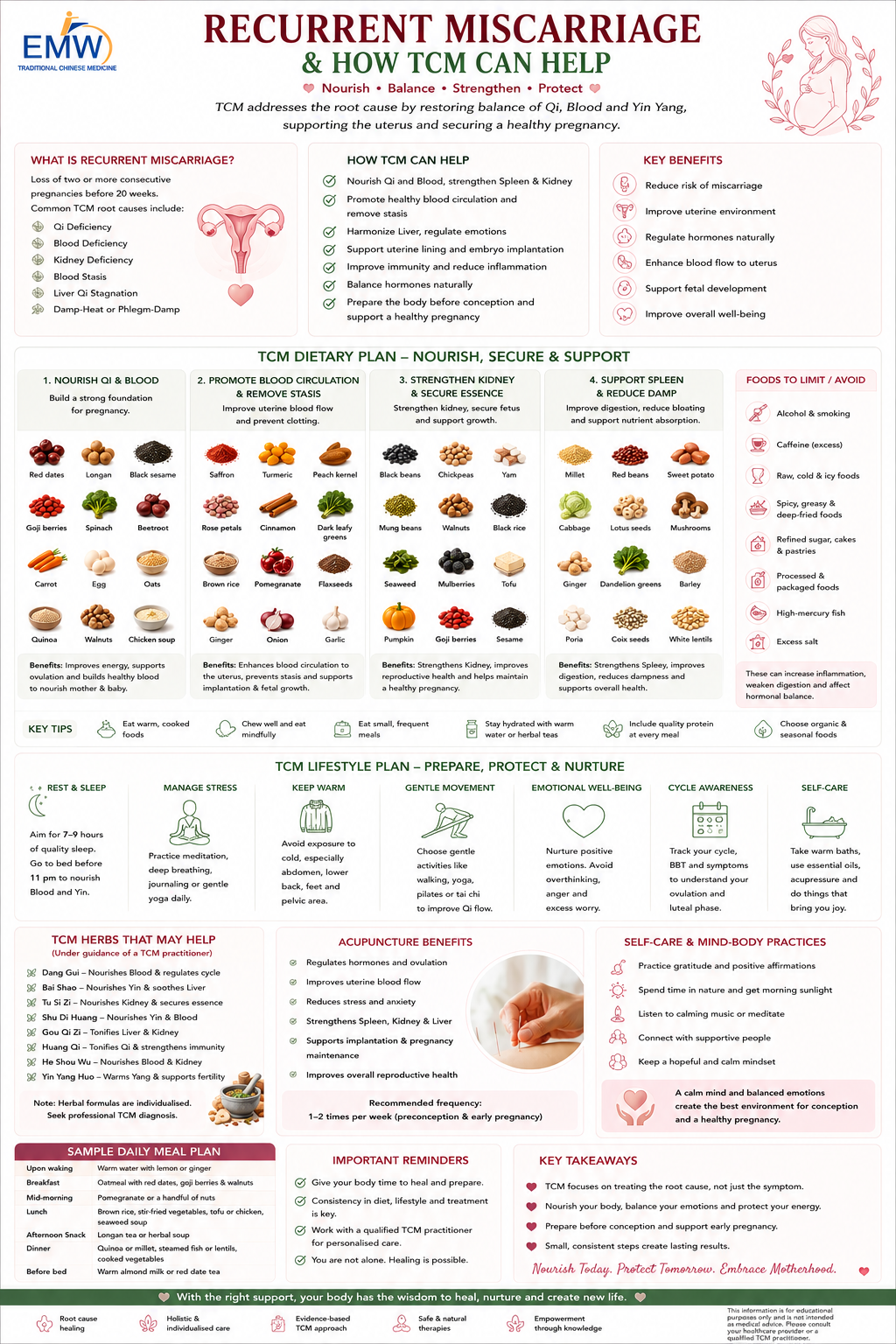
Miscarriage TCM Master Guide

Press the image to zoom in. If you like such infographics, we have a ‘3 ways to superboost your fertility’ PDF guide – Actionable steps that can help to support your reproductive health right away. You can sign up for free here:  https://emwtcm.podia.com/3-ways-to-boost-your-fertility

Fertility Womens Health 6
Each herbal formula is meticulously crafted based on your individual constitution, ensuring maximum efficacy and safety. Our expertise spans a wide range of conditions, including fertility, male fertility, gut health, pediatrics, confinement and postpartum care, and lactation support.

When Should You Seek Medical Evaluation?

Please seek proper medical review if you have had two or more pregnancy losses, especially if you are above 35, have thyroid issues, autoimmune history, irregular cycles, known fibroids, endometriosis, PCOS, clotting history, or previous IVF failures.

Important medical investigations may include:

  • Thyroid function and thyroid antibodies
  • Antiphospholipid syndrome screening
  • Uterine cavity assessment
  • Genetic testing where appropriate
  • Diabetes and metabolic screening
  • Hormonal assessment
  • Progesterone evaluation when clinically relevant
  • Semen analysis and sperm DNA fragmentation when indicated

ACOG states that after two miscarriages, a thorough physical exam and testing are recommended.

TCM support works best when it is integrated safely with medical care.

Lifestyle Nutrition For IVF 5
What the modern science and TCM talks about IVF

How EMW TCM Supports Recurrent Miscarriage Cases

At EMW TCM Singapore, our recurrent miscarriage support is built around clarity, not fear.

We assess:

  • Menstrual history
  • Pregnancy loss history
  • Cycle length and ovulation pattern
  • PMS and pain patterns
  • Tongue and pulse
  • Sleep, stress, digestion, and energy
  • Western test results when available
  • Known fertility diagnoses
  • Male factor risks
  • Lifestyle and nutritional patterns

Treatment may include:

  • Cycle-based acupuncture
  • Preconception body preparation
  • Stress and sleep regulation
  • Fertility nutrition guidance
  • Womb warming strategies if appropriate
  • Spleen and Blood nourishment
  • Kidney support
  • Coordination with IVF or gynaecology care where needed

We do not promise that acupuncture can prevent miscarriage.

No ethical clinic should promise that.

But we do believe that many women benefit from a more structured, personalised, and whole-body fertility plan before the next pregnancy.

This is the heart of 5 Reasons Acupuncture May Help With Recurrent Miscarriage: A TCM Perspective: support the body before conception, calm the nervous system, nourish the womb, regulate the cycle, and reduce avoidable trial-and-error.

FAQ: Acupuncture and Recurrent Miscarriage

1. Can acupuncture prevent miscarriage?

No treatment can guarantee miscarriage prevention. Acupuncture may support the body by improving stress regulation, cycle rhythm, uterine blood flow, and TCM constitutional balance, but recurrent miscarriage should always be medically assessed.

2. When should I start acupuncture after miscarriage?

This depends on your bleeding, recovery, emotional state, and medical advice. Some women begin after bleeding has settled. Others start after their next period. A TCM physician should assess your individual condition.

3. Should I do acupuncture before trying again?

Often, yes. For recurrent miscarriage cases, preconception preparation is usually more useful than waiting until pregnancy is confirmed.

4. Is acupuncture safe in early pregnancy?

Acupuncture should only be done by a qualified TCM physician trained in fertility and pregnancy care. Certain points are avoided during pregnancy, and treatment must be gentle and appropriate.

5. Do I still need a gynaecologist if I am seeing a TCM physician?

Yes. Recurrent miscarriage needs medical investigation. TCM should support, not replace, medical care.

6. Can my husband’s sperm affect miscarriage risk?

Yes. Sperm quality, sperm DNA fragmentation, age, lifestyle, smoking, heat exposure, and oxidative stress may affect embryo quality. Male fertility should not be ignored.

7. How long should I prepare before trying again?

Many patients benefit from 2–3 cycles of preparation, but this depends on age, medical history, emotional readiness, and gynaecologist advice.

Final Thoughts

Recurrent miscarriage can make a woman lose trust in her body.

But your body is not your enemy.

It may be depleted, stressed, cold, stagnant, undernourished, inflamed, or overwhelmed. These are not moral failures. They are signals.

TCM gives us a language to understand those signals.

Acupuncture may help by supporting uterine blood flow, calming the nervous system, regulating cycle rhythm, addressing root TCM patterns, and preparing the body before the next pregnancy.

If you have experienced repeated pregnancy loss, do not walk the journey alone.

Start with proper medical investigation.

Then consider a personalised TCM fertility plan that supports your body before conception, during preparation, and, when appropriate, into early pregnancy care.

Extended Readings

How EMW TCM Help Your Fertility

From a biomedical perspective, acupuncture for fertility improves ovarian and uterine blood flow, regulates the hypothalamic-pituitary-ovarian axis, lowers cortisol, reduces inflammation, and supports hormonal balance. These effects complement TCM principles and help enhance egg development, implantation, and reproductive function.

1. Comprehensive Assessment

Your first consultation includes:

  • Cycle assessment

  • Digestion and hormonal review

  • Energy and stress evaluation

  • Sleep and lifestyle factors

  • Male fertility screening when relevant

2. Evidence-Based TCM Diagnosis

  • Qi stagnation

  • Blood deficiency

  • Spleen Qi weakness

  • Kidney Yin/Yang imbalance

  • Liver Qi constraint

  • Dampness and inflammation

3. Personalised Fertility Treatment Plan

  • Weekly fertility acupuncture

  • Customised herbal formulas

  • Moxibustion

  • Dietary therapy

  • Stress reduction strategies

  • Lifestyle recommendations

TCM Acupuncture for Fertility Treatments

Acupuncture, one of the most researched TCM fertility tools, has been found to influence several physiological pathways related to reproduction.

A review published in Fertility and Sterility (2019) reported that acupuncture may improve blood flow to the uterus and ovaries, modulate stress hormones, and enhance endometrial receptivity. Another meta-analysis in Integrative Medicine Research (2021) concluded that acupuncture used alongside conventional fertility treatment can improve pregnancy outcomes and reduce anxiety levels in women undergoing IVF.

From a clinical standpoint, acupuncture helps regulate the hypothalamic-pituitary-ovarian axis, improving hormone balance and menstrual regularity. It can also reduce cortisol levels, encouraging the parasympathetic or “rest-and-rebuild” state which supports implantation and early pregnancy.

Our Flagship Ebook & Video Course

Fertility Guide 1
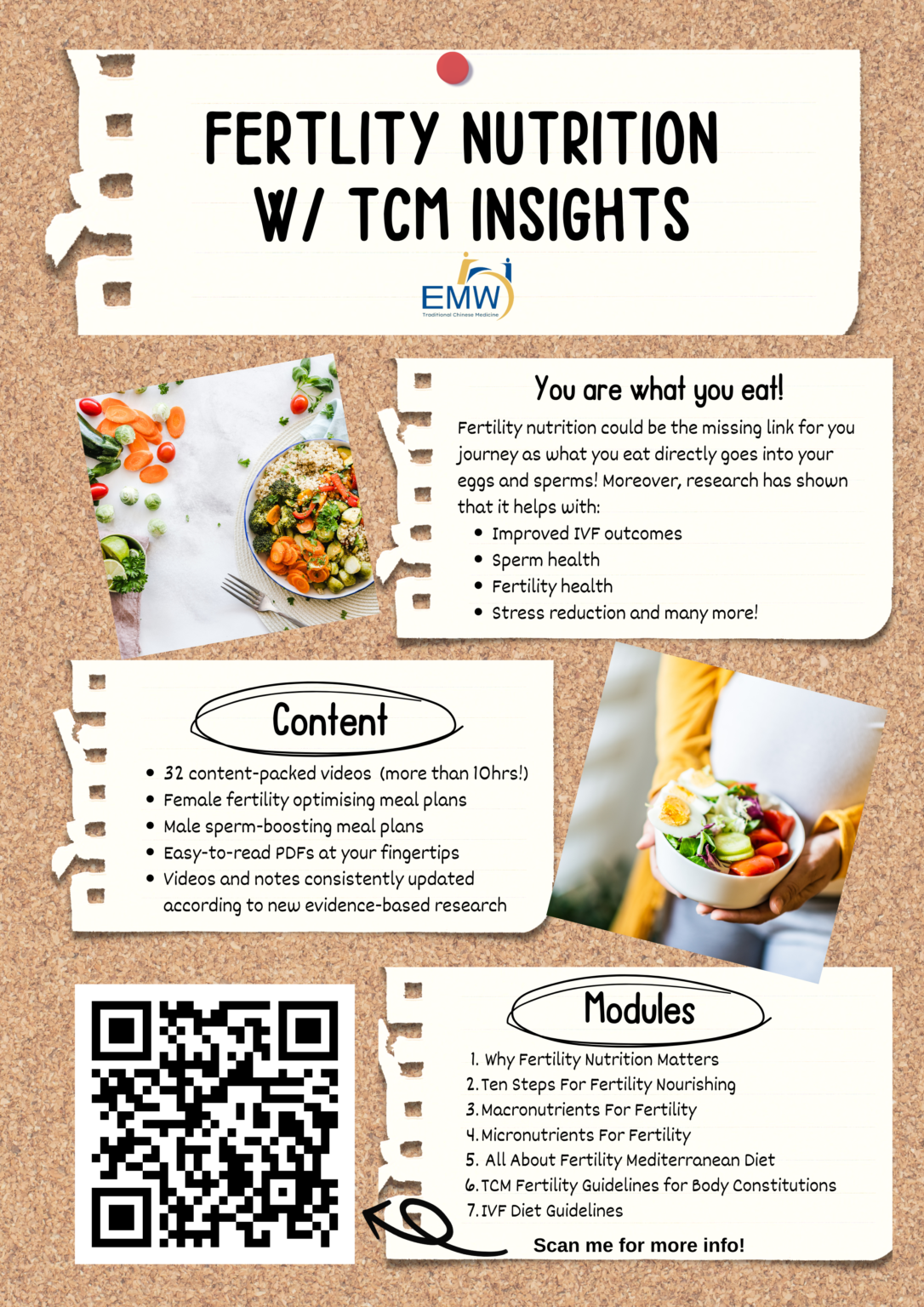
This comprehensive eBook gives you the clarity, confidence, and gentle structure you need to stop second-guessing and finally move forward. Instead of wasting precious months on trial and error, you will learn how to create the best internal environment for conception, naturally or alongside treatments like IUI and IVF.
newsletter subscribe
You understand the significance of nutrition and lifestyle, showcasing a conscientious approach. (You’re definitely on the right track!) Embarking on the Fertility Nutrition With TCM Insights course opens up a world of simple yet transformative actions that can reshape your journey, starting from the moment you decide to join.

When to Seek Professional TCM Fertility Help

Fertility is not just a matter of age or hormones. It is a reflection of the body’s internal harmony. Traditional Chinese Medicine provides an integrative and natural way to restore this balance, supporting both physical and emotional readiness for conception.

At EMW TCM Singapore, our team of experienced physicians brings together centuries-old wisdom and modern evidence to guide your fertility journey. Whether you are trying naturally or preparing for IVF, we are here to help you create the best internal environment for new life to begin.

If you have been trying to conceive for more than six to twelve months, experience irregular menses, painful periods, or have been diagnosed with PCOS, endometriosis, or low sperm count, consider a consultation. Professional TCM fertility care aims to correct the underlying imbalance rather than simply forcing ovulation or hormone production.

Check out our links below to book your fertility consultation and begin your holistic journey toward conception.

EMW TCM Clinics

International Building Branch

360 Orchard Road, International Building #02-05/06
Singapore 238869
Book Your Appointment With Us Here: +65 89585869

Our Physicians

Principal TCM Physician

  • M.Med(TCM Gynaecology)
  • B.Sc(Hons) Biomedical Sciences
  • Dip. Naturopath
  • Ayurvedic Therapist(500hrs)
  • Registered TCM Physician (Singapore MOH)

Senior TCM Physician

  • M.Med(TCM Acupuncture & Moxibustion)
  • B.Sc(Hons) Biomedical Sciences
  • Certified Aromatherapist
  • Registered TCM Physician (Singapore MOH)

TCM Physician

  • M.Med(TCM Gynaecology)
  • B.Sc(Hons) Biomedical Sciences
  • Registered TCM Physician (Singapore MOH)

TCM Physician

  • B.Med(TCM)
  • B.Sc(Hons) Biomedical Sciences
  • International Board-Certified Lactation Consultant (IBCLC)
  • Registered TCM Physician (Singapore MOH)

References

  1. Chao JC et al. Antioxidant effects of Lycium barbarum polysaccharides. J Sci Food Agric. 2006. DOI: 10.1002/jsfa.2362
  2. Stener-Victorin E et al. Reduction of uterine artery blood flow impedance. Hum Reprod. 1996. DOI: 10.1093/oxfordjournals.humrep.a019187
  3. May-Panloup P et al. Mitochondrial biogenesis and oocyte quality. Hum Reprod Update. 2016. DOI: 10.1093/humupd/dmw006
  4. Stener-Victorin E & Wu X. Acupuncture effects on the reproductive system. Auton Neurosci. 2010. DOI: 10.1016/j.autneu.2009.12.001
  5. Tamura H et al. Melatonin and female reproduction. J Obstet Gynaecol Res. 2014. DOI: 10.1111/jog.12317

Comments

No comments yet. Why don’t you start the discussion?

Leave a Reply

Your email address will not be published. Required fields are marked *