
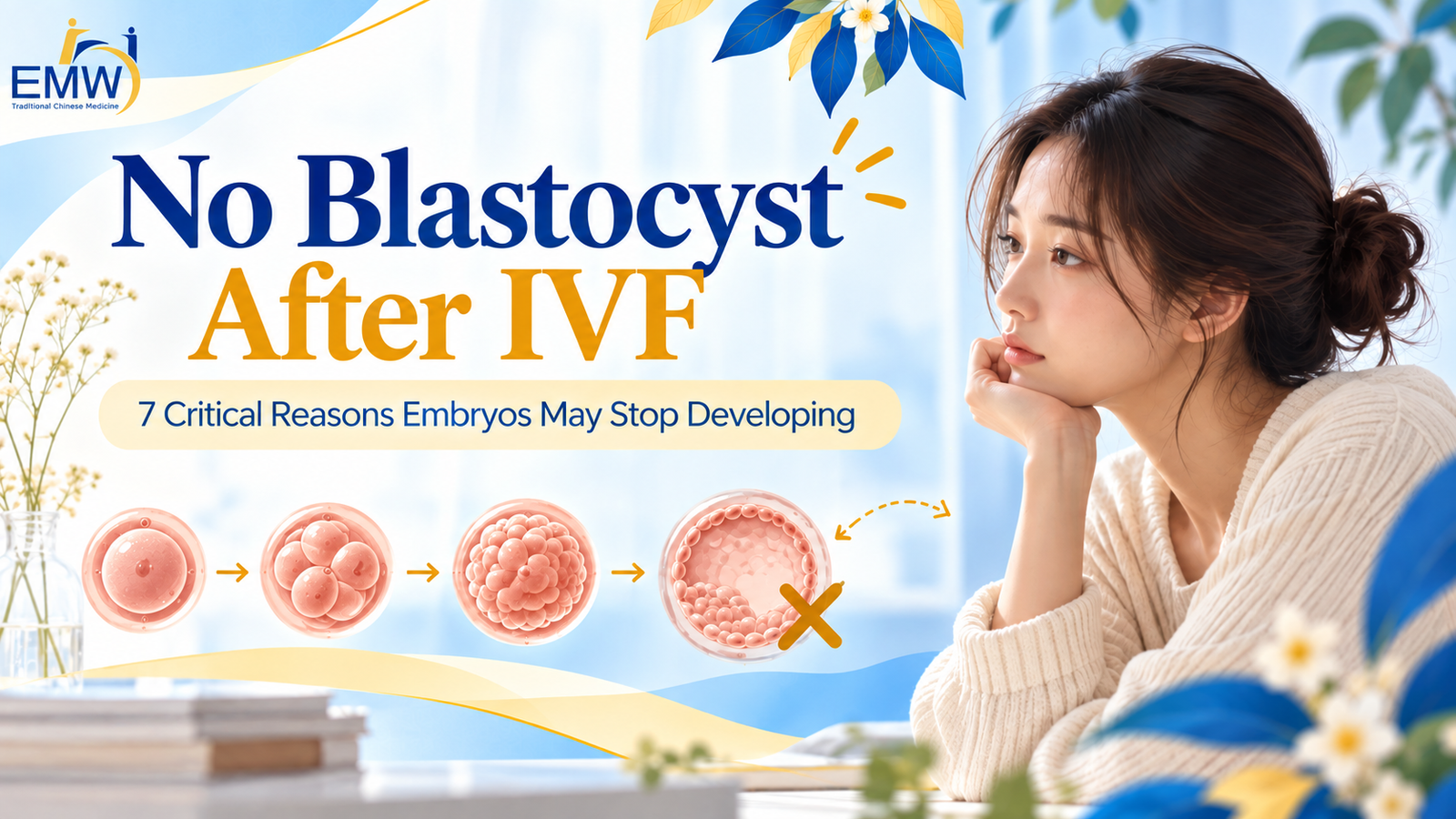
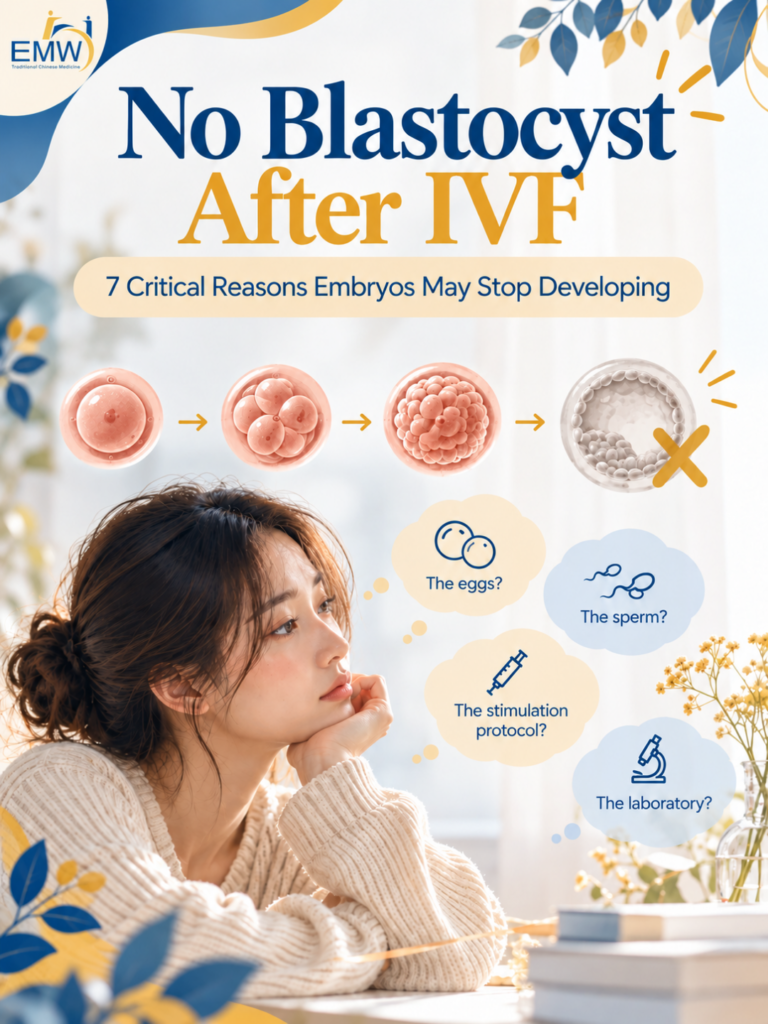
No Blastocyst After IVF: 7 Critical Reasons Embryos May Stop Developing
Egg retrieval is finished.
You may have started with what seemed like a reasonable number of eggs.
Some were mature.
Several fertilised.
Then the daily embryology updates became progressively harder to hear.
Day 3: some embryos still developing.
Day 5: none ready.
Day 6: still waiting.
And eventually:
No embryos suitable for freezing or transfer.
When there is no blastocyst after IVF, patients understandably want to know what went wrong.
Was it the eggs?
The sperm?
The stimulation protocol?
The laboratory?
Was there something you ate or did?
And, perhaps most importantly:
Will the same thing happen again?
The answer is rarely one simple factor.
Embryo development is a process of biological selection. Every egg retrieved does not become a mature egg, every mature egg does not fertilise, and every fertilised egg does not become a blastocyst.
The key is to work out where the greatest drop-off occurred.
Quick answer
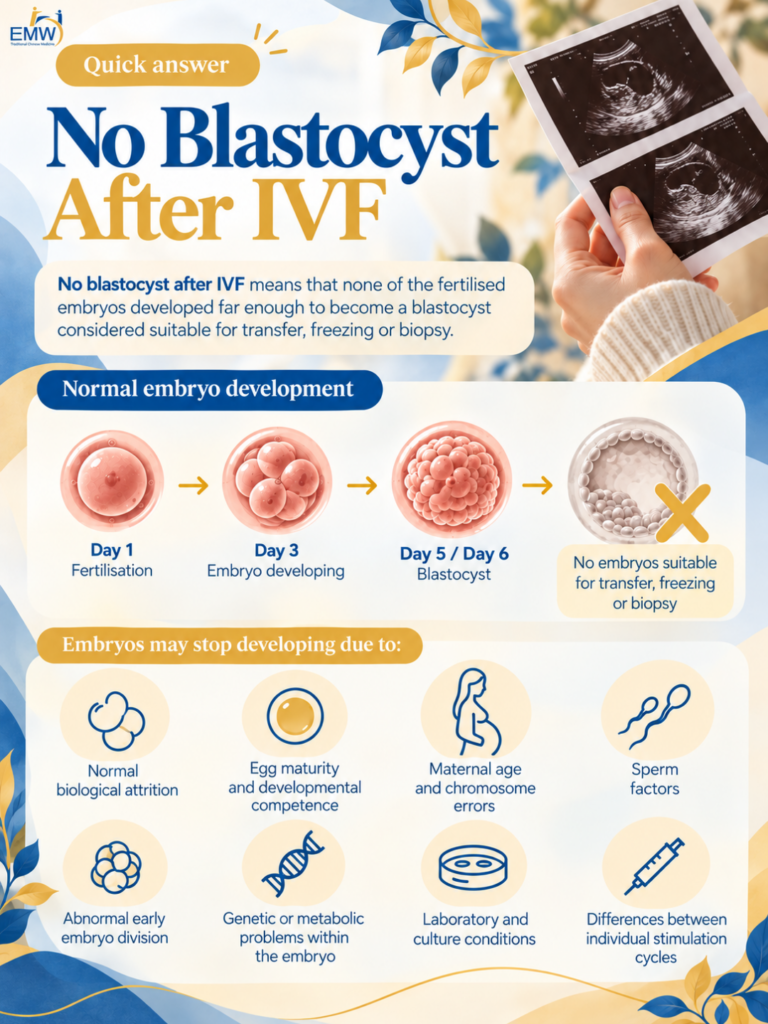
No blastocyst after IVF means that none of the fertilised embryos developed far enough to become a blastocyst considered suitable for transfer, freezing or biopsy.
A blastocyst usually develops around Day 5 or Day 6 after fertilisation, although some embryos reach this stage on Day 7. At this point, the embryo contains a fluid-filled cavity, an inner cell mass that may develop into the fetus, and trophectoderm cells that contribute to the placenta.
Embryos may stop developing because of a combination of factors involving:
- normal biological attrition
- egg maturity and developmental competence
- maternal age and chromosome errors
- sperm factors
- abnormal early embryo division
- genetic or metabolic problems within the embryo
- laboratory and culture conditions
- differences between individual ovarian stimulation cycles
One unsuccessful cycle does not automatically tell you which factor was responsible.
The most useful starting point is the complete embryology timeline.
First understand what normally happens between egg retrieval and blastocyst.
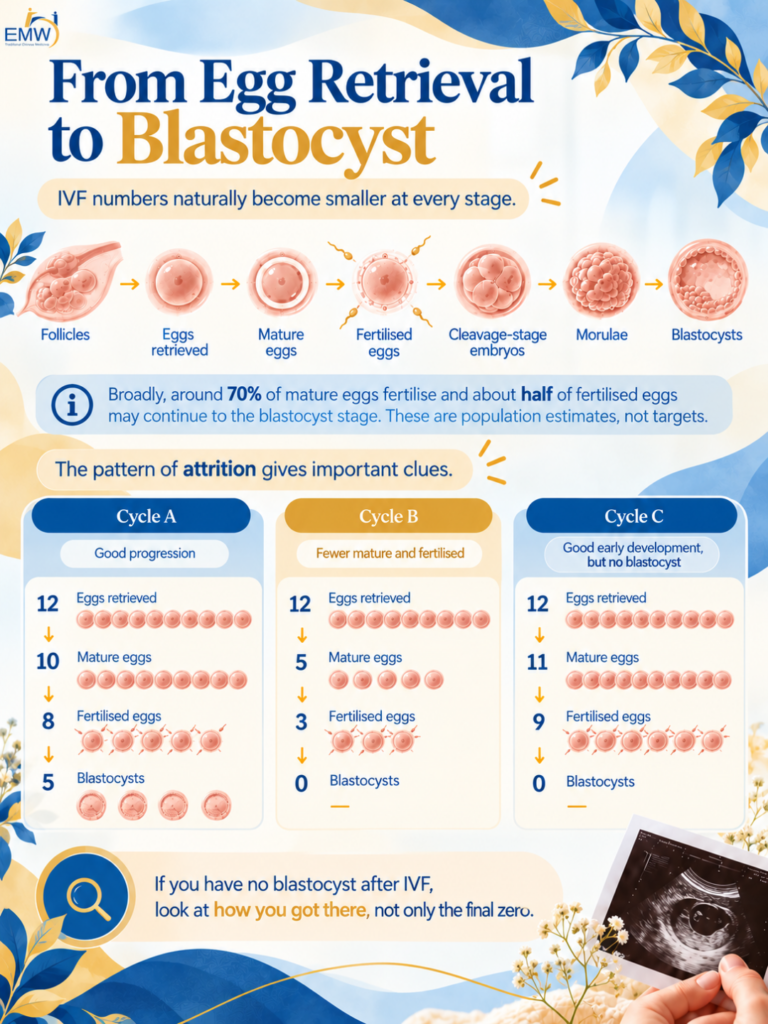
IVF numbers naturally become smaller at every stage.
A simplified pathway looks like this:
Follicles → eggs retrieved → mature eggs → fertilised eggs → cleavage-stage embryos → morulae → blastocysts
ASRM notes that, broadly, around 70% of mature eggs fertilise and about half of fertilised eggs may continue to the blastocyst stage. These are broad population estimates, not targets that every individual IVF cycle will meet.
This is why:
12 eggs retrieved
does not mean:
12 blastocysts.
Even a successful IVF cycle involves attrition.
However, the pattern of attrition gives important clues.
For example:
Cycle A
12 retrieved, 10 mature, 8 fertilised, 5 blastocysts
is very different from:
Cycle B
12 retrieved, 5 mature, 3 fertilised, 0 blastocysts
and also different from:
Cycle C
12 retrieved, 11 mature, 9 normally fertilised, 0 blastocysts.
In Cycle B, egg maturity and fertilisation deserve particular attention.
In Cycle C, the important question becomes why apparently normally fertilised embryos did not continue developing.
If you have no blastocyst after IVF, do not look only at the final zero.
Look at how you got there.
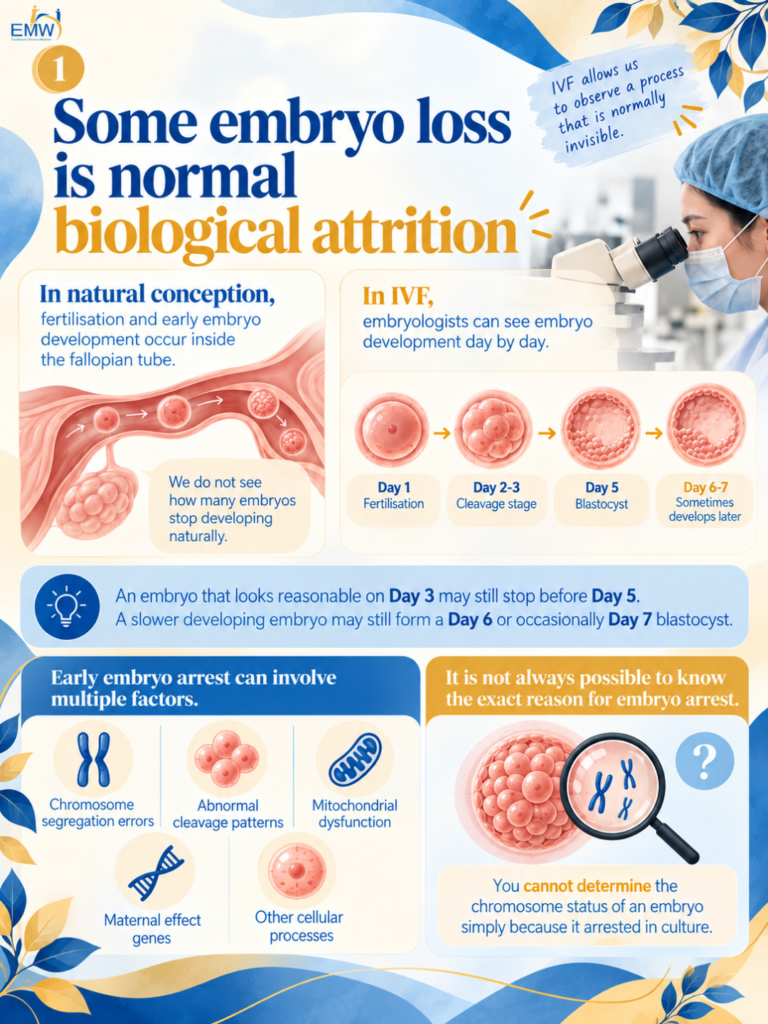
1. Some embryo loss is normal biological attrition
This is perhaps the hardest fact emotionally.
IVF allows us to watch a biological process that is normally invisible.
In natural conception, fertilisation and early embryo development occur inside the fallopian tube.
We do not see how many fertilised eggs stop developing before a pregnancy is established.
In IVF, embryologists can see those developmental losses day by day.
ASRM notes that the ability of individual embryos to reach the blastocyst stage varies widely and remains difficult to predict perfectly from cleavage-stage appearance alone.
An embryo that looks reasonable on Day 3 may still stop before Day 5.
Likewise, an embryo that is developing a little more slowly may still form a Day 6 or occasionally Day 7 blastocyst.
This means that some developmental arrest is part of human reproductive biology.
The question becomes more clinically important when:
- no embryos reach blastocyst
- the same pattern occurs repeatedly
- a relatively large number of normally fertilised embryos all arrest
- embryo development is consistently poor across several cycles
That is when a more detailed review becomes especially useful.
2. Egg maturity is not the same as egg quality
The number of eggs retrieved gets most of the attention after egg collection.
But one of the next numbers to ask for is:
How many were mature?
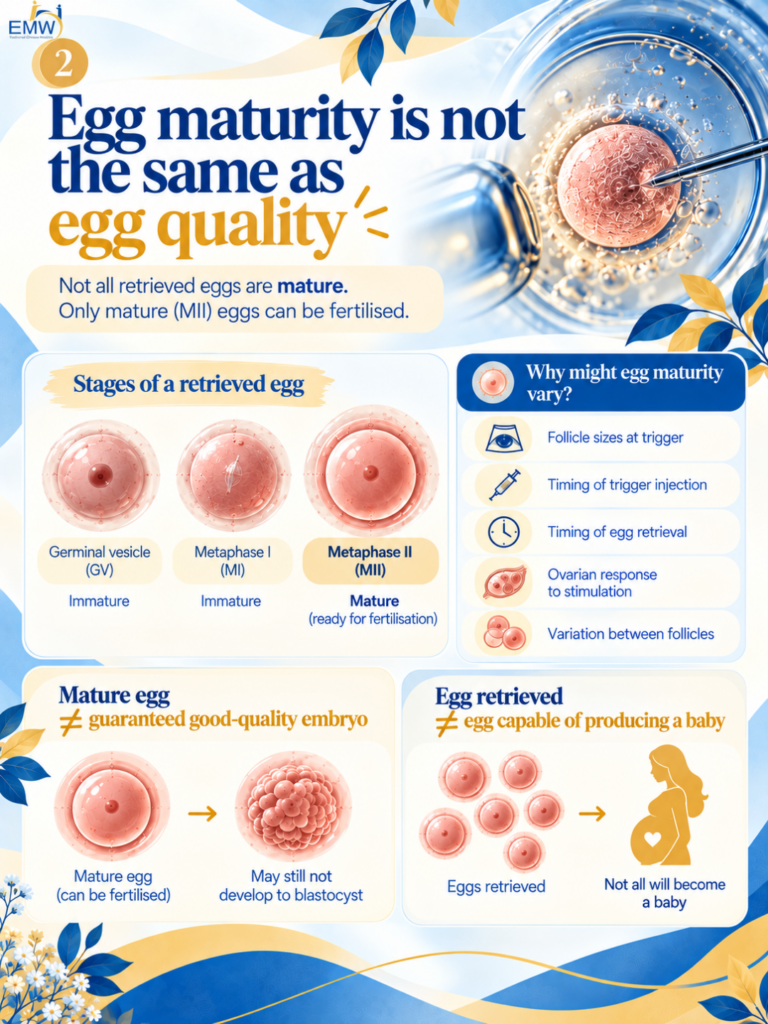
For fertilisation, the egg generally needs to have reached the metaphase II, or MII, stage.
NUH describes retrieved eggs as potentially being at germinal vesicle, metaphase I or mature metaphase II stages. Mature MII eggs are ready for fertilisation.
A cycle might retrieve 10 eggs but only have six mature eggs available for fertilisation.
That immediately changes the starting point.
Why might egg maturity vary?
Possible factors include:
- follicle sizes at trigger
- timing of the trigger injection
- timing of egg retrieval
- ovarian response to stimulation
- variation between follicles
- individual ovarian biology
A 2025 systematic review involving more than 25,000 follicles found that follicle size was associated with oocyte maturity and developmental competence, although follicle size alone is far from a perfect predictor.
But maturity still does not tell us everything.
A mature egg can fertilise and yet lack the developmental competence needed to support embryo growth all the way to the blastocyst stage.
That is why:
mature egg ≠ guaranteed good-quality embryo
and:
egg retrieved ≠ egg capable of producing a baby.
3. Maternal age and chromosome abnormalities matter
Age is one of the strongest predictors of IVF outcome.
This does not mean every embryo from an older woman is abnormal.
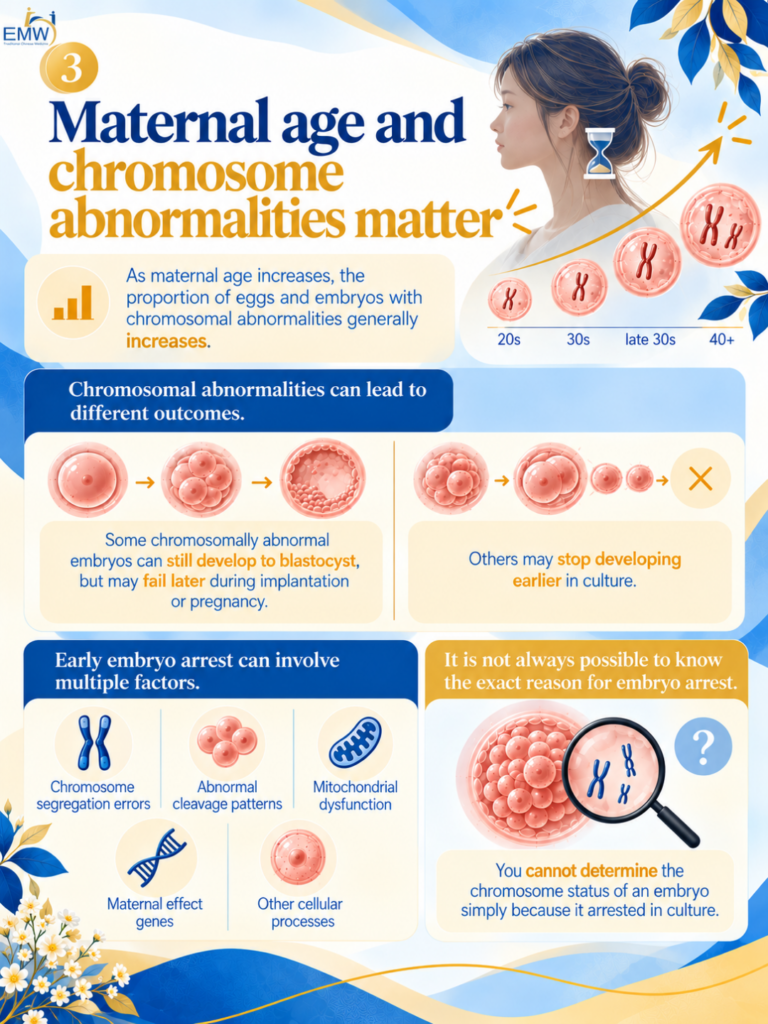
It means the proportion of eggs and embryos with chromosomal abnormalities generally increases as female age rises.
ESHRE and ASRM both recognise embryo aneuploidy as an important age-related factor in reproductive failure.
However, the relationship between chromosomes and developmental arrest is complicated.
Some chromosomally abnormal embryos continue to blastocyst and only fail later during implantation or pregnancy.
Others stop developing earlier.
Recent research into embryonic arrest suggests that early embryo failure can involve chromosome-segregation errors during cell division, abnormal cleavage patterns, mitochondrial dysfunction, maternal-effect genes and other cellular processes. The biology is still incompletely understood.
So it is too simplistic to say:
“The embryos stopped because all the eggs were chromosomally abnormal.”
Sometimes that may contribute.
But you cannot determine the chromosome status of an embryo simply because it arrested in culture.
4. Sperm still matters after fertilisation
There is a common misconception that once fertilisation occurs, sperm has successfully completed its job.
Not quite.
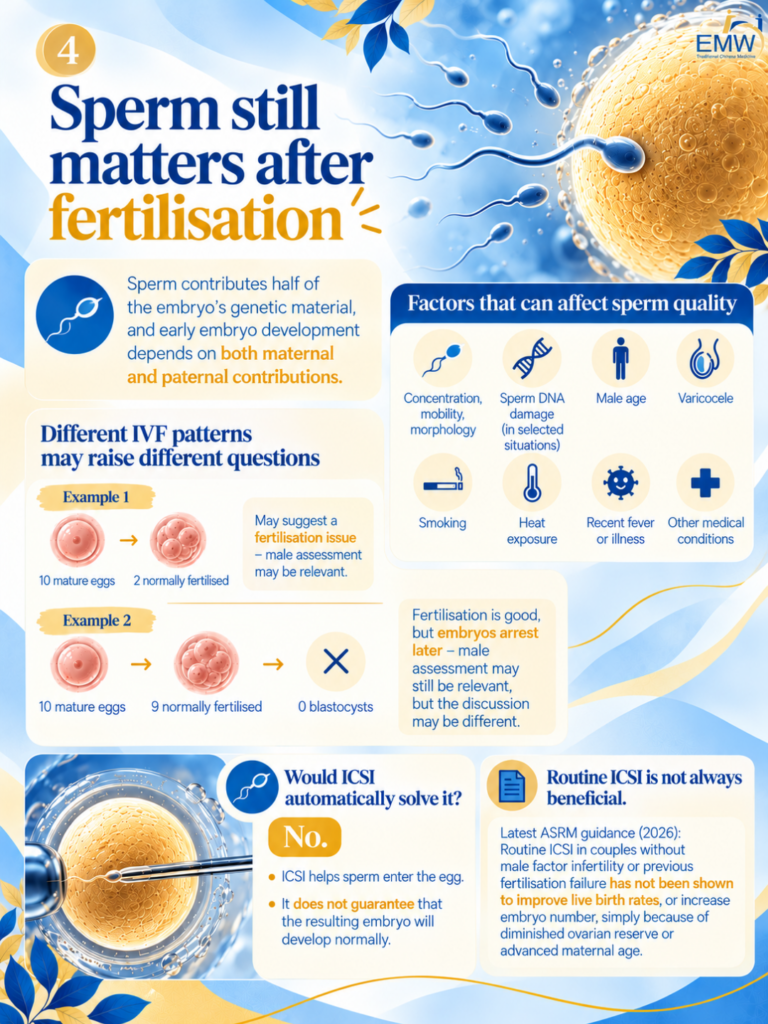
The sperm contributes half of the embryo’s genetic material.
Early embryo development depends on both maternal and paternal contributions.
This means the male partner should not disappear from the clinical discussion simply because ICSI successfully produced fertilised eggs.
A fertility review may consider:
- semen concentration
- motility
- morphology
- previous fertilisation results
- male age
- varicocele
- recent fever or illness
- smoking
- heat exposure
- relevant medical conditions
- sperm DNA damage in selected situations
Research has associated higher sperm DNA fragmentation with poorer embryo development and reduced blastocyst formation in some patient populations, although results vary considerably between studies.
This does not mean every couple with poor blastocyst formation should immediately order sperm DNA fragmentation testing.
The whole IVF pattern matters.
For example:
10 mature eggs → 2 normally fertilised
raises a different question from:
10 mature eggs → 9 normally fertilised → 0 blastocysts.
Male assessment may be appropriate in both situations, but the likely discussion will not be identical.
Would ICSI automatically solve it?
No.
ICSI helps sperm enter the egg.
It does not guarantee that the resulting embryo will develop normally.
The latest 2026 ASRM guidance states that routine ICSI in couples without male-factor infertility or previous fertilisation failure has not been shown to improve live birth rates. ICSI also has not been shown to improve embryo number or live birth simply because a woman has diminished ovarian reserve or advanced maternal age.
If fertilisation itself was poor, changing fertilisation strategy may be relevant.
If fertilisation was already good but embryos later arrested, simply switching to ICSI may not address the underlying problem.
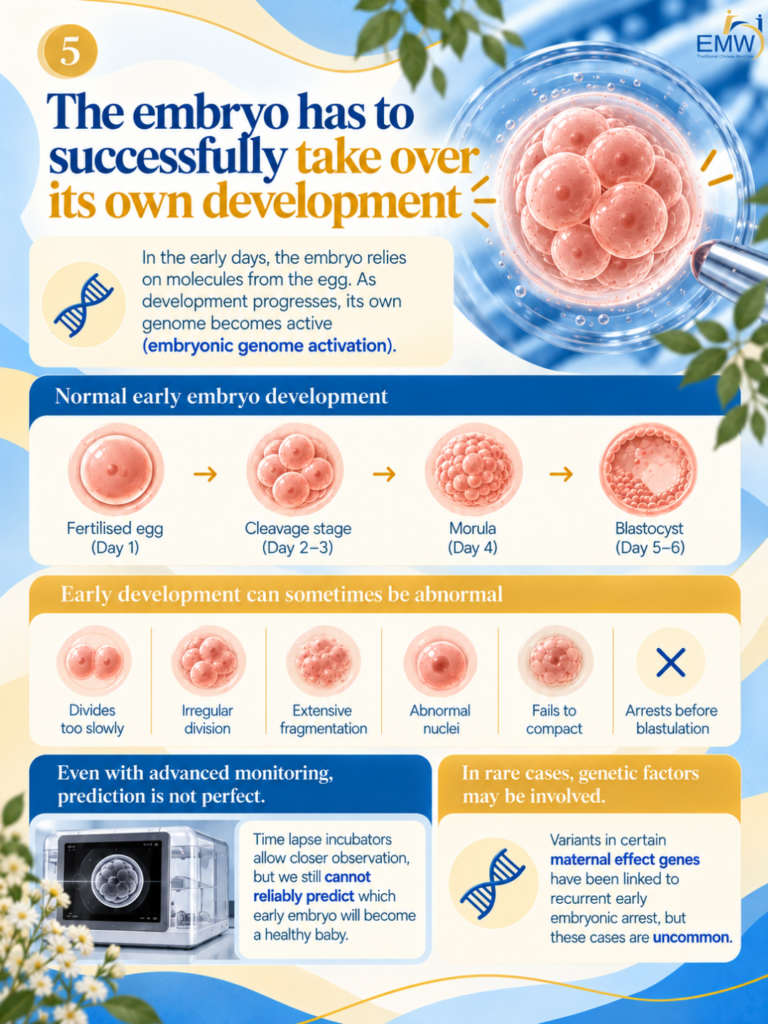
5. The embryo has to successfully take over its own development
The first few days after fertilisation are biologically complex.
Initially, the embryo relies heavily on molecules and cellular machinery supplied by the egg.
As development progresses, the embryo’s own genome becomes increasingly active.
This transition is known as embryonic genome activation.
If early cell division is abnormal, the embryo may:
- divide too slowly
- divide irregularly
- develop extensive fragmentation
- have abnormal numbers of nuclei
- stop compacting properly
- fail to form a morula
- arrest before blastulation
Modern time-lapse incubators have made it possible to observe many of these developmental patterns more closely.
But even sophisticated embryo monitoring still cannot perfectly identify which early embryo will become a healthy baby.
ASRM specifically notes that reliable criteria capable of predicting which cleavage-stage embryos will become viable blastocysts have not yet been established for routine clinical use.
In rare situations, recurrent developmental arrest may also lead fertility specialists to consider unusual genetic causes.
Variants in certain maternal-effect genes have been associated with recurrent early embryonic arrest.
These cases are uncommon.
Genetic testing is not something every couple with one unsuccessful blastocyst culture needs.
But repeated, strikingly similar developmental failure may deserve a deeper reproductive-genetics discussion.
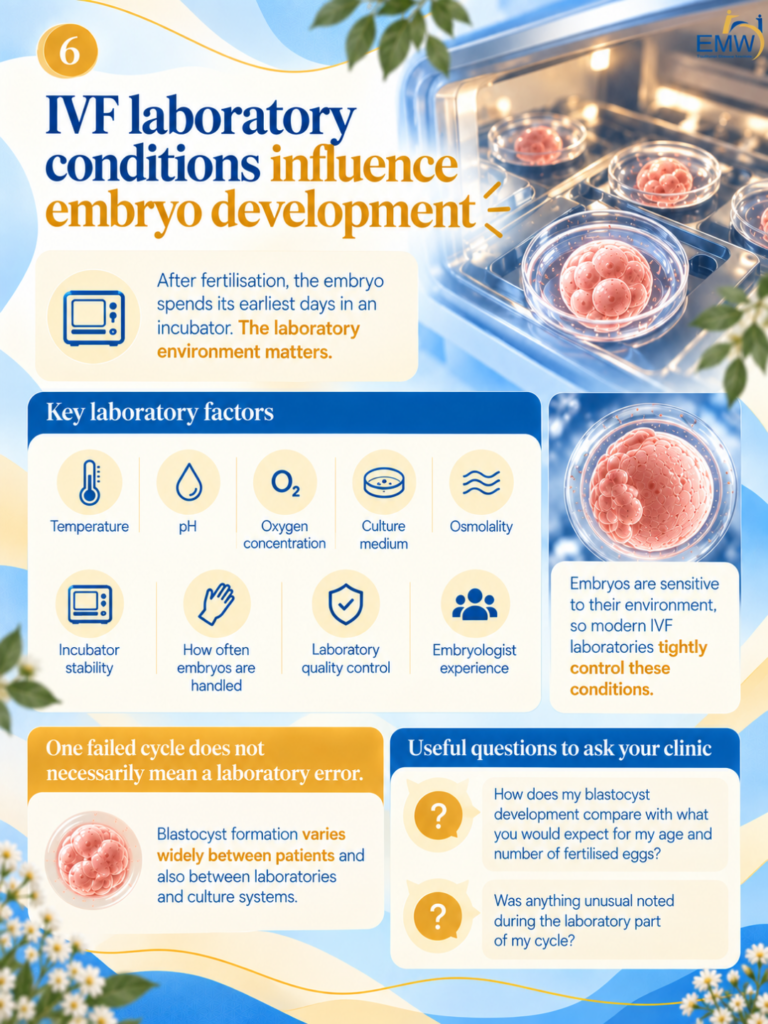
6. IVF laboratory conditions influence embryo development
Once an embryo is created through IVF, it spends its earliest days inside an incubator.
The laboratory therefore matters.
Important variables include:
- temperature
- pH
- oxygen concentration
- culture medium
- osmolality
- incubator stability
- how often embryos are handled
- laboratory quality control
- embryologist experience
Modern IVF laboratories tightly control these conditions because embryos are sensitive to their environment.
A major review of IVF laboratory culture emphasises that temperature, pH, oxygen, osmolality, gas concentration and light exposure all require careful management.
However, this section needs perspective.
One failed cycle does not mean:
“The laboratory damaged my embryos.”
Biological differences between patients have an enormous effect on blastocyst formation.
ASRM notes that blastulation rates vary considerably between patients and also between laboratories and culture systems.
If you are concerned, reasonable questions for the fertility clinic include:
How does my blastocyst development compare with what you would expect for my age and number of fertilised eggs?
and:
Was anything unusual noted during the laboratory part of my cycle?
That is more useful than assuming laboratory error without evidence.
7. One IVF cycle is only one cohort of eggs
This point is easy to forget.
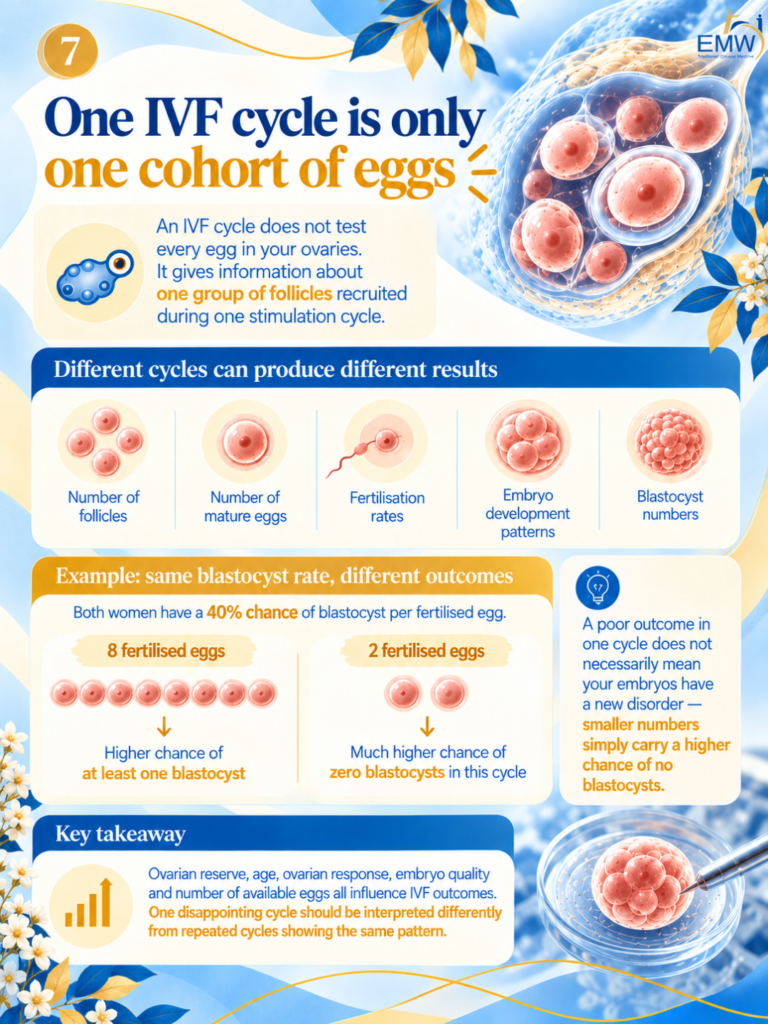
An IVF cycle does not test every egg remaining in your ovaries.
It gives information about one group of follicles recruited during one stimulation cycle.
Different cycles can produce different:
- numbers of follicles
- numbers of mature eggs
- fertilisation rates
- embryo-development patterns
- blastocyst numbers
This is particularly important in patients who begin with relatively few eggs.
Imagine two women each have a blastocyst formation probability of 40% per normally fertilised egg.
One has eight fertilised embryos.
The other has two.
The woman with two embryos has a much greater chance of ending that particular cycle with zero blastocysts simply because the starting number is small.
That does not necessarily mean her embryos have a unique new disorder.
Ovarian reserve matters partly because it influences how many opportunities are available in each cycle.
Age, ovarian response, embryo quality and number of available eggs are all important predictors of IVF outcome.
This is also why one disappointing cycle needs to be interpreted differently from repeated cycles showing the same pattern.
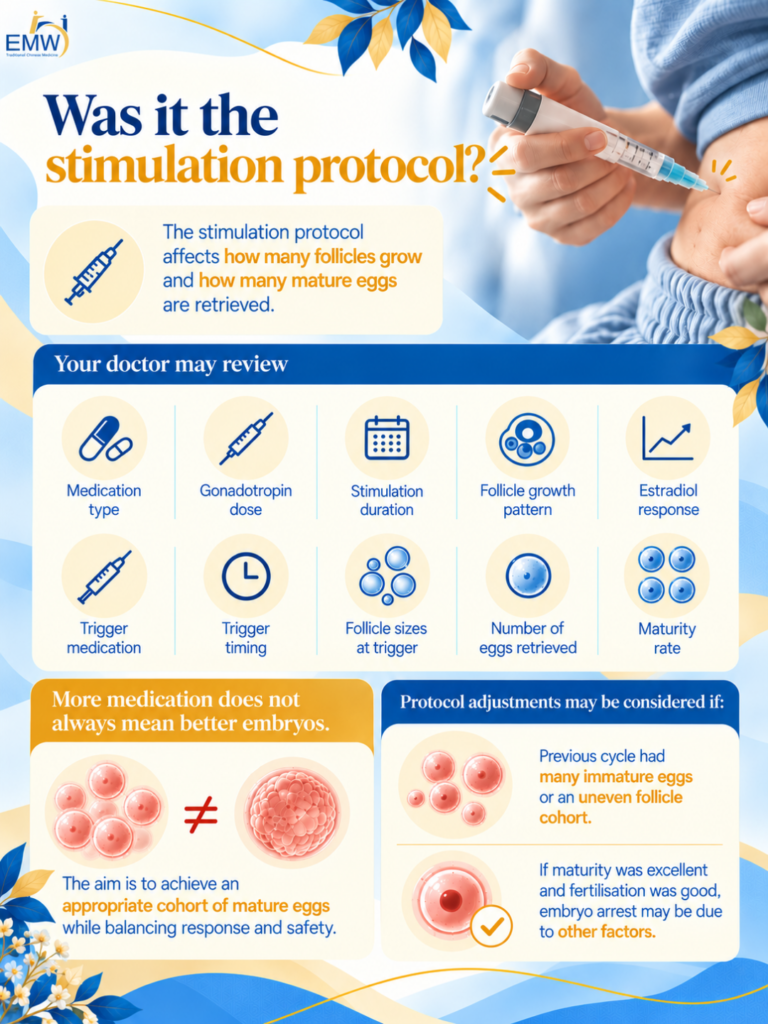
Was it the stimulation protocol?
Possibly, but do not assume that changing the medication automatically fixes embryo development.
After an unsuccessful cycle, your fertility specialist may review:
- medication type
- gonadotropin dose
- stimulation duration
- follicle growth pattern
- estradiol response
- trigger medication
- trigger timing
- follicle sizes at trigger
- number of eggs retrieved
- maturity rate
The aim is not necessarily:
More medication = more eggs = better embryos.
The objective is to achieve an appropriate cohort of mature eggs while balancing response and safety.
If the previous stimulation produced many immature eggs or a very uneven follicle cohort, adjustments may be discussed.
If maturity was excellent and fertilisation was good, the reason for embryo arrest may lie elsewhere.
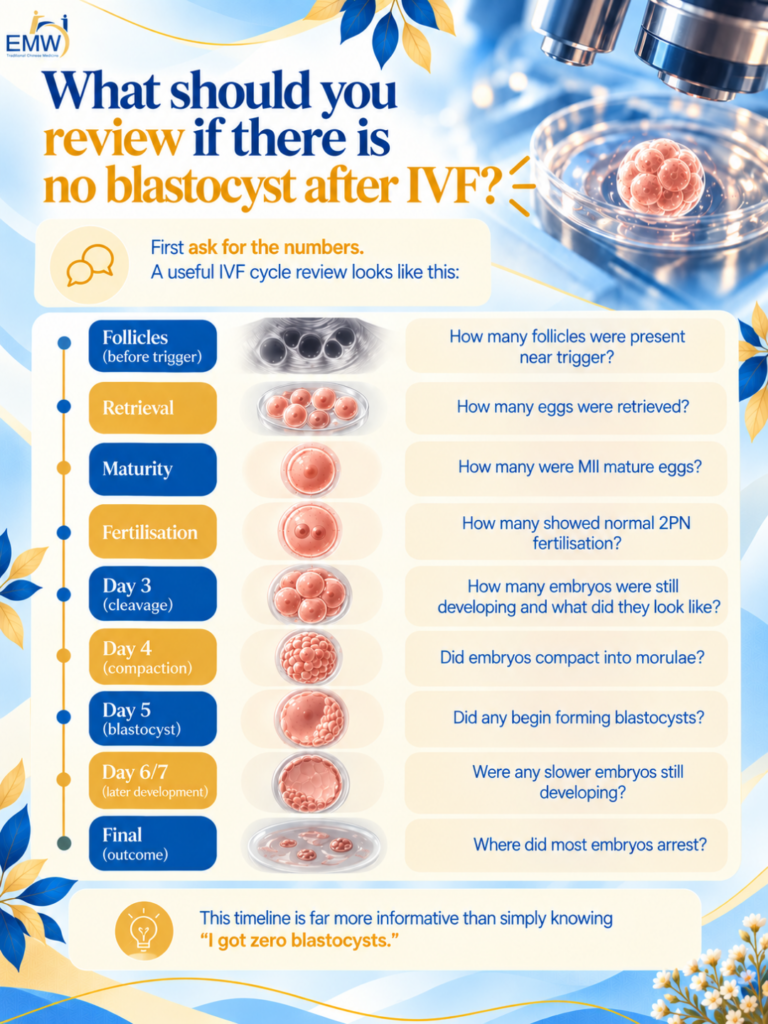
What should you review if there is no blastocyst after IVF?
Do not go into the next consultation only asking:
“What should we change?”
First ask for the numbers.
A useful IVF cycle review looks like this:
Stage | Question to ask |
|---|---|
| Follicles | How many follicles were present near trigger? |
| Retrieval | How many eggs were retrieved? |
| Maturity | How many were MII mature eggs? |
| Fertilisation | How many showed normal 2PN fertilisation? |
| Day 3 | How many embryos were still developing and what did they look like? |
| Day 4 | Did embryos compact into morulae? |
| Day 5 | Did any begin forming blastocysts? |
| Day 6/7 | Were any slower embryos still developing? |
| Final | Where did most embryos arrest? |
This timeline is far more informative than simply knowing:
“I got zero blastocysts.”
NUH similarly describes IVF embryo assessment as a day-by-day process, including maturity, cleavage, compaction and eventual blastocyst grading.
Do Day 6 blastocysts still count?
Yes.
A blastocyst does not have to be fully developed on Day 5 to be usable.
Current terminology recognises blastocysts forming on Day 5 or Day 6, and some embryos reach the stage on Day 7.
Whether a particular embryo is suitable for freezing, biopsy or transfer depends on:
- development
- morphology
- laboratory policy
- the clinical situation
Do not assume an embryo is automatically poor simply because it was not ready first thing on Day 5.
Your embryologist can explain how your clinic handles slower-developing embryos.
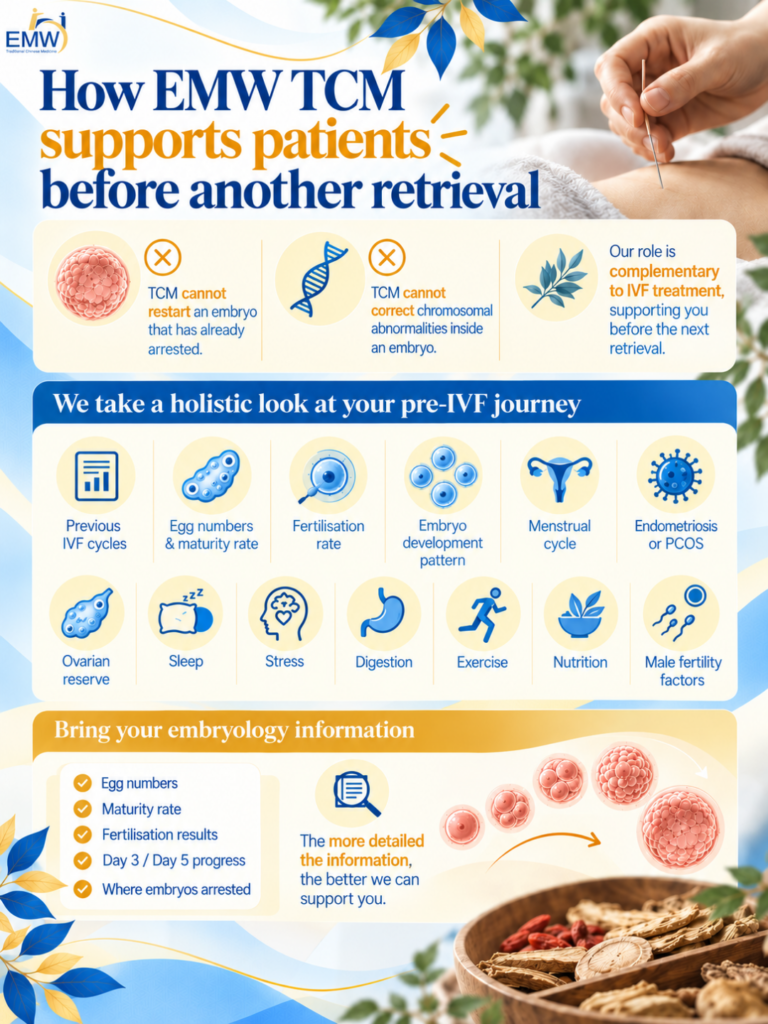
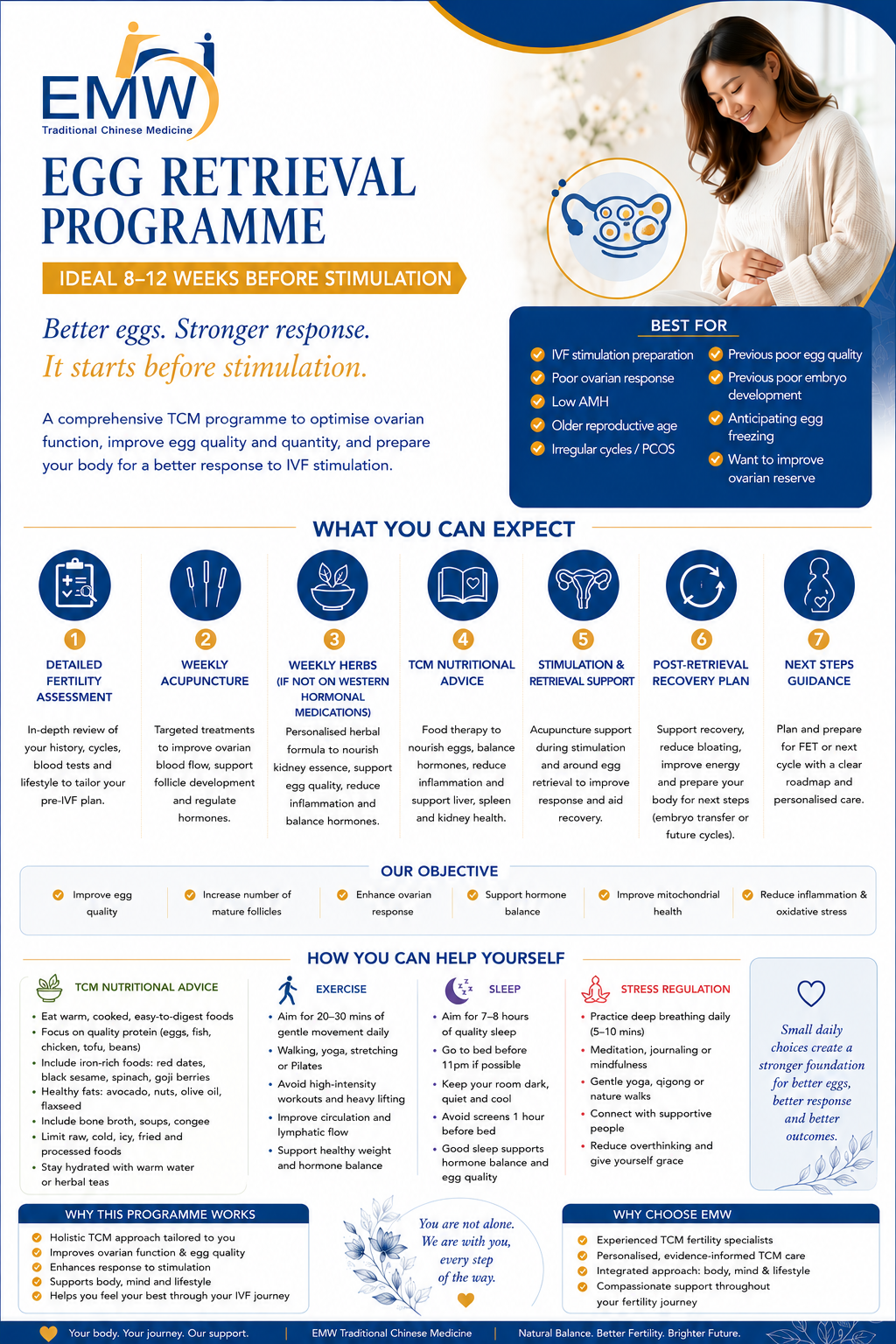
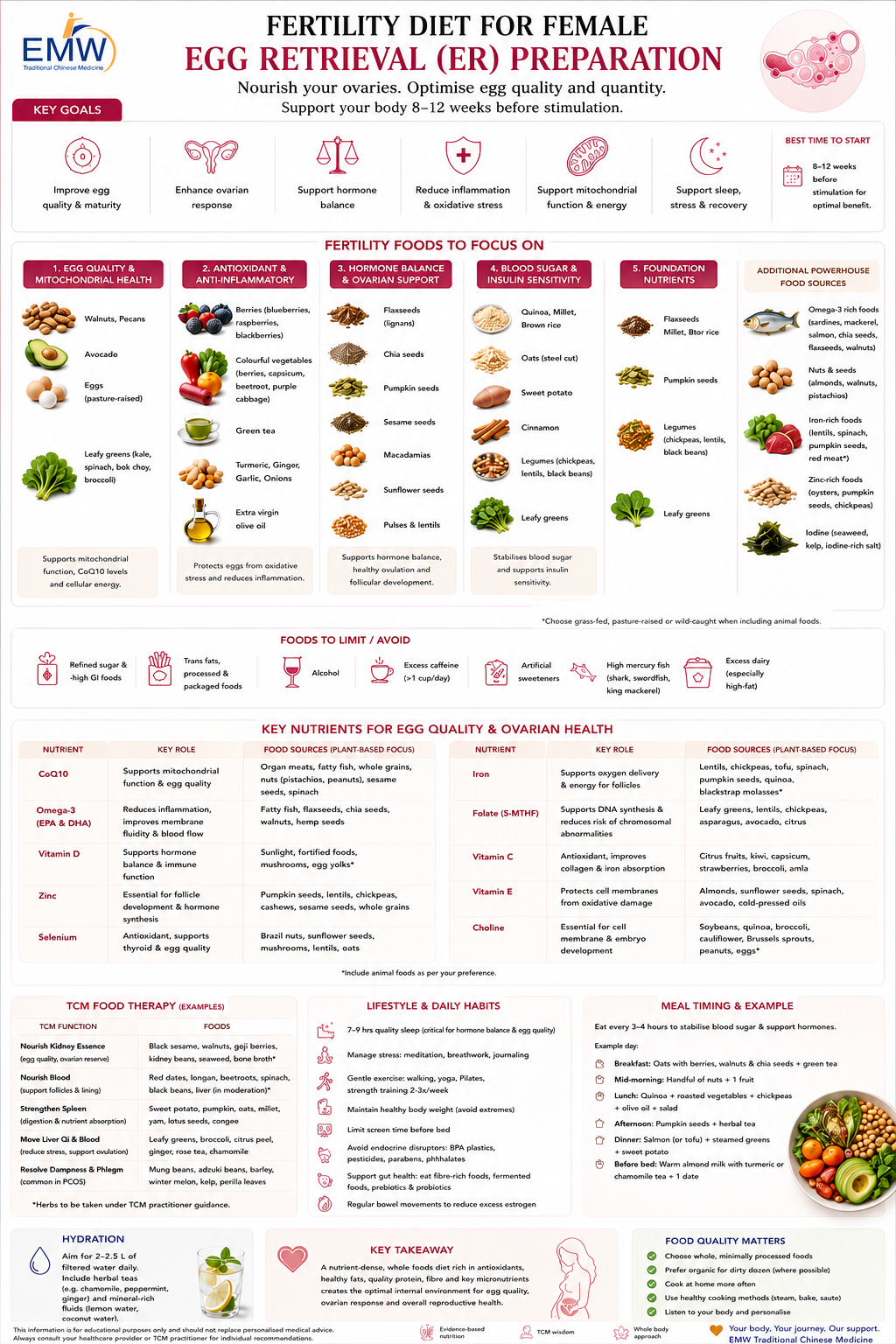
How EMW TCM supports patients before another retrieval
At EMW TCM, our role is complementary to IVF treatment.
Acupuncture or Chinese medicine cannot restart an embryo that has already arrested in the laboratory.
TCM also cannot correct a chromosomal abnormality inside an embryo.
For patients preparing for another retrieval, we instead review the broader pre-IVF period.
This may include:
- previous stimulation cycles
- egg numbers
- maturity rate
- fertilisation rate
- embryo-development pattern
- menstrual cycle
- endometriosis or PCOS
- ovarian reserve
- sleep
- stress
- digestion
- energy
- exercise
- nutrition
- male fertility factors
- IVF timeline
If there is time before the next cycle, treatment can be planned during the preparation period and adjusted once stimulation begins.
We encourage patients to bring their embryology information.
“Seven eggs retrieved, zero blastocysts” is useful.
But:
“Seven retrieved, six mature, five fertilised normally, four looked appropriate on Day 3 and all arrested between Day 3 and Day 5”
tells us much more.
TCM support should complement that medical review, not replace it.
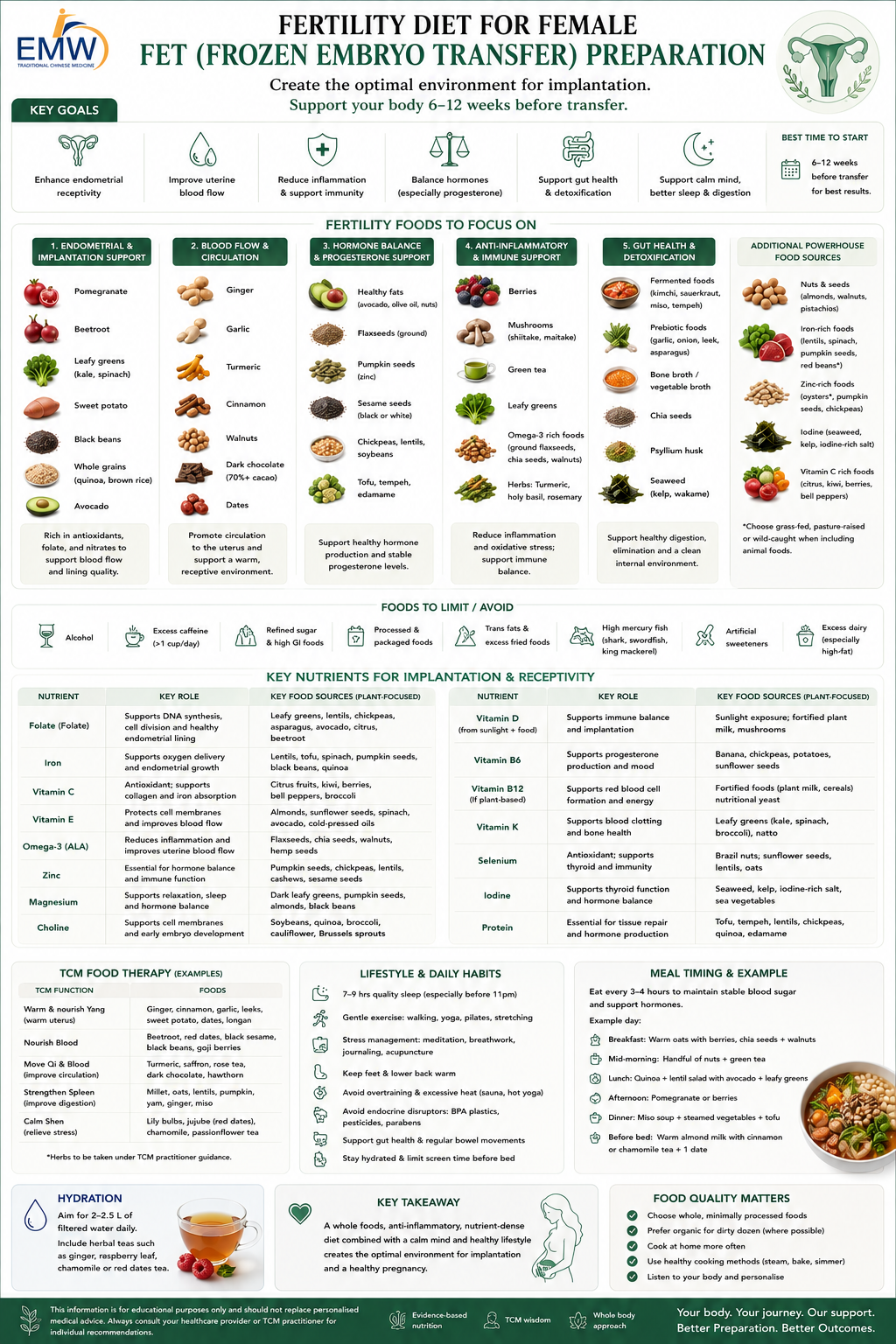
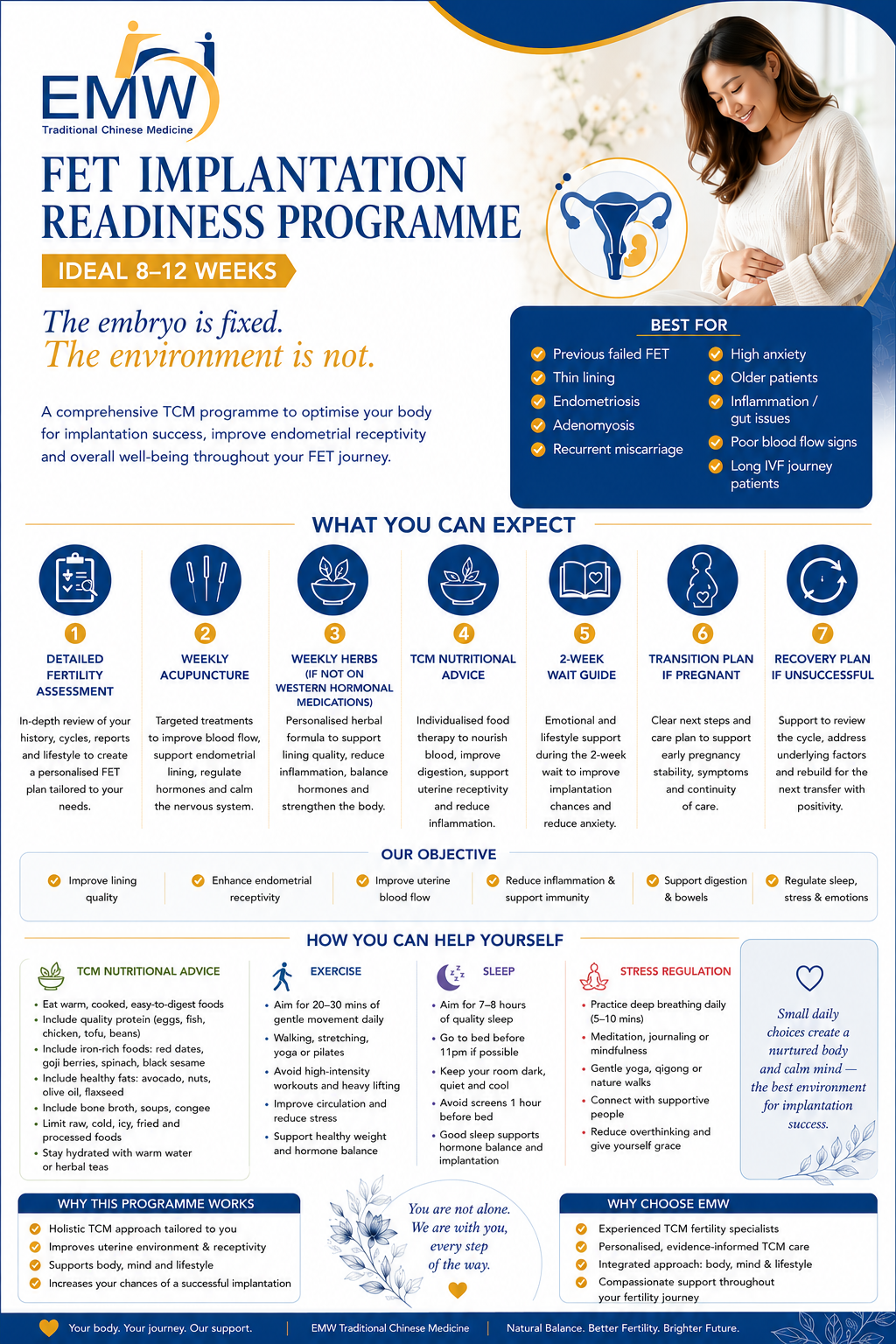
Before your next IVF transfer, ask these 7 questions
- Were my previous embryos tested or untested, and how does that affect how we interpret the failed transfers?
- Does my uterine cavity need to be reassessed?
- Could adenomyosis, endometriosis or hydrosalpinx be relevant in my case?
- Was my endometrial preparation and progesterone exposure appropriate?
- Were there any difficulties during embryo transfer?
- Is there a specific reason for any additional test or IVF add-on being recommended?
- Will that test or treatment meaningfully change what we do next?
The seventh question is especially important.
Testing is most valuable when the result changes management.
EMW IVF Master Guide
Press the image to zoom in. If you like such infographics, we have a ‘3 ways to superboost your fertility’ PDF guide – Actionable steps that can help to support your reproductive health right away. You can sign up for free here: https://emwtcm.podia.com/3-ways-to-boost-your-fertility
Frequently Asked Questions
Is it normal to have zero blastocysts from IVF?
It can happen.
The likelihood depends heavily on age, number of mature eggs, fertilisation, embryo competence and individual cycle factors.
It becomes more concerning when the same pattern occurs repeatedly or when a relatively large number of normally fertilised embryos all fail to progress.
Does zero blastocysts mean my eggs are bad?
No.
It tells us that the embryos in that particular cycle did not reach a usable blastocyst stage.
Egg factors may contribute, but sperm, chromosomes, early cell division, stimulation and other biological factors can also matter.
If fertilisation was good, does that mean sperm is definitely normal?
No.
Normal fertilisation is reassuring, but sperm contributes genetic material that remains relevant to later embryo development.
That does not mean sperm is automatically responsible either.
Can changing IVF to ICSI improve blastocyst formation?
Not necessarily.
If there was poor or failed fertilisation with conventional IVF, ICSI may be considered.
If fertilisation was already normal, current evidence does not show that routine ICSI improves live birth simply because embryos later stopped developing.
Is Day 6 too late for a blastocyst?
No.
Many clinically usable embryos reach blastocyst on Day 6, and some laboratories also culture selected embryos to Day 7.
Does one cycle with no blastocysts mean the next cycle will be the same?
No.
One IVF cycle represents one cohort of eggs.
The next cycle may have a different ovarian response and different embryo-development outcome.
Repeated similar outcomes are more informative than one isolated cycle.
Can egg quality actually be tested?
There is no single blood test that directly measures egg quality.
AMH and AFC mainly help estimate ovarian reserve and expected response.
Embryo development provides additional information about reproductive potential, but it cannot reveal one simple “egg quality score”.
The most important question is where the embryos stopped
Experiencing no blastocyst after IVF can make an entire cycle feel as though it produced nothing.
But medically, the cycle produced information.
It tells you:
How your ovaries responded.
How many eggs matured.
How fertilisation went.
How the embryos divided.
And where development became difficult.
That information should guide the next conversation.
Do not immediately change ten things.
Do not assume that your eggs are hopeless.
Do not assume that sperm must be responsible.
And do not assume that a supplement or IVF add-on can guarantee a different result.
Instead, reconstruct the cycle from:
retrieval → maturity → fertilisation → cleavage → blastocyst
Then ask what can realistically be changed before the next attempt.
That is a far stronger starting point than simply trying harder.
Preparing for another IVF cycle?
If you are preparing for another egg retrieval after disappointing embryo development, use the interval between cycles to understand what happened and prepare systematically.
You can read more fertility and IVF guides on the EMW TCM blog:
For couples who want a structured approach to nutrition, lifestyle and fertility preparation, our Fertility Optimisation Bundle brings together practical fertility guidance with TCM insights:
Access the Fertility Optimisation Bundle
This article is educational and does not replace advice from your fertility specialist or embryologist. Always follow your IVF clinic’s recommendations regarding stimulation medication, trigger timing, egg retrieval, fertilisation methods, embryo culture and genetic testing.
When to Seek Professional TCM Fertility Help
Fertility is not just a matter of age or hormones. It is a reflection of the body’s internal harmony. Traditional Chinese Medicine provides an integrative and natural way to restore this balance, supporting both physical and emotional readiness for conception.
At EMW TCM Singapore, our team of experienced physicians brings together centuries-old wisdom and modern evidence to guide your fertility journey. Whether you are trying naturally or preparing for IVF, we are here to help you create the best internal environment for new life to begin.
If you have been trying to conceive for more than six to twelve months, experience irregular menses, painful periods, or have been diagnosed with PCOS, endometriosis, or low sperm count, consider a consultation. Professional TCM fertility care aims to correct the underlying imbalance rather than simply forcing ovulation or hormone production.
Check out our links below to book your fertility consultation and begin your holistic journey toward conception.
EMW TCM Clinics
International Building Branch
360 Orchard Road, International Building #02-05/06
Singapore 238869
Book Your Appointment With Us Here: +65 89585869
Our Physicians

Principal TCM Physician
- M.Med(TCM Gynaecology)
- B.Sc(Hons) Biomedical Sciences
- Dip. Naturopath
- Ayurvedic Therapist(500hrs)
- Registered TCM Physician (Singapore MOH)

Senior TCM Physician
- M.Med(TCM Acupuncture & Moxibustion)
- B.Sc(Hons) Biomedical Sciences
- Certified Aromatherapist
- Registered TCM Physician (Singapore MOH)

TCM Physician
- M.Med(TCM Gynaecology)
- B.Sc(Hons) Biomedical Sciences
- Registered TCM Physician (Singapore MOH)

TCM Physician
- M.Med(TCM Acupuncture & Moxibustion)
- B.Sc(Hons) Biomedical Sciences
- Registered TCM Physician (Singapore MOH)
TCM Physician
- B.Med(TCM)
- B.Sc(Hons) Biomedical Sciences
- International Board-Certified Lactation Consultant (IBCLC)
- Registered TCM Physician (Singapore MOH)
References
- American Society for Reproductive Medicine. Blastocyst Culture and Transfer in Clinically Assisted Reproduction: A Committee Opinion.
- American Society for Reproductive Medicine. Intracytoplasmic Sperm Injection for Nonmale Factor Indications: A Committee Opinion. 2026.
- American Society for Reproductive Medicine. The International Glossary on Infertility and Fertility Care. 2025.
- Human Fertilisation and Embryology Authority. Decisions to Make About Your Embryos.
- National University Hospital Singapore. Infertility and IVF Treatment.
- KK Women’s and Children’s Hospital. Blastocyst Culture.
- McCollin A, et al. Embryonic arrest: causes and implications. 2023.
- Review: Preimplantation embryos that arrest in vitro: phenotypes, causes, and possible therapies. 2026.
- Review: The genetics of preimplantation embryonic arrest: the role of aneuploidies. 2025.
- Cairo Consensus Group. Guidelines on IVF Culture Conditions. Reproductive BioMedicine Online.
- American Society for Reproductive Medicine. It Takes More Than One: Why IVF Patients Often Need Multiple Embryos to Have a Baby.
- Human Fertilisation and Embryology Authority. Treatment Add-ons. 2026.