Postpartum Constipation: 7 Essential Causes and Safe Recovery Tips

Postpartum Constipation

Postpartum Constipation: 7 Essential Causes and Safe Recovery Tips

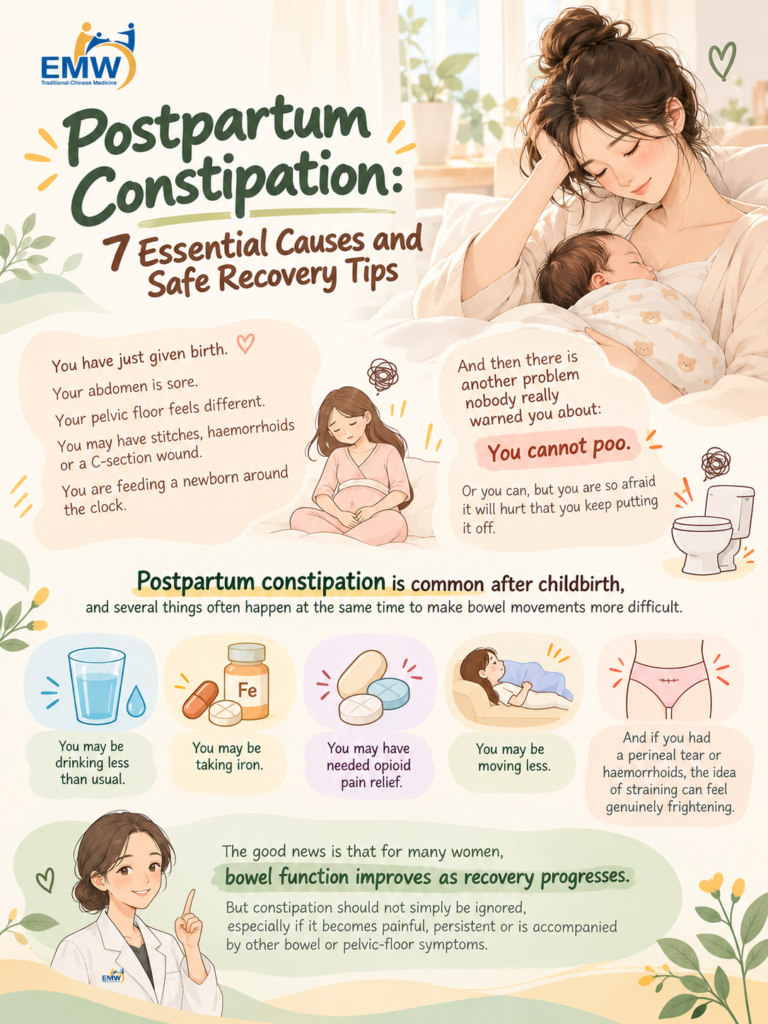
You have just given birth.

Your abdomen is sore.

Your pelvic floor feels different.

You may have stitches, haemorrhoids or a C-section wound.

You are feeding a newborn around the clock.

And then there is another problem nobody really warned you about:

You cannot poo.

Or you can, but you are so afraid it will hurt that you keep putting it off.

Postpartum constipation is common after childbirth, and several things often happen at the same time to make bowel movements more difficult.

You may be drinking less than usual.

You may be taking iron.

You may have needed opioid pain relief.

You may be moving less.

And if you had a perineal tear or haemorrhoids, the idea of straining can feel genuinely frightening.

The good news is that for many women, bowel function improves as recovery progresses.

But constipation should not simply be ignored, especially if it becomes painful, persistent or is accompanied by other bowel or pelvic-floor symptoms.

Quick answer

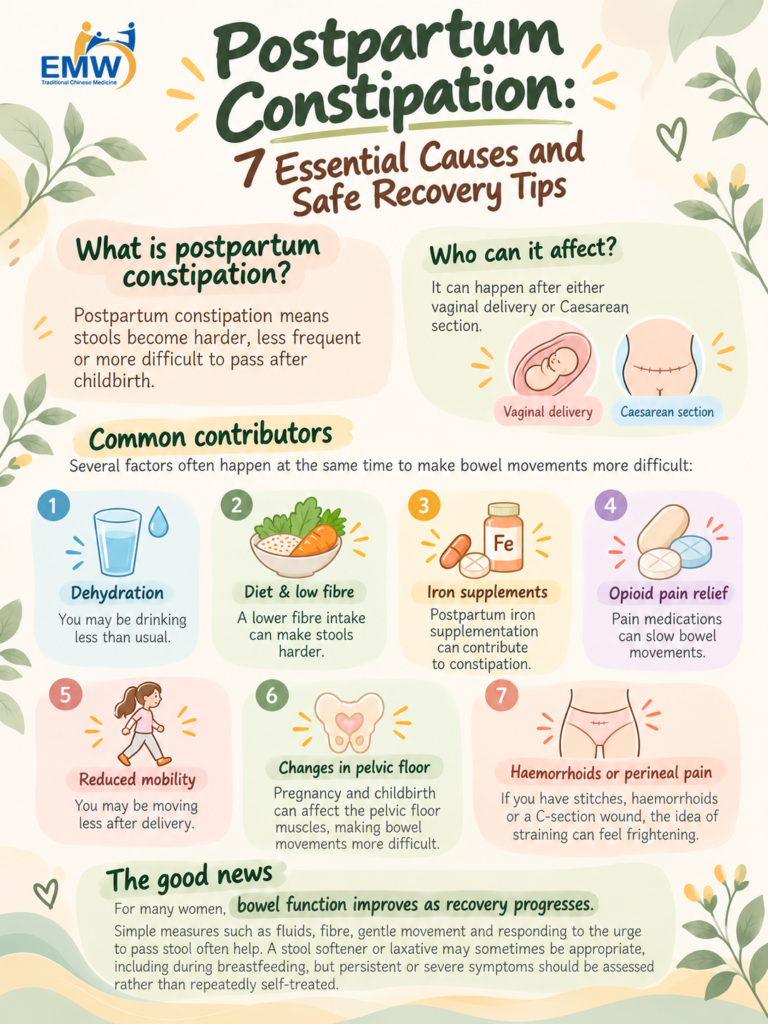
Postpartum constipation means stools become harder, less frequent or more difficult to pass after childbirth.

It can happen after either vaginal delivery or Caesarean section.

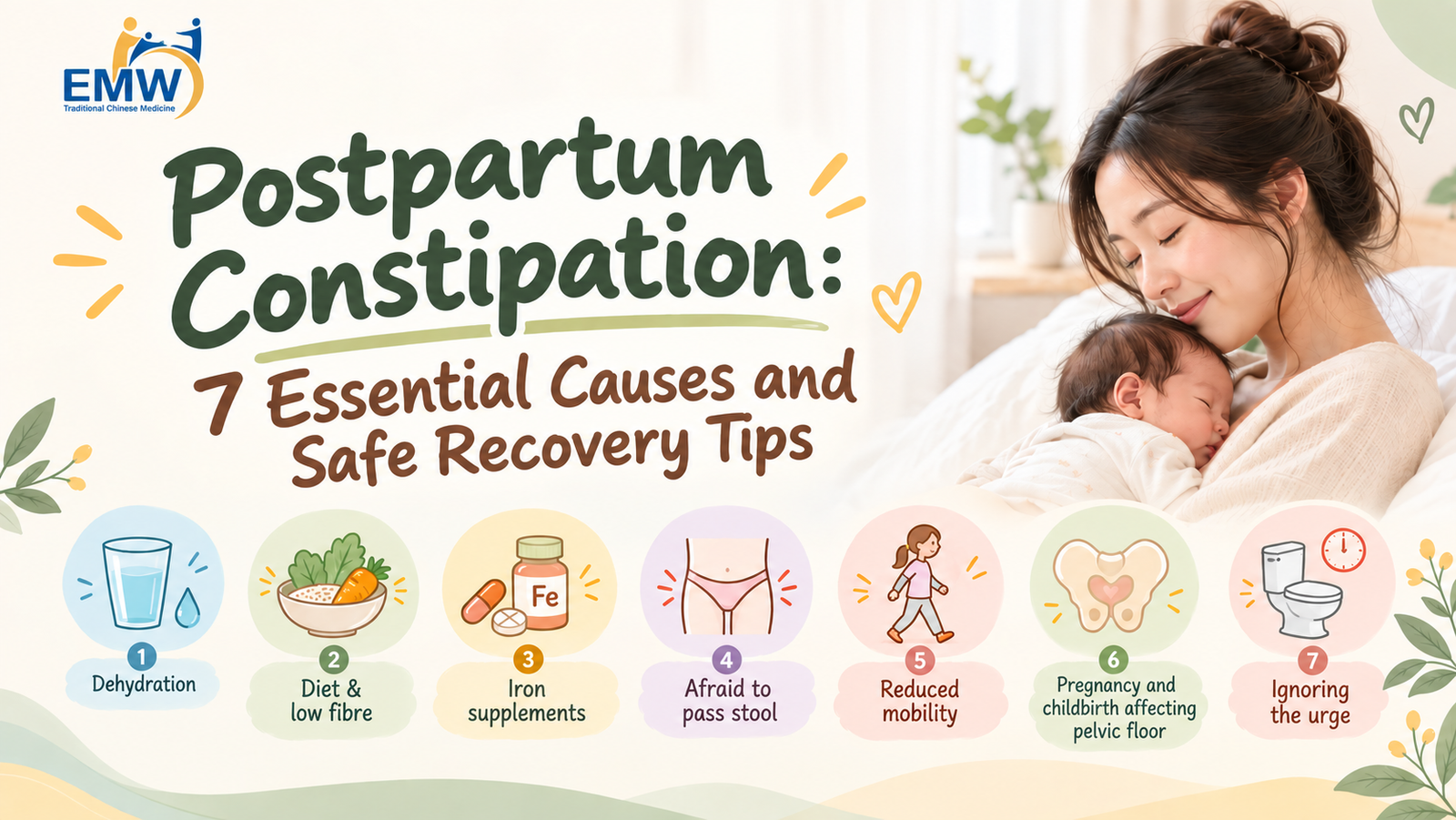
Common contributors include dehydration, dietary changes, reduced movement, iron supplements, pain medication, haemorrhoids, perineal pain and changes in the pelvic floor after pregnancy and birth.

KK Women’s and Children’s Hospital notes that some degree of constipation is expected after delivery, particularly after Caesarean section, and stool-softening medication may be prescribed to avoid excessive straining. Singapore HealthHub also lists constipation as a common side effect of postpartum iron supplementation.

Simple measures such as fluids, fibre, gentle movement and responding to the urge to pass stool often help. A stool softener or laxative may sometimes be appropriate, including during breastfeeding, but persistent or severe symptoms should be assessed rather than repeatedly self-treated.

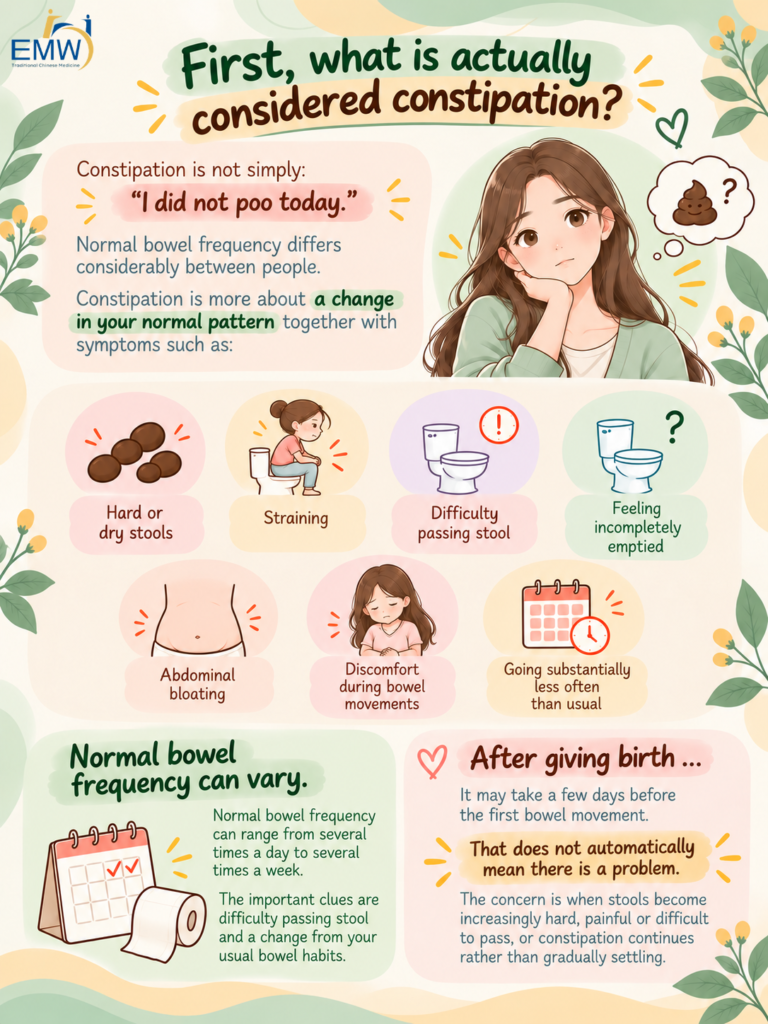
First, what is actually considered constipation?

Constipation is not simply:

“I did not poo today.”

Normal bowel frequency differs considerably between people.

Constipation is more about a change in your normal pattern together with symptoms such as:

  • hard or dry stools
  • straining
  • difficulty passing stool
  • feeling incompletely emptied
  • abdominal bloating
  • discomfort during bowel movements
  • going substantially less often than usual

Singapore HealthHub notes that normal bowel frequency can range from several times a day to several times a week. The important clues are difficulty passing stool and a change from your usual bowel habits.

After giving birth, it may take a few days before the first bowel movement.

That does not automatically mean there is a problem.

The concern is when stools become increasingly hard, painful or difficult to pass, or constipation continues rather than gradually settling.

Postpartum Constipation: 7 Essential Causes and Safe Recovery Tips

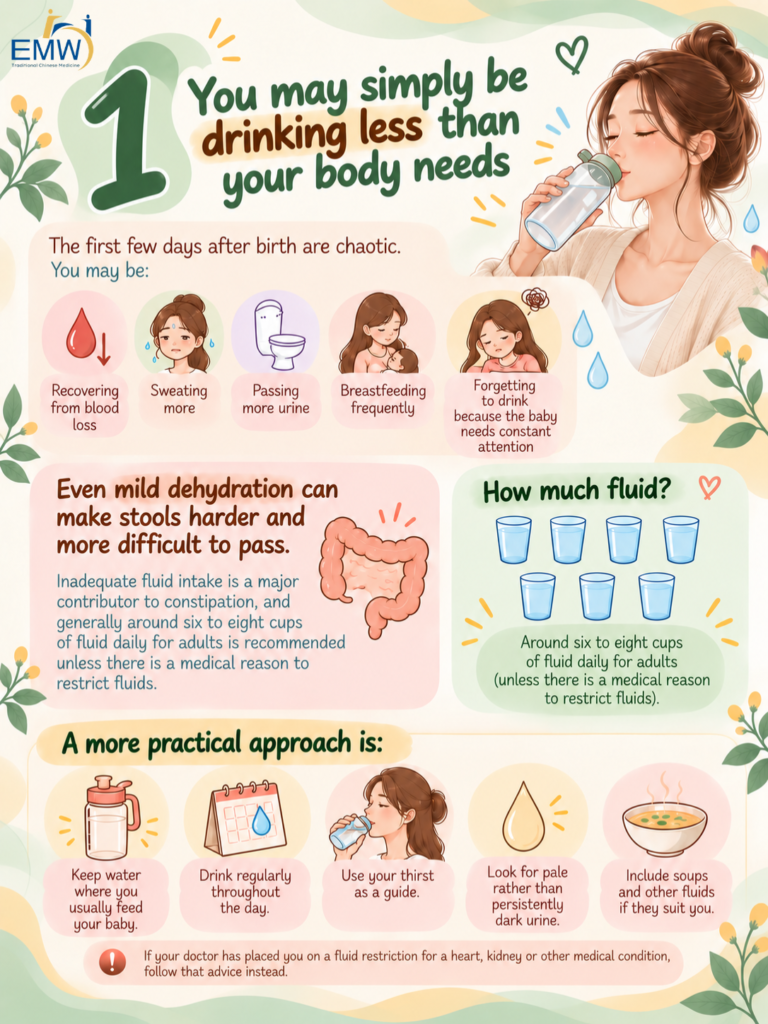
1. You may simply be drinking less than your body needs

The first few days after birth are chaotic.

You may be:

  • recovering from blood loss
  • sweating more
  • passing more urine
  • breastfeeding frequently
  • forgetting to drink because the baby needs constant attention

Even mild dehydration can make stools harder and more difficult to pass.

Singapore HealthHub lists inadequate fluid intake as a major contributor to constipation and generally recommends around six to eight cups of fluid daily for adults unless there is a medical reason to restrict fluids.

If you are breastfeeding, thirst is also common.

There is no need to force huge quantities of water because you are breastfeeding.

A more practical approach is:

  • keep water where you usually feed your baby
  • drink regularly throughout the day
  • use your thirst as a guide
  • look for pale rather than persistently dark urine
  • include soups and other fluids if they suit you

If your doctor has placed you on a fluid restriction for a heart, kidney or other medical condition, follow that advice instead.

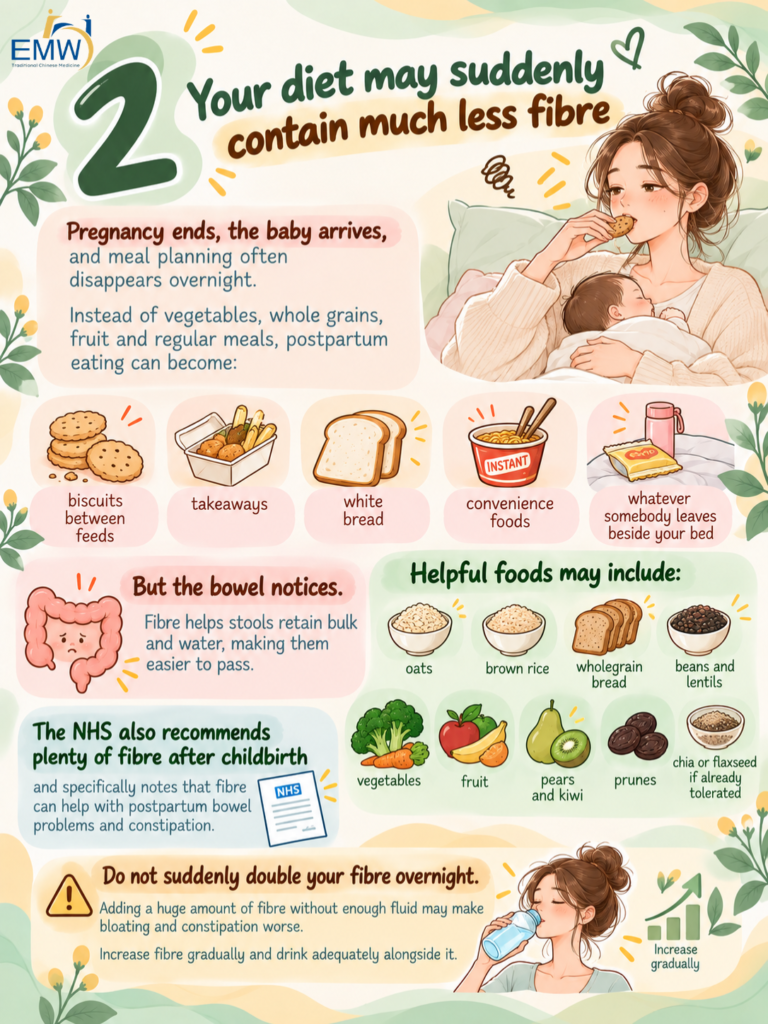
2. Your diet may suddenly contain much less fibre

Pregnancy ends, the baby arrives, and meal planning often disappears overnight.

Instead of vegetables, whole grains, fruit and regular meals, postpartum eating can become:

  • biscuits between feeds
  • takeaways
  • white bread
  • convenience foods
  • whatever somebody leaves beside your bed

That is understandable.

But the bowel notices.

Fibre helps stools retain bulk and water, making them easier to pass.

Helpful foods may include:

  • oats
  • brown rice
  • wholegrain bread
  • beans and lentils
  • vegetables
  • fruit
  • pears
  • kiwi
  • prunes
  • chia or flaxseed if already tolerated

The NHS also recommends plenty of fibre after childbirth and specifically notes that fibre can help with postpartum bowel problems and constipation.

Do not suddenly double your fibre overnight

This is an important point.

Adding a huge amount of fibre without enough fluid may make bloating and constipation worse.

Increase fibre gradually and drink adequately alongside it.

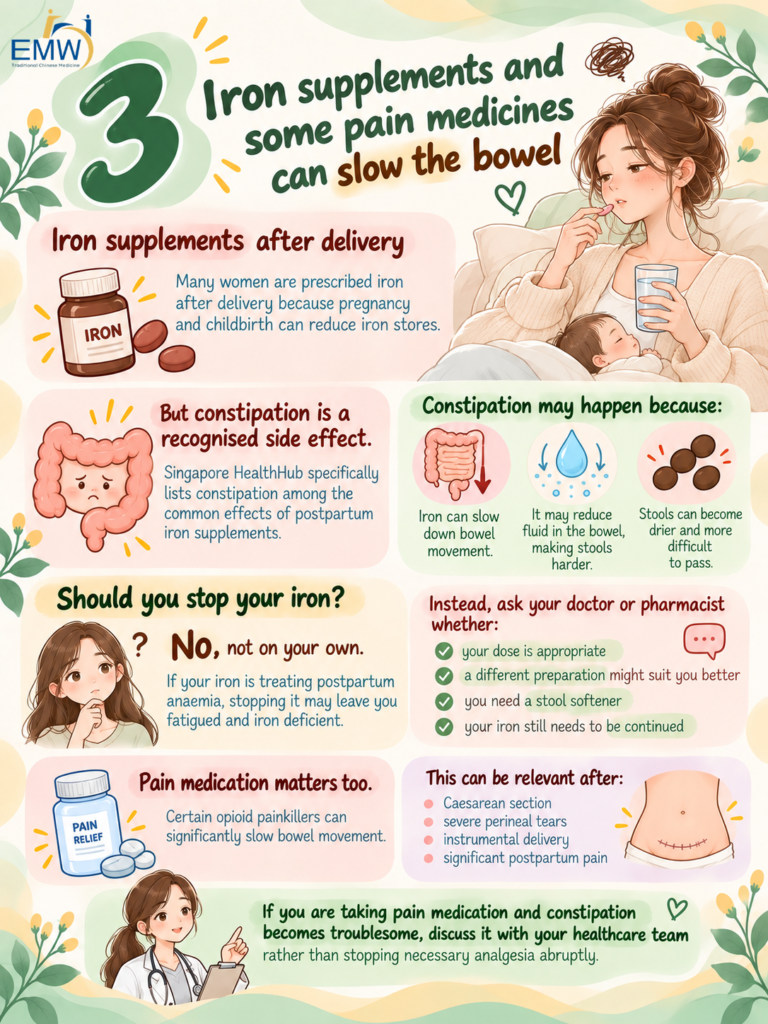
3. Iron supplements and some pain medicines can slow the bowel

This is one of the most practical things to review.

Many women are prescribed iron after delivery because pregnancy and childbirth can reduce iron stores.

Iron is important when you need it.

But constipation is a recognised side effect.

Singapore HealthHub specifically lists constipation among the common effects of postpartum iron supplements and recommends adequate fluids, fruits and vegetables to help prevent it.

Should you stop your iron?

No, not on your own.

If your iron is treating postpartum anaemia, stopping it may leave you fatigued and iron deficient.

Instead, ask your doctor or pharmacist whether:

  • your dose is appropriate
  • a different preparation might suit you better
  • you need a stool softener
  • your iron still needs to be continued

Pain medication matters too

Certain opioid painkillers can significantly slow bowel movement.

That becomes particularly relevant after:

  • Caesarean section
  • severe perineal tears
  • instrumental delivery
  • significant postpartum pain

If you are taking pain medication and constipation becomes troublesome, discuss it with your healthcare team rather than stopping necessary analgesia abruptly.

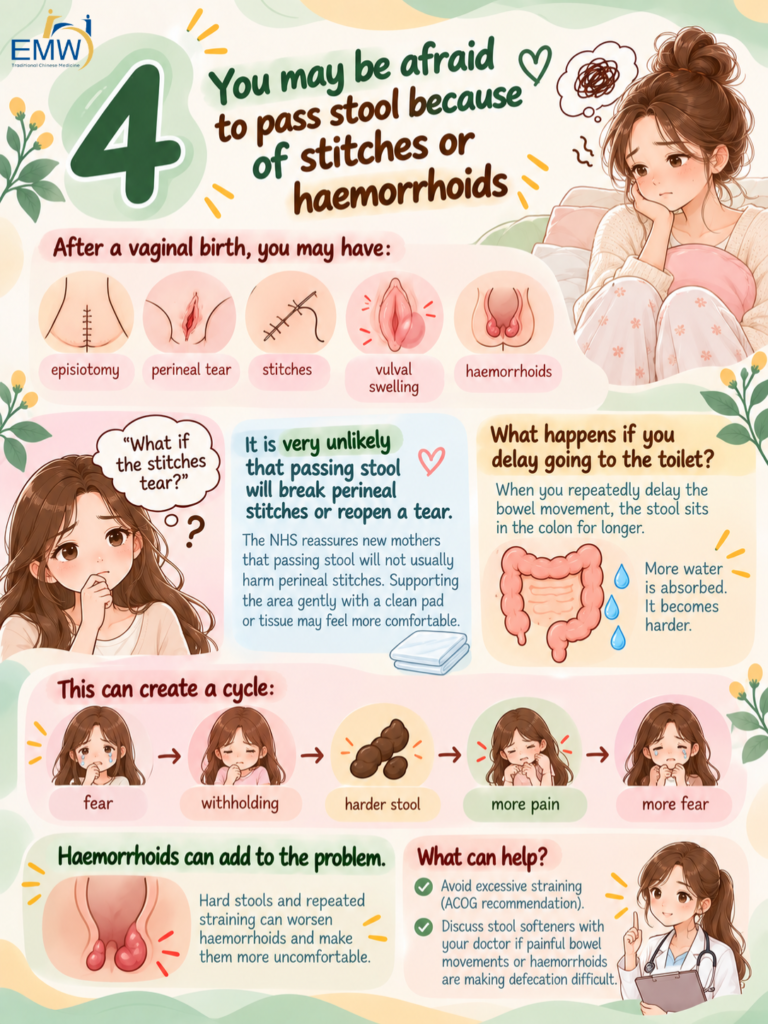
4. You may be afraid to pass stool because of stitches or haemorrhoids

This is extremely common.

After a vaginal birth, you may have:

  • an episiotomy
  • a perineal tear
  • stitches
  • vulval swelling
  • haemorrhoids

So when you finally feel the urge to open your bowels, the thought is:

“What if the stitches tear?”

The NHS specifically reassures new mothers that it is very unlikely that passing stool will break perineal stitches or reopen a tear. Supporting the area gently with a clean pad or tissue may feel more comfortable.

The problem with repeatedly delaying the bowel movement is that the stool sits in the colon for longer.

More water is absorbed.

It becomes harder.

Then it really is more painful to pass.

This creates a cycle:

fear → withholding → harder stool → more pain → more fear

Haemorrhoids can add to the problem because hard stools and repeated straining can worsen their discomfort.

ACOG advises avoiding excessive straining and discussing stool softeners if haemorrhoids or painful bowel movements are making defecation difficult after birth.

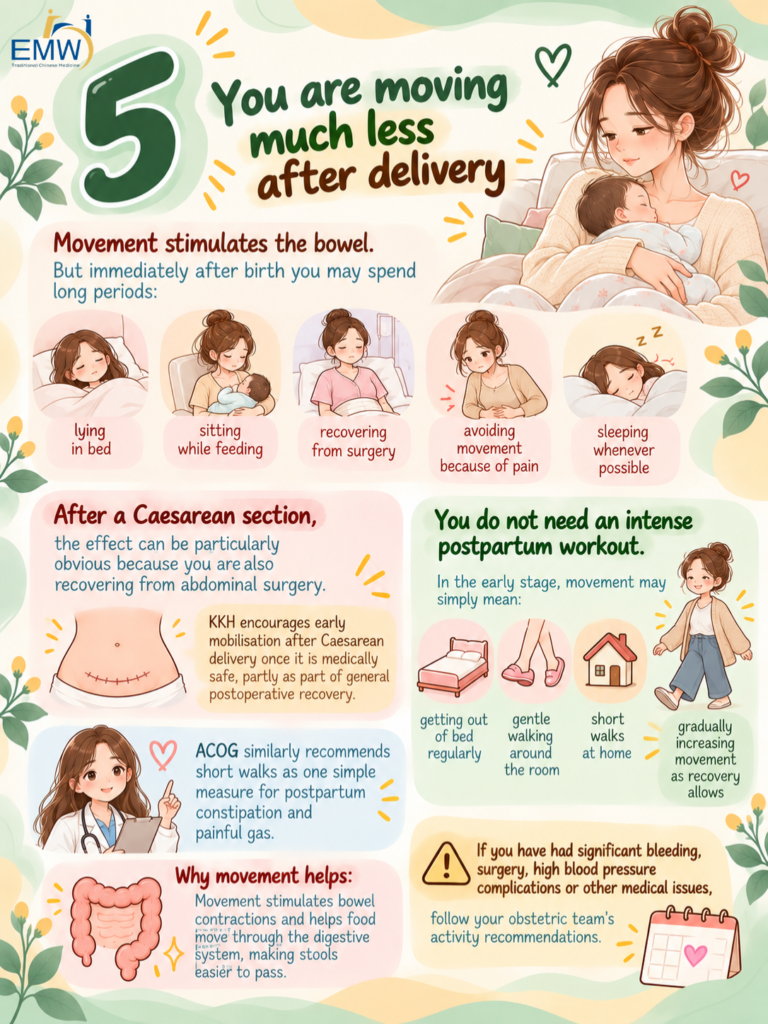
5. You are moving much less after delivery

Movement stimulates the bowel.

But immediately after birth you may spend long periods:

  • lying in bed
  • sitting while feeding
  • recovering from surgery
  • avoiding movement because of pain
  • sleeping whenever possible

After a Caesarean section, the effect can be particularly obvious because you are also recovering from abdominal surgery.

KKH encourages early mobilisation after Caesarean delivery once it is medically safe, partly as part of general postoperative recovery.

You do not need an intense postpartum workout.

In the early stage, movement may simply mean:

  • getting out of bed regularly
  • gentle walking around the room
  • short walks at home
  • gradually increasing movement as recovery allows

ACOG similarly recommends short walks as one simple measure for postpartum constipation and painful gas.

If you have had significant bleeding, surgery, high blood pressure complications or other medical issues, follow your obstetric team’s activity recommendations.

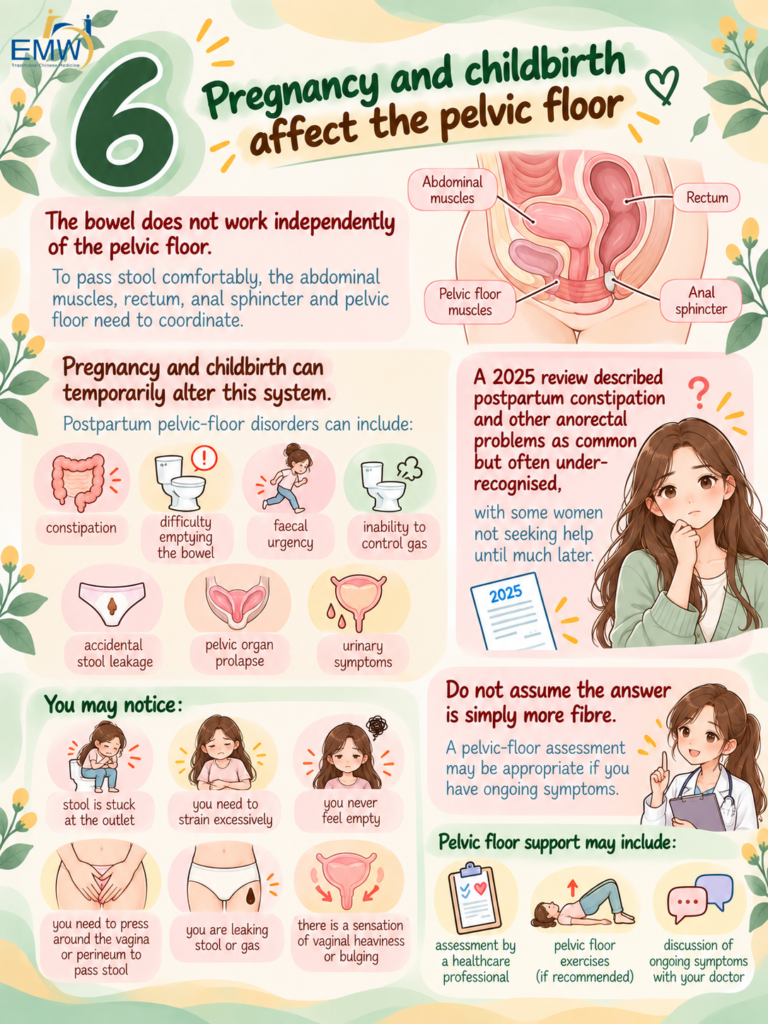
6. Pregnancy and childbirth affect the pelvic floor

The bowel does not work independently of the pelvic floor.

To pass stool comfortably, the abdominal muscles, rectum, anal sphincter and pelvic floor need to coordinate.

Pregnancy and childbirth can temporarily alter that system.

Postpartum pelvic-floor disorders can include:

  • constipation
  • difficulty emptying the bowel
  • faecal urgency
  • inability to control gas
  • accidental stool leakage
  • pelvic organ prolapse
  • urinary symptoms

A 2025 review described postpartum constipation and other anorectal problems as common but often under-recognised, with some women not seeking help until much later.

If you repeatedly feel:

  • stool is stuck at the outlet
  • you need to strain excessively
  • you never feel empty
  • you need to press around the vagina or perineum to pass stool

  • you are leaking stool or gas
  • there is a sensation of vaginal heaviness or bulging

Do not assume the answer is simply more fibre.

A pelvic-floor assessment may be appropriate.

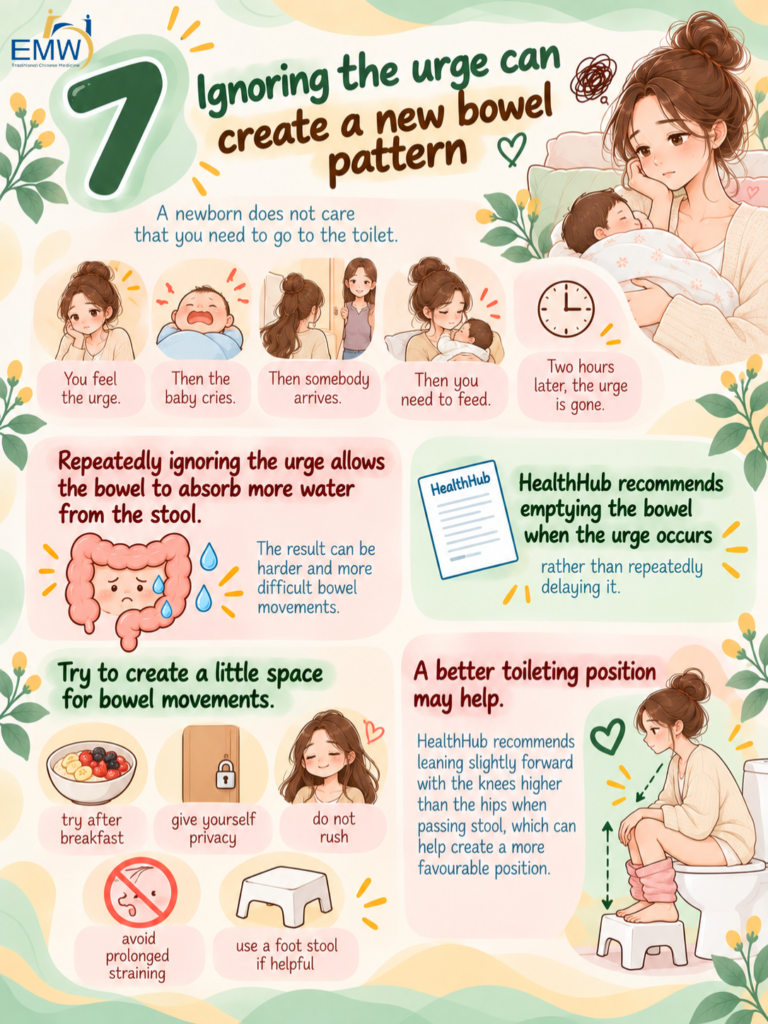
7. Ignoring the urge can create a new bowel pattern

A newborn does not care that you need to go to the toilet.

You feel the urge.

Then the baby cries.

Then somebody arrives.

Then you need to feed.

Two hours later, the urge is gone.

This repeatedly happens to new mothers.

But regularly ignoring the urge to pass stool allows the bowel to absorb more water from the stool.

The result can be harder and more difficult bowel movements.

HealthHub specifically recommends emptying the bowel when the urge occurs rather than repeatedly delaying it.

It may help to intentionally create a little space for bowel movements.

For example:

  • try after breakfast
  • give yourself privacy
  • do not rush
  • avoid prolonged straining
  • use a foot stool if helpful

HealthHub recommends leaning slightly forward with the knees higher than the hips when passing stool, which can help create a more favourable toileting position.

What can you do at home?

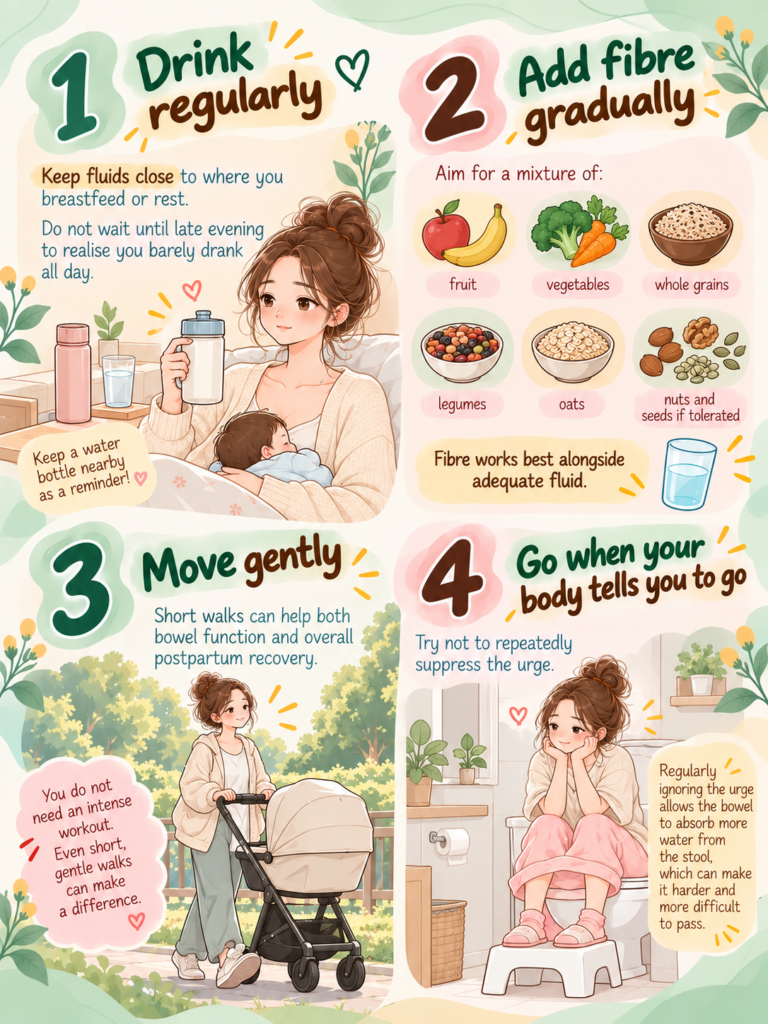
1. Drink regularly

Keep fluids close to where you breastfeed or rest.

Do not wait until late evening to realise you barely drank all day.

2. Add fibre gradually

Aim for a mixture of:

  • fruit
  • vegetables
  • whole grains
  • legumes
  • oats
  • nuts and seeds if tolerated

Fibre works best alongside adequate fluid.

3. Move gently

Short walks can help both bowel function and overall postpartum recovery.

4. Go when your body tells you to go

Try not to repeatedly suppress the urge.

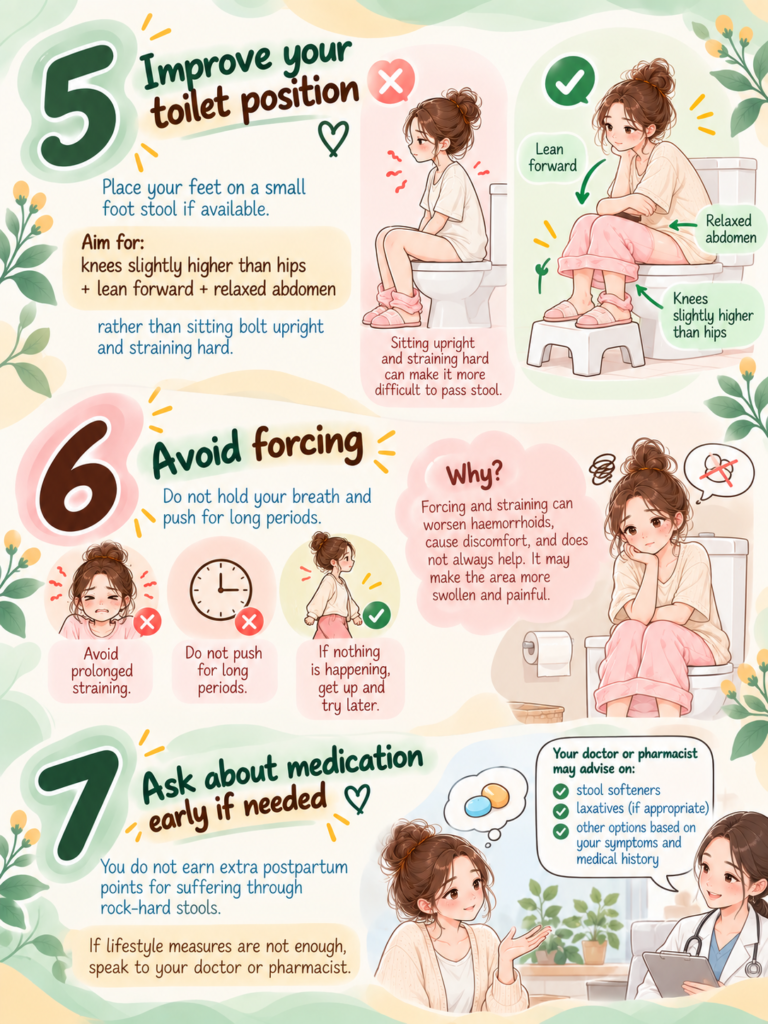
5. Improve your toilet position

Place your feet on a small foot stool if available.

Aim for:

knees slightly higher than hips + lean forward + relaxed abdomen

rather than sitting bolt upright and straining hard.

6. Avoid forcing

Do not hold your breath and push for long periods.

If nothing is happening, get up and try later.

7. Ask about medication early if needed

You do not earn extra postpartum points for suffering through rock-hard stools.

If lifestyle measures are not enough, speak to your doctor or pharmacist.

Do confinement foods cause constipation?

They can, depending on what the actual diet contains.

There is no single “confinement diet”.

Some women eat a varied diet containing:

  • vegetables
  • soups
  • fruit
  • whole grains
  • legumes
  • adequate fluid

Others end up eating a very meat-heavy, low-fibre diet because of family traditions or food restrictions.

The bowel does not care whether a food is labelled “confinement food”.

It responds to:

fluid + fibre + movement + medication + bowel habits + individual physiology

If your confinement diet contains little plant food, review it.

Postpartum recovery should not require avoiding all fruit, vegetables or water.

What about traditional Chinese medicine?

From a TCM perspective, bowel difficulty after childbirth is not approached as one single pattern.

Postpartum women may present differently.

Some have more features traditionally associated with Qi and Blood deficiency, particularly after significant delivery-related blood loss or prolonged labour.

Others may have more pronounced dryness, abdominal distension or impaired movement of Qi.

The treatment principle therefore depends on the individual presentation.

At EMW TCM, postpartum constipation would not be treated simply by prescribing the strongest bowel-moving herbs possible.

We would first review:

  • mode of delivery
  • blood loss
  • Caesarean or vaginal wound recovery
  • breastfeeding
  • appetite
  • fluid intake
  • stool consistency
  • abdominal symptoms
  • haemorrhoids
  • iron and medication use
  • sleep and energy
  • lochia
  • overall postpartum recovery

Chinese herbal medicine may sometimes be considered, but the prescription needs to be appropriate for a newly postpartum and potentially breastfeeding mother.

Strong purgative treatment is not automatically appropriate.

Likewise, severe constipation with concerning abdominal symptoms should be medically assessed rather than treated as a routine TCM pattern.

When should you seek medical help?

Please seek medical advice if constipation is severe, worsening or does not improve despite reasonable self-care.

Singapore HealthHub advises medical review for constipation associated with symptoms such as:

  • fever
  • nausea or vomiting
  • blood in the stool
  • black or sticky stool
  • significant abdominal pain or cramping
  • major bloating
  • loss of appetite
  • stool leakage
  • persistent or worsening symptoms

Seek urgent medical assessment if you have:

Severe or worsening abdominal pain + vomiting + marked bloating + inability to pass stool or gas.

That combination can indicate bowel obstruction and should not be managed as ordinary constipation.

Also tell your obstetrician or doctor if you develop:

  • accidental stool leakage
  • inability to control gas
  • persistent difficulty emptying the bowel
  • a vaginal bulge or pressure sensation
  • significant rectal bleeding

Childbirth can affect the pelvic floor and anal sphincter, and these symptoms deserve assessment rather than embarrassment.

Frequently Asked Questions

How long does postpartum constipation last?

For many women, bowel movements begin returning within the first several days after delivery.

However, symptoms may continue longer if you are taking iron or opioid medication, are dehydrated, have painful haemorrhoids, are recovering from a C-section or have underlying pelvic-floor dysfunction.

Persistent symptoms deserve review.

Will pooping break my stitches?

It is very unlikely.

The NHS specifically reassures women that opening their bowels is unlikely to break perineal stitches or reopen a tear. Supporting the area gently with clean tissue or a pad may feel more comfortable.

Why is my first bowel movement after birth so painful?

Possible reasons include:

  • hard stool
  • perineal swelling
  • stitches
  • haemorrhoids
  • fear and muscle tightening

Keeping stools soft is usually more helpful than repeatedly delaying the bowel movement.

Is constipation worse after a C-section?

It can be troublesome after Caesarean birth because of reduced mobility, postoperative pain and medications. KKH specifically includes constipation management as part of post-Caesarean discharge care.

Can iron cause constipation after delivery?

Yes.

Constipation is a recognised side effect of iron supplements. Do not stop medically indicated iron without discussing it with your healthcare provider.

Is lactulose safe while breastfeeding?

Lactulose is considered compatible with breastfeeding and is commonly used for constipation.

Can haemorrhoids make constipation worse?

Indirectly, yes.

Pain may make you avoid bowel movements, leading stools to become harder. Straining can also aggravate haemorrhoids.

TCM Lactation Support: Enhancing Milk Flow Naturally

Insufficient milk supply is a common worry for new mothers. In TCM, lactation depends on the smooth flow of Qi and Blood to the breasts. When Qi is stagnant or Blood is deficient, milk production may decrease.

Acupuncture and herbal therapy can address both underlying and immediate issues. Studies in Journal of Alternative and Complementary Medicine (2020) reported that acupuncture at points such as SI1 (Shaoze) and ST18 (Rugen) significantly increased milk volume within one week.

Herbs like Tong Cao, Mu Tong, and Wang Bu Liu Xing are used to open the lactation channels, while Dang Gui and Ren Shen rebuild Blood to ensure sustained milk production. At EMW TCM, our Flowing Ease essential oil blend and lactation herbal packages further support these goals in a gentle, skin-safe way.

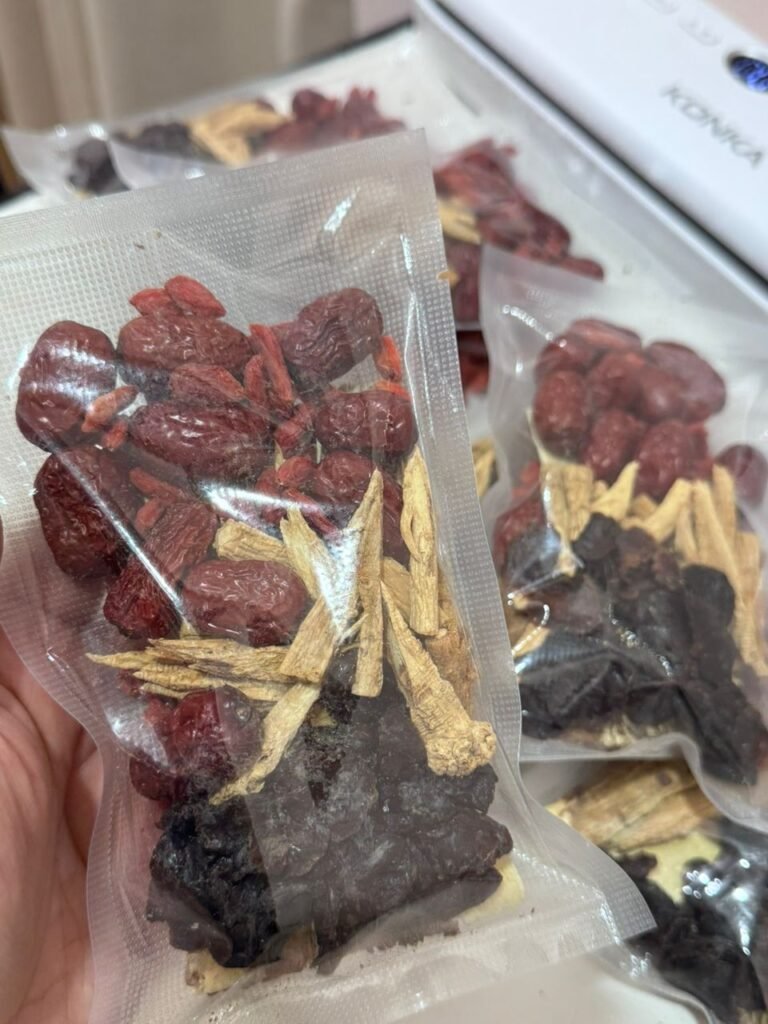
personalised chinese herbal medicine
Each packet is vacuum packed for best quality!

Why Choose EMW’s Personalised TCM Confinement Herbal Package

Every woman’s body is different.
Your recovery needs depend on:

  • Type of delivery (natural or C-section)

  • Blood and Qi strength

  • Milk supply

  • Sleep, stress, and digestion patterns

At EMW TCM, our physician-formulated herbal care is:

  • Personalised: Herbs are customised after TCM pulse and tongue assessment

  • Physician-led: All prescriptions are reviewed by registered TCM physicians

  • Convenient: Herbs are pre-portioned into daily sachets

  • Safe for breastfeeding: Gentle, non-toxic formulations

  • Follow-up supported: Post-confinement consultation ensures smooth transition can be requested upon demand.

Our goal: to help you heal deeply, rebuild your vitality, and embrace motherhood with confidence.


There are many benefits to personalized TCM confinement, including:

  • Improved recovery: To speed up the healing process after childbirth and reduce the risk of complications.
  • Reduced discomfort: To relieve common postpartum symptoms such as pain, fatigue, and anxiety.
  • Improved mood: To improve the mother’s mood and reduce the risk of postpartum depression.
  • Enhanced lactation: To promote lactation and improve the quality of breast milk.
  • Strengthened immune system: To strengthen the mother’s immune system and protect her from illness.

One can easily find 28 days confinement herbal soups off any herbal stores. 

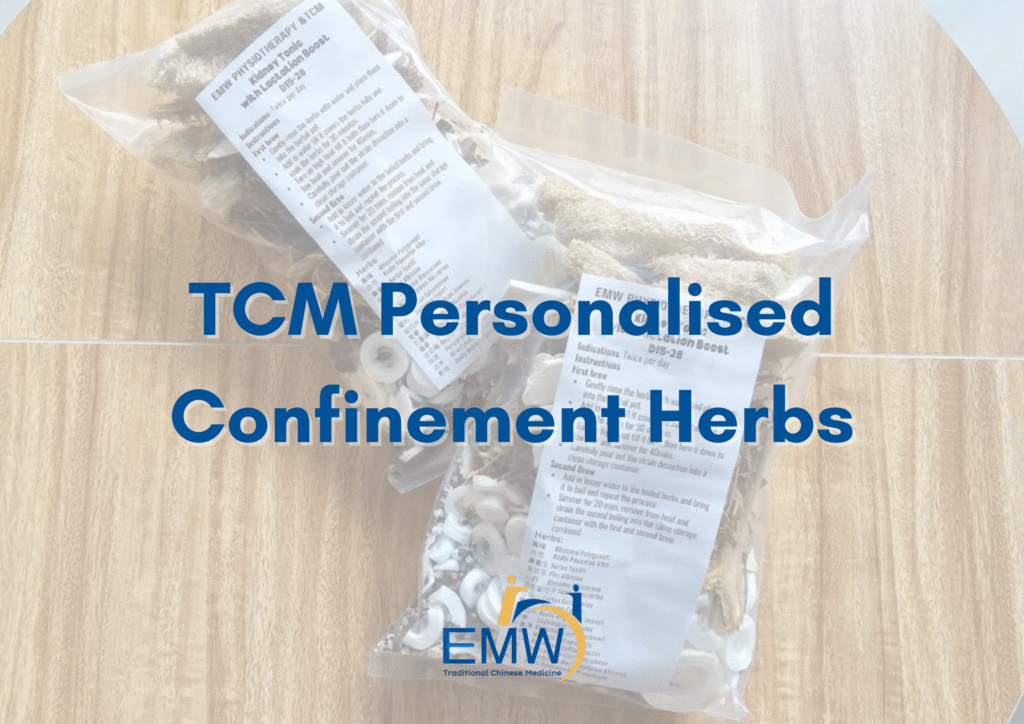
However, with EMW Personalised Confinement Herbal Package, herbs prescribed is supplementary to the 28 days confinement herbal soups. It is designed to be brewed into a decoction and to be drank separately outside of meals. 

Therefore, confinement herbal soups are catered more towards general body constitution while our Herbal Package herbs are more catered to individual body types hence being more potent as a result. 

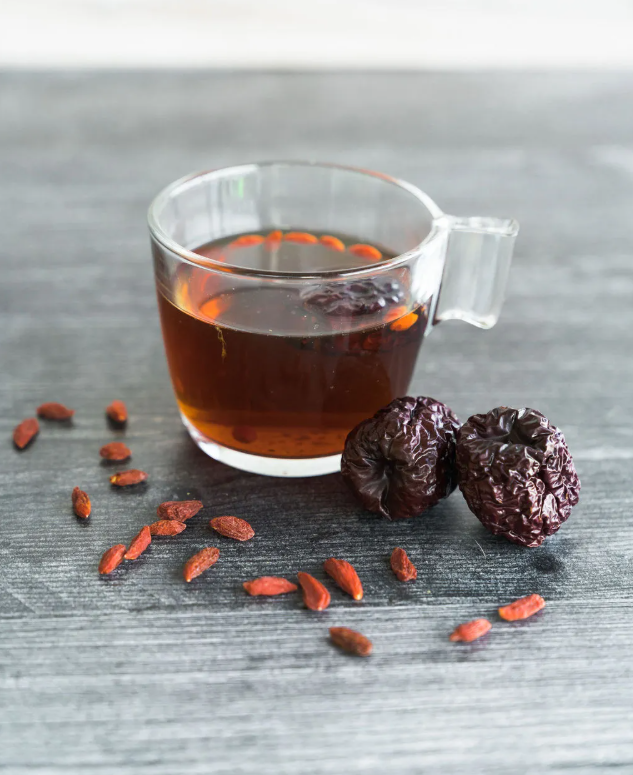
28 Day Confinement Herbal Tea

During TCM confinement, hydration and warmth are vital for restoring Qi and blood. At EMW TCM, we formulate confinement teas that gently replenish energy, warm the body, and calm emotions.

Our TCM confinement tea blends are handcrafted by our physicians to support:

  • Blood and Qi replenishment: using Dang Shen (Codonopsis), Hong Zao (Red Dates), and Gou Qi Zi (Goji Berries)

  • Digestive recovery: Huang Qi to strengthen the Spleen and aid absorption

  • Mood balance and sleep support: Long Yan Rou (Longan) to soothe the mind and nourish the Heart

  • Physical Strengthening: Du Zhong to strengthen Kidney and lower back

Each sachet is pre-portioned for convenience and safety.
Simply steep in warm water and enjoy throughout the day.
Our TCM confinement tea is caffeine-free, gentle for breastfeeding mothers, and an excellent companion for your daily postpartum nourishment.

This will be purchased separately from Personalised Confinement Herbal Package.

Screenshot 2025 11 12 154907
e8ccb28cc963413a9babfbeb7a9cb025

TCM Confinement Herbal Bath

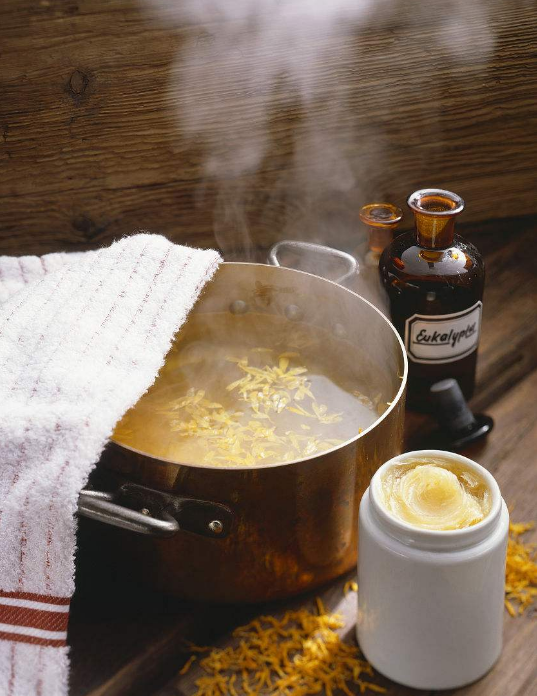
In Traditional Chinese Medicine, postpartum women are considered vulnerable to cold invasion. A TCM confinement herbal bath helps expel cold, improve blood circulation, and relieve muscle tension.

At EMW TCM Singapore, our herbal bath formula is carefully balanced to restore warmth while being safe and soothing for new mothers.

Key Benefits of Our TCM Confinement Herbal Bath:

  • Promotes blood flow and helps discharge residual lochia
  • Warms the body to prevent postpartum chills and joint pain
  • Relaxes tired muscles and alleviates neck or back aches
  • Gently cleanses without drying or irritating the skin

Main Herbal Ingredient:
Ai Ye (Mugwort Leaf) which supports the body’s natural healing by unblocking meridians and harmonising blood circulation.

How to Use the EMW Herbal Bath:

  1. Boil the pre-packed herbal sachet in 2–3 litres of water for 15 minutes.
  2. Pour into a basin or bathtub and mix with warm water (around 40 °C).
  3. Soak or sponge-bathe for 10–15 minutes daily.
  4. Keep the body warm and dry immediately after bathing.

Our confinement bath can also be used for hand or foot soaking to relieve swelling or stiffness.

Postnatal Acupuncture for Recovery

Postnatal acupuncture helps regulate hormonal balance, promote uterine contraction, and ease muscular pain. Research published in Obstetrics & Gynecology Science (2021) showed that acupuncture can modulate oxytocin release and improve milk flow, making it useful for both physical recovery and TCM lactation support.

Our postpartum acupuncture sessions commonly target:

  • ST36 (Zusanli) to boost energy and digestion.

  • SP6 (Sanyinjiao) to harmonise the reproductive system.

  • LV3 (Taichong) to soothe emotions and relieve stress.

  • BL20 (Pishu) to strengthen Spleen Qi and prevent bloating.

Mothers often notice improved sleep, lighter body aches, and calmer emotions within several sessions.

TCM Confinement Singapore
A 2018 study published in The Journal of Maternal Health found that postpartum massage enhances oxytocin release, which helps with uterine contractions, reduces swelling, and supports emotional well-being. Our specialized EMW TCM postnatal massage Singapore program integrates these evidence-based benefits to ensure a smoother recovery journey for new mothers.

With Our Partners During 28 Days: Confinement Soups

The 28-Day Personalised Confinement Herbs & Soup Program by Maternity Angels, developed in collaboration with EMW TCM Physicians, is a premium, evidence-informed postpartum recovery solution designed to support a mother’s healing, nourishment, and vitality after childbirth.

This personalised confinement program begins with a one-to-one consultation with an experienced EMW Physician, ensuring that your herbs and soups are tailored to your individual constitution, delivery type (natural birth or C-section), and postpartum recovery needs. Every detail is customised to support blood replenishment, uterine recovery, digestion, and long-term maternal wellbeing.

Each mother receives a fully personalised confinement soup recipe, created using premium-grade Chinese herbs traditionally used to support postpartum recovery, circulation, and lactation. The program includes 28 days of carefully prepared confinement soup, making daily nourishment simple and consistent during the critical postpartum period.

Beyond nutrition, this program is thoughtfully designed for modern families. It comes with reusable drawers for organised storage of baby essentials, as well as an environmentally friendly cotton tote bag, making it both practical and sustainable.

What’s Included:

  • Consultation with a certified EMW TCM Physician

  • Personalised 28 days of confinement soup

  • Premium quality Chinese herbs

  • Reusable drawers for baby item storage

  • Eco-friendly cotton tote bag

Perfect for Singapore mothers looking for confinement soups instead of confinement herbs that may not be palpable for mummies that don’t take TCM frequently.

Confinement Angels 3
Our partners at Maternity Angels
MA x Mong 1
Our partners at Maternity Angels

With Our Partners During 28 Days: Confinement Meals

At Maternity Angels, the Confinement Food Menu is curated by EMW TCM physicians, dietician, and a team of professional chefs. While keeping it real within the parameters of TCM and dieticians, they transform traditional confinement ingredients into international dishes that focus on recovery, lactation and all-round wellness.

Our confinement meal includes a serving of desert (Lunch), appetizer (Dinner), meat, vegetable, double-boiled soup, staple and Red Dates Tea.

Most soups provided with their meals are double boiled. The Double boiling technique is a slow and gentle process which better extract the flavour, essence and nutrients of the ingredients and offers maximum benefit to post-partum mummy for their recovery.

Their dishes are lactation friendly, with ingredients like green papaya, salmon, spinach and broccoli.

With Our Partners During 28 Days: Confinement Care

At Confinement Angels, they believe that the journey of motherhood is a precious time that deserves to be supported with the utmost care and professionalism.

With over 10 years of experience providing expert confinement nanny services, they have built a strong reputation for delivering personalised, compassionate care for both mothers and newborns.

Their team of highly trained nannies is dedicated to ensuring that you and your baby receive the best possible support during this important recovery period.

At Confinement Angels, they understand that your family deserves the very best care. This is why they invest in in-house training for all their nannies to ensure they meet their high standards. Each nanny undergoes a comprehensive training program that includes infant care, postpartum wellness practices, and best safety protocols, ensuring that they are equipped with the necessary skills and knowledge before they are assigned to assist any family.

They take professionalism very seriously at Confinement Angels. From the moment you contact them, you will experience a high level of service and care. Their nannies are not only skilled but also respectful, dedicated, and compassionate. They understand that every mother’s needs are unique, and they work hard to ensure that both mothers and babies receive the individual attention and care they deserve.

Confinement Angels isn’t just a confinement nanny agency. They offer a one-stop solution for all your postpartum needs. Along with expert confinement nanny services, they also provide a comprehensive range of additional services to make your experience even more convenient and supportive.

6c0eb0ec042950b077c4f5d15076f3c1
Our partners at Confinement Angels provide top-notch nanny services too!

Diet Therapy: The Foundation of Postpartum TCM Singapore

In TCM, food therapy is the first medicine. The Spleen and Stomach must be supported with easily digestible, warm meals. The modern postpartum diet should avoid icy drinks, cold fruits, and raw salads, which can trap Cold and hinder digestion.

Recommended foods include:

  • Soups and broths made with chicken, fish, or pork bones.

  • Congee with goji berries, red dates, and ginger to replenish Blood and warm the body.

  • Steamed or stir-fried vegetables such as spinach and Chinese kale for iron and fibre.

  • Black sesame, walnuts, and lotus seeds to nourish Kidney essence.

Research in Nutrition & Health (2020) confirmed that protein-rich, iron-dense diets accelerate postpartum recovery, supporting the same concept long recognised in TCM.

Neglecting proper postpartum recovery can lead to lingering conditions such as menstrual pain, chronic fatigue, thyroid imbalance, or fertility difficulties in subsequent pregnancies. TCM physicians often call this “Postpartum Internal Injury”, where Cold and Blood stasis remain unresolved.

Regular postnatal acupuncture, warm herbal baths, and proper diet for at least 30 to 40 days help seal the body’s energy, ensuring long-term vitality. EMW TCM’s Postpartum Programme integrates these methods with modern clinical monitoring for safe, evidence-based results.

When During the Cycle Should You Do Fertility Acupuncture 9
One can easily find 28 days confinement herbal soups off any herbal stores. However, with EMW Personalised Confinement Herbal Package, herbs prescribed is supplementary to the 28 days confinement herbal soups. It is designed to be brewed into a decoction and to be drank separately outside of meals. Therefore, confinement herbal soups are catered more towards general body constitution while our Herbal Package herbs are more catered to individual body types hence being more potent as a result.

Integrating East and West for Modern Mothers

In Singapore, confinement practices now range from traditional home-based care to modern confinement centres. While approaches differ, mothers can still follow key TCM confinement principles: adequate warmth, nutrient-rich meals, emotional rest, and gradual return to activity.

At EMW TCM, our postpartum TCM Singapore consultations bridge tradition with modern practicality. We tailor herbal formulas that are compatible with breastfeeding and provide dietary advice suited for Singapore’s humid climate, where overheating can easily occur if old recipes are followed without modification.

TCM postpartum care complements Western medical check-ups by addressing areas conventional care may overlook: energy, sleep, mood, and long-term resilience. Our approach works alongside gynaecologists and lactation consultants to create an integrated plan for both mother and baby.

We believe healing should be gentle, evidence-based, and personal. Each treatment begins with pulse and tongue diagnosis to identify whether Qi, Blood, Yin, or Yang are out of balance. The plan then combines:

  • Chinese herbs for postpartum recovery

  • Postnatal acupuncture to harmonise hormones

  • TCM lactation support when needed

  • Emotional and dietary coaching

When to Start TCM Confinement Singapore

Ideally, TCM care begins within the first week after delivery, once bleeding stabilises. However, it is never too late to benefit. Many mothers start months later to address fatigue, hair loss, or low mood and still experience significant improvement.

Each session is gentle and supportive, allowing mothers to relax while their bodies rebuild Qi and Blood.

If you are a new mother or planning for postpartum confinement in Singapore, remember that your recovery shapes your long-term wellbeing. Proper care today helps prevent chronic conditions tomorrow.

Let your motherhood journey begin with balance, warmth, and care.
EMW TCM Singapore, blending tradition with science for modern mothers.

TCM Confinement 101

When During the Cycle Should You Do Fertility Acupuncture 13

TCM Lactation

We do pre-delivery lactation consultation at week 37-39 which includes a detailed breast examination, 1-to-1 personalised guidance on latching, positioning techniques and discussion of common concerns, and a post-delivery lactation consultation to addresses major lactation concerns like low milk supply, engorgement, poor letdown, nipple pain/bruising with the help of TCM acupressure together with other treatments.
When During the Cycle Should You Do Fertility Acupuncture 9

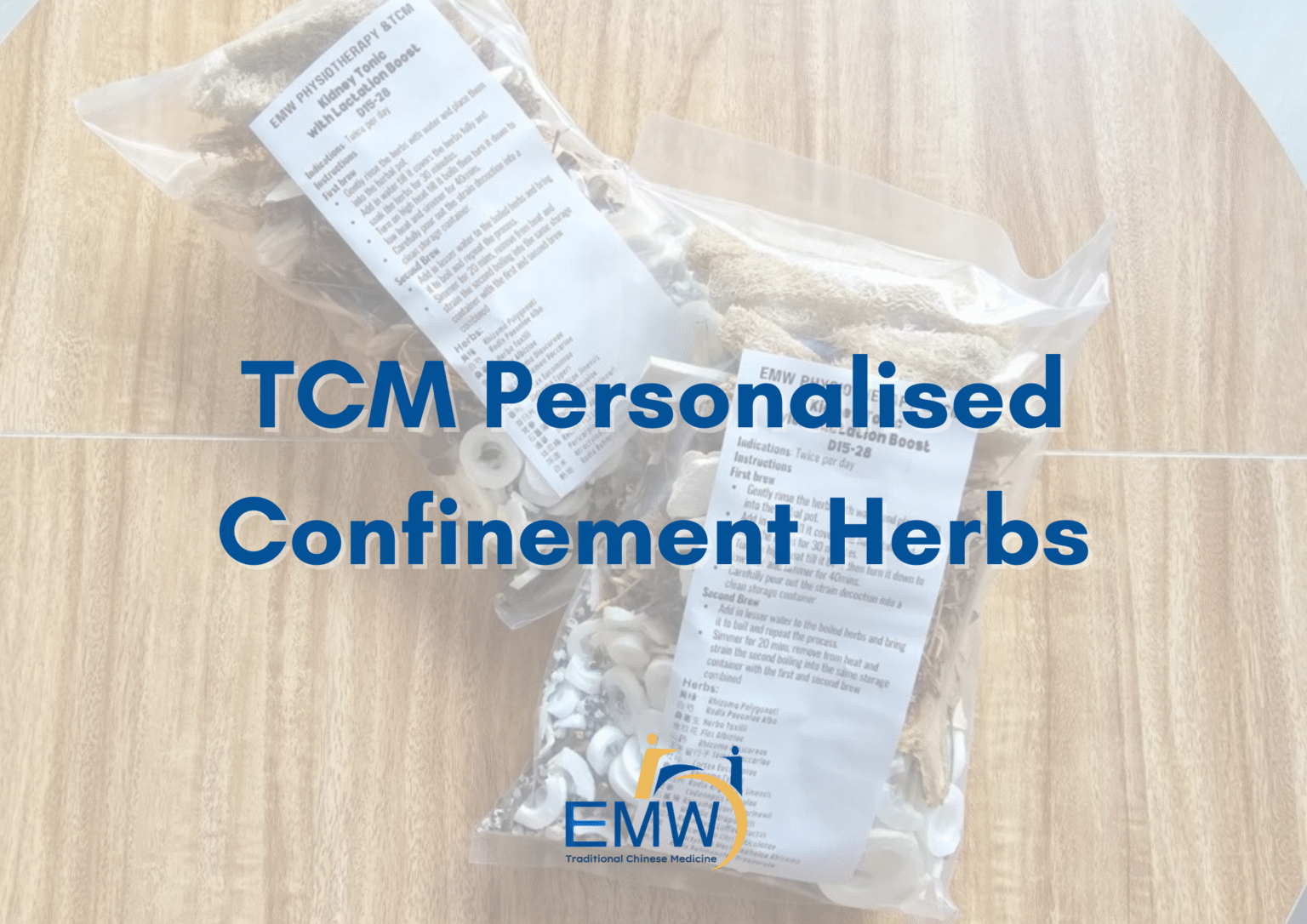
TCM Confinement Herbs

EMW Personalised Confinement Herbal Package is designed to be brewed into a decoction and to be drank separately outside of meals. Therefore, while confinement herbal soups are catered more towards general body constitution while our Herbal Package herbs are more catered to individual body types hence being more potent as a result.
When During the Cycle Should You Do Fertility Acupuncture 7

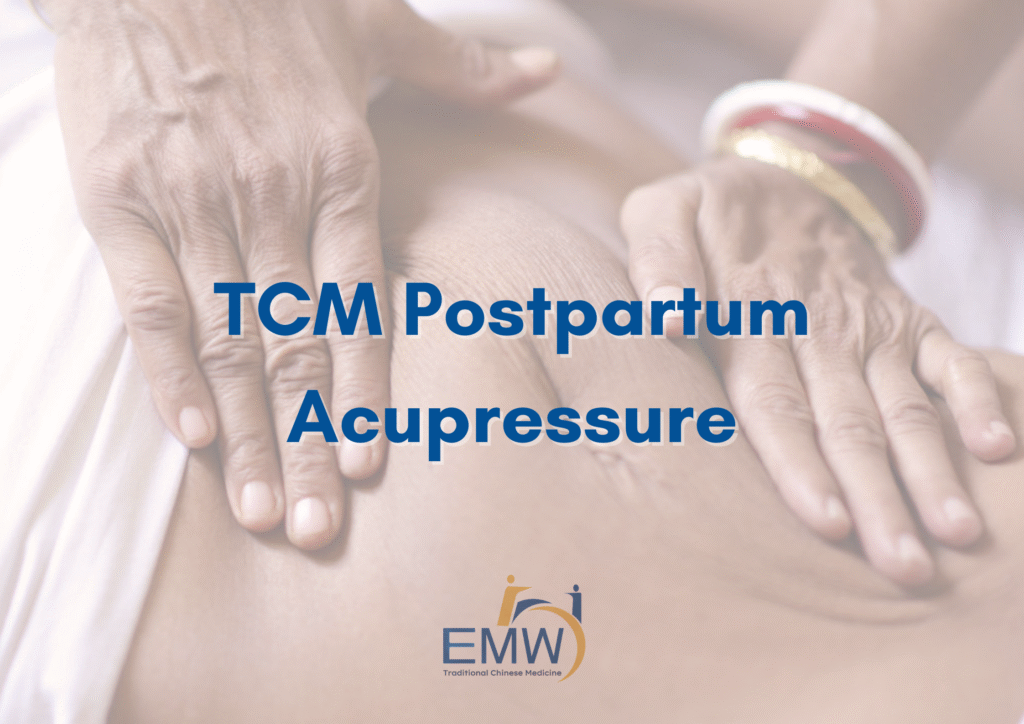
TCM Postartum Acupressure

A 2018 study published in The Journal of Maternal Health found that postpartum massage enhances oxytocin release, which helps with uterine contractions, reduces swelling, and supports emotional well-being. Our specialized EMW TCM postnatal massage Singapore program integrates these evidence-based benefits to ensure a smoother recovery journey for new mothers.
When During the Cycle Should You Do Fertility Acupuncture 8

How TCM Supports Postpartum Recovery

At EMW TCM Singapore, we see postpartum care not only as physical healing but also as emotional restoration. Our physicians integrate TCM acupressure, moxibustion acupuncture, and herbal medicine in TCM Confinement Singapore care to help mothers regain balance, replenish energy, and prevent long-term health issues.

EMW TCM Clinics

International Building Branch

360 Orchard Road, International Building #02-05/06
Singapore 238869
Book Your Appointment With Us Here: +65 89585869

Our Physicians

Principal TCM Physician

  • M.Med(TCM Gynaecology)
  • B.Sc(Hons) Biomedical Sciences
  • Dip. Naturopath
  • Ayurvedic Therapist(500hrs)
  • Registered TCM Physician (Singapore MOH)

Senior TCM Physician

  • M.Med(TCM Acupuncture & Moxibustion)
  • B.Sc(Hons) Biomedical Sciences
  • Certified Aromatherapist
  • Registered TCM Physician (Singapore MOH)

TCM Physician

  • M.Med(TCM Gynaecology)
  • B.Sc(Hons) Biomedical Sciences
  • Registered TCM Physician (Singapore MOH)

TCM Physician

  • M.Med(TCM Acupuncture & Moxibustion)
  • B.Sc(Hons) Biomedical Sciences
  • Registered TCM Physician (Singapore MOH)

TCM Physician

  • B.Med(TCM)
  • B.Sc(Hons) Biomedical Sciences
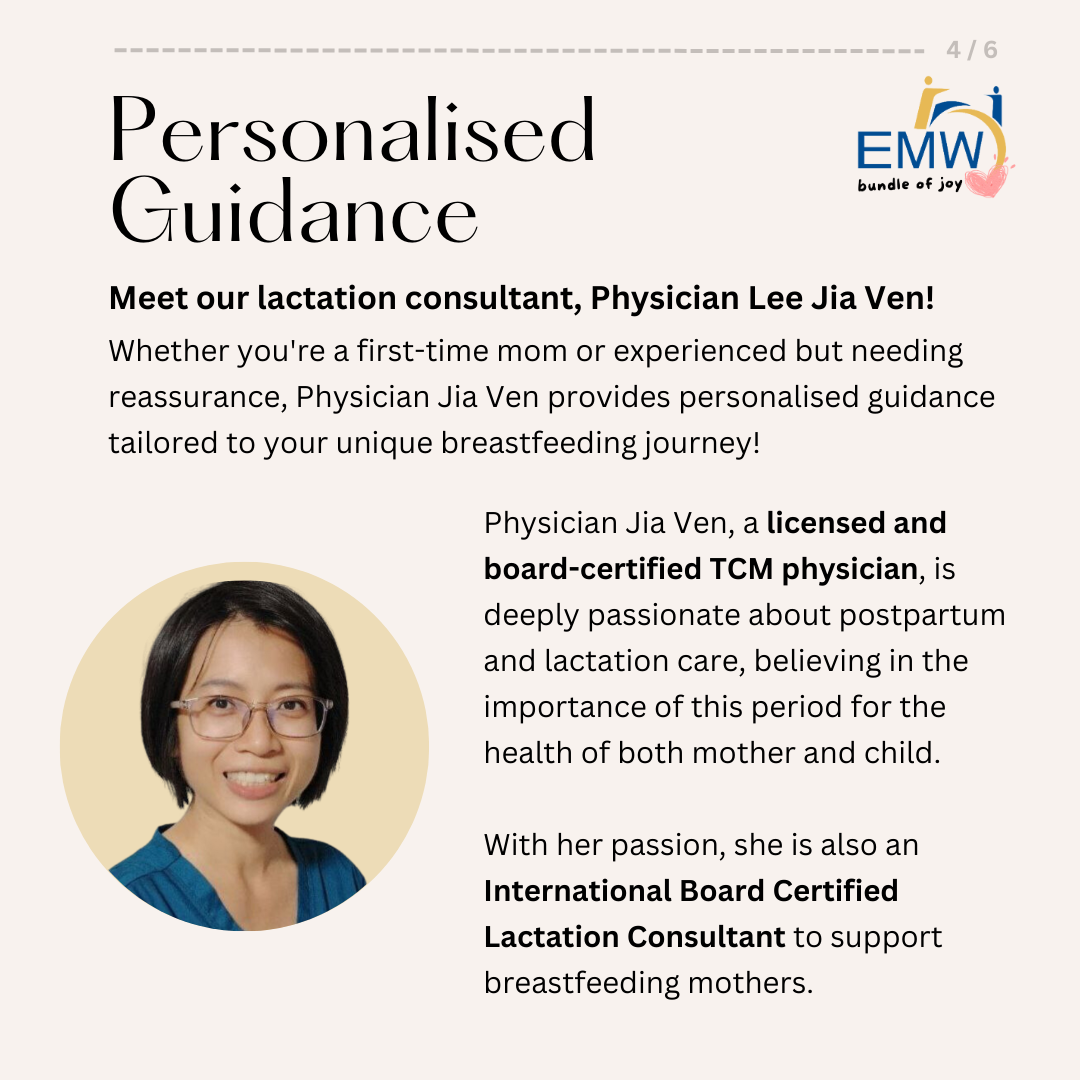
  • International Board-Certified Lactation Consultant (IBCLC)
  • Registered TCM Physician (Singapore MOH)

Comments

No comments yet. Why don’t you start the discussion?

Leave a Reply

Your email address will not be published. Required fields are marked *