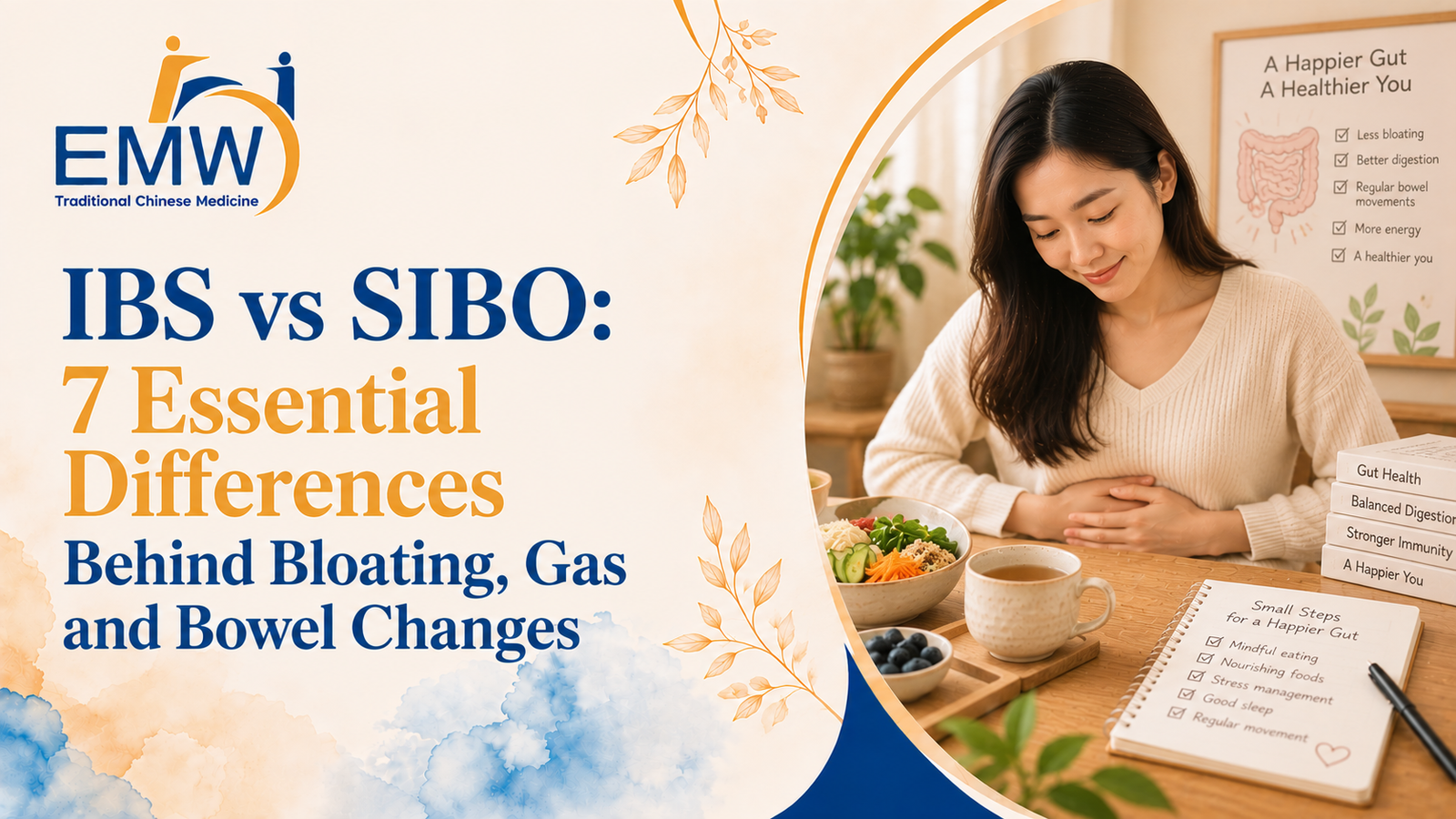
IBS vs SIBO: 7 Essential Differences Behind Bloating, Gas and Bowel Changes

IBS vs SIBO 7 Essential Differences Behind Bloating, Gas and Bowel Changes

IBS vs SIBO: 7 Essential Differences Behind Bloating, Gas and Bowel Changes​

Bloating, abdominal discomfort, diarrhoea, constipation and excessive gas can occur in several digestive disorders, which is why IBS vs SIBO is such a common question. Although the two can share symptoms and may sometimes occur together, irritable bowel syndrome and small intestinal bacterial overgrowth are not the same condition.

IBS is a disorder of gut-brain interaction characterised by recurring abdominal pain associated with altered bowel habits. SIBO refers to an abnormal increase or alteration of microorganisms in the small intestine.

The symptoms can overlap considerably, so IBS vs SIBO cannot reliably be distinguished by bloating alone.

tcm gut health
At EMW TCM, our physicians combine classical diagnosis with evidence-based approaches to create personalised programs that strengthen digestion, reduce bloating, and calm the nervous system. Each treatment plan under TCM for gut health is tailored to your constitution, helping your body rebuild its natural rhythm and resilience.

IBS vs SIBO: 7 Essential Differences Behind Bloating, Gas and Bowel Changes​

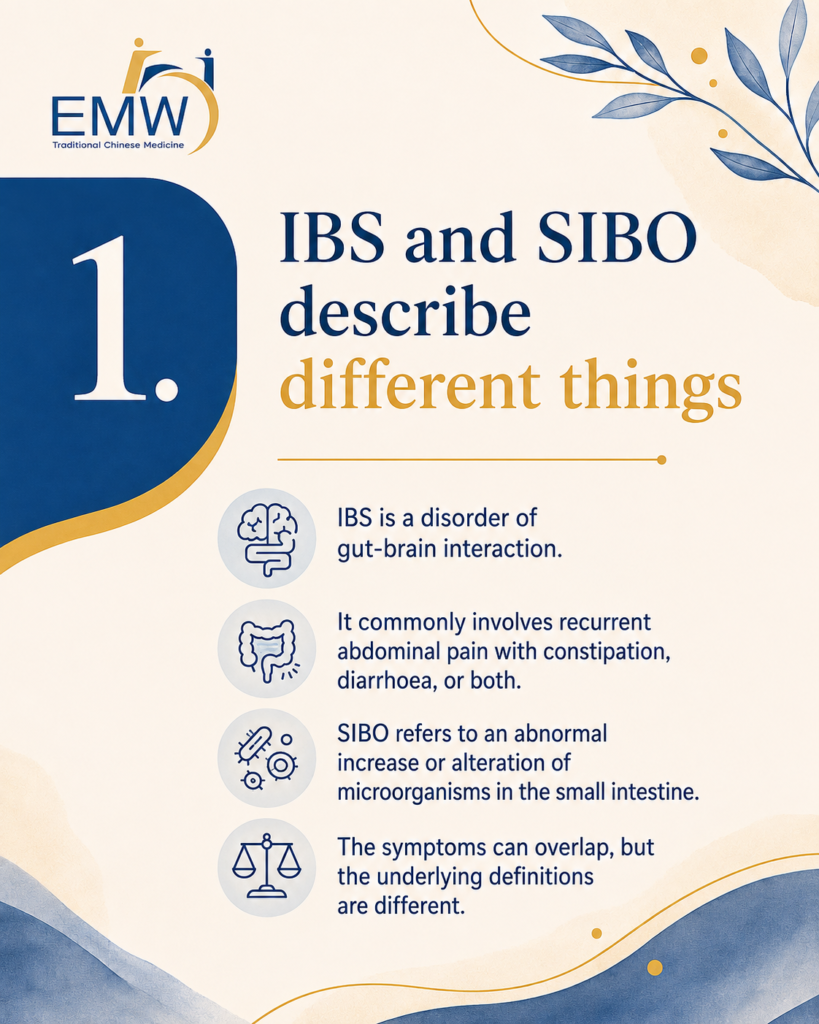
1. IBS and SIBO describe different things

IBS refers to a functional bowel disorder.

People with IBS commonly experience recurrent abdominal pain together with constipation, diarrhoea or a mixture of both.

SIBO describes excessive or altered bacterial populations within the small intestine.

Possible symptoms include bloating, abdominal discomfort, excessive gas and diarrhoea.

So while the symptom lists overlap, the underlying definitions are different.

2. Bloating does not prove you have SIBO

Social media has made SIBO one of the most frequently self-diagnosed digestive conditions.

A flat stomach in the morning followed by significant evening bloating can certainly be uncomfortable, but it does not by itself establish SIBO.

Bloating can occur with IBS, constipation, functional dyspepsia, food intolerance and several other conditions.

This is the first major distinction when discussing IBS vs SIBO:

symptoms generate possibilities; they do not establish the diagnosis.

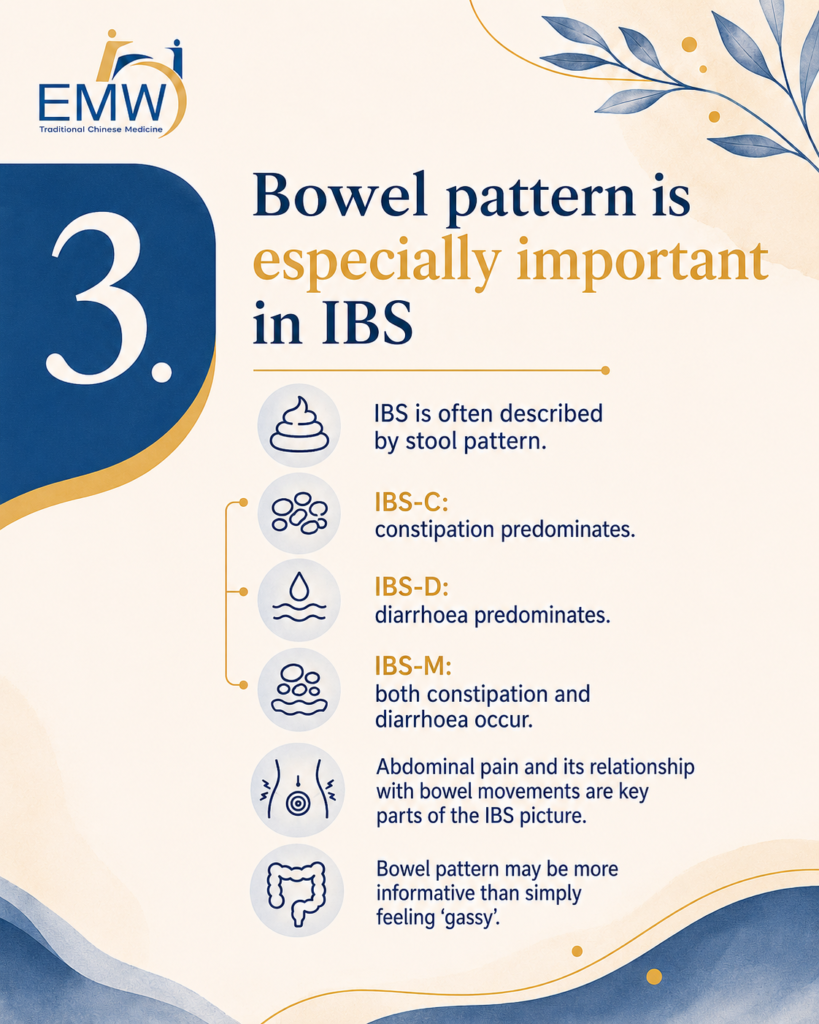
3. Bowel pattern is especially important in IBS

Clinicians often further describe IBS according to predominant stool pattern:

IBS-C, where constipation predominates;

IBS-D, where diarrhoea predominates;

IBS-M, where both constipation and diarrhoea occur.

Abdominal pain and its relationship with bowel movements are important components of the IBS picture.

This bowel-pattern relationship may be more informative than simply asking whether someone feels “gassy”.

4. SIBO may require specific testing

Breath testing is commonly used when SIBO is suspected.

The American College of Gastroenterology guideline suggests glucose or lactulose hydrogen breath testing in selected symptomatic patients, including some patients with IBS, although the strength and quality of evidence are limited.

This matters because a breath test is not a perfect universal screening test for anyone with bloating.

Results have to be interpreted within the clinical context.

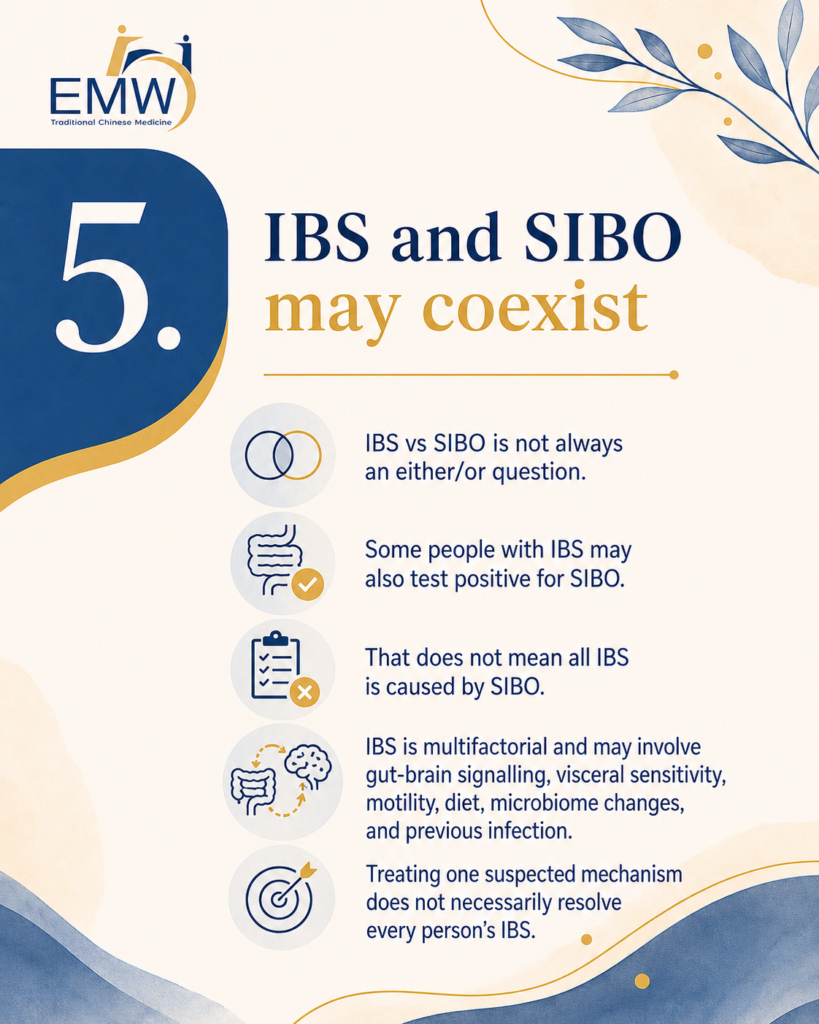
5. IBS and SIBO may coexist

This is why IBS vs SIBO is not always an either/or question.

Some people with IBS may also test positive for SIBO.

However, that does not mean all IBS is caused by SIBO.

IBS is multifactorial and may involve altered gut-brain signalling, visceral sensitivity, motility, diet, microbiome changes and previous gastrointestinal infection.

Treating one suspected mechanism does not necessarily resolve every person’s IBS.

6. Treatment should follow the diagnosis

For IBS, management may include dietary modification, soluble fibre in appropriate patients, medications targeted at diarrhoea or constipation and therapies addressing the gut-brain interaction.

For suspected SIBO, the medical approach may involve identifying contributing factors and, when appropriate, specific antimicrobial treatment under a doctor.

Repeating restrictive diets or antibiotics without proper evaluation is not a long-term gut-health strategy.

One particular concern is excessive dietary restriction.

If someone keeps removing more and more foods because they fear bloating, nutrition and quality of life can suffer.
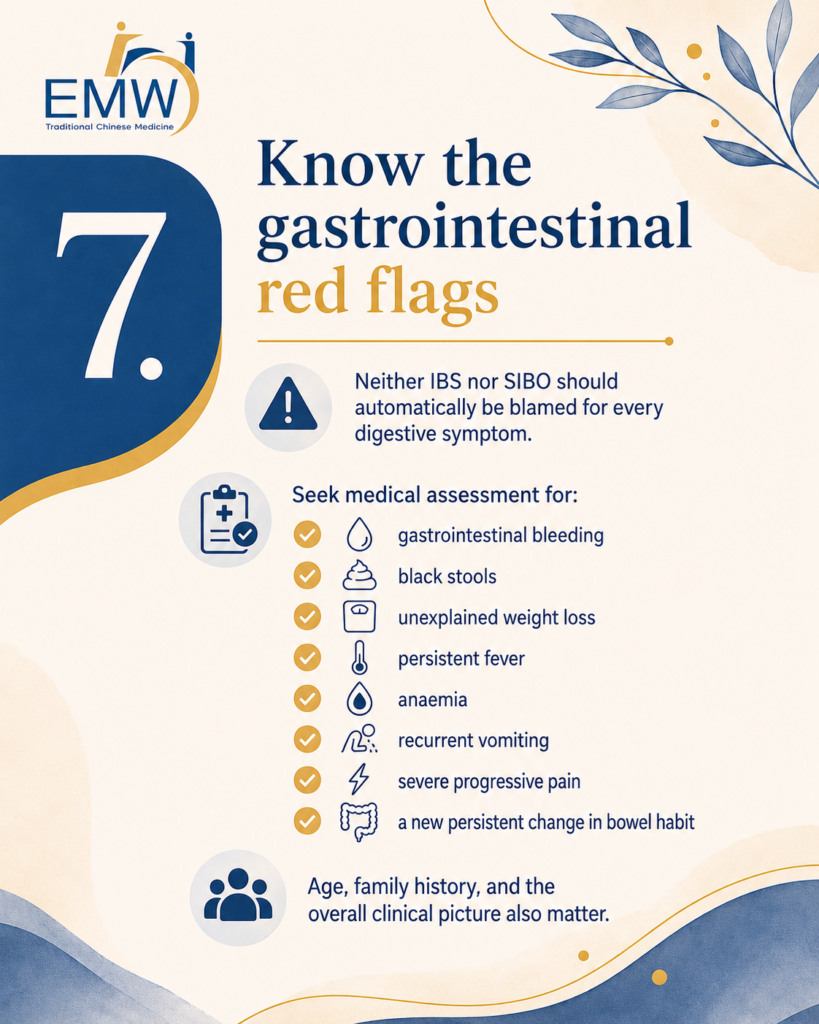
7. Know the gastrointestinal red flags

Neither IBS nor SIBO should automatically be blamed for every digestive symptom.

Seek medical assessment for gastrointestinal bleeding, black stools, unexplained weight loss, persistent fever, anaemia, recurrent vomiting, severe progressive pain, a new persistent change in bowel habit or other concerning symptoms.

Age, family history and the overall clinical picture also influence how symptoms should be investigated.

BBFA 1
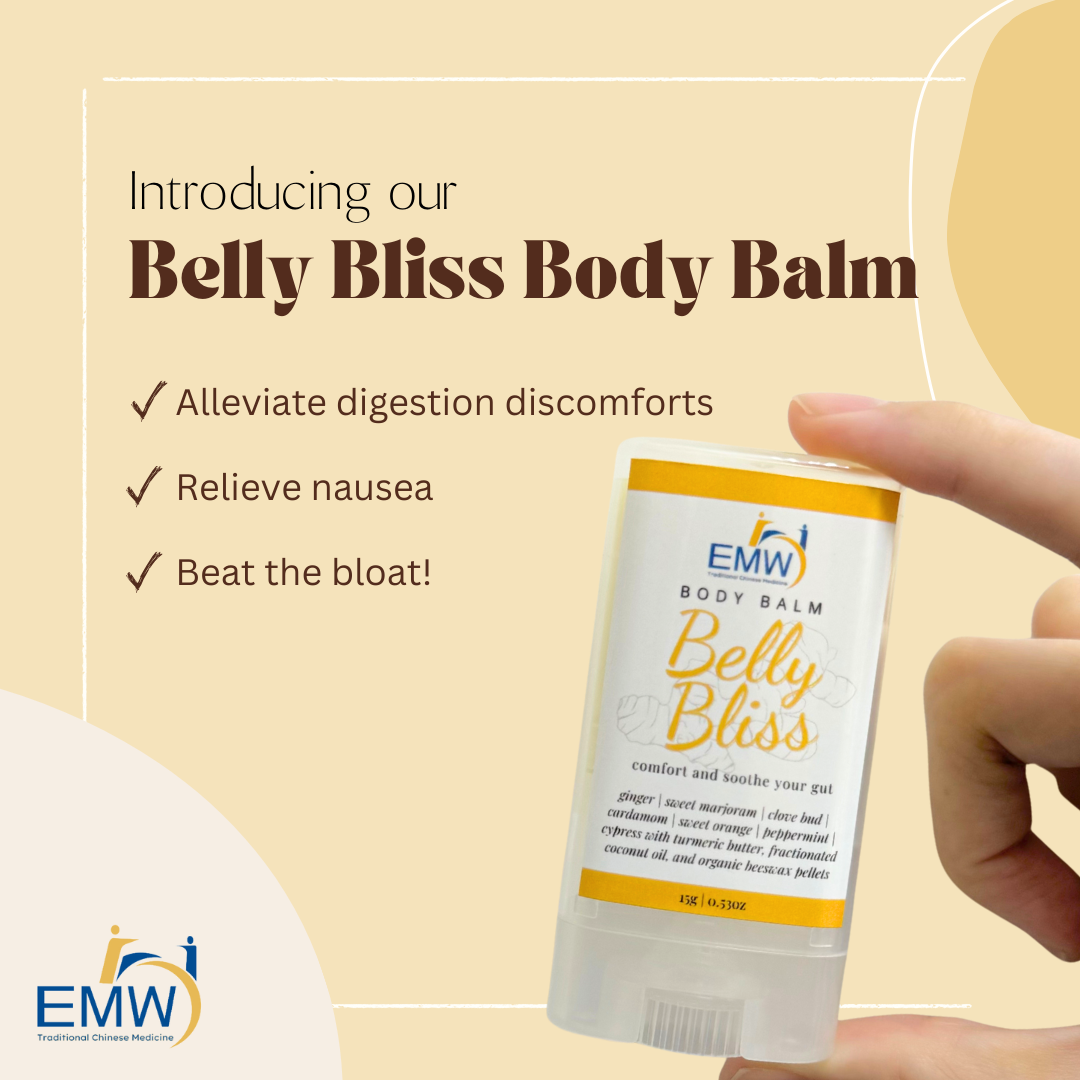
Specially curated in-house for individuals with: bloating,heartburn,nausea. Whatsapp us @97280455 to place your order.

Where could TCM fit for IBS vs SIBO?​

Patients searching IBS vs SIBO often come to TCM after experiencing long-standing bloating, bowel changes and food sensitivity.

At EMW TCM, treatment should begin with understanding what medical investigations have already been performed.

TCM diagnosis then looks at the person’s broader pattern rather than assuming all bloating represents one syndrome.

Depending on the assessment, acupuncture or Chinese medicine may be considered as complementary symptom support.

However, TCM should not be positioned as a substitute for testing when SIBO, inflammatory bowel disease, coeliac disease or another medical condition is suspected.

Frequently Asked Questions

Which causes more bloating, IBS or SIBO?

Both can cause significant bloating. Severity alone cannot reliably distinguish them.

Does having IBS mean I have SIBO?

No.

Can you have IBS and SIBO together?

Yes, they can coexist.

Should everyone with IBS do a SIBO breath test?

No. Testing is most useful when it is clinically indicated rather than used as universal screening.

Is SIBO the same as gut dysbiosis?

No. “Gut dysbiosis” is a broad term describing alterations in microbial communities. SIBO specifically refers to the small intestine.

When During the Cycle Should You Do Fertility Acupuncture 4
In this article, our journey through Part I has unveiled the delightful and potent local dishes that can give your fertility a natural boost. From the fresh and flavorful seafood to the soul-warming herbal soups, Singaporean cuisine is a treasure trove of fertility-friendly foods. By adding these delicious, nutrient-packed dishes to your meals, you’re not just nourishing your body but also embracing a rich culinary tradition.

Key takeaway

The most important point in IBS vs SIBO is that similar symptoms do not mean identical conditions.

A structured medical history, bowel-pattern assessment and appropriately selected investigations are usually more useful than guessing based on bloating alone.

Practical Guidance for Singapore Lifestyles

OYGH series 1
At EMW, we treat each patient based on syndrome differentiation and design a tailored therapy protocol that caters to individual’s constitution. Treatment plan focuses to relax and calm down spastic colon, improve energy circulation by ensuring smooth flow of Qi and Blood in your digestive organs and remove any heat, dampness, or stagnated energy. We strive towards enhancing your overall health and wellness to restore your vagus nerve function, for you to feel tranquil and rejuvenated after each treatment session with improvement in digestion and bowel movement.

When to Seek Professional TCM Help

Your gut is the first organ to receive, transform, and deliver nourishment to every cell. If you experience chronic bloating, constipation, acid reflux, or fatigue, these may be early signs that your digestion needs attention.

Healing the gut restores energy, improves hormonal communication, and creates the internal harmony required for general health.

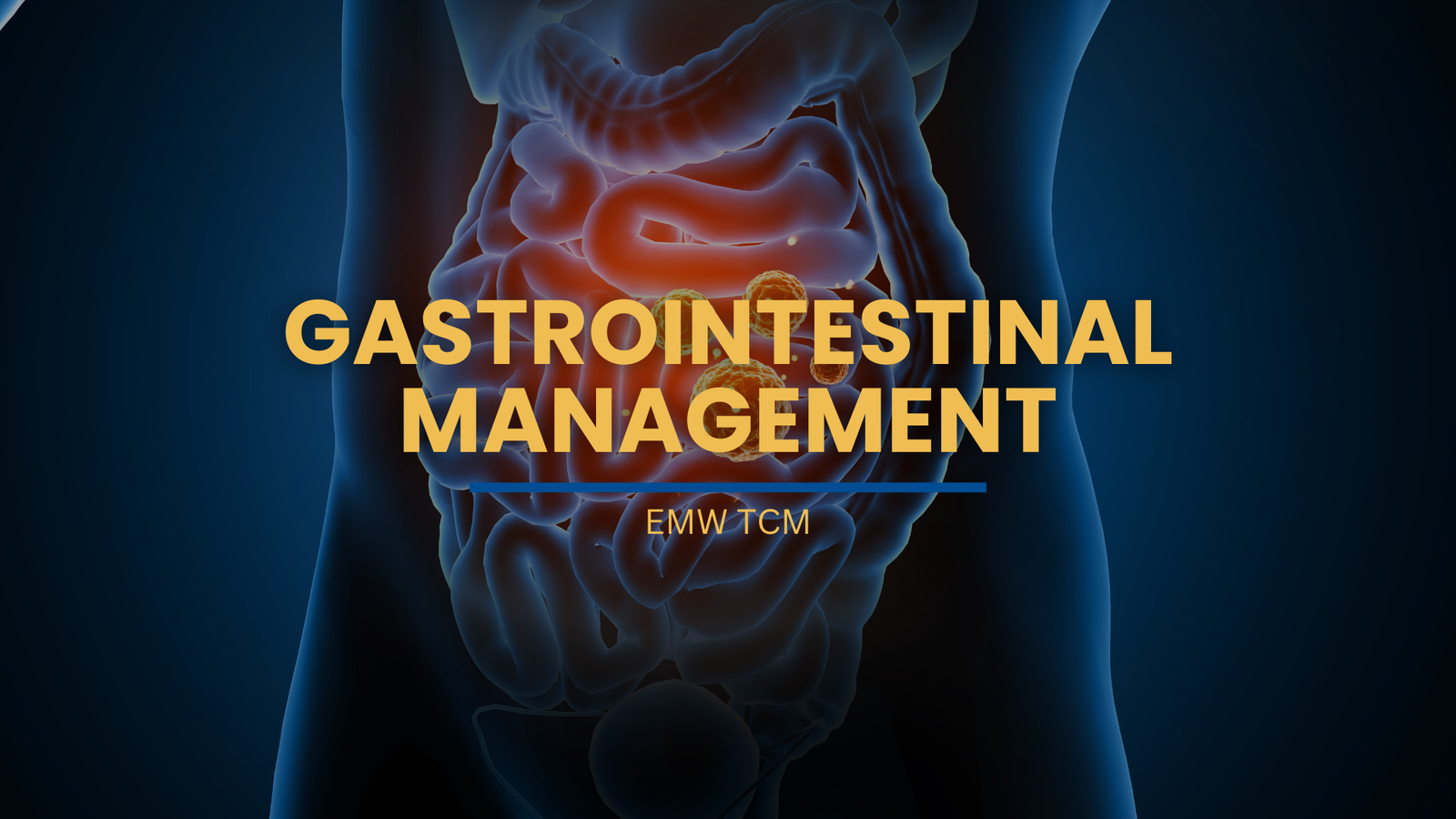
At EMW TCM Singapore, our physicians guide you through this process with care, evidence, and empathy. Whether you are addressing IBS or GERD or fertility, TCM offers a gentle yet powerful pathway to holistic wellness.

Check out our links below to book your consultation and begin your holistic journey toward better health ahead.

EMW TCM Clinics

International Building Branch

360 Orchard Road, International Building #02-05/06
Singapore 238869
Book Your Appointment With Us Here: +65 89585869

Our Physicians

Principal TCM Physician

  • M.Med(TCM Gynaecology)
  • B.Sc(Hons) Biomedical Sciences
  • Dip. Naturopath
  • Ayurvedic Therapist(500hrs)
  • Registered TCM Physician (Singapore MOH)

Senior TCM Physician

  • M.Med(TCM Acupuncture & Moxibustion)
  • B.Sc(Hons) Biomedical Sciences
  • Certified Aromatherapist
  • Registered TCM Physician (Singapore MOH)

TCM Physician

  • M.Med(TCM Gynaecology)
  • B.Sc(Hons) Biomedical Sciences
  • Registered TCM Physician (Singapore MOH)

TCM Physician

  • M.Med(TCM Acupuncture & Moxibustion)
  • B.Sc(Hons) Biomedical Sciences
  • Registered TCM Physician (Singapore MOH)

TCM Physician

  • B.Med(TCM)
  • B.Sc(Hons) Biomedical Sciences
  • International Board-Certified Lactation Consultant (IBCLC)
  • Registered TCM Physician (Singapore MOH)

References

  1. Turner JR. Intestinal mucosal barrier function in health and disease. Physiological Reviews. 2009;89(1):163-192. DOI: 10.1152/physrev.00011.2008

Comments

No comments yet. Why don’t you start the discussion?

Leave a Reply

Your email address will not be published. Required fields are marked *