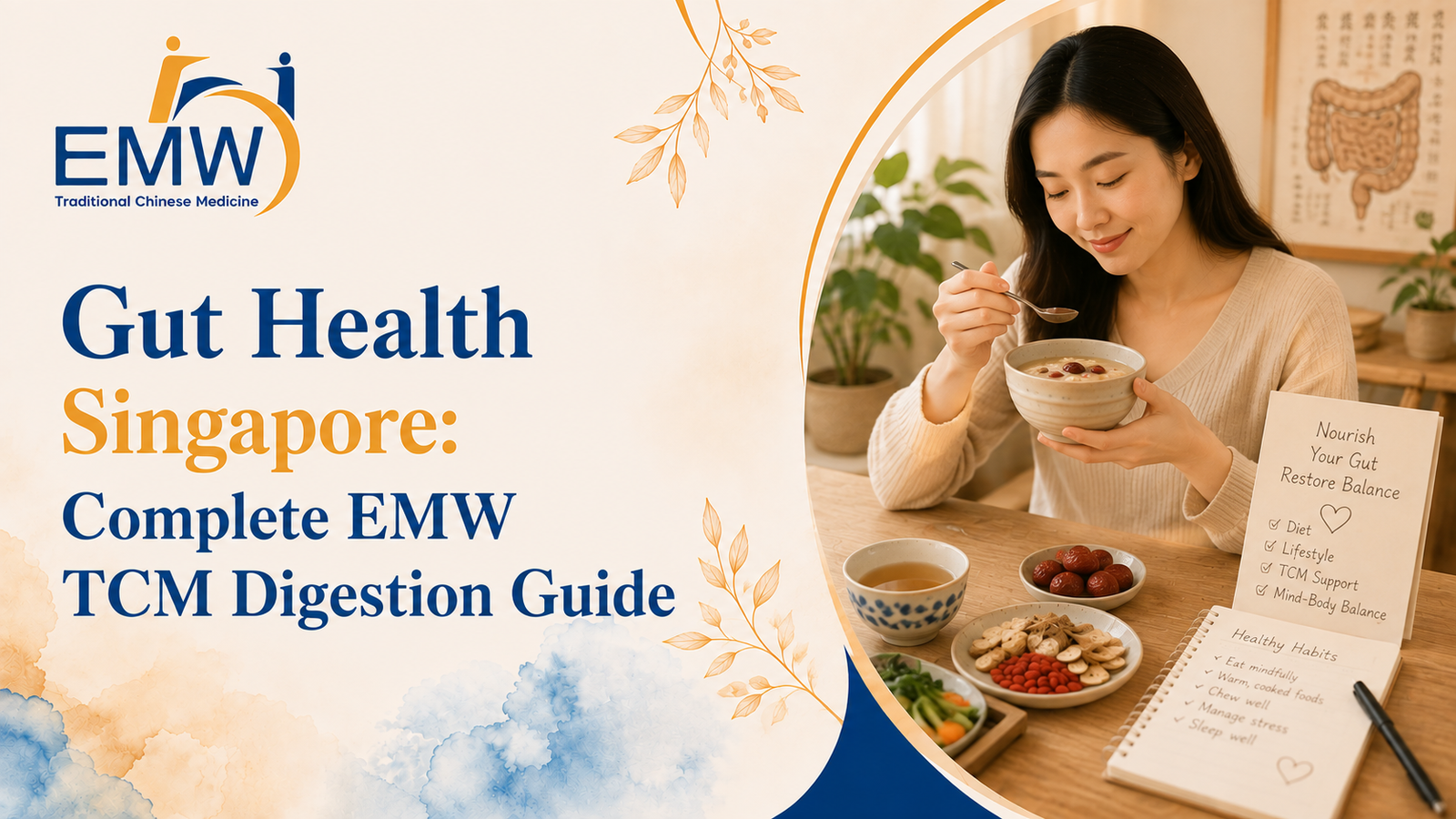
Gut Health Singapore: Complete EMW TCM Digestion Guide

Gut Health Singapore: Complete EMW TCM Digestion Guide

Introduction: The Overlooked Link Between Gut Health and Hormones

Digestive symptoms are often easy to dismiss.

You feel bloated after lunch, but work continues.

You experience reflux at night, so you take an antacid.

You do not pass stool for two or three days, but constipation has become normal for you.

You alternate between loose stools and difficulty emptying your bowels, yet previous tests were reported as “normal”.

Over time, digestion begins to affect more than meals.

You may avoid eating before meetings.

You may plan your route according to toilet access.

You may feel tired after food, anxious about symptoms or frustrated that every diet seems to contradict the last one.

Avoid gluten.

Stop dairy.

Take probiotics.

Eat more fibre.

Follow a low-FODMAP diet.

Drink apple cider vinegar.

Remove nightshades.

Fast for sixteen hours.

Eat six small meals.

When advice becomes this confusing, people often start restricting more and eating less without understanding what is causing their symptoms.

This gut health Singapore guide explains how common digestive symptoms are assessed, how the gut and brain communicate, when medical investigation is necessary and how EMW TCM uses acupuncture, herbal medicine, dietary guidance and lifestyle support as complementary care.

TCM does not replace endoscopy, colonoscopy, blood tests, stool testing or medical treatment when these are needed.

The goal is to understand the full digestive pattern rather than treating every episode of bloating, reflux or constipation in isolation.

The Quick Answer

The digestive system includes the gastrointestinal tract together with organs such as the liver, pancreas and gallbladder. Its job is to break food down, absorb nutrients and eliminate waste. Digestive conditions may be brief and self-limiting or chronic and recurrent.

A gut-health assessment may consider:

  • Where symptoms occur
  • When they began
  • Meal timing
  • Food triggers
  • Stool frequency and form
  • Reflux
  • Nausea
  • Bloating
  • Abdominal pain
  • Medication
  • Stress
  • Sleep
  • Menstrual or hormonal patterns
  • Previous investigations
  • Medical warning signs

At EMW TCM, digestive treatment is individualised according to the patient’s symptoms, constitution, tongue and pulse findings, lifestyle and medical history. The clinic’s current gut-health programme commonly addresses bloating, reflux, IBS, irregular bowel habits and general digestive weakness through combinations of consultation, acupuncture, herbal medicine and lifestyle guidance.

No single probiotic, herb or elimination diet is suitable for everyone.

tcm gut health
At EMW TCM, our physicians combine classical diagnosis with evidence-based approaches to create personalised programs that strengthen digestion, reduce bloating, and calm the nervous system. Each treatment plan under TCM for gut health is tailored to your constitution, helping your body rebuild its natural rhythm and resilience.

What Does “Gut Health” Actually Mean?

The term “gut health” is used everywhere, but it does not have one simple medical definition.

For practical purposes, healthy digestion may involve:

  • Comfortable eating
  • Appropriate appetite
  • Minimal troublesome reflux
  • Regular bowel movements
  • Effective nutrient absorption
  • Limited abdominal pain
  • Manageable gas and bloating
  • A stable relationship between food and symptoms

Good gut health does not mean never experiencing gas or an occasional change in bowel movement.

Passing gas is a normal part of digestion. Bloating refers to a sensation of fullness or swelling, while distension means that the abdomen has visibly enlarged. A person can feel severely bloated without having significant visible distension.

A healthy bowel pattern also does not require exactly one bowel movement every morning.

What matters is whether your usual pattern is comfortable, stools are reasonably easy to pass and you do not feel persistently obstructed or incompletely emptied.

Common Digestive Symptoms

Bloating

Bloating may feel like:

  • Fullness
  • Tightness
  • Pressure
  • Abdominal swelling
  • Trapped gas
  • Clothing becoming tighter after meals

Possible contributors include:

  • Constipation
  • Swallowed air
  • Carbohydrate fermentation
  • Lactose or fructose intolerance
  • IBS
  • Functional dyspepsia
  • Small intestinal bacterial overgrowth in selected cases
  • Menstrual changes
  • Pelvic-floor dysfunction
  • Disorders affecting gut-brain interaction

Undigested carbohydrates may reach the large intestine, where bacteria break them down and produce gas. This does not automatically mean that gut bacteria are “bad” or that everyone with bloating needs antimicrobial treatment.

Persistent bloating should be assessed in context rather than treated automatically as “leaky gut” or SIBO.

Acid reflux and GERD

Reflux occurs when stomach contents move upwards into the oesophagus.

Typical symptoms include:

  • Heartburn
  • Sour taste
  • Regurgitation
  • Belching
  • Nausea
  • Upper abdominal discomfort

Some people also experience chronic cough, hoarseness, chest discomfort or swallowing symptoms. GERD may develop when the lower oesophageal sphincter becomes weak or relaxes inappropriately.

Reflux is not always caused by “too much stomach acid”.

The position and function of the lower oesophageal sphincter, meal size, timing, body position, smoking, pregnancy, weight, medication and hiatal hernia may all be relevant.

Indigestion and functional dyspepsia

Indigestion, or dyspepsia, may involve:

  • Upper abdominal discomfort
  • Burning
  • Early fullness
  • Feeling uncomfortably full after a small meal
  • Nausea
  • Bloating
  • Belching

Most chronic indigestion is diagnosed as functional dyspepsia, now commonly understood as a disorder involving communication between the gut and brain rather than visible structural damage alone.

“Functional” does not mean imaginary.

It means the problem may involve sensation, motility, nervous-system signalling and digestive function even when tests do not show an ulcer, tumour or major structural disease.

Constipation

Constipation may involve:

  • Fewer than three bowel movements each week
  • Hard or dry stools
  • Painful passage
  • Straining
  • Incomplete emptying
  • Needing significant effort or manual support

Constipation has many possible causes, including diet, hydration, medication, reduced movement, thyroid problems, pelvic-floor dysfunction and disorders of gut-brain interaction.

Having a bowel movement daily does not completely rule out constipation if every stool is hard, painful or incomplete.

Diarrhoea

Loose stools may occur because of:

  • Infection
  • Medication
  • Food intolerance
  • IBS
  • Inflammatory bowel disease
  • Coeliac disease
  • Thyroid disease
  • Bile-acid problems
  • Malabsorption
  • Other digestive disorders

Repeated or persistent diarrhoea should not be treated indefinitely with restrictive diets or herbs without understanding the cause.

Irritable bowel syndrome

IBS involves repeated abdominal pain together with changes in bowel movements.

The bowel pattern may involve:

  • Constipation
  • Diarrhoea
  • Both constipation and diarrhoea
  • Bloating
  • Mucus
  • Incomplete evacuation

IBS does not cause visible damage to the digestive tract, but symptoms can be persistent and disruptive. It is classified as a disorder of gut-brain interaction because altered sensitivity and bowel movement patterns may contribute to pain, bloating and stool changes.

IBS should not be used as a casual label for every unexplained stomach problem.

A clinician should assess the symptom pattern and consider whether testing is required.

The Gut-Brain Connection

The gut and brain communicate continuously through nerves, hormones, immune signalling and microbial metabolites.

This relationship helps explain why stress may trigger:

  • Urgency
  • Diarrhoea
  • Constipation
  • Nausea
  • Reflux
  • Loss of appetite
  • Abdominal pain

It also explains why chronic digestive symptoms can increase anxiety.

The process goes in both directions.

Stress can affect digestion, and digestive discomfort can make the nervous system more vigilant.

This does not mean that symptoms are “all in your head”.

It means that digestion cannot always be separated from sleep, stress, emotional state and autonomic nervous-system activity.

Disorders such as IBS and functional dyspepsia are recognised examples of altered gut-brain interaction.

At EMW TCM, stress and digestion are commonly assessed together, especially when symptoms worsen during work pressure, travel, conflict, menstruation or poor sleep.

BBFA 1
Specially curated in-house for individuals with: bloating,heartburn,nausea. Whatsapp us @97280455 to place your order.

The TCM Perspective on Digestion

In TCM, digestion is centred around the Spleen and Stomach systems.

These terms describe functional relationships and do not refer only to the anatomical spleen and stomach recognised in modern medicine.

The Stomach

The Stomach receives food and begins the process traditionally described as “ripening and rotting”.

In modern language, this refers broadly to receiving and breaking food down so that it can be processed.

Healthy Stomach Qi is said to descend.

When it moves in the wrong direction, symptoms may include:

  • Reflux
  • Nausea
  • Vomiting
  • Belching
  • Hiccups

The Spleen

The Spleen transforms food into nourishment and transports it around the body.

It is traditionally associated with:

  • Digestion
  • Nutrient transformation
  • Energy
  • Fluid metabolism
  • Formation of Qi and Blood

When this system is weak, symptoms may include:

  • Bloating
  • Poor appetite
  • Loose stool
  • Fatigue
  • Heaviness
  • Brain fog
  • Feeling tired after eating

EMW’s gut programme uses this Spleen-Stomach framework together with modern digestive assessment, diet, lifestyle, tongue and pulse findings.

The Liver

The Liver system supports the smooth movement of Qi.

Stress, frustration and emotional tension may disrupt this movement and affect digestion.

Possible symptoms include:

  • Bloating that changes with stress
  • Abdominal tension
  • Reflux
  • Alternating constipation and diarrhoea
  • Loss of appetite
  • Symptoms that worsen before menstruation

The intestines

The Small Intestine is traditionally associated with separating the clear from the turbid.

The Large Intestine receives waste and supports elimination.

In clinical TCM, intestinal symptoms are still interpreted through the wider relationship between the Spleen, Stomach, Liver, Kidney, Qi, Blood, Heat, Cold and fluids.

Common TCM Gut Patterns

A TCM pattern is not the same as a Western diagnosis.

Two people with IBS may have different TCM patterns, while one person may have more than one pattern.

Spleen Qi deficiency

Possible signs include:

  • Bloating after meals
  • Poor appetite
  • Loose stool
  • Fatigue
  • Weakness
  • Pale tongue
  • Teeth marks on the tongue

Treatment may focus on supporting digestive function and reducing the formation of Dampness.

Liver Qi stagnation affecting the Stomach or Spleen

Possible signs include:

  • Stress-related bloating
  • Reflux
  • Abdominal tightness
  • Variable stool
  • Sighing
  • Irritability
  • Menstrual-related digestive changes

Treatment may focus on regulating Qi while supporting digestion.

Food stagnation

Possible signs include:

  • Fullness after overeating
  • Belching
  • Sour regurgitation
  • Nausea
  • Thick tongue coating
  • Strong food-related discomfort

Treatment may focus on restoring digestive movement rather than immediately adding tonics.

Dampness

Possible signs include:

  • Heaviness
  • Sticky or incomplete stool
  • Nausea
  • Bloating
  • Thick tongue coating
  • Fatigue
  • Feeling foggy

Stomach Heat

Possible signs include:

  • Burning discomfort
  • Strong thirst
  • Bad breath
  • Acid reflux
  • Hunger soon after eating
  • Red tongue

Not every person with reflux has Stomach Heat.

Some patients have deficiency, Cold or stress-related patterns instead.

Stomach Cold or Spleen Yang deficiency

Possible signs include:

  • Abdominal pain improved by warmth
  • Loose stools
  • Feeling cold
  • Poor appetite
  • Fatigue
  • Symptoms after excessive cold food in susceptible individuals

This is why one generic “cooling” reflux formula or one universal warming diet may be inappropriate.

How EMW TCM Approaches Gut Health Singapore

A gut-health visit begins with understanding the full symptom pattern.

The physician may ask about:

  • Main complaint
  • Symptom location
  • Timing
  • Food triggers
  • Meal size
  • Reflux
  • Nausea
  • Bloating
  • Stool frequency
  • Stool consistency
  • Incomplete emptying
  • Medication
  • Menstrual cycle
  • Stress
  • Sleep
  • Exercise
  • Previous investigations

Patients are encouraged to bring relevant reports such as:

  • Endoscopy
  • Colonoscopy
  • Ultrasound
  • Stool tests
  • Blood tests
  • Allergy or intolerance testing
  • Medication lists

EMW’s programme currently uses personalised diagnosis, herbal medicine, acupuncture and lifestyle guidance for concerns such as IBS, bloating, reflux, constipation and diarrhoea.

Acupuncture

Acupuncture may be incorporated to support:

  • Nausea
  • Abdominal discomfort
  • Bowel regularity
  • Stress regulation
  • Gut-brain signalling
  • Individual TCM patterns

Acupuncture is not a substitute for treatment of bleeding, obstruction, inflammatory bowel disease or another serious digestive condition.

Research into acupuncture for digestive disorders varies by diagnosis and study quality. It is more responsible to describe it as supportive care than to promise that it cures IBS or GERD.

Herbal medicine

Herbal formulas may be prescribed according to symptoms and TCM diagnosis.

Treatment may focus on:

  • Strengthening digestion
  • Regulating Qi
  • Reducing Dampness
  • Supporting bowel movement
  • Addressing Heat or Cold patterns
  • Harmonising the Stomach
  • Managing stress-related digestive change

There is no single gut-repair formula.

The same herbs are not suitable for a patient with chronic loose stools, someone with severe constipation and someone with burning reflux.

Inform the physician about:

  • Prescription medication
  • Pregnancy
  • Breastfeeding
  • Liver or kidney disease
  • Anticoagulants
  • Supplements
  • Allergies

Do not stop prescribed acid suppression, laxatives or other medication without discussing it with the prescribing doctor.

Moxibustion

Moxibustion may be considered for selected patients with Cold or deficiency patterns.

It is not suitable for every reflux, inflammatory or Heat presentation.

Diet and lifestyle

Advice is matched to symptoms and constitution rather than based only on a generic TCM food list.

What to Expect During an EMW Gut-Health Visit

1. Detailed consultation

The physician reviews:

  • Symptom history
  • Medical diagnosis
  • Food pattern
  • Bowel movements
  • Reflux
  • Stress
  • Sleep
  • Menstrual or hormonal symptoms
  • Medication
  • Investigations

2. TCM assessment

This may include:

  • Tongue observation
  • Pulse diagnosis
  • Abdominal findings
  • Constitution
  • Pattern differentiation

3. Personalised plan

Treatment may include:

  • Acupuncture
  • Herbal medicine
  • Acupressure
  • Moxibustion for suitable patients
  • Dietary guidance
  • Meal-timing changes
  • Sleep and stress support

4. Review

Symptoms are monitored over time.

The formula or acupuncture approach may change as reflux, stool, appetite, bloating or energy changes.

Chronic digestive problems may require more than one appointment, but no responsible practitioner should promise an exact cure timeline before assessing the patient.

When During the Cycle Should You Do Fertility Acupuncture 4
In this article, our journey through Part I has unveiled the delightful and potent local dishes that can give your fertility a natural boost. From the fresh and flavorful seafood to the soul-warming herbal soups, Singaporean cuisine is a treasure trove of fertility-friendly foods. By adding these delicious, nutrient-packed dishes to your meals, you’re not just nourishing your body but also embracing a rich culinary tradition.

Why Choose EMW TCM for Gut Health Singapore?

Integrative assessment

EMW combines TCM diagnosis with medical history, medication and previous investigations.

Individualised patterns

Patients with the same diagnosis may receive different treatment according to symptoms and constitution.

Support for multiple digestive concerns

The clinic commonly sees patients with:

  • IBS
  • Bloating
  • Constipation
  • Diarrhoea
  • GERD
  • Indigestion
  • Nausea
  • Poor appetite
  • Stress-related digestion

Combined treatment methods

Care may include herbal medicine, acupuncture, acupressure, moxibustion and lifestyle guidance.

Attention to the gut-brain relationship

Stress, sleep and nervous-system regulation are considered alongside food and bowel symptoms.

Appropriate referral

Medical warning signs require investigation rather than symptom suppression.

OYGH series 1
At EMW, we treat each patient based on syndrome differentiation and design a tailored therapy protocol that caters to individual’s constitution. Treatment plan focuses to relax and calm down spastic colon, improve energy circulation by ensuring smooth flow of Qi and Blood in your digestive organs and remove any heat, dampness, or stagnated energy. We strive towards enhancing your overall health and wellness to restore your vagus nerve function, for you to feel tranquil and rejuvenated after each treatment session with improvement in digestion and bowel movement.

Frequently Asked Questions

What is the best way to improve gut health?

Start by identifying the actual symptom pattern. Regular meals, dietary variety, fibre, hydration, movement and sleep are useful foundations, but chronic symptoms may require medical and TCM assessment.

Is daily bloating normal?

Occasional bloating is common. Persistent, painful or worsening bloating should be assessed.

Does bloating mean I have too much gas?

Not always. Bloating can involve altered gut sensitivity and the way gas or contents move through the bowel.

Does everyone need a probiotic?

No. Probiotics are strain- and condition-specific and may worsen bloating in some people.

What is IBS?

IBS involves recurrent abdominal pain with constipation, diarrhoea or both, without visible structural damage in the digestive tract.

Can IBS be seen on a colonoscopy?

IBS does not usually cause visible damage. Colonoscopy may be used to investigate other conditions when indicated.

Is IBS caused by stress?

Stress may aggravate symptoms, but IBS is not simply a psychological problem.

What is functional dyspepsia?

It is chronic upper digestive discomfort involving symptoms such as early fullness, burning, nausea or bloating without a clear structural cause.

Is acid reflux always caused by excess acid?

No. Lower oesophageal-sphincter function, meal size, body position, pregnancy, smoking, medication and hiatal hernia may contribute.

Should I stop acid-suppression medication before TCM?

No. Do not stop prescribed medication without consulting the prescribing doctor.

Can acupuncture treat IBS?

Acupuncture may be used as complementary support for pain, motility and stress regulation, but it does not replace medical assessment.

Can Chinese herbs help constipation?

Herbs may be prescribed according to the individual pattern. Suspected obstruction or severe pain needs medical care.

Can I take the same gut herbs as a family member?

No. Similar symptoms may arise from different patterns and medical causes.

Should I avoid all cold food?

Not necessarily. Some patients with weak digestion feel better with cooked food, while others tolerate raw or cold food well.

Is a gluten-free diet healthier?

Only when medically required or individually beneficial. It is essential for coeliac disease, but not automatically healthier for everyone.

Does dairy cause inflammation?

Not for everyone. Dairy may cause symptoms in lactose intolerance, allergy or individual sensitivity.

Should I try a low-FODMAP diet?

It may help selected IBS patients but should include structured reintroduction rather than indefinite restriction.

How much fibre do I need?

Needs vary. Increase gradually, particularly when you are prone to bloating or constipation.

Why am I constipated even though I eat vegetables?

Constipation may also involve medication, fluids, movement, thyroid function, bowel motility or pelvic-floor coordination.

Why do my gut symptoms worsen during my period?

Hormonal changes, pain sensitivity and bowel motility may influence digestive symptoms around menstruation.

Can poor gut health affect fertility?

Digestive health can affect nutrition and overall wellbeing, but it should not be presented as the sole explanation for infertility.

Can TCM diagnose SIBO?

SIBO is a biomedical diagnosis. TCM pattern assessment does not replace appropriate medical evaluation.

How quickly will gut treatment work?

It depends on the diagnosis, duration, medication, diet and individual response. Chronic symptoms may require ongoing review and adjustment.

Final Thoughts

Gut health is not built by finding one perfect food, supplement or probiotic.

It is built by understanding how your digestion actually behaves.

Do you become full too quickly?

Does stress trigger urgency?

Are you constipated despite passing stool?

Does reflux worsen after late meals?

Did symptoms begin after infection, medication, childbirth or a major life change?

A useful gut health Singapore plan should bring these pieces together.

At EMW TCM, digestion is assessed through both modern clinical understanding and the TCM relationship between the Spleen, Stomach, Liver, intestines, Qi, Blood and fluids.

Treatment may include acupuncture, herbal medicine, dietary changes, meal timing and stress support.

The purpose is not to label every symptom as Dampness or promise a permanent cure.

It is to provide structured, personalised complementary care while recognising when medical investigation is necessary.

Explore:

Read more gut-health guidance:
https://www.emw.sg/blog

For an individual assessment, arrange an in-clinic consultation and bring any relevant blood tests, stool results, endoscopy reports, medication lists and symptom records.

Our Flagship Ebook & Video Course

Fertility Guide 1
This comprehensive eBook gives you the clarity, confidence, and gentle structure you need to stop second-guessing and finally move forward. Instead of wasting precious months on trial and error, you will learn how to create the best internal environment for conception, naturally or alongside treatments like IUI and IVF.
newsletter subscribe
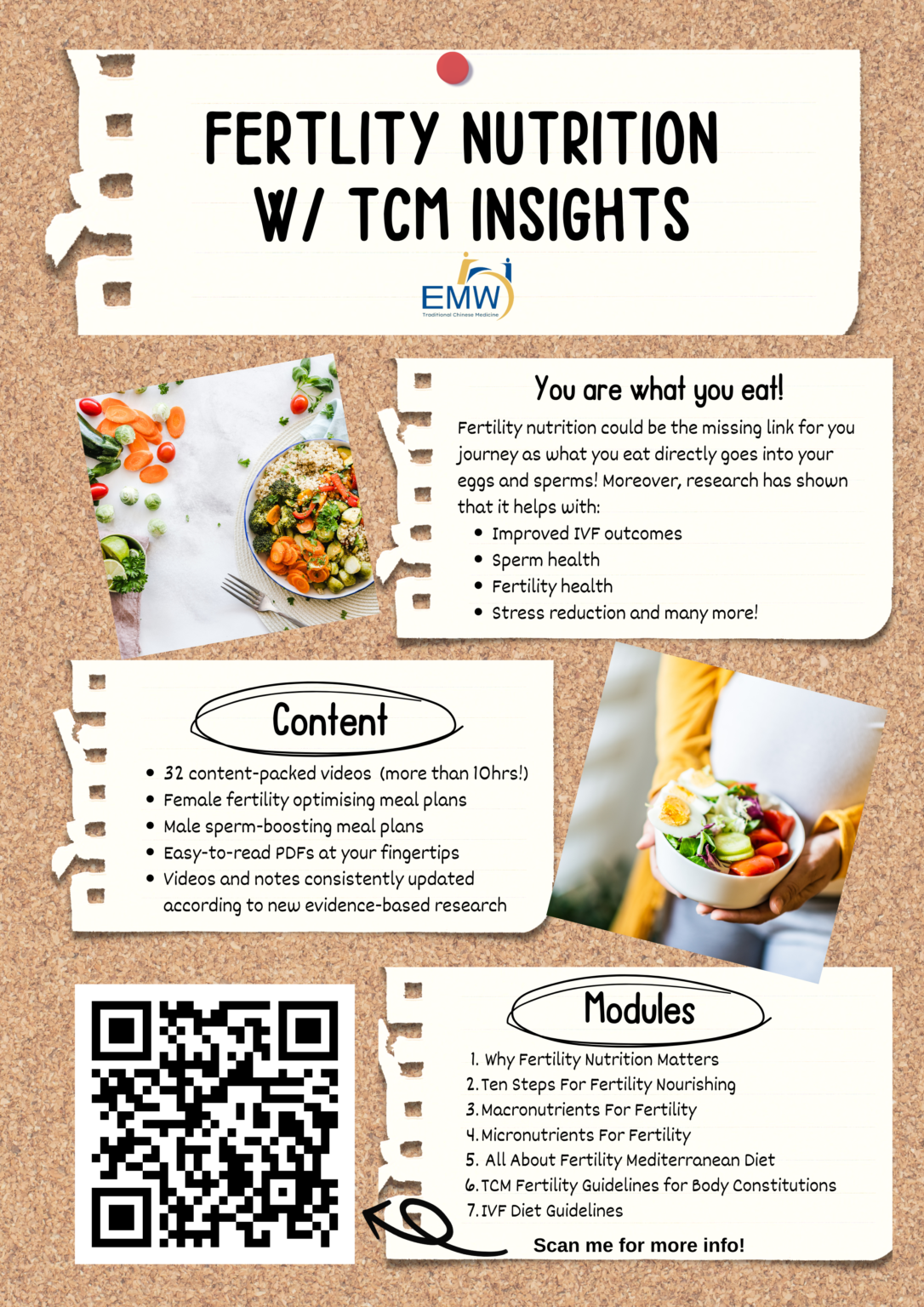
You understand the significance of nutrition and lifestyle, showcasing a conscientious approach. (You’re definitely on the right track!) Embarking on the Fertility Nutrition With TCM Insights course opens up a world of simple yet transformative actions that can reshape your journey, starting from the moment you decide to join.

When to Seek Professional TCM Help

Your gut is the first organ to receive, transform, and deliver nourishment to every cell. If you experience chronic bloating, constipation, acid reflux, or fatigue, these may be early signs that your digestion needs attention.

Healing the gut restores energy, improves hormonal communication, and creates the internal harmony required for general health.

At EMW TCM Singapore, our physicians guide you through this process with care, evidence, and empathy. Whether you are addressing IBS or GERD or fertility, TCM offers a gentle yet powerful pathway to holistic wellness.

Check out our links below to book your consultation and begin your holistic journey toward better health ahead.

EMW TCM Clinics

Scotts Medical Centre Branch

9 Scotts Road #10-04, Scotts Medical Centre @ Pacific Plaza,
Singapore 228210
Book Your Appointment With Us Here: +65 89585869

International Building Branch

360 Orchard Road, International Building #02-05/06
Singapore 238869
Book Your Appointment With Us Here: +65 89585869

Our Physicians

Principal TCM Physician

  • M.Med(TCM Gynaecology)
  • B.Sc(Hons) Biomedical Sciences
  • Dip. Naturopath
  • Ayurvedic Therapist(500hrs)
  • Registered TCM Physician (Singapore MOH)

Senior TCM Physician

  • M.Med(TCM Acupuncture & Moxibustion)
  • B.Sc(Hons) Biomedical Sciences
  • Certified Aromatherapist
  • Registered TCM Physician (Singapore MOH)

TCM Physician

  • M.Med(TCM Gynaecology)
  • B.Sc(Hons) Biomedical Sciences
  • Registered TCM Physician (Singapore MOH)

TCM Physician

  • B.Med(TCM)
  • B.Sc(Hons) Biomedical Sciences
  • International Board-Certified Lactation Consultant (IBCLC)
  • Registered TCM Physician (Singapore MOH)

References

  1. Turner JR. Intestinal mucosal barrier function in health and disease. Physiological Reviews. 2009;89(1):163-192. DOI: 10.1152/physrev.00011.2008

Comments

No comments yet. Why don’t you start the discussion?

Leave a Reply

Your email address will not be published. Required fields are marked *