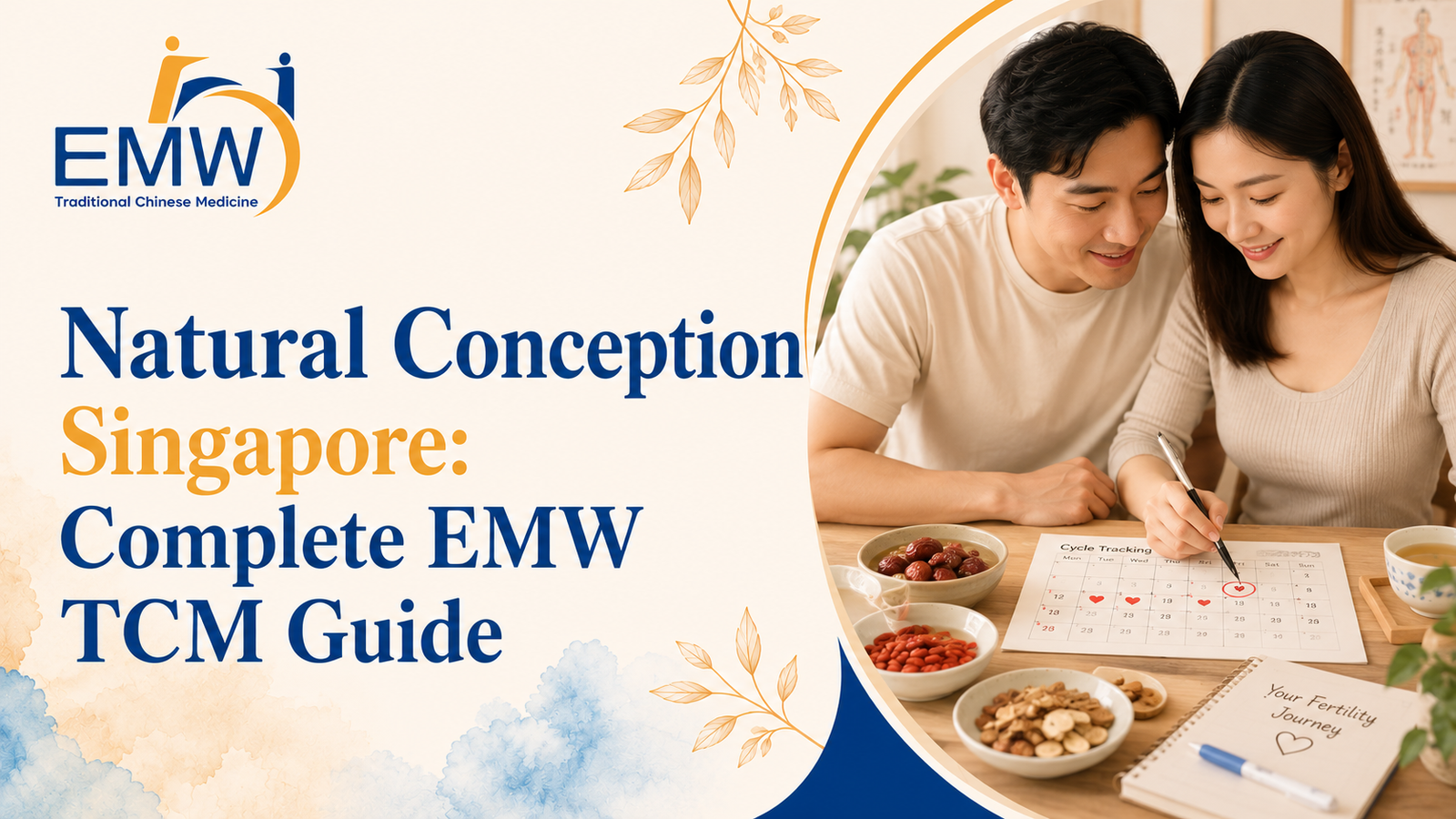
Natural Conception Singapore: Everything You Need to Know About Trying Naturally With EMW TCM
Trying to conceive naturally sounds simple until you are the one doing it.
Stop contraception.
Track ovulation.
Have intercourse during the fertile window.
Wait for two weeks.
Take a pregnancy test.
But after several unsuccessful cycles, the process can begin to take over your life.
You may start analysing every change in cervical mucus, testing your urine twice a day and comparing symptoms with people online.
Intercourse becomes scheduled.
Your period becomes a monthly verdict.
You wonder whether you are ovulating too late, whether your egg quality is poor, whether your uterine lining is thin or whether stress is stopping implantation.
Meanwhile, the male partner may not have been assessed at all.
This natural conception Singapore guide explains how natural conception actually happens, how to identify the fertile window, how often to have intercourse, what both partners should assess and when it is time to seek medical help.
It also explains how EMW TCM uses cycle-based acupuncture, personalised herbal treatment, nutrition and lifestyle guidance to support couples who are trying naturally.
TCM cannot guarantee pregnancy, reopen a blocked fallopian tube or replace fertility investigations. The purpose is to support reproductive health while ensuring that couples do not lose valuable time when medical assessment is needed.
The Quick Answer
For conception to occur naturally:
- An egg must develop and ovulation must occur.
- Sperm must be present in the reproductive tract during the fertile window.
- At least one fallopian tube must allow the egg and sperm to meet.
- Fertilisation must occur.
- The developing embryo must travel into the uterus.
- The uterine environment must allow implantation.
- The pregnancy must continue developing.
The fertile window is generally the six-day period ending on the day of ovulation. The highest chance of conception usually occurs during the one to two days before ovulation. Intercourse every one to two days during this window provides the highest reproductive efficiency, although intercourse two to three times each week can produce nearly similar results for many couples.
Couples should consider fertility evaluation after:
- 12 months of regular unprotected intercourse when the female partner is under 35
- Six months when the female partner is 35 or older
- Earlier when there are irregular periods, severe menstrual pain, known reproductive conditions, sexual difficulties or other fertility concerns
These timelines are starting points, not rules that require everyone to wait.
Understanding the Fertile Window
The fertile window is not limited to the day an ovulation app marks with a small flower.
It includes the days before ovulation because sperm may survive in the female reproductive tract while waiting for the egg.
For clinical counselling, the fertile window is usually defined as the six-day interval ending on ovulation day. Peak probability is generally observed in the two days before ovulation.
How often should you have intercourse?
Intercourse every one to two days during the fertile window offers the highest chance of conception.
However, rigid timing can create stress, resentment and performance pressure.
A practical approach is:
- Have intercourse two to three times each week throughout the cycle, or
- Have intercourse every one to two days once fertile cervical mucus appears or the ovulation test begins approaching positive
More frequent intercourse does not “use up” sperm or reduce fertility in most couples.
Having intercourse only once during the fertile window creates a greater chance of missing the most fertile day.
Do you need to lie down afterwards?
No particular intercourse position has been shown to improve fertility.
There is also no evidence that keeping the legs elevated, lying still for an extended period or avoiding the toilet improves conception rates.
Semen leaking from the vagina afterwards is normal and does not mean all the sperm have fallen out.
How to Identify Ovulation
No single tracking method is perfect.
The fertile window can vary even in people with generally regular menstrual cycles. Apps that predict ovulation using previous cycle length may therefore be wrong in an individual month.
Cervical mucus
As oestrogen rises, cervical mucus may become:
- Wetter
- Clearer
- More slippery
- Stretchy
- Similar to raw egg white
This mucus supports sperm movement and survival.
Intercourse should not be delayed until the final day of egg-white cervical mucus. Begin when the mucus first becomes noticeably wetter or more slippery.
Urinary LH tests
Ovulation predictor kits detect the LH surge that usually occurs before ovulation.
A positive result indicates that ovulation may be approaching, but it does not prove that an egg was released.
Patients with PCOS may experience repeated LH elevations or persistently darker lines, making interpretation more difficult.
Avoid drinking excessive water immediately before testing because highly diluted urine may affect the result.
Basal body temperature
Basal body temperature usually rises after ovulation due to progesterone.
It can help confirm a pattern retrospectively, but it is less useful for predicting intercourse timing in the same cycle.
Temperature may be affected by:
- Illness
- Poor sleep
- Alcohol
- Shift work
- Different waking times
- Travel
Ultrasound and blood tests
When ovulation is unclear, medical monitoring can assess follicle growth, endometrial development and hormone changes.
This may be useful when cycles are irregular or when home tracking gives confusing results.
Are Regular Periods Proof of Ovulation?
Regular and predictable cycles make ovulation more likely, but they do not provide absolute proof.
ASRM notes that monthly ovulation is likely when menstrual cycles are predictable, generally within a 25-to-35-day range with limited variation. Widely fluctuating cycles are more likely to indicate ovulatory dysfunction.
Seek assessment when cycles are:
- Consistently shorter than about 21 days
- Longer than about 35 days
- Highly variable
- Absent
- Associated with prolonged spotting
- Extremely painful
- Very heavy
- Accompanied by symptoms of androgen excess
Possible causes include PCOS, thyroid disorders, elevated prolactin, low energy availability, perimenopause and other endocrine or reproductive conditions.
TCM may support cycle regulation, but it should not be used to avoid investigating a significant hormonal disorder.
When Should You Seek Fertility Testing?
You do not need to wait exactly one year when there are clear warning signs.
Seek earlier evaluation if there is:
- Female age over 35
- Irregular or absent periods
- Severe menstrual pain
- Suspected endometriosis
- Previous pelvic inflammatory disease
- Known blocked fallopian tubes
- Previous ectopic pregnancy
- Recurrent miscarriage
- Ovarian surgery
- Cancer treatment
- Very low ovarian reserve for age
- Erectile or ejaculatory difficulties
- Testicular disease or varicocele
- Abnormal semen analysis
- Difficulty having intercourse regularly
Fertility evaluation should assess both partners.
Infertility may arise from female factors, male factors, both partners or remain unexplained after standard testing. WHO estimates that approximately one in six people of reproductive age experience infertility during their lifetime.
Female investigations may include
- Menstrual and ovulation history
- Pelvic ultrasound
- Ovarian reserve testing where relevant
- Thyroid and prolactin assessment
- Tubal patency testing
- Assessment for endometriosis, fibroids or polyps
- Progesterone testing in selected cases
Male investigations may include
- Semen volume
- Sperm concentration
- Total count
- Motility
- Morphology
- Hormone or urology assessment when indicated
A woman should not undergo months of fertility treatment while the male partner remains untested.
Read the complete EMW male fertility guide for a deeper explanation.
What Is Unexplained Infertility?
Unexplained infertility is diagnosed when standard testing does not identify a clear cause.
This usually means:
- Ovulation appears to occur
- At least one fallopian tube is open
- Semen analysis is within an acceptable range
- No major uterine problem has been identified
It does not mean that nothing is wrong or that the couple imagined the difficulty.
Standard investigations cannot measure every detail of egg competence, sperm function, fertilisation, embryo development or implantation.
However, unexplained infertility should not automatically lead to a long list of unvalidated tests and treatments.
The couple’s age, duration of trying, pregnancy history and previous treatment should guide the next step.
How Age Affects Natural Conception
Female fertility declines gradually with age, with a more meaningful decline in the mid-to-late thirties and beyond.
Age affects:
- Remaining egg quantity
- Egg chromosome status
- Monthly pregnancy probability
- Miscarriage risk
- Time to conception
AMH may provide information about ovarian reserve, particularly in treatment planning, but it is not a direct egg-quality test and is a poor standalone predictor of short-term natural conception in women without infertility.
This distinction matters.
A low AMH result does not prove that natural pregnancy is impossible.
A high AMH result does not guarantee fertility.
Couples should consider age together with cycle pattern, duration of trying, semen results and other investigations.
Read EMW’s guide to trying to conceive after 35 for age-specific support.
How EMW TCM Supports Natural Conception Singapore Patients
EMW TCM uses a cycle-based approach rather than giving the same treatment throughout the month.
The plan may be influenced by:
- Cycle length
- Menstrual flow and pain
- Ovulation timing
- Cervical mucus
- Luteal-phase length
- Previous pregnancy or miscarriage
- PCOS or endometriosis
- Uterine lining
- Ovarian reserve
- Semen analysis
- Sleep
- Digestion
- Stress
- Tongue and pulse findings
Menstrual phase
Treatment may focus on supporting appropriate menstrual flow and addressing pain, clots or stagnation.
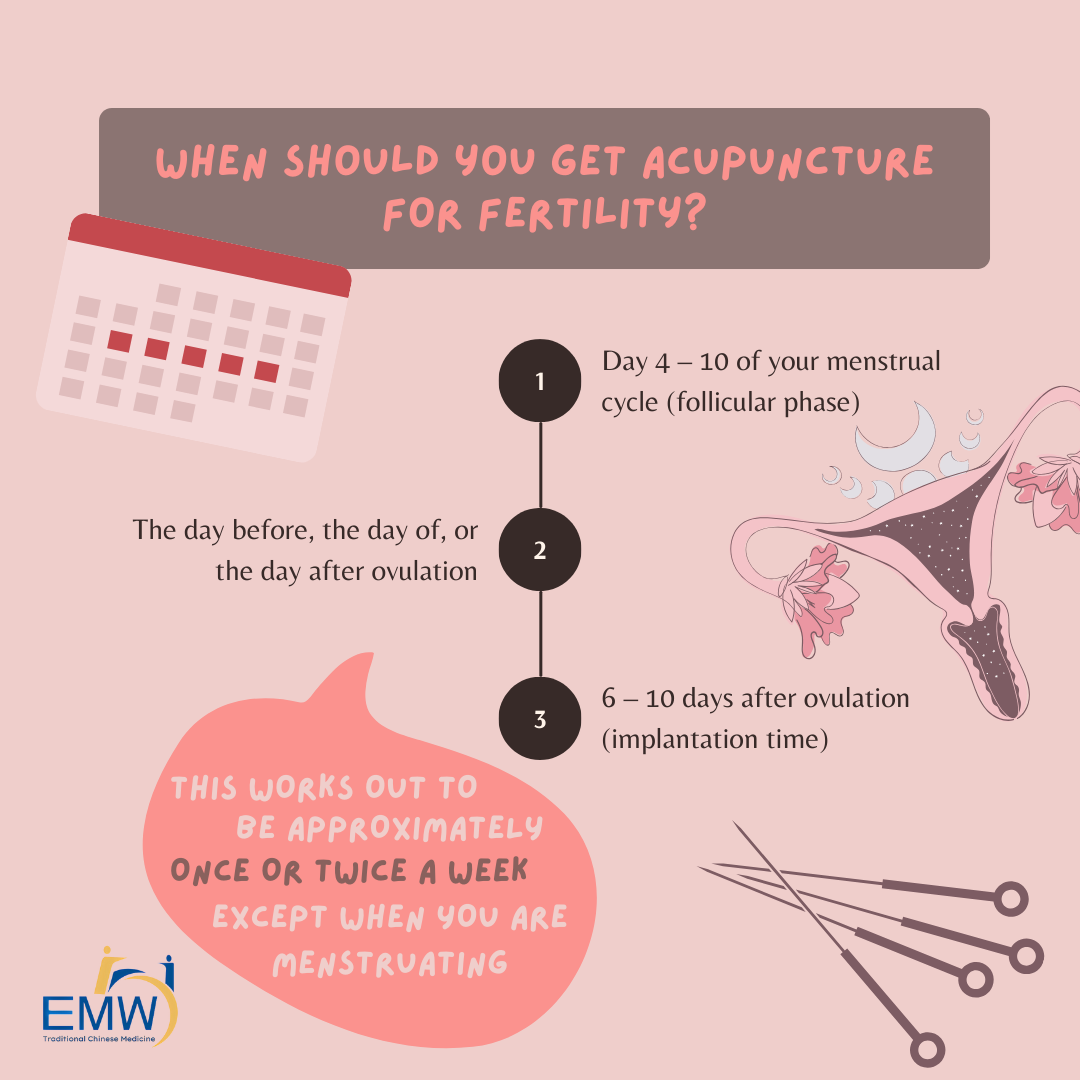
When flow is not heavy and cramps are manageable, acupuncture may begin from the first day of menstruation.
When bleeding is heavy or pain is severe, treatment may begin after the heaviest days, commonly around Day 3.
Follicular phase
Before ovulation, treatment may focus on:
- Follicular development
- Blood nourishment
- Cervical mucus
- Pelvic circulation
- Digestion
- Sleep
- Stress regulation
- Individual Kidney, Liver and Spleen patterns
Acupuncture is generally continued weekly until ovulation, with frequency adjusted according to the cycle and fertility plan.
Ovulation phase
Treatment around ovulation may support:
- Cycle regulation
- Relaxation
- Pelvic circulation
- Intercourse timing
- Ovulatory symptoms
- Cervical mucus
Acupuncture does not physically release an egg on command.
Patients with persistent anovulation need appropriate medical evaluation.
Luteal phase
After ovulation, treatment becomes gentler.
The focus may shift towards:
- Luteal support
- Warmth and stability
- Sleep
- Digestion
- Stress
- Early-pregnancy caution
Lower-abdominal needling, strong Blood-moving treatment and intense moxibustion are avoided when conception may have occurred.
If the pregnancy test is positive, inform the TCM physician before the next treatment.
Can Acupuncture Help Natural Conception?
Acupuncture is commonly sought for cycle regulation, stress, menstrual symptoms and fertility support.
Potential supportive effects proposed in research include:
- Autonomic nervous-system regulation
- Stress reduction
- Pelvic circulation
- Modulation of pain
- Effects on reproductive hormones
However, evidence that acupuncture alone increases natural-conception live-birth rates remains limited and depends heavily on the population and treatment protocol.
EMW does not promise pregnancy from acupuncture.
Acupuncture is used as part of a broader plan that includes timing, medical investigation, male assessment, nutrition and lifestyle.
It is most appropriate when treatment is linked to the menstrual phase and the patient’s actual diagnosis rather than being offered as a generic weekly fertility ritual.
Can Chinese Herbs Support Natural Conception?
Chinese herbal medicine may be prescribed according to the menstrual phase and individual TCM diagnosis.
A pre-ovulation formula may differ from a post-ovulation formula.
Treatment may address patterns involving:
- Kidney deficiency
- Blood deficiency
- Blood stasis
- Liver Qi stagnation
- Spleen deficiency
- Dampness
- Cold
- Heat
Herbs should not be taken randomly after ovulation when pregnancy is possible.
Formulas containing strong Blood-moving, purgative or otherwise pregnancy-inappropriate ingredients are adjusted or stopped.
Inform the physician immediately after a positive pregnancy test or when the menstrual period is late.
Patients should also inform their fertility doctor about herbal products where clinically appropriate.
Fertility Nutrition for Natural Conception
There is no specific fertility diet proven to make every couple conceive.
ASRM notes that evidence is insufficient to conclude that one particular diet or macronutrient composition improves natural fertility in people without a diagnosed nutritional problem. A generally healthy diet remains advisable for overall and reproductive health.
A useful fertility eating pattern includes:
- Vegetables of different colours
- Fruit
- Whole grains
- Legumes
- Fish
- Eggs
- Lean proteins
- Nuts and seeds
- Healthy unsaturated fats
- Adequate fibre
- Regular meals
The goal is not perfect eating.
The goal is to support:
- Nutrient adequacy
- Stable blood sugar
- Healthy body composition
- Bowel regularity
- Hormone production
- Egg and sperm health
- Pregnancy readiness
Folic acid
Folic acid should generally begin before conception and continue through early pregnancy to reduce the risk of neural-tube defects. Singapore’s HealthHub notes that folic acid is commonly taken from preconception until the twelfth week of pregnancy.
The appropriate dose may differ for patients with specific medical risks, so follow individual medical advice.
Caffeine and alcohol
High caffeine intake may be unhelpful, while low-to-moderate intake is generally considered acceptable for many people trying to conceive.
Reduce caffeine when it worsens anxiety, sleep, reflux or palpitations.
Avoid smoking and recreational drugs.
Alcohol should be limited, and many women choose to avoid it once ovulation has occurred because early pregnancy may not yet be recognised.
What Both Partners Can Do for Three Months
Female partner
- Track cycle length and ovulation signs
- Begin folic acid
- Review medication and medical conditions
- Address irregular or painful periods
- Eat regular balanced meals
- Improve sleep
- Avoid smoking
- Limit alcohol
- Seek timely assessment based on age and history
Male partner
- Complete a semen analysis when indicated
- Stop smoking and vaping
- Reduce heavy alcohol intake
- Avoid anabolic steroids and unsupervised testosterone
- Reduce significant heat exposure
- Improve sleep and metabolic health
- Review varicocele or testicular symptoms
As a couple
- Have intercourse every one to two days during the fertile window, or two to three times each week
- Avoid allowing ovulation tracking to control the relationship
- Review both partners rather than focusing only on eggs
- Decide in advance when to seek further help
- Prepare for pregnancy, not just conception
Why Choose EMW TCM for Natural Conception Singapore Support?
Cycle-based treatment
Acupuncture and herbs are adjusted across menstruation, follicular development, ovulation and the luteal phase.
Couple-focused assessment
EMW considers male fertility alongside female fertility.
Integration with medical testing
Patients are encouraged to complete appropriate investigations rather than relying only on TCM diagnosis.
Individualised care
A patient with PCOS and irregular ovulation needs a different plan from someone with regular cycles, severe pain and suspected endometriosis.
Nutrition and lifestyle guidance
Treatment includes practical attention to food, digestion, sleep, movement and stress.
Conservative post-ovulation care
Treatment is adjusted when pregnancy may have occurred.
Realistic claims
EMW does not promise that acupuncture or herbs will guarantee conception.
FAQ: Natural Conception After 35 and TCM in Singapore
When is the best time to have intercourse?
The highest chance is generally during the two days before ovulation. The broader fertile window includes the five days before ovulation and ovulation day.
How often should we have intercourse?
Every one to two days during the fertile window provides the highest chance. Intercourse two to three times each week can also work well.
Can daily intercourse reduce sperm quality?
Daily intercourse does not generally reduce fertility for couples without severe male-factor concerns.
Can I become pregnant after ovulation?
The egg remains available for only a limited period. Pregnancy is more likely when sperm are already present before ovulation.
Are ovulation apps accurate?
Apps provide estimates based on previous cycles. Ovulation can vary, even with regular periods.
Does a positive LH test prove ovulation?
No. It detects an LH rise but does not confirm that an egg was released.
Does egg-white discharge mean I am ovulating?
It commonly indicates rising oestrogen and a fertile period. Ovulation may occur after the mucus first appears.
Can regular periods still occur without ovulation?
Yes, although predictable cycles make ovulation more likely.
How long should we try before testing?
Generally 12 months when the female partner is under 35 and six months from age 35, with earlier evaluation when risk factors are present.
Should the male partner be tested?
Yes. Fertility assessment should involve both partners.
Does low AMH mean I cannot conceive naturally?
No. AMH reflects ovarian reserve more than immediate natural-conception ability.
Can blocked fallopian tubes be treated with acupuncture?
No. Acupuncture cannot reopen a mechanically blocked fallopian tube.
Can acupuncture make me ovulate?
Acupuncture may support cycle regulation in selected patients, but it cannot guarantee ovulation or replace necessary medical treatment.
When should acupuncture start?
Treatment can begin during menstruation or the early follicular phase and continue according to the cycle.
Can acupuncture continue after ovulation?
Yes, but treatment is modified and becomes more conservative when pregnancy is possible.
Can I take herbs during the two-week wait?
Only when prescribed by a physician who knows that conception may have occurred.
What should I eat to get pregnant?
There is no single conception food. Eat a balanced pattern with vegetables, fruit, protein, whole grains, legumes, nuts, seeds and healthy fats.
Should I stop coffee?
Not everyone must stop completely. Keep intake moderate and reduce it if it affects sleep, anxiety or reflux.
Does stress stop implantation?
Stress alone does not explain most infertility and should not be used to blame patients.
Do intercourse positions matter?
No particular position has been shown to improve conception rates.
Should I lie down after intercourse?
Extended lying down is not necessary.
Can lubricant affect fertility?
Some conventional lubricants may reduce sperm movement in laboratory settings. Couples who require lubricant may choose a fertility-friendly product.
Is spotting before a period normal?
Occasional light spotting may occur, but persistent spotting should be assessed in context with cycle length and other symptoms.
What luteal-phase length is normal?
The luteal phase commonly lasts around 11 to 14 days. Repeated very short intervals between ovulation and menstruation may justify assessment.
Does one miscarriage mean I am infertile?
No. One miscarriage does not usually mean future natural conception is impossible.
Conclusion
Natural conception is not always as effortless as people make it sound.
Even when both partners are healthy and intercourse is correctly timed, pregnancy may not happen in the first cycle.
This does not mean that you failed.
A sensible natural conception Singapore plan should help you:
- Understand the fertile window
- Time intercourse without turning it into a nightly assignment
- Assess both partners
- Support nutrition, sleep and reproductive health
- Use TCM appropriately
- Seek medical help at the right time
At EMW TCM, natural-conception support is cycle-based, physician-led and individualised.
We aim to support ovulation, menstrual health, sperm health, digestion, sleep and the wider reproductive environment without promising an outcome that no practitioner can guarantee.
Explore:
- EMW TCM fertility Singapore
- Fertility acupuncture and natural conception
- When to schedule fertility acupuncture
- EMW male fertility service
- How to improve egg quality naturally
- Fertility nutrition and lifestyle
- EMW fertility blog
- Fertility Optimisation Bundle
For an individual assessment, arrange an in-clinic consultation and bring any previous fertility tests, menstrual records and semen-analysis results.
How EMW TCM Help Your Fertility
From a biomedical perspective, acupuncture for fertility improves ovarian and uterine blood flow, regulates the hypothalamic-pituitary-ovarian axis, lowers cortisol, reduces inflammation, and supports hormonal balance. These effects complement TCM principles and help enhance egg development, implantation, and reproductive function.
1. Comprehensive Assessment
Your first consultation includes:
Cycle assessment
Digestion and hormonal review
Energy and stress evaluation
Sleep and lifestyle factors
Male fertility screening when relevant
2. Evidence-Based TCM Diagnosis
Qi stagnation
Blood deficiency
Spleen Qi weakness
Kidney Yin/Yang imbalance
Liver Qi constraint
Dampness and inflammation
3. Personalised Fertility Treatment Plan
Weekly fertility acupuncture
Customised herbal formulas
Stress reduction strategies
Lifestyle recommendations
TCM Acupuncture for Fertility Treatments
Acupuncture, one of the most researched TCM fertility tools, has been found to influence several physiological pathways related to reproduction.
A review published in Fertility and Sterility (2019) reported that acupuncture may improve blood flow to the uterus and ovaries, modulate stress hormones, and enhance endometrial receptivity. Another meta-analysis in Integrative Medicine Research (2021) concluded that acupuncture used alongside conventional fertility treatment can improve pregnancy outcomes and reduce anxiety levels in women undergoing IVF.
From a clinical standpoint, acupuncture helps regulate the hypothalamic-pituitary-ovarian axis, improving hormone balance and menstrual regularity. It can also reduce cortisol levels, encouraging the parasympathetic or “rest-and-rebuild” state which supports implantation and early pregnancy.
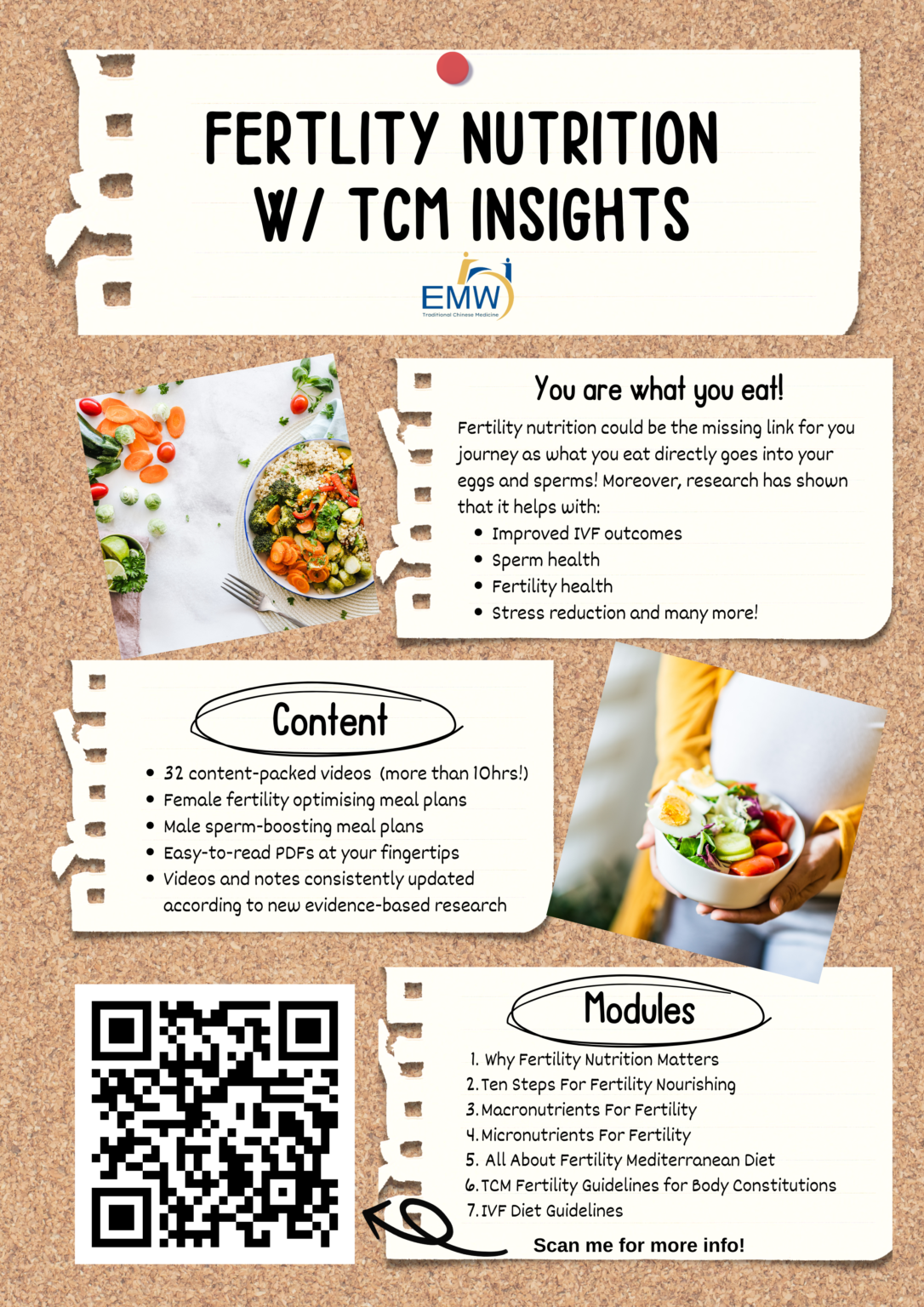
Our Flagship Ebook & Video Course
When to Seek Professional TCM Fertility Help
Fertility is not just a matter of age or hormones. It is a reflection of the body’s internal harmony. Traditional Chinese Medicine provides an integrative and natural way to restore this balance, supporting both physical and emotional readiness for conception.
At EMW TCM Singapore, our team of experienced physicians brings together centuries-old wisdom and modern evidence to guide your fertility journey. Whether you are trying naturally or preparing for IVF, we are here to help you create the best internal environment for new life to begin.
If you have been trying to conceive for more than six to twelve months, experience irregular menses, painful periods, or have been diagnosed with PCOS, endometriosis, or low sperm count, consider a consultation. Professional TCM fertility care aims to correct the underlying imbalance rather than simply forcing ovulation or hormone production.
Check out our links below to book your fertility consultation and begin your holistic journey toward conception.
EMW TCM Clinics
International Building Branch
360 Orchard Road, International Building #02-05/06
Singapore 238869
Book Your Appointment With Us Here: +65 89585869
Our Physicians
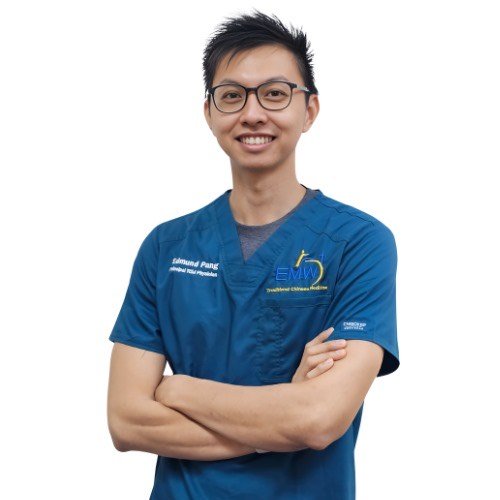
Principal TCM Physician
- M.Med(TCM Gynaecology)
- B.Sc(Hons) Biomedical Sciences
- Dip. Naturopath
- Ayurvedic Therapist(500hrs)
- Registered TCM Physician (Singapore MOH)
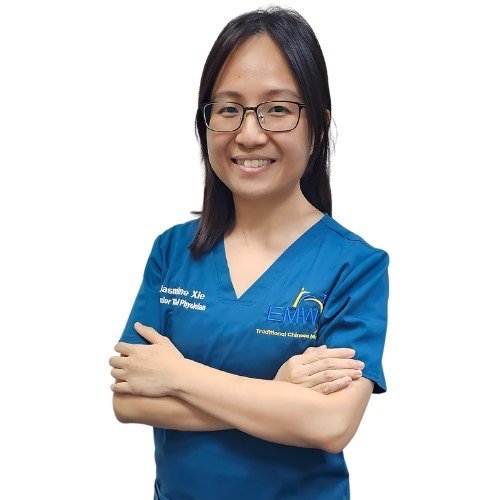
Senior TCM Physician
- M.Med(TCM Acupuncture & Moxibustion)
- B.Sc(Hons) Biomedical Sciences
- Certified Aromatherapist
- Registered TCM Physician (Singapore MOH)

TCM Physician
- M.Med(TCM Gynaecology)
- B.Sc(Hons) Biomedical Sciences
- Registered TCM Physician (Singapore MOH)
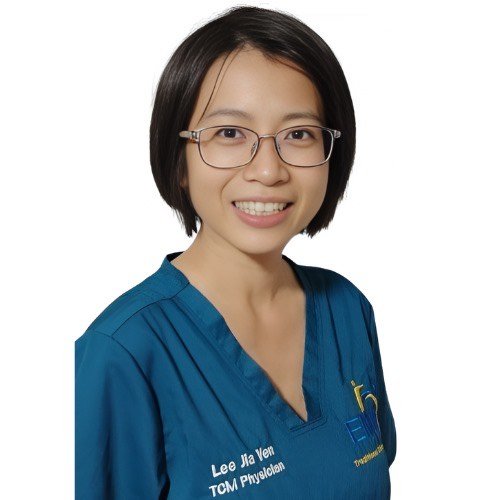
TCM Physician
- B.Med(TCM)
- B.Sc(Hons) Biomedical Sciences
- International Board-Certified Lactation Consultant (IBCLC)
- Registered TCM Physician (Singapore MOH)
References
- Chao JC et al. Antioxidant effects of Lycium barbarum polysaccharides. J Sci Food Agric. 2006. DOI: 10.1002/jsfa.2362
- Stener-Victorin E et al. Reduction of uterine artery blood flow impedance. Hum Reprod. 1996. DOI: 10.1093/oxfordjournals.humrep.a019187
- May-Panloup P et al. Mitochondrial biogenesis and oocyte quality. Hum Reprod Update. 2016. DOI: 10.1093/humupd/dmw006
- Stener-Victorin E & Wu X. Acupuncture effects on the reproductive system. Auton Neurosci. 2010. DOI: 10.1016/j.autneu.2009.12.001
- Tamura H et al. Melatonin and female reproduction. J Obstet Gynaecol Res. 2014. DOI: 10.1111/jog.12317