5 Important Ways TCM for PCOS Fertility Supports Cycle Regularity

5 Important Ways TCM for PCOS Fertility Supports Cycle Regularity

5 Important Ways TCM for PCOS Fertility Supports Cycle Regularity

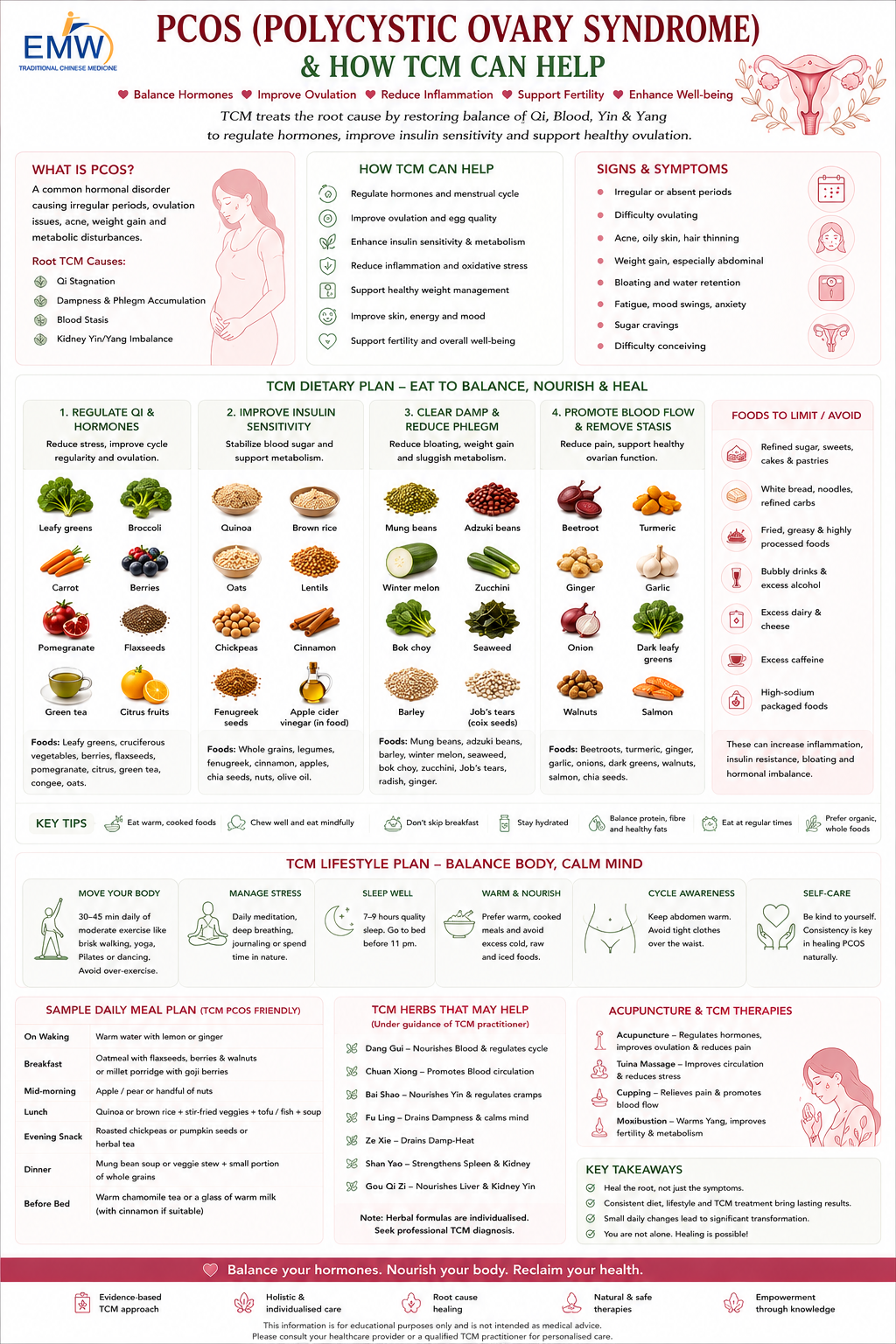
Polycystic ovary syndrome, commonly known as PCOS, is one of the most common hormonal conditions affecting women of reproductive age. It is also one of the most common reasons women experience irregular periods, delayed ovulation or difficulty conceiving.

For many women in Singapore, PCOS can feel confusing. Some women have long cycles. Some skip periods for months. Some ovulate unpredictably. Some have acne, weight changes, excess hair growth, insulin resistance or ovarian cyst-like follicles on ultrasound. Others look physically slim but still have irregular cycles and biochemical signs of PCOS.

This is where TCM for PCOS Fertility can play a supportive role.

At EMW TCM, PCOS is not treated as one single pattern. A woman with PCOS and frequent bloating may need a different approach from a woman with PCOS, acne and heat signs. A woman with lean PCOS and stress-related cycle disruption may need a different plan from a woman with insulin resistance, fatigue and Dampness.

EMW TCM’s PCOS fertility approach integrates Traditional Chinese Medicine, biomedical understanding, functional nutrition and IVF-aware care, with the goal of supporting ovulatory rhythm and hormonal resilience rather than simply forcing a period to arrive. Read more about EMW’s PCOS fertility approach.

This article explains 5 important ways TCM for PCOS Fertility may support cycle regularity, ovulation and fertility preparation in a realistic, evidence-informed way.

Understanding PCOS and Irregular Cycles

PCOS is commonly associated with irregular periods, higher androgen levels and ovulatory dysfunction. The World Health Organization describes PCOS as a hormonal condition linked with higher androgen levels, irregular menstrual periods, abnormal ovulation, infertility, acne and excess facial or body hair in some women. WHO also notes that PCOS affects an estimated 10 to 13 percent of reproductive-aged women and is a leading cause of anovulation globally.

In Singapore, NUH describes PCOS as a common hormonal disorder affecting around 10 percent of women of reproductive age, with possible symptoms including infrequent or absent periods, infertility, acne, excess body hair, scalp hair loss, weight gain and elevated insulin levels.

From a fertility perspective, the key issue is often not simply whether a period comes. The deeper question is whether ovulation is happening regularly and whether the body is building a healthy hormonal rhythm.

A menstrual bleed does not always mean ovulation occurred. Some women with PCOS may have irregular bleeding without regular ovulation. Others may ovulate, but much later in the cycle.

This is why PCOS fertility care should assess:

  • Cycle length
  • Ovulation signs
  • Cervical mucus
  • Basal body temperature, if used
  • PMS symptoms
  • Acne or hair growth
  • Weight and metabolic markers
  • Blood sugar and insulin patterns
  • Sleep and stress
  • Digestion and bowel habits
  • TCM pulse and tongue findings
  • Fertility timeline, including IUI or IVF plans

At EMW TCM Fertility Singapore, PCOS support is part of a broader fertility framework that also considers egg quality, endometrial receptivity, sperm health, inflammation and ART timing.

15
TCM for recurrent miscarriage

How TCM Understands PCOS

In TCM, PCOS is not one disease pattern. It may involve several overlapping patterns, such as:

  • Kidney deficiency
  • Spleen Qi deficiency
  • Phlegm Dampness
  • Damp Heat
  • Liver Qi stagnation
  • Blood stasis
  • Yin deficiency
  • Yang deficiency

These traditional terms can be translated into modern fertility language.

For example:

  • Kidney deficiency may overlap with reproductive endocrine weakness, low vitality or delayed ovulation.
  • Spleen Qi deficiency may overlap with poor digestion, blood sugar instability, fatigue or nutrient absorption issues.
  • Phlegm Dampness may overlap with insulin resistance, heaviness, weight gain, ovarian follicle accumulation and metabolic imbalance.
  • Liver Qi stagnation may overlap with stress-related hormonal disruption, PMS, irritability and tension.
  • Damp Heat may overlap with inflammation, acne, discharge, heat signs and metabolic stress.
  • Blood stasis may overlap with poor circulation, pelvic congestion, painful periods or endometrial issues.

This is why TCM for PCOS Fertility should be individualised. The same diagnosis of PCOS can look very different in different women.

EMW TCM’s women and fertility clinic states that care may combine acupuncture, herbal remedies, dietary recommendations and lifestyle changes to improve reproductive function, with personalised treatment based on TCM principles.

5 Important Ways TCM for PCOS Fertility Supports Cycle Regularity

1. TCM Supports Ovulatory Rhythm Instead of Only Inducing Bleeding

One of the most important goals in PCOS fertility care is supporting ovulation.

Many women with PCOS are given medication to induce withdrawal bleeding or stimulate ovulation. These treatments can be clinically appropriate and should be discussed with a gynaecologist or fertility specialist.

However, TCM looks at a wider question: why is the body not ovulating consistently?

From a TCM perspective, ovulation requires a coordinated movement of Yin, Yang, Qi and Blood. The follicular phase is associated with Yin and Blood nourishment. Ovulation requires transformation and movement. The luteal phase depends on Yang warmth and sustained Qi.

When this rhythm is disrupted, cycles may become long, delayed or absent.

A TCM plan may focus on:

  • Nourishing Kidney essence
  • Supporting follicular development
  • Strengthening Spleen Qi
  • Reducing Phlegm Dampness
  • Moving Liver Qi
  • Supporting Blood circulation
  • Regulating the transition from follicular phase to ovulation
  • Supporting luteal phase warmth and stability

This is different from simply trying to “bring on a period”. For fertility, regular ovulation matters more than just regular bleeding.

Evidence on acupuncture for PCOS is mixed. A large randomized clinical trial published in JAMA found that clomiphene was superior to placebo for live birth in infertile women with PCOS, and that active acupuncture did not add benefit over control acupuncture in that trial. However, another randomized sham-controlled trial reported that manual acupuncture combined with herbal medicine may be clinically useful for improving ovulation and pregnancy rates in infertile women with PCOS.

This is why EMW TCM uses balanced language. Acupuncture should not be sold as a guaranteed PCOS cure. It may be useful as part of a structured, individualised fertility plan, especially when combined with nutrition, lifestyle, cycle tracking and medical care where appropriate.

2. TCM Strengthens Spleen Qi to Support Insulin and Metabolic Health

PCOS is often linked with insulin resistance, even in women who are not overweight. When insulin signalling is disrupted, androgen levels may rise and ovulation may become less regular.

From a TCM perspective, insulin resistance and metabolic imbalance often overlap with Spleen Qi deficiency, Phlegm Dampness and Damp Heat.

Signs may include:

  • Bloating
  • Fatigue after meals
  • Sugar cravings
  • Weight gain or difficulty losing weight
  • Heaviness
  • Brain fog
  • Loose stools
  • Oily skin
  • Acne
  • Thick tongue coating
  • Irregular cycles

This is where fertility nutrition becomes central.

For PCOS, nutrition should usually support:

  • Stable blood sugar
  • Better insulin sensitivity
  • Digestive strength
  • Reduced inflammation
  • Healthy gut function
  • Steady energy
  • Sustainable ovulation support

A food-first PCOS fertility plan may include:

  • Cooked leafy greens
  • Colourful vegetables
  • Beans and lentils if tolerated
  • Tofu and tempeh
  • Eggs
  • Fish or omega-3 rich foods
  • Nuts and seeds in moderate amounts
  • Whole grains in appropriate portions
  • Root vegetables in appropriate portions
  • Warm soups and broths
  • Protein at breakfast
  • Reduced sugary drinks and refined carbohydrates

TCM food therapy does not mean every PCOS patient must avoid all carbohydrates. The better approach is to choose the right carbohydrates, prepare them well and match portions to the patient’s digestion, insulin pattern and constitution.

EMW’s PCOS lifestyle article notes that diet and lifestyle modifications are an essential part of PCOS management, especially for regulating blood sugar and balancing hormones. Read EMW’s PCOS diet and lifestyle guide.

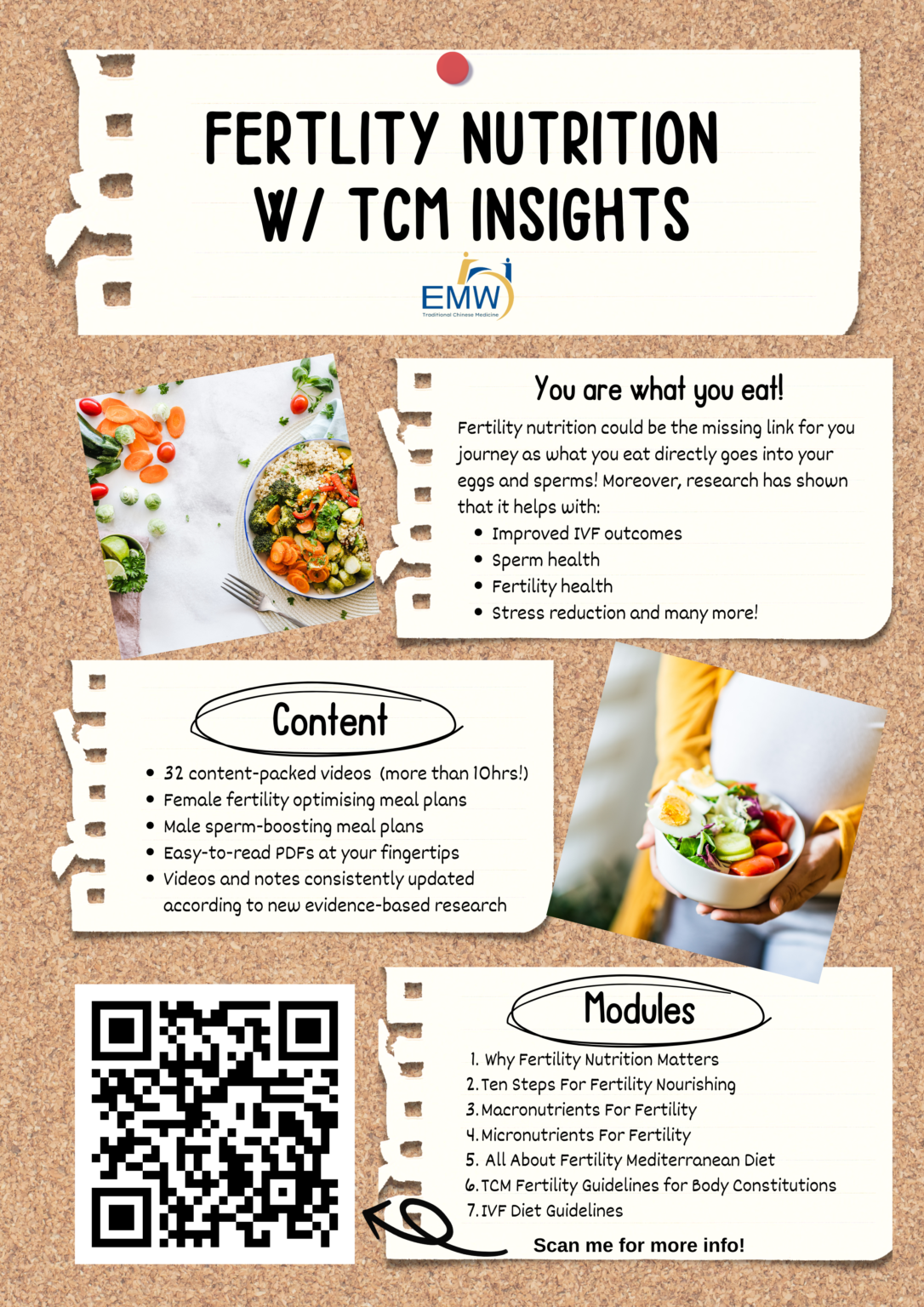
For women who feel overwhelmed by conflicting fertility diet advice, EMW offers Fertility Nutrition with TCM Insights, which helps explain nutrition through Spleen, Kidney, Liver, Qi, Blood, Dampness and inflammation concepts.

3. TCM Regulates Liver Qi to Reduce Stress-Related Cycle Disruption

Many women with PCOS notice that their cycles become more irregular during periods of stress, poor sleep, intense work or emotional strain.

From a TCM perspective, this often involves Liver Qi stagnation.

The Liver system helps regulate the smooth movement of Qi, Blood and emotions. When Liver Qi becomes constrained, cycle rhythm may become more disrupted.

Signs of Liver Qi stagnation may include:

  • PMS
  • Breast tenderness
  • Irritability
  • Mood swings
  • Headaches
  • Neck and shoulder tension
  • Digestive discomfort during stress
  • Clenching or tightness
  • Poor sleep
  • Irregular ovulation

Modern fertility language may connect this with stress physiology, cortisol rhythm, nervous system regulation, sleep disruption, inflammatory signalling and appetite changes.

This does not mean stress “causes” PCOS. It also does not mean a woman is responsible for her condition because she feels stressed.

Instead, stress regulation is one part of restoring hormonal rhythm.

Support may include:

  • Acupuncture
  • Gentle movement
  • Earlier sleep
  • Breathing practices
  • Warm regular meals
  • Reducing overtraining
  • Better work boundaries
  • Cycle tracking without obsession
  • Counselling or emotional support if needed

At EMW TCM IVF Acupuncture Support, treatment timing can be adapted for women preparing for IVF or IUI. This matters because women with PCOS may need ovulation support, stimulation support, egg retrieval preparation or transfer support depending on their treatment stage.

4. TCM Reduces Dampness and Inflammation That May Affect Cycle Regularity

In TCM, Phlegm Dampness is one of the classic patterns associated with PCOS. It may show up as heaviness, bloating, weight gain, thick tongue coating, fatigue, acne, oily skin, irregular cycles and ovarian follicle accumulation.

Dampness can obstruct the smooth movement of Qi and Blood. In fertility terms, this may affect ovulatory rhythm, cervical mucus quality, metabolic balance and endometrial health.

Damp Heat may be considered when Dampness combines with heat or inflammation. Signs may include:

  • Acne
  • Oily skin
  • Irritability
  • Constipation
  • Strong body heat
  • Yellowish discharge
  • Mouth ulcers
  • Heavy or sticky tongue coating
  • Worsening symptoms with fried or spicy foods

A Dampness-focused plan may include:

  • Strengthening Spleen Qi
  • Supporting digestion
  • Reducing greasy and fried foods
  • Reducing sugary drinks
  • Improving bowel regularity
  • Using acupuncture to regulate Qi movement
  • Using herbs where appropriate
  • Supporting low-glycaemic, plant-forward nutrition
  • Avoiding excessive cold raw foods if digestion is weak

This is one reason TCM for PCOS Fertility is not only about the ovaries. Gut health, food tolerance, bowel habits and inflammation all matter.

EMW’s website notes that TCM can support fertility in conditions such as PCOS, endometriosis, thyroid imbalance, irregular periods, poor egg quality, low sperm motility, luteal phase defects, AMH decline, high inflammation and digestive issues that affect hormones.

For patients with PCOS and gut symptoms, you may also find EMW’s article on TCM gut health and fertility useful.

5. TCM Personalises Support for Natural Conception, IUI or IVF

Not every woman with PCOS is trying to conceive in the same way.

Some are trying naturally. Some are using ovulation induction medication. Some are preparing for IUI. Some are preparing for IVF. Some have already gone through IVF and were told they had many eggs but variable maturity or embryo development.

This is why timing matters.

For natural conception, TCM for PCOS Fertility may focus on:

  • Encouraging more regular ovulation
  • Improving cervical mucus patterns
  • Supporting luteal phase stability
  • Tracking fertile windows more accurately
  • Supporting digestion and blood sugar
  • Reducing stress-related cycle disruption

For IUI preparation, the plan may focus on:

  • Ovulation timing
  • Endometrial support
  • Cervical mucus
  • Stress regulation
  • Partner sperm health
  • Digestion and inflammation

For IVF preparation, the plan may focus on:

  • Ovarian response
  • Egg quality environment
  • OHSS risk awareness, where relevant
  • Egg maturity
  • Retrieval preparation
  • Embryo transfer preparation
  • Blood sugar and inflammation support
  • Acupuncture timing around stimulation and transfer

This is where EMW TCM differs from many general TCM clinics. The plan is not just “take herbs for PCOS”. It is built around your fertility stage, your medical plan, your TCM pattern and your goals.

EMW’s fertility service page describes an integrative approach that includes TCM fertility care for both women and men, with support for natural conception and IVF preparation.
Lifestyle Nutrition For IVF 5
What the modern science and TCM talks about IVF

What Makes EMW TCM Different for PCOS Fertility?

Many women with PCOS have already tried diet changes, supplements, ovulation tracking, medication or general TCM before they come to EMW.

The difference is not simply that EMW offers acupuncture or herbs. The difference is the structure of the care.

At EMW TCM, PCOS fertility support is:

Root-cause focused

The goal is to understand why the cycle is irregular. Is the main issue Spleen Qi weakness, Dampness, Liver Qi stagnation, Kidney deficiency, Blood stasis, inflammation, insulin resistance or a combination?

Individualised

A lean PCOS patient with anxiety and delayed ovulation does not need the same plan as a patient with weight gain, acne, cravings and heavy Dampness.

Nutrition-integrated

Food is part of the treatment plan, not an afterthought. EMW’s philosophy is food-first, digestion-focused and fertility-appropriate.

IVF-aware

If a patient is doing IVF, treatment timing is adjusted to stimulation, egg retrieval, transfer and luteal phase support.

Physician-led

Treatment is based on TCM assessment, cycle history, symptoms, fertility timeline and test information where available.

Couple-centred

PCOS may affect ovulation, but sperm health, timing, stress and relationship burden also matter. EMW can support both partners where appropriate.

Ethical

EMW TCM does not promise pregnancy and does not position TCM as a replacement for medical fertility care. Instead, TCM is used to support the body’s internal fertility environment in a structured way.

Practical PCOS Cycle Support Checklist

If you have PCOS and irregular cycles, start with these foundations:

  • Track your cycle length and ovulation signs.
  • Eat protein at breakfast where possible.
  • Choose cooked vegetables daily.
  • Reduce sugary drinks and ultra-processed snacks.
  • Avoid extreme dieting or fasting if it worsens stress or cravings.
  • Prioritise sleep rhythm.
  • Include regular gentle to moderate movement.
  • Avoid overtraining if your cycles become more irregular.
  • Support digestion before adding many supplements.
  • Seek fertility review if cycles are very long, absent or you are trying to conceive.

For structured support, you can explore the Fertility Support Guide or book an in-clinic consultation at EMW TCM.

Frequently Asked Questions

Can TCM for PCOS Fertility regulate periods?

TCM for PCOS Fertility may support more regular cycles by addressing TCM patterns such as Spleen Qi deficiency, Phlegm Dampness, Liver Qi stagnation, Kidney deficiency and Blood stasis. However, results vary and treatment should be aligned with medical care when needed.

Does a regular period mean I am ovulating?

Not always. Some bleeding may occur without ovulation. For fertility, it is important to assess ovulation signs, cycle patterns and medical testing where appropriate.

Can acupuncture help PCOS ovulation?

Research is mixed. Some studies suggest acupuncture combined with herbal medicine may improve ovulation and pregnancy rates in PCOS, while a large JAMA trial did not find added benefit from active acupuncture compared with control acupuncture for live birth.

What foods are best for PCOS fertility?

PCOS fertility nutrition often focuses on protein, cooked vegetables, fibre-rich foods, beans, tofu, eggs, omega-3 rich foods, moderate whole grains and reduced sugar. The exact plan should depend on digestion, insulin resistance, TCM pattern and fertility goals.

Can TCM be used with IVF for PCOS?

Yes, TCM can be used alongside IVF when guided appropriately. The plan should be aligned with stimulation, egg retrieval, transfer and your fertility doctor’s instructions.

Conclusion

PCOS cycle irregularity is not just a period problem. It reflects a deeper disruption in ovulation, metabolism, digestion, stress regulation, inflammation and hormonal rhythm.

TCM for PCOS Fertility can support cycle regularity by strengthening Spleen Qi, regulating Liver Qi, nourishing Kidney essence, reducing Dampness, improving circulation and aligning treatment with natural conception, IUI or IVF plans.

At EMW TCM, PCOS fertility care is root-cause focused, individualised, nutrition-integrated and IVF-aware. The aim is not to force the body, but to support a more stable reproductive rhythm over time.

To learn more, visit the EMW TCM Blog, explore Fertility Nutrition with TCM Insights, download the Fertility Support Guide, or book an in-clinic fertility consultation and acupuncture session via WhatsApp at +65 8958 5869.

How EMW TCM Help Your Fertility

From a biomedical perspective, acupuncture for fertility improves ovarian and uterine blood flow, regulates the hypothalamic-pituitary-ovarian axis, lowers cortisol, reduces inflammation, and supports hormonal balance. These effects complement TCM principles and help enhance egg development, implantation, and reproductive function.

1. Comprehensive Assessment

Your first consultation includes:

  • Cycle assessment

  • Digestion and hormonal review

  • Energy and stress evaluation

  • Sleep and lifestyle factors

  • Male fertility screening when relevant

2. Evidence-Based TCM Diagnosis

  • Qi stagnation

  • Blood deficiency

  • Spleen Qi weakness

  • Kidney Yin/Yang imbalance

  • Liver Qi constraint

  • Dampness and inflammation

3. Personalised Fertility Treatment Plan

  • Weekly fertility acupuncture

  • Customised herbal formulas

  • Moxibustion

  • Dietary therapy

  • Stress reduction strategies

  • Lifestyle recommendations

TCM Acupuncture for Fertility Treatments

Acupuncture, one of the most researched TCM fertility tools, has been found to influence several physiological pathways related to reproduction.

A review published in Fertility and Sterility (2019) reported that acupuncture may improve blood flow to the uterus and ovaries, modulate stress hormones, and enhance endometrial receptivity. Another meta-analysis in Integrative Medicine Research (2021) concluded that acupuncture used alongside conventional fertility treatment can improve pregnancy outcomes and reduce anxiety levels in women undergoing IVF.

From a clinical standpoint, acupuncture helps regulate the hypothalamic-pituitary-ovarian axis, improving hormone balance and menstrual regularity. It can also reduce cortisol levels, encouraging the parasympathetic or “rest-and-rebuild” state which supports implantation and early pregnancy.

Our Flagship Ebook & Video Course

Fertility Guide 1
This comprehensive eBook gives you the clarity, confidence, and gentle structure you need to stop second-guessing and finally move forward. Instead of wasting precious months on trial and error, you will learn how to create the best internal environment for conception, naturally or alongside treatments like IUI and IVF.
newsletter subscribe
You understand the significance of nutrition and lifestyle, showcasing a conscientious approach. (You’re definitely on the right track!) Embarking on the Fertility Nutrition With TCM Insights course opens up a world of simple yet transformative actions that can reshape your journey, starting from the moment you decide to join.

When to Seek Professional TCM Fertility Help

Fertility is not just a matter of age or hormones. It is a reflection of the body’s internal harmony. Traditional Chinese Medicine provides an integrative and natural way to restore this balance, supporting both physical and emotional readiness for conception.

At EMW TCM Singapore, our team of experienced physicians brings together centuries-old wisdom and modern evidence to guide your fertility journey. Whether you are trying naturally or preparing for IVF, we are here to help you create the best internal environment for new life to begin.

If you have been trying to conceive for more than six to twelve months, experience irregular menses, painful periods, or have been diagnosed with PCOS, endometriosis, or low sperm count, consider a consultation. Professional TCM fertility care aims to correct the underlying imbalance rather than simply forcing ovulation or hormone production.

Check out our links below to book your fertility consultation and begin your holistic journey toward conception.

EMW TCM Clinics

Scotts Medical Centre Branch

9 Scotts Road #10-04, Scotts Medical Centre @ Pacific Plaza,
Singapore 228210
Book Your Appointment With Us Here: +65 89585869

International Building Branch

360 Orchard Road, International Building #02-05/06
Singapore 238869
Book Your Appointment With Us Here: +65 89585869

Our Physicians

Principal TCM Physician

  • M.Med(TCM Gynaecology)
  • B.Sc(Hons) Biomedical Sciences
  • Dip. Naturopath
  • Ayurvedic Therapist(500hrs)
  • Registered TCM Physician (Singapore MOH)

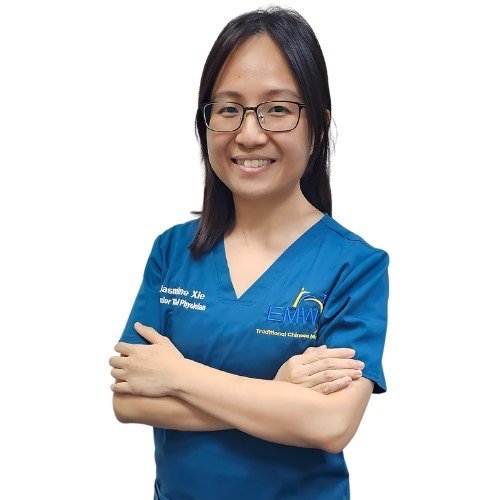
Senior TCM Physician

  • M.Med(TCM Acupuncture & Moxibustion)
  • B.Sc(Hons) Biomedical Sciences
  • Certified Aromatherapist
  • Registered TCM Physician (Singapore MOH)

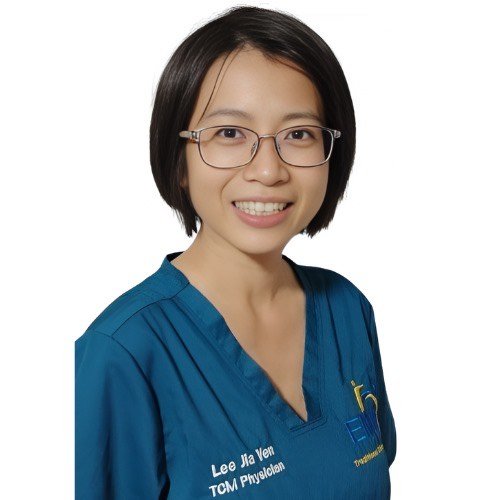
TCM Physician

  • M.Med(TCM Gynaecology)
  • B.Sc(Hons) Biomedical Sciences
  • Registered TCM Physician (Singapore MOH)

TCM Physician

  • B.Med(TCM)
  • B.Sc(Hons) Biomedical Sciences
  • International Board-Certified Lactation Consultant (IBCLC)
  • Registered TCM Physician (Singapore MOH)

References

  1. Chao JC et al. Antioxidant effects of Lycium barbarum polysaccharides. J Sci Food Agric. 2006. DOI: 10.1002/jsfa.2362
  2. Stener-Victorin E et al. Reduction of uterine artery blood flow impedance. Hum Reprod. 1996. DOI: 10.1093/oxfordjournals.humrep.a019187
  3. May-Panloup P et al. Mitochondrial biogenesis and oocyte quality. Hum Reprod Update. 2016. DOI: 10.1093/humupd/dmw006
  4. Stener-Victorin E & Wu X. Acupuncture effects on the reproductive system. Auton Neurosci. 2010. DOI: 10.1016/j.autneu.2009.12.001
  5. Tamura H et al. Melatonin and female reproduction. J Obstet Gynaecol Res. 2014. DOI: 10.1111/jog.12317

Comments

No comments yet. Why don’t you start the discussion?

Leave a Reply

Your email address will not be published. Required fields are marked *