7 Strategies to Support TCM Natural Conception After 35 in Singapore

7 Strategies to Support TCM Natural Conception After 35 in Singapore

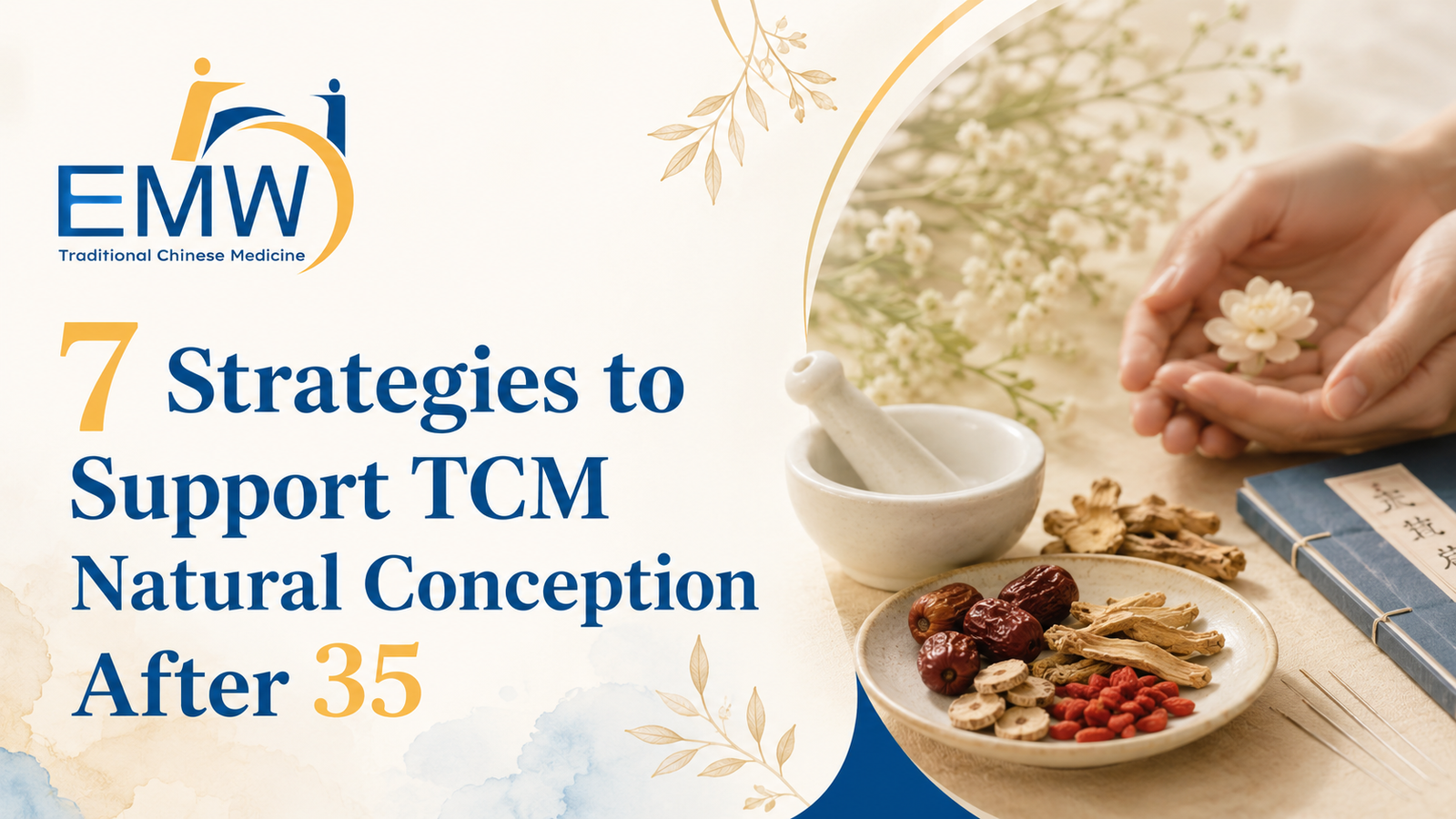
7 TCM Strategies to Support Natural Conception After 35 in Singapore

Trying to conceive naturally after 35 can feel emotionally heavy.

Many women in Singapore are told the same thing: egg quality declines, time is limited, and IVF may eventually be needed. While it is true that female fertility declines with age, especially from the mid-thirties onwards, this does not mean natural conception is impossible. It means the body needs to be supported with more precision, consistency, and less trial-and-error.

KK Women’s and Children’s Hospital notes that fertility starts declining in the mid-thirties, and women keen to have children should seek help early if pregnancy does not occur after a period of regular unprotected intercourse. ACOG also explains that fertility declines with age because the ovaries naturally lose follicle count over time.

From a Traditional Chinese Medicine perspective, age-related fertility decline is not viewed only as “poor egg quality.” It is understood through the deeper condition of the body: Kidney Essence, Blood nourishment, Liver Qi flow, Spleen digestion, uterine warmth, emotional state, sleep rhythm, and circulation.

At EMW TCM, fertility care is never about chasing one symptom. It is about rebuilding the internal environment so ovulation, fertilisation, and implantation have the best possible support.

This article explains 7 TCM strategies to support natural conception after 35 in Singapore.

Trying Naturally After 35 Is Not Hopeless, But It Needs Strategy

1. Strengthen Kidney Essence to Support Egg Quality

In TCM fertility theory, the Kidney system governs reproduction, ageing, vitality, hormone rhythm, and reproductive essence, also known as Jing.

After 35, many women notice changes such as:

  • Shorter cycles
  • Lower AMH
  • Lighter periods
  • Poorer sleep
  • Lower libido
  • More fatigue
  • Slower recovery from stress
  • More difficulty conceiving despite regular ovulation

From a biomedical view, egg quality depends heavily on chromosomal integrity, mitochondrial energy production, oxidative balance, and follicular environment.

From a TCM view, this overlaps with Kidney Essence.

The aim is not to “reverse age.” That would be unrealistic. The aim is to improve the terrain around the egg so the follicles still available have better metabolic, circulatory, and hormonal support.

TCM strategies may include:

  • Kidney-nourishing acupuncture points
  • Personalised herbal medicine when appropriate
  • Black sesame, walnuts, cooked beans, eggs, and nourishing soups
  • Earlier sleep
  • Avoiding overwork and excessive exercise
  • Supporting both Yin and Yang depending on the patient’s pattern

At EMW TCM, we often explain this simply: after 35, fertility is no longer only about timing intercourse. It is about improving the quality of the cycle itself.


2. Regulate the Menstrual Cycle Before Chasing Ovulation

Many women track ovulation using apps, LH strips, basal body temperature, cervical mucus, or fertility monitors. These tools can be useful, but they do not tell the full story.

A woman may ovulate, but still have:

  • Poor follicle development
  • Insufficient cervical mucus
  • A short luteal phase
  • Low progesterone signs
  • Premenstrual spotting
  • Thin lining
  • Painful periods
  • Clotted menstrual flow

In TCM, the menstrual cycle is a monthly report card of reproductive health.

A healthy fertility cycle should ideally show:

  • A predictable cycle length
  • Moderate flow
  • Minimal pain
  • Fresh red menstrual blood
  • Good cervical mucus around ovulation
  • Stable mood before the period
  • No significant spotting before menstruation

If the cycle is irregular, painful, scanty, clotted, or accompanied by strong PMS, TCM does not see this as “normal.” It reflects patterns such as Qi stagnation, Blood deficiency, Blood stagnation, Cold in the womb, Dampness, or Kidney deficiency.

EMW’s fertility guide explains that TCM commonly sees fertility challenges through patterns such as Kidney Deficiency, Qi Stagnation, Blood Deficiency, Dampness Accumulation, Blood Stagnation, and Coldness in the Womb. These are not just labels; they guide the treatment direction.

This is why a personalised TCM fertility plan usually follows the cycle:

  • Menstrual phase: clear stagnation and renew the lining
  • Follicular phase: nourish Blood, Yin, and follicles
  • Ovulation phase: promote Qi movement and egg release
  • Luteal phase: warm and stabilise the womb

Natural conception becomes more realistic when the whole cycle becomes stronger, not just when ovulation is detected.


3. Improve Uterine Blood Flow and Lining Receptivity

Conception does not end at ovulation.

Even if the egg is released and fertilised, implantation still depends on the uterine environment. After 35, some women may experience thinner lining, poorer circulation, more uterine tension, fibroids, endometriosis, or stress-related vasoconstriction.

In TCM, the uterus needs warmth, Blood, Qi movement, and stability.

Common signs that the uterine environment may need support include:

  • Cold lower abdomen
  • Period pain relieved by heat
  • Dark clots during menstruation
  • Thin lining on scan
  • Spotting before the period
  • Cold hands and feet
  • History of miscarriage or failed implantation
  • Long-term stress and poor sleep

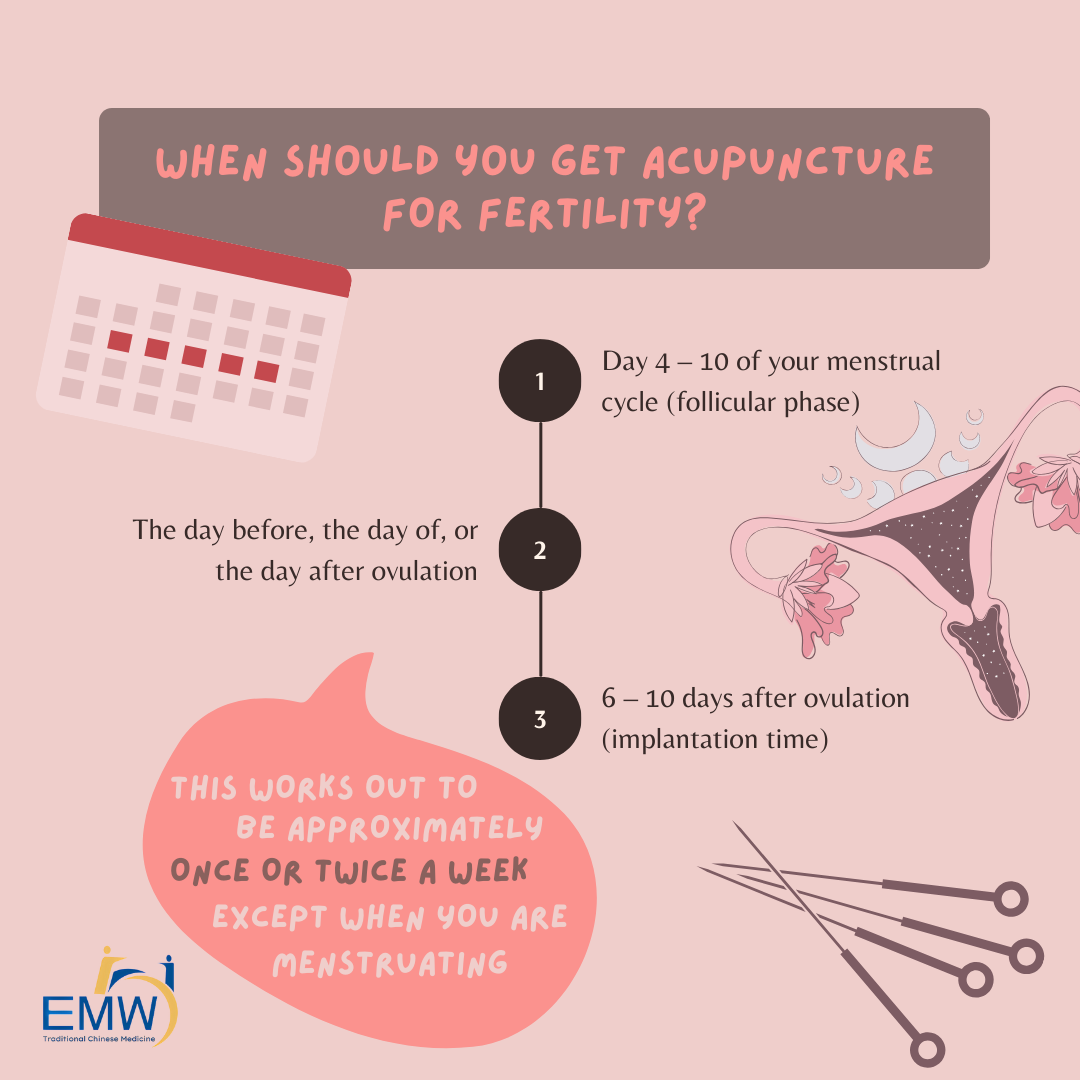
Acupuncture is commonly used in TCM fertility care to support pelvic blood flow, regulate nervous system tone, reduce stress, and improve the body’s reproductive rhythm.

From the EMW fertility perspective, natural conception is not just about timing intercourse. It is about preparing the body month after month so egg, sperm, and uterine lining are in their best possible state. The guide also highlights that TCM support before ovulation, around ovulation, and after ovulation focuses on hormone balance, Blood flow, cervical mucus, luteal support, and implantation readiness.

At EMW TCM, we often recommend a 3-cycle approach for natural conception because follicle development and uterine preparation take time.


4. Support Digestion Because Fertility Depends on Nutrient Transformation

Many patients focus on supplements first.

CoQ10. Omega-3. Prenatal vitamins. Vitamin D. Iron. Folate. Inositol.

These can be useful when appropriate, but TCM asks a deeper question: can your body digest, absorb, and transform nutrients properly?

In TCM, the Spleen system governs digestion and Blood production. If Spleen Qi is weak, a woman may present with:

  • Bloating
  • Loose stools
  • Food coma after meals
  • Sugar cravings
  • Fatigue
  • Water retention
  • Brain fog
  • Heavy limbs
  • Pale tongue with teeth marks
  • Spotting before periods

This matters because the uterine lining, cervical mucus, hormone production, and egg environment all depend on nutrient availability.

A fertility-friendly TCM nutrition plan usually emphasises:

  • Warm, cooked meals
  • Soups, stews, congee, and steamed foods
  • Adequate protein
  • Dark leafy greens
  • Root vegetables
  • Black sesame, walnuts, red dates, goji berries where suitable
  • Reduced iced drinks, raw salads, refined sugar, and greasy foods

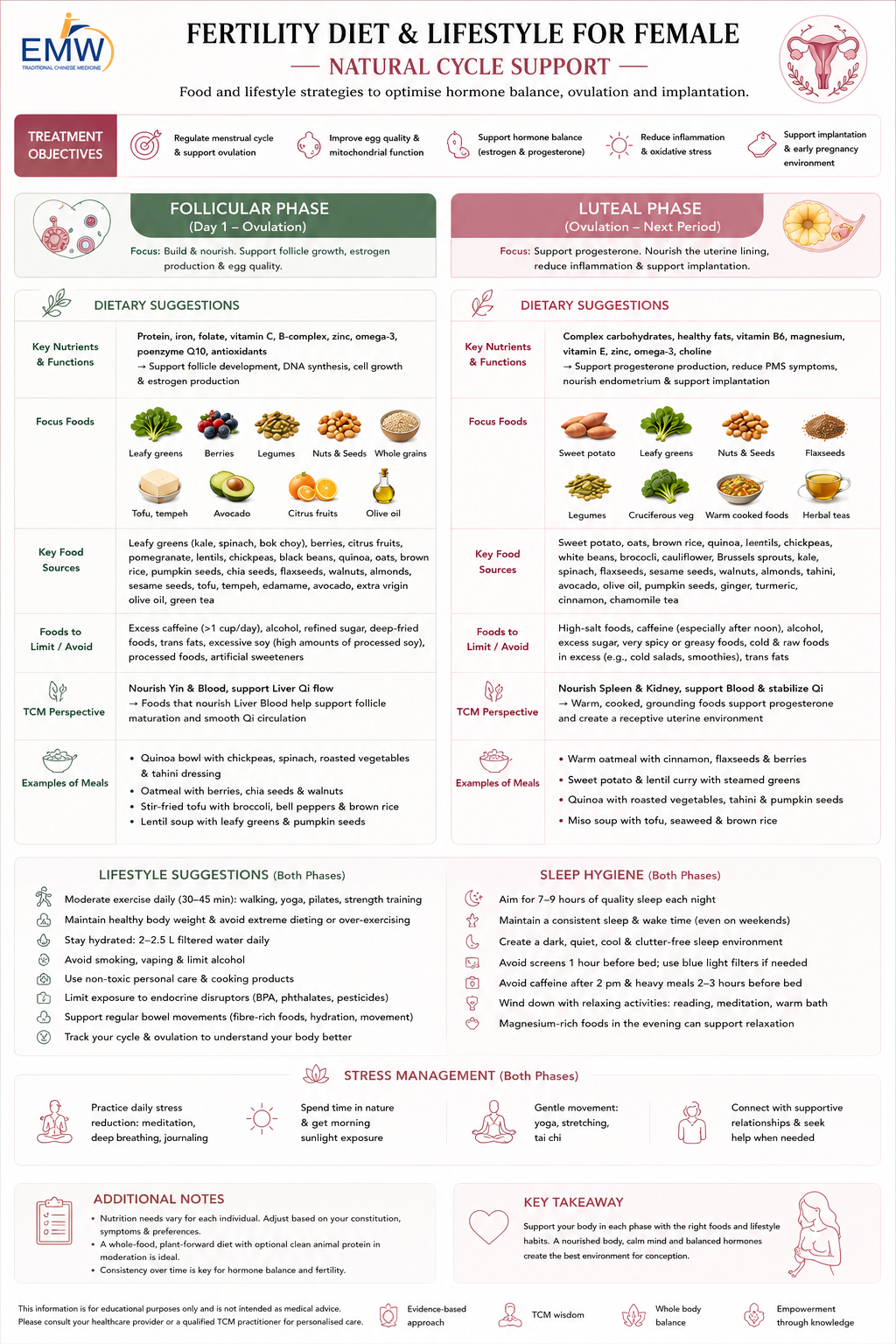
The EMW fertility guide uses the SANE framework — Sleep, Anxiety, Nutrition, and Exercise — to make fertility lifestyle advice practical. In the Nutrition section, it emphasises warm cooked meals, Blood and Kidney-supporting foods, and reducing Dampness-causing foods such as excessive dairy, fried foods, and sugar.

This is not about restrictive dieting. It is about making digestion efficient so the body can produce better Qi, Blood, and reproductive nourishment.


5. Calm Liver Qi and Regulate Stress Without Blaming the Patient

One of the most unhelpful things fertility patients hear is: “Just relax.”

Stress does not mean a woman caused her infertility. However, chronic stress can affect the hypothalamic-pituitary-ovarian axis, sleep, cortisol rhythm, digestion, libido, inflammation, and pelvic blood flow.

In TCM, this often presents as Liver Qi stagnation.

Signs may include:

  • PMS
  • Breast tenderness
  • Mood swings
  • Irritability
  • Sighing often
  • Neck and shoulder tension
  • Bloating before the period
  • Painful periods
  • Irregular ovulation
  • Poor sleep before menstruation

After 35, stress becomes more biologically expensive. The body has less room for chronic sleep debt, emotional overload, under-eating, overworking, and high-intensity exercise without recovery.

TCM strategies to move Liver Qi include:

  • Acupuncture
  • Breathwork
  • Gentle yoga
  • Walking after meals
  • Stretching the ribs, hips, and pelvis
  • Reducing caffeine when anxiety is high
  • Creating decompression time before sleep
  • Personalised herbs when appropriate

At EMW TCM, we often frame this as shifting the body from “fight-or-flight” into “rest-and-rebuild.” Fertility does not thrive in survival mode. The body must feel safe enough to ovulate, receive, implant, and sustain.


6. Sleep Before 11pm to Support Hormonal and Cellular Repair

Sleep is one of the most underestimated fertility tools.

In Singapore, many women sleep late because of work, children, screen time, stress, or the feeling that nighttime is the only personal time they have. But from both TCM and biomedical perspectives, late nights can weaken fertility resilience.

In TCM, nighttime is when Yin and Blood are restored. Poor sleep can worsen:

  • Yin deficiency
  • Liver Qi stagnation
  • Blood deficiency
  • Hormonal instability
  • Poor follicular nourishment
  • Emotional reactivity

From a biomedical lens, sleep influences melatonin, cortisol rhythm, insulin sensitivity, inflammation, and reproductive hormone communication. Melatonin also acts as an antioxidant in the reproductive environment.

A simple fertility sleep plan:

  • Aim to sleep before 11pm most nights
  • Get morning sunlight within 30 minutes of waking
  • Reduce screens after 9pm
  • Keep dinner earlier and lighter
  • Avoid intense work at night
  • Use warm foot soaks if Cold or stress patterns are present
  • Keep the bedroom dark and cool

For women above 35, sleep is not “self-care.” It is reproductive preparation.

If you are doing acupuncture, herbs, supplements, and fertility tracking but still sleeping at 1am, the foundation is not stable.


7. Use a 3-Month TCM Fertility Plan Instead of Random Monthly Effort

One of the biggest mistakes couples make is trying something new every month.

One month they focus on supplements. The next month they change diet. Then they try acupuncture only around ovulation. Then they stop because the period arrives. Then they restart again with a different strategy.

This creates emotional exhaustion and biological inconsistency.

At EMW TCM, we prefer structured preparation.

A 3-month natural conception plan may include:

  • Cycle assessment
  • Tongue and pulse diagnosis
  • Review of menstrual patterns
  • Ovulation and luteal phase assessment
  • Fertility nutrition guidance
  • Acupuncture planning by cycle phase
  • Herbal medicine where appropriate
  • Sleep and stress regulation
  • Male fertility screening when relevant
  • Review of Western test results such as AMH, thyroid markers, ultrasound findings, and semen analysis

Why 3 months?

Because follicle development takes time. Sperm development also takes time. Uterine lining quality, inflammation, Blood nourishment, and hormonal rhythm do not transform overnight.

This is why EMW’s approach is root-cause driven rather than symptom-chasing. The goal is not just to “try harder.” The goal is to help the body become more ready.
15
TCM for recurrent miscarriage

When Should You Seek Help If You Are Trying Naturally After 35?

If you are 35 or older, it is wise to seek fertility support earlier rather than waiting too long.

Consider getting assessed if:

  • You have been trying for 6 months without success
  • Your cycles are irregular
  • You have painful periods or clots
  • You have known PCOS, endometriosis, fibroids, thyroid issues, or low AMH
  • You have had miscarriage or chemical pregnancy
  • Your partner has not done a semen analysis
  • You are unsure whether you are ovulating well
  • You feel overwhelmed by conflicting advice

Natural conception after 35 is not only about female fertility. Male sperm quality, timing, stress, inflammation, and lifestyle also matter.

A good fertility plan should involve both partners whenever possible.

How EMW TCM Supports Natural Conception After 35

At EMW TCM Singapore, our fertility care combines classical TCM diagnosis with biomedical understanding, functional nutrition, acupuncture, herbal medicine, and lifestyle support.

Our approach may support:

  • Menstrual regulation
  • Ovulation quality
  • Uterine lining nourishment
  • Stress and cortisol regulation
  • Digestive and nutritional status
  • Blood circulation
  • Cold womb patterns
  • Kidney, Liver, and Spleen balance
  • Male fertility factors
  • Preconception preparation before IVF if needed later

We do not promise pregnancy. No ethical clinic should.

What we do is help you reduce trial and error, understand your body constitution, and build a structured fertility plan that supports your best possible chance each cycle.

If you are trying to conceive naturally after 35, the most important thing is not panic.

The most important thing is clarity.

Lifestyle Nutrition For IVF 5
What the modern science and TCM talks about IVF

FAQ: Natural Conception After 35 and TCM in Singapore

1. Can I still conceive naturally after 35?

Yes, many women do conceive naturally after 35. However, fertility declines with age due to changes in egg quantity and quality, so it is better to seek support earlier rather than waiting too long.

2. How long should I try naturally after 35 before seeking help?

Many fertility specialists recommend seeking assessment earlier after 35, especially if pregnancy has not occurred after 6 months of regular unprotected intercourse or if there are known fertility concerns.

3. Can TCM improve egg quality after 35?

TCM cannot create new eggs or reverse age, but it may support the follicular environment, circulation, inflammation balance, sleep, stress response, and hormonal rhythm. These factors may influence the quality of the cycles you still have.

4. Is acupuncture useful for natural conception?

Acupuncture may support fertility by regulating stress response, improving reproductive blood flow, supporting cycle regularity, and helping the nervous system shift into a more receptive state.

5. Do I need herbs to conceive naturally?

Not always. Some patients benefit from acupuncture and lifestyle changes alone. Others may need personalised herbal support depending on their TCM pattern, cycle symptoms, and medical history.

6. Should my husband also be assessed?

Yes. Male factors contribute significantly to fertility challenges. Semen analysis, lifestyle, stress, sleep, heat exposure, nutrition, and TCM support for sperm health may all be relevant.

7. How long does TCM take to support fertility?

A realistic starting point is 3 months, because egg, sperm, and uterine preparation take time. Some patients notice cycle, sleep, digestion, and energy improvements earlier.

Conclusion

Trying to conceive after 35 can feel like a race against time.

But the answer is not fear. The answer is precision.

TCM offers a way to understand the body beyond age alone: Kidney Essence, Blood, Qi flow, Spleen digestion, Liver stress, uterine warmth, sleep, and emotional resilience.

When these systems are supported together, the body often becomes more regular, more nourished, and more receptive.

If you are trying naturally after 35 in Singapore, do not wait until you feel desperate.

Start preparing your body now.

Read more fertility articles on the EMW TCM blog:
www.emw.sg/blog

Book your fertility consultation with EMW TCM:
WhatsApp EMW TCM to begin your personalised fertility assessment.

How EMW TCM Help Your Fertility

From a biomedical perspective, acupuncture for fertility improves ovarian and uterine blood flow, regulates the hypothalamic-pituitary-ovarian axis, lowers cortisol, reduces inflammation, and supports hormonal balance. These effects complement TCM principles and help enhance egg development, implantation, and reproductive function.

1. Comprehensive Assessment

Your first consultation includes:

  • Cycle assessment

  • Digestion and hormonal review

  • Energy and stress evaluation

  • Sleep and lifestyle factors

  • Male fertility screening when relevant

2. Evidence-Based TCM Diagnosis

  • Qi stagnation

  • Blood deficiency

  • Spleen Qi weakness

  • Kidney Yin/Yang imbalance

  • Liver Qi constraint

  • Dampness and inflammation

3. Personalised Fertility Treatment Plan

  • Weekly fertility acupuncture

  • Customised herbal formulas

  • Moxibustion

  • Dietary therapy

  • Stress reduction strategies

  • Lifestyle recommendations

TCM Acupuncture for Fertility Treatments

Acupuncture, one of the most researched TCM fertility tools, has been found to influence several physiological pathways related to reproduction.

A review published in Fertility and Sterility (2019) reported that acupuncture may improve blood flow to the uterus and ovaries, modulate stress hormones, and enhance endometrial receptivity. Another meta-analysis in Integrative Medicine Research (2021) concluded that acupuncture used alongside conventional fertility treatment can improve pregnancy outcomes and reduce anxiety levels in women undergoing IVF.

From a clinical standpoint, acupuncture helps regulate the hypothalamic-pituitary-ovarian axis, improving hormone balance and menstrual regularity. It can also reduce cortisol levels, encouraging the parasympathetic or “rest-and-rebuild” state which supports implantation and early pregnancy.

Our Flagship Ebook & Video Course

Fertility Guide 1
This comprehensive eBook gives you the clarity, confidence, and gentle structure you need to stop second-guessing and finally move forward. Instead of wasting precious months on trial and error, you will learn how to create the best internal environment for conception, naturally or alongside treatments like IUI and IVF.
newsletter subscribe
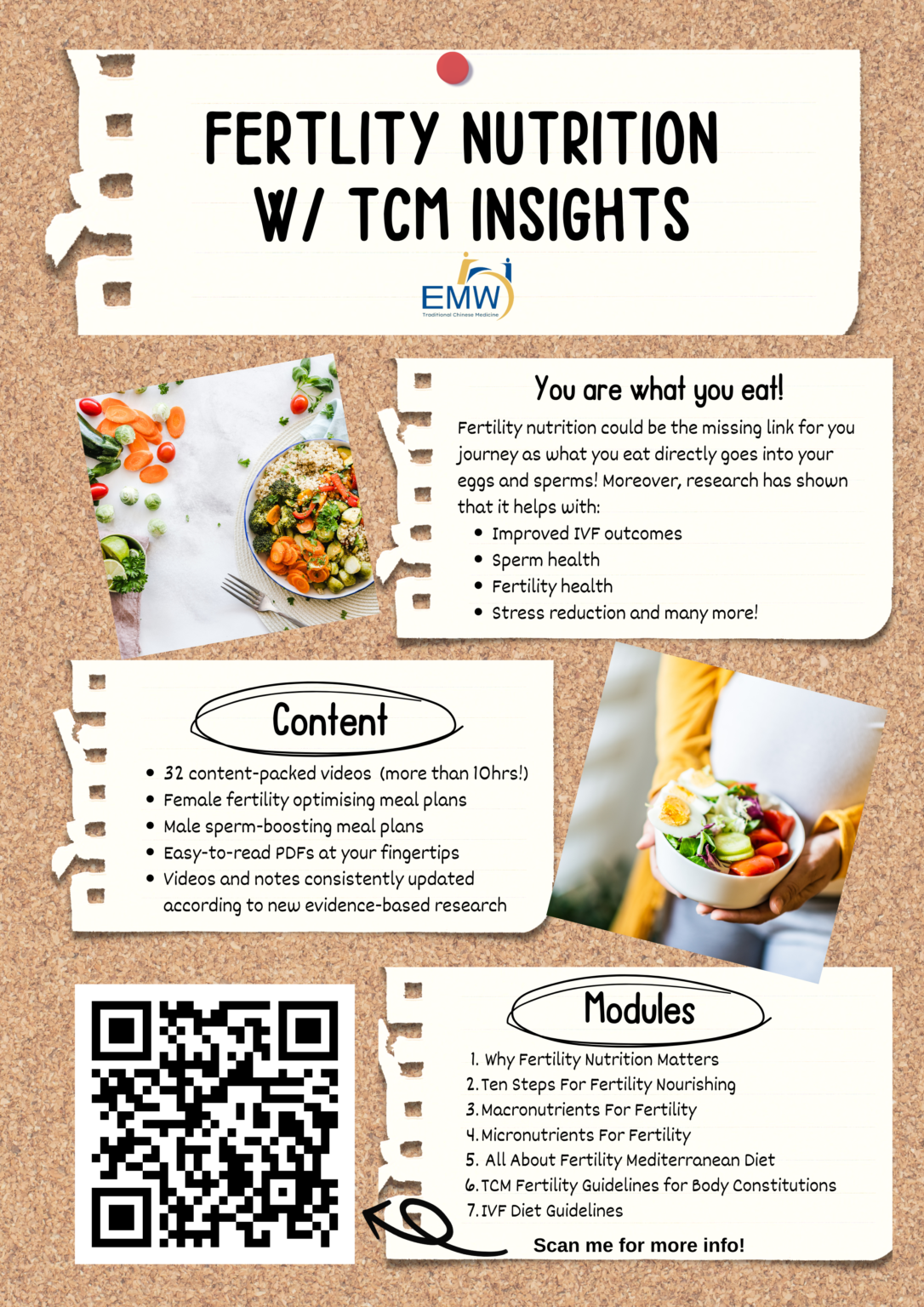
You understand the significance of nutrition and lifestyle, showcasing a conscientious approach. (You’re definitely on the right track!) Embarking on the Fertility Nutrition With TCM Insights course opens up a world of simple yet transformative actions that can reshape your journey, starting from the moment you decide to join.

When to Seek Professional TCM Fertility Help

Fertility is not just a matter of age or hormones. It is a reflection of the body’s internal harmony. Traditional Chinese Medicine provides an integrative and natural way to restore this balance, supporting both physical and emotional readiness for conception.

At EMW TCM Singapore, our team of experienced physicians brings together centuries-old wisdom and modern evidence to guide your fertility journey. Whether you are trying naturally or preparing for IVF, we are here to help you create the best internal environment for new life to begin.

If you have been trying to conceive for more than six to twelve months, experience irregular menses, painful periods, or have been diagnosed with PCOS, endometriosis, or low sperm count, consider a consultation. Professional TCM fertility care aims to correct the underlying imbalance rather than simply forcing ovulation or hormone production.

Check out our links below to book your fertility consultation and begin your holistic journey toward conception.

EMW TCM Clinics

Scotts Medical Centre Branch

9 Scotts Road #10-04, Scotts Medical Centre @ Pacific Plaza,
Singapore 228210
Book Your Appointment With Us Here: +65 89585869

International Building Branch

360 Orchard Road, International Building #02-05/06
Singapore 238869
Book Your Appointment With Us Here: +65 89585869

Our Physicians

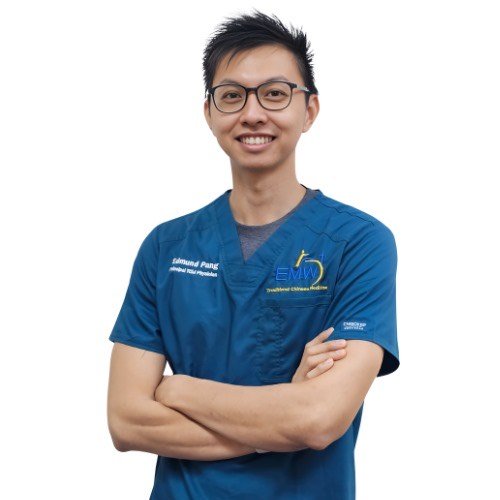
Principal TCM Physician

  • M.Med(TCM Gynaecology)
  • B.Sc(Hons) Biomedical Sciences
  • Dip. Naturopath
  • Ayurvedic Therapist(500hrs)
  • Registered TCM Physician (Singapore MOH)

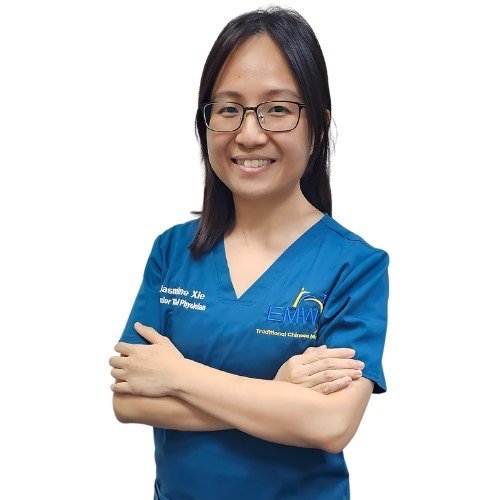
Senior TCM Physician

  • M.Med(TCM Acupuncture & Moxibustion)
  • B.Sc(Hons) Biomedical Sciences
  • Certified Aromatherapist
  • Registered TCM Physician (Singapore MOH)

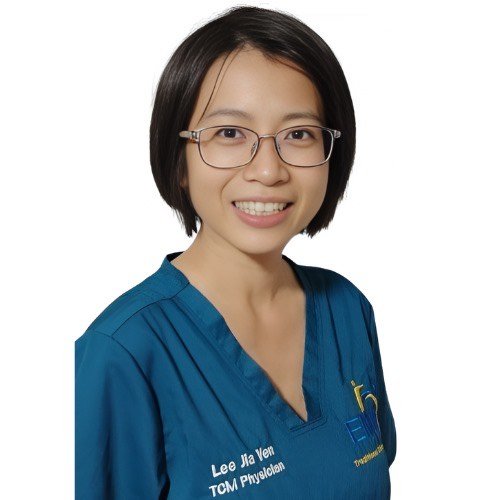
TCM Physician

  • M.Med(TCM Gynaecology)
  • B.Sc(Hons) Biomedical Sciences
  • Registered TCM Physician (Singapore MOH)

TCM Physician

  • B.Med(TCM)
  • B.Sc(Hons) Biomedical Sciences
  • International Board-Certified Lactation Consultant (IBCLC)
  • Registered TCM Physician (Singapore MOH)

References

  1. Chao JC et al. Antioxidant effects of Lycium barbarum polysaccharides. J Sci Food Agric. 2006. DOI: 10.1002/jsfa.2362
  2. Stener-Victorin E et al. Reduction of uterine artery blood flow impedance. Hum Reprod. 1996. DOI: 10.1093/oxfordjournals.humrep.a019187
  3. May-Panloup P et al. Mitochondrial biogenesis and oocyte quality. Hum Reprod Update. 2016. DOI: 10.1093/humupd/dmw006
  4. Stener-Victorin E & Wu X. Acupuncture effects on the reproductive system. Auton Neurosci. 2010. DOI: 10.1016/j.autneu.2009.12.001
  5. Tamura H et al. Melatonin and female reproduction. J Obstet Gynaecol Res. 2014. DOI: 10.1111/jog.12317

Comments

No comments yet. Why don’t you start the discussion?

Leave a Reply

Your email address will not be published. Required fields are marked *