7 Powerful Ways TCM Treats Pediatric Digestive Issues Naturally in Singapore
Digestive concerns are one of the most common reasons parents seek help for their children. In Singapore, issues such as poor appetite, recurrent abdominal pain, constipation, bloating, loose stools, and food sensitivities are increasingly seen in toddlers and primary school children.
Many parents want something gentle. Something that supports their child’s development without suppressing symptoms. This is where many families discover how TCM treats pediatric digestive issues in a fundamentally different way.
At EMW TCM, pediatric care is not simply adult treatment made smaller. It is a dedicated, age-appropriate system designed around digestive maturation, immune development, and the realities of Singapore school life.
Let us explore how TCM treats pediatric digestive issues and why families choose EMW TCM for safe, child-centred care.
Why Digestive Health Matters So Much in Children
In Traditional Chinese Medicine, the Spleen and Stomach system forms the foundation of growth, immunity, and emotional regulation in children. Unlike adults, children are described as having “immature digestive fire.” This aligns with modern research showing that gut microbiota, digestive enzyme production, and immune tolerance continue developing throughout early childhood.
The gut is deeply connected to immune training. Around 70 percent of immune cells reside in gut-associated lymphoid tissue. Early microbial exposure shapes immune balance and allergy risk.
Arrieta MC et al. The intestinal microbiome in early life. DOI: 10.1186/s13059-014-0427-x
This means when we support digestion properly, we are also supporting immunity, growth, and emotional resilience.
1. Age-Appropriate Diagnosis Instead of Adult Labels
One of the key differences in how TCM treats pediatric digestive issues at EMW TCM is diagnostic precision based on age and maturation.
Many clinics apply adult digestive patterns such as liver qi stagnation or damp heat directly to children. However, children’s physiology is different:
- They accumulate food stagnation easily
- They are sensitive to cold and overfeeding
- Their digestion weakens during growth spurts
- Emotional stress affects appetite quickly
At EMW TCM, diagnosis considers:
- Feeding history
- Stool pattern and consistency
- Appetite rhythm
- Sleep quality
- School stress
- Growth stage
This avoids over-treatment and ensures gentle correction rather than aggressive intervention.
2. Food as Primary Therapy
A cornerstone of how TCM treats pediatric digestive issues at EMW TCM is dietary therapy before herbs.
In Singapore, common contributing factors include:
- Frequent cold drinks
- Processed snacks
- Irregular mealtimes
- Tuition-related late dinners
- Over-supplementation
Instead of prescribing strong herbs immediately, we first correct:
- Meal timing
- Portion size
- Temperature of food
- Sugar intake
- Dairy tolerance
- Snacking frequency
Children’s digestive enzymes and microbiota adapt to diet patterns. Research shows that early dietary exposures influence microbial diversity and immune tolerance.
Rodriguez JM et al. The composition of the gut microbiota throughout life. DOI: 10.1016/j.nutres.2015.02.005
Parents often see improvement in bloating and stool regularity within weeks just by adjusting food patterns.
This conservative approach reflects our belief that food is medicine for children.
3. Minimalist Herbal Prescriptions for Safety
When herbs are required, EMW TCM uses:
- Child-adjusted dosages
- Short treatment courses
- Simple formulas
- Powder or liquid formats suitable for children
Unlike adult protocols that may use complex combinations, pediatric formulas focus on:
- Strengthening digestion
- Gently moving stagnation
- Reducing dampness
- Supporting appetite
Overuse of strong purgatives or heat-clearing herbs can damage a child’s digestive qi. Our approach avoids this.
This safety-first philosophy reassures parents who worry about long-term herbal use.
4. Pediatric Acupressure Instead of Strong Needling
Another reason parents choose EMW TCM is our use of pediatric acupressure techniques.
Young children often respond very well to:
- Tui na massage
- Gentle meridian stroking
- Abdominal rubbing techniques
- Spleen meridian stimulation
These techniques:
- Improve bowel movement regularity
- Reduce abdominal discomfort
- Enhance appetite
- Calm emotional stress
Because children have more responsive meridian systems, treatment can be light yet effective.
Parents are also taught simple techniques to continue at home, empowering them rather than creating dependency.
5. Herbal Plasters for Children Who Dislike Medicine
Some children resist taking herbal powders. For these cases, EMW TCM may recommend child-friendly herbal plasters.
These are:
- Applied externally
- Mild in action
- Useful for bloating and abdominal discomfort
- Suitable for children with sensitive digestion
External therapy reduces internal burden and can be especially helpful during episodes of acute food stagnation.
This reflects our commitment to flexible, child-appropriate care.
6. Supporting Immunity Through Digestive Strength
When TCM treats pediatric digestive issues, the goal is not just symptom relief. It is immune development.
Studies show early gut dysbiosis is associated with allergic diseases and recurrent infections.
Wopereis H et al. The first thousand days. DOI: 10.3389/fimmu.2014.00427
In Singapore, common patterns include:
- Recurrent cough after digestive upset
- Phlegm after excessive dairy
- Loose stools during exam stress
- Appetite loss during viral illness
Rather than repeatedly boosting immunity with supplements, EMW TCM focuses on strengthening digestive function as the root.
A strong digestive system:
- Produces better energy
- Supports nutrient absorption
- Regulates bowel flora
- Builds stable immunity
This integrative philosophy works alongside conventional pediatric care, not against it.
7. Collaborative and Conservative Care
At EMW TCM, we encourage:
- Routine pediatric checkups
- Vaccination adherence
- Appropriate medical investigations when needed
We do not replace conventional care. We complement it.
Parents appreciate that our recommendations are realistic and safety-oriented.
If a child presents with red flag symptoms such as weight loss, persistent vomiting, or severe abdominal pain, referral for medical evaluation is prioritised.
This balanced approach builds trust and long-term outcomes.
What Is Pediatric Tuina Massage?
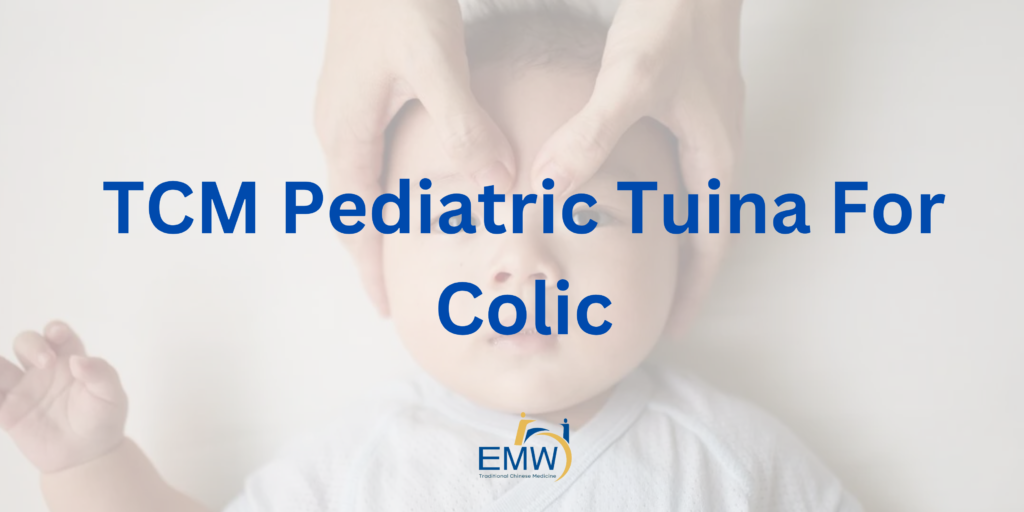
Tuina is a form of therapeutic manual therapy within TCM. Pediatric Tuina is a distinct subspecialty with its own techniques, pressure levels, and treatment logic.
Unlike adult massage, Tuina massage for babies uses light, rhythmic strokes along specific meridians and reflex zones. Sessions are short, non-invasive, and designed to calm rather than stimulate. At EMW TCM, practitioners undergo specialised pediatric training to ensure techniques are developmentally appropriate and safe.
Key characteristics of pediatric Tuina include:
- No forceful manipulation
- No joint cracking or deep pressure
- Focus on regulation, not correction
- Adapted entirely to infant physiology
Download Our Cough Relief Pediatric Acupressure Handbook!

Common Pediatric Digestive Issues We See in Singapore
At EMW TCM, we commonly treat:
- Poor appetite
- Selective eating
- Recurrent bloating
- Chronic constipation
- Loose stools
- Post-antibiotic gut imbalance
- Functional abdominal pain
- Stress-related digestive upset
Singapore’s competitive schooling environment means even Primary 1 children experience stress-related appetite changes.
Research confirms that stress alters gut motility and microbiota composition.
Karl JP et al. Effects of psychological stress on gut microbiota. DOI: 10.1038/s41598-018-35068-3
By addressing both emotional and digestive aspects, we provide whole-child care.
Why Parents Choose EMW TCM Instead of Other Clinics
Parents consistently share several reasons:
1. We specialise in children
Pediatric dosing, pediatric diagnosis, pediatric techniques.
2. We prioritise food and lifestyle first
Not every child needs herbs.
3. We avoid adult treatment models
Children are not small adults.
4. We use gentle methods
Acupressure and herbal plasters are often sufficient.
5. We collaborate with medical doctors
Safety comes first.
6. We educate parents
Consultations include practical guidance, not just prescriptions.
This is what makes the way TCM treats pediatric digestive issues at EMW TCM different from general TCM practice.
Safety and Evidence Considerations
Is Tuina Massage Safe for Babies?
When performed by trained pediatric TCM practitioners, Tuina is considered low risk. Pressure is light, sessions are short, and techniques are adapted to the baby’s tolerance.
What Does Research Say?
Studies suggest that pediatric massage and Tuina-like interventions may help reduce crying duration and improve gastrointestinal function in infants.
- A systematic review found that massage therapy reduced crying time in infants with colic (DOI: 10.1542/peds.2006-2384).
- Research on infant massage has demonstrated modulation of vagal tone and improved gastric motility (DOI: 10.1016/S0140-6736(02)07363-8).
- Studies on TCM-based pediatric manual therapy suggest benefits for functional digestive disorders (DOI: 10.1016/j.ctim.2013.03.002).
While more high-quality trials are needed, the existing literature supports the safety and potential benefit of gentle manual therapies when used appropriately.

Singapore Context: Why This Matters Locally
In Singapore, many infants face:
- Early childcare exposure
- High parental stress levels
- Tight schedules affecting feeding rhythms
These factors can exacerbate colic and reflux symptoms. EMW TCM takes local lifestyle realities into account, offering realistic guidance that fits modern Singaporean families.
When Should Parents Seek Help?
Consider consultation if your child has:
- Persistent poor appetite
- Hard stools more than twice weekly
- Loose stools lasting more than two weeks
- Recurrent abdominal pain
- Frequent bloating
- Digestive issues affecting growth or mood
Early correction is easier than long-term repair.
Digestive health is the foundation of growth, immunity, and emotional balance.
When done properly, TCM treats pediatric digestive issues in a way that:
- Respects developmental physiology
- Supports microbiome maturation
- Avoids over-medication
- Empowers parents
- Complements conventional care
At EMW TCM in Singapore, our mission is simple: protect childhood while supporting health.
Our TCM Physicians

Principal TCM Physician
- M.Med(TCM Gynaecology)
- B.Sc(Hons) Biomedical Sciences
- Dip. Naturopath
- Ayurvedic Therapist(500hrs)
- Registered TCM Physician (Singapore MOH)

Senior TCM Physician
- M.Med(TCM Acupuncture & Moxibustion)
- B.Sc(Hons) Biomedical Sciences
- Certified Aromatherapist
- Registered TCM Physician (Singapore MOH)

TCM Physician
- M.Med(TCM Gynaecology)
- B.Sc(Hons) Biomedical Sciences
- Registered TCM Physician (Singapore MOH)

TCM Physician
- B.Med(TCM)
- B.Sc(Hons) Biomedical Sciences
- International Board-Certified Lactation Consultant (IBCLC)
- Registered TCM Physician (Singapore MOH)