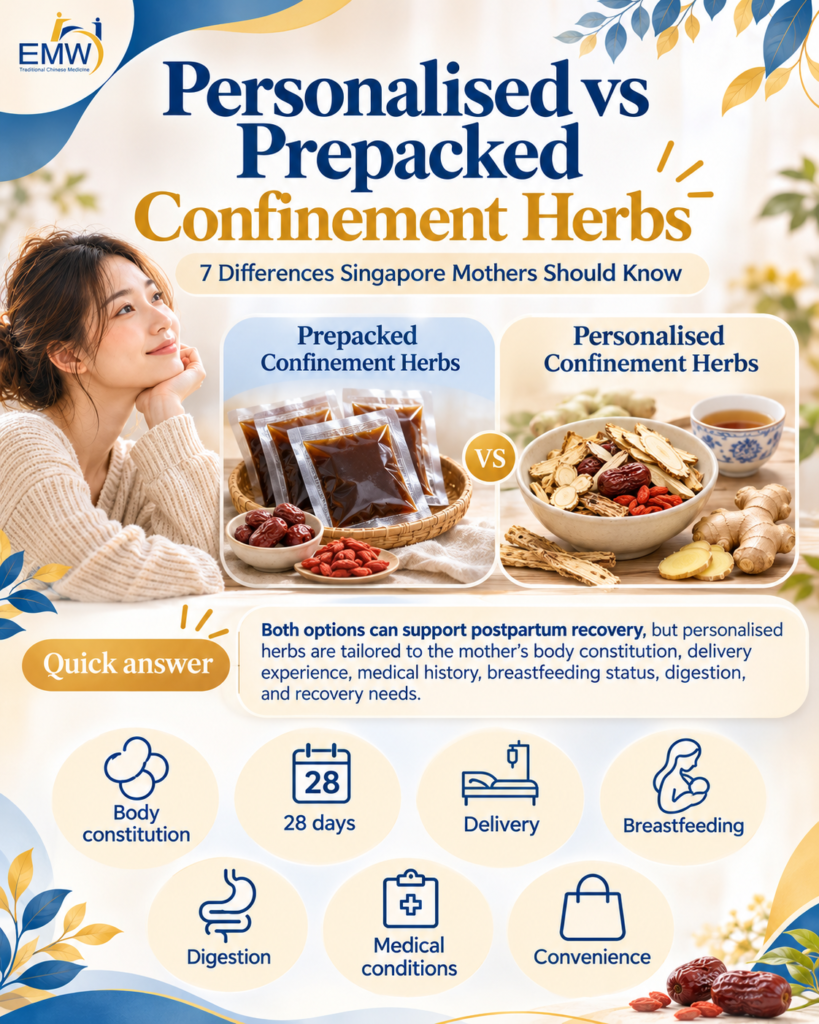
Personalised vs Prepacked Confinement Herbs: 7 Differences Singapore Mothers Should Know
You are preparing for your confinement, and someone recommends a 28-day herbal package.
Your mother-in-law suggests a traditional formula. Your confinement nanny has her preferred herbal soup recipes. Meanwhile, you have seen several confinement packages online, each promising to nourish your body after childbirth.
Most of them seem to contain similar ingredients.
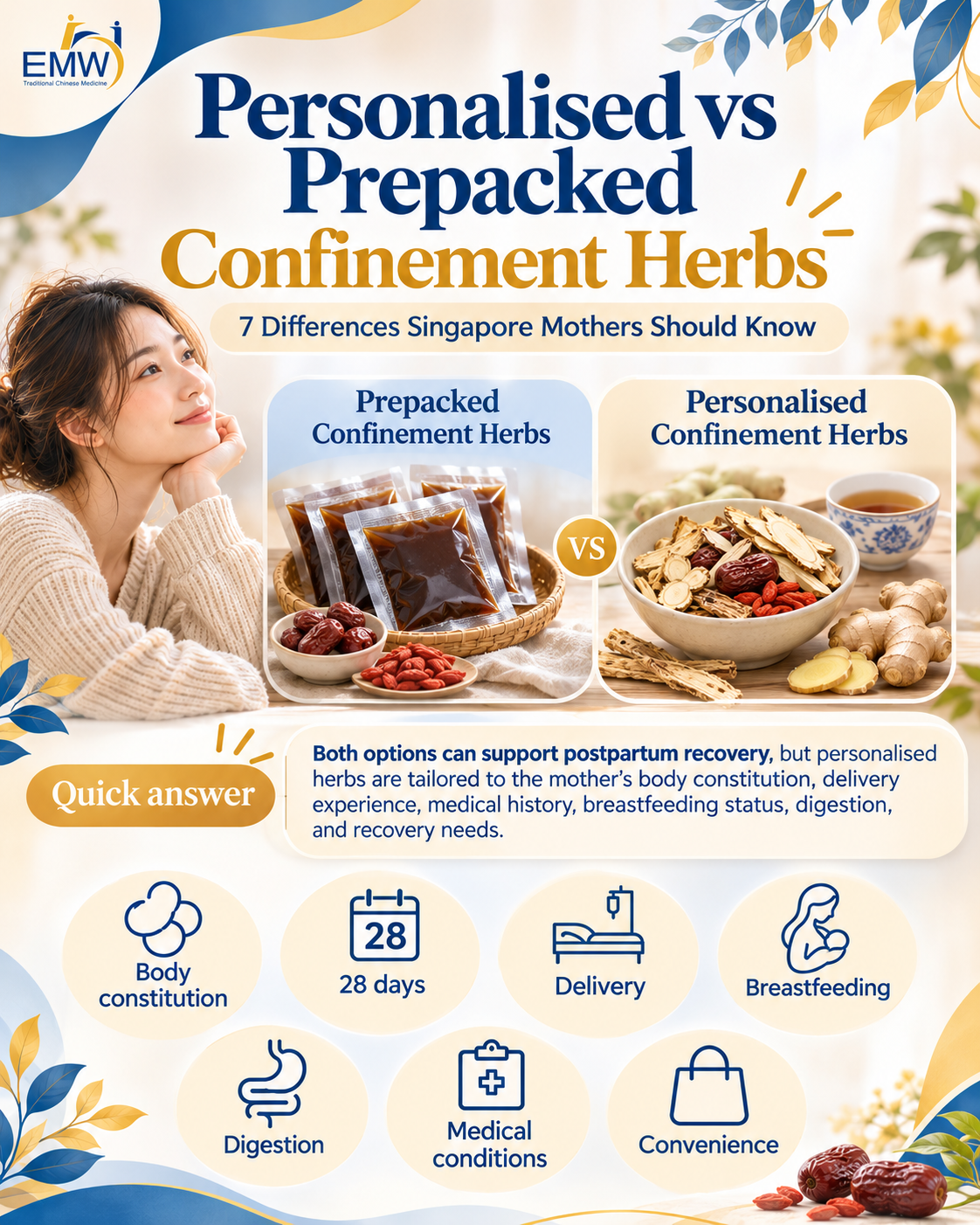
Why one herbal formula may not suit every mother
Red dates, dang gui, huang qi, ginger, goji berries and other familiar Chinese herbs.
So, does it really matter which package you choose?
And is it worth having your herbs personalised when prepacked options are readily available?
When comparing personalised vs prepacked confinement herbs, the key difference lies in how well the herbs are tailored to your individual needs, delivery experience and postpartum recovery.
A mother who has just undergone a Caesarean section may have very different concerns from someone who has had a vaginal delivery.
Another mother may be struggling with bloating, constipation or poor appetite, while someone else is dealing with breastfeeding difficulties.
They have all given birth, but that does not mean they need exactly the same herbs.
Before purchasing a confinement package, here are seven differences worth understanding.
Quick Answer: Are Personalised Confinement Herbs Better Than Prepacked Herbs?
Personalised confinement herbs are selected by a TCM physician based on the mother’s body constitution, medical history, pregnancy condition, anticipated delivery method and other relevant factors.
Standard prepacked herbs generally contain a predetermined combination of ingredients intended for broader use.
Neither option is automatically better or safer for every mother.
A standard herbal soup pack may be suitable as part of a balanced confinement diet, while personalised herbal medicine may be considered when a mother requires an individualised TCM approach.
At EMW TCM Singapore, our personalised confinement supplement herbs are prescribed following a physician’s assessment and prepared in convenient daily vacuum-packed portions.
The herbs are intended to be brewed separately from regular confinement soups, allowing mothers to enjoy both nourishing meals and individualised TCM care where appropriate.
Seven Differences Singapore Mothers Should Know
Each approved EMW infographic sits beside its key points. The original clinical explanations, cautions and tables continue underneath.
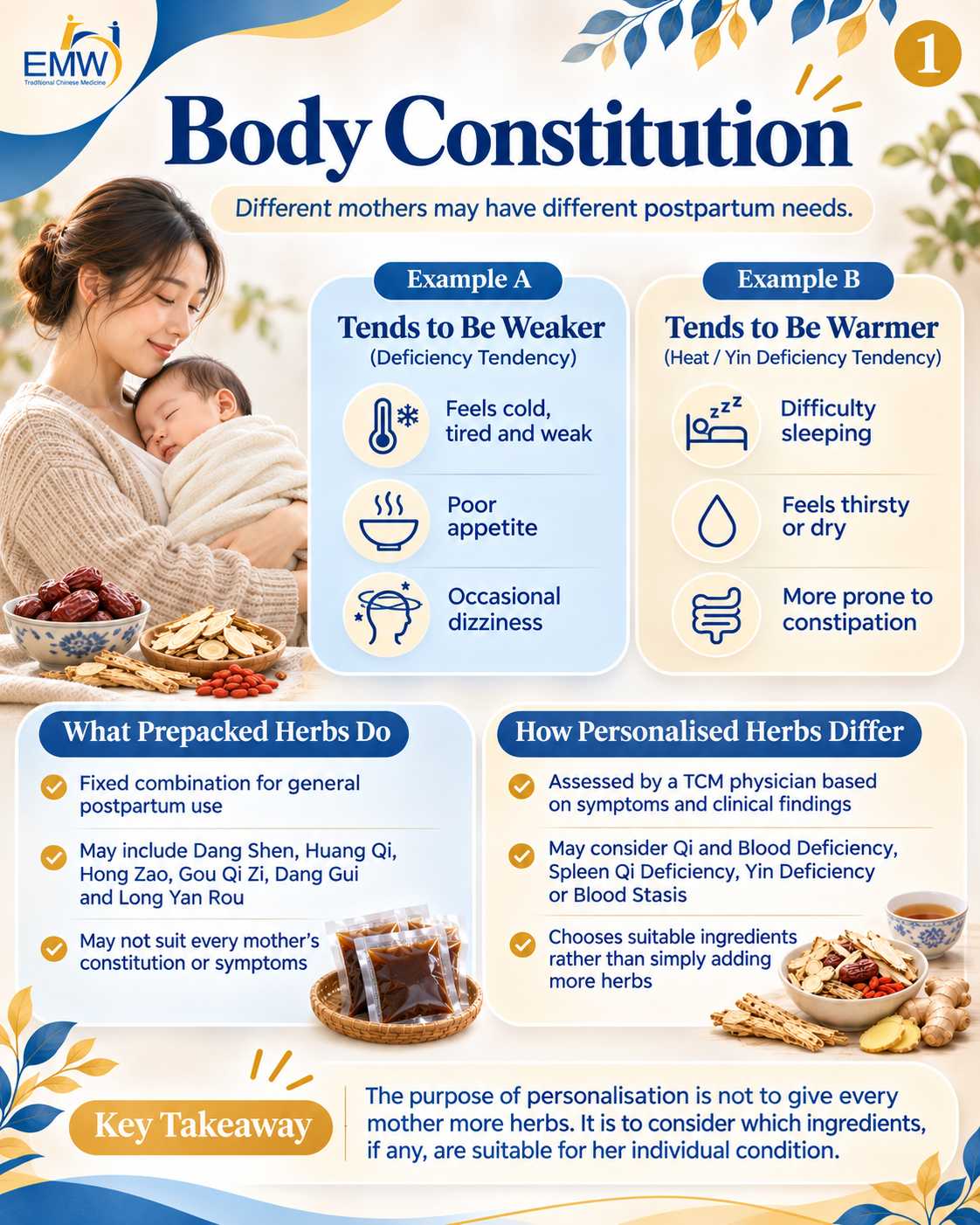
1. Personalised Herbs Consider Your Body Constitution
In Traditional Chinese Medicine, we believe that every person’s constitution is different.
Two mothers may be the same age, deliver within days of each other and follow similar confinement diets.
Yet their postpartum symptoms may be quite different.
One mother feels cold, tired and weak. She has poor appetite and occasionally experiences dizziness.
Personalisation considers a mother’s constitution and symptoms, not simply giving more herbs.
Another feels warm most of the time, has difficulty sleeping and frequently experiences thirst, constipation or a dry mouth.
Giving both mothers the same strongly warming herbal formula may not be appropriate.
How Standard Prepacked Herbs Work
Many ready-made confinement herbal products contain a fixed combination of ingredients traditionally associated with postpartum nourishment.
Common ingredients may include:
- Dang Shen 党参 (Codonopsis)
- Huang Qi 黄芪 (Astragalus)
- Hong Zao 红枣 (Red Dates)
- Gou Qi Zi 枸杞子 (Goji Berries)
- Dang Gui 当归 (Chinese Angelica Root)
- Long Yan Rou 龙眼肉 (Dried Longan)
These herbs have different traditional functions, and not every product contains all of them.
However, a formula designed for general use may not account for whether the mother has pronounced Heat signs, digestive sensitivity or another TCM pattern.
How Personalised Herbs Are Different
With individualised TCM care, the physician considers symptoms and clinical findings before selecting herbs.
For example:
Qi and Blood Deficiency 气血两虚
A mother may experience marked fatigue, poor appetite or other deficiency-related symptoms.
In TCM, treatment may focus on supporting Qi and Blood when that pattern is present.
Spleen Qi Deficiency 脾气虚
Another mother may struggle with bloating, loose stools and digestive weakness.
Her treatment may place greater emphasis on supporting the Spleen and Stomach systems.
Yin Deficiency 阴虚
Some mothers may experience night sweats, dryness or other signs traditionally associated with Yin Deficiency.
A heavily warming formula may not be suitable for this presentation.
Blood Stasis 血瘀
Blood Stasis may be considered when there are relevant symptoms such as certain pain patterns.
However, postpartum bleeding requires medical assessment when abnormal, and strongly blood-moving herbs can be inappropriate during particular recovery stages.
The purpose of personalisation is not to give every mother more herbs. It is to consider which ingredients, if any, are suitable for her individual condition.
These TCM concepts describe traditional patterns. They do not replace medical diagnoses such as anaemia, thyroid dysfunction or postpartum infection.
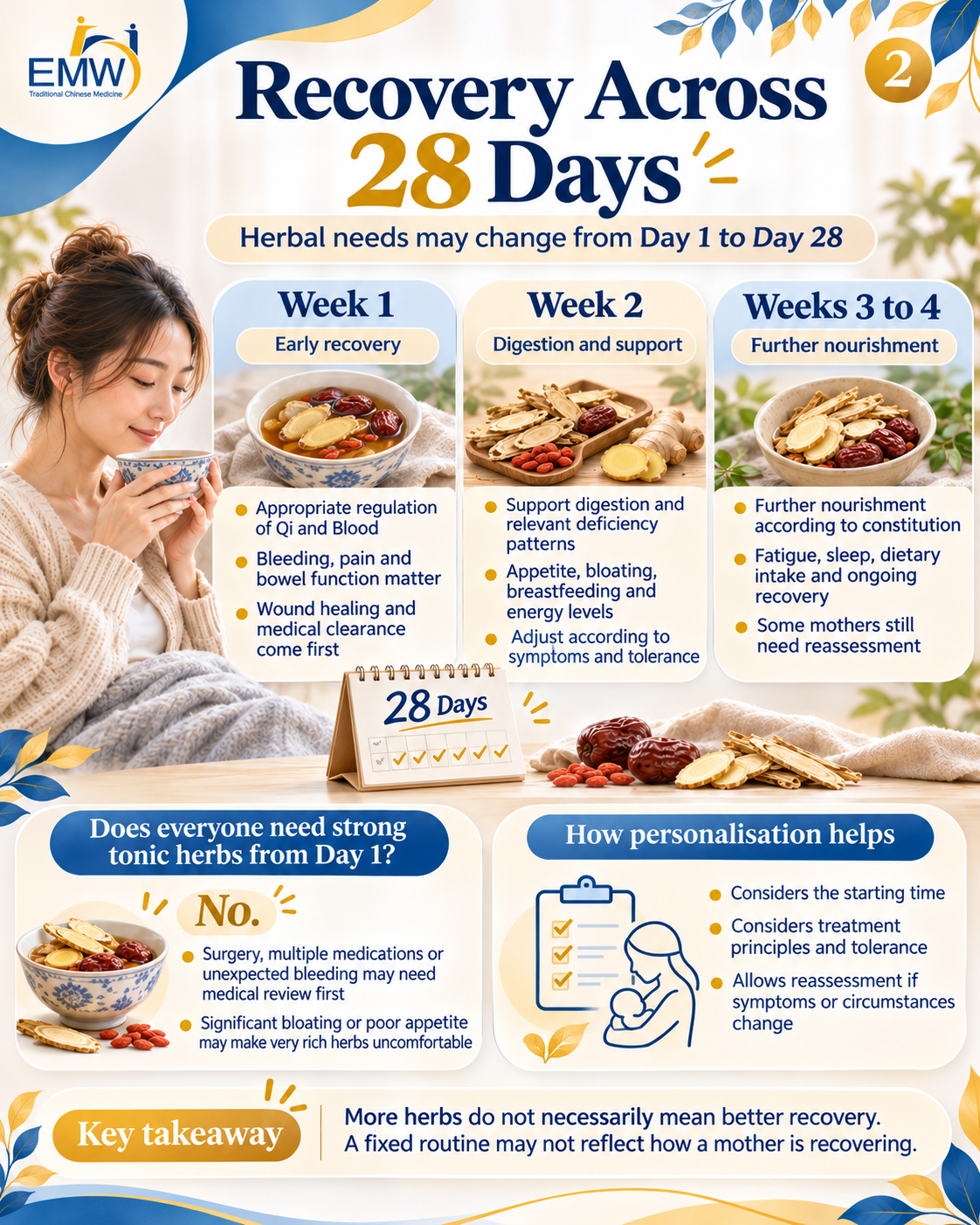
2. Your Herbal Needs May Change Throughout the 28 Days
A mother’s recovery does not remain the same from Day 1 to Day 28.
In the first few days, she may still be experiencing significant uterine cramping, vaginal bleeding, wound discomfort and fatigue.
By the second week, her main concerns may have shifted towards breastfeeding, digestion and sleep.
A mother’s recovery can change during the 28 days, so an individual review may be needed.
Towards the end of confinement, she may be feeling stronger, although some mothers continue to experience considerable fatigue or other symptoms.
This is why a fixed herbal routine may not always reflect how recovery is progressing.
Traditional TCM Confinement Phases
TCM confinement care is sometimes organised into three broad stages.
| Period | Traditional TCM Focus | Practical Considerations |
|---|---|---|
| Week 1 | Early recovery and appropriate regulation of Qi and Blood | Bleeding, pain, bowel function, wound healing and medical clearance |
| Week 2 | Supporting digestion and addressing relevant deficiency patterns | Appetite, bloating, breastfeeding and energy levels |
| Weeks 3 and 4 | Further nourishment according to constitution | Fatigue, sleep, dietary intake and ongoing recovery |
These are traditional planning principles, not fixed biological stages that every mother must follow.
Does Everyone Need Strong Tonic Herbs From Day 1?
No.
In fact, more herbs do not necessarily mean better recovery.
A mother who has just undergone surgery, is taking multiple medications or has unexpected postpartum bleeding may need medical review before beginning herbal treatment.
Likewise, a mother with significant bloating or poor appetite may find a very rich herbal preparation uncomfortable.
A personalised approach allows the physician to consider the appropriate starting time, treatment principles and need for reassessment.
This does not mean every personalised package is automatically changed every week.
If symptoms or medical circumstances change after delivery, the mother should inform her physician before continuing or modifying the herbal regimen.
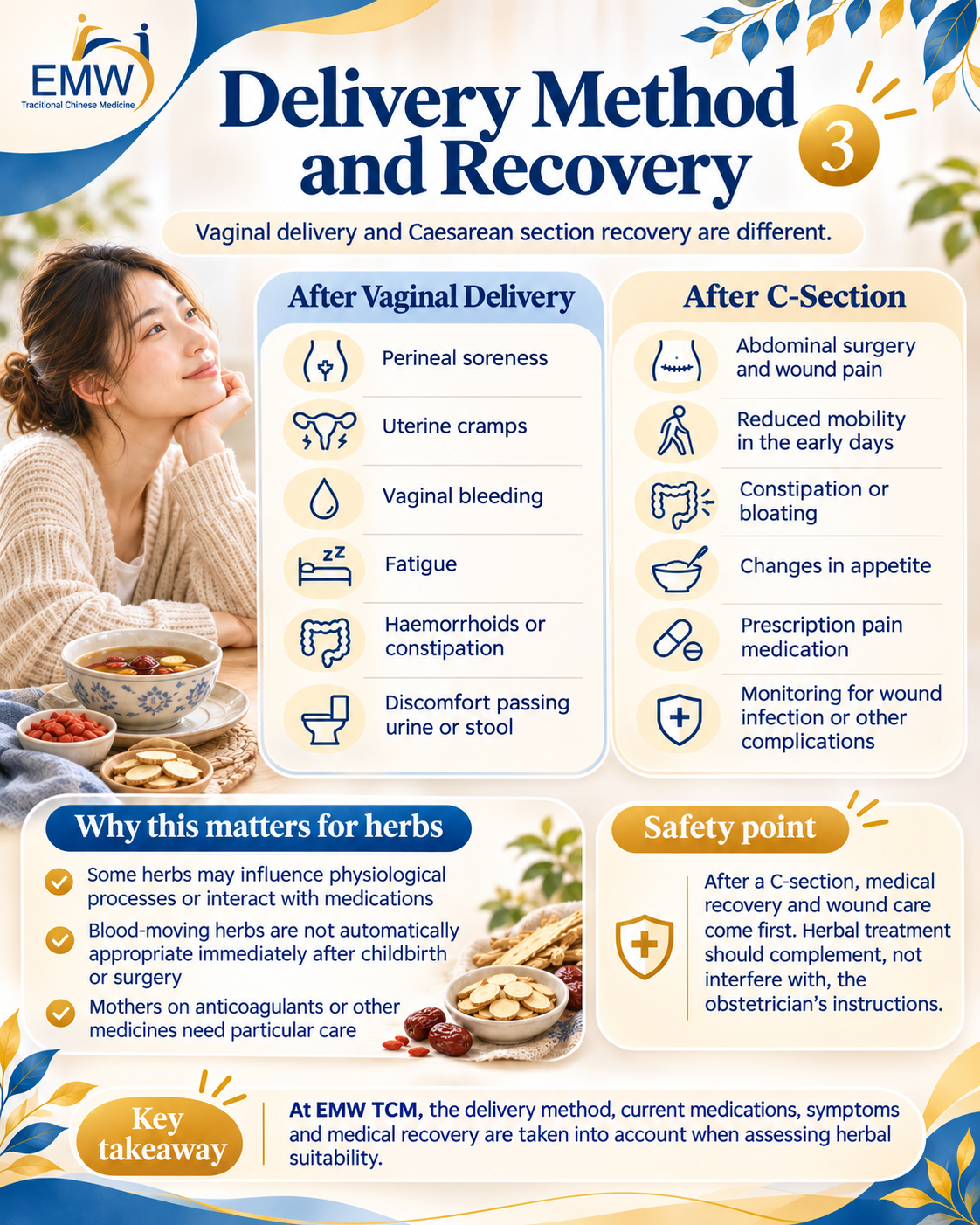
3. Vaginal Delivery and Caesarean Section Recovery Are Different
One question I would encourage every mother to ask is:
"Are these herbs suitable for my delivery and current recovery?"
A vaginal delivery and a Caesarean section can both be physically demanding.
However, the medical considerations may differ.
Delivery method, wound recovery and medication use matter when selecting herbs.
After Vaginal Delivery
Some mothers experience:
- Perineal soreness
- Uterine cramps
- Vaginal bleeding
- Fatigue
- Haemorrhoids or constipation
- Discomfort while passing urine or stool
A mother who has experienced significant blood loss may also require investigation and treatment for anaemia.
After Caesarean Section
In addition to normal postpartum changes, a mother recovering from a C-section has undergone abdominal surgery.
Her recovery may involve:
- Surgical wound pain
- Reduced mobility during the early days
- Constipation or bloating
- Changes in appetite
- Prescription pain medication
- Monitoring for wound infection or other complications
Why Does This Matter for Herbal Treatment?
Some traditional herbs influence physiological processes or may interact with medications.
Herbs traditionally described as promoting Blood circulation are not automatically appropriate immediately after childbirth or surgery.
A mother taking anticoagulants or other prescribed medicines needs particular care when considering herbal products.
At EMW TCM, our physicians take the delivery method, current medications, symptoms and medical recovery into account when assessing herbal suitability.
We do not assume that a mother can begin every confinement formula immediately after delivery.
After a C-section, medical recovery and wound care come first. Herbal treatment should complement, not interfere with, the obstetrician’s instructions.
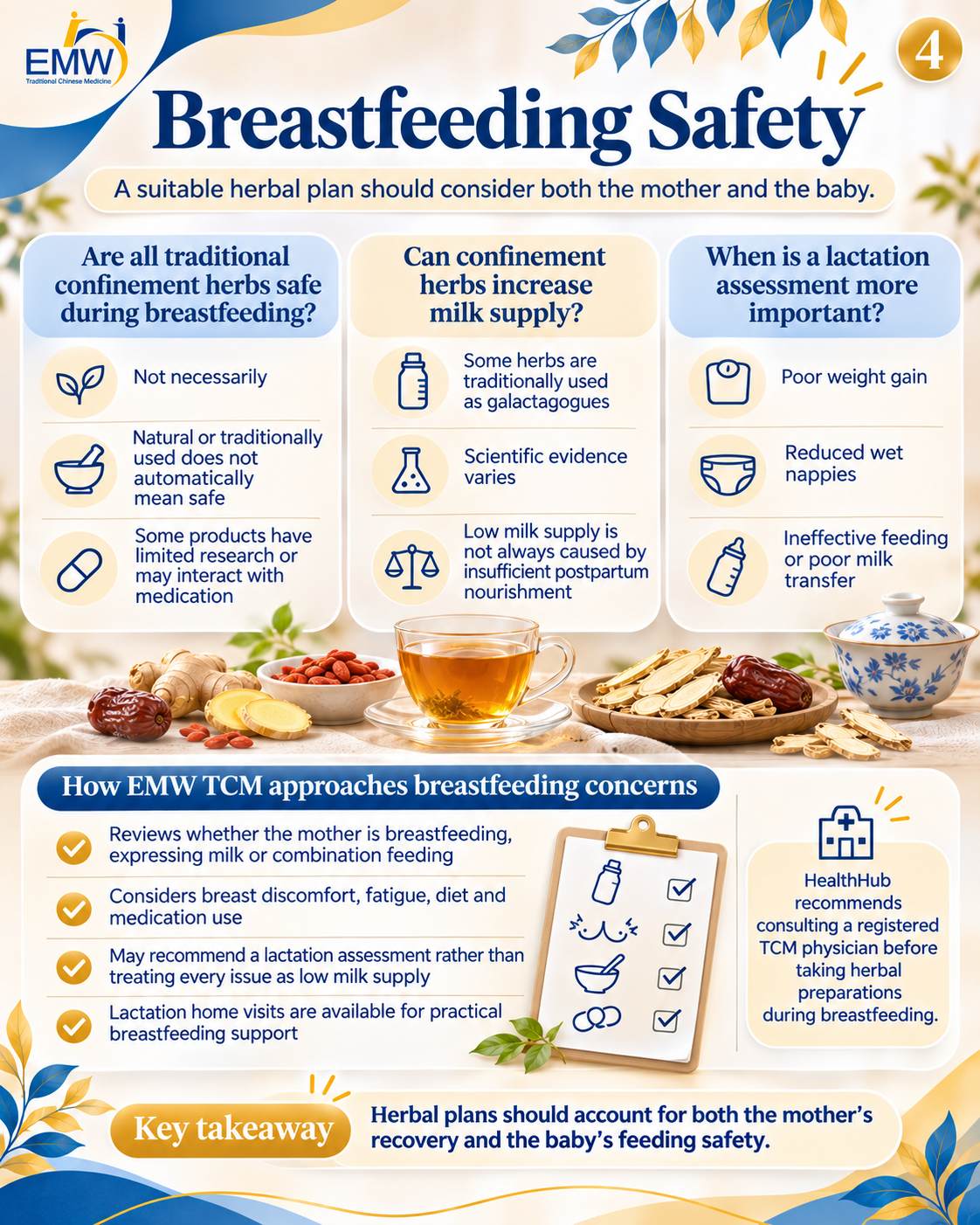
4. Breastfeeding Mothers Need Additional Considerations
Many confinement herbs are traditionally associated with supporting postpartum nourishment and lactation.
However, breastfeeding adds another important consideration.
Substances taken by the mother may sometimes reach the baby through breast milk.
Consider both herbal safety and effective feeding support for mother and baby.
The amount and clinical significance vary considerably between ingredients.
Are All Traditional Confinement Herbs Safe During Breastfeeding?
Not necessarily.
An herb being natural or traditionally used after childbirth does not automatically establish its safety during lactation.
Some herbal products have limited research on their effects in breastfeeding mothers and infants.
Others may interact with medication or cause adverse reactions.
This is why Singapore’s HealthHub recommends consulting a registered TCM physician before consuming herbal preparations during breastfeeding.
Can Confinement Herbs Increase Milk Supply?
Certain herbs are traditionally used as galactagogues, meaning they are intended to support lactation.
However, scientific evidence for their effectiveness and safety varies.
More importantly, low milk supply is not always caused by insufficient postpartum nourishment.
For example, a mother may be producing adequate milk, but her baby may have difficulty transferring it because of a shallow latch.
In that situation, adding more lactation herbs would not correct the underlying feeding problem.
If the baby has poor weight gain, reduced wet nappies or ineffective feeding, a skilled lactation assessment is more important than increasing herbal intake.
How EMW TCM Approaches Breastfeeding Concerns
During a confinement assessment, our physicians consider whether the mother is breastfeeding, expressing milk or combination feeding.
We also review relevant concerns such as breast discomfort, fatigue, diet and medication use.
When necessary, we may recommend a lactation assessment rather than treating every concern as low milk supply.
EMW TCM also provides lactation home visits for mothers requiring practical breastfeeding support.
A suitable postpartum herbal plan should account for both the mother’s recovery and the baby’s feeding safety.
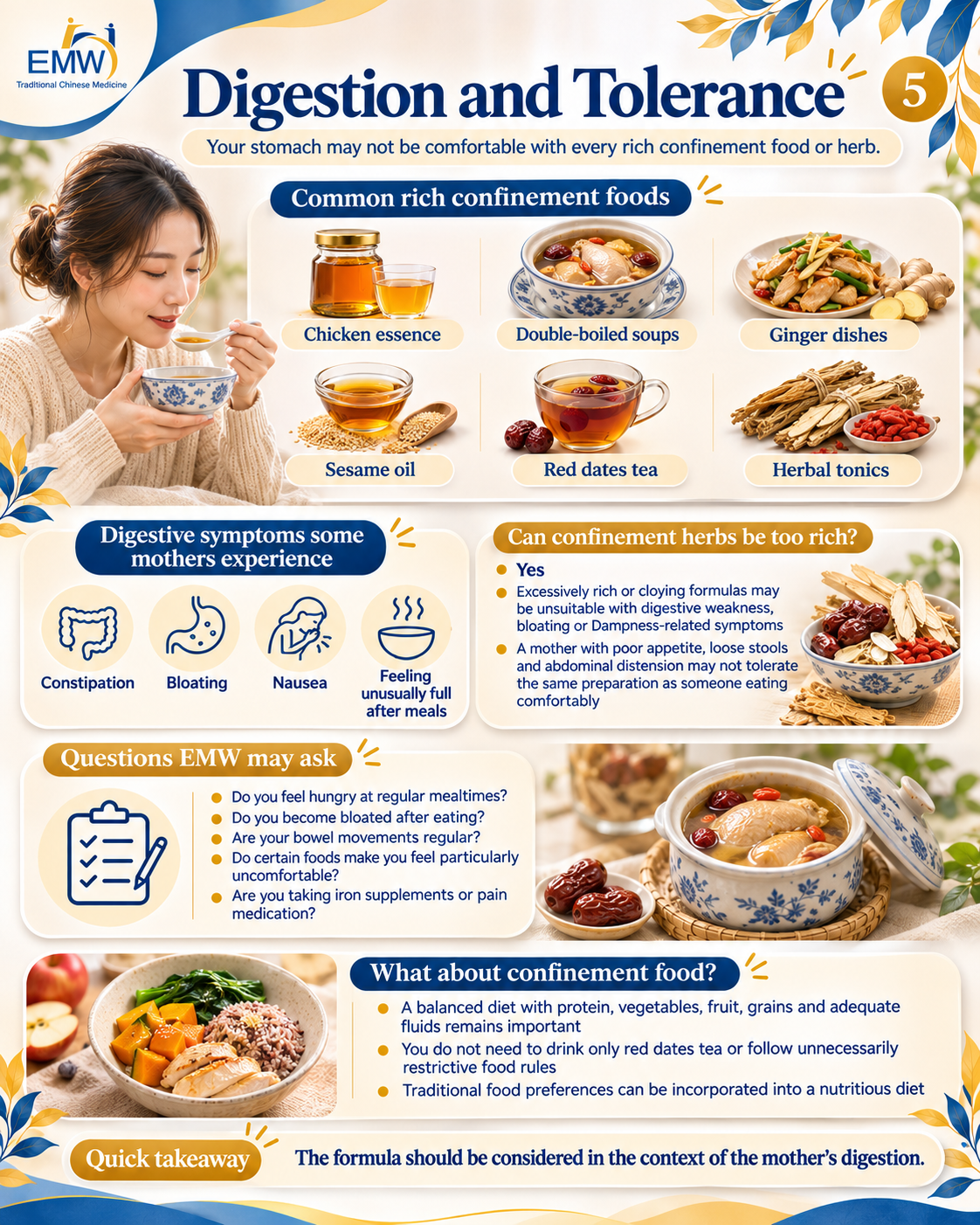
5. Your Digestion Matters More Than You May Think
During confinement, mothers are often encouraged to eat more nourishing foods.
Herbal care should be considered in the context of the mother’s digestion.
Chicken essence.
Double-boiled soups.
Ginger dishes.
Sesame oil.
Red dates tea.
Herbal tonics.
But what happens when your stomach cannot comfortably manage all these foods?
Some mothers experience constipation after delivery.
Others feel bloated, nauseated or unusually full after meals.
This may be related to changes in routine, medication, reduced mobility, pain or other postpartum factors.
Can Confinement Herbs Be Too Rich?
Yes, some herbal preparations may be difficult for certain mothers to tolerate.
From a TCM perspective, excessively rich or cloying formulations may be unsuitable for patients who already have pronounced digestive weakness, bloating or Dampness-related symptoms.
For example, a mother who has poor appetite, loose stools and significant abdominal distension may not tolerate the same preparation as someone who eats comfortably and has no digestive complaints.
This does not mean nourishing herbs are always unsuitable.
It means the formula should be considered in the context of the mother’s digestion.
How EMW TCM Assesses Postpartum Digestion
During a consultation, we may ask:
- Do you feel hungry at regular mealtimes?
- Do you become bloated after eating?
- Are your bowel movements regular?
- Do you experience constipation or loose stools?
- Do certain foods make you feel particularly uncomfortable?
- Are you taking iron supplements or pain medication?
- Has your digestion changed since delivery?
These details help us determine whether TCM treatment should address digestive concerns before or alongside traditional nourishment.
What About Confinement Food?
Herbal medicine is only one part of postpartum care.
A balanced diet that includes protein, vegetables, fruit, grains and adequate fluids remains important.
You do not need to eliminate all raw fruit, drink only red dates tea or consume a particular herbal soup every day to recover properly.
Traditional food preferences can be incorporated into a nutritious diet without unnecessarily restricting entire food groups.
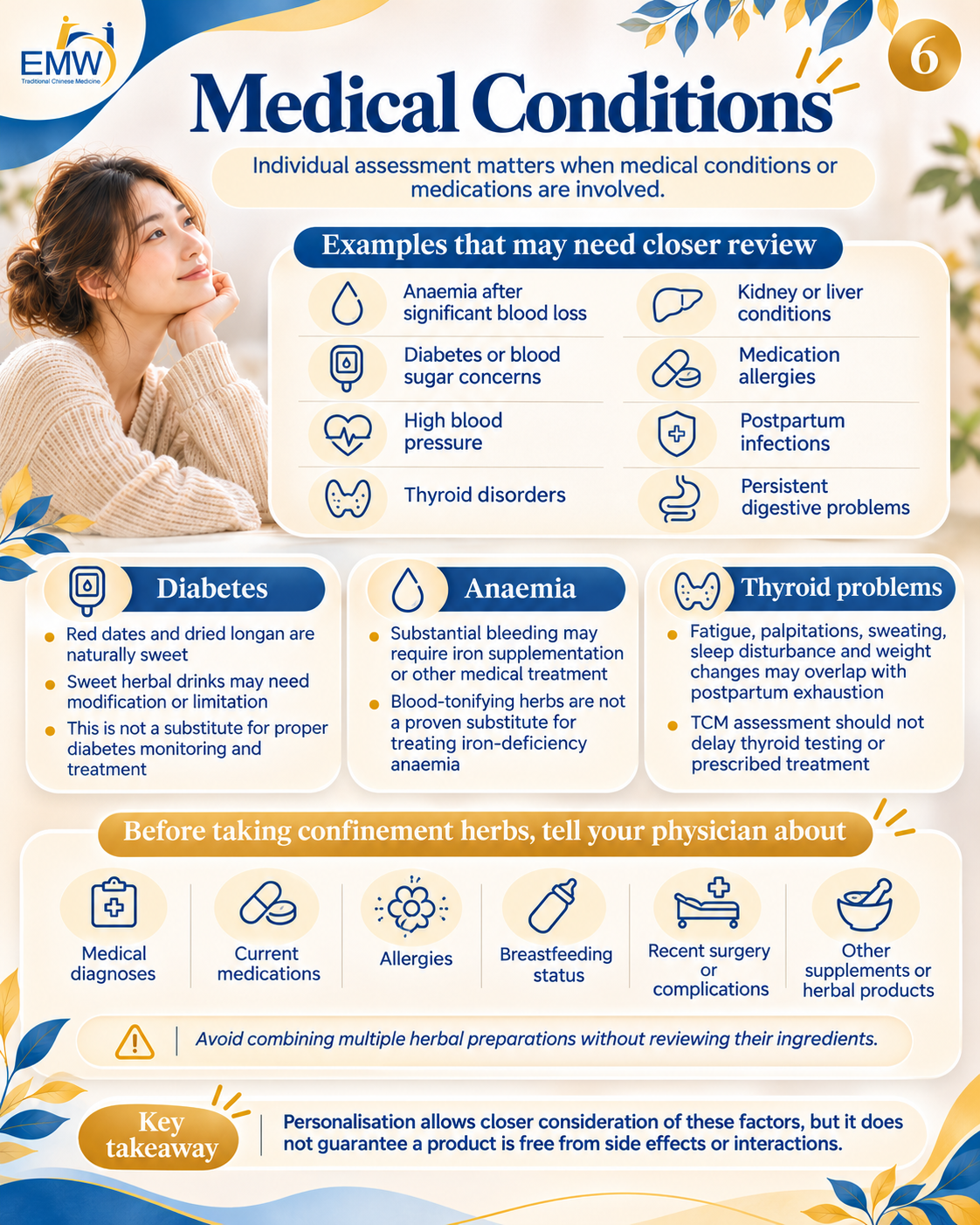
6. Personalised Herbs Allow More Careful Consideration of Medical Conditions
Confinement is not always straightforward.
Some mothers have medical conditions that continue after childbirth.
Others develop new concerns during the postpartum period.
Medical history and medications need review, and individual assessment cannot guarantee herbal safety.
Examples include:
- Anaemia after significant blood loss
- Diabetes or ongoing blood sugar concerns
- High blood pressure
- Thyroid disorders
- Kidney or liver conditions
- Medication allergies
- Postpartum infections
- Persistent digestive problems
These conditions do not necessarily mean that all herbal products must be avoided.
However, they make individual assessment particularly important.
Example: A Mother With Diabetes
Red dates and dried longan are naturally sweet.
A confinement tea containing generous amounts of these ingredients may contribute to carbohydrate intake.
For a mother who needs to monitor blood sugar, sweetened herbal beverages may require modification or limitation.
A personalised approach can account for these considerations.
However, changing the amount of dried fruit in a tea is not a substitute for appropriate diabetes monitoring and treatment.
Example: A Mother With Anaemia
A mother who experienced substantial bleeding may need iron supplementation or other medical treatment.
In TCM, her symptoms may also be assessed for Qi and Blood Deficiency.
However, a Blood-tonifying herbal formula is not a proven substitute for treating iron-deficiency anaemia.
Example: A Mother With Thyroid Problems
Postpartum thyroiditis or other thyroid conditions may cause fatigue, palpitations, sweating, sleep disturbance or changes in weight.
These symptoms can overlap with what some people assume is normal postpartum exhaustion.
A TCM assessment should not delay thyroid testing or prescribed medical treatment when indicated.
Why Safety Assessment Matters
Before taking confinement herbs, mothers should inform their physician about:
- Medical diagnoses
- Current medications
- Allergies
- Breastfeeding status
- Recent surgery or complications
- Other supplements or herbal products
Avoid combining multiple herbal preparations without reviewing their ingredients.
A personalised prescription allows for closer consideration of these factors, although it does not guarantee that a herbal product is free from side effects or interactions.
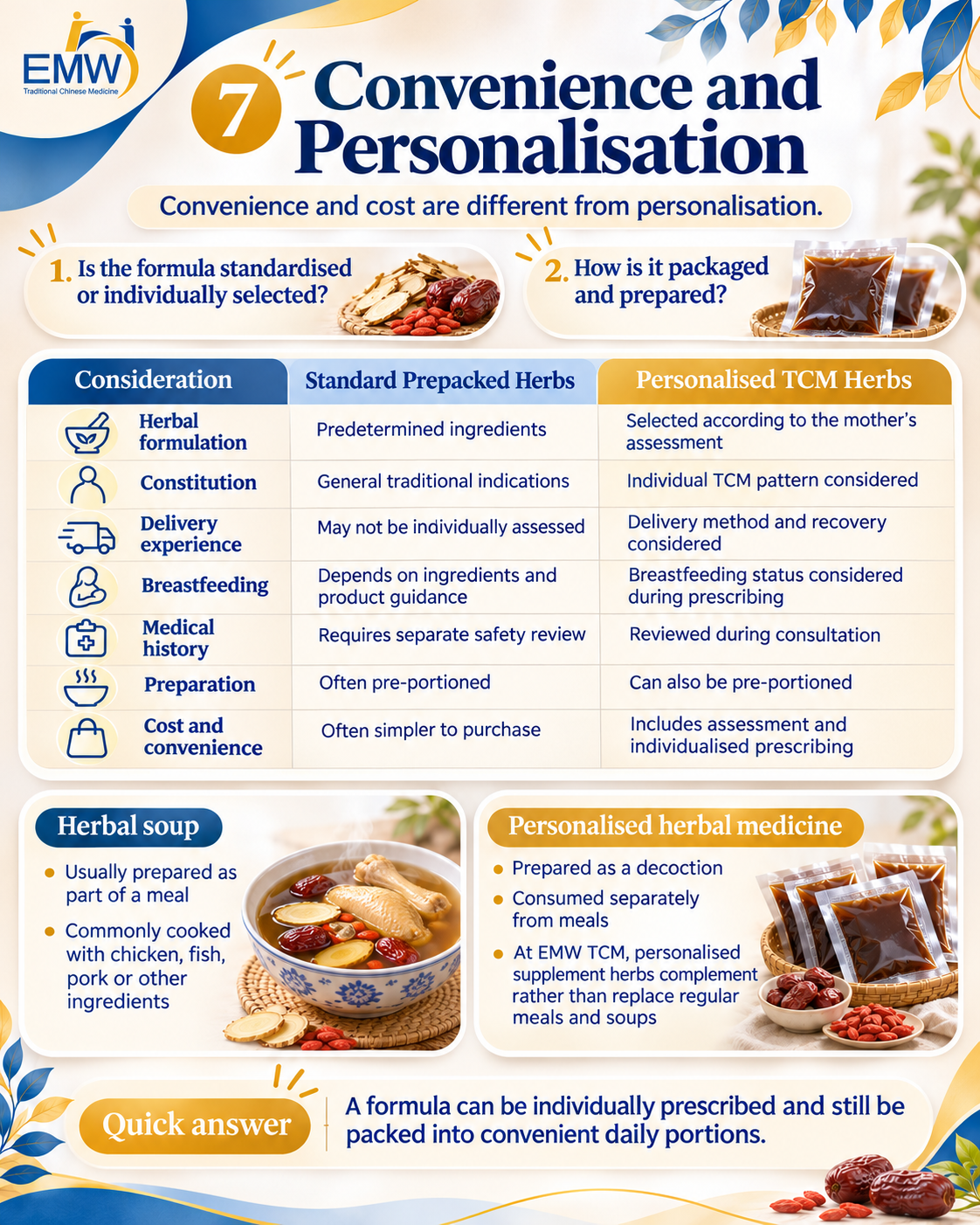
7. Convenience and Cost Are Different From Personalisation
Many mothers assume that personalised herbs are difficult to prepare, while prepacked herbs are more convenient.
But there are actually two separate considerations.
First: Is the formula standardised or individually selected?
Personalised herbal prescriptions can still be prepared in convenient daily portions.
Second: How is the formula packaged and prepared?
These are not the same thing.
A formula can be individually prescribed and still be packed into convenient daily portions.
Personalised vs Prepacked Confinement Herbs: Quick Comparison
| Consideration | Standard Prepacked Herbs | Personalised TCM Herbs |
|---|---|---|
| Herbal formulation | Predetermined ingredients | Selected according to the mother’s assessment |
| Constitution | General traditional indications | Individual TCM pattern considered |
| Delivery experience | May not be individually assessed | Delivery method and recovery considered |
| Breastfeeding | Depends on ingredients and product guidance | Breastfeeding status considered during prescribing |
| Medical history | Requires separate safety review | Reviewed during consultation |
| Preparation | Often pre-portioned | Can also be pre-portioned |
| Cost and convenience | Often simpler to purchase | Includes assessment and individualised prescribing |
Both options require attention to ingredient quality, proper preparation, medication interactions and suitability.
What Is the Difference Between Herbal Soup and Herbal Medicine?
This is another common point of confusion.
A confinement herbal soup pack is usually prepared as part of a meal.
The herbs are commonly cooked with chicken, fish, pork or other ingredients.
A personalised herbal prescription, on the other hand, may be prepared as a decoction and consumed separately from meals.
At EMW TCM, our personalised confinement supplement herbs are intended to complement, rather than replace, regular confinement meals and soups.
This allows mothers to keep their traditional confinement food routine while receiving individualised TCM care if suitable.
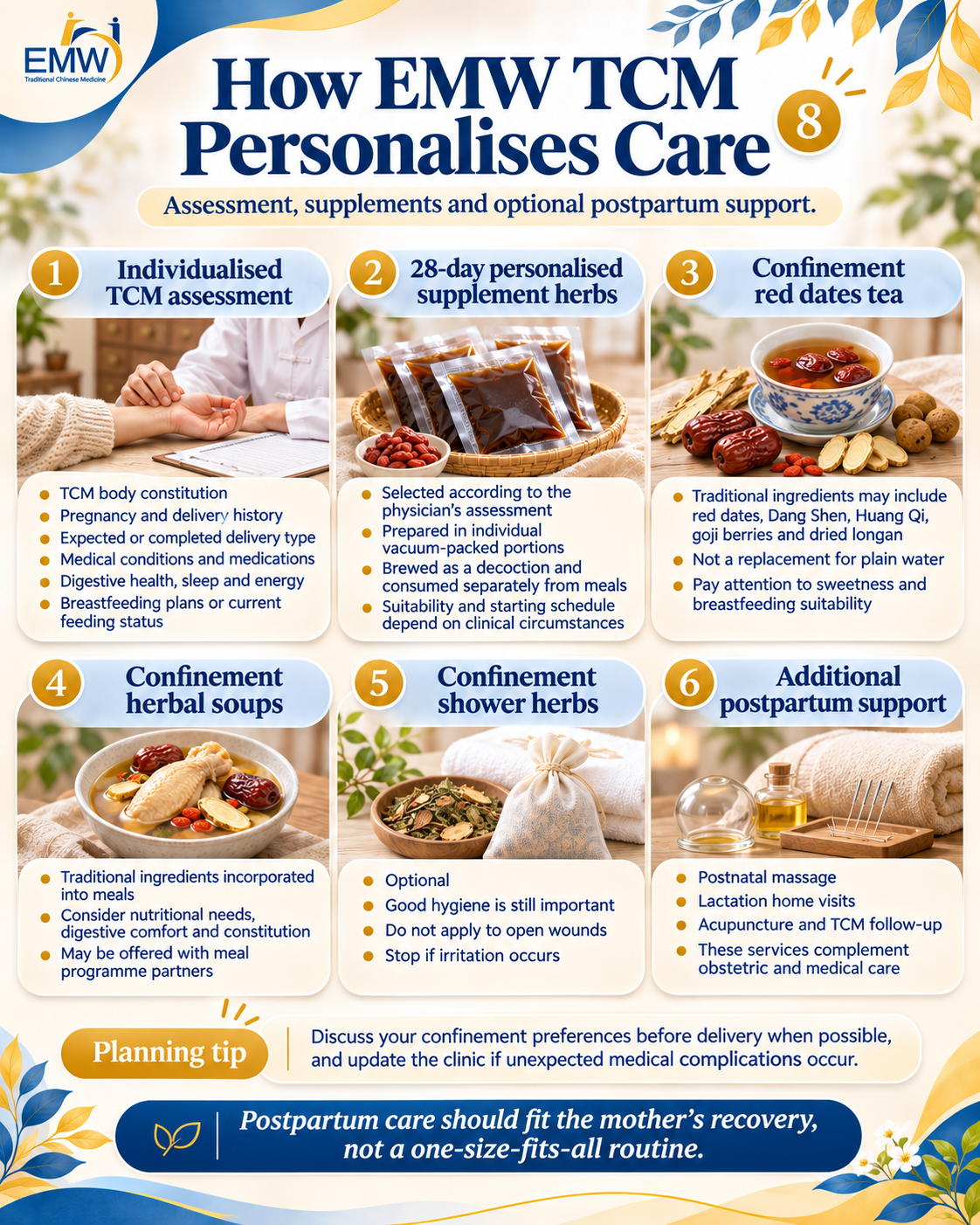
How EMW TCM Personalises Confinement Herbal Care
At EMW TCM Singapore, we understand that postpartum mothers have different recovery needs.
Some mothers are preparing for their first delivery.
Others have already experienced childbirth and know that their previous recovery involved fatigue, digestive discomfort or other concerns.
EMW TCM assesses individual recovery needs before recommending suitable postpartum care.
Our personalised confinement care takes these differences into account.
Step 1: Individualised TCM Assessment
Our physician reviews the mother’s relevant health background, which may include:
- TCM body constitution
- Pregnancy and delivery history
- Expected or completed delivery type
- Medical conditions and medications
- Previous postpartum recovery
- Digestive health
- Sleep and energy levels
- Breastfeeding plans or current feeding status
- Specific postpartum concerns
The assessment helps determine whether personalised herbal support is suitable and what treatment principles should be considered.
Planning may begin before delivery where clinic arrangements and eligibility permit, with postpartum symptoms reviewed as needed.
Step 2: Personalised 28-Day Confinement Supplement Herbs
EMW TCM offers a 28-day personalised confinement supplement herbal package.
The herbs are selected according to the physician’s assessment rather than simply using the same formula for every mother.
They are prepared in individual vacuum-packed portions for convenience.
The prescribed herbs are brewed into a decoction and consumed according to the physician’s instructions.
Unlike regular herbal soups, these supplementary herbs are intended to be taken separately from meals.
The actual suitability, formulation and starting schedule depend on the mother’s clinical circumstances.
If unexpected medical complications occur after delivery, the physician should be informed before starting or continuing the herbs.
Step 3: Confinement Red Dates Tea
For mothers who enjoy traditional confinement beverages, EMW TCM also offers a 28-day red dates tea option.
Depending on the formulation, traditional ingredients may include:
- Red dates 红枣
- Dang Shen 党参
- Huang Qi 黄芪
- Goji berries 枸杞子
- Dried longan 龙眼肉
Within TCM, these ingredients are traditionally associated with nourishment and support for Qi and Blood.
However, red dates tea is not a replacement for plain water, a balanced diet or prescribed medical treatment.
Mothers with diabetes or concerns about blood sugar should pay particular attention to the amount of sweet dried fruit used.
Breastfeeding suitability should also be assessed according to the actual ingredients.
Step 4: Confinement Herbal Soups
EMW TCM provides confinement soup options for mothers who prefer to incorporate traditional herbal ingredients into meals.
Herbal soup can be a convenient way to combine food, fluids and familiar flavours during confinement.
However, not every mother needs medicinal herbs added to every meal.
Our approach is to consider the mother’s nutritional needs, digestive comfort and TCM constitution.
EMW also collaborates with confinement-care partners, including Maternity Angels, on postpartum herbal soup and meal programmes.
Step 5: Confinement Shower Herbs
Traditional herbal bathing is another option offered within EMW’s confinement range.
Some mothers enjoy the comforting experience of using warm herbal baths during recovery.
However, herbal bathing is optional.
In Singapore’s warm climate, regular bathing and good hygiene are important.
There is no medical need to avoid showering throughout confinement.
Mothers recovering from a C-section or perineal wounds should follow their medical team’s wound-care instructions.
Herbal preparations should not be applied to open wounds, and bathing should be discontinued if irritation occurs.
Step 6: Additional Postpartum Support
Depending on the mother’s condition, EMW TCM may also discuss other services.
These include:
Postnatal massage
Treatment is arranged according to the delivery method, recovery stage and medical suitability.
Lactation home visits
For mothers experiencing difficulties with milk transfer, latch, pumping or breast discomfort, our lactation service provides practical breastfeeding support.
Acupuncture and TCM follow-up
Where clinically appropriate, acupuncture may be considered for selected postpartum symptoms and overall wellbeing.
These services complement, rather than replace, obstetric follow-up and other medical care.
When Should You Start Planning Your Confinement Herbs?
You do not need to leave every decision until the baby arrives.
In fact, discussing your confinement preferences before delivery can make the early postpartum period more manageable.
You can start by considering:
- Whether you prefer herbal soups, supplementary herbal decoctions or both
- Whether you want a standard product or individualised TCM assessment
- Your medical conditions and current medication
- Whether you plan to breastfeed
- Who will prepare your meals and herbs
- Whether your confinement nanny or family needs preparation instructions
- How you will arrange follow-up if your postpartum condition changes
EMW’s confinement products can be discussed in advance, but the appropriate timing of a clinical consultation or prescription should be confirmed with the clinic.
If you have an unexpected delivery complication, do not begin a prearranged herbal regimen without checking whether it is still suitable.
Frequently Asked Questions About Confinement Herbs
1. Do I Really Need 28 Days of Confinement Herbs?
Not necessarily.
A 28-day period is common in traditional Chinese confinement practice, but there is no medical requirement for every mother to consume Chinese herbs for exactly 28 days.
The duration and suitability of herbal treatment should be individualised.
2. Are Personalised Confinement Herbs Safer Than Standard Packages?
Personalisation allows medical history, medications, breastfeeding and TCM patterns to be considered before prescribing.
However, it does not guarantee safety. Any herbal product can have side effects, interactions or other risks.
3. Can I Take Confinement Herbs While Breastfeeding?
Some preparations may be appropriate, but safety depends on the ingredients, dose, mother’s health and infant’s condition.
Consult a registered TCM physician and inform your baby’s healthcare professional when relevant.
4. Can I Take Confinement Herbs Immediately After a C-Section?
Do not automatically begin herbal medicine immediately after surgery.
Your obstetrician’s instructions, medications, bleeding, wound recovery and overall condition should be reviewed first.
5. Can I Drink Red Dates Tea Every Day During Confinement?
Some mothers choose to include red dates tea as part of their confinement routine.
However, it should not replace plain water, and the ingredients and sweetness need consideration, particularly for mothers with diabetes or breastfeeding concerns.
6. Can Confinement Herbs Improve Breast Milk Supply?
Some herbs are traditionally used to support lactation, but clinical evidence for improving milk production is limited.
Effective milk removal, appropriate feeding frequency and identifying latch problems remain important.
7. Do I Need Both Confinement Herbal Soup and Personalised Herbal Supplements?
Not every mother needs both.
Herbal soups are generally incorporated into meals, while EMW’s personalised supplement herbs are prescribed as separate decoctions.
Your physician can help determine whether either option is appropriate for your circumstances.
When Should You Seek Medical Attention Instead of Taking More Herbs?
Postpartum discomfort is common, but not every symptom should be explained as a weak constitution, Cold or Blood Stasis.
Seek urgent medical care if you experience:
- Very heavy vaginal bleeding or large clots
- Severe or worsening abdominal pain
- Chest pain or difficulty breathing
- Severe headache, especially with visual disturbances
- Fainting or marked weakness
- One-sided leg pain or swelling
- Thoughts of harming yourself or your baby
Fever, worsening wound pain, foul-smelling discharge or persistent symptoms also require prompt medical assessment.
Herbal treatment should never delay investigation or treatment of postpartum complications.
Final Thoughts: Your Confinement Care Should Fit Your Recovery
After childbirth, it is easy to focus entirely on the baby.
Feeding schedules, diaper changes and sleepless nights quickly take over.
But the mother’s recovery deserves attention too.
You need adequate nutrition, rest, appropriate medical follow-up and practical support.
Traditional confinement practices can be part of that experience, provided they are approached thoughtfully.
When deciding between personalised vs prepacked confinement herbs, consider more than the ingredient list or price.
Think about your digestion, breastfeeding plans, medical history, delivery experience and how your body is recovering.
At EMW TCM Singapore, we believe postpartum care should be individualised.
Our physicians provide personalised confinement herbal assessment and guidance, with supplementary herbs, traditional red dates tea, confinement soups and other postpartum care options according to the mother’s needs.
Preparing for confinement or looking for suitable postpartum herbal support?
Read more articles on confinement, postpartum recovery and breastfeeding at www.emw.sg/blog.
Explore our EMW TCM Personalised Confinement Herbal Package to learn more about our 28-day herbal supplements and confinement support.
Enquire about EMW TCM’s Confinement Herbal Package via WhatsApp 97280455
Our team can explain the available packages, consultation arrangements and preparation instructions.
Traditional Chinese herbal medicine should be used under appropriate professional guidance. Confinement products do not replace medical care, prescribed medication, a balanced diet or necessary postpartum follow-up.
References
- HealthHub Singapore. Postpartum Nutrition: Your Road to Recovery.
- HealthHub Singapore. First Days of Our Lives With Baby.
- HealthHub Singapore. Chinese Proprietary Medicine: Important Safety Considerations.
- World Health Organization. (2022). WHO Recommendations on Maternal and Newborn Care for a Positive Postnatal Experience.
- American College of Obstetricians and Gynecologists. Postpartum Pain Management.
- EMW TCM. Personalised TCM Confinement Herbal Package Singapore.
- EMW TCM. Postpartum Confinement Singapore: Complete EMW TCM Guide.