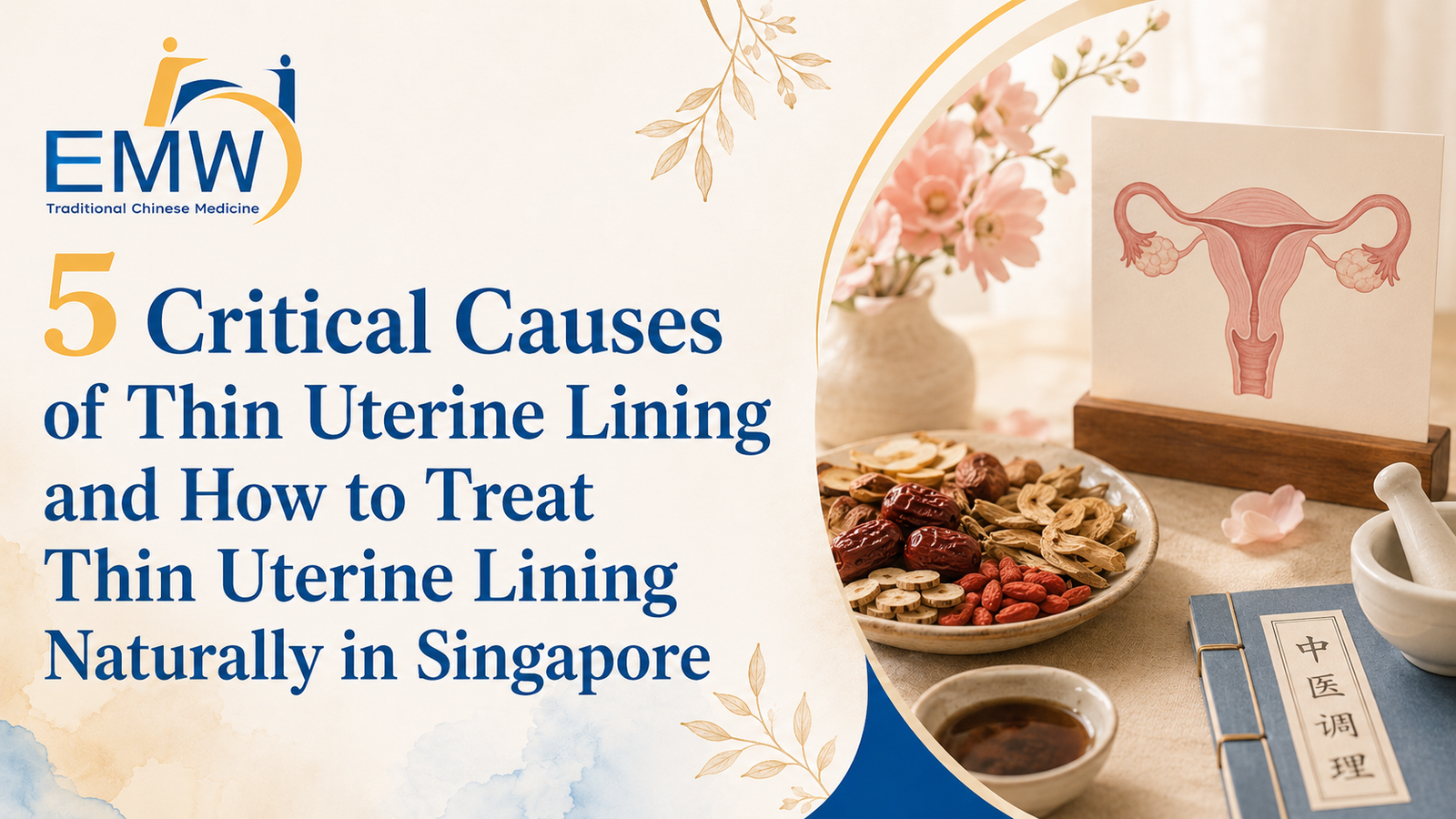
Introduction: Why Uterine Lining Thickness Matters for Fertility
For implantation to occur successfully, the uterus must provide a receptive and well-nourished environment. One of the most important indicators of this is the thickness and quality of the endometrium, commonly referred to as the uterine lining.
Clinically, a lining of 7–10 mm is often considered optimal for implantation during IVF or natural conception cycles. When the lining is too thin, the chances of embryo implantation may be reduced.
For many women, being told they have a “thin lining” can feel frustrating, especially after doing everything right.
At EMW TCM Singapore, we approach this differently.
Instead of focusing only on thickness, we assess:
- Blood flow and microcirculation
- Hormonal signalling
- Inflammation and metabolic health
- Stress physiology
This allows for a more structured and realistic way to treat thin uterine lining.
1. Poor Blood Flow to the Uterus
One of the most common causes of a thin uterine lining is insufficient blood flow to the uterus.
Without adequate circulation:
- Oxygen delivery is reduced
- Nutrient supply is limited
- Endometrial growth is compromised
Biomedical perspective:
Reduced uterine artery blood flow has been linked to thinner endometrial development and lower implantation rates.
TCM perspective:
This is often associated with Blood deficiency or Qi stagnation, affecting nourishment of the uterus.
How to treat thin uterine lining:
- Improve circulation through regular movement
- Use acupuncture to enhance pelvic blood flow
- Support vascular health through nutrition
You can learn more here:
https://www.emw.sg/blog/how-tcm-improves-uterine-lining-for-implantation-naturally-in-singapore
2. Hormonal Imbalance (Low Oestrogen Response)
Endometrial growth is highly dependent on oestrogen stimulation.
If the body does not respond adequately:
- The lining may remain thin
- Growth may be delayed
- Implantation timing may be affected
This can occur even in IVF cycles despite medication.
Common contributing factors:
- Chronic stress
- Poor metabolic health
- Disrupted hormonal signalling
How to treat thin uterine lining:
- Stabilise blood sugar and metabolic function
- Improve sleep and stress regulation
- Support hormonal balance through targeted nutrition
At EMW, hormonal patterns are assessed as part of a broader physiological system rather than in isolation.
3. Chronic Inflammation
Low-grade inflammation is an increasingly recognised factor in fertility challenges.
In the uterus, inflammation can:
- Disrupt endometrial development
- Affect receptivity
- Impair implantation
Sources of inflammation:
- Poor gut health
- Processed diet
- Environmental stressors
How to treat thin uterine lining:
- Adopt an anti-inflammatory, plant-forward diet
- Improve digestion and gut health
- Reduce inflammatory triggers
You may find this helpful:
4. Scar Tissue or Previous Uterine Procedures
Procedures such as:
- Dilation and curettage (D&C)
- Fibroid removal
- Previous infections
can lead to scar tissue formation, affecting the ability of the lining to regenerate.
Biomedical impact:
- Reduced functional endometrial surface
- Impaired blood flow
- Altered implantation environment
How to treat thin uterine lining:
- Improve circulation to affected areas
- Support tissue repair and regeneration
- Use acupuncture as part of a structured plan
While structural issues may require medical evaluation, supportive care can still optimise the environment.
5. Stress and Nervous System Dysregulation
Chronic stress affects fertility through the HPA axis, influencing hormonal balance and blood flow.
This can result in:
- Reduced uterine perfusion
- Hormonal disruption
- Delayed endometrial growth
How to treat thin uterine lining:
- Regulate the nervous system through acupuncture
- Build consistent sleep and recovery routines
- Address stress as a physiological factor, not just emotional
At EMW, stress is treated as a biological driver, integrated into the overall fertility plan.

Why Thin Lining Requires a Structured Approach
Many patients are advised to:
- “Try more supplements”
- “Wait for the next cycle”
But without addressing root causes, results often plateau.
To effectively treat thin uterine lining, a structured approach is needed that considers:
- Timing within the menstrual or IVF cycle
- Underlying metabolic and inflammatory factors
- Individual response patterns
How EMW TCM Approaches Thin Uterine Lining
1. Root-Cause Assessment
We evaluate:
- Blood flow patterns
- Hormonal response
- Digestive and metabolic health
- Stress physiology
2. IVF-Aligned Treatment Timing
For IVF patients, care is synchronised with:
- Stimulation phase
- Lining development
- Embryo transfer timing
3. Integrated Care Model
Treatment may include:
- Acupuncture
- Herbal therapy where appropriate
- Nutrition and lifestyle strategies
4. Individualised Plans
No two patients receive the same protocol. Plans are tailored based on:
- Clinical history
- Cycle patterns
- Response to treatment
Nutrition as a Foundation for Endometrial Health
Diet plays a key role in supporting:
- Blood flow
- Hormonal balance
- Inflammation control
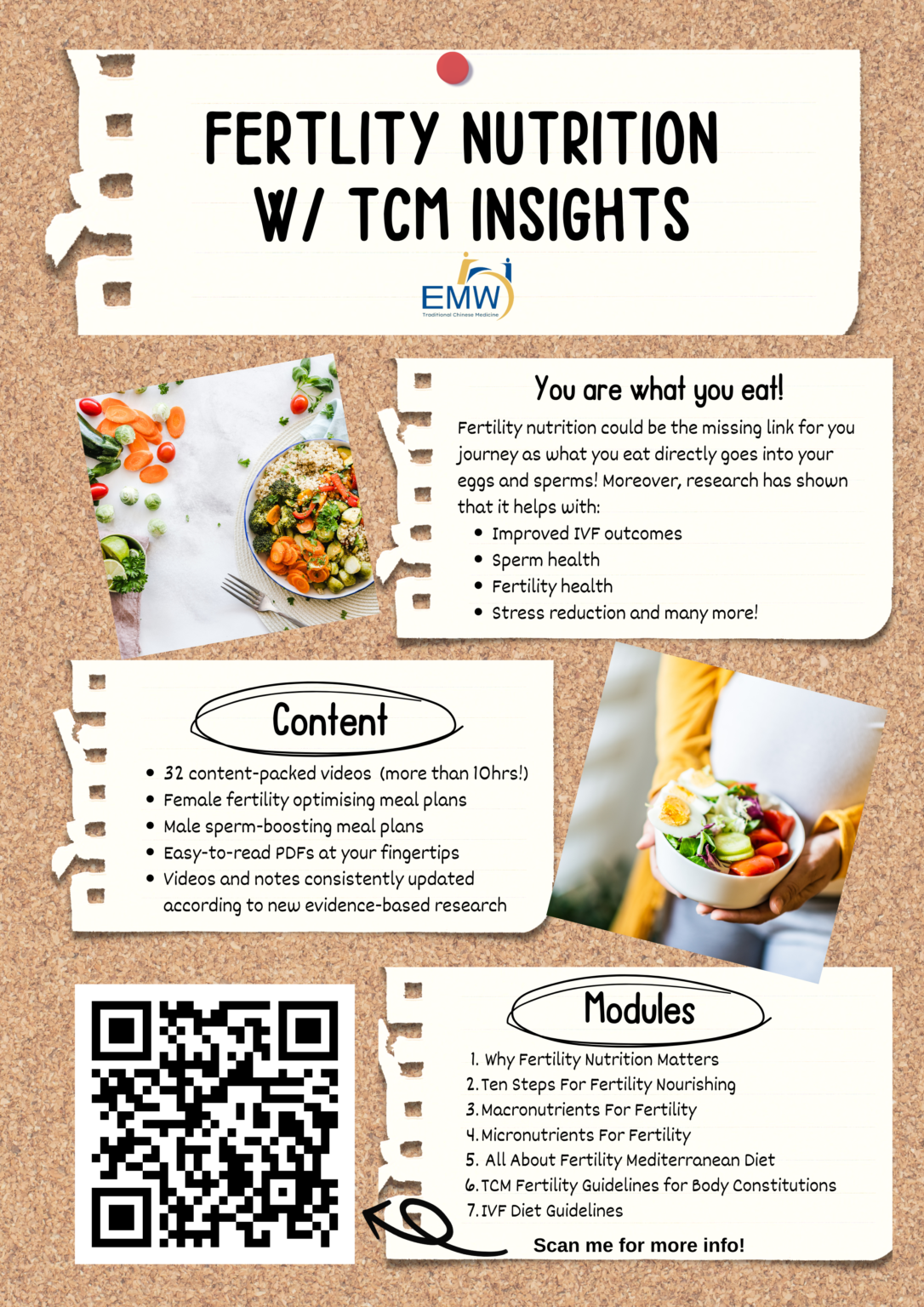
You can learn how to structure this here:
https://emwtcm.podia.com/fertility-nutrition-with-tcm-insights
This programme explains:
- Fertility-supportive foods
- How to nourish Blood and Yin from a TCM perspective
- How to support endometrial development naturally
If You Need a Clear Starting Point
If you’re unsure what’s affecting your lining, this guide can help:
https://emwtcm.podia.com/fertility-support-guide
It outlines:
- Key fertility drivers
- What to prioritise
- How to build a structured plan
When to Seek Support
You may benefit from professional support if:
- Your lining is consistently below 7 mm
- IVF cycles have been delayed due to thin lining
- You have had implantation challenges
For personalised care, you can contact:
WhatsApp: +65 8958 5869
Conclusion
A thin uterine lining is not just a number on a scan. It reflects deeper physiological processes involving circulation, hormones, inflammation, and stress.
By addressing these root causes in a structured and integrated way, it is possible to treat thin uterine lining and improve the chances of successful implantation.
How EMW TCM Help Your Fertility
From a biomedical perspective, acupuncture for fertility improves ovarian and uterine blood flow, regulates the hypothalamic-pituitary-ovarian axis, lowers cortisol, reduces inflammation, and supports hormonal balance. These effects complement TCM principles and help enhance egg development, implantation, and reproductive function.
1. Comprehensive Assessment
Your first consultation includes:
Cycle assessment
Digestion and hormonal review
Energy and stress evaluation
Sleep and lifestyle factors
Male fertility screening when relevant
2. Evidence-Based TCM Diagnosis
Qi stagnation
Blood deficiency
Spleen Qi weakness
Kidney Yin/Yang imbalance
Liver Qi constraint
Dampness and inflammation
3. Personalised Fertility Treatment Plan
Weekly fertility acupuncture
Customised herbal formulas
Stress reduction strategies
Lifestyle recommendations
TCM Acupuncture for Fertility Treatments
Acupuncture, one of the most researched TCM fertility tools, has been found to influence several physiological pathways related to reproduction.
A review published in Fertility and Sterility (2019) reported that acupuncture may improve blood flow to the uterus and ovaries, modulate stress hormones, and enhance endometrial receptivity. Another meta-analysis in Integrative Medicine Research (2021) concluded that acupuncture used alongside conventional fertility treatment can improve pregnancy outcomes and reduce anxiety levels in women undergoing IVF.
From a clinical standpoint, acupuncture helps regulate the hypothalamic-pituitary-ovarian axis, improving hormone balance and menstrual regularity. It can also reduce cortisol levels, encouraging the parasympathetic or “rest-and-rebuild” state which supports implantation and early pregnancy.
Our Flagship Ebook & Video Course
When to Seek Professional TCM Fertility Help
Fertility is not just a matter of age or hormones. It is a reflection of the body’s internal harmony. Traditional Chinese Medicine provides an integrative and natural way to restore this balance, supporting both physical and emotional readiness for conception.
At EMW TCM Singapore, our team of experienced physicians brings together centuries-old wisdom and modern evidence to guide your fertility journey. Whether you are trying naturally or preparing for IVF, we are here to help you create the best internal environment for new life to begin.
If you have been trying to conceive for more than six to twelve months, experience irregular menses, painful periods, or have been diagnosed with PCOS, endometriosis, or low sperm count, consider a consultation. Professional TCM fertility care aims to correct the underlying imbalance rather than simply forcing ovulation or hormone production.
Check out our links below to book your fertility consultation and begin your holistic journey toward conception.
EMW TCM Clinics
Scotts Medical Centre Branch
9 Scotts Road #10-04, Scotts Medical Centre @ Pacific Plaza,
Singapore 228210
Book Your Appointment With Us Here: +65 89585869
International Building Branch
360 Orchard Road, International Building #02-05/06
Singapore 238869
Book Your Appointment With Us Here: +65 89585869
Our Physicians
Principal TCM Physician
- M.Med(TCM Gynaecology)
- B.Sc(Hons) Biomedical Sciences
- Dip. Naturopath
- Ayurvedic Therapist(500hrs)
- Registered TCM Physician (Singapore MOH)
Senior TCM Physician
- M.Med(TCM Acupuncture & Moxibustion)
- B.Sc(Hons) Biomedical Sciences
- Certified Aromatherapist
- Registered TCM Physician (Singapore MOH)
TCM Physician
- M.Med(TCM Gynaecology)
- B.Sc(Hons) Biomedical Sciences
- Registered TCM Physician (Singapore MOH)
TCM Physician
- B.Med(TCM)
- B.Sc(Hons) Biomedical Sciences
- International Board-Certified Lactation Consultant (IBCLC)
- Registered TCM Physician (Singapore MOH)
References
- Chao JC et al. Antioxidant effects of Lycium barbarum polysaccharides. J Sci Food Agric. 2006. DOI: 10.1002/jsfa.2362
- Stener-Victorin E et al. Reduction of uterine artery blood flow impedance. Hum Reprod. 1996. DOI: 10.1093/oxfordjournals.humrep.a019187
- May-Panloup P et al. Mitochondrial biogenesis and oocyte quality. Hum Reprod Update. 2016. DOI: 10.1093/humupd/dmw006
- Stener-Victorin E & Wu X. Acupuncture effects on the reproductive system. Auton Neurosci. 2010. DOI: 10.1016/j.autneu.2009.12.001
- Tamura H et al. Melatonin and female reproduction. J Obstet Gynaecol Res. 2014. DOI: 10.1111/jog.12317