7 Effective TCM Approaches to Strengthen Your Child's Immune System Naturally in Singapore
Every parent in Singapore knows the pattern.
Your child starts preschool or childcare and becomes sick almost every week.
Runny nose, then cough, then fever. A brief recovery, and then the cycle repeats.
In Singapore’s tropical climate and densely populated childcare environments, recurrent respiratory infections in young children are among the most common reasons parents seek TCM support.
While some degree of illness exposure is a normal and necessary part of immune development, children who are repeatedly sick with slow recovery often have underlying constitutional weakness that makes them more vulnerable than their peers.
This is where TCM pediatric care takes a genuinely different approach.
Rather than suppressing each infection episode, TCM focuses on strengthening the child’s underlying constitution, building the defensive Qi that protects against pathogens.
At EMW TCM Singapore, our pediatric approach is gentle, drug-free, and structured around the individual child’s pattern rather than a generic protocol.
The TCM View: Wei Qi and the Child's Developing Constitution
In TCM, immune function in children relates primarily to Wei Qi (Defensive Qi) and the strength of the Lung and Spleen systems.
Wei Qi circulates at the surface of the body, protecting against external pathogens.
In children, the constitution is inherently more delicate. The Spleen is described as physiologically immature, and the Lung system is easily affected by environmental changes.
When the Spleen is weak:
- Food transformation is incomplete, reducing Qi and Blood production
- Dampness and Phlegm accumulate, causing chronic cough, runny nose, and congestion
- Wei Qi production decreases, leaving the child vulnerable
Children who are frequently ill often show Spleen Qi deficiency as the root, with the respiratory symptoms as the branch.
7 Effective TCM Approaches to Strengthen Your Child's Immune System
1. Pediatric Tuina to Strengthen Spleen and Lung Qi
Pediatric Tuina is a specialised massage therapy specifically adapted for children, using gentle, rhythmic stimulation of acupoints and meridians.
It is not adult massage scaled down. It is a distinct clinical discipline requiring specific training in child physiology and point selection.
For immune strengthening, key Tuina techniques include:
- Supplementing Spleen meridian point (Bu Pi Jing): strengthens digestive function
- Supplementing Lung meridian point (Bu Fei Jing): consolidates defensive Qi
- Pressing Zu San Li (ST36): classical immune support and Qi tonification point
- Rubbing the abdomen: improves gut motility and nutrient absorption
Clinical studies have found that Tuina can reduce the frequency and duration of respiratory infections in children with recurrent illness.
Reference: Ji M et al. Pediatric Tuina for recurrent respiratory tract infections. J Tradit Chin Med. 2016. DOI: 10.1016/S0254-6272(16)30043-7
2. Auricular Acupressure for Ongoing Immune Regulation
Ear acupressure involves the application of small seeds or pellets to specific auricular points corresponding to organ systems.
For children, this is a non-invasive, painless, and effective way to provide ongoing immune support between clinic sessions.
Parents are shown how to gently stimulate the seeds at home daily.
Key auricular points for immune support include the Lung point, Spleen point, and the Shen Men calming point, which helps with stress regulation and sleep quality.
3. Addressing Gut Microbiome Imbalance in Children
Emerging research consistently links early childhood gut microbiome composition to long-term immune function.
Children who are frequently sick often show reduced microbial diversity, often related to:
- Early antibiotic exposure
- Diets high in processed foods and low in plant diversity
- C-section delivery affecting initial microbiome seeding
In TCM, poor gut microbiome health reflects Spleen weakness and Damp accumulation.
Dietary guidance at EMW TCM focuses on introducing diverse plant foods, fermented foods appropriate for the child’s age, and reducing refined sugar that feeds pathogenic organisms.
Reference: Arrieta MC et al. The intestinal microbiome in early life. Science. 2014. DOI: 10.1126/science.1254842
4. Gentle Herbal Support for Recurrent Respiratory Infections
Gentle herbal formulas are an important component of TCM pediatric immune support.
All paediatric herbal prescriptions at EMW TCM are:
- Prescribed by registered TCM physicians
- Dosed appropriately for the child’s age and weight
- Adjusted for the child’s individual pattern, not given generically
Commonly used herbs for immune strengthening in children include:
- Huang Qi (Astragalus membranaceus): documented immunomodulatory effects, supports Wei Qi
- Dang Shen (Codonopsis pilosula): Spleen Qi tonic, gentle enough for prolonged use in children
- Yu Ping Feng San (Jade Screen Formula): classical formula for Wei Qi deficiency
Yu Ping Feng San has been studied in clinical trials showing reduction in the frequency of upper respiratory infections in children when used preventively.
Reference: Shao BM et al. A study on the immune receptors for polysaccharides of Astragalus membranaceus. Biochem Biophys Res Commun. 2004. DOI: 10.1016/j.bbrc.2004.02.063
5. Reducing Allergic Inflammation
Allergic rhinitis, eczema, and asthma are among the most common chronic conditions in Singapore children.
These conditions reflect an immune system that is reactive rather than resilient.
In TCM, allergic conditions often involve Lung and Spleen deficiency with underlying Wind-Cold or Damp patterns.
Treatment for allergic immune dysregulation in children involves:
- Strengthening the root constitution to reduce hypersensitivity
- Calming Wind patterns with appropriate herbs
- Dietary modification to reduce Dampness production
Many families find that consistent TCM treatment over two to three months reduces the frequency and severity of allergic episodes.
6. Prioritising Sleep for Immune Recovery
Sleep is when the immune system consolidates and repairs.
Children who sleep fewer hours than recommended for their age consistently show higher rates of respiratory infections.
In TCM, adequate sleep supports Heart and Kidney balance and allows Qi to be replenished overnight.
For children with disrupted sleep, whether from night waking, difficulty settling, or night terrors, Tuina and auricular acupressure can significantly improve sleep quality.
Better sleep means faster immune recovery and reduced vulnerability to new infections.
Reference: Prather AA et al. Sleep and susceptibility to the common cold. Sleep. 2015. DOI: 10.5665/sleep.5138
7. Seasonal Immune Preparation
In Singapore’s year-round tropical environment, immune challenges come not from seasonal changes but from air-conditioning exposure, school term cycles, and periodic outbreaks.
At EMW TCM, we recommend preventive Tuina and herbal support at the start of each school term, following major holidays when the child’s routine has been disrupted, and at the first sign of illness onset.
Early intervention at the Qi Wei (surface defence) level is far more effective than waiting until a full infection has established.
Download Our Cough Relief Pediatric Acupressure Handbook!

When Should You Bring Your Child to EMW TCM?
Consider evaluation if your child:
- Has four or more respiratory infections per year
- Takes more than two weeks to recover from each illness
- Has chronic runny nose or persistent cough between infections
- Has documented allergic rhinitis, eczema, or asthma
- Is on frequent antibiotics without lasting improvement
- Is a poor eater with low energy and slow weight gain
At EMW TCM, we commonly treat:
- Poor appetite
- Selective eating
- Recurrent bloating
- Chronic constipation
- Loose stools
- Post-antibiotic gut imbalance
- Functional abdominal pain
- Stress-related digestive upset
Singapore’s competitive schooling environment means even Primary 1 children experience stress-related appetite changes.
Research confirms that stress alters gut motility and microbiota composition.
Karl JP et al. Effects of psychological stress on gut microbiota. DOI: 10.1038/s41598-018-35068-3
By addressing both emotional and digestive aspects, we provide whole-child care.
Why Parents Choose EMW TCM Instead of Other Clinics
Parents consistently share several reasons:
1. We specialise in children
Pediatric dosing, pediatric diagnosis, pediatric techniques.
2. We prioritise food and lifestyle first
Not every child needs herbs.
3. We avoid adult treatment models
Children are not small adults.
4. We use gentle methods
Acupressure and herbal plasters are often sufficient.
5. We collaborate with medical doctors
Safety comes first.
6. We educate parents
Consultations include practical guidance, not just prescriptions.
This is what makes the way TCM treats pediatric digestive issues at EMW TCM different from general TCM practice.
Safety and Evidence Considerations
Is Tuina Massage Safe for Babies?
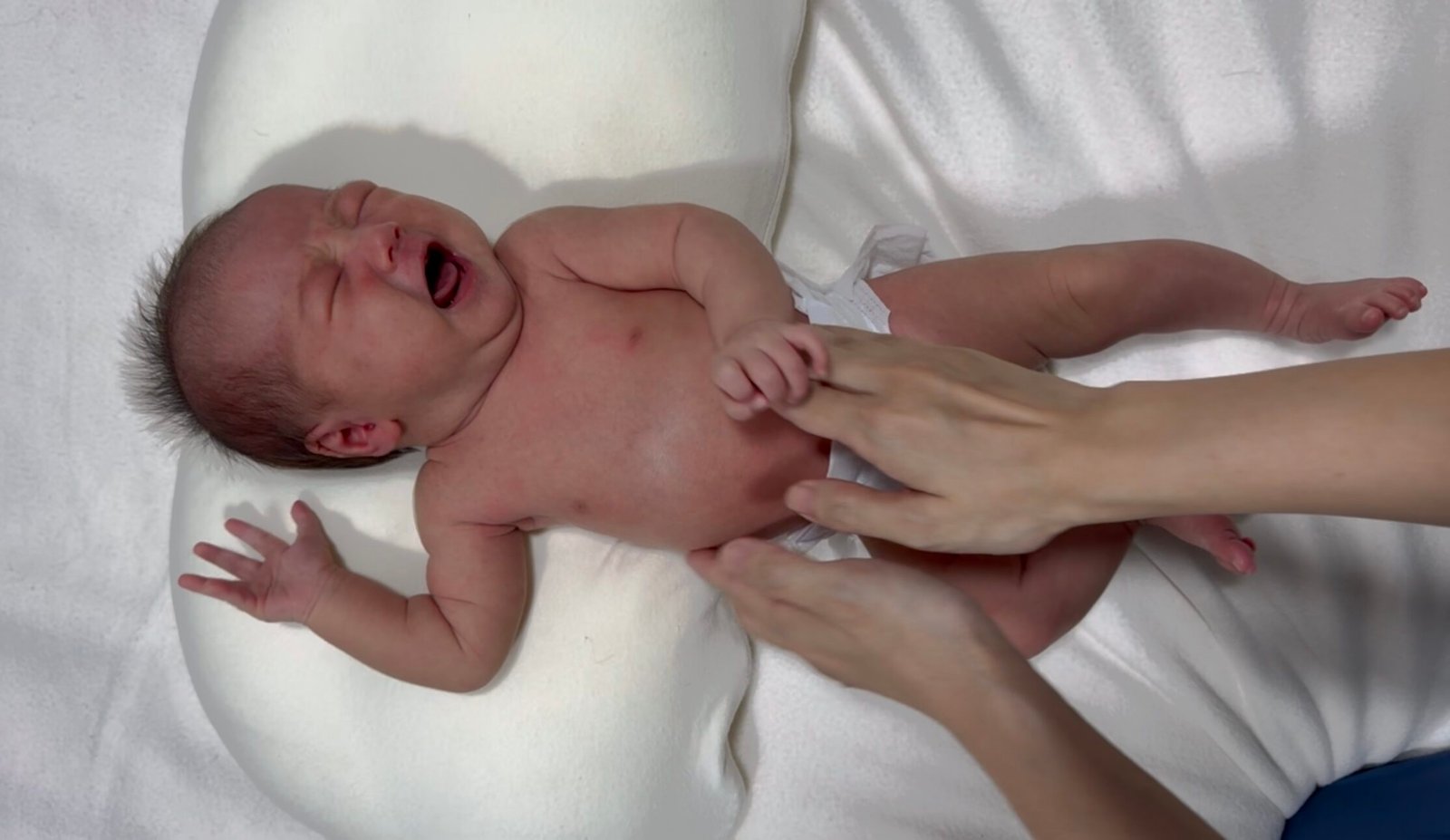
When performed by trained pediatric TCM practitioners, Tuina is considered low risk. Pressure is light, sessions are short, and techniques are adapted to the baby’s tolerance.
What Does Research Say?
Studies suggest that pediatric massage and Tuina-like interventions may help reduce crying duration and improve gastrointestinal function in infants.
- A systematic review found that massage therapy reduced crying time in infants with colic (DOI: 10.1542/peds.2006-2384).
- Research on infant massage has demonstrated modulation of vagal tone and improved gastric motility (DOI: 10.1016/S0140-6736(02)07363-8).
- Studies on TCM-based pediatric manual therapy suggest benefits for functional digestive disorders (DOI: 10.1016/j.ctim.2013.03.002).
While more high-quality trials are needed, the existing literature supports the safety and potential benefit of gentle manual therapies when used appropriately.
Singapore Context: Why This Matters Locally
In Singapore, many infants face:
- Early childcare exposure
- High parental stress levels
- Tight schedules affecting feeding rhythms
These factors can exacerbate colic and reflux symptoms. EMW TCM takes local lifestyle realities into account, offering realistic guidance that fits modern Singaporean families.
When Should Parents Seek Help?
Consider consultation if your child has:
- Persistent poor appetite
- Hard stools more than twice weekly
- Loose stools lasting more than two weeks
- Recurrent abdominal pain
- Frequent bloating
- Digestive issues affecting growth or mood
Early correction is easier than long-term repair.
Digestive health is the foundation of growth, immunity, and emotional balance.
When done properly, TCM treats pediatric digestive issues in a way that:
- Respects developmental physiology
- Supports microbiome maturation
- Avoids over-medication
- Empowers parents
- Complements conventional care
At EMW TCM in Singapore, our mission is simple: protect childhood while supporting health.
Our TCM Physicians

Principal TCM Physician
- M.Med(TCM Gynaecology)
- B.Sc(Hons) Biomedical Sciences
- Dip. Naturopath
- Ayurvedic Therapist(500hrs)
- Registered TCM Physician (Singapore MOH)

Senior TCM Physician
- M.Med(TCM Acupuncture & Moxibustion)
- B.Sc(Hons) Biomedical Sciences
- Certified Aromatherapist
- Registered TCM Physician (Singapore MOH)

TCM Physician
- M.Med(TCM Gynaecology)
- B.Sc(Hons) Biomedical Sciences
- Registered TCM Physician (Singapore MOH)
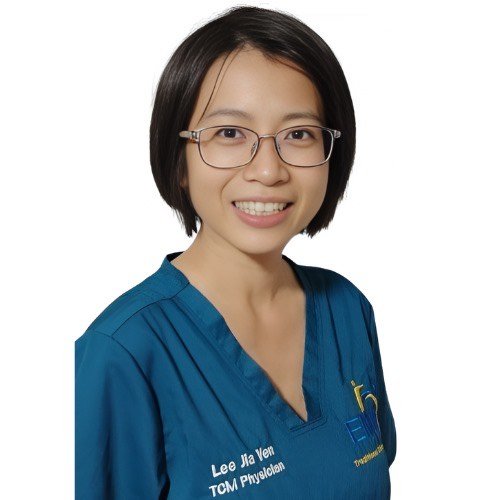
TCM Physician
- B.Med(TCM)
- B.Sc(Hons) Biomedical Sciences
- International Board-Certified Lactation Consultant (IBCLC)
- Registered TCM Physician (Singapore MOH)

Pingback: Paediatric TCM Singapore: Complete EMW Children’s Health Guide - EMW TCM