Understanding Gut Repair From a TCM Gut Health Perspective
Leaky gut, clinically referred to as increased intestinal permeability, is increasingly recognised as a driver of chronic digestive symptoms, food sensitivities, inflammation, fatigue, hormonal imbalance, and immune dysfunction.
While the term “leaky gut” comes from modern biomedical research, Traditional Chinese Medicine has long described this phenomenon through patterns involving Spleen weakness, Dampness accumulation, Heat, and Qi stagnation affecting the gut barrier.
At EMW TCM, gut repair is not treated as a single condition. It is addressed as a systems-level dysfunction involving digestion, immunity, stress regulation, and inflammation. This is why simply taking random gut supplements or generic herbal formulas often fails to produce lasting results.
This article explains how TCM herbs support gut repair, which herbs are commonly used, and why EMW TCM’s pattern-based approach delivers more sustainable outcomes than standard TCM gut treatments.
How TCM Explains Gut Barrier Dysfunction
In TCM, the integrity of the gut lining depends on the Spleen’s ability to transform food and fluids efficiently.
When the Spleen is weakened by chronic stress, poor diet, irregular eating, or illness:
- Food stagnates instead of being fully transformed
- Dampness accumulates and irritates the gut lining
- Heat and inflammation may develop
- The gut becomes more reactive and sensitive
From a biomedical perspective, this aligns with impaired tight junction function, altered microbiome balance, and immune activation within the intestinal lining.
TCM herbs for gut repair are therefore chosen not to “seal” the gut mechanically, but to restore the functional environment that allows the gut barrier to heal naturally.

Why Generic TCM Gut Formulas Often Fall Short
Many patients in Singapore try off-the-shelf herbal formulas marketed for diarrhoea, bloating, or detoxification. These may temporarily reduce symptoms but often fail to repair the gut long term.
Common issues include:
- Overuse of harsh drying or purging herbs
- Ignoring underlying deficiency patterns
- Lack of dietary and lifestyle integration
- Treating symptoms rather than gut inflammation
At EMW TCM, herbal prescriptions are customised based on gut pattern differentiation, inflammatory status, stress load, and dietary habits. Herbs are selected to support repair, not suppress symptoms.
The 9 Most Common TCM Herbs Used for Gut Repair
Below are some of the most frequently used herbs in gut-repair protocols. Importantly, these are rarely used alone and are always prescribed based on individual patterns.
1. Huang Qi (Astragalus Root)
TCM function
Strengthens Spleen Qi and supports protective Qi.
Best suited for
Spleen Qi deficiency with loose stools and low energy.
2. Bai Zhu (Atractylodes)
TCM function
Strengthens digestion and dries Dampness.
Best suited for
Chronic bloating, loose stools, and heaviness after meals.
3. Shan Yao (Chinese Yam)
TCM function
Tonifies Spleen and Kidney while being gentle and nourishing.
Best suited for
Sensitive guts, post-illness recovery, and chronic digestive weakness.
4. Fu Ling (Poria)
TCM function
Drains Dampness while supporting the Spleen.
Best suited for
Bloating with fatigue and water retention.
5. Gan Cao (Licorice Root)
TCM function
Harmonises formulas and soothes the digestive tract.
Best suited for
Irritated, inflamed digestive systems.
6. Huang Lian (Coptis)
TCM function
Clears Heat and damp-heat from the gut.
Best suited for
Heat-driven gut inflammation, not deficiency patterns.
7. Bai Shao (White Peony Root)
TCM function
Nourishes Blood and regulates the Liver.
Best suited for
IBS-like symptoms worsened by stress.
8. Chen Pi (Aged Tangerine Peel)
TCM function
Regulates Qi and improves digestion.
Best suited for
Qi stagnation with fullness and gas.
9. Yi Yi Ren (Coix Seed)
TCM function
Drains Dampness and supports digestive recovery.
Best suited for
Chronic inflammation with digestive sluggishness.
How EMW TCM Uses Herbs for Gut Repair Differently
Functional Pattern Identification
Before prescribing herbs, EMW TCM assesses digestive strength, inflammation signs, stool patterns, stress load, and dietary habits. Herbs are chosen to restore function, not chase symptoms.
Emphasis on Gut Integrity, Not Detox
There is no aggressive detoxification. The goal is to stabilise the gut lining, calm inflammation, and rebuild digestive capacity.
Integration With Diet and Lifestyle
Herbs alone cannot repair the gut. Patients receive tailored dietary guidance focused on warm, plant-forward, anti-inflammatory meals suitable for Singapore’s climate.
Gradual, Sustainable Protocols
Herbal formulas evolve as the gut heals. Dosages and ingredients are adjusted to avoid dependency or overstimulation.
How EMW TCM Treats Bloating and Gas Differently
Most TCM clinics focus on short-term symptom relief. EMW TCM is structured around long-term gut restoration.
Functional Understanding of Gut Inflammation
Bloating is often a downstream sign of intestinal inflammation and permeability. Treatment strategies address this root dysfunction rather than just dispersing gas.
Individualised Herbal Prescriptions
Formulas are customised based on your constitution, diet, stress load, and symptom progression. There is no standard bloating prescription.
Diet as a Therapeutic Tool
Dietary guidance is central, not optional. EMW TCM emphasises warm, plant-forward, anti-inflammatory meals suited to Singapore’s climate and lifestyle.
Integration of Emotional Health
Stress management is embedded into treatment because emotional tension directly disrupts digestion.
Long-Term Gut Repair
The goal is improved resilience, not dependency on herbs or supplements.
Diet Principles for Reducing Bloating the TCM Way
Rather than extreme elimination diets, EMW TCM focuses on sustainable adjustments:
- Warm cooked foods over raw meals
- Plant-based soups, stews, and porridges
- Reduce iced drinks and late-night eating
- Gentle use of spices like ginger and fennel
- Supplements only when food alone is insufficient
This approach supports the microbiome while protecting digestive capacity.

Scientific Evidence Supporting a Pattern-Based Gut Approach
Modern research increasingly supports what TCM has long observed.
Studies show that chronic stress alters gut motility and permeability via the gut–brain axis, contributing to bloating and gas. Low-grade inflammation and microbiome imbalance are now recognised as drivers of functional gastrointestinal disorders.
A key review published in Gastroenterology highlights the role of intestinal permeability and immune activation in functional gut symptoms, supporting the need for root-cause treatment rather than symptom suppression.
Scientific Evidence Supporting Herbal Gut Repair
Research increasingly supports the use of botanical compounds in gut barrier restoration.
A peer-reviewed study published in Frontiers in Pharmacology demonstrated that several traditional herbal compounds improve tight junction protein expression and reduce intestinal inflammation, supporting mucosal healing.
Another review in Nutrients highlighted the role of plant-based polyphenols in modulating gut permeability and immune response, aligning with TCM’s emphasis on whole-herb synergy rather than isolated compounds.
Who Benefits Most From TCM Herbs for Gut Repair
TCM-based gut repair is especially helpful for individuals who:
- Have persistent bloating, food sensitivities, or IBS-like symptoms
- Experience flares under stress
- Have tried probiotics or supplements with limited success
- Have gut symptoms linked to fatigue, skin issues, or hormonal imbalance
Early, pattern-based intervention prevents progression into more complex inflammatory conditions.
Why Patients Choose EMW TCM for Gut Repair
Patients seek EMW TCM because they want a clear, structured, and evidence-informed approach to gut healing.
They value:
- Individualised herbal prescriptions
- Integration of modern gut science and classical TCM
- Practical dietary and lifestyle guidance
- A focus on long-term gut resilience
If you are exploring TCM herbs for gut repair and want a personalised, clinically grounded plan, book a gut health consultation through whatsapp.
Common TCM Patterns and Causes of Gut Imbalance
Every digestive issue has its root cause and TCM for gut health looks beyond symptoms to identify the underlying energy patterns that disrupt digestion. These imbalances often arise from lifestyle stress, poor dietary habits, or emotional tension that affects the Liver, Spleen, and Stomach systems.
Through identifying your unique pattern, TCM for gut health offers a clear, structured path to healing rather than symptom suppression. The goal is to harmonize internal systems, strengthen the digestive organs, and re-establish natural balance so that energy flows freely again.

When to Seek Treatment for Bloating at EMW TCM?
It is advisable to seek professional assessment if you experience any of the following persistent or recurrent symptoms:
- Abdominal pain that persists for more than three days
- Bloating that occurs consistently after meals or lasts longer than one week
- Indigestion, including sensations of fullness, excessive wind, or frequent hiccups, which in TCM may indicate food stagnation
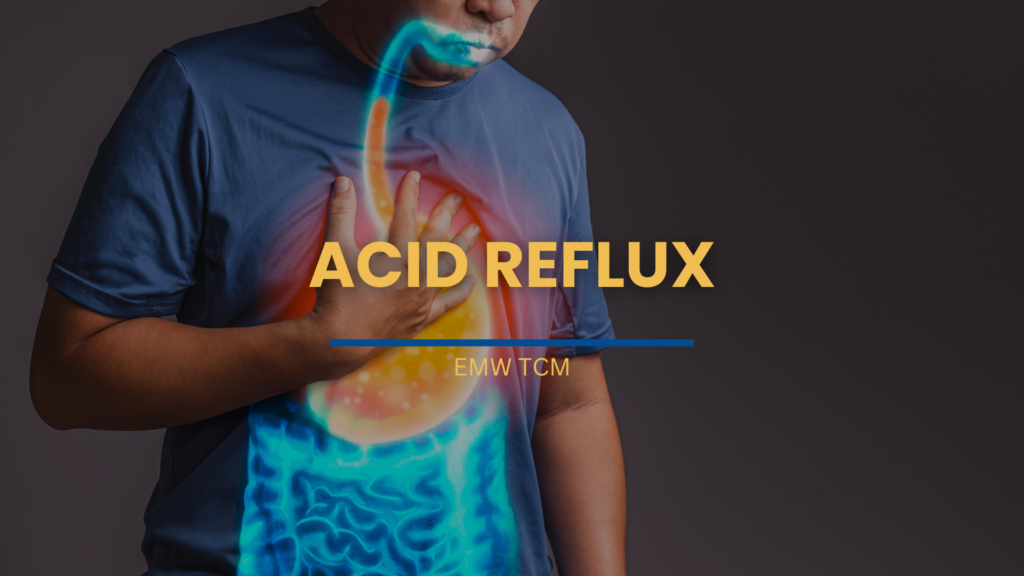
- Acid reflux (gastroesophageal reflux disease, GERD), characterised by the backflow of stomach acid into the oesophagus
- Changes in bowel habits, including ongoing constipation or diarrhoea
While bloating can be a common and uncomfortable condition, Traditional Chinese Medicine offers an integrated approach to managing digestive health. When factors such as diet, stress, or lifestyle contribute to constipation, a TCM practitioner in Singapore may recommend a tailored combination of herbal therapy, acupuncture, acupressure, and lifestyle modifications to help restore internal balance.
At EMW TCM, our bilingual team of MOH-registered TCM physicians develops personalised treatment plans that take into account each individual’s lifestyle, dietary habits, and underlying health patterns. This approach is further supported by evidence-based research, which suggests that TCM may be effective in providing both symptom relief and long-term digestive support.
If you have any questions or concerns regarding TCM treatment for bloatingor digestive health management, we welcome you to contact us. EMW TCM is committed to delivering personalised, holistic care to support the long-term wellbeing of our patients.bloa
EMW TCM Clinics
Scotts Medical Centre Branch
9 Scotts Road #10-04, Scotts Medical Centre @ Pacific Plaza,
Singapore 228210
Book Your Appointment With Us Here: +65 89585869
International Building Branch
360 Orchard Road, International Building #02-05/06
Singapore 238869
Book Your Appointment With Us Here: +65 89585869
Our Physicians

Principal TCM Physician
- M.Med(TCM Gynaecology)
- B.Sc(Hons) Biomedical Sciences
- Dip. Naturopath
- Ayurvedic Therapist(500hrs)
- Registered TCM Physician (Singapore MOH)

Senior TCM Physician
- M.Med(TCM Acupuncture & Moxibustion)
- B.Sc(Hons) Biomedical Sciences
- Certified Aromatherapist
- Registered TCM Physician (Singapore MOH)

TCM Physician
- M.Med(TCM Gynaecology)
- B.Sc(Hons) Biomedical Sciences
- Registered TCM Physician (Singapore MOH)

TCM Physician
- B.Med(TCM)
- B.Sc(Hons) Biomedical Sciences
- International Board-Certified Lactation Consultant (IBCLC)
- Registered TCM Physician (Singapore MOH)
References
- Wang Y et al. Herbal medicines and intestinal barrier function. Frontiers in Pharmacology. 2020;11:556. DOI: 10.3389/fphar.2020.00556
- Martínez-González MA et al. Plant-based diets, polyphenols, and gut permeability. Nutrients. 2019;11(11):2712. DOI: 10.3390/nu11112712