
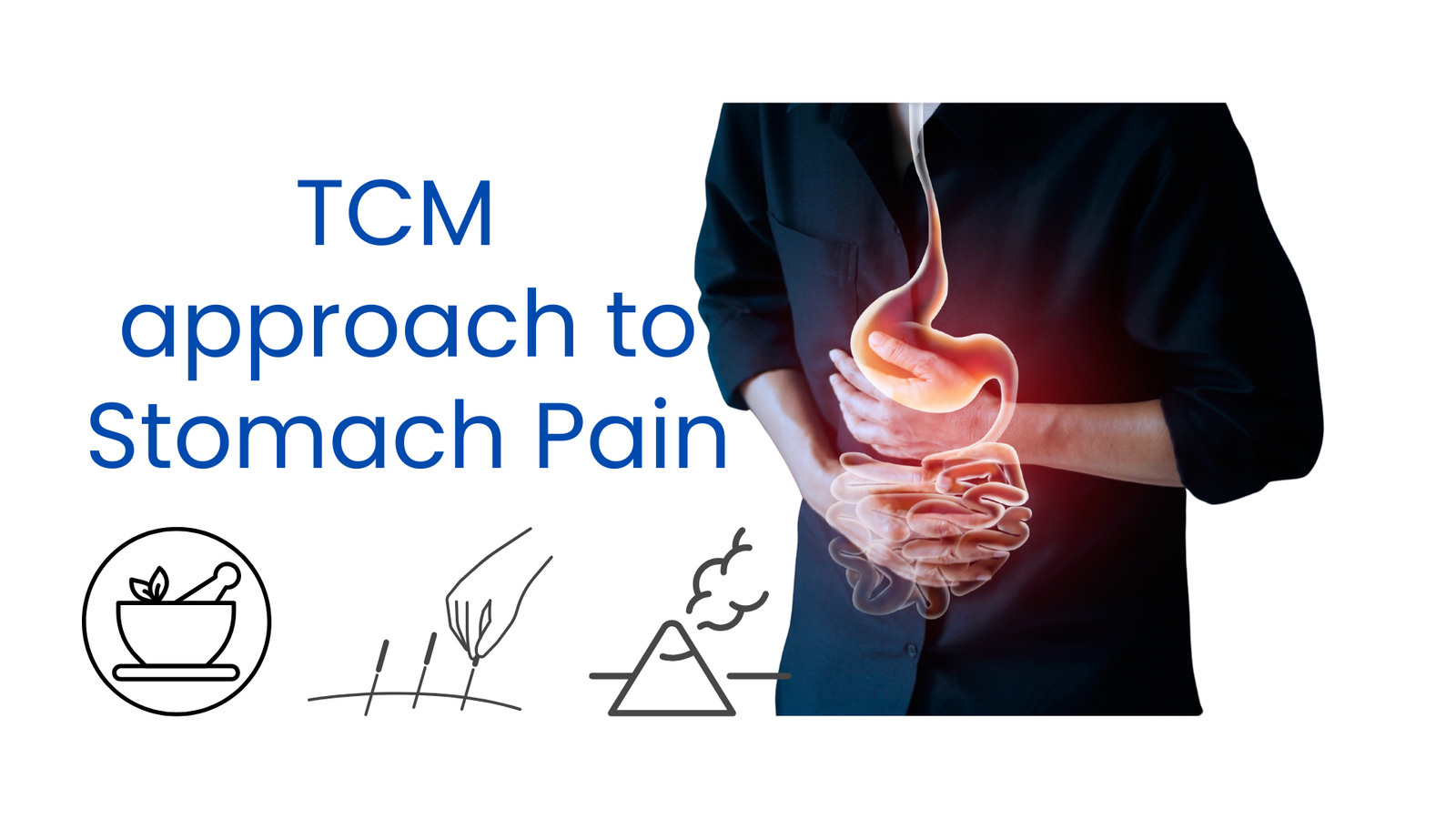
Stomach pain is one of the most common digestive complaints in Singapore, and many patients turn to Traditional Chinese Medicine (TCM) for a natural, root-cause-focused solution. In this guide, our EMW physicians explain how TCM understands stomach pain through the Spleen–Stomach system, the Liver–Stomach relationship, and pattern differentiation. If you are searching for a reliable, evidence-based TCM stomach pain explanation, this article covers causes, TCM diagnosis, common patterns, acupuncture points, herbs, and when to seek treatment.
In TCM, digestive discomfort is a sign that your internal system is out of balance, especially your Liver (Gan 肝), Spleen (Pí 脾) and Stomach (Wèi 胃). At EMW TCM, we don’t just treat the symptom. We offer a holistic and personalized treatment approach to help you understand why your stomach is acting up, and what your body needs to feel better.
TCM Causes of Stomach Pain (TCM Stomach Pain Patterns Explained)
Your Stomach and Spleen are the heart of your digestive system in TCM, converting food into vital energy, (Qì 气), and Blood (Xuè 血).
- The Stomach receives and breaks down your food (Receiving, Ripening and Rotting)
- The Spleen extracts the nutrients and delivers them to your body (Transformation and Transportation)
When these systems are in harmony, digestion feels smooth. However, when they are overworked, weakened, or affected by stress or cold foods, pain begins to show up, often as bloating, discomfort, acid reflux, or fatigue after eating. Hence, TCM views stomach pain as a sign of imbalance in the body primarily involving the digestive organs.
How We Personalise Your Diagnosis at EMW TCM
Our physicians use the Four Diagnostic Methods (四诊) [1] to identify your root imbalance and design a highly personalised treatment protocol for comprehensive relief and restoration:
1. Observation (Wàng 望)
Your tongue colour, coating and texture give insights into heat, cold, dampness, stagnation, and digestive weakness.
2. Listening and Smelling (Wén 闻)
The tone of your voice, your breathing pattern (such as wheezing), vocal sounds (for example, a loud or weak voice) to collect subtle clues about internal deficiencies. Unusual body odour can point toward heat or dampness.
3. Interrogation (Wèn 问)
We gather information about the onset and development of symptoms, diet, lifestyle, emotional state, sleep patterns, and medical history. This is not just a checklist, it involves a detailed and meaningful conversation that helps us connect all the dots, identify possible causes and the pattern of imbalances.
4. Palpation (Qiè 切)
We examine your pulse, checking for qualities like strength, depth, and rhythm. Each position corresponds to different organ systems and provides insights into the status of the Qi, Blood, and other internal systems. We may also gently palpate your abdomen or back to identify tenderness, coldness, or stagnation.
Common TCM Patterns of Stomach Pain
By identifying each patient’s unique pattern, EMW TCM provides a structured treatment instead of treating only the symptoms of stomach pain. These are some commonly observed patterns linked to stomach pain:
1. Patterns of “Excess”
The following patterns manifest as severe pain that is worsened by pressure, and connected with stress, heat or excessive cold:
Liver Qi Invading Stomach (TCM Stomach Pain due to Stress) (Gān Qì Héng Nì Fàn Wèi 肝气横逆犯胃)
Linked to stress, anxiety, and pent-up emotions. The Liver becomes stagnated and “attacks” the Stomach.
- Symptoms: Painful bloating or distension that moves around, acid reflux, belching, or a bitter taste in the mouth [2].
- Treatment Focus: Soothe the Liver and harmonise the Stomach.
Stomach Heat (TCM Stomach Pain with Burning Discomfort) (Wèi Rè 胃热), or (Wèi Huǒ 胃火)
Caused by a high consumption of spicy, deep-fried or oily foods.
- Symptoms: Burning pain, severe thirst, bad breath, constipation, red face and a red tongue with a yellow, dry coating.
- Treatment Focus: Clear Stomach Heat, and descend the Stomach Qi.
Cold-Damp Stagnation (TCM Stomach Pain from Cold Foods) (Hán Shī Zǔ Zhì 寒濕阻滯)
Exacerbated by Singapore’s humidity and overuse of air-conditioning, together with a high consumption of cold drinks and foods.
- Symptoms: Colicky pain that is aggravated by cold, and relieved by eating warm foods or applying heat, such as a hot towel, to the stomach area.
- Treatment Focus: Dispel Cold and Dampness, and warm the Stomach and Spleen area.
2. Deficiency Patterns
These patterns are characterised by dull, nagging pain that is usually relieved by eating or gentle pressure, signifying sluggishness in the organs and a lack of nourishment.
Spleen–Stomach Qi Deficiency (Chronic Stomach Pain in TCM) (Pí Wèi Qì Xū 脾胃气虚)
Irregular eating, chronic overwork, and a poor diet contribute to Qi deficiency in the Stomach and Spleen. The Stomach does not efficiently digest food, and the Spleen lacks the energy to perform the “Transformation and Transportation” function in the body.
- Symptoms: Dull pain that lingers, loose stools, poor appetite, and bloating after eating small meals.
- Treatment Focus: Tonify and support Spleen and Stomach Qi.
Stomach Yin Deficiency (Dryness-related TCM Stomach Pain) (Wèi Yīn Xū 胃阴虚)
This deficiency happens after excessive vomiting, or prolonged Heat, caused by a depletion of the moistening, cooling substance (Yin) of the Stomach Lining
- Symptoms: A persistently dry mouth and throat, a gnawing, dull pain, and discomfort relieved by drinking fluids.
- Treatment Focus: Nourish the Stomach Yin.
TCM Treatments Modalities for Stomach Pain

Acupressure Points for Stomach Pain
Acupressure applies finger pressure to specific points on the body to balance the flow of Qì and relieve discomfort. You can stimulate the following acupressure points for bloating and pain relief, while enhancing the flow of Qì (气) in the Spleen and Stomach meridians:
Key Acupressure Points
1. Ren (CV12) - (Zhōng Wǎn 中脘)
Location: In the middle of the abdomen, about four finger-widths (8cm) above your navel.
Effects: This point influences the Stomach, balancing digestion and dispelling stagnation in cases of upper abdominal pain, bloating, wind, and indigestion.
Instructions: Place your fingertips on the midline of your abdomen, halfway between the navel and the sternum. Gently massage in circular motions to ease abdominal discomfort.
2. Stomach 36 (ST36) - (Zú Sān Lî 足三里)
Location: Four finger-widths (8cm) below the kneecap, and one finger-width (2 cm) to the outer edge of the shin bone.
Effects: This is a master point for the digestive system, used to tonify Qi, harmonise the Stomach, and relieve various abdominal discomforts like indigestion, gas, and bloating.
Instructions: Apply pressure with your fingers below the kneecap on the outer side of the leg. Repeat holding and releasing this point to stimulate digestion.
3. Inner Gate (PC6) - (Nèi Guān 内关)
Location: On the inner wrist, about three finger-widths (6cm) up from the wrist crease. PC6 is between the two central tendons, palmaris longus and flexor carpi radialis.
Effects: For calming the stomach, relieving nausea, vomiting, and acid reflux. Often used when digestive issues are connected to stress.
Instructions: Press on the point with your thumb or index finger for one or two minutes.
Moxibustion (艾灸) Ài Jiǔ
Moxibustion is an excellent complementary therapy to enhance treatment results by strengthening the patient’s Qi and blood circulation. Sticks or cones of dried mugwort (Ài Cǎo 艾叶), or “moxa” are burned near specific acupuncture points. The heat generated treats stomach pain caused by Qi insufficiency, resolves dampness, and revives circulation.
We pair moxibustion with acupuncture at EMW TCM to enhance its overall efficacy and healing effects for conditions related to “Phlegm” or “Dampness”. This is especially beneficial for patients with stomach pain and other gastrointestinal issues, such as indigestion, loose stools, and abdominal bloating.

Chinese Medicine for Stomach Pain
Our physicians prescribe customised herbal formulas to restore harmony within organs, ensure smooth circulation, remove stagnation and improve digestive function naturally. Here are three frequently used formulas for stomach pain:
Bǎo Hé Wán (保和丸) Preserve Harmony Pill
Bǎo Hé Wán is made with Hawthorn Berries (山楂) Shān Zhā, as a principal ingredient. The main actions of this herbal formula are to reduce stagnation, and harmonise the stomach in cases of nausea and vomiting.
Xiāng Shā Liù Jūn Zǐ Tāng (香砂六君子汤) Six Gentlemen Decoction
With Ginseng (人参) Rén Shēn as its principal ingredient, this herbal formula is one of the most important and widely used prescriptions in TCM for weak digestion. It tonifies the Spleen, and clears dampness and phlegm in occurrences of poor appetite, wind, and bloating after eating.
Zuǒ Jīn Wán (左金丸) Left Metal Pill
Goldthread Rhizomes (黄连) Huáng Lián and Evodia Fruits (吳茱萸) Wú Zhū Yú, make up this herbal formula. It treats stagnant Liver Qi that has invaded the stomach, causing Liver Fire which results in heartburn, acid reflux, and peptic ulcers.
TCM Diet for Stomach Pain
Your daily habits make a big difference in how your stomach feels. We strongly encourage practical, sustainable dietary and lifestyle changes, as your active participation plays a key role in improving and maintaining your digestive health. For long-term wellness, consider the following dietary and lifestyle principles:
- Consume Warm Foods: Warm foods like plain congee and clear soups are suitable for patients with weak digestion, but not for individuals with hypochlorhydria (low stomach acid).
- Mindful Eating: Patients are advised to chew their food slowly, and not overeat.
- Avoiding Triggers: Cold drinks and foods such as ice cream, and oily spicy food, can stagnate Liver Qi.
- Manage Stress: Meditation, qi gong, relaxation techniques, deep breathing, and getting enough sleep are recommended to rebalance the mind and body.
When to See a TCM Physician for Stomach Pain
You should consider seeking treatment at EMW TCM if you experience the following persistent or recurring symptoms that could indicate an underlying imbalance in your body:
- Stomach pain that does not go away after three days.
- Bloating that occurs consistently after meals or persists for more than a week.
- Indigestion, such as feelings of fullness, wind, or hiccups, which may be signs of ‘food stagnation’ in TCM.
- Acid Reflux (GERD), where stomach acid rises into the esophagus.
- Changes in Bowel Habits, including chronic constipation, or diarrhoea.
Stomach discomfort may be common in daily life, but TCM provides a holistic, integrated way to address these digestive concerns. When diet, stress, or lifestyle habits contribute to your symptoms, a TCM practitioner in Singapore can recommend the appropriate combination of herbs, acupuncture, acupressure, and lifestyle adjustments to help rebalance your system.
At EMW TCM, our bilingual MOH-registered physicians integrate classical TCM diagnostic methods with contemporary understanding of digestive disorders to craft an individualised treatment plan that reflects your unique lifestyle and dietary patterns. Our approach is informed by evidence-based research demonstrating the benefits of TCM for symptom management and sustained healing.
We do not just treat the pain, we rebuild your digestive foundation so you can feel energised, comfortable, and in control of your health again.
If you’ve been struggling with chronic stomach pain, bloating, reflux or unpredictable bowels, we would love to support you on your healing journey.
Find TCM Clinic Near You
Scotts Medical Centre Branch
9 Scotts Road #10-04, Scotts Medical Centre @ Pacific Plaza,
Singapore 228210
Book Your Appointment With Us Here: +65 89585869
International Building Branch
360 Orchard Road, International Building #02-05/06
Singapore 238869
Book Your Appointment With Us Here: +65 89585869
Our Bilingual MOH-Registered Physicians

Principal TCM Physician
- M.Med(TCM Gynaecology)
- B.Sc(Hons) Biomedical Sciences
- Dip. Naturopath
- Ayurvedic Therapist(500hrs)
- Registered TCM Physician (Singapore MOH)

Senior TCM Physician
- M.Med(TCM Acupuncture & Moxibustion)
- B.Sc(Hons) Biomedical Sciences
- Certified Aromatherapist
- Registered TCM Physician (Singapore MOH)

TCM Physician
- M.Med(TCM Gynaecology)
- B.Sc(Hons) Biomedical Sciences
- Registered TCM Physician (Singapore MOH)

TCM Physician
- B.Med(TCM)
- B.Sc(Hons) Biomedical Sciences
- International Board-Certified Lactation Consultant (IBCLC)
- Registered TCM Physician (Singapore MOH)
References
- Zhao, C., Li, G. Z., Wang, C., & Niu, J. (2015). Advances in Patient Classification for Traditional Chinese Medicine: A Machine Learning Perspective. Evidence-based complementary and alternative medicine: eCAM, 2015, 376716. https://doi.org/10.1155/2015/376716
- How Do You Treat Irritable Bowel Syndromein Your Practice? (2018). Medical acupuncture, 30(6), 348–357. https://doi.org/10.1089/acu.2018.29101.cpl