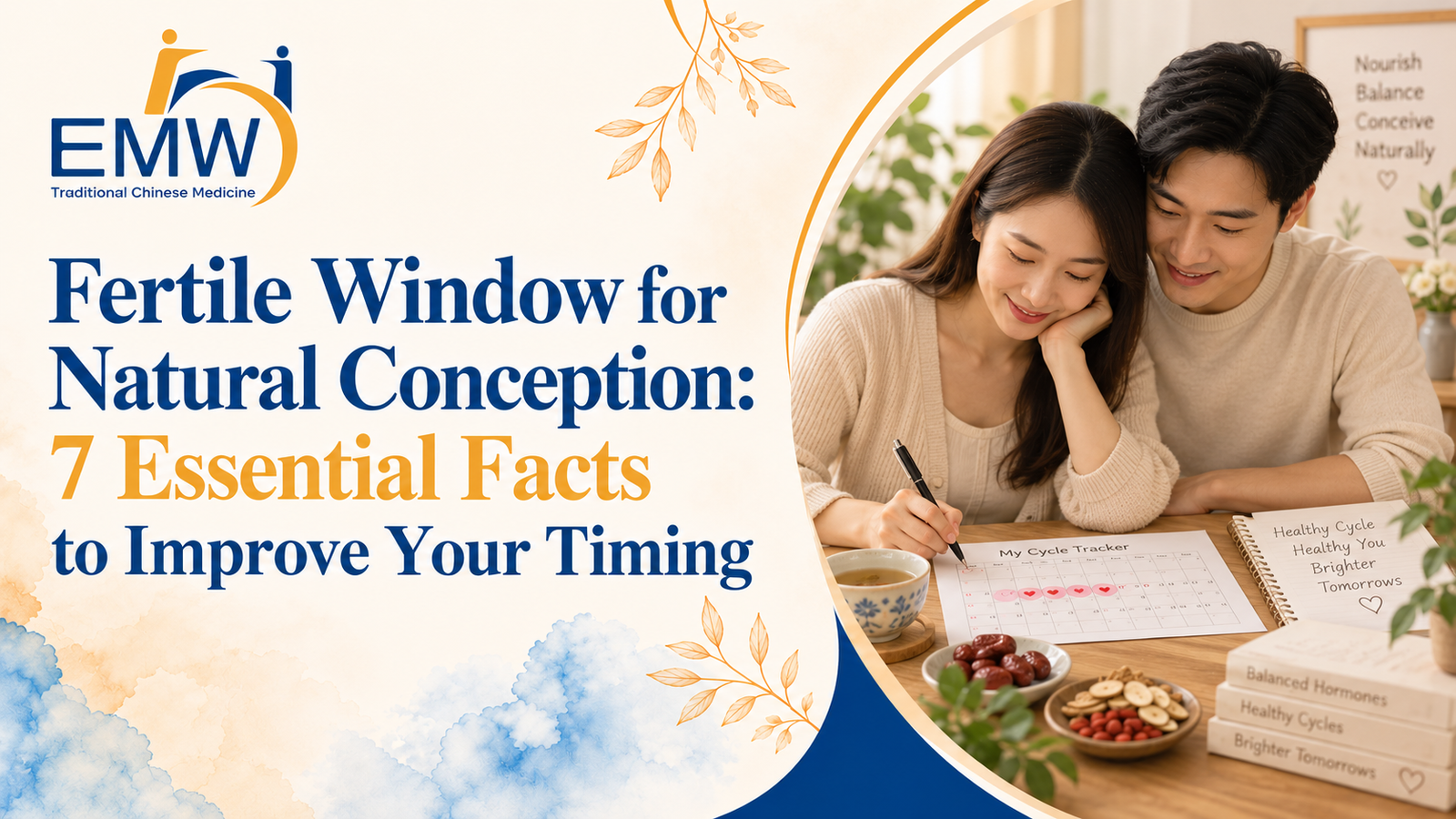
Fertile Window for Natural Conception: 7 Essential Facts to Improve Your Timing
If you are trying for a baby naturally, timing intercourse only on the day an app predicts ovulation may mean you are targeting too narrow a window. Understanding the fertile window for natural conception can help couples time intercourse more effectively without turning every month into a stressful race against the clock.
The important point is that fertility does not begin only when ovulation happens.
In fact, some of the best days for conception occur before ovulation.
When is the fertile window?
The fertile window for natural conception is generally considered the six-day period ending on the day of ovulation.
This includes:
- the five days before ovulation
- the day of ovulation
This window exists because sperm can survive within the female reproductive tract for several days, while the egg has a much shorter period during which fertilisation can occur.
ASRM defines the fertile window as the six-day interval ending on ovulation and notes that the highest probability of conception occurs when intercourse takes place within the two days before ovulation.
So instead of trying to catch one perfect moment, think of fertility as a window.
Poor Ovarian Response in IVF: 7 Critical Facts to Know Before Your Next Cycle
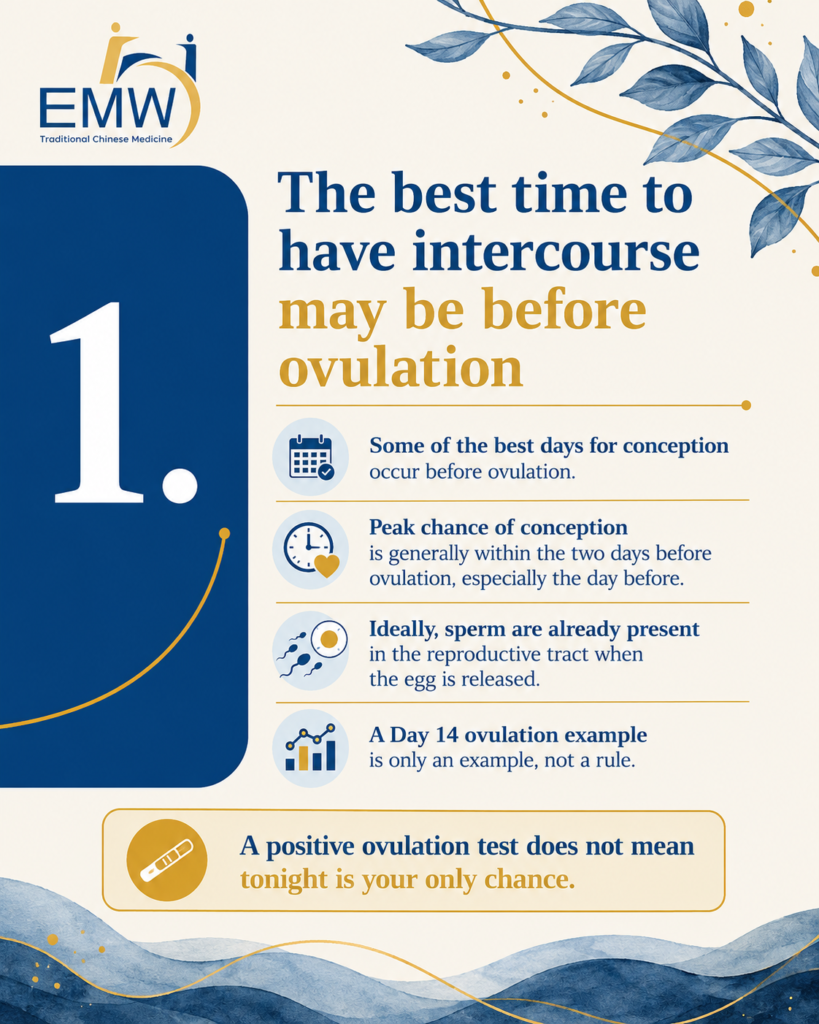
1. The best time to have intercourse may be before ovulation
This surprises many couples.
When an ovulation test becomes positive, patients often say:
“Tonight is our only chance.”
Fortunately, it isn’t.
The highest chance of conception is generally seen when intercourse occurs in the few days leading up to ovulation.
ASRM reports that peak fecundability occurs when intercourse takes place within the two days before ovulation, with particularly high probability around the day before ovulation.
Why?
Because ideally sperm should already be present within the reproductive tract when the egg is released.
Waiting until well after ovulation may mean the most fertile portion of the cycle has already passed.
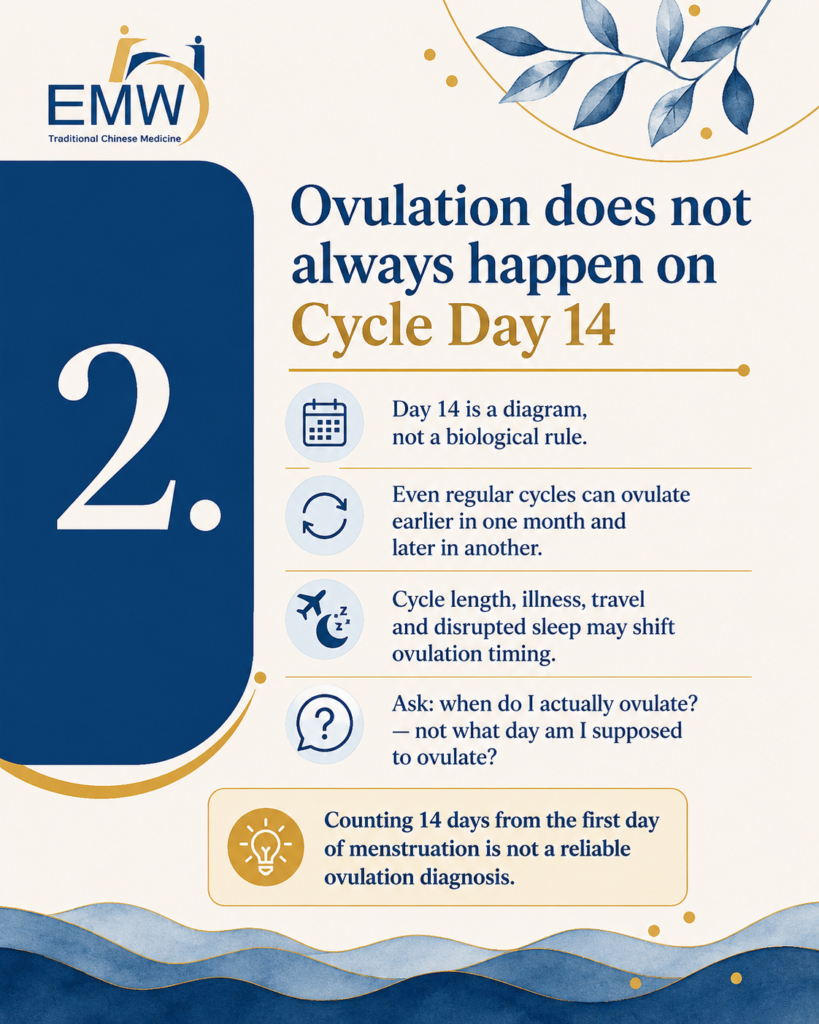
2. Ovulation does not always happen on Cycle Day 14
A 28-day menstrual-cycle diagram often shows ovulation occurring precisely on Day 14.
Real bodies are less tidy.
A woman with a regular menstrual cycle may ovulate:
- earlier in one cycle
- later in another
- at different times depending on cycle length
Illness, travel, disrupted sleep and other physiological factors may also shift ovulation timing.
The fertile window for natural conception therefore cannot always be calculated accurately by counting 14 days from the first day of menstruation.
The more useful question is:
When do I actually ovulate?
rather than:
“What cycle day am I supposed to ovulate?”
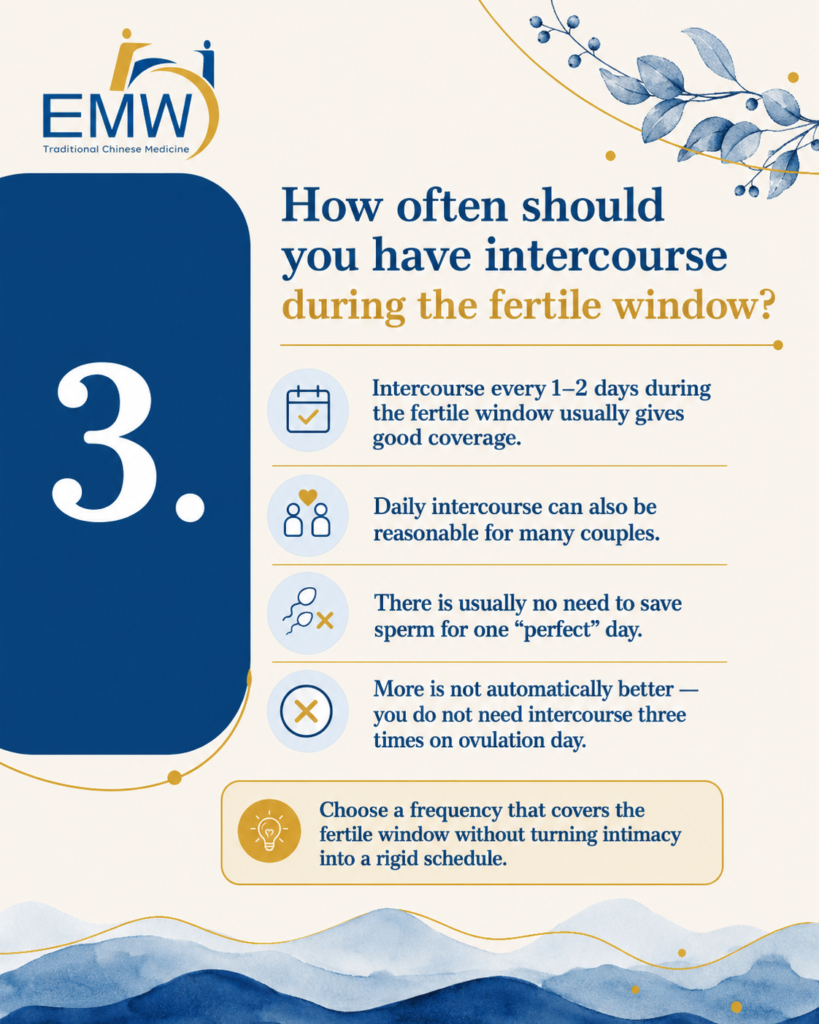
3. How often should you have intercourse during the fertile window?
For most couples, there is no need to save sperm for one single “perfect” day.
ASRM advises that reproductive efficiency is highest when intercourse occurs approximately every one to two days during the fertile window.
For example:
If your likely fertile period is Day 10 to Day 15, you might have intercourse on:
Day 10 → Day 12 → Day 14
or:
Day 11 → Day 12 → Day 14 → Day 15
depending on what is comfortable for the couple.
Daily intercourse can also be appropriate for many couples.
The goal is not to create a rigid schedule that makes intimacy stressful.
Do you need intercourse three times on ovulation day?
No.
More is not automatically better.
Having intercourse regularly across the fertile period is generally more useful than putting enormous pressure on one predicted ovulation day.
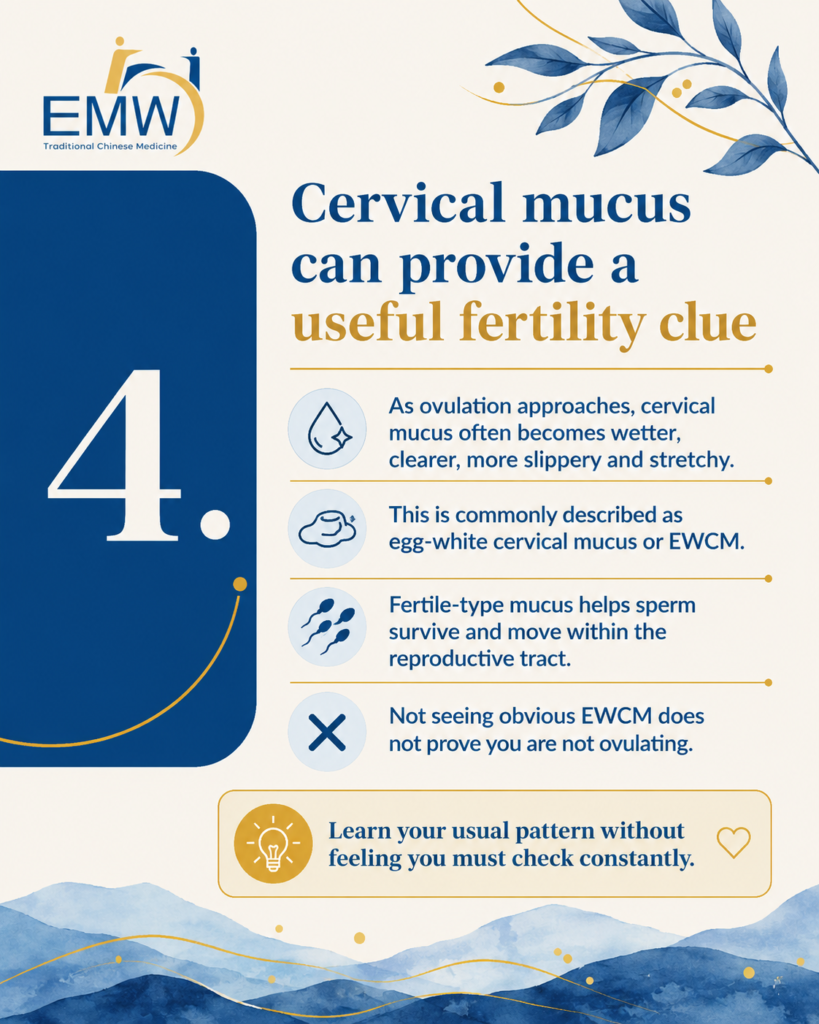
4. Cervical mucus can provide a useful fertility clue
One of the body’s natural signs of approaching ovulation is changing cervical mucus.
As oestrogen rises before ovulation, cervical mucus often becomes:
- wetter
- clearer
- more slippery
- stretchy
Patients commonly describe this as egg-white cervical mucus, or EWCM.
This type of cervical mucus helps sperm survive and move within the female reproductive tract.
If you notice a clear increase in slippery or stretchy cervical mucus, you may be entering the fertile window for natural conception.
You do not need to obsessively inspect mucus several times every day.
Simply becoming familiar with your usual cycle pattern can provide useful information.
What if I never see egg-white cervical mucus?
Not seeing obvious EWCM does not prove you are not ovulating.
Some women notice:
- watery mucus rather than stretchy mucus
- only a small amount
- changes that are difficult to distinguish
Medication, vaginal products, infection and individual differences can also affect cervical secretions.
If menstrual cycles are irregular or ovulation is uncertain, medical assessment is more useful than relying on cervical mucus alone.
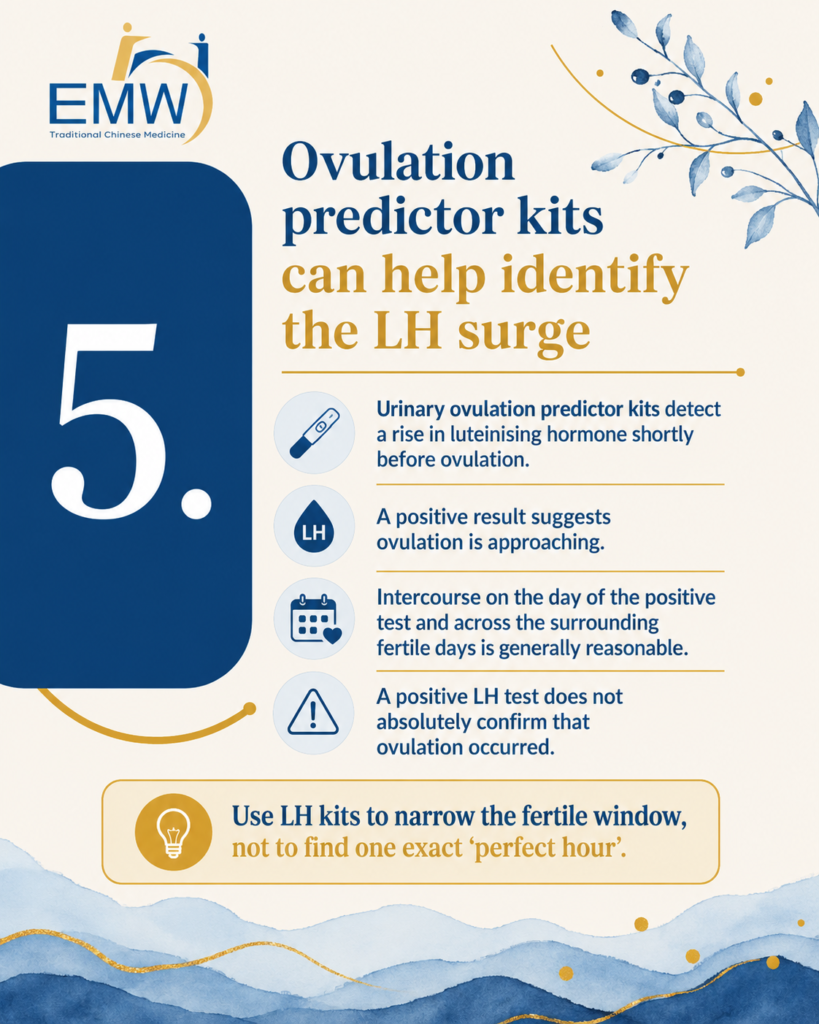
5. Ovulation predictor kits can help identify the LH surge
Urinary ovulation predictor kits measure a rise in luteinising hormone, or LH.
The LH surge typically occurs shortly before ovulation.
A positive result can therefore provide a useful signal that ovulation is approaching.
For couples trying naturally, an LH kit can help narrow down the fertile window for natural conception, particularly when intercourse frequency is limited by work, travel or other commitments.
When should you have intercourse after a positive ovulation test?
Rather than waiting until the following day or trying to identify the exact hour of ovulation, intercourse on the day of the positive test and around the surrounding fertile days is generally reasonable.
Remember that some of the most fertile days occur before the egg is released.
Does a positive LH test guarantee ovulation?
No.
An LH surge suggests that the body is preparing to ovulate, but it does not absolutely confirm that ovulation occurred.
This becomes particularly relevant in women with:
- very irregular cycles
- PMOS/PCOS
- repeated LH surges
- unclear ovulation patterns
If there is genuine concern regarding ovulation, a fertility doctor may use ultrasound or hormone testing when clinically appropriate.
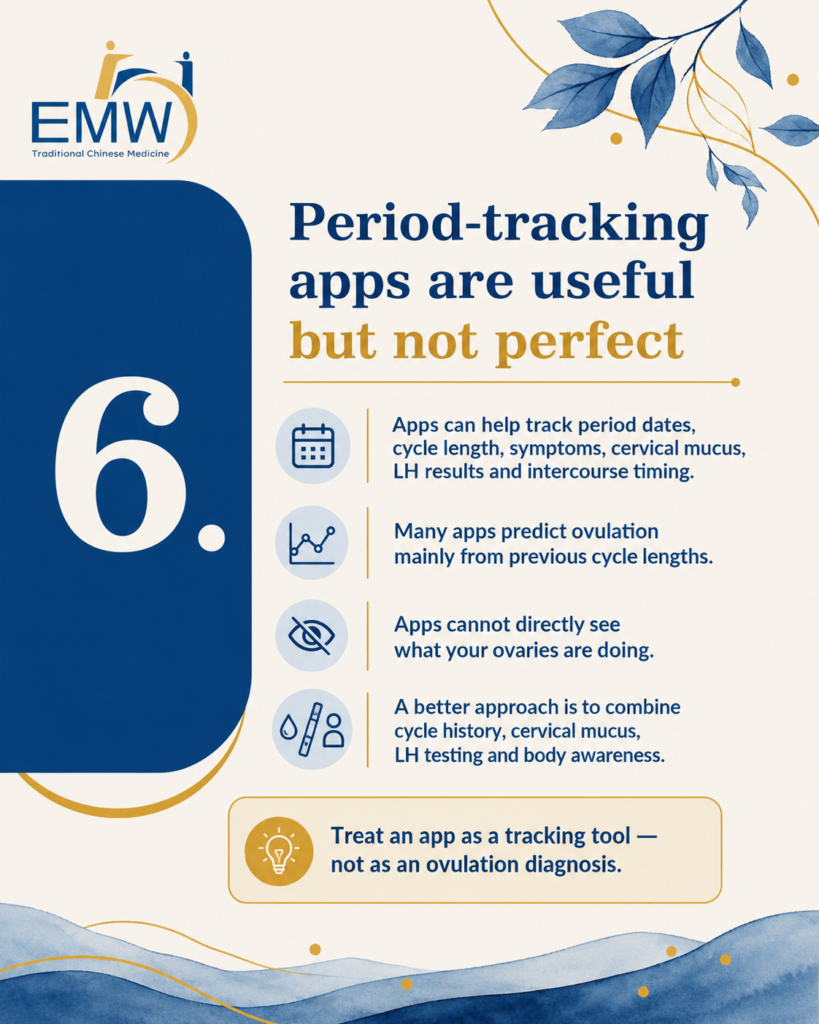
6. Period-tracking apps are useful but not perfect
Apps can be convenient.
They can help record:
- period dates
- cycle length
- symptoms
- cervical mucus
- ovulation-test results
- intercourse timing
But many apps initially estimate ovulation based largely on previous cycle lengths.
They cannot see what your ovaries are doing.
This matters because even relatively regular cycles vary.
A recent 2026 study examining fertile-window classification in cycle-tracking applications again highlighted the challenges involved in accurately predicting individual fertile days from calendar-based information alone.
So when timing the fertile window for natural conception, consider an app a tracking tool rather than an ovulation diagnosis.
Better approach
Combine information where practical:
cycle history + cervical mucus + LH testing + body awareness
rather than trusting a single app-generated green dot.
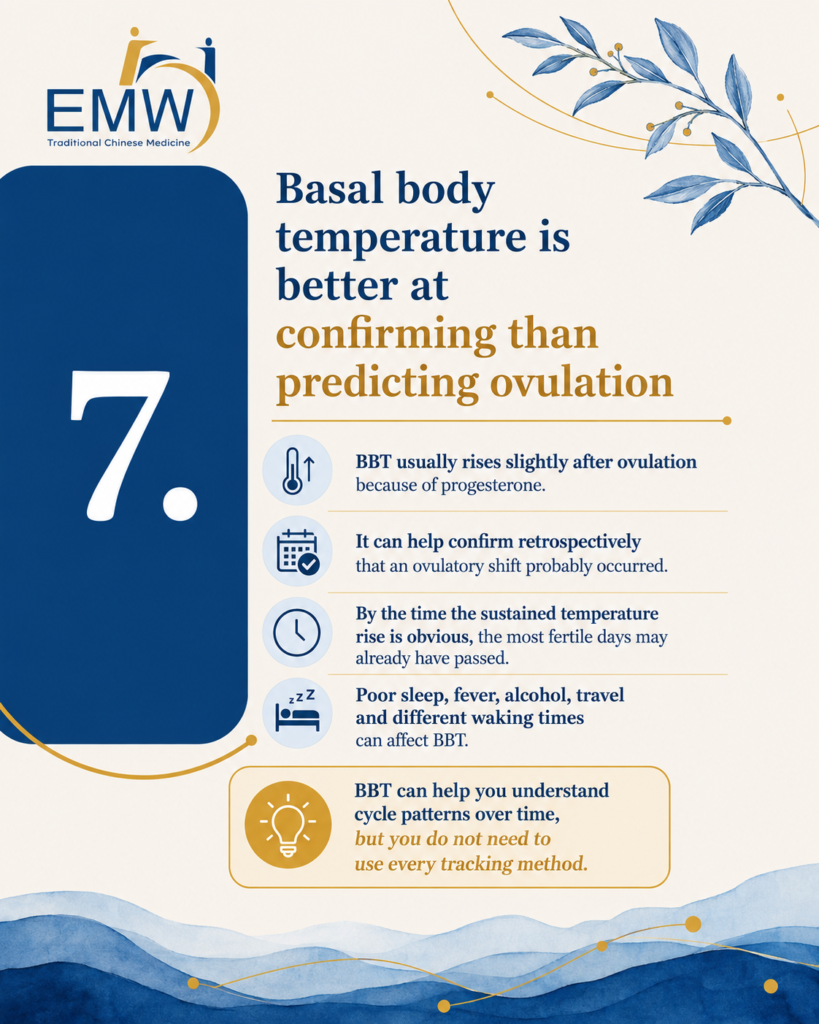
7. Basal body temperature is better at confirming than predicting ovulation
Basal body temperature, or BBT, usually rises slightly after ovulation because of progesterone.
This can help confirm retrospectively that an ovulatory shift probably occurred.
But there is one limitation.
By the time the sustained temperature rise is obvious, your most fertile days may already have passed.
So BBT is often more useful for understanding your cycle pattern over several months than for deciding:
“Should we have intercourse tonight?”
BBT can also be affected by:
- poor sleep
- fever
- alcohol
- travel
- different waking times
- night shifts
For some people it is helpful.
For others it creates unnecessary stress.
You do not need to use every fertility-tracking method available.
How do I identify my fertile window if my cycles are regular?
Suppose your menstrual cycles usually last around 30 days.
You may expect ovulation somewhere in the middle-to-later portion of the cycle, but instead of selecting one fixed day, observe your body’s fertility signals.
For example:
Day 1
First day of full menstrual bleeding.
Day 10 onward
Begin paying closer attention to cervical mucus if this corresponds with your usual pattern.
Approaching ovulation
Mucus may become wetter/slipperier.
LH test becomes positive
Ovulation is likely approaching.
Intercourse
Aim for regular intercourse across this window rather than waiting for one exact day.
The exact cycle days vary from person to person.
How do I identify my fertile window if my cycles are regular?
Suppose your menstrual cycles usually last around 30 days.
You may expect ovulation somewhere in the middle-to-later portion of the cycle, but instead of selecting one fixed day, observe your body’s fertility signals.
For example:
Day 1
First day of full menstrual bleeding.
Day 10 onward
Begin paying closer attention to cervical mucus if this corresponds with your usual pattern.
Approaching ovulation
Mucus may become wetter/slipperier.
LH test becomes positive
Ovulation is likely approaching.
Intercourse
Aim for regular intercourse across this window rather than waiting for one exact day.
The exact cycle days vary from person to person.
What if my menstrual cycles are irregular?
When cycles vary significantly, calendar prediction becomes much less reliable.
For example:
Cycle 1 = 28 days
Cycle 2 = 35 days
Cycle 3 = 43 days
An app may struggle to predict ovulation accurately.
Irregular cycles may occur with:
- PMOS/PCOS
- thyroid conditions
- significant weight changes
- hyperprolactinaemia
- perimenopause
- hypothalamic menstrual disturbance
- other hormonal conditions
If you are trying to conceive and repeatedly cannot determine whether ovulation is occurring, speak with a doctor rather than spending months buying more sophisticated tracking devices.
Understanding the cause of irregular ovulation is more important than identifying the perfect intercourse date.
Can you get pregnant outside the predicted fertile window?
Yes, particularly if the prediction was incorrect.
If an app says:
“Your fertile window ended three days ago”
but ovulation actually occurred later than predicted, pregnancy is still possible.
This is another reason calendar-based contraception can be unreliable without an appropriate validated method.
Biologically, however, successful conception generally requires intercourse close enough to actual ovulation for viable sperm and egg to overlap.
Does intercourse position affect natural conception?
There is no convincing evidence that a particular sexual position substantially increases pregnancy rates.
You do not need to:
- elevate your legs
- lie upside down
- remain completely still for 30 minutes
Sperm begin moving into cervical mucus very quickly.
Trying to make conception dependent on elaborate post-intercourse rituals can unnecessarily increase stress.
Should I lie down after intercourse?
There is no strong evidence that remaining flat for a prolonged period improves natural conception rates.
Some fluid leaking from the vagina after intercourse is normal.
It does not mean:
“all the sperm fell out.”
Semen contains millions of sperm, and sperm capable of entering the cervix begin doing so rapidly.
Do fertility-friendly lubricants matter?
Some conventional lubricants may impair sperm movement under laboratory conditions.
If lubrication is needed frequently while trying to conceive, couples may consider a product specifically designed to be sperm-compatible.
But not using lubricant does not automatically improve fertility if intercourse becomes painful or difficult as a result.
Comfort matters too.
Should we have intercourse every day or every other day?
Both can be reasonable.
For many couples, intercourse every one to two days during the fertile window for natural conception provides good coverage without creating excessive scheduling pressure.
ASRM notes that conception rates are highest with frequent intercourse during the fertile period and that couples should choose a frequency that remains practical and comfortable.
A very strict timetable can sometimes make TTC feel like a monthly medical procedure.
That is not necessary.
How long should we try naturally before getting fertility tests?
This depends partly on age and medical history.
For a woman under 35, fertility evaluation is generally recommended after approximately 12 months of regular unprotected intercourse without conception.
For women 35 and above, evaluation is generally recommended after approximately 6 months because fertility declines with increasing age.
Evaluation may be appropriate earlier when there is a known fertility-related concern such as:
- very irregular or absent periods
- known endometriosis
- previous ectopic pregnancy
- suspected tubal disease
- previous ovarian surgery
- markedly diminished ovarian reserve
- recurrent miscarriage
- known male-factor infertility
- previous chemotherapy or radiotherapy
You do not need to “complete” 12 months of trying if there is already a clear reason fertility may be affected.
What fertility investigations might be considered?
A fertility assessment depends on the couple but may include:
Female partner
- menstrual and ovulation history
- pelvic ultrasound
- ovarian reserve assessment where appropriate
- hormone testing
- tubal patency assessment when indicated
Male partner
- reproductive and medical history
- semen analysis
- further male fertility assessment if abnormalities are found
Both partners should be considered.
Natural conception is a couple’s process, not solely a woman’s responsibility.
What role can TCM play when trying to conceive naturally?
Patients at EMW TCM frequently come in before starting IVF because they would first like to try for natural conception.
The first step should still be understanding the couple’s fertility status.
TCM should not be used to postpone investigation where there is a reason to suspect:
- blocked fallopian tubes
- severe endometriosis
- significant ovulatory dysfunction
- diminished ovarian reserve
- substantial male-factor infertility
Where medically appropriate, TCM care may be used alongside natural TTC.
An EMW fertility assessment may look at:
- menstrual-cycle length
- menstrual flow
- ovulation signs
- cervical mucus
- basal body temperature if tracked
- PMS
- sleep
- stress
- bowel and digestive health
- previous pregnancies
- fertility investigations
- partner’s semen analysis where available
Acupuncture or Chinese herbal medicine may then be considered according to the individual’s TCM pattern.
The purpose is not to claim that acupuncture can create a fertile window.
Ovulation biology still determines the fertile window for natural conception.
Instead, integrative care should support the broader reproductive-health picture while the couple continues evidence-based cycle tracking and medical assessment where necessary.
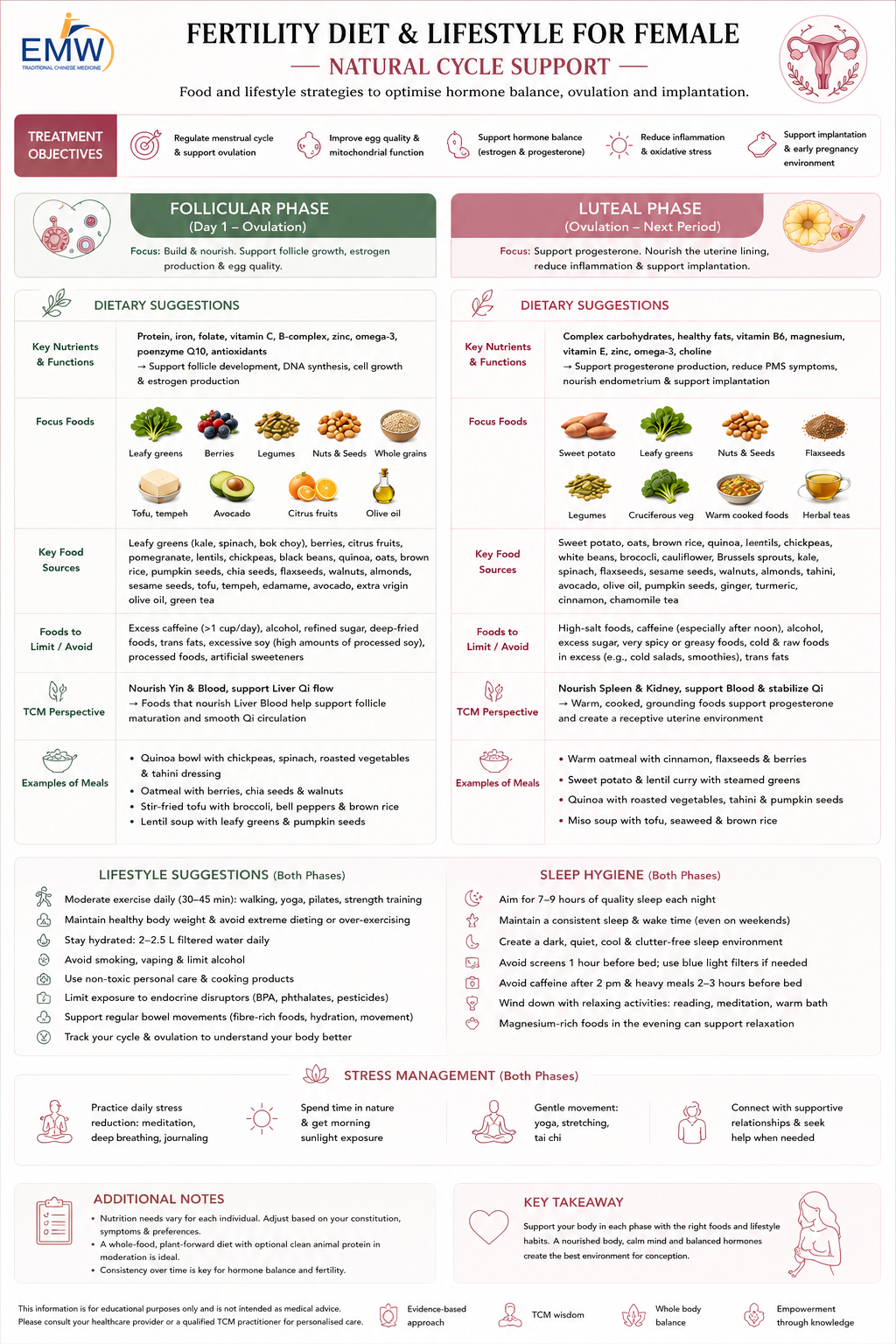
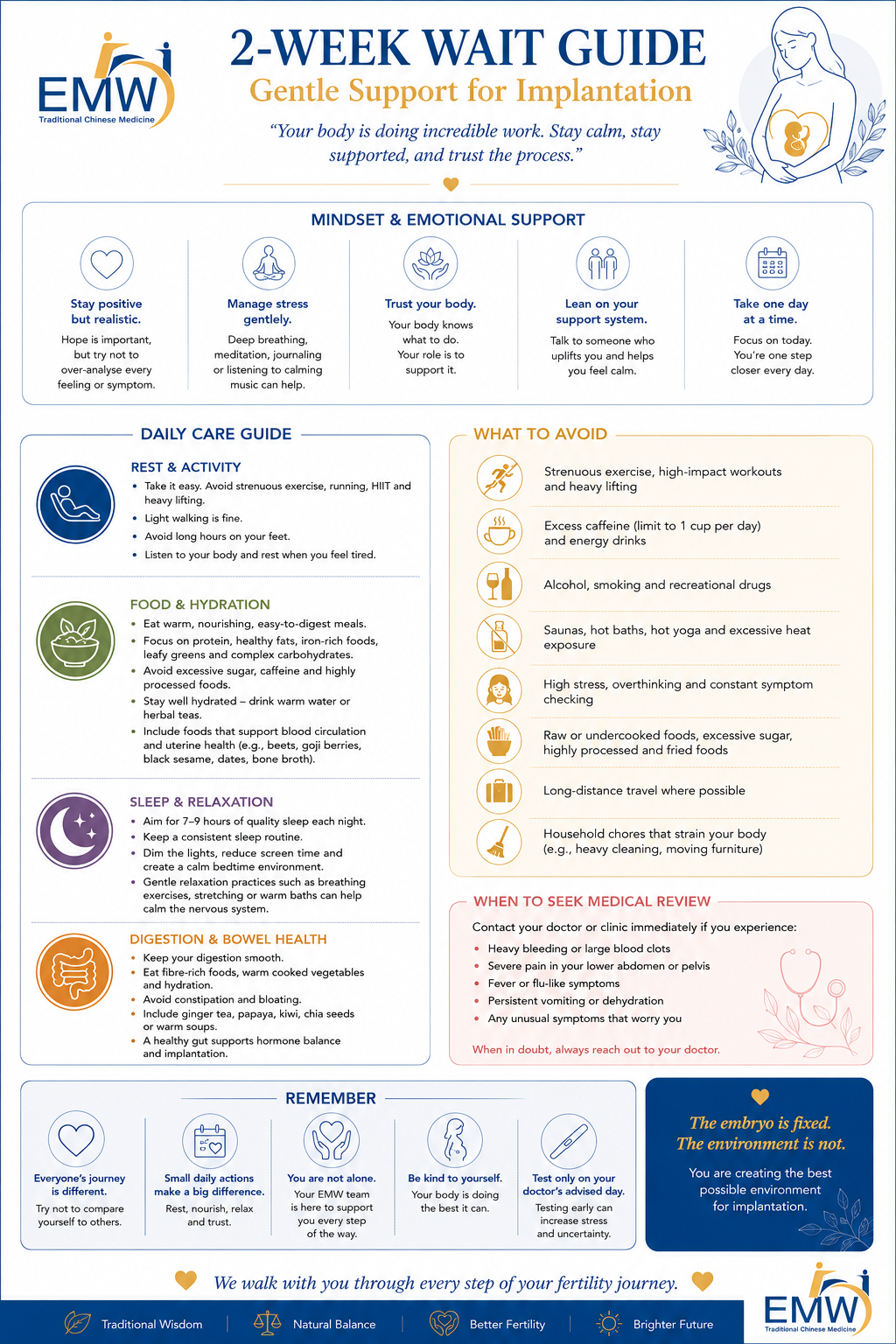
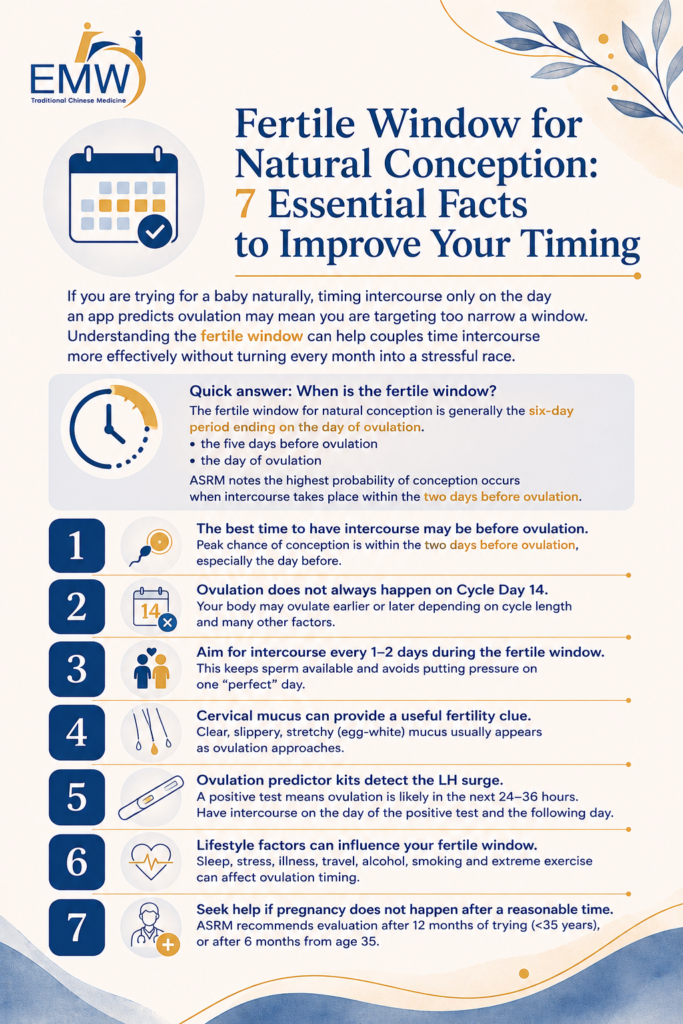
Natural Conception TCM Master Guide
Press the image to zoom in. If you like such infographics, we have a ‘3 ways to superboost your fertility’ PDF guide – Actionable steps that can help to support your reproductive health right away. You can sign up for free here: https://emwtcm.podia.com/3-ways-to-boost-your-fertility
Frequently Asked Questions
What are the most fertile days to get pregnant?
The highest probability generally occurs in the days immediately before ovulation, particularly within approximately two days before the egg is released.
Is ovulation day the best day to have intercourse?
It can be fertile, but waiting until ovulation day alone may miss some of the highest-probability days before ovulation.
How many days is the fertile window?
The fertile window for natural conception is generally described as six days: the five days before ovulation plus the day of ovulation.
How long can sperm survive?
Under favourable conditions in the female reproductive tract, sperm can remain capable of fertilisation for several days. This is why intercourse before ovulation can lead to pregnancy.
How long does the egg survive?
The egg has a considerably shorter fertilisation window after ovulation than sperm have before it, which is why pre-ovulation intercourse is important.
Is egg-white cervical mucus a sign of ovulation?
It commonly appears as oestrogen increases before ovulation and can be a useful sign that fertility is increasing, although it does not confirm ovulation on its own.
What does a positive ovulation kit mean?
It usually detects an LH surge suggesting ovulation is approaching. It does not guarantee that the egg has already been released.
Is intercourse every other day enough when trying to conceive?
For many couples, yes. Intercourse every one to two days during the fertile period generally provides good coverage.
Why am I not pregnant even though we time intercourse perfectly?
Timing is only one component of fertility.
Conception also depends on:
- ovulation
- egg quality
- open fallopian tubes
- sperm health
- fertilisation
- embryo development
- implantation
Even healthy fertile couples do not have a 100% chance of pregnancy each month.
Key takeaway
Understanding the fertile window for natural conception is less about finding one perfect ovulation day and more about giving sperm and egg several opportunities to meet.
The most practical approach is usually:
1. Know your general cycle pattern.
2. Watch for fertile cervical mucus.
3. Use LH tests if helpful.
4. Do not rely entirely on an app.
5. Have intercourse every one to two days across the fertile period.
6. Do not wait too long for fertility evaluation when age or medical history warrants earlier assessment.
Most importantly, TTC should not become an exam you can fail because you missed one night.
Good timing improves opportunity, but conception still involves both partners and many biological steps beyond the calendar.
How EMW TCM Help Your Fertility
From a biomedical perspective, acupuncture for fertility improves ovarian and uterine blood flow, regulates the hypothalamic-pituitary-ovarian axis, lowers cortisol, reduces inflammation, and supports hormonal balance. These effects complement TCM principles and help enhance egg development, implantation, and reproductive function.
1. Comprehensive Assessment
Your first consultation includes:
Cycle assessment
Digestion and hormonal review
Energy and stress evaluation
Sleep and lifestyle factors
Male fertility screening when relevant
2. Evidence-Based TCM Diagnosis
Qi stagnation
Blood deficiency
Spleen Qi weakness
Kidney Yin/Yang imbalance
Liver Qi constraint
Dampness and inflammation
3. Personalised Fertility Treatment Plan
Weekly fertility acupuncture
Customised herbal formulas
Stress reduction strategies
Lifestyle recommendations
TCM Acupuncture for Fertility Treatments
Acupuncture, one of the most researched TCM fertility tools, has been found to influence several physiological pathways related to reproduction.
A review published in Fertility and Sterility (2019) reported that acupuncture may improve blood flow to the uterus and ovaries, modulate stress hormones, and enhance endometrial receptivity. Another meta-analysis in Integrative Medicine Research (2021) concluded that acupuncture used alongside conventional fertility treatment can improve pregnancy outcomes and reduce anxiety levels in women undergoing IVF.
From a clinical standpoint, acupuncture helps regulate the hypothalamic-pituitary-ovarian axis, improving hormone balance and menstrual regularity. It can also reduce cortisol levels, encouraging the parasympathetic or “rest-and-rebuild” state which supports implantation and early pregnancy.
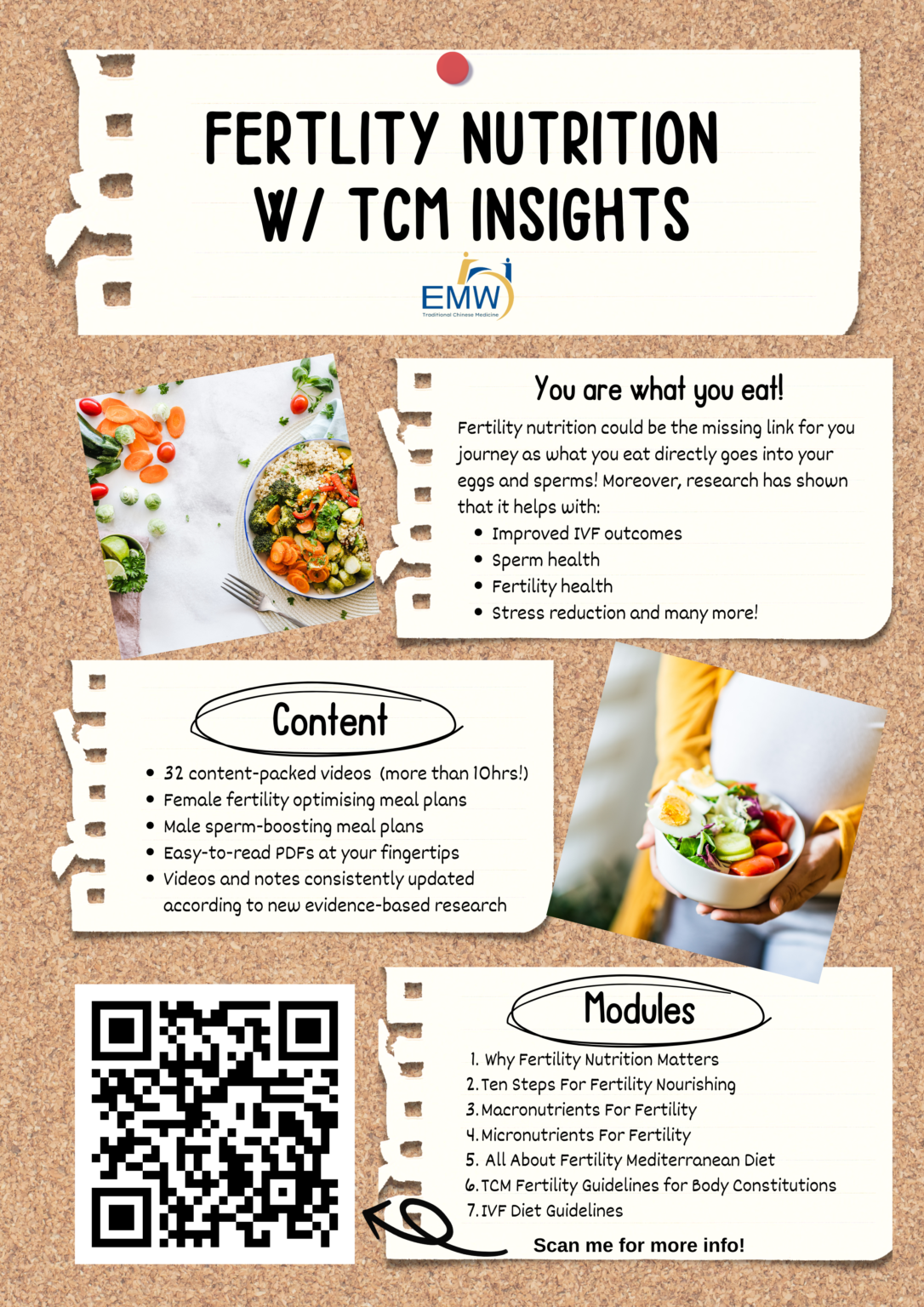
Our Flagship Ebook & Video Course
When to Seek Professional TCM Fertility Help
Fertility is not just a matter of age or hormones. It is a reflection of the body’s internal harmony. Traditional Chinese Medicine provides an integrative and natural way to restore this balance, supporting both physical and emotional readiness for conception.
At EMW TCM Singapore, our team of experienced physicians brings together centuries-old wisdom and modern evidence to guide your fertility journey. Whether you are trying naturally or preparing for IVF, we are here to help you create the best internal environment for new life to begin.
If you have been trying to conceive for more than six to twelve months, experience irregular menses, painful periods, or have been diagnosed with PCOS, endometriosis, or low sperm count, consider a consultation. Professional TCM fertility care aims to correct the underlying imbalance rather than simply forcing ovulation or hormone production.
Check out our links below to book your fertility consultation and begin your holistic journey toward conception.
EMW TCM Clinics
International Building Branch
360 Orchard Road, International Building #02-05/06
Singapore 238869
Book Your Appointment With Us Here: +65 89585869
Our Physicians
Principal TCM Physician
- M.Med(TCM Gynaecology)
- B.Sc(Hons) Biomedical Sciences
- Dip. Naturopath
- Ayurvedic Therapist(500hrs)
- Registered TCM Physician (Singapore MOH)
Senior TCM Physician
- M.Med(TCM Acupuncture & Moxibustion)
- B.Sc(Hons) Biomedical Sciences
- Certified Aromatherapist
- Registered TCM Physician (Singapore MOH)
TCM Physician
- M.Med(TCM Gynaecology)
- B.Sc(Hons) Biomedical Sciences
- Registered TCM Physician (Singapore MOH)
TCM Physician
- M.Med(TCM Acupuncture & Moxibustion)
- B.Sc(Hons) Biomedical Sciences
- Registered TCM Physician (Singapore MOH)
TCM Physician
- B.Med(TCM)
- B.Sc(Hons) Biomedical Sciences
- International Board-Certified Lactation Consultant (IBCLC)
- Registered TCM Physician (Singapore MOH)
References
- Chao JC et al. Antioxidant effects of Lycium barbarum polysaccharides. J Sci Food Agric. 2006. DOI: 10.1002/jsfa.2362
- Stener-Victorin E et al. Reduction of uterine artery blood flow impedance. Hum Reprod. 1996. DOI: 10.1093/oxfordjournals.humrep.a019187
- May-Panloup P et al. Mitochondrial biogenesis and oocyte quality. Hum Reprod Update. 2016. DOI: 10.1093/humupd/dmw006
- Stener-Victorin E & Wu X. Acupuncture effects on the reproductive system. Auton Neurosci. 2010. DOI: 10.1016/j.autneu.2009.12.001
- Tamura H et al. Melatonin and female reproduction. J Obstet Gynaecol Res. 2014. DOI: 10.1111/jog.12317