What's the link between Cold Womb & Fertility?
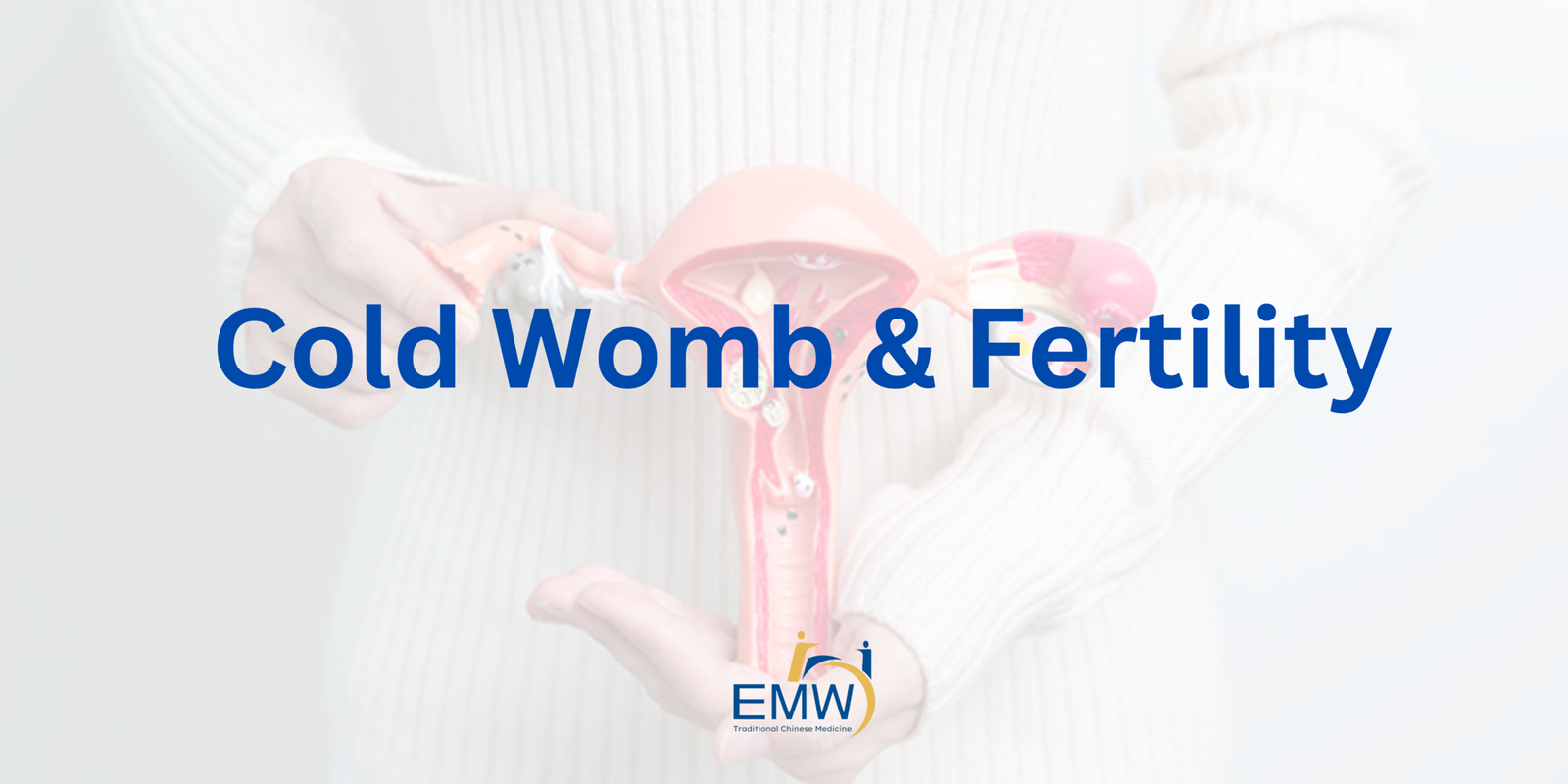
Many women are surprised when a fertility physician mentions Cold Womb Syndrome. The term can sound outdated or symbolic, yet it remains one of the most clinically relevant Traditional Chinese Medicine concepts in fertility care.
Cold uterus fertility issues are not about body temperature alone. They describe a functional state where uterine blood flow, hormonal signalling, and implantation capacity are compromised.
In Singapore, this pattern is increasingly common due to lifestyle factors such as chronic stress, dieting, air-conditioned environments, cold food intake, and delayed childbearing.
At EMW TCM, Cold Womb Syndrome is approached as a physiological condition that can be clearly explained using modern reproductive science, not folklore.
This article explains why a cold uterine environment can reduce fertility, how it presents clinically, and how warming strategies are applied ethically and evidence-based alongside IVF or natural conception.
What Is Cold Womb Syndrome in TCM Terms
In Traditional Chinese Medicine, the uterus is referred to as the Palace of the Child. It requires adequate warmth, blood flow, and nourishment to support ovulation, implantation, and early pregnancy.
Cold Womb Syndrome typically arises from:
- Kidney Yang deficiency
- Cold invasion from diet or environment
- Blood stagnation due to cold constriction
- Chronic depletion from stress or illness
Translated into modern terms, this reflects:
- Reduced uterine and pelvic blood flow
- Sluggish endometrial development
- Impaired progesterone response
- Increased uterine contractility
- Poor implantation conditions
Cold is constrictive. Whether described in TCM or biomedical language, the effect is the same.
Common Signs of Cold Womb Fertility Patterns
Women with Cold Womb fertility challenges often present with a cluster of symptoms rather than a single complaint.
Common features include:
- Painful menstrual cramps relieved by heat
- Dark or clotted menstrual flow
- Delayed ovulation or short luteal phase
- Low basal body temperature
- Cold hands and feet
- Fatigue and low libido
- Thin endometrium on ultrasound
Not every woman has all these symptoms. This is why pattern differentiation matters more than labels.
How Cold Affects Fertility in Biomedical Terms
1. Reduced Uterine Blood Flow
Adequate blood flow is essential for endometrial thickening and receptivity. Cold causes vasoconstriction, reducing oxygen and nutrient delivery to the uterine lining.
Studies show that poor uterine perfusion is associated with lower implantation rates, particularly in IVF cycles.
2. Impaired Progesterone Response
Progesterone is essential for implantation and early pregnancy stability. Cold-related metabolic and circulatory dysfunction may impair progesterone receptor sensitivity.
Clinically, this may present as spotting before periods or early pregnancy loss.
3. Increased Uterine Contractility
A cold, stressed uterus may be more prone to micro-contractions, which can interfere with embryo implantation. This is particularly relevant during embryo transfer windows.
Cold Womb and IVF Outcomes
In IVF care, Cold Womb fertility patterns often correlate with:
- Thin or poorly responsive endometrium
- Recurrent implantation failure
- Difficulty maintaining early pregnancy
- Poor response despite good-quality embryos
It is important to be clear. Cold Womb is not a diagnosis used in IVF clinics. However, the physiological findings associated with it are well recognised.
At EMW TCM, TCM pattern assessment is integrated with ultrasound findings, hormone reports, and IVF timelines to ensure alignment rather than contradiction.
Why Cold Womb Is Increasingly Common in Singapore
Cold Womb fertility patterns are no longer rare.
Contributing factors include:
- Chronic exposure to air-conditioning
- Frequent consumption of iced drinks and raw foods
- High stress and sympathetic nervous system dominance
- Skipping meals or restrictive dieting
- Excessive exercise without adequate recovery
- Repeated hormonal stimulation without recovery time
These factors impair circulation, digestion, and hormonal regulation over time.
TCM does not blame lifestyle. It explains how these factors accumulate physiologically.
Warming the Womb: What TCM Actually Does
Warming the womb does not mean applying heat indiscriminately.
Clinical warming strategies are targeted and timed.
Acupuncture
Acupuncture improves pelvic blood flow, regulates the autonomic nervous system, and reduces cold-induced vasoconstriction.
Specific point selection is critical. Generic protocols are often insufficient.
Moxibustion
Moxibustion is a heat-based therapy used selectively to warm the uterus and Kidney Yang. When used correctly, it improves circulation and endometrial response.
It is not appropriate for every patient and must be prescribed professionally.
Herbal Medicine
Herbal strategies focus on warming without overstimulation. They are adjusted based on menstrual phase and IVF timing.
At EMW TCM, herbal prescriptions are modified dynamically rather than used long-term without review.
Nutrition and Lifestyle for Cold Womb Fertility
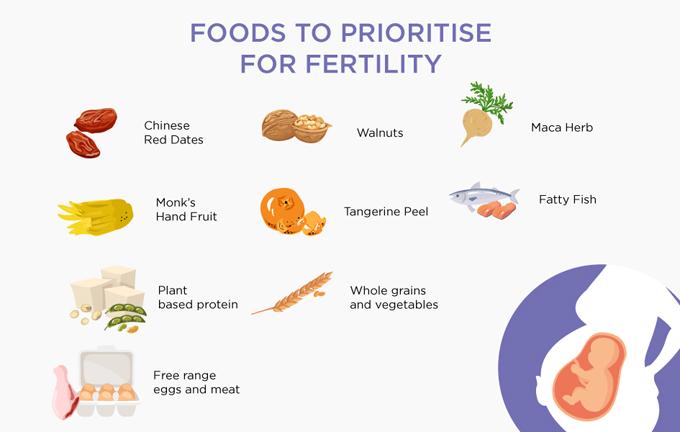
Food is one of the most powerful ways to warm the womb safely.
TCM-informed fertility nutrition emphasises:
- Warm, cooked meals
- Root vegetables and whole grains
- Adequate healthy fats
- Ginger, cinnamon, and warming spices in moderation
- Avoidance of iced drinks and excessive raw foods
This is not about restriction. It is about supporting digestion, circulation, and hormonal signalling.
Sleep, stress management, and gentle movement are equally important. Chronic cold patterns often coexist with burnout.
Why EMW TCM Approaches Cold Womb Differently
Many clinics treat Cold Womb fertility with formulaic warming herbs or heat therapies alone.
At EMW TCM, the approach is different.
Root-Cause Assessment
Is cold primary, or secondary to stress, blood deficiency, or repeated IVF cycles?
IVF-Aligned Timing
Warming strategies are adjusted around stimulation, transfer, and luteal phases.
Integrated Care
Nutrition, lifestyle, acupuncture, and herbs are coordinated rather than isolated.
Physician-Led Oversight
Treatment decisions are reviewed by senior fertility physicians, not delegated.
Ethical Communication
No promises. No fear-based diagnosis. Just physiology explained clearly.
This structured care is why many patients seek EMW TCM after unexplained IVF challenges.
Who Should Consider Cold Womb Assessment
Cold Womb fertility patterns are especially relevant for women with:
- Painful periods relieved by heat
- Thin endometrium
- Recurrent implantation failure
- Early pregnancy loss
- Fatigue with cold intolerance
- Poor response despite normal hormone levels
It is also relevant for women preparing for IVF who want to optimise uterine receptivity before stimulation begins.
What Warming the Womb Cannot Do
Clear expectations are essential.
Warming the womb cannot:
- Reverse genetic embryo issues
- Replace progesterone support when medically required
- Guarantee implantation or pregnancy
- Override age-related decline
Its role is to improve the uterine environment, not to promise outcomes.
How EMW TCM Help Your Fertility
From a biomedical perspective, acupuncture for fertility improves ovarian and uterine blood flow, regulates the hypothalamic-pituitary-ovarian axis, lowers cortisol, reduces inflammation, and supports hormonal balance. These effects complement TCM principles and help enhance egg development, implantation, and reproductive function.
1. Comprehensive Assessment
Your first consultation includes:
Cycle assessment
Digestion and hormonal review
Energy and stress evaluation
Sleep and lifestyle factors
Male fertility screening when relevant
2. Evidence-Based TCM Diagnosis
Qi stagnation
Blood deficiency
Spleen Qi weakness
Kidney Yin/Yang imbalance
Liver Qi constraint
Dampness and inflammation
3. Personalised Fertility Treatment Plan
Weekly fertility acupuncture
Customised herbal formulas
Stress reduction strategies
Lifestyle recommendations
TCM Acupuncture for Fertility Treatments
Acupuncture, one of the most researched TCM fertility tools, has been found to influence several physiological pathways related to reproduction.
A review published in Fertility and Sterility (2019) reported that acupuncture may improve blood flow to the uterus and ovaries, modulate stress hormones, and enhance endometrial receptivity. Another meta-analysis in Integrative Medicine Research (2021) concluded that acupuncture used alongside conventional fertility treatment can improve pregnancy outcomes and reduce anxiety levels in women undergoing IVF.
From a clinical standpoint, acupuncture helps regulate the hypothalamic-pituitary-ovarian axis, improving hormone balance and menstrual regularity. It can also reduce cortisol levels, encouraging the parasympathetic or “rest-and-rebuild” state which supports implantation and early pregnancy.
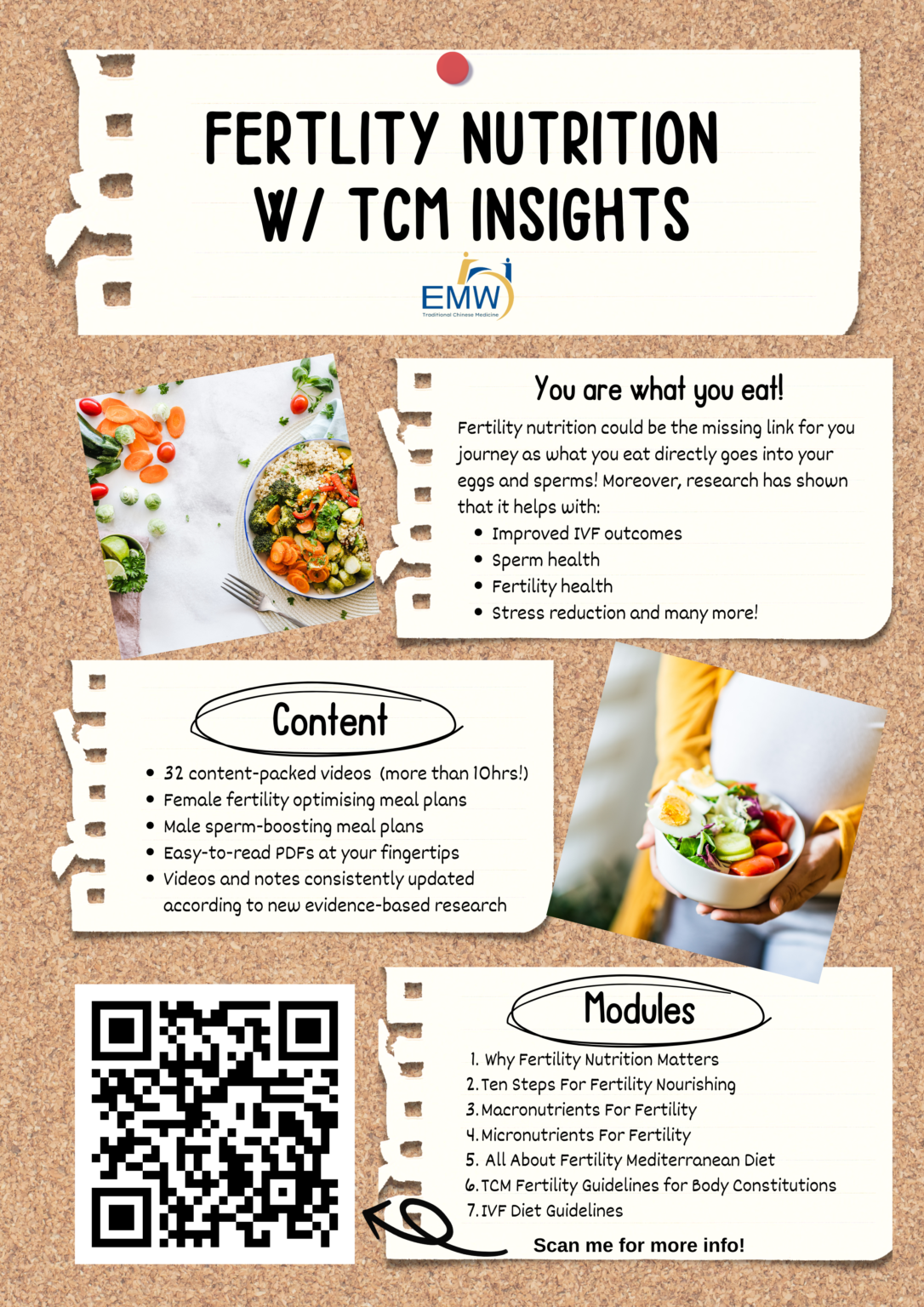
Our Flagship Ebook & Video Course
When to Seek Professional TCM Fertility Help
Fertility is not just a matter of age or hormones. It is a reflection of the body’s internal harmony. Traditional Chinese Medicine provides an integrative and natural way to restore this balance, supporting both physical and emotional readiness for conception.
At EMW TCM Singapore, our team of experienced physicians brings together centuries-old wisdom and modern evidence to guide your fertility journey. Whether you are trying naturally or preparing for IVF, we are here to help you create the best internal environment for new life to begin.
If you have been trying to conceive for more than six to twelve months, experience irregular menses, painful periods, or have been diagnosed with PCOS, endometriosis, or low sperm count, consider a consultation. Professional TCM fertility care aims to correct the underlying imbalance rather than simply forcing ovulation or hormone production.
Check out our links below to book your fertility consultation and begin your holistic journey toward conception.
EMW TCM Clinics
Scotts Medical Centre Branch
9 Scotts Road #10-04, Scotts Medical Centre @ Pacific Plaza,
Singapore 228210
Book Your Appointment With Us Here: +65 89585869
International Building Branch
360 Orchard Road, International Building #02-05/06
Singapore 238869
Book Your Appointment With Us Here: +65 89585869
Our Physicians
Principal TCM Physician
- M.Med(TCM Gynaecology)
- B.Sc(Hons) Biomedical Sciences
- Dip. Naturopath
- Ayurvedic Therapist(500hrs)
- Registered TCM Physician (Singapore MOH)
Senior TCM Physician
- M.Med(TCM Acupuncture & Moxibustion)
- B.Sc(Hons) Biomedical Sciences
- Certified Aromatherapist
- Registered TCM Physician (Singapore MOH)
TCM Physician
- M.Med(TCM Gynaecology)
- B.Sc(Hons) Biomedical Sciences
- Registered TCM Physician (Singapore MOH)
TCM Physician
- B.Med(TCM)
- B.Sc(Hons) Biomedical Sciences
- International Board-Certified Lactation Consultant (IBCLC)
- Registered TCM Physician (Singapore MOH)
References
- Paulus WE, Zhang M, Strehler E, El-Danasouri I, Sterzik K. Influence of acupuncture on the pregnancy rate in patients who undergo assisted reproduction therapy. Fertility and Sterility. 2002. DOI: 10.1016/S0015-0282(02)03165-2
- Smith CA, de Lacey S, Chapman M, Ratcliffe J, Norman RJ, Johnson NP. Effect of acupuncture vs sham acupuncture on live births among women undergoing in vitro fertilization. JAMA. 2018. DOI: 10.1001/jama.2018.18919
- Anderson BJ, Haimovici F, Ginsburg ES, Schust DJ, Wayne PM. In vitro fertilization and acupuncture: clinical efficacy and mechanistic basis. Alternative Therapies in Health and Medicine. 2007. DOI: 10.1016/j.explore.2007.04.001