
Chemical Pregnancy After IVF: 7 Important Questions Before Your Next FET
Your pregnancy test is positive.
After weeks of injections, appointments and waiting, you finally hear the news you have been hoping for.
But the excitement is short-lived.
Your fertility clinic calls a few days later. Your beta hCG level has dropped.
The pregnancy is no longer progressing.
It is called a chemical pregnancy.
For some women, this happens after their very first embryo transfer. For others, it comes after years of IVF treatment, multiple retrievals or previous unsuccessful transfers.
A chemical pregnancy after IVF can be particularly difficult because you have already seen that positive result. You may have started imagining the months ahead, only to be told that the pregnancy ended before the first ultrasound.
Naturally, you want answers.
Did the embryo implant?
Was something wrong with the embryo?
Was my progesterone too low?
Should I change my treatment before the next frozen embryo transfer (FET)?
And is there anything Traditional Chinese Medicine (TCM) can do to support my recovery and fertility preparation?
Before making changes to your next IVF cycle, there are seven important questions worth understanding.
Quick Answer: What Is a Chemical Pregnancy After IVF?
A chemical pregnancy, also called a biochemical pregnancy, is a very early pregnancy detected through a positive hCG blood or urine test that does not progress to an ultrasound-confirmed pregnancy.
In IVF, this may be identified when the first beta hCG test is positive, but subsequent tests show that the hormone level is falling.
A chemical pregnancy indicates that early pregnancy-related hCG production occurred. However, it does not prove that implantation occurred in the uterus, because the pregnancy location may not have been confirmed.
One chemical pregnancy does not mean your next FET will fail.
The next steps depend on your beta hCG results, embryo information, medical history and whether you have experienced previous pregnancy losses.
TCM may also be considered as complementary care during recovery and preparation for a subsequent IVF cycle.
1. Did My Embryo Actually Implant?
This is often the first question patients ask after receiving a positive pregnancy test that later becomes negative.
The answer requires a little explanation.
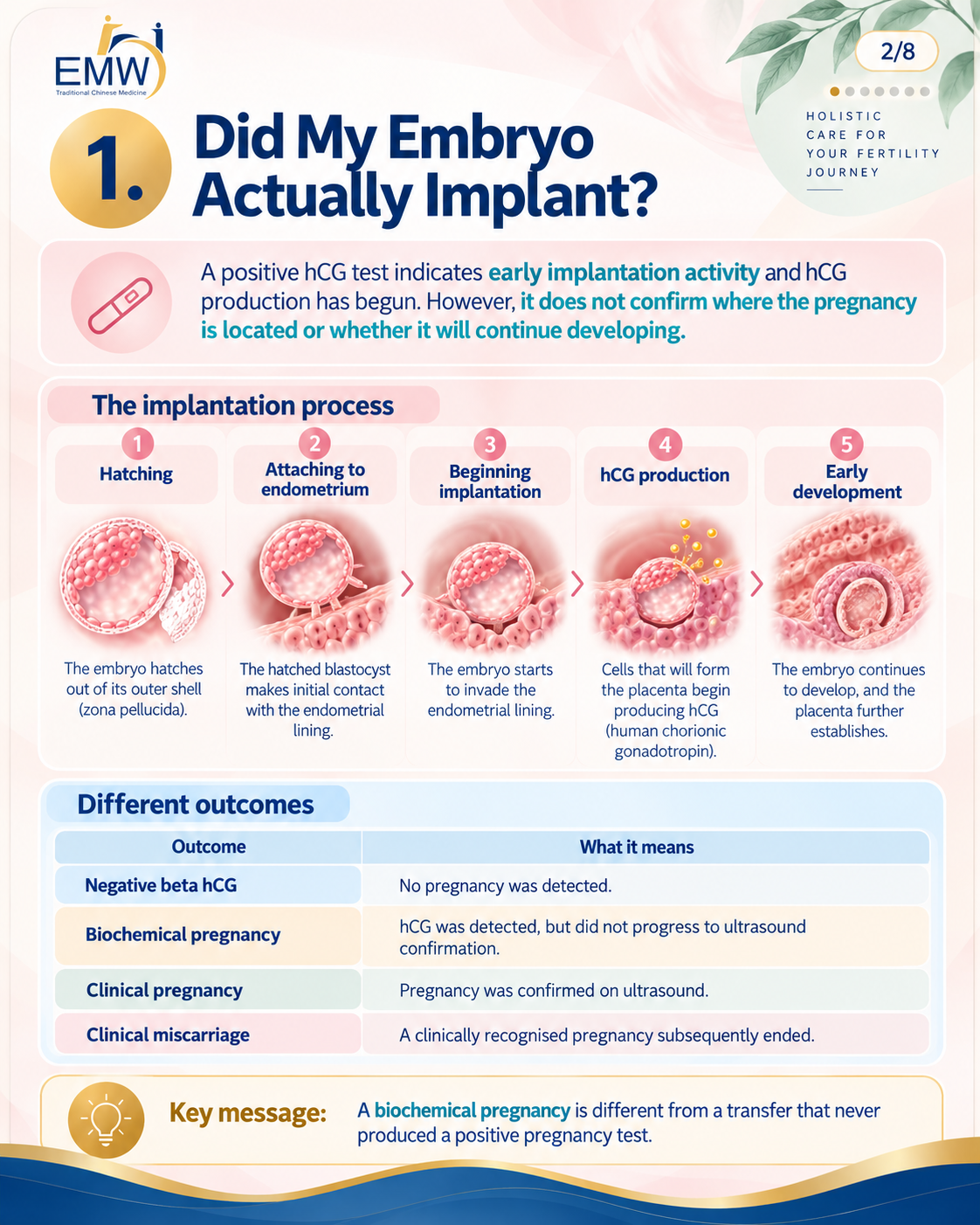
After embryo transfer, the embryo must undergo several processes before an ongoing pregnancy can develop.
These include:
- Hatching from its surrounding shell, if it has not already hatched
- Attaching to the endometrial lining
- Beginning implantation
- Developing cells that produce hCG
- Continuing early embryonic and placental development
When a genuine pregnancy-related beta hCG result becomes positive, it indicates that early implantation activity and hCG production have begun.
However, a positive hCG test does not establish where the pregnancy is located or whether it will continue developing.
How Is This Different From Failed Implantation?
There is an important difference between a completely negative pregnancy test and a biochemical pregnancy.
| Outcome | What It Means |
|---|---|
| Negative beta hCG | No pregnancy was detected at the time of testing |
| Biochemical pregnancy | hCG was detected, but pregnancy did not progress to ultrasound confirmation |
| Clinical pregnancy | Pregnancy was confirmed on ultrasound |
| Clinical miscarriage | A clinically recognised pregnancy subsequently ended |
A genuine biochemical pregnancy tells us something different from a transfer that never produced a positive pregnancy test.
But it does not automatically tell us why the pregnancy stopped developing.
2. What Do My Beta hCG Results Tell Me?
After a positive IVF pregnancy test, your clinic may arrange another blood test approximately 48 hours later.
The purpose is to assess how the pregnancy hormone level is changing.
In a developing early pregnancy, hCG generally rises over time, although the expected increase varies according to the starting level and clinical circumstances.
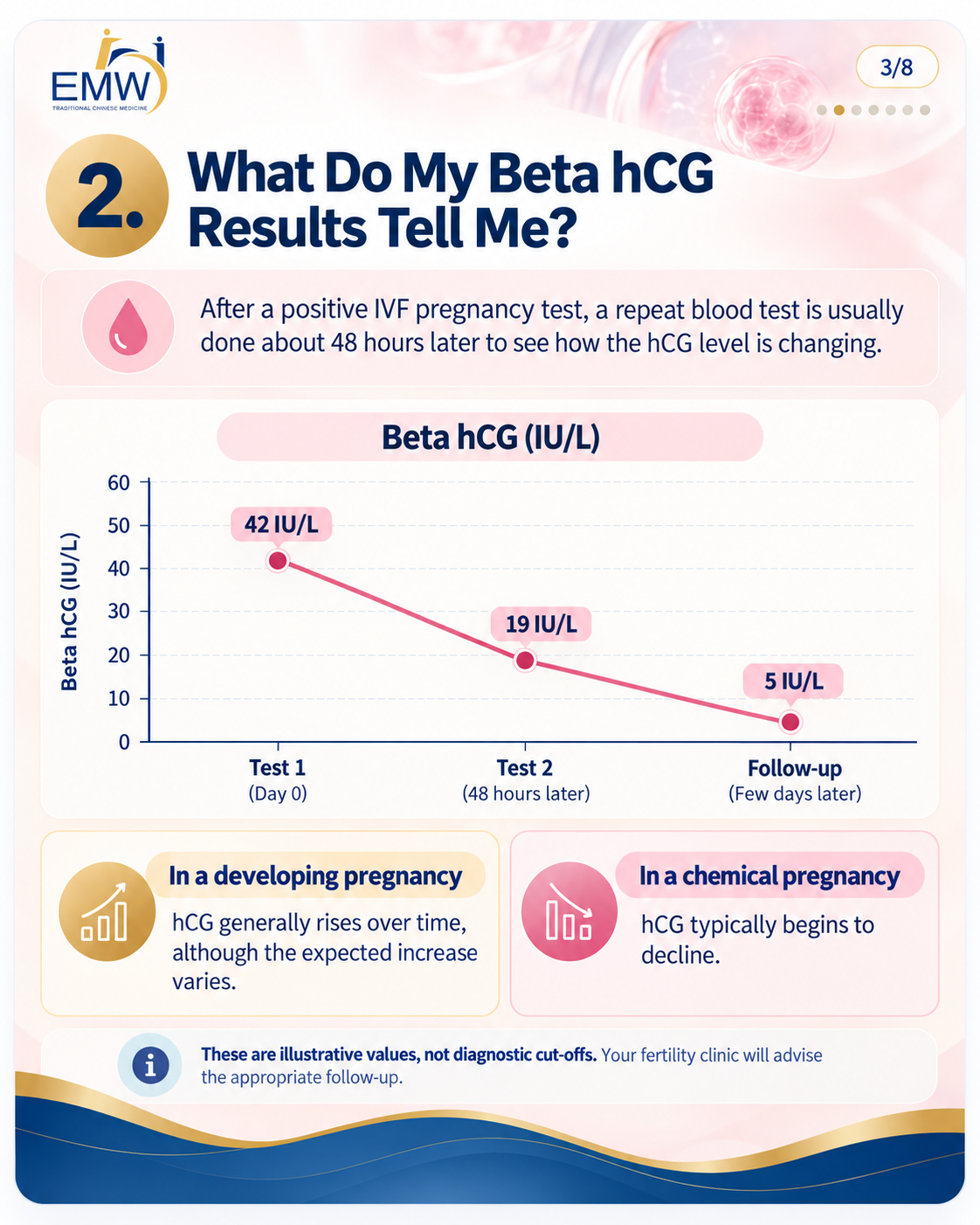
In a biochemical pregnancy, hCG typically begins to decline.
For example, a patient’s results might look like this:
| Blood Test | Illustrative Beta hCG |
|---|---|
| First test | 42 IU/L |
| Second test | 19 IU/L |
| Follow-up | 5 IU/L |
These are illustrative values, not diagnostic cut-offs.
The falling pattern would be consistent with a resolving early pregnancy, but the fertility clinic must still determine the appropriate follow-up.
3. Why Does a Chemical Pregnancy Happen?
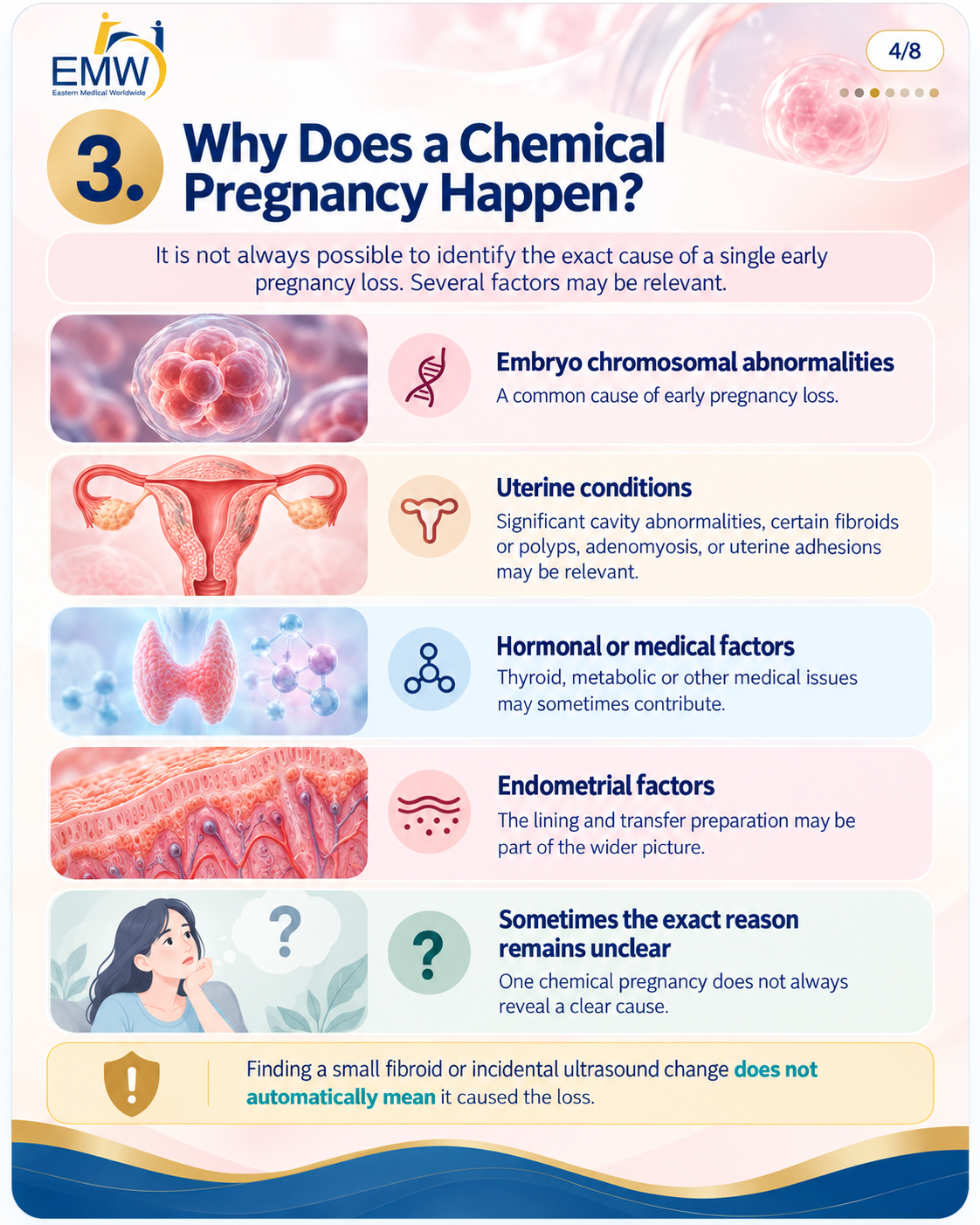
Unfortunately, it is not always possible to identify the exact cause of a single early pregnancy loss.
Several factors may be relevant.
Embryo Chromosomal Abnormalities
Chromosomal abnormalities are a common cause of early pregnancy loss.
An embryo may begin implantation and produce hCG but be unable to continue developing normally.
The risk of chromosomal abnormalities increases with maternal age, although younger women can also experience early pregnancy losses.
Uterine Conditions
Some conditions affecting the uterus may be relevant, particularly in patients with repeated losses.
Examples include:
- Significant uterine cavity abnormalities
- Certain fibroids or polyps
- Adenomyosis
- Uterine adhesions
However, finding a small fibroid or an incidental ultrasound abnormality does not automatically mean it caused the pregnancy loss.
The significance depends on its size, location and effect on the uterine cavity.
4. Does a Chemical Pregnancy Mean My Embryo Was Poor Quality?
Not necessarily.
A chemical pregnancy can occur after transfer of a highly graded blastocyst.
It can also happen after transfer of an embryo that has been reported as chromosomally normal through preimplantation genetic testing for aneuploidy (PGT-A).
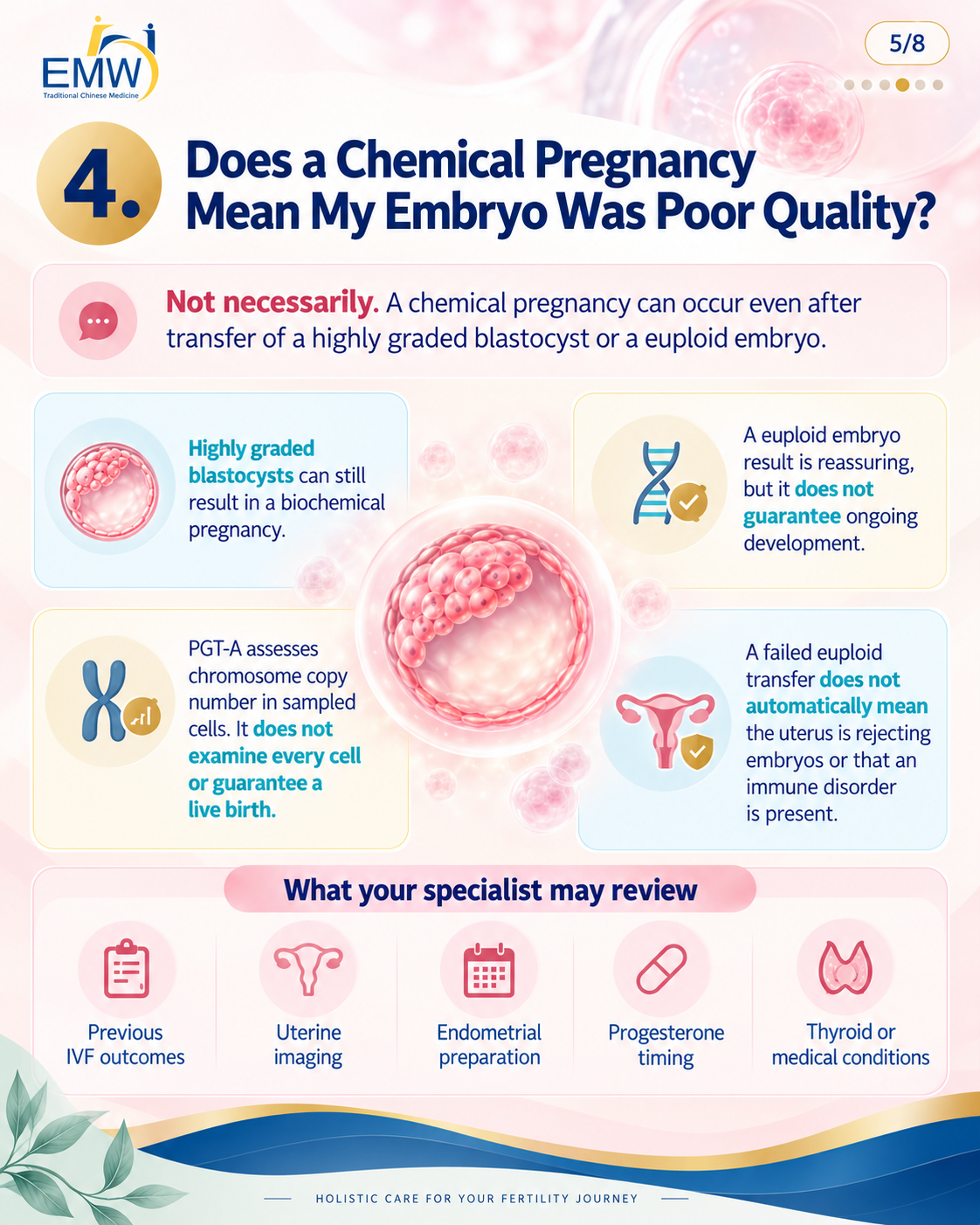
PGT-A assesses chromosome copy number in sampled embryo cells. It does not examine every cell or guarantee normal subsequent development.
What If My Embryo Was Euploid?
A euploid result is generally reassuring regarding the chromosomes assessed.
However, a euploid embryo can still result in an unsuccessful transfer or early pregnancy loss.
If this happens, your fertility specialist may review the wider clinical picture.
Relevant considerations may include:
- Previous pregnancy and IVF outcomes
- Uterine imaging
- Endometrial preparation
- Progesterone timing and administration
- Thyroid function or other medical conditions when indicated
An unsuccessful transfer of a euploid embryo does not automatically mean the uterus is rejecting embryos or that an immune disorder is present.
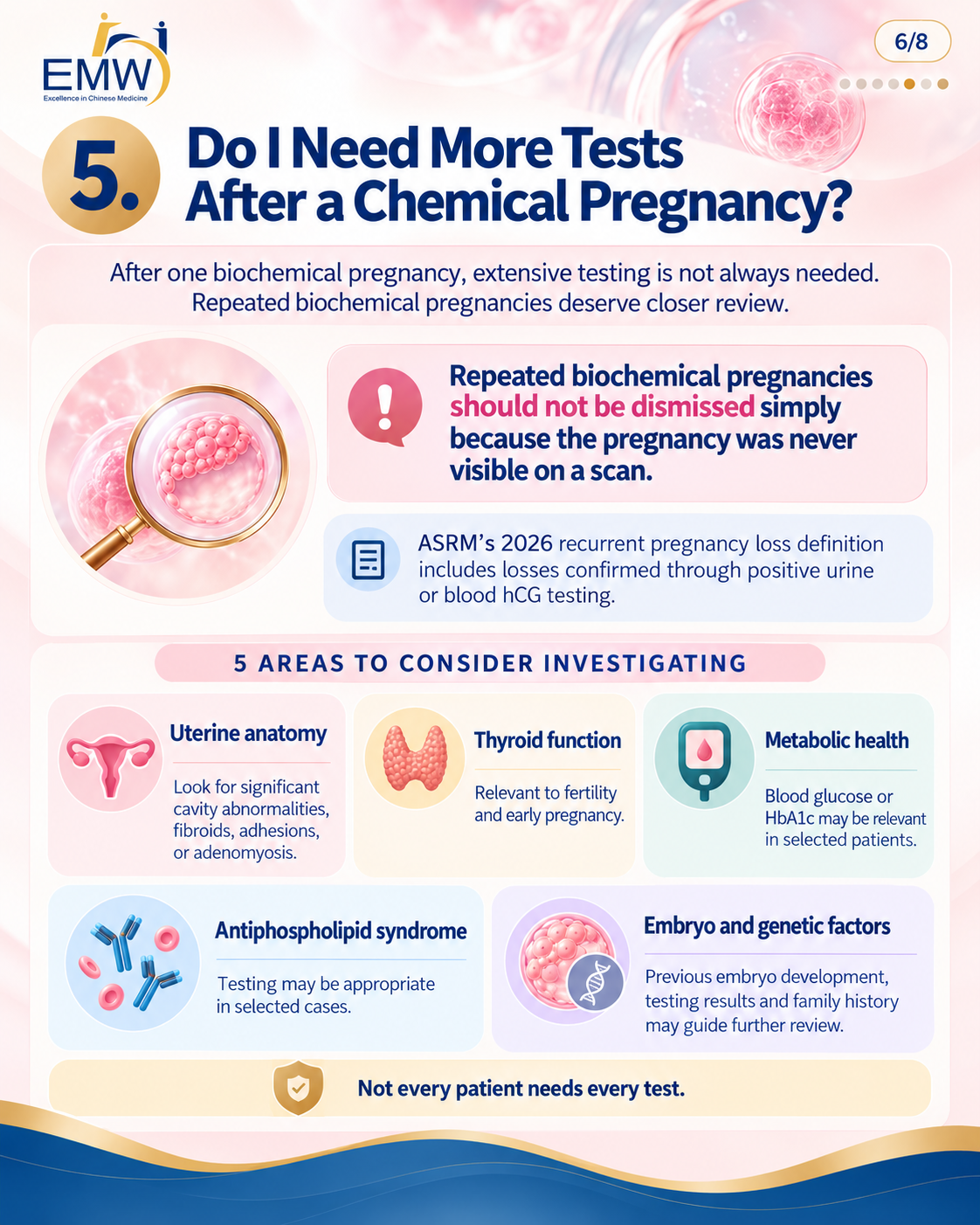
5. Do I Need More Tests After a Chemical Pregnancy?
This depends on your previous history.
If you have experienced one biochemical pregnancy, your fertility specialist may recommend reviewing the cycle and proceeding with another transfer when medically appropriate.
One early loss does not automatically justify a large panel of investigations.
However, repeated biochemical pregnancies deserve closer attention.
Do Chemical Pregnancies Count as Recurrent Pregnancy Loss?
Yes, they can.
The American Society for Reproductive Medicine’s 2026 guideline defines recurrent pregnancy loss as two or more spontaneous pregnancy losses, excluding confirmed ectopic and molar pregnancies.
Importantly, the guideline includes losses confirmed through positive urine or blood hCG testing. Ultrasound confirmation is not required.
This means repeated biochemical pregnancy losses should not simply be dismissed because the pregnancy was never visible on a scan.
After two or more losses, an individualised review may be appropriate.
What Investigations Might Be Considered?
Depending on your history, your fertility specialist may review:
Uterine anatomy
Ultrasound or other investigations may help identify significant cavity abnormalities, fibroids, adhesions or adenomyosis.
Thyroid function
Thyroid dysfunction is relevant to fertility and early pregnancy, particularly in patients with recurrent losses.
Metabolic health
Blood glucose or HbA1c testing may be appropriate in patients with diabetes risk factors, PCOS or relevant medical history.
Antiphospholipid syndrome
Testing may be appropriate in selected patients based on their pregnancy and medical history.
Embryo and genetic factors
Previous embryo development, testing results and relevant family history may inform further assessment.
Not every patient needs every test.
6. Should My Next Frozen Embryo Transfer Be Managed Differently?
After a chemical pregnancy after IVF, it is understandable to want a completely different treatment plan.
But changing everything does not necessarily improve the next outcome.
Start by reviewing the previous transfer.
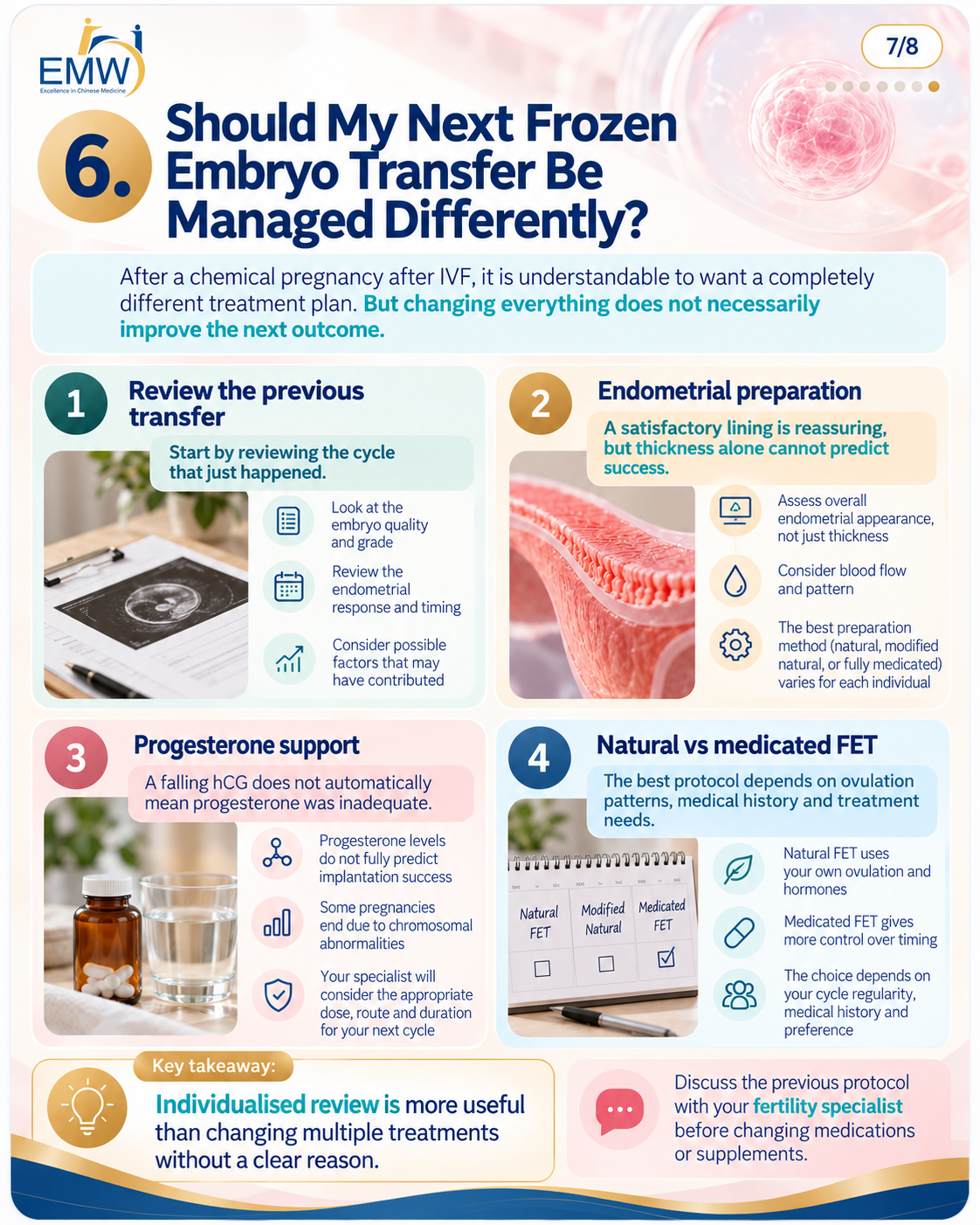
Was the Endometrial Preparation Appropriate?
Your fertility specialist may review the endometrial lining, transfer protocol and timing of medications.
A satisfactory lining measurement is reassuring, but thickness alone cannot tell us whether an embryo will implant successfully.
Should Progesterone Support Be Changed?
Progesterone is essential for supporting the endometrium in an FET cycle.
However, a falling pregnancy hCG result does not automatically mean progesterone was inadequate.
Taking more progesterone is not always the solution.
Should I Switch From Medicated to Natural FET?
A natural or modified natural FET uses the patient’s ovulatory cycle, while a medicated FET generally relies on prescribed hormones to prepare the lining.
The most suitable protocol depends on ovulation patterns, medical history and treatment requirements
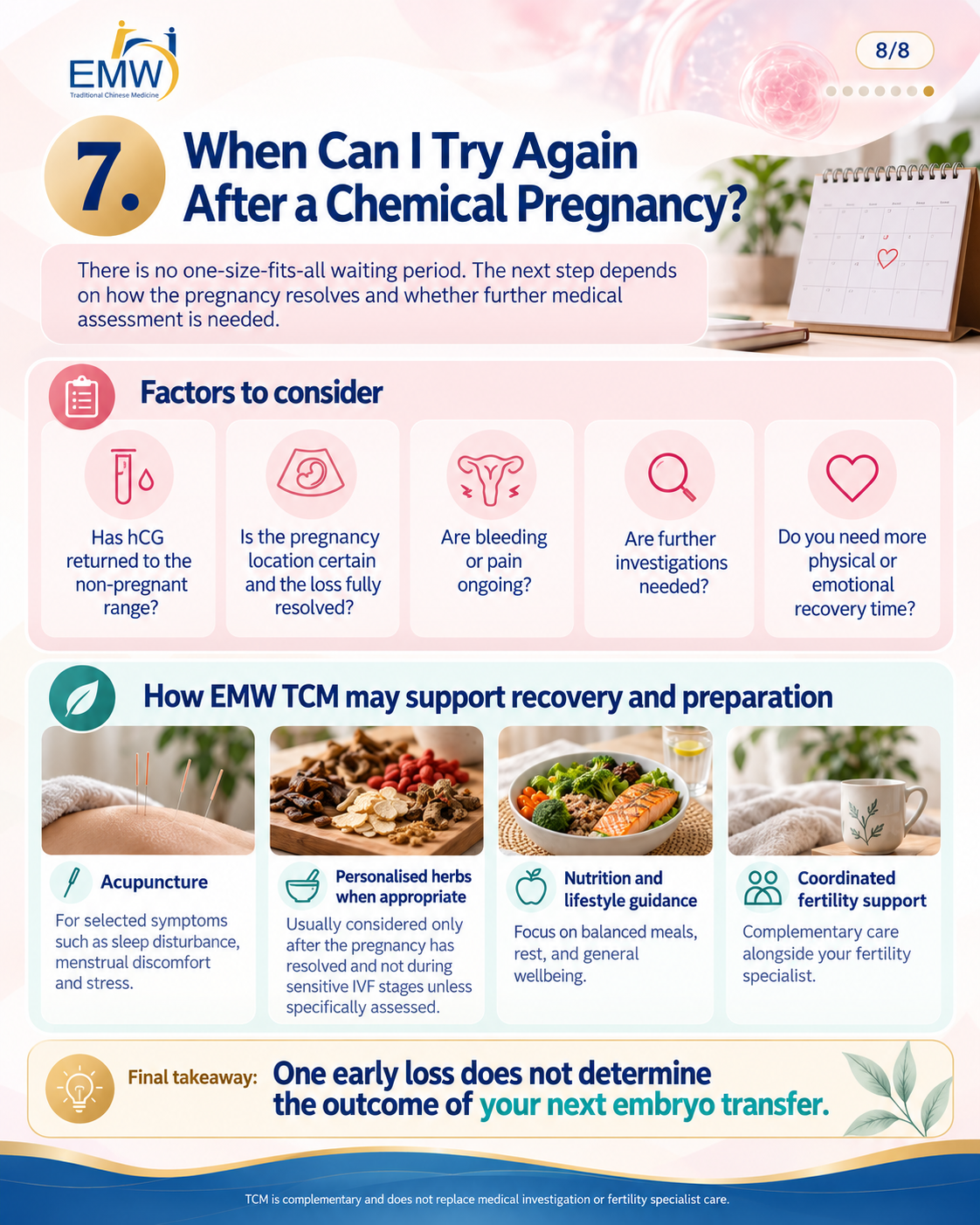
7. When Can I Try Again After a Chemical Pregnancy?
The answer depends on how the pregnancy resolves and whether additional medical assessment is required.
In an uncomplicated biochemical pregnancy, recovery may be relatively quick.
Some patients can begin planning another cycle after the pregnancy has fully resolved and their fertility clinic has cleared them to proceed.
Others may require more time, particularly if:
- hCG has not returned to the nonpregnant range
- Pregnancy location remains uncertain
- There is persistent bleeding or pain
- Further investigations are needed
- Another medical condition requires treatment
- They need time away from fertility treatment
You do not necessarily need to wait several months after an uncomplicated biochemical pregnancy.
However, do not begin a new cycle before your fertility clinic confirms that it is appropriate.
Should I Use the Break to Prepare for My Next FET?
This can be a useful time to review aspects of health that may have been overlooked during IVF treatment.
For example:
- Are you eating regularly?
- Are you getting enough protein and iron-rich foods?
- Has bleeding left you feeling unusually fatigued?
- Is your sleep particularly disrupted?
- Are you managing an existing thyroid or metabolic condition?
- Have you reviewed your medications and supplements?
You do not need an extreme fertility diet or a cupboard full of supplements.
For many patients, focusing on consistent meals, adequate rest, comfortable movement and appropriate medical follow-up is a sensible starting point.
How Does TCM Understand Early Pregnancy Loss?
In Traditional Chinese Medicine, early pregnancy loss may be discussed within traditional concepts such as 胎漏, 胎动不安 or 堕胎, depending on the presentation and stage.
Following a confirmed and completed loss, the physician may also consider patterns associated with reproductive weakness, menstrual disturbance, Qi and Blood deficiency or emotional tension.
TCM diagnosis is not based solely on the fact that a miscarriage occurred.
At EMW TCM, our physicians assess menstrual history, bleeding characteristics, digestive function, sleep, energy levels, fertility history, tongue and pulse before developing a treatment plan.
Kidney Deficiency (肾虚)
In TCM theory, the Kidney system is closely associated with reproductive development and the maintenance of pregnancy.
Patients with relevant Kidney deficiency patterns may report symptoms such as fatigue, lower back soreness or other constitutional signs.
Treatment principles may involve supporting Kidney Qi, Yin or Yang depending on the presentation.
However, a biochemical pregnancy does not automatically mean a patient has Kidney deficiency.
Qi and Blood Deficiency (气血两虚)
After pregnancy loss, some patients may experience tiredness, dizziness or reduced energy, particularly if bleeding has been substantial.
TCM treatment may focus on supporting Qi and Blood when the pattern is appropriate.
Symptoms such as significant dizziness or prolonged bleeding also require medical assessment to exclude anaemia or other problems.
Liver Qi Stagnation (肝气郁结)
IVF can involve a prolonged period of physical and emotional strain.
Some patients experience poor sleep, abdominal distension, irritability or menstrual changes after a difficult treatment cycle.
Within TCM, Liver Qi Stagnation may be considered when the full pattern is present.
Treatment may focus on regulating Qi and addressing associated symptoms.
Blood Stasis (血瘀)
Blood Stasis may be considered when there are relevant symptoms such as pronounced menstrual cramps, dark clots or other traditional signs.
However, Blood Stasis is not equivalent to a diagnosed blood-clotting disorder or poor uterine circulation.
Strongly blood-moving herbs or treatment techniques should not be used while pregnancy is ongoing or its resolution remains uncertain.
How EMW TCM Supports Recovery and Preparation Before Your Next FET
For patients who have experienced a chemical pregnancy after IVF, EMW TCM provides personalised complementary fertility care.
Our approach is not to assume that the pregnancy ended because the body was too weak, the uterus was too cold or implantation was insufficient.
Instead, we begin by reviewing what happened medically and assessing the patient’s current symptoms.
TCM treatment is planned after appropriate medical follow-up, and it changes according to the stage of the IVF cycle.
Step 1: Reviewing Your Previous IVF and Pregnancy Results
During the first consultation, our physician may discuss:
- Number and grading of embryos transferred
- Day 5 or Day 6 blastocyst development
- PGT-A results, if available
- Natural or medicated FET protocol
- Endometrial measurements
- Progesterone support
- Initial and subsequent beta hCG results
- Previous biochemical pregnancies or miscarriages
- Medical conditions such as PCOS, adenomyosis or thyroid dysfunction
- Current menstrual, digestive and sleep symptoms
We also check whether the fertility specialist has confirmed that the pregnancy has resolved.
If hCG remains positive, the pregnancy location is uncertain or bleeding and pain are ongoing, medical follow-up takes priority over routine fertility acupuncture or herbal treatment.
Step 2: Acupuncture During Recovery
Once the pregnancy has fully resolved and the patient is medically stable, acupuncture may be considered for suitable symptoms.
Treatment may focus on:
Managing menstrual discomfort
Some patients experience changes in menstrual flow, cramping or cycle timing after an early pregnancy loss.
The physician assesses the symptoms before selecting appropriate acupuncture techniques.
Supporting sleep and relaxation
For patients experiencing disrupted sleep or emotional tension, acupuncture may be incorporated into supportive care.
Addressing accompanying TCM patterns
Treatment may differ for someone presenting with Qi and Blood deficiency compared with a patient whose main concerns are menstrual pain and Liver Qi Stagnation.
The selection of points is individualised.
Acupuncture is not a proven treatment for preventing biochemical pregnancy loss, but it may be used to support general wellbeing and selected symptoms during recovery.
Step 3: Personalised Chinese Herbal Medicine
Chinese herbal medicine may be considered in selected patients after the pregnancy has resolved and before active fertility treatment.
The prescription is based on the TCM assessment.
For example, the physician may consider treatment principles such as:
- Supporting Qi and Blood when deficiency is present
- Nourishing Kidney Yin or Yang when appropriate
- Regulating Liver Qi
- Addressing digestive weakness
- Managing menstrual symptoms
However, not every patient requires herbal treatment.
There is insufficient reliable clinical evidence that Chinese herbs prevent another chemical pregnancy.
Herbs must also be reviewed for possible interactions with prescribed medications.
At EMW TCM, herbal treatment is generally paused or avoided during sensitive IVF stages, particularly around embryo transfer and possible early pregnancy, unless specifically assessed as appropriate in coordination with the fertility specialist.
Step 4: Preparing for the Next FET
If another frozen embryo transfer is planned, our physician develops an acupuncture schedule around the fertility clinic’s timeline.
Depending on the available preparation period and the patient’s condition, treatment may involve:
During the early preparation phase
Acupuncture approximately twice weekly during the first two weeks when appropriate, followed by weekly appointments.
This is an individualised clinic approach, not a medically proven minimum treatment frequency.
Before embryo transfer
Approximately three pre-transfer acupuncture sessions may be considered according to the patient’s clinical needs and schedule.
Around embryo transfer
For suitable patients, sessions may be arranged within 24 hours before and after transfer, with an additional appointment approximately three to five days later where appropriate.
Treatment after ovulation and transfer is modified for possible early pregnancy.
Abdominal needling and techniques considered inappropriate during this stage are avoided.
Current evidence has not established that peri-transfer acupuncture reliably increases live birth rates or prevents miscarriage.
Our aim is to provide appropriate complementary support rather than promise a particular IVF outcome.
Step 5: Practical Diet and Lifestyle Guidance
Recovery does not have to involve complicated restrictions.
At EMW TCM, we generally encourage a balanced approach.
Eat warm, nourishing meals if they are comfortable for you.
Soups, cooked vegetables, rice, fish, eggs and other protein sources can form part of a balanced diet.
Warm meals may be preferred within TCM dietary practice, but there is no evidence that eating cold food causes a chemical pregnancy.
Include iron-rich foods if you have experienced bleeding.
Lean meat, legumes and leafy vegetables can provide dietary iron.
If you have heavy bleeding, marked fatigue or symptoms of anaemia, speak to your doctor about appropriate testing.
Continue prescribed folic acid or prenatal supplementation.
For most women planning pregnancy, folic acid supplementation is recommended. The correct dose depends on individual medical needs.
Make sleep more manageable.
Aim for a consistent routine where possible. If sleep disturbance is severe or persistent, discuss it with your healthcare professional.
Do not blame yourself for being stressed.
Emotional wellbeing deserves attention, but an early pregnancy loss should not be attributed to ordinary stress without evidence.
Can TCM Prevent Another Chemical Pregnancy?
This is a question we believe deserves a careful answer.
TCM can offer complementary support for selected symptoms during fertility preparation, including menstrual discomfort, sleep problems and other health concerns identified during consultation.
However, acupuncture and Chinese herbal medicine have not been proven to prevent recurrent biochemical pregnancy loss or guarantee that a subsequent embryo transfer will result in a live birth.
The most useful approach is to combine appropriate medical evaluation with individualised supportive care.
At EMW TCM, we work within the patient’s IVF treatment timeline and encourage coordination with their fertility specialist.
Frequently Asked Questions
1. Does a Chemical Pregnancy Mean My Body Rejected the Embryo?
No. A biochemical pregnancy can happen for several reasons, and a single loss does not prove that the uterus rejected the embryo or that the immune system is attacking it.
2. Can I Have a Successful Pregnancy After a Chemical Pregnancy?
Yes. Many women go on to have successful pregnancies after an early pregnancy loss. Your individual prospects depend on factors such as age, embryo quality, fertility diagnosis and previous pregnancy history.
3. Can Low Progesterone Cause a Chemical Pregnancy?
Inadequate progesterone exposure may affect certain IVF cycles, but a low progesterone result during a failing pregnancy can also be a consequence rather than the original cause of the loss. Your fertility specialist should interpret it in context.
4. Is a Chemical Pregnancy More Common With Day 6 Embryos?
Embryo developmental timing and grade may be associated with differences in pregnancy outcomes, but a Day 6 embryo can still produce a healthy pregnancy. A biochemical loss should not automatically be attributed to the embryo being Day 6.
5. Do I Need a Hysteroscopy Before My Next Transfer?
Not necessarily. Hysteroscopy may be useful when uterine cavity abnormalities are suspected, but it is not a routine requirement after one chemical pregnancy.
6. Should I Take Chinese Herbs Immediately After a Chemical Pregnancy?
Do not begin herbs while the pregnancy status is uncertain or while hCG remains positive without specialist assessment. Confirm resolution with your fertility clinic first. A registered TCM physician can then advise whether herbs are appropriate.
7. How Long Should I Prepare With TCM Before FET?
The treatment period is individualised. Some patients seek TCM care several weeks before transfer, while others begin earlier. There is no proven number of acupuncture sessions required to prevent another early pregnancy loss.
Before Your Next FET, Understand What Happened
A positive pregnancy test followed by a negative result can be one of the most emotionally difficult experiences during IVF.
You had a reason to feel hopeful.
And you may now be afraid that the same thing will happen again.
But one early loss does not determine the outcome of your next embryo transfer.
Before beginning another cycle, review your pregnancy results, previous treatment protocol and relevant medical history with your fertility specialist.
If there have been repeated losses, ask whether further investigations are appropriate.
At EMW TCM Singapore, our physicians provide personalised TCM care to support recovery and preparation for future fertility treatment, with acupuncture, appropriate herbal medicine and practical lifestyle guidance according to individual needs.
Looking for more fertility information?
Read our other articles at www.emw.sg/blog.
Explore our EMW Fertility Optimisation Bundle for fertility nutrition, TCM principles and practical lifestyle guidance.
Enquire about a fertility consultation with EMW TCM via WhatsApp.
This article is intended for education and does not replace advice from your fertility specialist. Acupuncture and Chinese herbal medicine are complementary treatments and should not delay medical investigation or management of pregnancy loss.
References
- American Society for Reproductive Medicine (2026). Recurrent Pregnancy Loss: A Committee Opinion.
- European Society of Human Reproduction and Embryology (2023). Recurrent Pregnancy Loss Guideline.
- NICE. Ectopic Pregnancy and Miscarriage: Diagnosis and Initial Management (NG126).
- Human Fertilisation and Embryology Authority. Complementary and Alternative Therapies.
- Smith CA, et al. (2018). Effect of Acupuncture vs Sham Acupuncture on Live Births Among Women Undergoing IVF. JAMA.