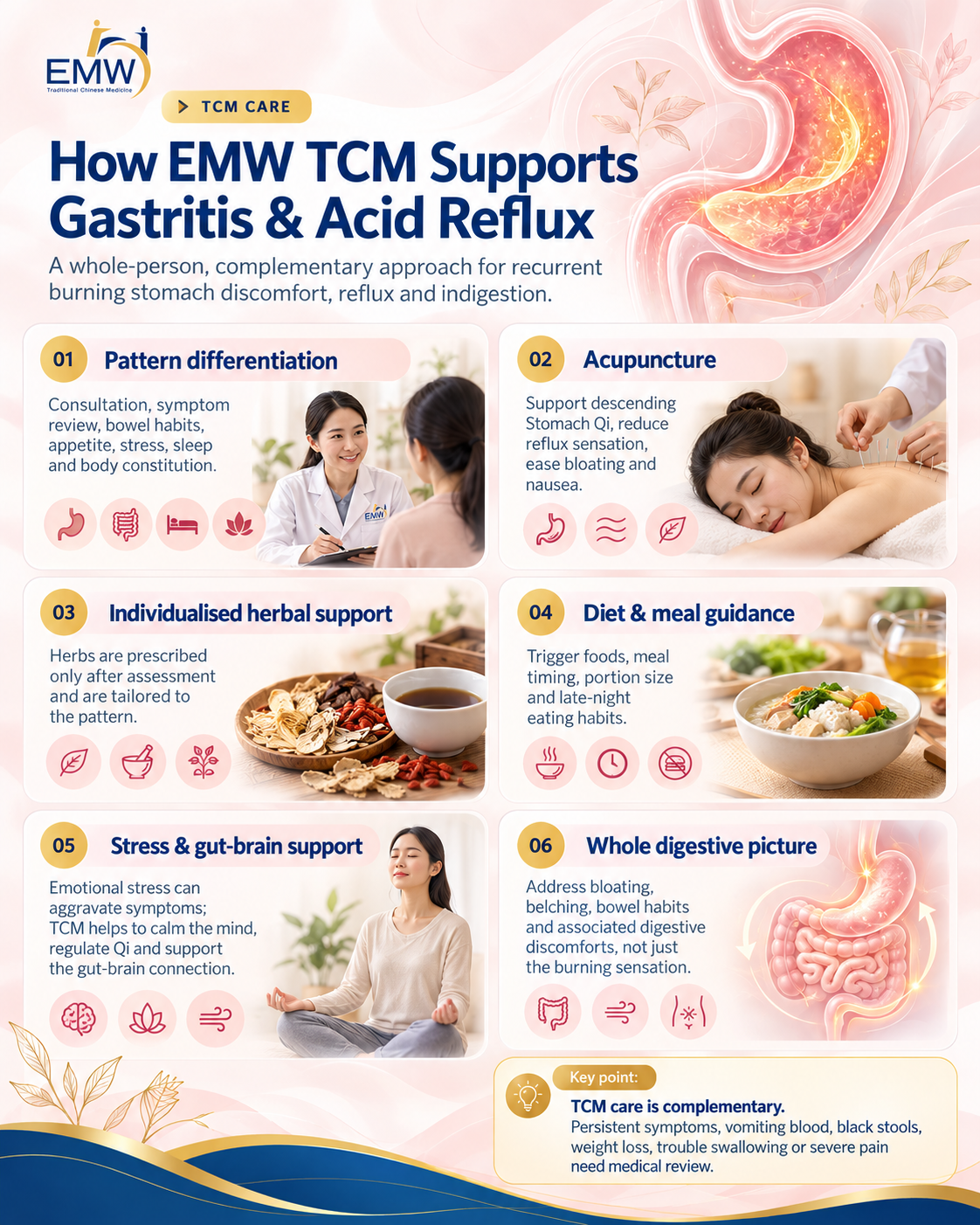
At EMW TCM Singapore, our gut health approach combines an individualised TCM assessment with appropriate acupuncture, Chinese herbal medicine and practical lifestyle guidance.
We also consider existing medical diagnoses and investigation results.
Our aim is to help manage suitable digestive symptoms and support the patient’s wellbeing alongside appropriate conventional care.
1. Understanding Your Symptoms Before Treatment
During your first consultation, our physician will ask questions such as:
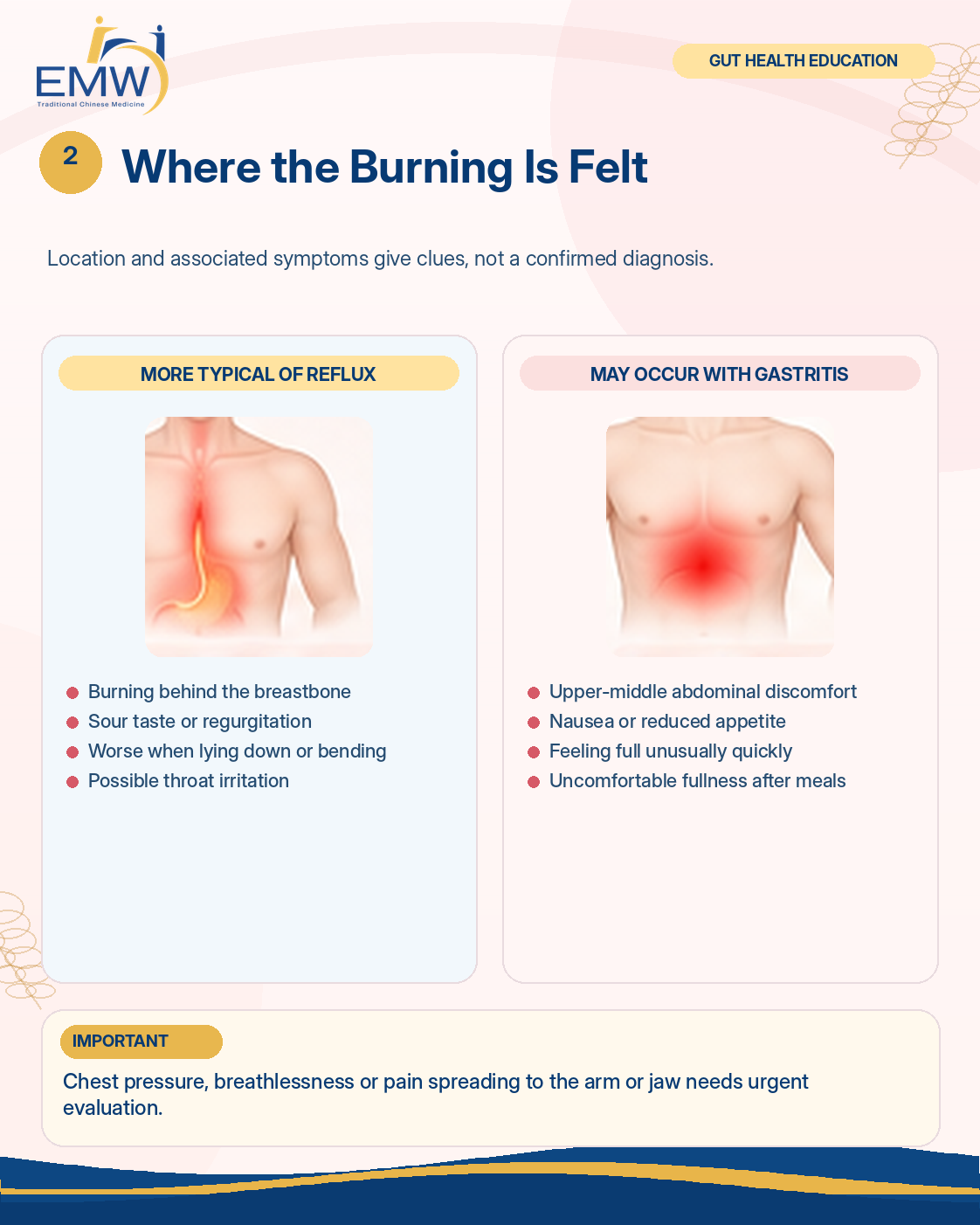
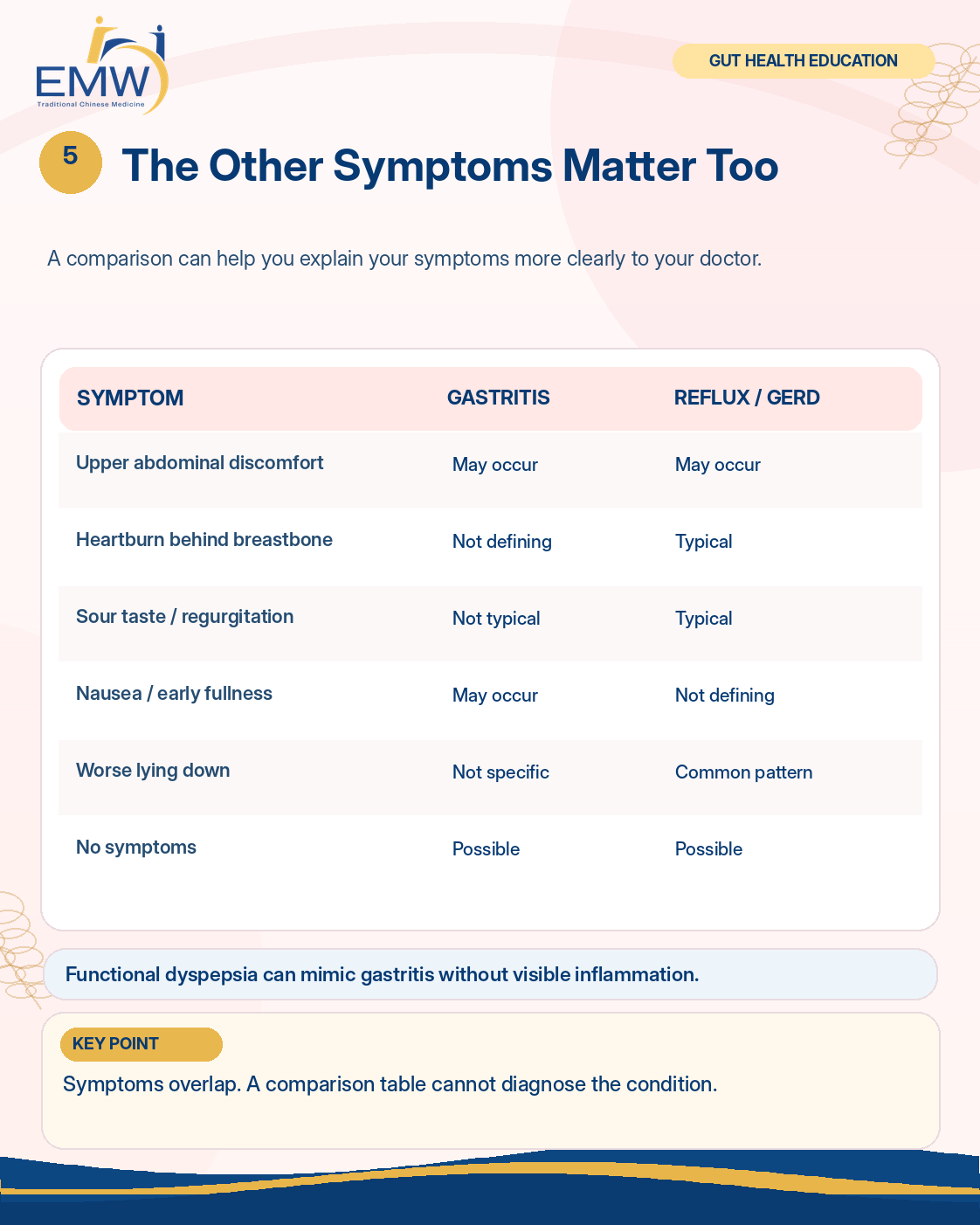
- Where exactly is the burning?
- Does the discomfort travel towards your chest or throat?
- Do you experience sour regurgitation?
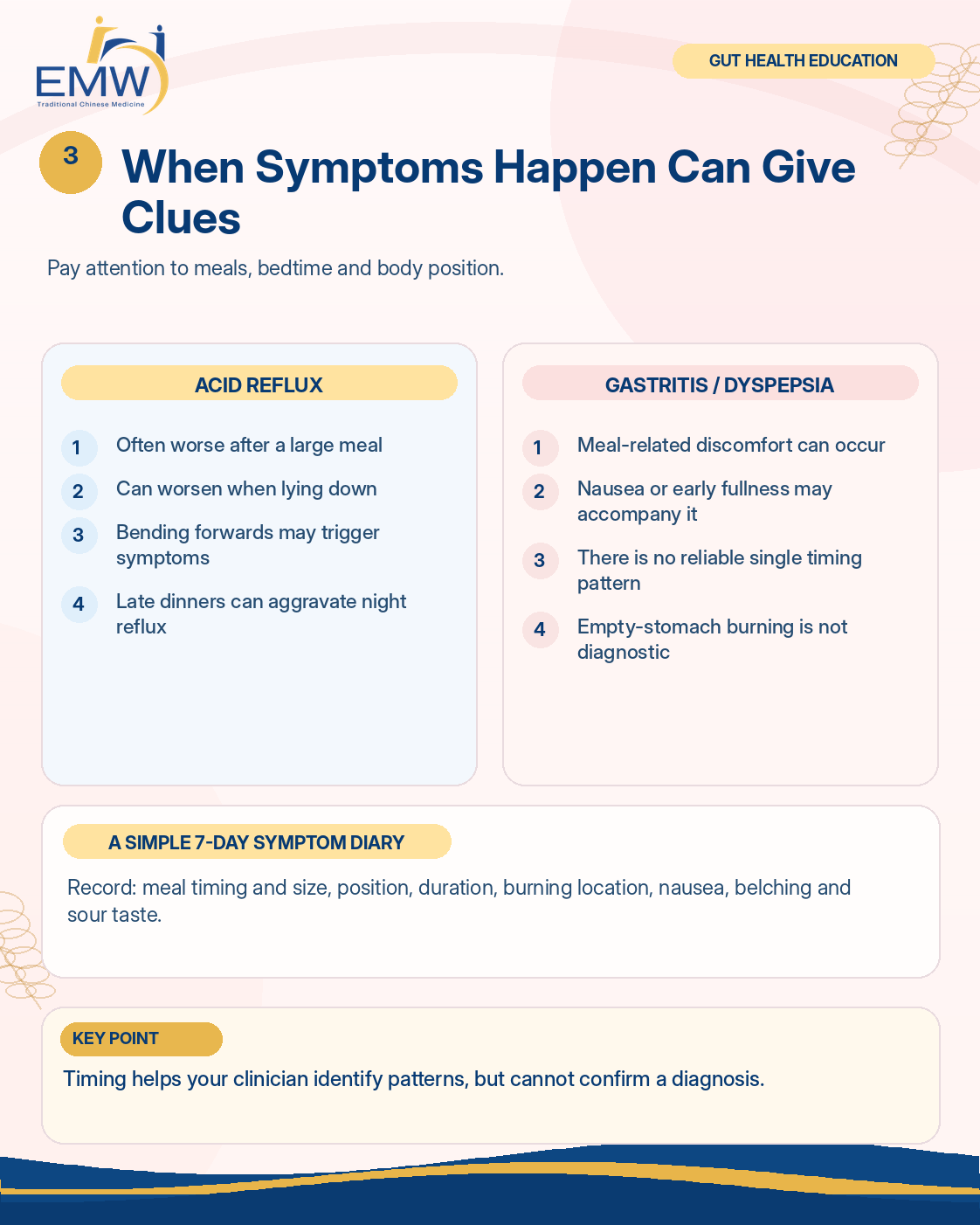
- Is it worse before or after meals?
- Does it occur during the night?
- How often do you experience belching or bloating?
- Do you feel full after only a small amount of food?
- Are your bowel movements regular?
- How is your appetite?
- Have you been experiencing significant stress?
- Are you taking antacids, PPIs, painkillers or supplements?
We also assess your tongue, pulse and other TCM findings.
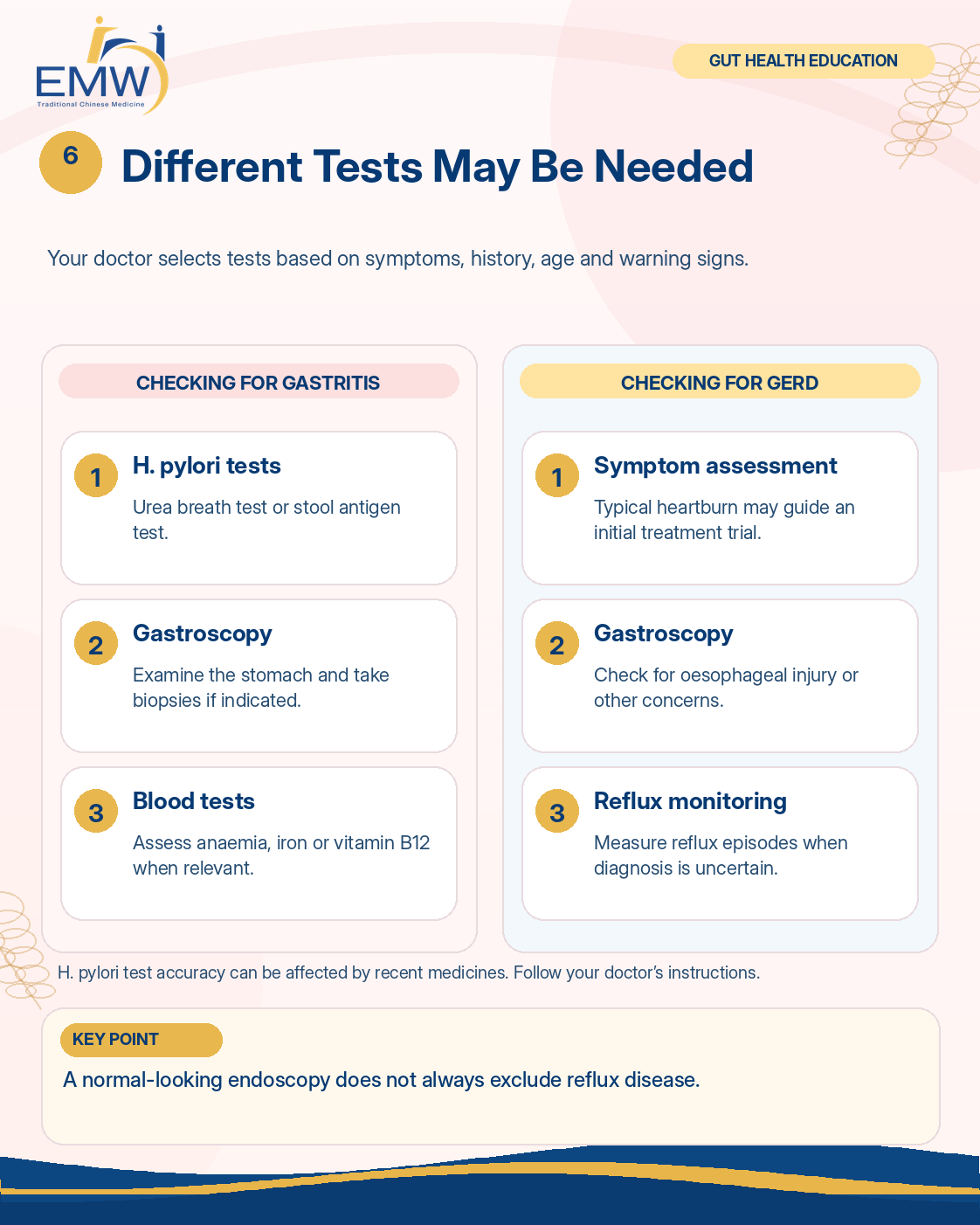
If you have completed medical investigations, we encourage you to bring relevant reports, including:
- Gastroscopy or endoscopy findings
- H. pylori results
- Blood tests
- Current medications
- Any previous gastroenterology assessment
These details help us understand whether your symptoms are consistent with an existing diagnosis, whether further medical evaluation is needed and how TCM care may fit into your management.
2. Acupuncture for Digestive Discomfort
Acupuncture is one of the treatment options used at EMW TCM for suitable digestive concerns.
Depending on the patient’s presentation, our physicians may select points traditionally associated with regulating Stomach Qi, relieving nausea or addressing digestive discomfort.
Some commonly considered points include:
Nei Guan (PC6, 内关)
Located on the inner forearm, PC6 is traditionally used for nausea and Stomach Qi Rebellion.
Zu San Li (ST36, 足三里)
Located below the knee, ST36 is traditionally associated with Spleen and Stomach regulation.
Zhong Wan (CV12, 中脘)
Located on the upper abdomen, CV12 is traditionally used in TCM for digestive complaints.
These are examples, not a universal prescription.
The physician selects acupuncture points according to the patient’s symptoms, medical condition and suitability for treatment.
What Does Research Say About Acupuncture for Gut Health?
Research on acupuncture varies according to the digestive condition being studied.
A systematic review published in 2026 examined 23 randomised controlled trials involving 2,454 people with functional dyspepsia.
The researchers found evidence that acupuncture probably improves certain functional dyspepsia symptoms and quality-of-life measures compared with sham acupuncture or usual care.
However, this evidence relates specifically to functional dyspepsia.
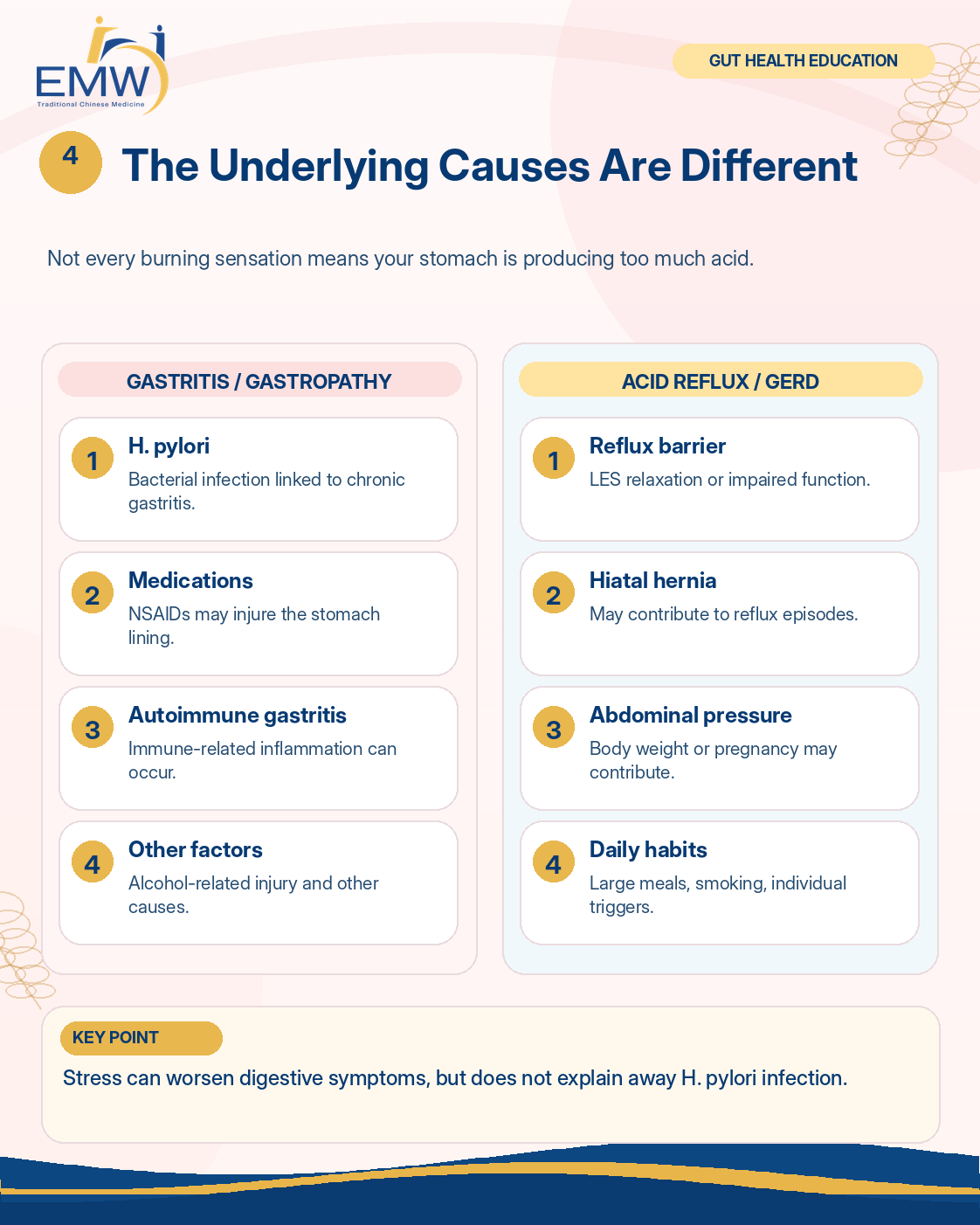
It does not establish that acupuncture eradicates H. pylori, heals gastritis-related tissue damage or reliably corrects the underlying mechanisms of GERD.
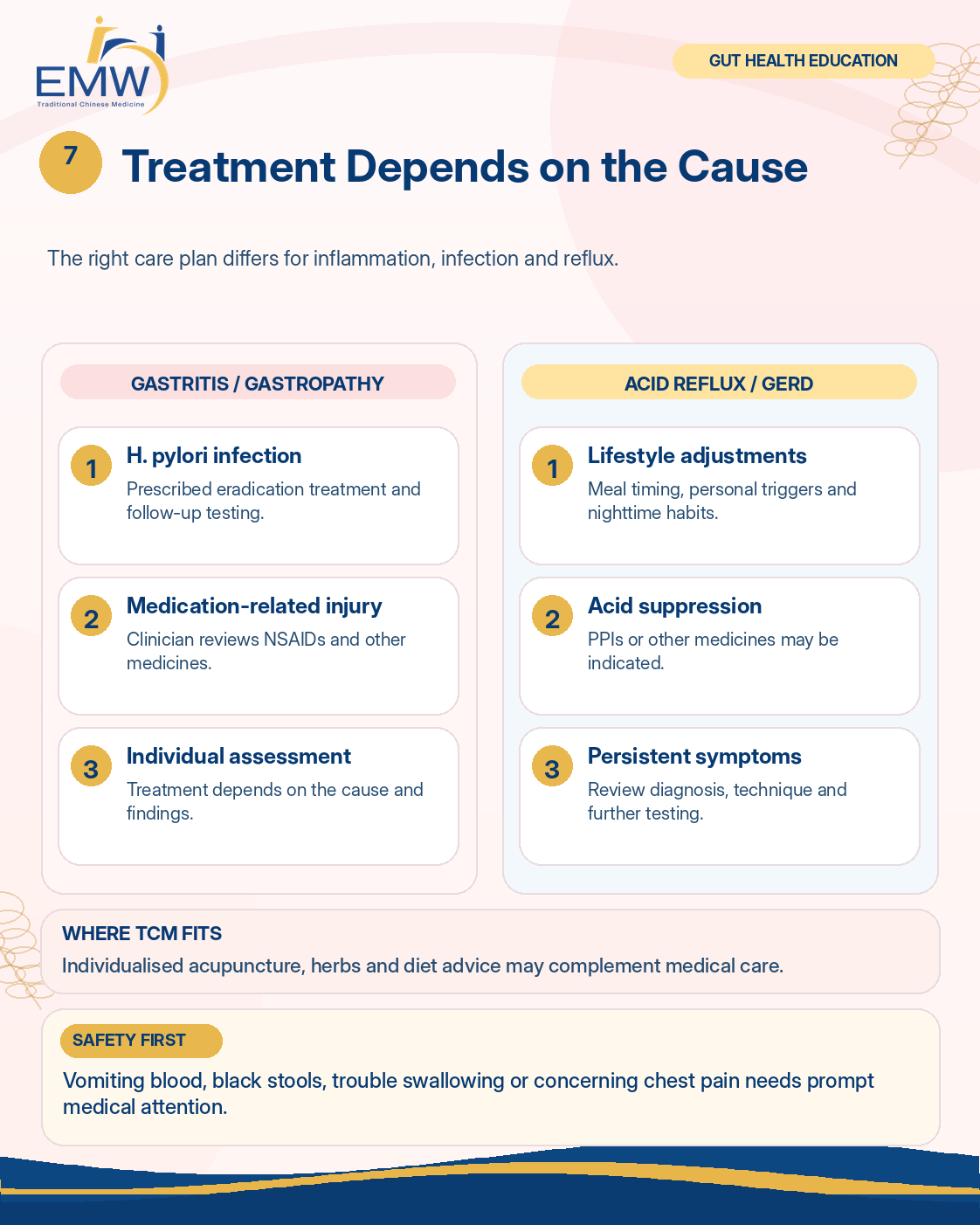
At EMW TCM, acupuncture is therefore used as complementary care for appropriate symptoms rather than a replacement for medical treatment.
3. Personalised Chinese Herbal Medicine
TCM herbal medicine may be considered according to the patient’s pattern of imbalance.
For example:
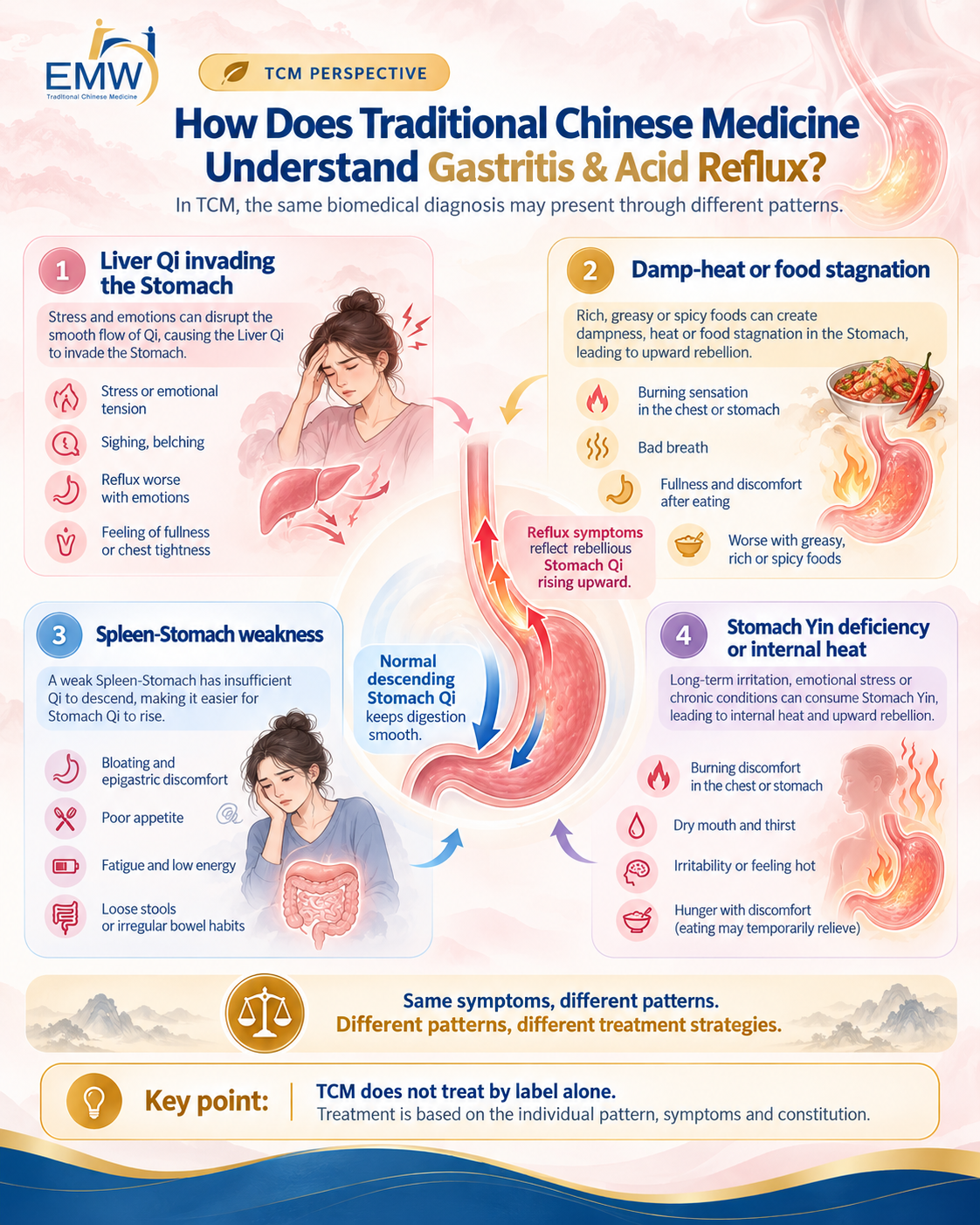
Liver Qi Stagnation with Stomach disharmony
The treatment principle may involve regulating Liver Qi and harmonising Stomach Qi.
Stomach Heat
The physician may consider herbs traditionally used to clear appropriate Heat patterns.
Stomach Yin Deficiency
Treatment may focus on nourishing Yin and supporting body fluids.
Spleen and Stomach deficiency
The prescription may focus on supporting digestive function according to whether the presentation involves Qi deficiency, Yang deficiency or another pattern.
The actual prescription must be individualised.
We do not recommend purchasing generic digestive herbs based solely on symptoms such as burning, bloating or belching.
Some herbs may interact with acid-suppressing medications, antibiotics, anticoagulants or other prescribed treatments.
Importantly, Chinese herbal medicine should not replace the recommended antibiotic treatment for confirmed H. pylori infection.
There is insufficient evidence that a personalised TCM prescription reliably eradicates the infection or prevents its long-term complications.
4. Dietary Guidance That Fits Your Digestive Pattern
Many people with recurring digestive discomfort start avoiding more and more foods.
Coffee goes first.
Then chilli, tomatoes, dairy products and citrus fruits.
Eventually, eating becomes stressful.
But not every patient needs the same restrictive diet.
At EMW TCM, we consider both the medical condition and the individual’s response to food.
For example, someone with reflux that worsens after heavy evening meals may benefit from reducing meal size and avoiding eating shortly before bed.
A patient experiencing early fullness and bloating may prefer smaller, regular meals that are easier to tolerate.
For those with sensitive digestion, simple cooked meals may be comfortable.
Examples include:
- Rice or congee with fish, tofu or lean meat
- Oat porridge
- Cooked vegetables
- Clear soups with appropriate protein
- Smaller portions of rich or oily dishes
From a TCM perspective, the suitability of warming or cooling foods may also be discussed according to the patient’s constitution.
However, warm foods do not cure gastritis, and cold foods do not automatically cause GERD.
The aim is to build a manageable eating routine without unnecessary restrictions.
5. Addressing the Gut-Brain Connection
Some patients notice that their symptoms become worse during stressful periods.
For example, they may feel reasonably comfortable over the weekend but experience more belching, bloating or burning during a demanding workweek.
The gut and nervous system communicate continuously.
Changes in stress, sleep and eating patterns may influence gut sensitivity and digestive function.
At EMW TCM, we may incorporate acupuncture, breathing exercises and practical routine adjustments into a personalised treatment plan.
Try This Simple Breathing Exercise
When you feel tense or notice mild digestive discomfort:
- Sit upright in a comfortable position.
- Relax your shoulders.
- Breathe slowly through your nose for approximately four seconds.
- Allow your abdomen to expand gently.
- Exhale comfortably for approximately six seconds.
- Continue for two to three minutes without straining or holding your breath.
Slow diaphragmatic breathing may help some patients relax and may reduce symptoms in selected cases.
However, it should not be used to dismiss persistent chest pain or other warning signs.
6. Reviewing Your Response to Treatment
Gut symptoms are not always constant.
Some days are better than others.
During follow-up consultations, we may ask patients to track:
- Frequency of burning episodes
- Severity of discomfort
- Sour taste or regurgitation
- Belching and bloating
- Appetite and meal tolerance
- Sleep disturbances
- Bowel habits
- Medication use and any medical review
This helps us understand whether supportive treatment is meeting the patient’s goals.
If symptoms persist, worsen or do not fit the initial assessment, we may recommend further medical investigation rather than simply continuing the same TCM approach.