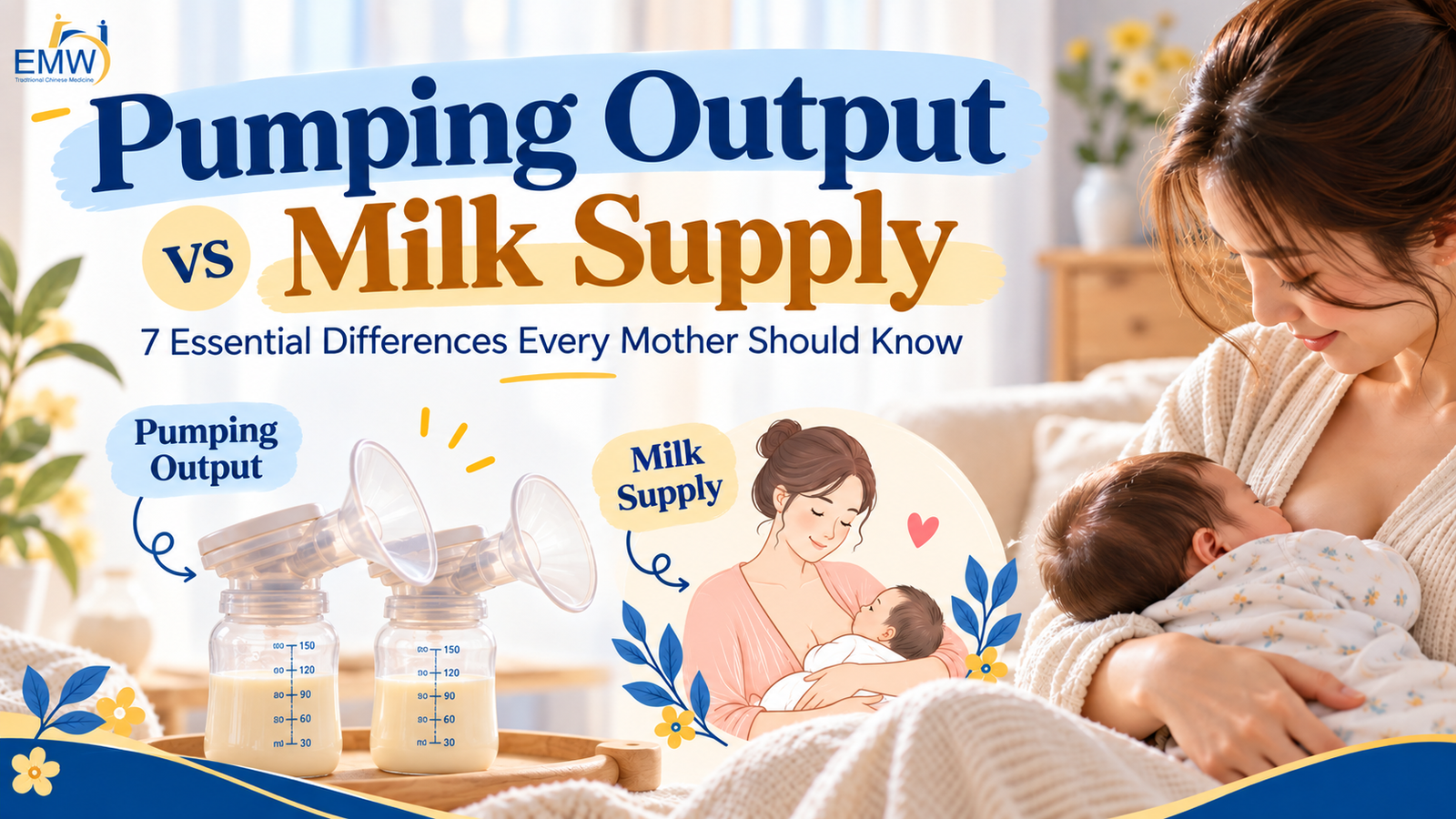
Pumping Output vs Milk Supply: 7 Essential Differences Every Mother Should Know
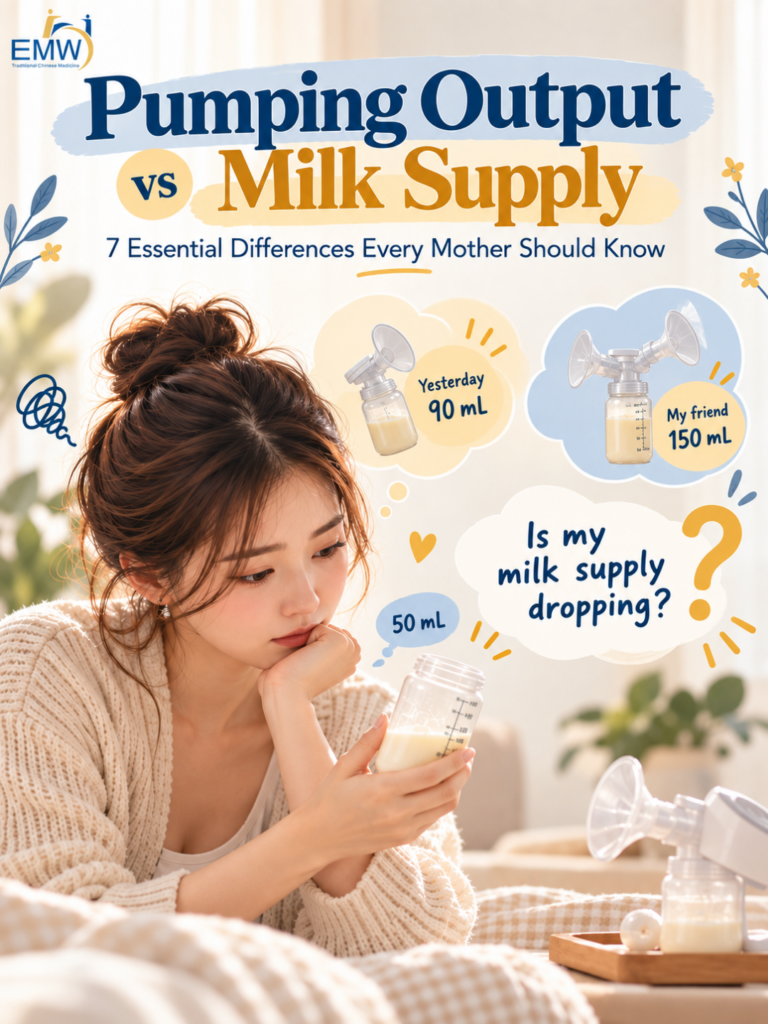
You finish a pumping session and look at the bottle.
50 mL.
Yesterday you pumped 90 mL.
Your friend says she pumps 150 mL every morning.
Suddenly one question takes over:
“Is my milk supply dropping?”
This is one of the most common ways breastfeeding mothers become anxious about milk production.
A breast pump gives you a number.
And because that number is visible and measurable, it can start to feel like a report card for your breastfeeding.
But it is not that simple.
Understanding pumping output vs milk supply is important because the amount collected during one pumping session does not necessarily tell you how much milk your breasts can produce over 24 hours, or how much milk your baby can obtain while breastfeeding.
Pump output is affected by many things:
- when you last breastfed or pumped
- time of day
- how well your milk lets down
- pump effectiveness
- flange fit
- pump parts
- whether you normally breastfeed or exclusively pump
- how established your milk production is
- how much milk your baby has already removed
So before assuming that a smaller bottle means a supply problem, look at the bigger picture.
Quick answer
Pumping output vs milk supply describes two different things.
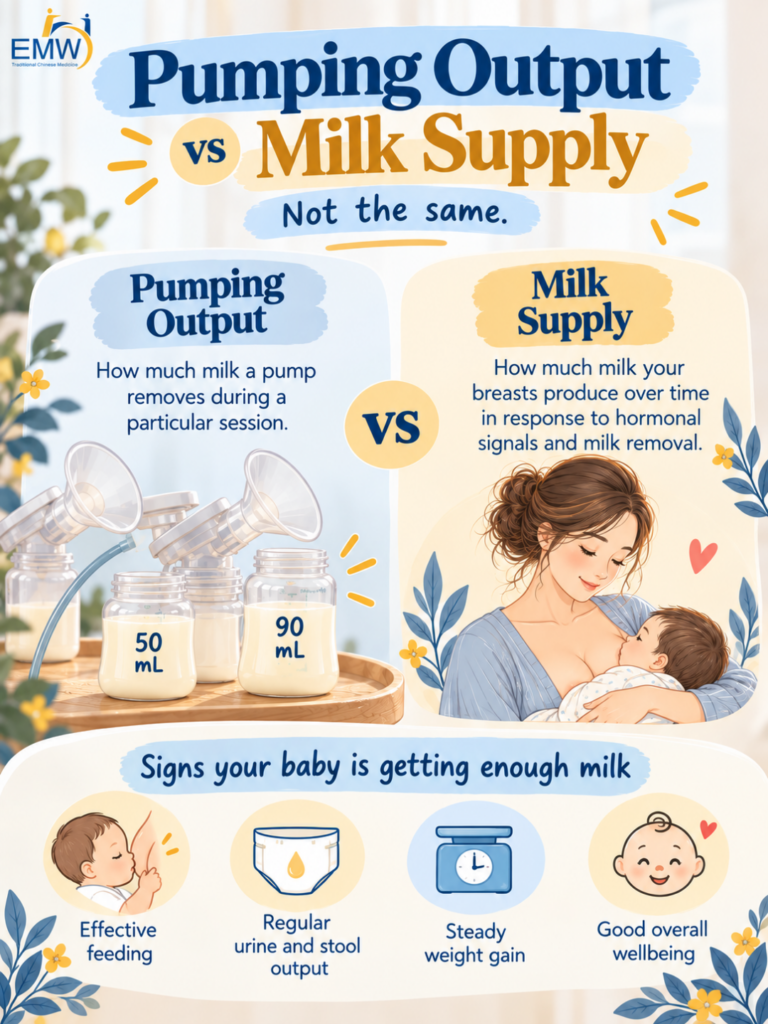
Pumping output is how much milk a pump removes during a particular session.
Milk supply is how much milk your breasts produce over time in response to hormonal signals and milk removal.
A mother can have adequate milk production but pump relatively little, particularly if she has recently breastfed, has difficulty triggering a let-down with the pump, or the pump is not removing milk efficiently.
Likewise, pumping a large volume does not automatically mean that a mother needs to produce that much milk.
The most useful way to assess whether a breastfed baby is receiving enough milk is to consider the whole feeding picture, including effective feeding, swallowing, urine and stool patterns, weight gain and the baby’s clinical wellbeing. Singapore HealthHub similarly advises looking at feeding effectiveness, output and weight rather than simply judging supply by one pumping session.
Pumping Output vs Milk Supply: 7 Essential Differences Every Mother Should Know
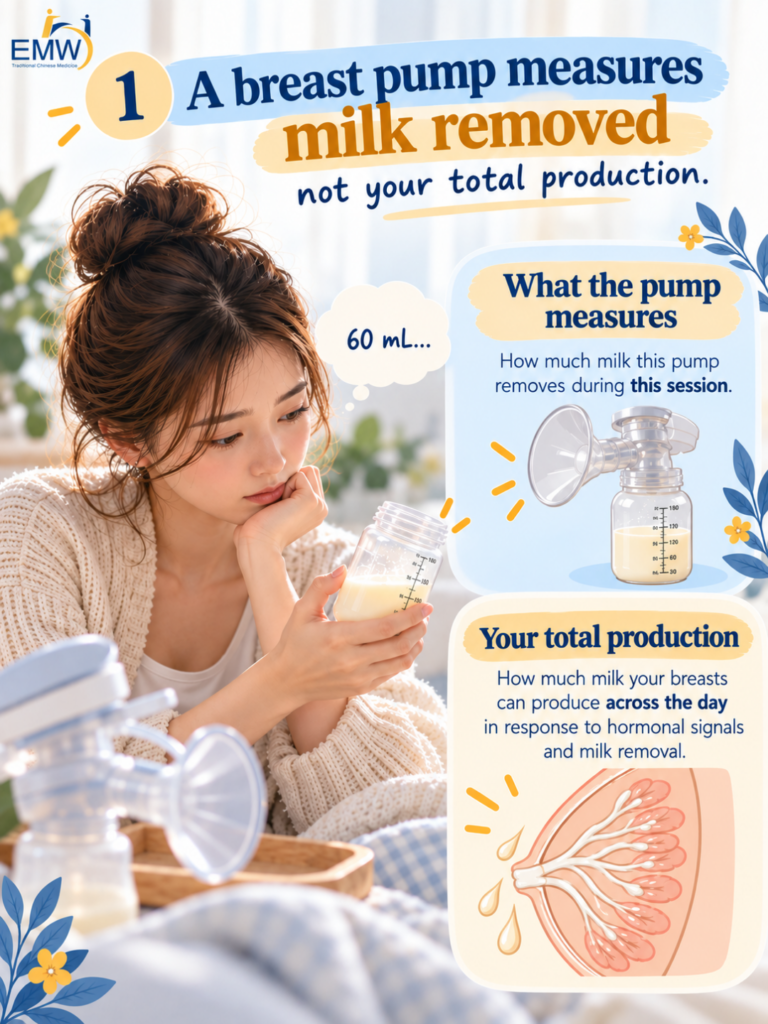
1. A breast pump measures milk removed, not your total production
This is the first distinction to understand.
Imagine your breast contains milk, but the pump only removes part of what is available.
The amount in the bottle reflects:
milk available at that moment × how effectively your milk lets down × how effectively the pump removes it
That is not exactly the same as:
how much milk your body is capable of producing across the day
Research examining milk expression has shown substantial differences between women in the rate and amount of milk expressed, even when using the same type of pump.
Pump design and expression method can also change the amount removed during a session.
So if you pump 60 mL, it does not mean:
“My breasts only make 60 mL.”
It means:
“Under these particular conditions, this pump removed 60 mL during this session.”
That difference sounds small.
Clinically, it is very important.
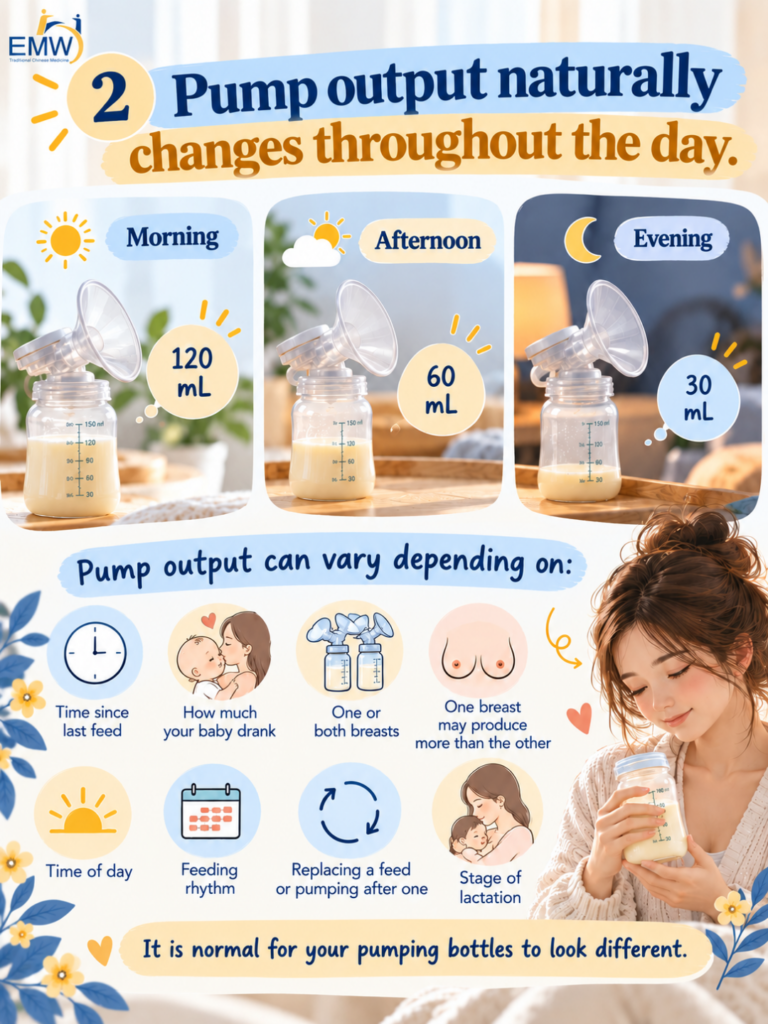
2. Pump output naturally changes throughout the day
Your pumping bottles do not need to look identical.
Milk volume can vary depending on:
- how long it has been since the previous feed
- how much your baby drank
- whether you pumped both breasts
- whether one breast produces more than the other
- your normal feeding rhythm
- time of day
- whether you are replacing a feed or pumping after one
- your stage of lactation
A mother who pumps after breastfeeding might only collect a small amount.
The same mother may pump considerably more when replacing a full feed.
These are completely different situations.
Morning versus evening pumping
Many mothers notice that they can express more milk during certain parts of the day.
That does not necessarily mean something went wrong later.
Look at the pattern over time rather than comparing every bottle individually.
One study in pump-dependent mothers also found that milk production between the two breasts frequently differed, reinforcing that uneven breast output can be physiologically normal.
Your left breast and right breast do not need to produce identical amounts.
They are sisters, not photocopies.
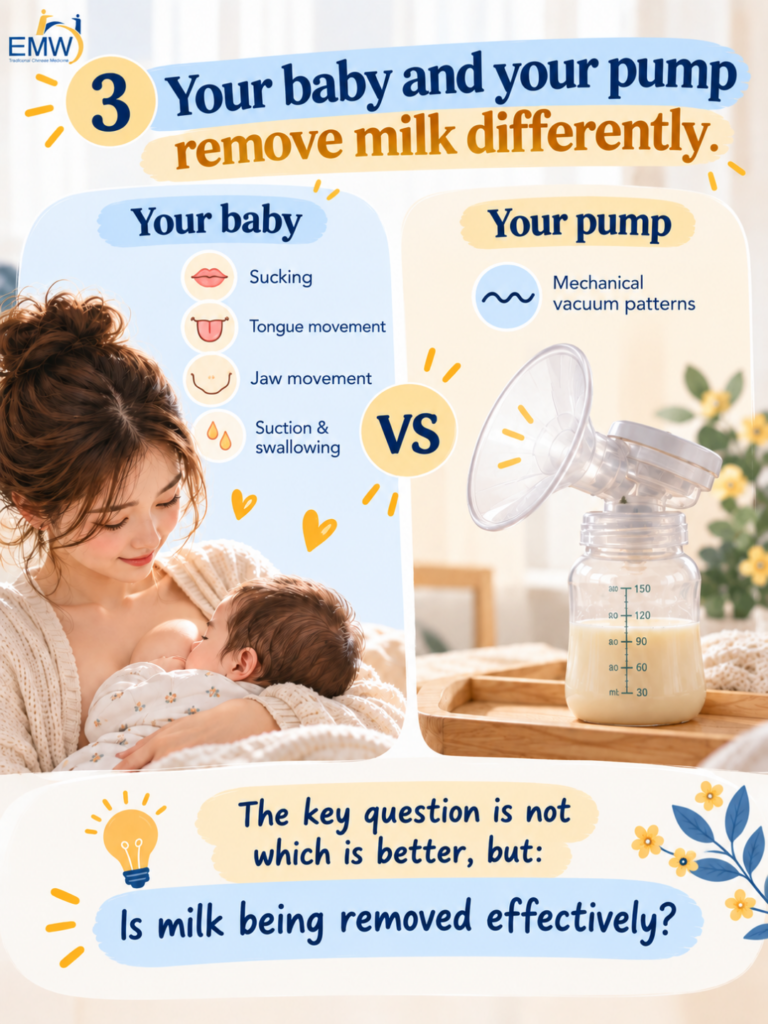
3. Your baby and your pump remove milk differently
One of the biggest misconceptions in the pumping output vs milk supply conversation is that the pump is a perfect substitute for the baby.
It isn’t.
Babies use coordinated:
- sucking
- tongue movement
- jaw movement
- suction
- swallowing
A breast pump uses mechanical vacuum patterns.
Neither method is automatically more efficient in every mother.
Some women respond extremely well to pumps.
Others breastfeed effectively but express relatively small volumes.
Research comparing expression techniques also shows that no single pumping method consistently performs best for every lactating woman. The effectiveness of milk expression can depend on the woman, the purpose of pumping, stage of lactation and equipment used.
This means that:
Low pump output does not automatically prove that your baby is receiving too little milk.
But the opposite also matters.
If your baby is not transferring milk effectively because of latch, sucking or feeding problems, directly breastfeeding does not automatically guarantee adequate intake either.
The question is not:
“Breast or pump, which is better?”
The useful question is:
“Is milk being removed effectively?”
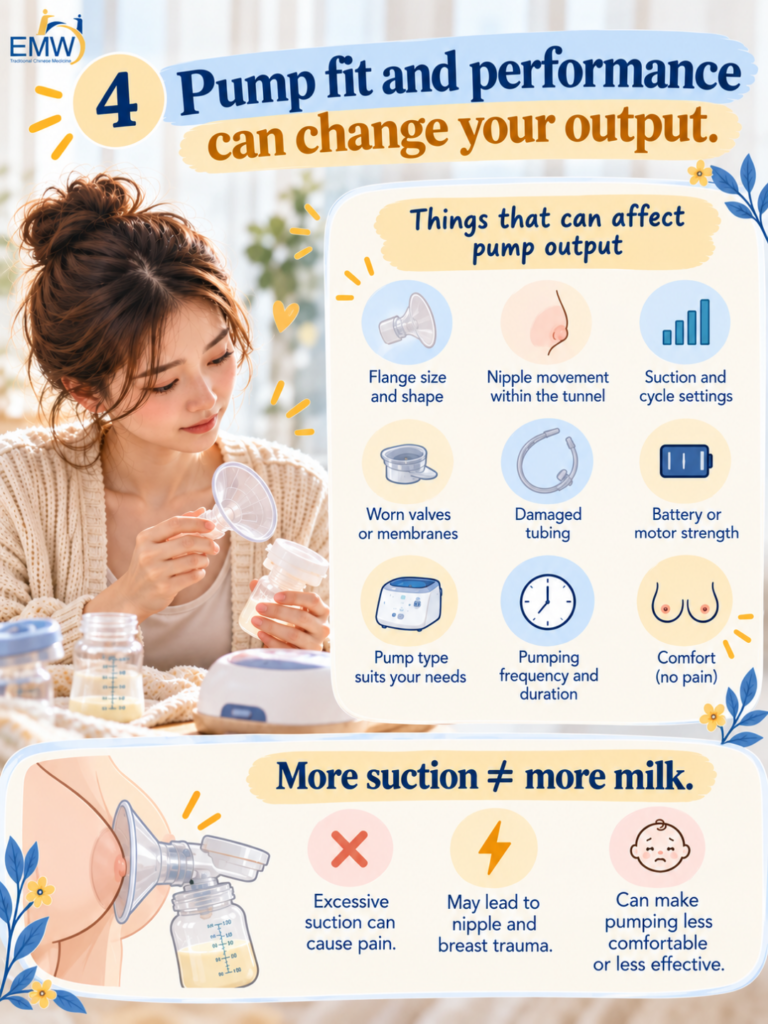
4. Pump fit and pump performance can change your output
Sometimes the breast is producing milk.
The problem is the equipment.
A pumping assessment may need to look at:
- flange size and shape
- nipple movement within the tunnel
- pain during pumping
- suction setting
- pump cycle settings
- worn valves or membranes
- damaged tubing
- battery strength or motor performance
- whether the pump is appropriate for the mother’s pumping needs
- pumping frequency and duration
More suction is not necessarily more milk
Many mothers gradually increase suction because they assume:
Stronger suction = better emptying
Not necessarily.
Pumping should not require painful suction.
Excessive vacuum or an unsuitable flange can cause nipple and breast trauma and may make pumping less comfortable or less effective.
The Academy of Breastfeeding Medicine specifically cautions that poorly fitted flanges, excessive suction and prolonged pump use can contribute to nipple and breast tissue trauma.
If pumping suddenly becomes painful or output falls unexpectedly, do not immediately assume your body has stopped producing milk.
Check the pump first.
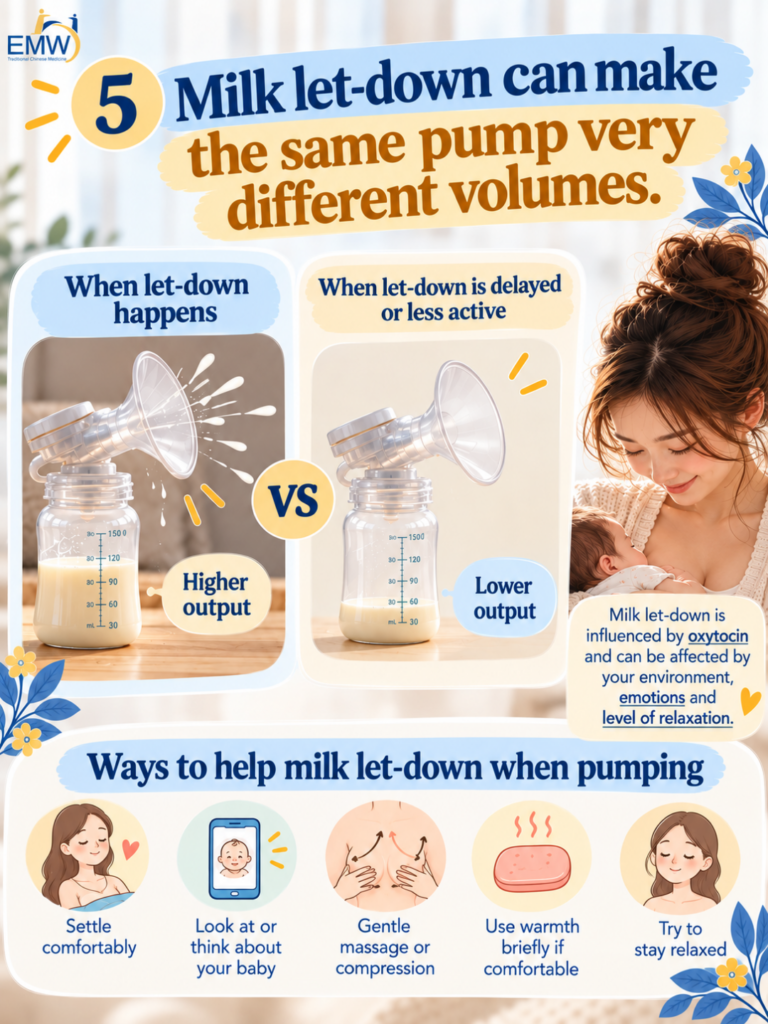
5. Milk let-down can make the same breast pump very different volumes
Milk production and milk release are related, but they are not identical.
Milk must first be produced.
Then it has to flow.
The milk ejection reflex, commonly called the let-down reflex, is strongly influenced by oxytocin.
Some mothers notice obvious let-down signs:
- tingling
- sudden milk spraying
- leaking from the opposite breast
- a change from fast sucking to audible swallowing
- milk suddenly flowing more quickly into the pump bottle
Other mothers feel nothing at all.
That is also normal.
Why might pumping feel harder than breastfeeding?
A mother may find it easier to let down when:
- holding her baby
- smelling her baby
- hearing her baby
- breastfeeding directly
- feeling relaxed in her normal feeding position
She may find pumping at work, in a cold room, while rushing between meetings or while repeatedly checking the bottle more difficult.
Singapore HealthHub advises mothers returning to work to express in a relaxed and comfortable environment and notes that thinking about or looking at their baby may help stimulate milk flow.
Practical strategies may include:
- settle comfortably before pumping
- use comfortable rather than maximal suction
- look at a photograph or video of your baby if helpful
- gently massage or compress the breast
- use warmth briefly before pumping if comfortable
- avoid repeatedly staring at the bottle
- allow enough time for another let-down
The objective is not to force the breast.
It is to make milk removal easier.
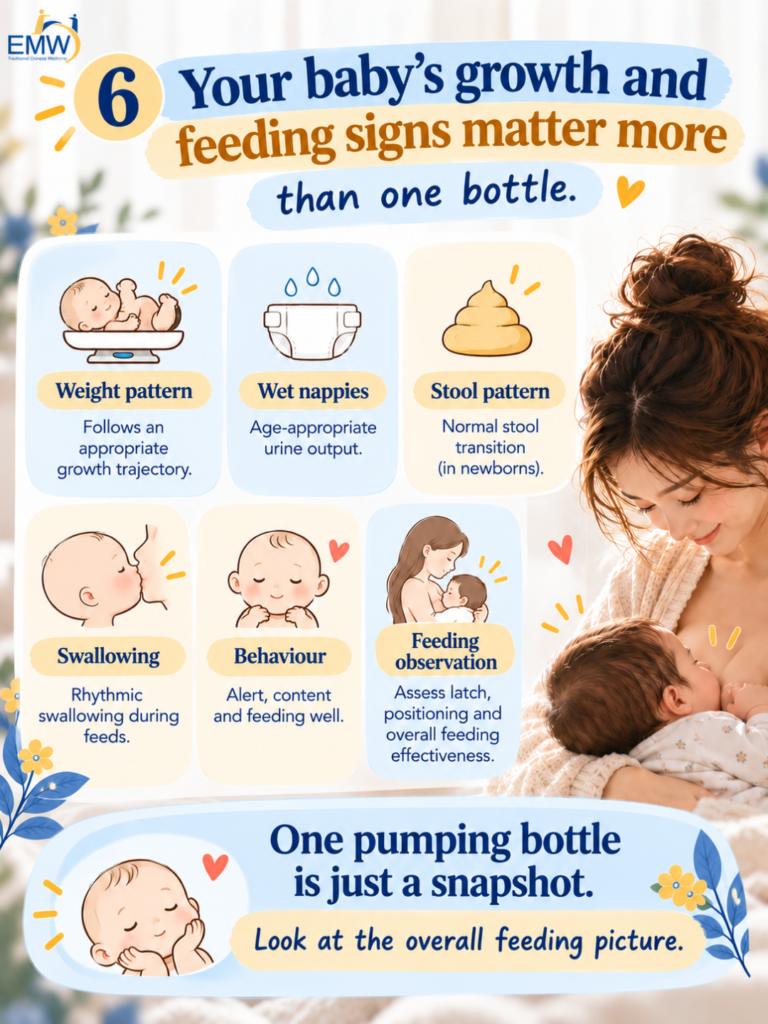
6. Your baby’s growth and feeding signs matter more than one bottle
If you are directly breastfeeding, the amount collected after a random pumping session is usually a poor standalone assessment of your baby’s intake.
Instead, look at the baby.
Useful indicators include:
Weight pattern
The baby’s weight trajectory is one of the most important objective measures.
After the expected early weight change following birth, babies should demonstrate appropriate growth over time.
Wet nappies
Age-appropriate urine output gives useful information about hydration and intake.
Stool transition in the newborn period
During the first days of life, stool changes are another important part of assessing milk intake.
Swallowing
During effective breastfeeding, you may see or hear rhythmic swallowing once milk begins flowing.
Baby’s behaviour and alertness
A baby who is repeatedly lethargic, difficult to wake, persistently feeding poorly or showing dehydration signs requires assessment.
Feeding observation
Sometimes the most useful assessment is simply watching a complete feed.
A trained lactation professional can assess:
- positioning
- latch
- sucking pattern
- swallowing
- maternal pain
- breast softening
- infant behaviour
- milk transfer
ACOG advises assessing the overall breastfeeding pattern and notes that perceived low supply is common. Infant weight, feeding effectiveness and urine output provide considerably more useful information than maternal perception alone.
7. True low milk supply does exist
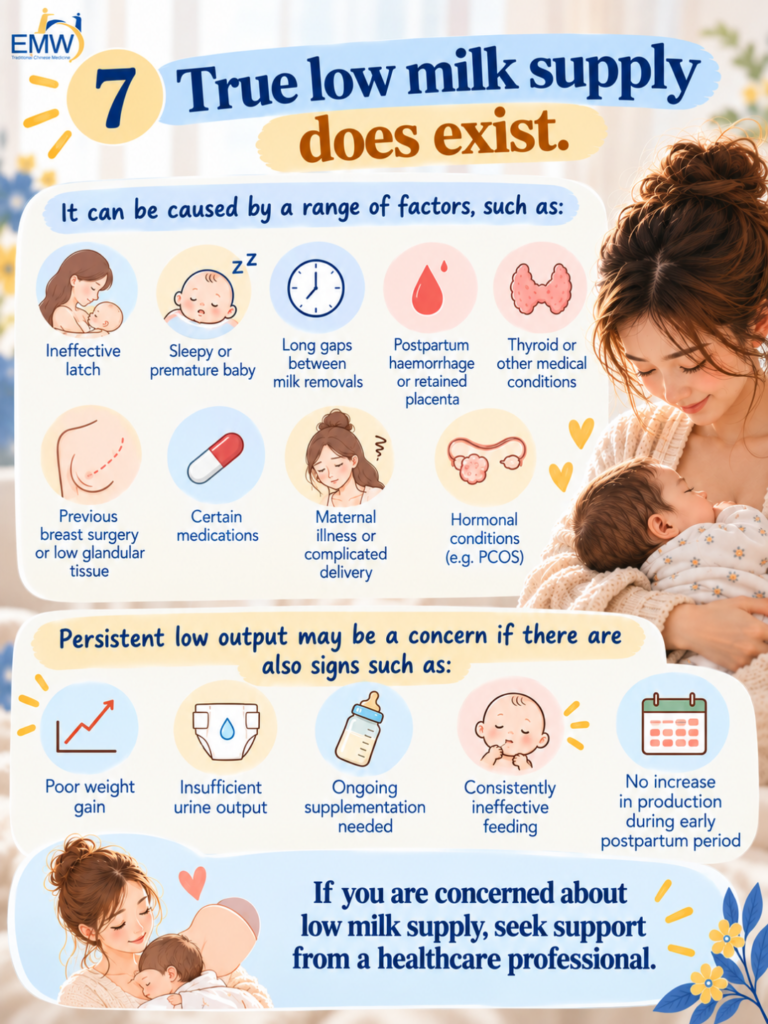
Saying that pump output does not equal milk supply does not mean every concern about supply should be dismissed.
Some mothers genuinely produce less milk than their baby requires.
Low production may occur because milk is not being removed frequently or effectively.
It may also occur alongside maternal or infant factors.
Potential contributors include:
- ineffective latch
- sleepy or premature baby
- long gaps between milk removals
- routinely replacing breastfeeds without pumping
- significant postpartum haemorrhage
- retained placental tissue
- previous breast surgery
- insufficient glandular tissue
- thyroid disorders
- diabetes or metabolic conditions
- polycystic ovary syndrome in some women
- certain medications
- delayed onset of higher-volume milk production
- maternal illness
- difficult or complicated delivery
Academy of Breastfeeding Medicine guidance lists several maternal, delivery and infant factors that can increase the likelihood of delayed lactogenesis or low production.
This is why persistent low pumping volumes deserve assessment when they occur together with:
- poor infant weight gain
- insufficient urine output
- ongoing supplementation because expressed milk is insufficient
- consistently ineffective feeding
- no meaningful increase in milk production during the early postpartum period
- significant maternal risk factors
The answer should not automatically be:
“Pump harder.”
Find out what is limiting production or milk removal first.
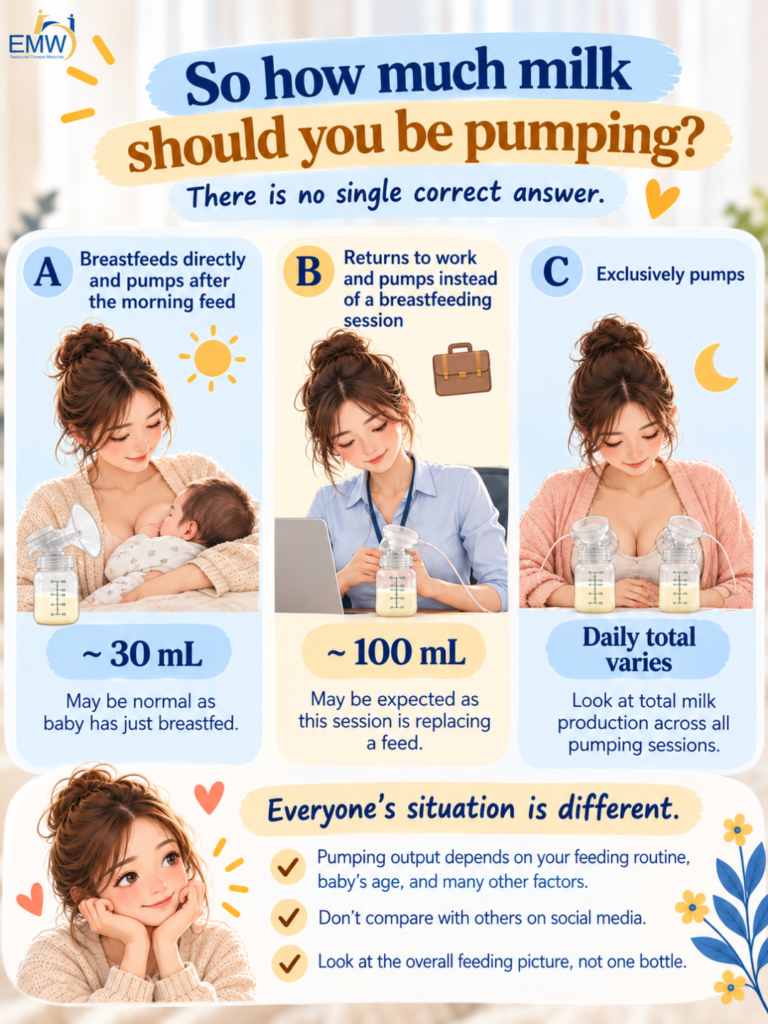
So how much milk should you be pumping?
This sounds like a simple question.
Unfortunately, there is no single correct answer.
Consider three different mothers.
Mother A: Breastfeeds directly and pumps after the morning feed
She collects 30 mL.
That may be perfectly reasonable because her baby has just breastfed.
Mother B: Returns to work and pumps instead of a normal breastfeeding session
She collects 100 mL.
That session is replacing a feed.
Mother C: Exclusively pumps
Her daily production has to be considered across all pumping sessions, not by one bottle.
Comparing these women makes no sense.
Yet mothers do it constantly.
Social media makes this worse.
Photos of 180 mL bottles often lack context.
You do not know:
- how long it had been since the previous feed
- whether the mother has oversupply
- whether she is exclusively pumping
- whether she pumped one breast or two
- how old the baby is
- how long she pumped
- whether this was her highest output of the day
Do not use somebody else’s freezer stash as your breastfeeding benchmark.
What if your pumping output suddenly drops?
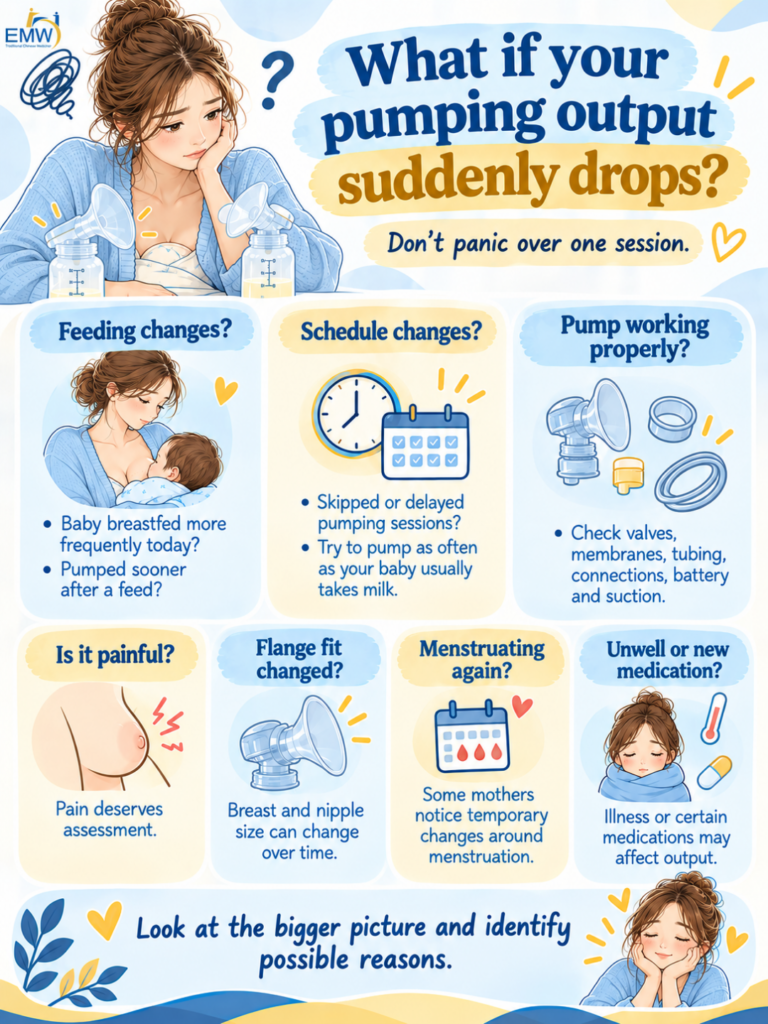
Do not panic over one session.
Start by asking:
Has anything changed with feeding?
Did the baby breastfeed more frequently today?
Did you pump sooner after a feed?
Has your schedule changed?
Did you skip or delay pumping sessions recently?
CDC advises mothers who are separated from their baby or exclusively pumping to generally pump as often as the baby normally takes milk, because milk-removal frequency helps maintain production.
Is the pump working properly?
Check:
- valves
- membranes
- tubing
- connections
- battery
- suction
Does pumping hurt?
Pain deserves assessment.
Has your flange fit changed?
Breast and nipple size can change over lactation.
Are you menstruating again?
Some mothers report temporary changes around menstruation, although individual response varies considerably.
Are you unwell?
Illness, reduced milk removal, dehydration associated with illness or substantial disruption to feeding routines can affect output.
Have you started medication?
Some medicines may affect lactation.
Do not stop prescribed medication without speaking to your doctor.
Should you pump after every breastfeed to increase supply?
Not automatically.
This depends on why you are pumping.
Additional milk removal can increase production.
That can be useful when supply truly needs to be increased.
But unnecessary pumping can also create oversupply in some mothers.
Academy of Breastfeeding Medicine guidance on hyperlactation warns that excessive expressing can contribute to persistent overproduction.
Oversupply can bring its own problems:
- uncomfortable fullness
- leaking
- recurrent inflammation
- fast milk flow
- baby coughing or pulling away
- recurrent mastitis symptoms
So the goal is not:
“Produce as much milk as physically possible.”
The goal is:
Produce enough milk for your baby’s needs and your feeding plan.
Breastfeeding, pumping and returning to work in Singapore
Returning to work is one of the times when pump volume suddenly becomes much more emotionally important.
At home, you may have mainly breastfed.
At work, every feed suddenly becomes:
80 mL. 90 mL. 110 mL.
And there is a practical question:
“Will I pump enough today for tomorrow?”
Singapore HealthHub advises beginning to practise expressing before returning to work and maintaining regular expression when separated from the baby.
A practical workday plan might consider:
- feeding before leaving home
- pumping at intervals that reasonably replace missed feeds
- appropriate milk storage
- having correctly fitted pump parts
- access to a comfortable pumping location
- feeding again after returning home
- reviewing the plan if daily pumping consistently falls short of the baby’s needs
A mother should not have to wait until her freezer stash is gone before asking for help.
How EMW TCM supports breastfeeding mothers
At EMW TCM, we do not assess milk supply simply by looking at the amount in your pump bottle.
The wider breastfeeding picture matters.
Our lactation assessment may include:
- baby’s age
- birth history
- feeding pattern
- breast or bottle feeding
- pumping schedule
- pump type
- flange fit
- maternal nipple or breast pain
- infant latch
- swallowing
- milk transfer
- breast fullness
- previous blocked ducts or mastitis
- postpartum recovery
- sleep
- appetite
- digestion
- stress
- menstrual return
- medications and supplements
Our lactation support combines practical breastfeeding assessment with TCM care where appropriate.
Depending on the mother’s needs, this may include:
- latch and positioning guidance
- pumping review
- flange sizing
- acupressure
- acupuncture
- dietary advice
- postpartum recovery support
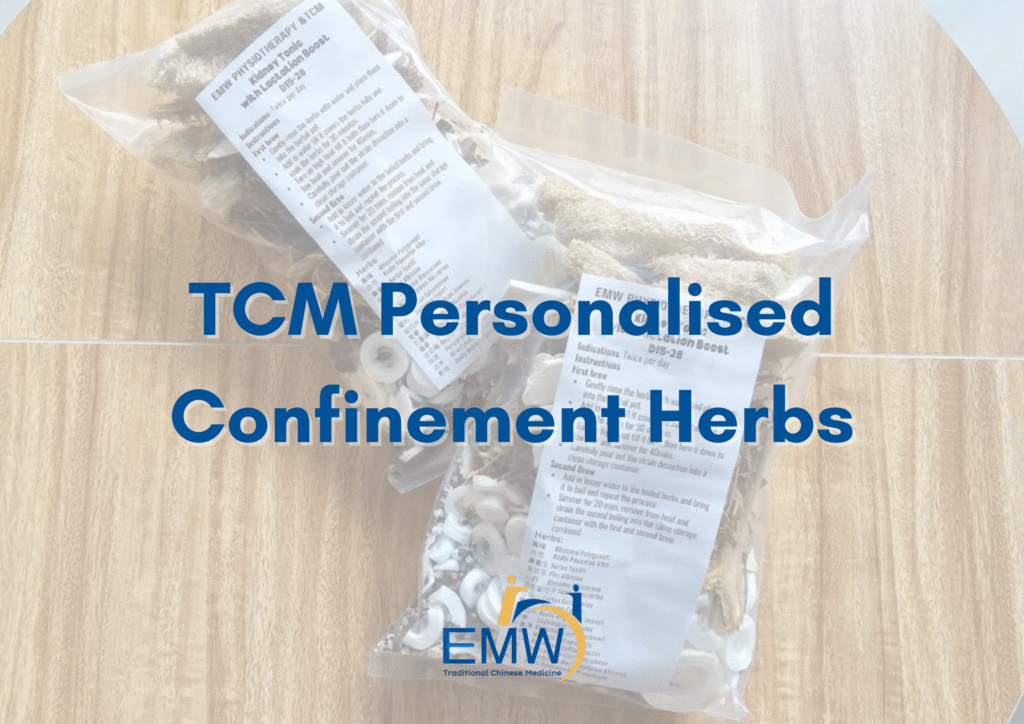
- individualised Chinese herbal medicine where suitable
TCM should sit alongside good lactation assessment.
If milk is not being removed because the flange does not fit, herbs are not the first answer.
If the baby has poor weight gain, the priority is making sure the baby receives adequate nutrition while the cause is investigated.
If there is true low production, then maternal recovery, nutrition and individual TCM patterns may be considered as part of a broader support plan.
When should you seek breastfeeding help?
Book a lactation or medical assessment if:
- your baby’s weight gain is concerning
- the baby has fewer wet nappies than expected
- the baby is very sleepy or difficult to wake for feeds
- feeding remains painful
- you cannot hear or see effective swallowing
- the baby repeatedly feeds for very long periods without appearing satisfied
- your milk volume remains very low despite frequent appropriate milk removal
- you have significant postpartum blood loss or medical risk factors
- pumping is painful
- nipples are damaged
- you have persistent breast redness, fever or flu-like symptoms
- you are worried that your baby is dehydrated
If infant intake is uncertain, do not wait several days simply to see whether a supplement, herb or pumping trick works.
Assess the baby first.
TCM Lactation Support: Enhancing Milk Flow Naturally

Insufficient milk supply is a common worry for new mothers. In TCM, lactation depends on the smooth flow of Qi and Blood to the breasts. When Qi is stagnant or Blood is deficient, milk production may decrease.
Acupuncture and herbal therapy can address both underlying and immediate issues. Studies in Journal of Alternative and Complementary Medicine (2020) reported that acupuncture at points such as SI1 (Shaoze) and ST18 (Rugen) significantly increased milk volume within one week.
Herbs like Tong Cao, Mu Tong, and Wang Bu Liu Xing are used to open the lactation channels, while Dang Gui and Ren Shen rebuild Blood to ensure sustained milk production. At EMW TCM, our Flowing Ease essential oil blend and lactation herbal packages further support these goals in a gentle, skin-safe way.
Frequently Asked Questions
Does low pumping output mean low milk supply?
Not necessarily.
A single low pumping session may reflect recent breastfeeding, timing, pump fit, let-down or pump performance.
Persistent low output combined with poor infant intake or inadequate weight gain deserves further assessment.
My breasts feel softer. Has my supply dropped?
Not necessarily.
Breasts often feel less constantly full as lactation becomes established and milk production adjusts more closely to the baby’s needs.
My friend pumps twice as much as me. Should I be worried?
No comparison can be made without knowing both feeding patterns.
She may be pumping instead of a feed while you are pumping after one.
She may also have greater storage capacity or oversupply.
Can my baby get more milk than my pump?
Sometimes.
Some babies transfer milk effectively while their mothers respond poorly to pumping.
However, a baby can also transfer milk poorly, so weight and feeding assessment remain important.
Does pumping output vs milk supply become easier to assess if I exclusively pump?
Yes, somewhat.
For an exclusively pumping mother, total milk collected across 24 hours gives more information about milk production than one individual session.
Even then, daily output can fluctuate.
Should I keep pumping until no milk comes out?
Not necessarily.
Your pumping plan should reflect your breastfeeding situation and goals rather than trying to completely drain the breasts after every session.
Does every mother need a freezer stash?
No.
A large freezer supply is not a requirement for successful breastfeeding.
Store what is practical for your own separation and work needs.
Can TCM help if my pump output has dropped?
It depends on the cause.
First assess breastfeeding or pumping frequency, milk transfer, pump mechanics and maternal or infant medical factors.
TCM care may then be considered as complementary postpartum and lactation support rather than replacing those assessments.
The number on the bottle is only one piece of information
Breastfeeding can become surprisingly mathematical.
How many minutes?
How many millilitres?
How many pumping sessions?
How many freezer bags?
Numbers can be useful.
But they can also create anxiety when they are interpreted without context.
The real distinction in pumping output vs milk supply is that one measures what came out during a particular pumping session, while the other describes the broader ability to produce milk for your baby over time.
So when the bottle looks smaller than expected, do not immediately ask:
“What is wrong with my supply?”
First ask:
“What was different about this pumping session?”
Then look at your baby, your feeding pattern and your overall milk removal.
That gives you a much more useful answer.
Need breastfeeding or pumping support?
If you are unsure whether your pumping output reflects a genuine supply issue, EMW TCM can help review your feeding and pumping pattern together with your overall postpartum recovery.
Visit our blog for more breastfeeding, postpartum and women’s health guides:
This article is for educational purposes and does not replace assessment by your baby’s doctor, paediatrician, lactation consultant or other healthcare professional. Seek prompt medical care if your baby shows signs of dehydration, poor feeding, lethargy or inadequate weight gain.
References
- American College of Obstetricians and Gynecologists. Breastfeeding Challenges. Committee Opinion No. 820. 2021.
- Centers for Disease Control and Prevention. Pumping Breast Milk. Updated February 2026.
- Health Promotion Board Singapore, HealthHub. Feeding Your Baby: Breastfeeding.
- Mitoulas LR, Lai CT, Gurrin LC, et al. Efficacy of breast milk expression using an electric breast pump. Journal of Human Lactation. 2002;18(4):344-352.
- Becker GE, Smith HA, Cooney F. Methods of milk expression for lactating women. Cochrane Database of Systematic Reviews.
- Academy of Breastfeeding Medicine. Clinical Protocol #32: Management of Hyperlactation.
- Academy of Breastfeeding Medicine. Clinical Protocol #3: Supplementary Feedings in the Healthy Term Breastfed Neonate.
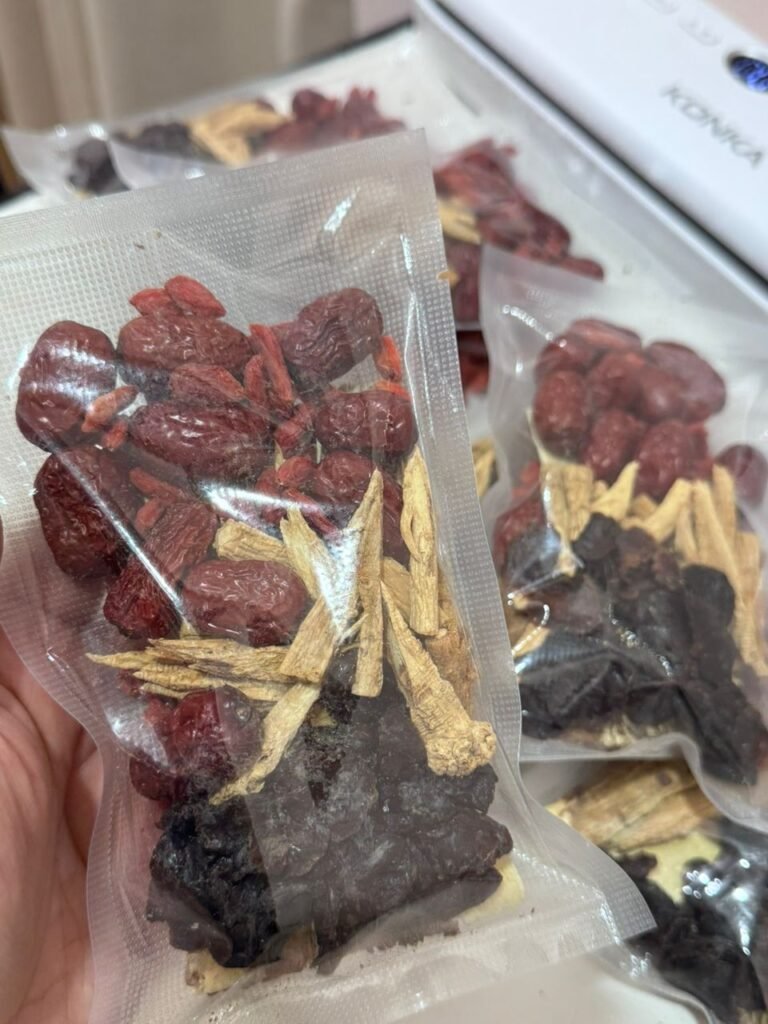
Why Choose EMW’s Personalised TCM Confinement Herbal Package
Every woman’s body is different.
Your recovery needs depend on:
Type of delivery (natural or C-section)
Blood and Qi strength
Milk supply
Sleep, stress, and digestion patterns
At EMW TCM, our physician-formulated herbal care is:
Personalised: Herbs are customised after TCM pulse and tongue assessment
Physician-led: All prescriptions are reviewed by registered TCM physicians
Convenient: Herbs are pre-portioned into daily sachets
Safe for breastfeeding: Gentle, non-toxic formulations
Follow-up supported: Post-confinement consultation ensures smooth transition can be requested upon demand.
Our goal: to help you heal deeply, rebuild your vitality, and embrace motherhood with confidence.
There are many benefits to personalized TCM confinement, including:
- Improved recovery: To speed up the healing process after childbirth and reduce the risk of complications.
- Reduced discomfort: To relieve common postpartum symptoms such as pain, fatigue, and anxiety.
- Improved mood: To improve the mother’s mood and reduce the risk of postpartum depression.
- Enhanced lactation: To promote lactation and improve the quality of breast milk.
- Strengthened immune system: To strengthen the mother’s immune system and protect her from illness.
One can easily find 28 days confinement herbal soups off any herbal stores.
However, with EMW Personalised Confinement Herbal Package, herbs prescribed is supplementary to the 28 days confinement herbal soups. It is designed to be brewed into a decoction and to be drank separately outside of meals.
Therefore, confinement herbal soups are catered more towards general body constitution while our Herbal Package herbs are more catered to individual body types hence being more potent as a result.
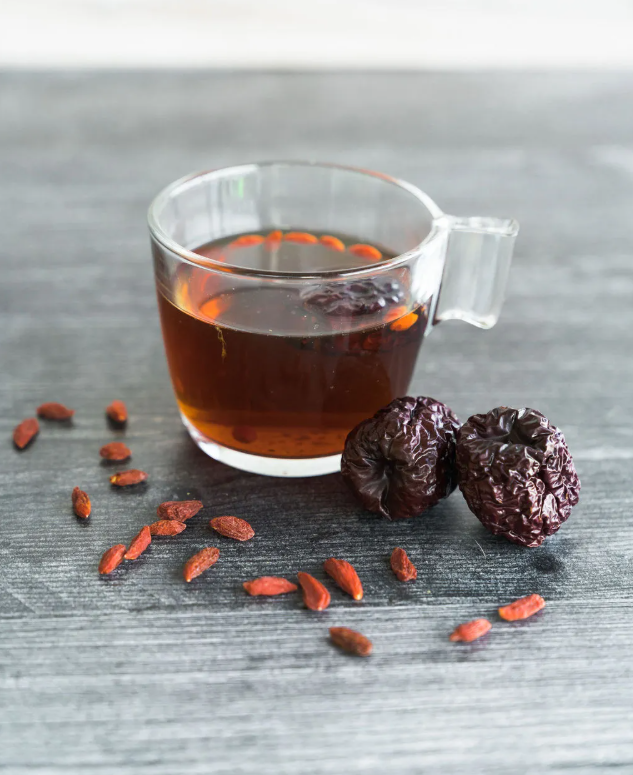
28 Day Confinement Herbal Tea
During TCM confinement, hydration and warmth are vital for restoring Qi and blood. At EMW TCM, we formulate confinement teas that gently replenish energy, warm the body, and calm emotions.
Our TCM confinement tea blends are handcrafted by our physicians to support:
Blood and Qi replenishment: using Dang Shen (Codonopsis), Hong Zao (Red Dates), and Gou Qi Zi (Goji Berries)
Digestive recovery: Huang Qi to strengthen the Spleen and aid absorption
Mood balance and sleep support: Long Yan Rou (Longan) to soothe the mind and nourish the Heart
- Physical Strengthening: Du Zhong to strengthen Kidney and lower back
Each sachet is pre-portioned for convenience and safety.
Simply steep in warm water and enjoy throughout the day.
Our TCM confinement tea is caffeine-free, gentle for breastfeeding mothers, and an excellent companion for your daily postpartum nourishment.
This will be purchased separately from Personalised Confinement Herbal Package.
TCM Confinement Herbal Bath
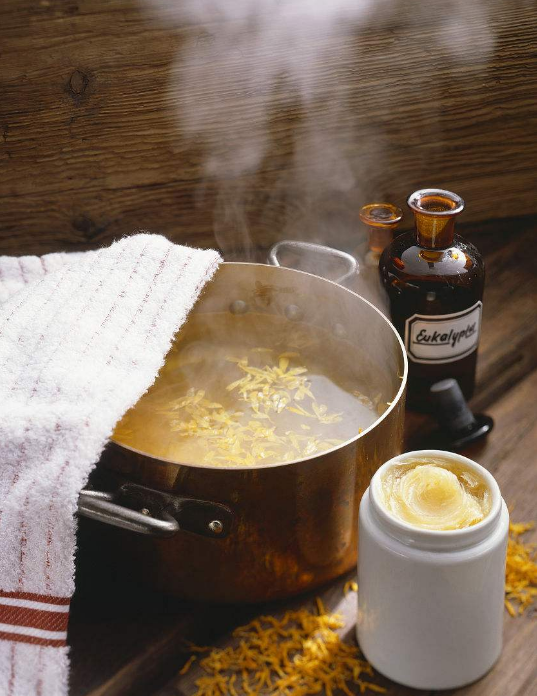
In Traditional Chinese Medicine, postpartum women are considered vulnerable to cold invasion. A TCM confinement herbal bath helps expel cold, improve blood circulation, and relieve muscle tension.
At EMW TCM Singapore, our herbal bath formula is carefully balanced to restore warmth while being safe and soothing for new mothers.
Key Benefits of Our TCM Confinement Herbal Bath:
- Promotes blood flow and helps discharge residual lochia
- Warms the body to prevent postpartum chills and joint pain
- Relaxes tired muscles and alleviates neck or back aches
- Gently cleanses without drying or irritating the skin
Main Herbal Ingredient:
Ai Ye (Mugwort Leaf) which supports the body’s natural healing by unblocking meridians and harmonising blood circulation.
How to Use the EMW Herbal Bath:
- Boil the pre-packed herbal sachet in 2–3 litres of water for 15 minutes.
- Pour into a basin or bathtub and mix with warm water (around 40 °C).
- Soak or sponge-bathe for 10–15 minutes daily.
- Keep the body warm and dry immediately after bathing.
Our confinement bath can also be used for hand or foot soaking to relieve swelling or stiffness.
Postnatal Acupuncture for Recovery
Postnatal acupuncture helps regulate hormonal balance, promote uterine contraction, and ease muscular pain. Research published in Obstetrics & Gynecology Science (2021) showed that acupuncture can modulate oxytocin release and improve milk flow, making it useful for both physical recovery and TCM lactation support.
Our postpartum acupuncture sessions commonly target:
ST36 (Zusanli) to boost energy and digestion.
SP6 (Sanyinjiao) to harmonise the reproductive system.
LV3 (Taichong) to soothe emotions and relieve stress.
BL20 (Pishu) to strengthen Spleen Qi and prevent bloating.
Mothers often notice improved sleep, lighter body aches, and calmer emotions within several sessions.
With Our Partners During 28 Days: Confinement Soups
The 28-Day Personalised Confinement Herbs & Soup Program by Maternity Angels, developed in collaboration with EMW TCM Physicians, is a premium, evidence-informed postpartum recovery solution designed to support a mother’s healing, nourishment, and vitality after childbirth.
This personalised confinement program begins with a one-to-one consultation with an experienced EMW Physician, ensuring that your herbs and soups are tailored to your individual constitution, delivery type (natural birth or C-section), and postpartum recovery needs. Every detail is customised to support blood replenishment, uterine recovery, digestion, and long-term maternal wellbeing.
Each mother receives a fully personalised confinement soup recipe, created using premium-grade Chinese herbs traditionally used to support postpartum recovery, circulation, and lactation. The program includes 28 days of carefully prepared confinement soup, making daily nourishment simple and consistent during the critical postpartum period.
Beyond nutrition, this program is thoughtfully designed for modern families. It comes with reusable drawers for organised storage of baby essentials, as well as an environmentally friendly cotton tote bag, making it both practical and sustainable.
What’s Included:
Consultation with a certified EMW TCM Physician
Personalised 28 days of confinement soup
Premium quality Chinese herbs
Reusable drawers for baby item storage
Eco-friendly cotton tote bag
Perfect for Singapore mothers looking for confinement soups instead of confinement herbs that may not be palpable for mummies that don’t take TCM frequently.


With Our Partners During 28 Days: Confinement Meals
At Maternity Angels, the Confinement Food Menu is curated by EMW TCM physicians, dietician, and a team of professional chefs. While keeping it real within the parameters of TCM and dieticians, they transform traditional confinement ingredients into international dishes that focus on recovery, lactation and all-round wellness.
Our confinement meal includes a serving of desert (Lunch), appetizer (Dinner), meat, vegetable, double-boiled soup, staple and Red Dates Tea.
Most soups provided with their meals are double boiled. The Double boiling technique is a slow and gentle process which better extract the flavour, essence and nutrients of the ingredients and offers maximum benefit to post-partum mummy for their recovery.
Their dishes are lactation friendly, with ingredients like green papaya, salmon, spinach and broccoli.
With Our Partners During 28 Days: Confinement Care
At Confinement Angels, they believe that the journey of motherhood is a precious time that deserves to be supported with the utmost care and professionalism.
With over 10 years of experience providing expert confinement nanny services, they have built a strong reputation for delivering personalised, compassionate care for both mothers and newborns.
Their team of highly trained nannies is dedicated to ensuring that you and your baby receive the best possible support during this important recovery period.
At Confinement Angels, they understand that your family deserves the very best care. This is why they invest in in-house training for all their nannies to ensure they meet their high standards. Each nanny undergoes a comprehensive training program that includes infant care, postpartum wellness practices, and best safety protocols, ensuring that they are equipped with the necessary skills and knowledge before they are assigned to assist any family.
They take professionalism very seriously at Confinement Angels. From the moment you contact them, you will experience a high level of service and care. Their nannies are not only skilled but also respectful, dedicated, and compassionate. They understand that every mother’s needs are unique, and they work hard to ensure that both mothers and babies receive the individual attention and care they deserve.
Confinement Angels isn’t just a confinement nanny agency. They offer a one-stop solution for all your postpartum needs. Along with expert confinement nanny services, they also provide a comprehensive range of additional services to make your experience even more convenient and supportive.

Diet Therapy: The Foundation of Postpartum TCM Singapore
In TCM, food therapy is the first medicine. The Spleen and Stomach must be supported with easily digestible, warm meals. The modern postpartum diet should avoid icy drinks, cold fruits, and raw salads, which can trap Cold and hinder digestion.
Recommended foods include:
Soups and broths made with chicken, fish, or pork bones.
Congee with goji berries, red dates, and ginger to replenish Blood and warm the body.
Steamed or stir-fried vegetables such as spinach and Chinese kale for iron and fibre.
Black sesame, walnuts, and lotus seeds to nourish Kidney essence.
Research in Nutrition & Health (2020) confirmed that protein-rich, iron-dense diets accelerate postpartum recovery, supporting the same concept long recognised in TCM.
Neglecting proper postpartum recovery can lead to lingering conditions such as menstrual pain, chronic fatigue, thyroid imbalance, or fertility difficulties in subsequent pregnancies. TCM physicians often call this “Postpartum Internal Injury”, where Cold and Blood stasis remain unresolved.
Regular postnatal acupuncture, warm herbal baths, and proper diet for at least 30 to 40 days help seal the body’s energy, ensuring long-term vitality. EMW TCM’s Postpartum Programme integrates these methods with modern clinical monitoring for safe, evidence-based results.
Integrating East and West for Modern Mothers
In Singapore, confinement practices now range from traditional home-based care to modern confinement centres. While approaches differ, mothers can still follow key TCM confinement principles: adequate warmth, nutrient-rich meals, emotional rest, and gradual return to activity.
At EMW TCM, our postpartum TCM Singapore consultations bridge tradition with modern practicality. We tailor herbal formulas that are compatible with breastfeeding and provide dietary advice suited for Singapore’s humid climate, where overheating can easily occur if old recipes are followed without modification.
TCM postpartum care complements Western medical check-ups by addressing areas conventional care may overlook: energy, sleep, mood, and long-term resilience. Our approach works alongside gynaecologists and lactation consultants to create an integrated plan for both mother and baby.
We believe healing should be gentle, evidence-based, and personal. Each treatment begins with pulse and tongue diagnosis to identify whether Qi, Blood, Yin, or Yang are out of balance. The plan then combines:
Chinese herbs for postpartum recovery
Postnatal acupuncture to harmonise hormones
TCM lactation support when needed
Emotional and dietary coaching
When to Start TCM Confinement Singapore
Ideally, TCM care begins within the first week after delivery, once bleeding stabilises. However, it is never too late to benefit. Many mothers start months later to address fatigue, hair loss, or low mood and still experience significant improvement.
Each session is gentle and supportive, allowing mothers to relax while their bodies rebuild Qi and Blood.
If you are a new mother or planning for postpartum confinement in Singapore, remember that your recovery shapes your long-term wellbeing. Proper care today helps prevent chronic conditions tomorrow.
- Book a TCM postpartum consultation at the links below to receive a personalised recovery plan and customised confinement herbs.
- Schedule pre and post natal lactation consultation and treatment to prevent issues like low milk supply, engorgement and mastitis.
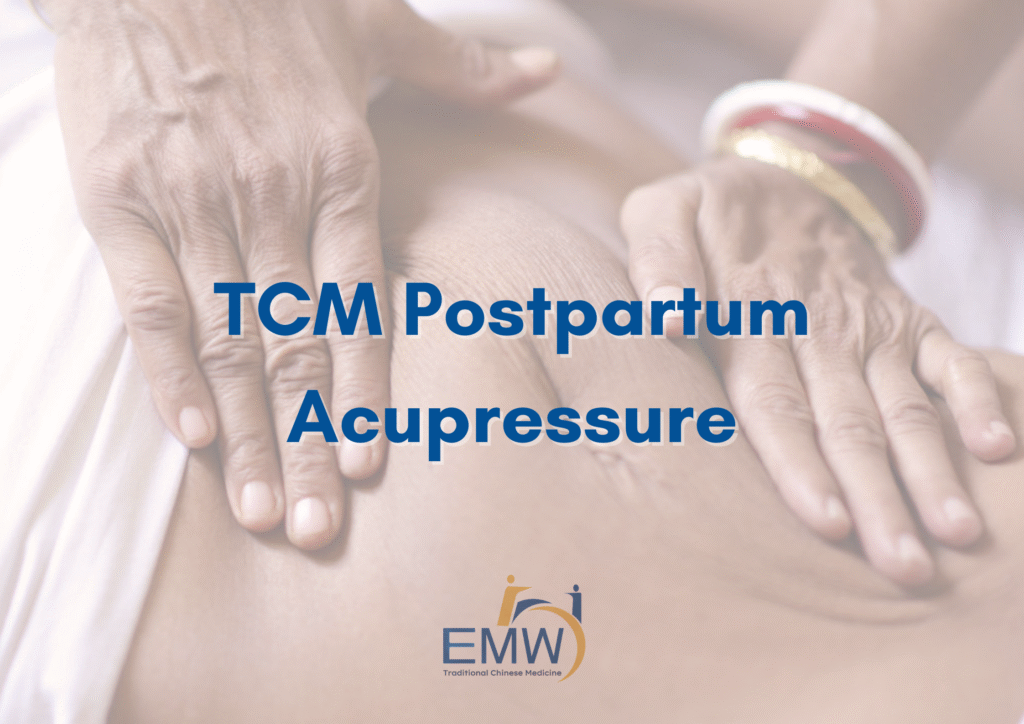
- Schedule postnatal acupressure for energy, mood, and lactation support.
Let your motherhood journey begin with balance, warmth, and care.
EMW TCM Singapore, blending tradition with science for modern mothers.
TCM Confinement 101

TCM Lactation
We do pre-delivery lactation consultation at week 37-39 which includes a detailed breast examination, 1-to-1 personalised guidance on latching, positioning techniques and discussion of common concerns, and a post-delivery lactation consultation to addresses major lactation concerns like low milk supply, engorgement, poor letdown, nipple pain/bruising with the help of TCM acupressure together with other treatments.
TCM Confinement Herbs
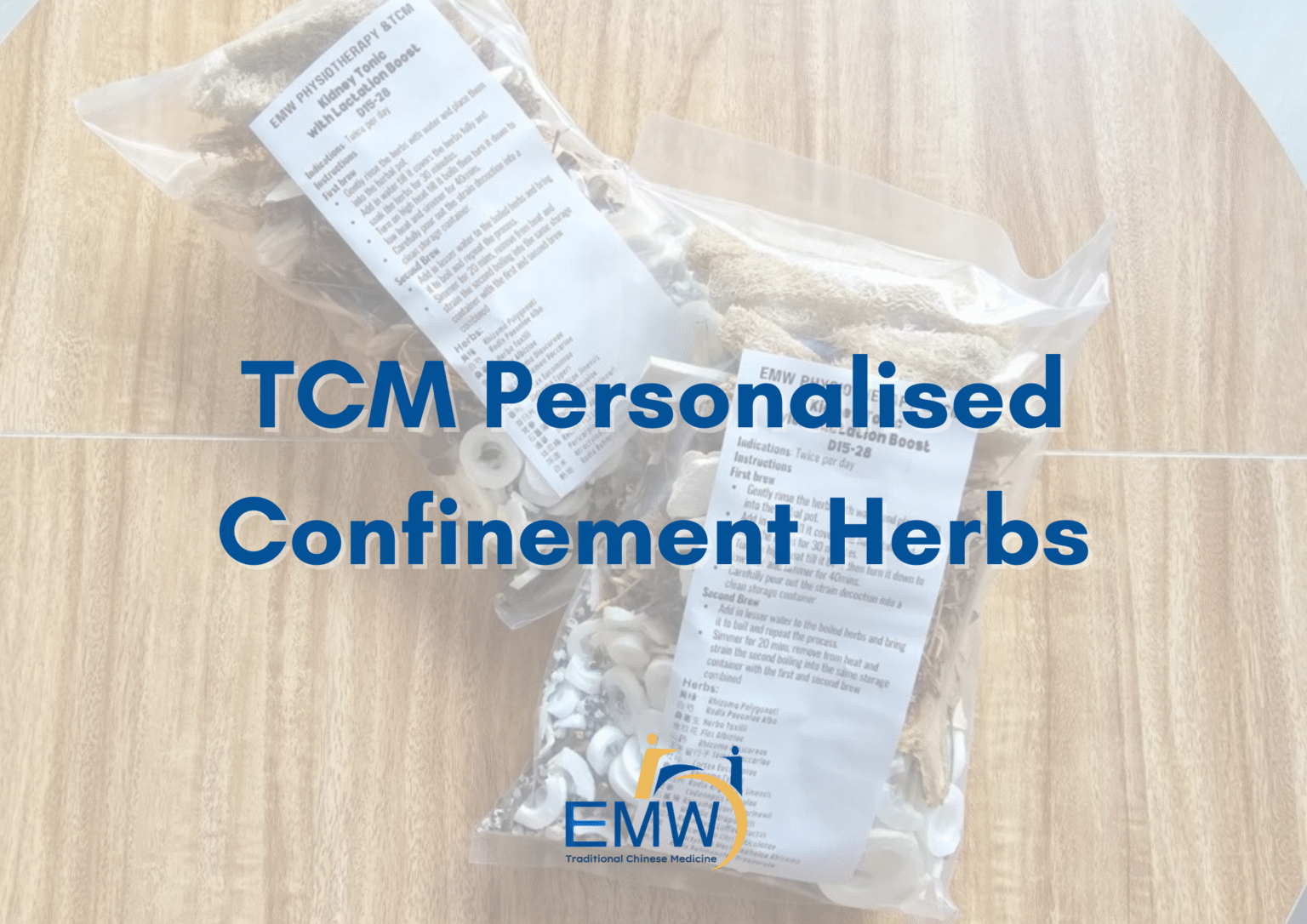
EMW Personalised Confinement Herbal Package is designed to be brewed into a decoction and to be drank separately outside of meals. Therefore, while confinement herbal soups are catered more towards general body constitution while our Herbal Package herbs are more catered to individual body types hence being more potent as a result.
TCM Postartum Acupressure
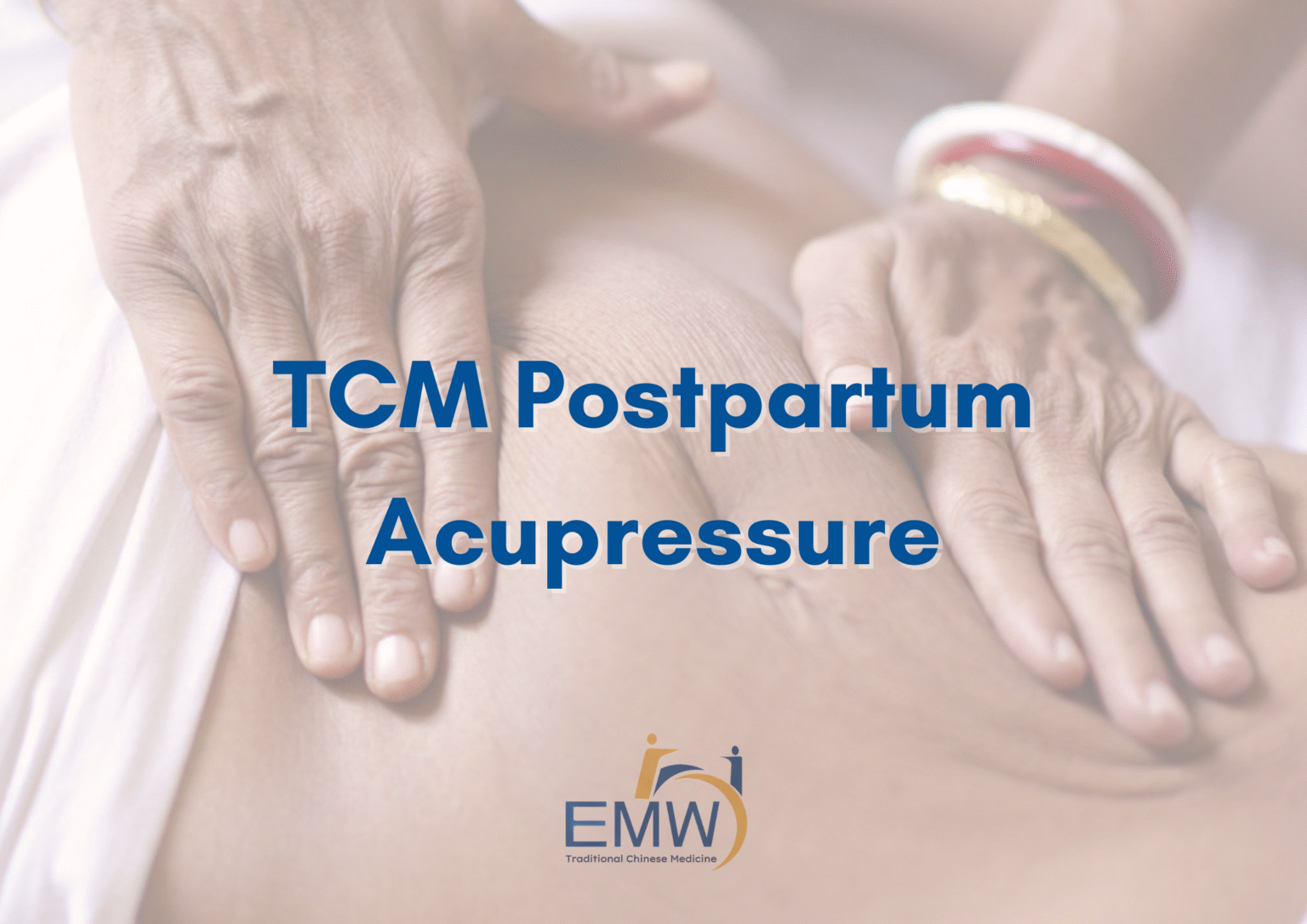
A 2018 study published in The Journal of Maternal Health found that postpartum massage enhances oxytocin release, which helps with uterine contractions, reduces swelling, and supports emotional well-being. Our specialized EMW TCM postnatal massage Singapore program integrates these evidence-based benefits to ensure a smoother recovery journey for new mothers.
How TCM Supports Postpartum Recovery
At EMW TCM Singapore, we see postpartum care not only as physical healing but also as emotional restoration. Our physicians integrate TCM acupressure, moxibustion acupuncture, and herbal medicine in TCM Confinement Singapore care to help mothers regain balance, replenish energy, and prevent long-term health issues.
EMW TCM Clinics
International Building Branch
360 Orchard Road, International Building #02-05/06
Singapore 238869
Book Your Appointment With Us Here: +65 89585869
Our Physicians

Principal TCM Physician
- M.Med(TCM Gynaecology)
- B.Sc(Hons) Biomedical Sciences
- Dip. Naturopath
- Ayurvedic Therapist(500hrs)
- Registered TCM Physician (Singapore MOH)

Senior TCM Physician
- M.Med(TCM Acupuncture & Moxibustion)
- B.Sc(Hons) Biomedical Sciences
- Certified Aromatherapist
- Registered TCM Physician (Singapore MOH)

TCM Physician
- M.Med(TCM Gynaecology)
- B.Sc(Hons) Biomedical Sciences
- Registered TCM Physician (Singapore MOH)

TCM Physician
- M.Med(TCM Acupuncture & Moxibustion)
- B.Sc(Hons) Biomedical Sciences
- Registered TCM Physician (Singapore MOH)

TCM Physician
- B.Med(TCM)
- B.Sc(Hons) Biomedical Sciences
- International Board-Certified Lactation Consultant (IBCLC)
- Registered TCM Physician (Singapore MOH)