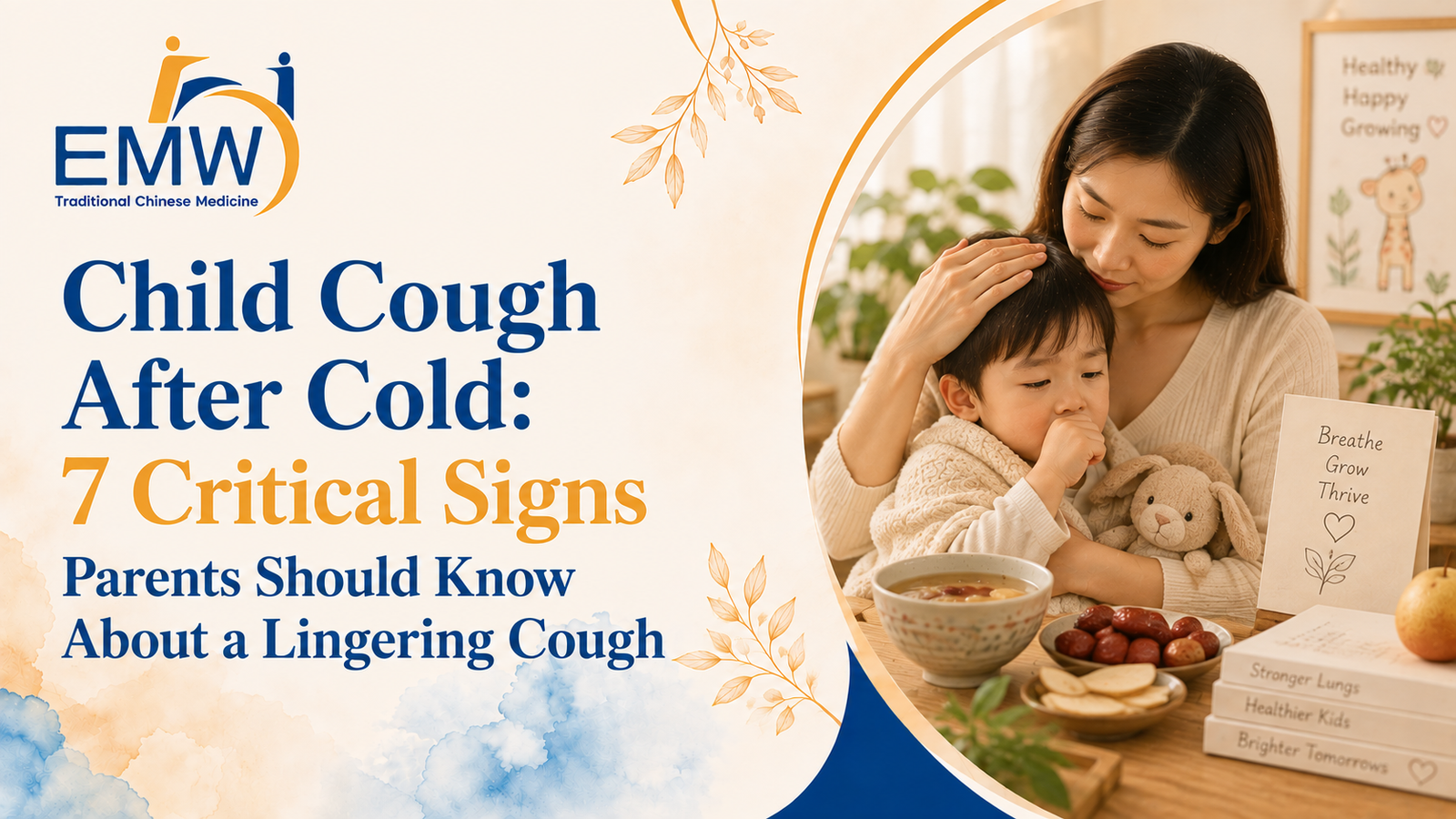
Child Cough After Cold: 7 Critical Signs Parents Should Know About a Lingering Cough

Child Cough After Cold 7 Critical Signs Parents Should Know About a Lingering Cough

Child Cough After Cold: 7 Critical Signs Parents Should Know About a Lingering Cough

The fever has disappeared, your child is playing again, but the cough is still there. A child cough after cold can sometimes persist beyond the other symptoms, leaving parents wondering whether the infection has returned or whether something else is going on.

A child cough after cold often improves gradually over the following few weeks. Singapore paediatric guidance notes that coughs associated with ordinary upper respiratory infections resolve within one to three weeks in at least 90% of children. However, an unremitting cough lasting more than four weeks warrants reassessment, particularly if it is wet or accompanied by other warning signs.

Lifestyle Nutrition For IVF 9
TCM treats pediatric digestive issues

Child Cough After Cold: 7 Critical Signs Parents Should Know About a Lingering Cough​

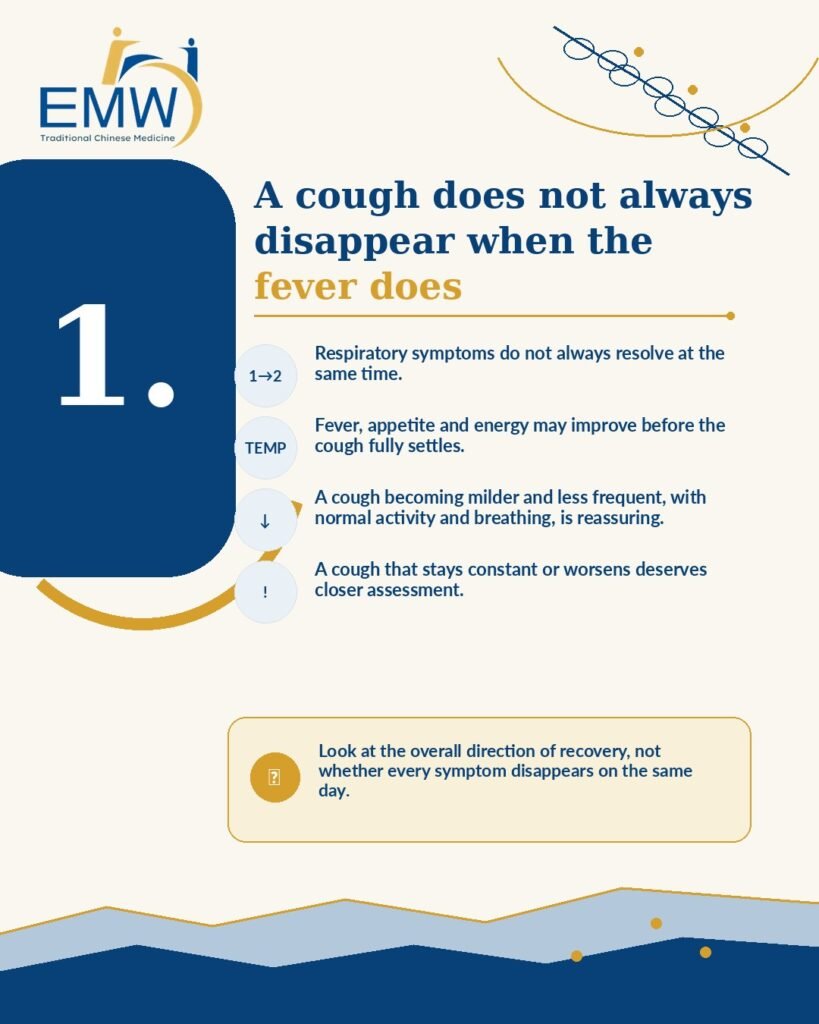
1. A cough does not always disappear when the fever does

Parents often expect all symptoms to stop at the same time.

Respiratory infections don’t always behave that neatly.

The nose may improve first, followed by fever, energy and appetite, while the cough gradually becomes less frequent.

What matters is the overall direction.

A child cough after cold that is becoming milder, occurs less often and is accompanied by normal activity and breathing is different from a cough that remains constant or is getting worse.

2. Duration matters

In children, a cough lasting more than four weeks is generally considered chronic under CHEST-based definitions used in the Singapore Medical Journal review from KKH-affiliated authors.

This does not mean every cough at four weeks represents a dangerous disease.

It means the child deserves reassessment.

The clinician will consider whether this is a resolving post-viral cough, repeated viral infections or another underlying cause.

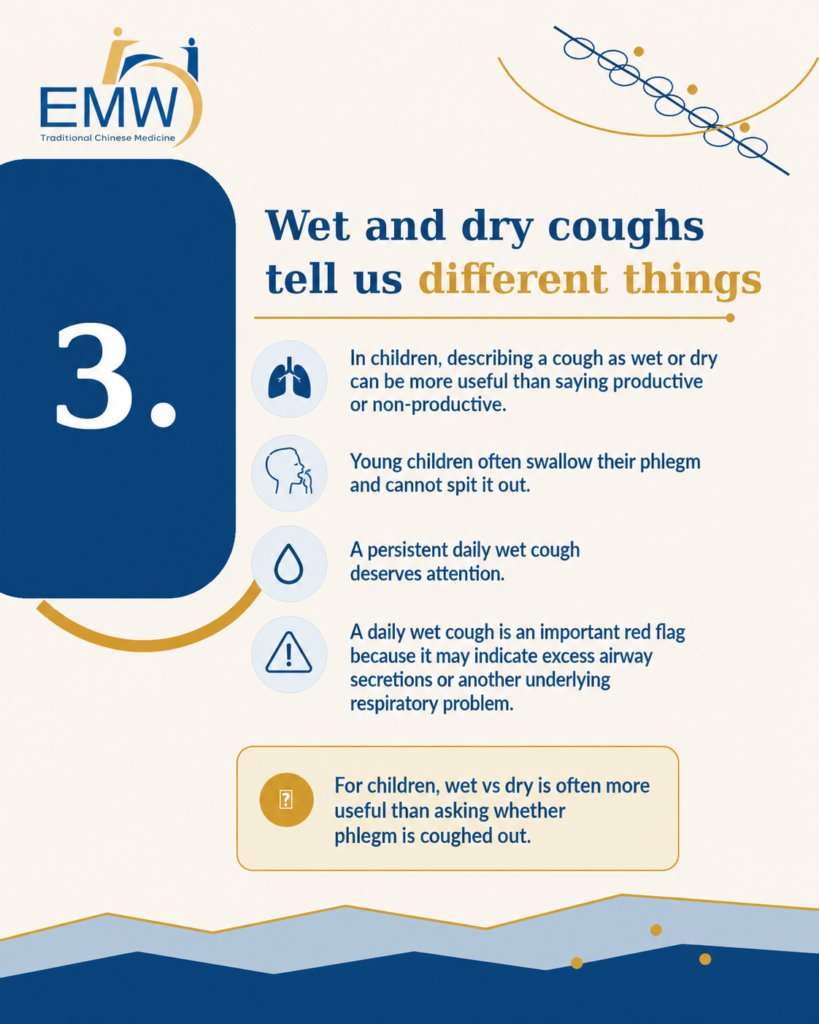
3. Wet and dry coughs tell us different things

For children, describing a cough as wet or dry can be more useful than saying productive or non-productive.

Young children often swallow their phlegm and cannot spit it out.

A persistent daily wet cough deserves attention.

Singapore paediatric guidance identifies persistent daily wet cough as an important red flag because it may indicate excessive airway secretions and an underlying respiratory problem.

4. Childcare can make it feel like your child is always sick

Parents sometimes say:

“He gets better for three days, then starts coughing again.”

Young children can experience repeated upper respiratory infections, particularly after starting childcare or preschool.

The Singapore review notes that otherwise healthy young children can have multiple URTIs each year.

This can create the appearance of one six-week infection when the child has actually experienced two or three overlapping viral illnesses.

A useful clue is whether there are genuinely cough-free or almost cough-free periods in between.v

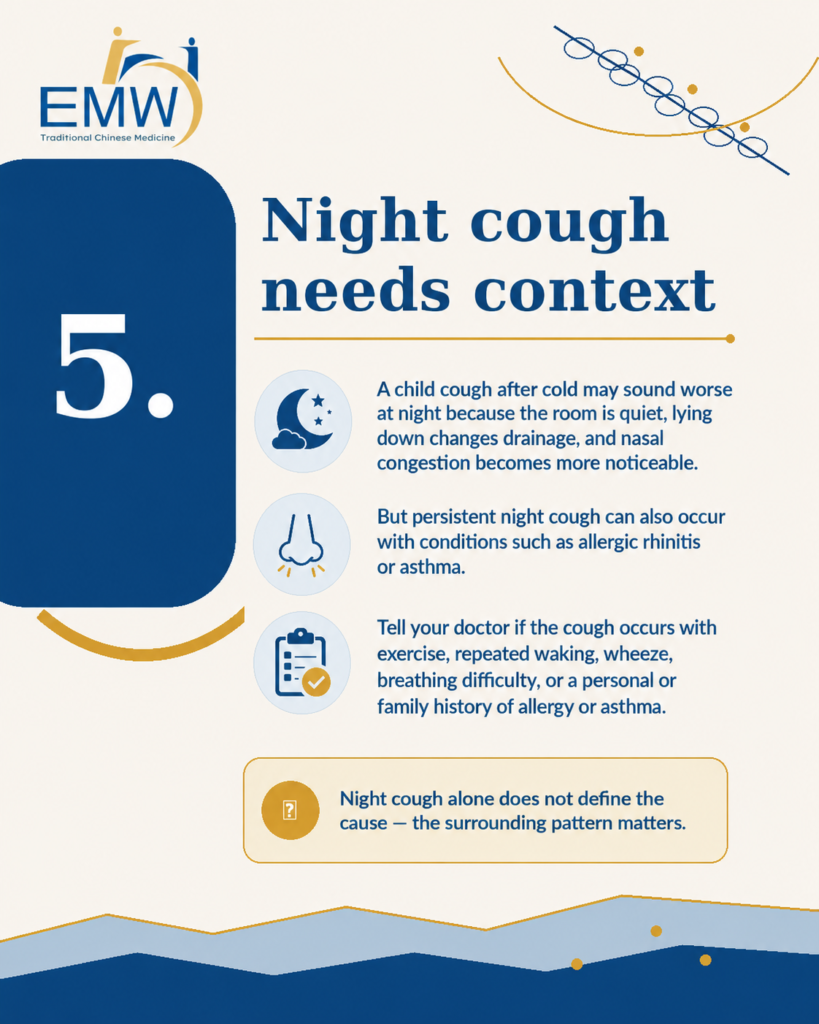
5. Night cough needs context

A child cough after cold may sound worse at night because the room is quiet, lying down changes drainage and nasal congestion becomes more noticeable.

But persistent night cough can also occur with other conditions such as allergic rhinitis or asthma.

Tell your doctor whether your child coughs with exercise, wakes repeatedly from coughing, wheezes, has breathing difficulty or has a personal/family history of allergy or asthma.

6. Some warning signs should not be managed as “just a lingering cough”

Seek medical review promptly if your child has breathing difficulty, persistent or recurrent fever, blue lips, poor feeding or dehydration, marked lethargy, coughing blood, unexplained weight loss, choking preceding the cough, suspected foreign-body inhalation or a persistent daily wet cough.

A cough that remains unremitting beyond four weeks should also be reassessed.

These symptoms require conventional medical evaluation rather than complementary treatment alone.
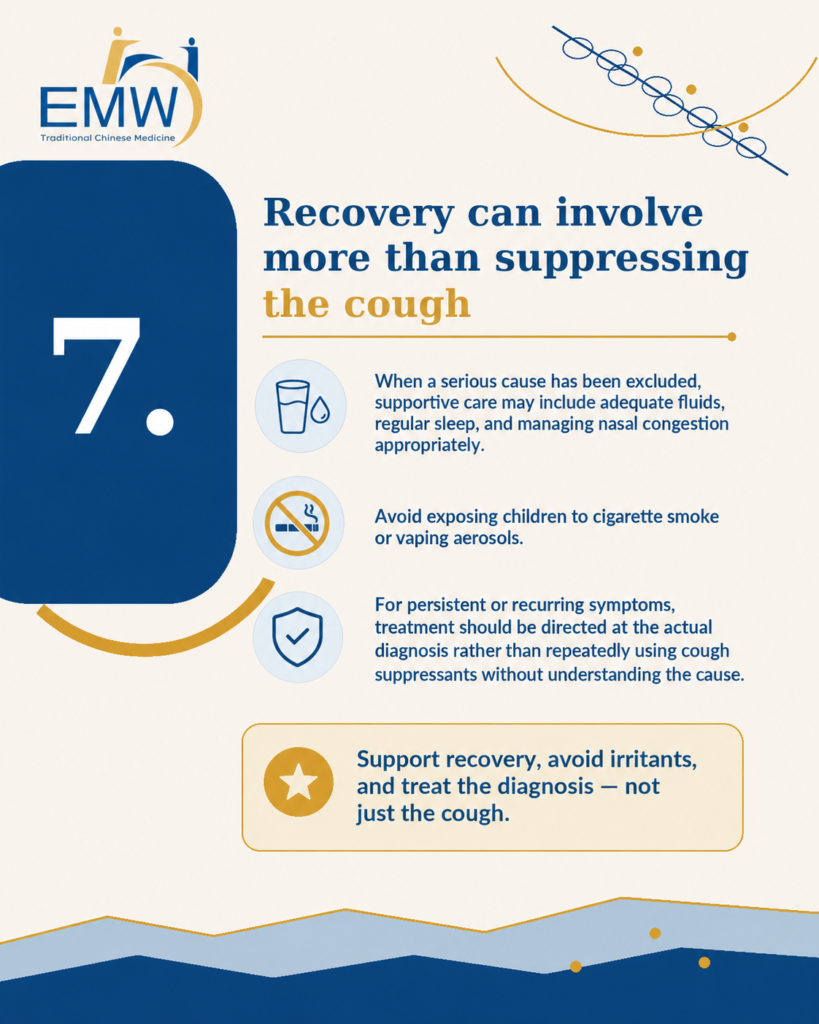
7. Recovery can involve more than suppressing the cough

When a serious cause has been excluded, parents often ask what can help while the child recovers.

Basic supportive care may include adequate fluids, regular sleep and managing nasal congestion appropriately.

Avoid exposing children to cigarette smoke or vaping aerosols.

For persistent or recurring symptoms, treatment should be directed at the actual diagnosis rather than repeatedly using cough suppressants without understanding the cause.

1
Download Our Cough Relief Pediatric Acupressure Handbook!

Where does paediatric TCM fit?

Some parents bring a child cough after cold to EMW after the child has already been medically assessed and is otherwise well but still experiencing residual symptoms.

Paediatric TCM may involve a TCM consultation followed by techniques such as paediatric tuina when appropriate for the child’s age and presentation.

TCM should be viewed as complementary care.

A child with breathing difficulty, fever, a persistent wet cough, significant lethargy or another red flag should be medically assessed first.

Frequently Asked Questions

How long can a cough last after a cold in children?

Many viral coughs improve within one to three weeks. An unremitting cough extending beyond four weeks should be reassessed.

Why is my child’s cough worse at night?

Possible explanations range from nasal drainage and airway sensitivity to allergic rhinitis or asthma. Persistent symptoms need assessment.

Does green or yellow phlegm automatically mean antibiotics are needed?

No. Colour alone does not determine whether an infection is bacterial or whether antibiotics are required.

When should I worry about a lingering cough?

Breathing difficulty, persistent fever, daily wet cough, blood, poor growth, choking history or an unremitting cough longer than four weeks warrant medical review.

Key takeaway

A child cough after cold is often part of ordinary recovery, particularly when it gradually improves and the child is otherwise active and well.

What parents should watch most closely is not merely the sound of the cough, but its duration, progression, wet/dry nature and accompanying symptoms.

Our TCM Physicians

Principal TCM Physician

  • M.Med(TCM Gynaecology)
  • B.Sc(Hons) Biomedical Sciences
  • Dip. Naturopath
  • Ayurvedic Therapist(500hrs)
  • Registered TCM Physician (Singapore MOH)

Senior TCM Physician

  • M.Med(TCM Acupuncture & Moxibustion)
  • B.Sc(Hons) Biomedical Sciences
  • Certified Aromatherapist
  • Registered TCM Physician (Singapore MOH)

TCM Physician

  • M.Med(TCM Gynaecology)
  • B.Sc(Hons) Biomedical Sciences
  • Registered TCM Physician (Singapore MOH)

TCM Physician

  • M.Med(TCM Acupuncture & Moxibustion)
  • B.Sc(Hons) Biomedical Sciences
  • Registered TCM Physician (Singapore MOH)

TCM Physician

  • B.Med(TCM)
  • B.Sc(Hons) Biomedical Sciences
  • International Board-Certified Lactation Consultant (IBCLC)
  • Registered TCM Physician (Singapore MOH)

Comments

No comments yet. Why don’t you start the discussion?

Leave a Reply

Your email address will not be published. Required fields are marked *