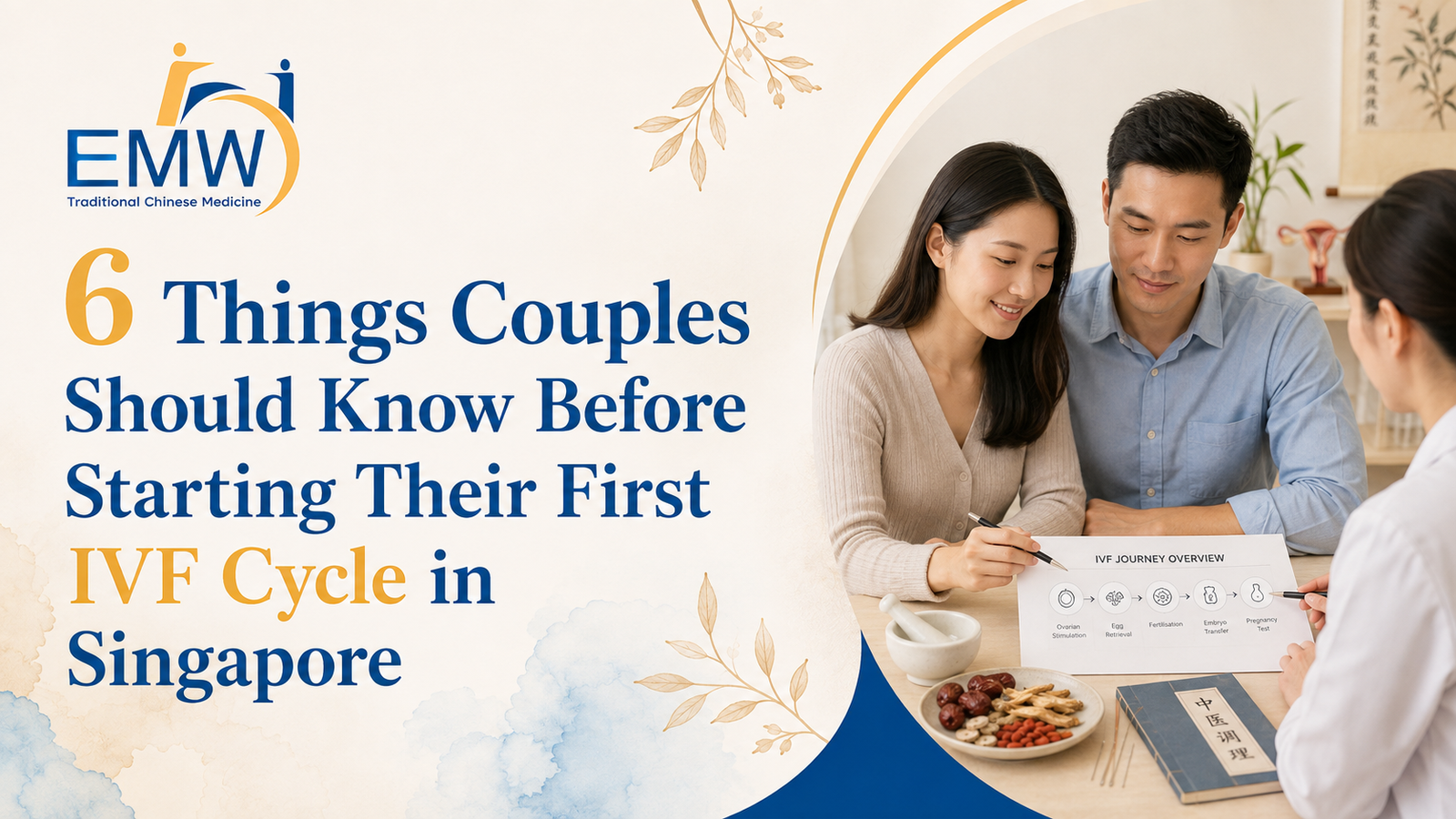
6 Things Couples Should Know Before Starting Their First IVF Cycle in Singapore
Starting IVF can feel like stepping into a world of injections, scans, blood tests, embryo grading, waiting rooms, medical terms, and emotional pressure.
For many couples in Singapore, IVF is not the first step. It often comes after months or years of trying naturally, failed IUIs, irregular cycles, male factor concerns, low AMH, endometriosis, PCOS, recurrent miscarriage, blocked tubes, unexplained infertility, or age-related fertility decline.
By the time IVF is discussed, couples are often tired. They may be hopeful, but also afraid.
At EMW TCM, we want couples to understand something important: IVF is not just a medical procedure. It is a whole-body, whole-couple journey.
Your ovaries, sperm quality, uterine lining, stress response, sleep, digestion, inflammation, and emotional resilience all matter.
1. IVF Is A Process, Not One Procedure
Many couples imagine IVF as one single treatment.
In reality, IVF is a sequence.
A typical IVF cycle may include ovarian stimulation, hormone injections, ultrasound monitoring, blood tests, egg retrieval, sperm preparation, fertilisation in the lab, embryo culture, embryo transfer, and the two-week wait. SingHealth explains that embryos are usually transferred into the uterus between day two and day five of fertilisation using a fine catheter, and the transfer usually takes only a few minutes.
For some couples, there may also be ICSI, embryo freezing, frozen embryo transfer, genetic testing, or cycle cancellation if the ovaries do not respond as expected. KKH explains that ICSI involves injecting a single sperm into the cytoplasm of the egg using a very fine glass needle.
This is why emotional preparation matters.
IVF is not only about “doing the transfer.” It is about moving through each stage with clarity.
Before starting, couples should ask their fertility doctor:
What is our diagnosis?
Why is IVF recommended now?
Are we doing IVF or IVF with ICSI?
Are we planning fresh transfer or freeze-all?
How many embryos are likely to be transferred?
What are the risks in my case?
What happens if we get fewer eggs than expected?
What happens if there are extra embryos?
What is the clinic’s plan if ovarian response is poor or excessive?
The first lesson in 6 Things Couples Should Know Before Starting Their First IVF Cycle in Singapore is this: clarity reduces fear.
The more you understand the steps, the less you feel like the process is controlling you.
2. Age, Egg Quality, And Sperm Quality All Matter
Many couples focus only on the woman’s eggs.
This is understandable because IVF stimulation happens in the woman’s body. However, embryo quality depends on both egg and sperm.
Female age is one of the strongest predictors of IVF outcome because egg quantity and egg quality decline with age. MOH notes that the chance of conception with ART decreases with age and becomes significantly lower after 40.
But sperm quality also matters.
Semen analysis is not only about sperm count. Motility, morphology, and sometimes sperm DNA fragmentation may be relevant, especially if there is repeated failed fertilisation, poor embryo development, miscarriage, smoking history, varicocele, heat exposure, infection, or older paternal age.
From a TCM perspective, we look at both partners.
For women, we assess:
- Menstrual cycle quality
- Ovulation signs
- Period flow, clots, pain, and spotting
- Cold womb signs
- Sleep and stress
- Digestion and Blood nourishment
- Kidney, Liver, and Spleen patterns
For men, we assess:
- Energy and libido
- Cold or Heat signs
- Stress and sleep
- Digestion
- Semen analysis results
- Lifestyle patterns
- Heat exposure
- Kidney Essence and Qi-Blood status
A stronger IVF plan prepares both partners, not only the woman.
At EMW TCM, we often recommend at least 8–12 weeks of pre-IVF preparation where possible, because follicle and sperm development take time.
3. IVF Preparation Should Start Before Injections
Many couples only think about support once injections begin.
But by then, a lot of biological preparation has already happened.
Follicles take time to develop. Sperm production takes time. Uterine lining quality, inflammation, sleep rhythm, nutritional status, and nervous system regulation do not change overnight.
This is why preconception preparation matters.
From a TCM perspective, IVF preparation may focus on:
- Nourishing Blood
- Supporting Kidney Essence
- Strengthening Spleen digestion
- Moving Liver Qi
- Improving pelvic circulation
- Reducing Cold in the womb
- Supporting sleep and recovery
- Reducing stress before stimulation
- Preparing the uterine lining before transfer
For example, if a patient has light periods, dizziness, pale lips, and poor sleep, we may focus on Blood nourishment.
If she has dark clots, painful periods, endometriosis, or poor circulation signs, we may focus on moving Blood and improving flow.
If she has cold hands and feet, cramps relieved by heat, and low basal body temperature, we may focus on warming the womb.
If she has bloating, loose stools, fatigue, and sugar cravings, we may strengthen Spleen Qi and digestion.
This is personalised IVF preparation.
It is not one protocol for everyone.
This is also why acupuncture should not be seen only as something done on embryo transfer day. It may be more useful as part of a structured plan before stimulation, during stimulation, before retrieval, before transfer, and during the two-week wait when appropriate.
4. Understand The Financial Side Before You Begin
IVF can be financially stressful, especially if couples assume one cycle will be enough.
In Singapore, eligible couples undergoing assisted conception procedures in public assisted reproduction centres may receive up to 75% government co-funding, covering up to 3 fresh and 3 frozen ART cycles.
The Made For Families support page also states that eligible couples may receive co-funding for Assisted Conception Procedures and gives conditions such as age and citizenship requirements.
Before starting, couples should ask clearly:
What is the estimated total cost?
What is included?
What is not included?
How much are medications?
Are embryo freezing and storage separate?
Is ICSI separate?
Is genetic testing separate?
Can MediSave be used?
What happens financially if the cycle is cancelled?
What happens if we need a frozen embryo transfer later?
This matters because IVF stress is not only medical.
It is emotional and financial.
Couples should plan for the possibility that more than one cycle may be needed. That does not mean expecting failure. It means protecting your nervous system from shock if the first cycle does not go perfectly.
A central message in 6 Things Couples Should Know Before Starting Their First IVF Cycle in Singapore is this: prepare your body, but also prepare your expectations.
5. The Two-Week Wait Is Often The Hardest Part
Many couples assume egg retrieval or embryo transfer will be the most stressful stage.
But for many patients, the hardest part is the two-week wait.
This is the period after embryo transfer and before the pregnancy test.
During this time, patients may overanalyse every symptom:
Breast tenderness.
Cramps.
No cramps.
Discharge.
Tiredness.
Insomnia.
Feeling warm.
Feeling nothing.
This can become emotionally exhausting.
From a TCM perspective, the two-week wait is a time to support calm, warmth, Blood flow, and stability. The goal is not to force implantation. The goal is to create a calm internal environment.
Helpful principles include:
- Keep meals warm and nourishing
- Avoid intense exercise unless cleared by your doctor
- Sleep early
- Avoid excessive Googling
- Avoid comparing symptoms with online forums
- Continue prescribed medication exactly as instructed
- Do not stop progesterone support unless your doctor tells you to
- Use breathing, gentle walking, or acupuncture if appropriate
- Keep the abdomen warm but avoid overheating
- Stay emotionally supported
At EMW TCM, we often remind patients that symptoms during the two-week wait are unreliable. Some women feel many symptoms and are not pregnant. Some feel nothing and are pregnant.
The body does not always give clear signs early.
This is why calm support matters more than constant symptom checking.
6. IVF Success Is Not Only About The Embryo
Embryo quality matters.
But IVF outcome is not only about the embryo.
The uterine lining, immune environment, hormones, blood flow, inflammation, stress response, thyroid function, metabolic health, and sleep can all influence the reproductive terrain.
This is where TCM offers a whole-body view.
In TCM, IVF support is not about replacing Western fertility treatment. It is about supporting the body going through IVF.
We may work on:
- Kidney Essence for reproductive vitality
- Spleen Qi for nutrient transformation
- Liver Qi for emotional and hormonal flow
- Blood nourishment for lining support
- Blood movement for circulation
- Yang warmth for luteal stability
- Yin nourishment for follicular development
- Shen calming for anxiety and sleep
This is especially relevant for patients with:
- Low AMH
- Poor ovarian response
- Thin lining
- Recurrent implantation failure
- Recurrent miscarriage
- PCOS
- Endometriosis
- Fibroids
- Thyroid issues
- Stress-related cycle disruption
- Male factor infertility
At EMW TCM, our goal is not to promise IVF success.
No ethical clinic should promise that.
Our goal is to help you enter IVF in a stronger, calmer, more prepared state.
That is the heart of 6 Things Couples Should Know Before Starting Their First IVF Cycle in Singapore: IVF is medical, but the body going through IVF is still whole.
How EMW TCM Supports Couples Before IVF
At EMW TCM Singapore, we support couples before and during IVF through a structured fertility approach.
Your plan may include:
- Cycle-based acupuncture
- IVF-stage-based acupuncture
- TCM fertility diagnosis
- Review of menstrual patterns
- Review of semen analysis where available
- Fertility nutrition guidance
- Sleep and stress support
- Cold womb, Blood deficiency, Dampness, or Qi stagnation assessment
- Pre-retrieval and pre-transfer body preparation
- Post-transfer support when appropriate
We also encourage couples to maintain close communication with their fertility specialist. IVF medications, scans, retrieval, embryo decisions, progesterone support, and pregnancy testing should always be directed by your IVF doctor.
TCM works best when it supports the medical plan safely.
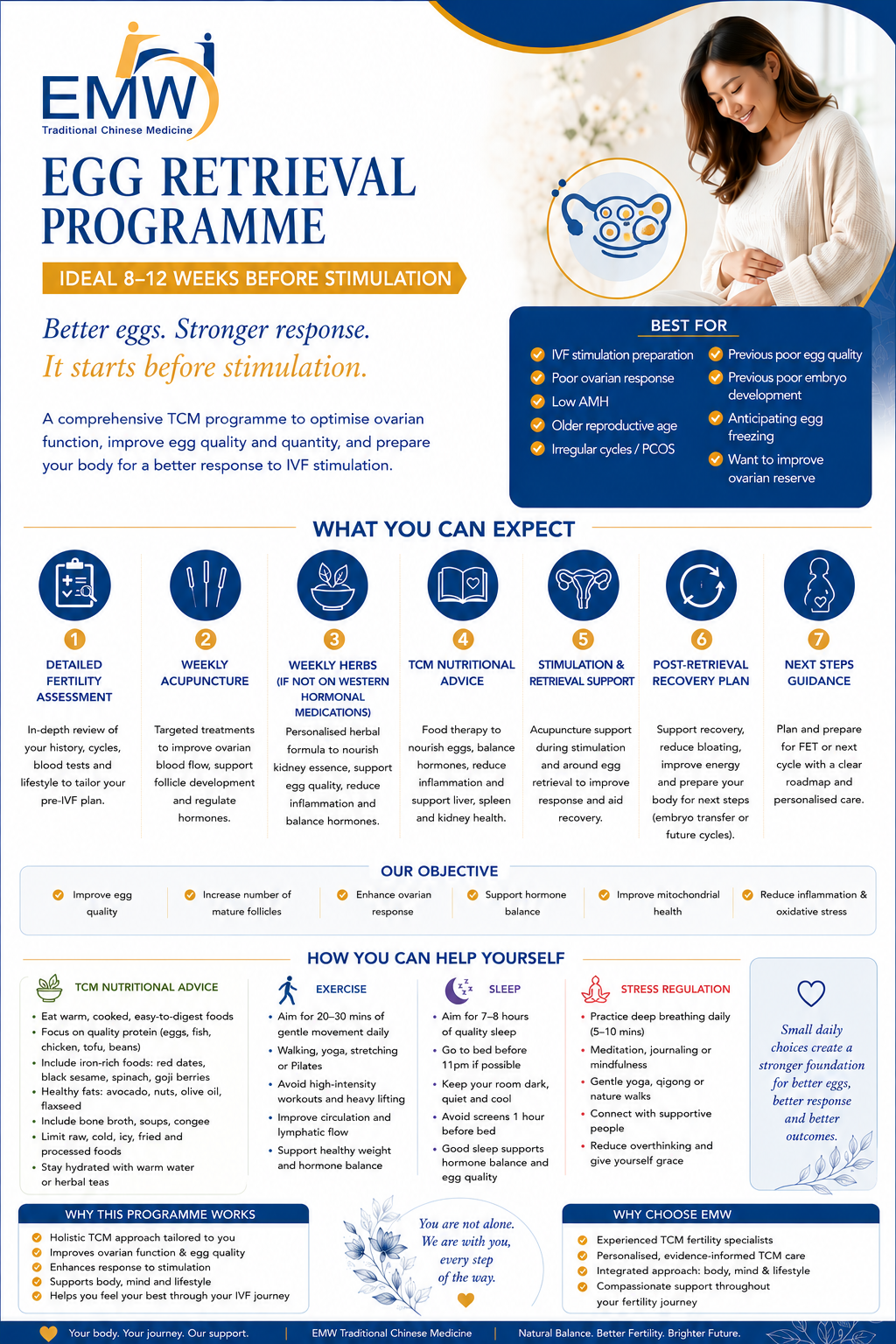
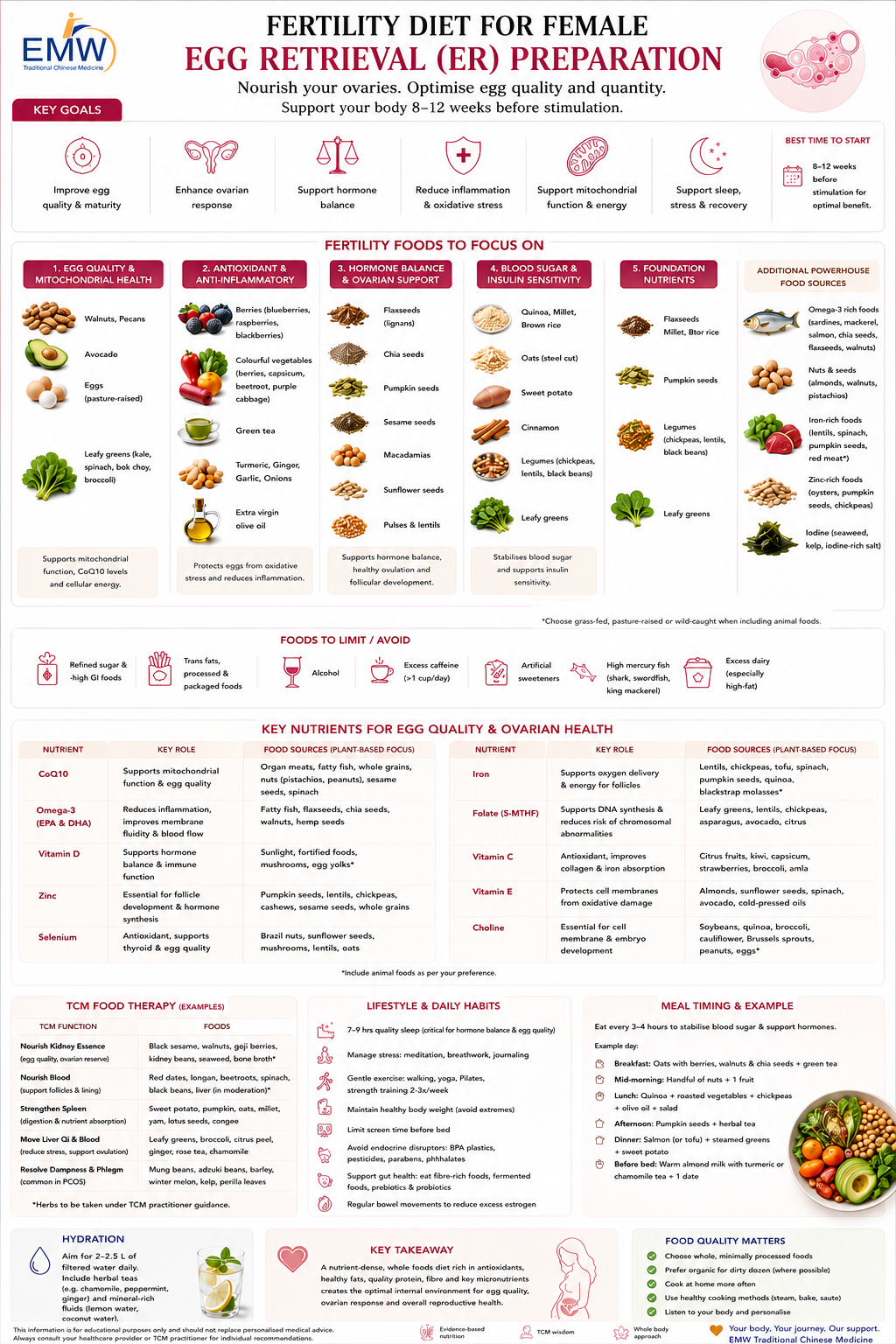
Egg Retrieval TCM Master Guide
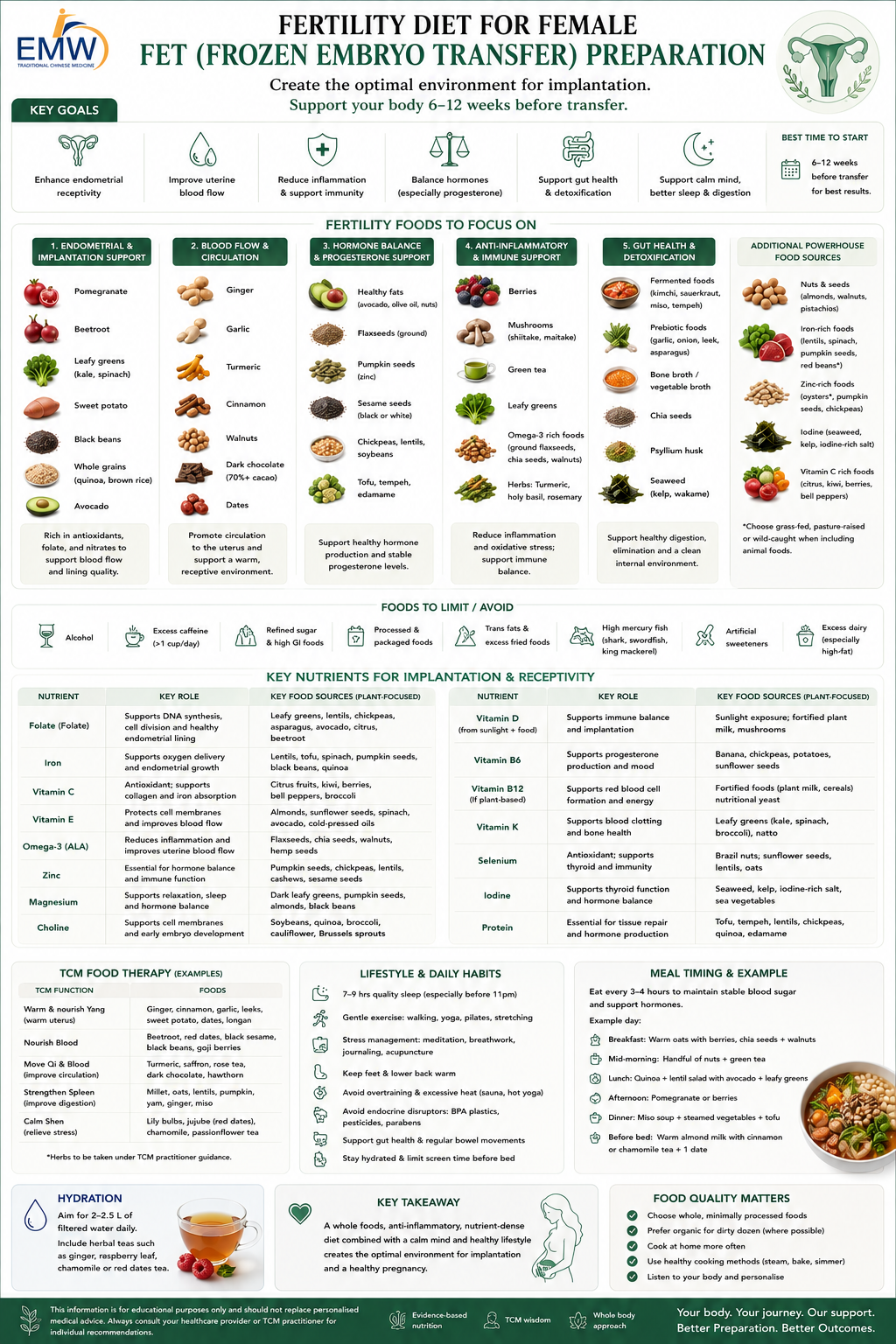
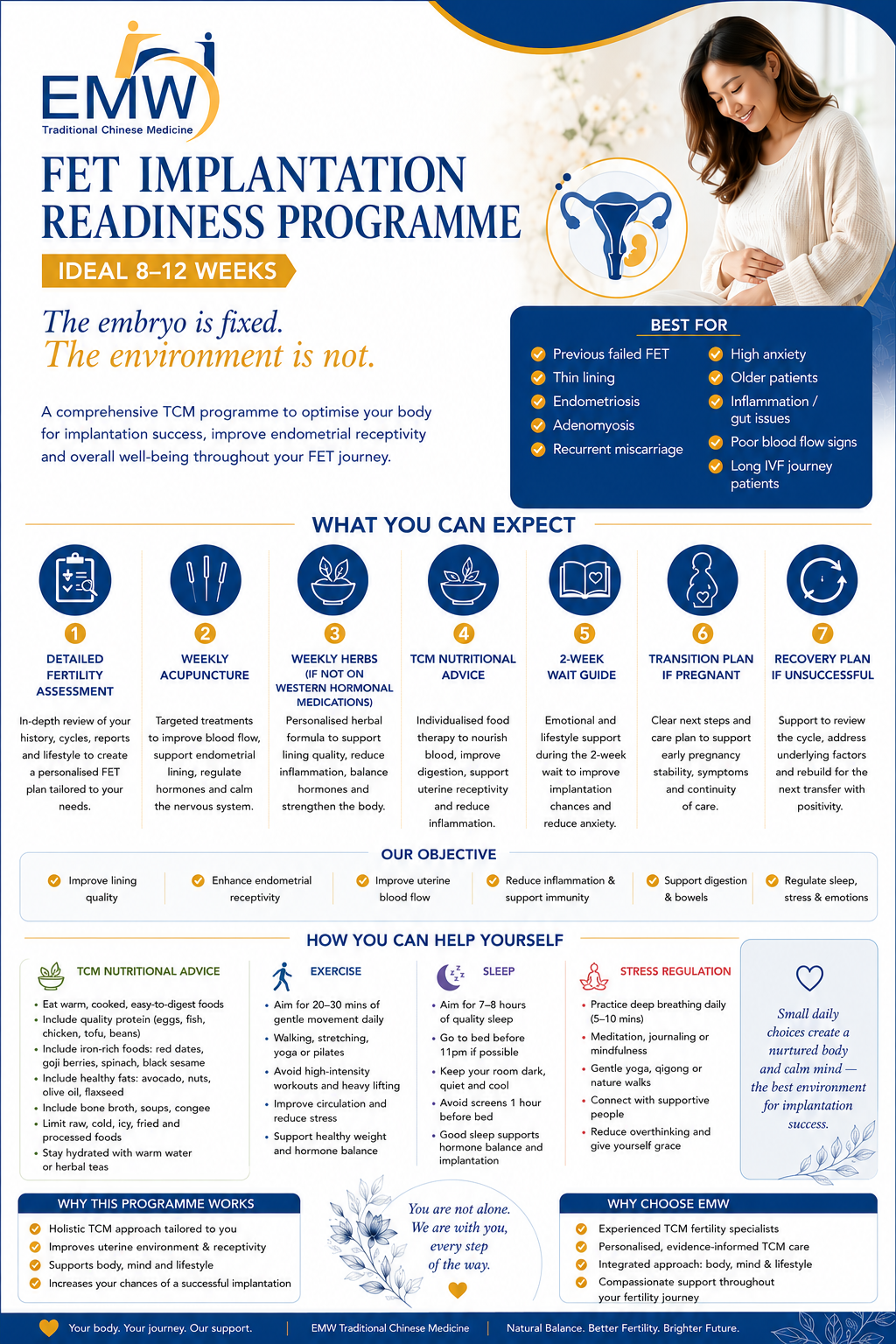
Press the image to zoom in. If you like such infographics, we have a ‘3 ways to superboost your fertility’ PDF guide – Actionable steps that can help to support your reproductive health right away. You can sign up for free here: https://emwtcm.podia.com/3-ways-to-boost-your-fertility
FAQ: First IVF Cycle In Singapore
1. How long does one IVF cycle take?
A fresh IVF cycle commonly takes several weeks, depending on your stimulation protocol, ovarian response, egg retrieval timing, embryo development, and whether you do a fresh or frozen transfer.
2. Should I do acupuncture before IVF?
Many couples choose acupuncture before IVF to support cycle regulation, stress response, uterine blood flow, sleep, and TCM body constitution. It is usually more useful to start before injections rather than only on transfer day.
3. Can TCM improve IVF success?
TCM cannot guarantee IVF success. However, acupuncture, nutrition, sleep support, and personalised TCM care may help optimise the body’s internal environment before and during IVF.
4. Should my husband prepare too?
Yes. Sperm quality affects fertilisation and embryo development. Male fertility preparation should ideally begin at least 8–12 weeks before IVF where possible.
5. Can I take herbs during IVF?
Do not take herbs randomly during IVF. Herbal medicine must be prescribed by a qualified TCM physician who understands fertility treatment, and your fertility doctor should be informed when appropriate.
6. What should I avoid during IVF?
Avoid smoking, excessive alcohol, recreational drugs, overheating the testes, extreme dieting, over-exercising, poor sleep, and unapproved supplements or herbs. Follow your fertility clinic’s instructions closely.
7. Is IVF painful?
Some discomfort can occur from injections, bloating, blood tests, scans, and egg retrieval. Your IVF team will guide you on pain relief, sedation, and what symptoms require urgent medical attention.
Final Thoughts
Your first IVF cycle can feel overwhelming.
There are many steps, many decisions, and many emotions.
But IVF becomes less frightening when you understand the process, prepare early, involve both partners, support your body, and manage expectations clearly.
You do not need to enter IVF feeling helpless.
You can enter it with a plan.
Read more fertility articles on the EMW TCM Blog.
If you are preparing for your first IVF cycle, EMW TCM can help you assess your constitution, regulate your cycle, support your fertility nutrition, and create a structured pre-IVF plan.
How EMW TCM Help Your Fertility
From a biomedical perspective, acupuncture for fertility improves ovarian and uterine blood flow, regulates the hypothalamic-pituitary-ovarian axis, lowers cortisol, reduces inflammation, and supports hormonal balance. These effects complement TCM principles and help enhance egg development, implantation, and reproductive function.
1. Comprehensive Assessment
Your first consultation includes:
Cycle assessment
Digestion and hormonal review
Energy and stress evaluation
Sleep and lifestyle factors
Male fertility screening when relevant
2. Evidence-Based TCM Diagnosis
Qi stagnation
Blood deficiency
Spleen Qi weakness
Kidney Yin/Yang imbalance
Liver Qi constraint
Dampness and inflammation
3. Personalised Fertility Treatment Plan
Weekly fertility acupuncture
Customised herbal formulas
Stress reduction strategies
Lifestyle recommendations
TCM Acupuncture for Fertility Treatments
Acupuncture, one of the most researched TCM fertility tools, has been found to influence several physiological pathways related to reproduction.
A review published in Fertility and Sterility (2019) reported that acupuncture may improve blood flow to the uterus and ovaries, modulate stress hormones, and enhance endometrial receptivity. Another meta-analysis in Integrative Medicine Research (2021) concluded that acupuncture used alongside conventional fertility treatment can improve pregnancy outcomes and reduce anxiety levels in women undergoing IVF.
From a clinical standpoint, acupuncture helps regulate the hypothalamic-pituitary-ovarian axis, improving hormone balance and menstrual regularity. It can also reduce cortisol levels, encouraging the parasympathetic or “rest-and-rebuild” state which supports implantation and early pregnancy.
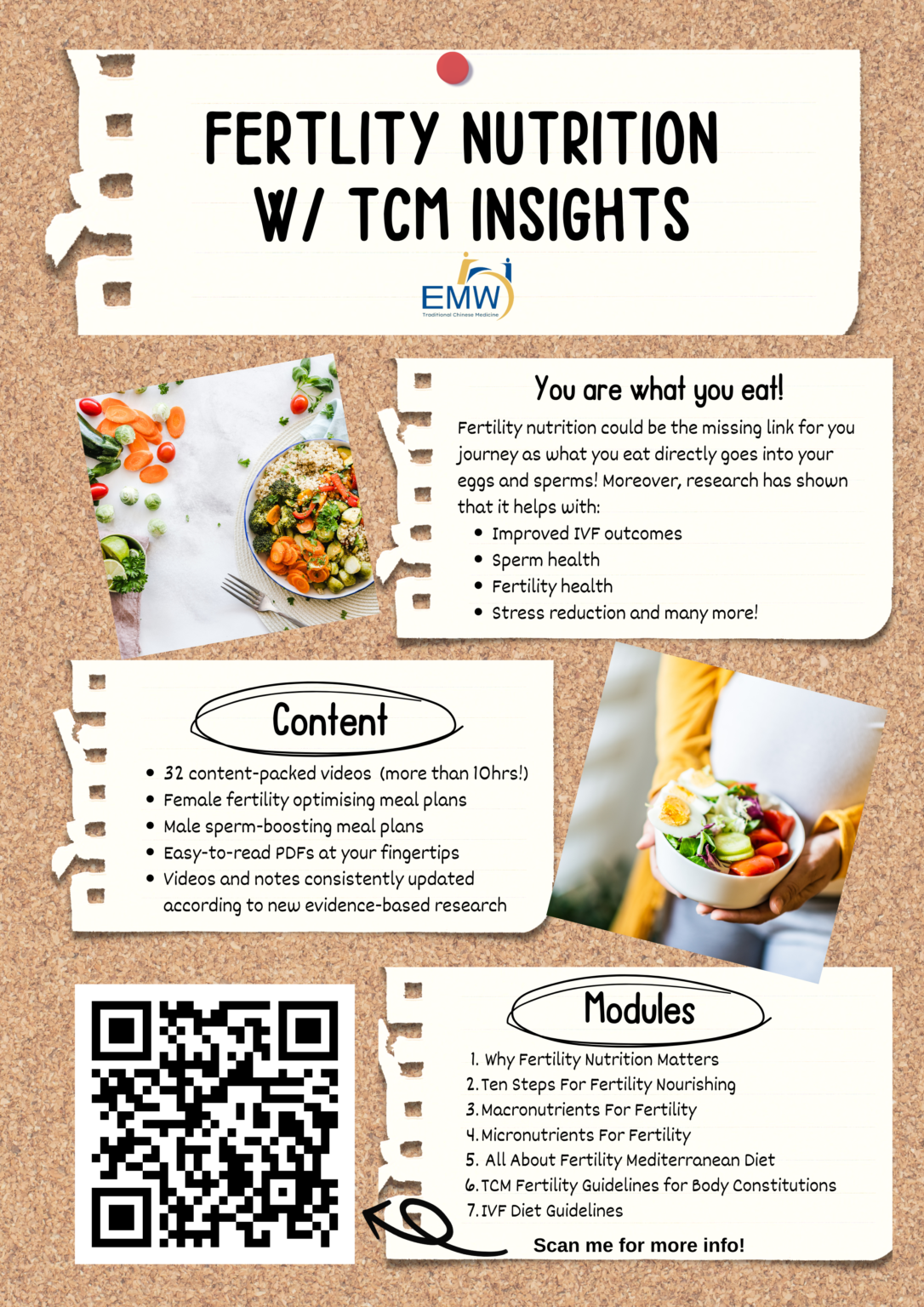
Our Flagship Ebook & Video Course
When to Seek Professional TCM Fertility Help
Fertility is not just a matter of age or hormones. It is a reflection of the body’s internal harmony. Traditional Chinese Medicine provides an integrative and natural way to restore this balance, supporting both physical and emotional readiness for conception.
At EMW TCM Singapore, our team of experienced physicians brings together centuries-old wisdom and modern evidence to guide your fertility journey. Whether you are trying naturally or preparing for IVF, we are here to help you create the best internal environment for new life to begin.
If you have been trying to conceive for more than six to twelve months, experience irregular menses, painful periods, or have been diagnosed with PCOS, endometriosis, or low sperm count, consider a consultation. Professional TCM fertility care aims to correct the underlying imbalance rather than simply forcing ovulation or hormone production.
Check out our links below to book your fertility consultation and begin your holistic journey toward conception.
EMW TCM Clinics
International Building Branch
360 Orchard Road, International Building #02-05/06
Singapore 238869
Book Your Appointment With Us Here: +65 89585869
Our Physicians
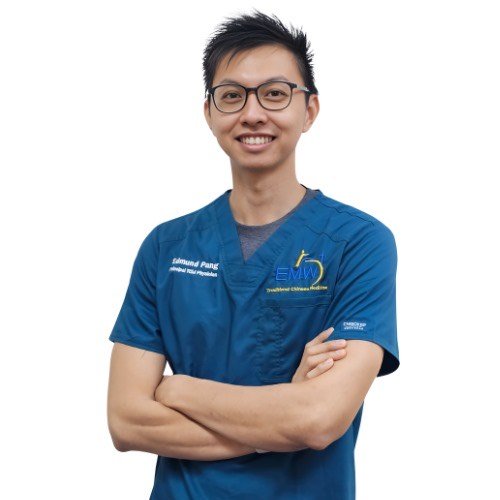
Principal TCM Physician
- M.Med(TCM Gynaecology)
- B.Sc(Hons) Biomedical Sciences
- Dip. Naturopath
- Ayurvedic Therapist(500hrs)
- Registered TCM Physician (Singapore MOH)
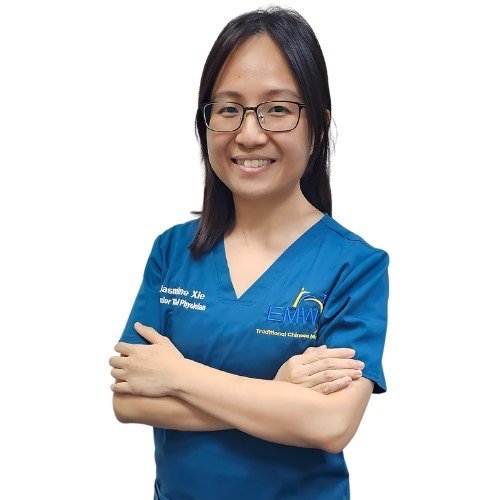
Senior TCM Physician
- M.Med(TCM Acupuncture & Moxibustion)
- B.Sc(Hons) Biomedical Sciences
- Certified Aromatherapist
- Registered TCM Physician (Singapore MOH)

TCM Physician
- M.Med(TCM Gynaecology)
- B.Sc(Hons) Biomedical Sciences
- Registered TCM Physician (Singapore MOH)
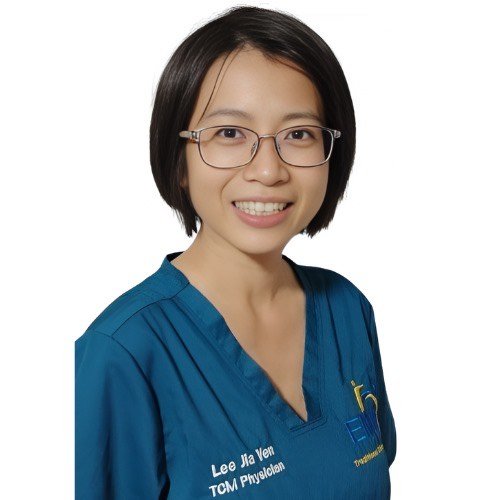
TCM Physician
- B.Med(TCM)
- B.Sc(Hons) Biomedical Sciences
- International Board-Certified Lactation Consultant (IBCLC)
- Registered TCM Physician (Singapore MOH)
References
- Chao JC et al. Antioxidant effects of Lycium barbarum polysaccharides. J Sci Food Agric. 2006. DOI: 10.1002/jsfa.2362
- Stener-Victorin E et al. Reduction of uterine artery blood flow impedance. Hum Reprod. 1996. DOI: 10.1093/oxfordjournals.humrep.a019187
- May-Panloup P et al. Mitochondrial biogenesis and oocyte quality. Hum Reprod Update. 2016. DOI: 10.1093/humupd/dmw006
- Stener-Victorin E & Wu X. Acupuncture effects on the reproductive system. Auton Neurosci. 2010. DOI: 10.1016/j.autneu.2009.12.001
- Tamura H et al. Melatonin and female reproduction. J Obstet Gynaecol Res. 2014. DOI: 10.1111/jog.12317