Understanding TCM for Gut Health and Why It Matters
Your gut plays a vital role in nutrient absorption, immune strength, and emotional stability, and when it’s imbalanced, symptoms like bloating, reflux, or fatigue often appear. TCM for gut health focuses on understanding these imbalances holistically, addressing both root causes and symptoms.
How TCM sees gut health
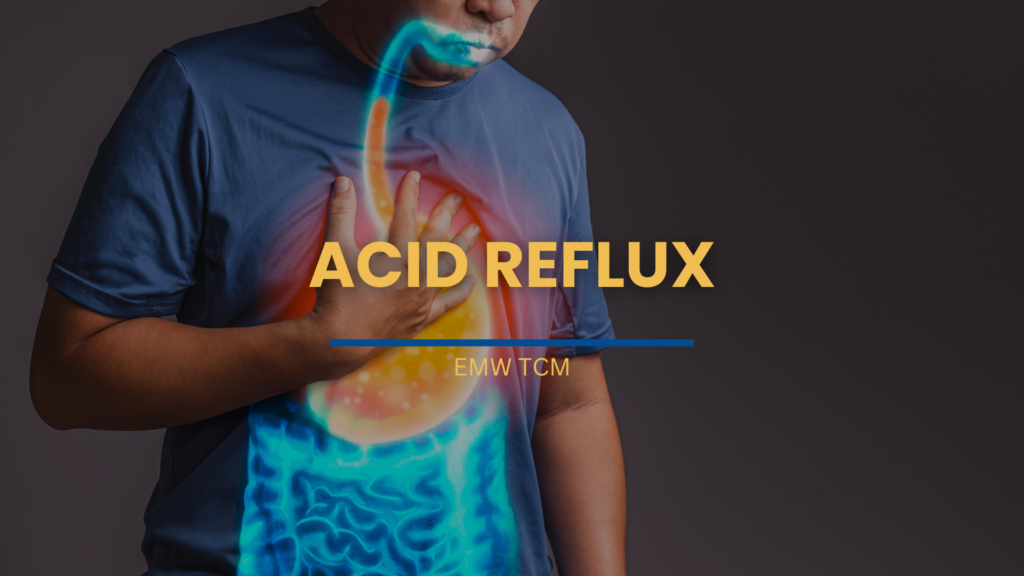
In Traditional Chinese Medicine, the Spleen and Stomach are central to digestion and energy transformation. When they are weakened by stress, irregular meals, or excessive cold and raw foods, the digestive “fire” dims, leading to discomfort and poor nutrient absorption. TCM for gut health aims to restore harmony to these organ systems, ensuring that Qi (energy) and Blood flow smoothly throughout the body.
Modern research now supports what ancient practitioners have long known, that the gut and brain are closely linked. Studies show that acupuncture, moxibustion and herbal medicine can influence the gut-brain axis, improving motility, reducing inflammation, and supporting microbiome balance. That’s why TCM for gut health is not just about relieving symptoms, but about rebalancing the entire system for lasting wellness.
EMW Gut Health Program
At EMW TCM, our physicians combine classical diagnosis with evidence-based approaches to create personalised programs that strengthen digestion, reduce bloating, and calm the nervous system. Each treatment plan under TCM for gut health is tailored to your constitution, helping your body rebuild its natural rhythm and resilience.

How TCM for Gut Health Supports Digestion and Overall Wellness
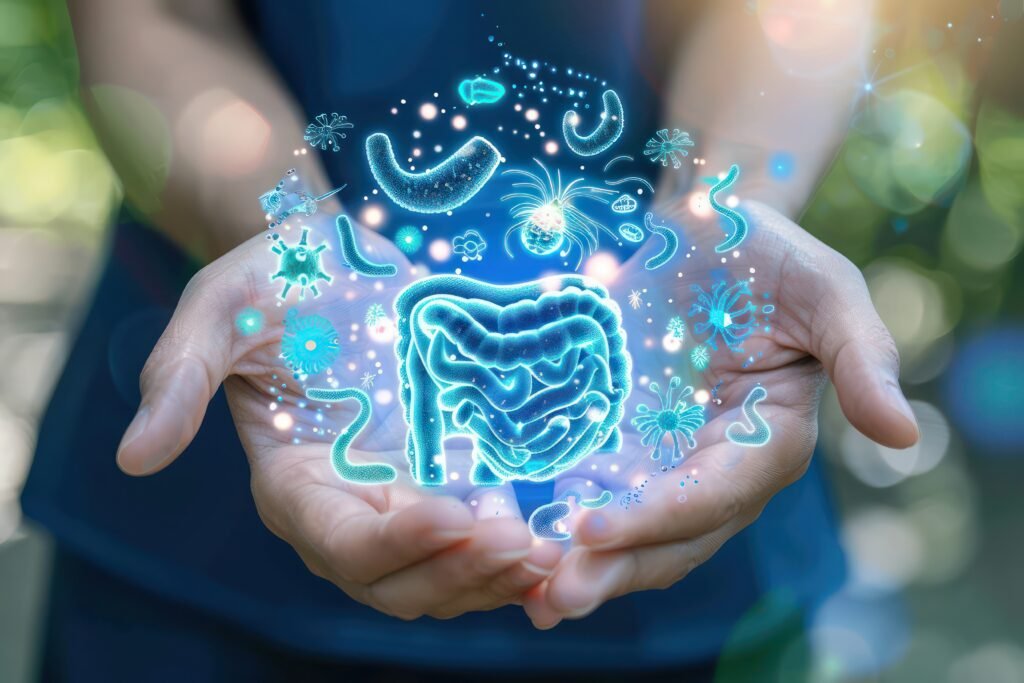
When it comes to restoring digestive balance, TCM combines time-tested wisdom with modern evidence. Each treatment is designed to regulate the digestive system, strengthen internal organs, and improve the communication between the gut, brain, and immune system.
Herbal Medicine to Rebalance the Digestive System
Herbal formulas are a core component of TCM for gut health, selected to strengthen the Spleen and Stomach, clear dampness, and harmonize the Liver. Herbs such as Bai Zhu (Atractylodes), Chen Pi (Tangerine Peel), and Huang Qin (Scutellaria) may be used to reduce bloating, acidity, and inflammation. Modern studies suggest that certain herbal compounds can modulate gut microbiota diversity, helping to restore microbial balance, a key foundation of digestive wellness.
Acupuncture for Gut Regulation and Stress Relief
Acupuncture is another key therapy used to regulate intestinal motility, calm the nervous system, and enhance blood flow to digestive organs. Points like Zusanli (ST36) and Neiguan (PC6) are often stimulated to improve digestive function and relieve nausea. Scientific research indicates acupuncture can influence the brain–gut axis, reducing visceral hypersensitivity and improving symptoms of IBS and reflux.
Dietary and Lifestyle Guidance
In TCM, food is medicine. Patients are encouraged to eat warm, cooked meals, chew slowly, and avoid cold, greasy, or highly processed foods. Specific dietary advice is tailored to your constitution, for example, those with Dampness benefit from lighter meals, while those with Cold patterns require warming ingredients like ginger or cinnamon. Lifestyle adjustments such as mindful eating, adequate rest, and gentle movement further strengthen digestive resilience.
Moxibustion and Abdominal Therapy
For chronic bloating, low appetite, or cold-related discomfort, warming therapies like moxibustion or abdominal massage may be incorporated. These treatments, commonly used in TCM, stimulate circulation, dispel cold, and promote smooth Qi movement. Patients often describe feeling lighter, warmer, and more energetic after just a few sessions.
Integrating Modern Science with Tradition
What makes TCM for gut health truly holistic is its integration with modern biomedical understanding. At EMW TCM, treatment plans are personalized based on tongue and pulse diagnosis as well as your lifestyle and dietary patterns. The approach aligns with research showing that TCM interventions can regulate the gut microbiome and reduce inflammatory responses, providing both symptomatic relief and long-term restoration. By combining herbal prescriptions, acupuncture, and lifestyle therapy, we create a powerful framework to restore internal harmony, addressing not just digestion, but energy, immunity, and emotional balance.
Evidence-based TCM Gut Health
At EMW TCM, we integrate evidence-based findings into every personalised program to ensure both safety and effectiveness. A 2023 review in Frontiers in Pharmacology reported that specific herbal formulas used in TCM for gut health helped regulate microbial diversity and reduce inflammation within the intestinal lining. Another study published in the World Journal of Gastroenterology showed that acupuncture improved gastrointestinal motility and decreased visceral hypersensitivity in patients with functional bowel disorders. At EMW TCM, all herbal prescriptions are sourced from GMP-certified suppliers, and acupuncture is performed by licensed physicians with over 10 years of clinical experience. Our approach mirrors current integrative-medicine research, ensuring every treatment is both traditional and evidence-aligned.
Common TCM Patterns and Causes of Gut Imbalance
Every digestive issue has its root cause and TCM for gut health looks beyond symptoms to identify the underlying energy patterns that disrupt digestion. These imbalances often arise from lifestyle stress, poor dietary habits, or emotional tension that affects the Liver, Spleen, and Stomach systems.
Through identifying your unique pattern, TCM for gut health offers a clear, structured path to healing rather than symptom suppression. The goal is to harmonize internal systems, strengthen the digestive organs, and re-establish natural balance so that energy flows freely again.

Spleen Qi Deficiency
A weak Spleen leads to fatigue, loose stools, bloating, or poor appetite. From the perspective of TCM for gut health, this pattern reflects insufficient energy to transform food into nutrients. Patients often feel tired after eating or crave sweets, signs that digestive “fire” needs strengthening.
Liver Qi Stagnation
Stress and emotional suppression cause Liver Qi to stagnate, affecting digestive flow. This often leads to IBS-like symptoms such as alternating constipation and diarrhea, abdominal tension, and bloating. TCM for gut health addresses this through acupuncture and herbs that promote smooth Qi movement, improving both mood and digestion.
Food Stagnation and Damp Accumulation
Irregular eating, overeating, or cold/raw diets can overload the system. Dampness forms, leading to heaviness, nausea, or thick coating on the tongue. Through herbal formulas and dietary changes, TCM helps clear this “internal dampness,” restoring lightness and vitality.
Stomach Heat and Inflammation
Excess spicy, fried, or late-night meals generate “heat” that manifests as acid reflux, ulcers, or bad breath. This is calmed by cooling herbs, acupuncture, and mindful eating habits to protect the digestive lining.
Cold in the Stomach
For some, digestive weakness stems from consuming too many cold drinks or iced foods. This slows metabolism and causes abdominal pain or loose stools. TCM for gut health recommends warm, cooked meals and gentle tonics to re-ignite the internal digestive fire.
Gut-Brain Connection (Modern Insight Meets Ancient Wisdom)
Modern science now confirms that the gut and brain constantly communicate, a relationship long emphasized in TCM for gut health. Emotional stress or anxiety can trigger gut issues, while digestive imbalance can influence mood and energy. TCM therapies like acupuncture and herbal medicine help restore this two-way balance.
What to Expect in EMW TCM Gut Health Program
When you visit EMW TCM for digestive concerns, your journey begins with a comprehensive consultation. Our physicians will review your symptoms, diet, stress levels, and lifestyle habits to identify your unique body constitution and underlying imbalance. This detailed analysis allows us to design a treatment plan that addresses both the root cause and the surface symptoms.
Using traditional methods such as tongue and pulse reading, along with modern clinical understanding, we assess how your Spleen, Stomach, and Liver systems are functioning. This integrative evaluation ensures your gut health program is specific to your needs, whether you experience bloating, reflux, irregular bowels, or general digestive weakness.
Your plan may include a combination of acupuncture, moxibustion, customised herbal formulas, and dietary adjustments. Acupuncture, moxibustion helps regulate the nervous system and improve intestinal movement, while herbs strengthen the digestive organs and calm inflammation. You’ll also receive practical guidance on eating habits, stress management, and lifestyle routines to support sustainable recovery.
Most patients begin with weekly sessions during the initial phase, then progress to maintenance treatments as balance returns. While acute issues may improve within a few visits, chronic conditions typically require a longer, steady approach, just as it took time for imbalance to develop.
We monitor your energy levels, appetite, stool consistency, and overall comfort. Adjustments are made along the way so your body continues to respond positively. Many patients report better sleep, improved mood, and reduced bloating as digestive strength improves.
Your program is fully integrative, it can complement existing medical treatments and medications safely. Our physicians communicate clearly about what to expect, possible interactions, and realistic timelines, giving you confidence throughout the process. By the end of the program, you’ll understand your body’s signals more clearly and know how to maintain digestive balance through daily choices. EMW TCM’s approach helps restore your body’s natural rhythm so you can enjoy energy, comfort, and vitality from within.
Frequently Asked Questions (FAQs)
Unlike medication that focuses mainly on symptom relief, TCM for gut health identifies the root energetic imbalance, such as weak Spleen Qi, Liver Qi stagnation, or Damp accumulation, that leads to discomfort. This holistic method rebalances your body to restore smooth digestion naturally.
Yes. EMW TCM integrates modern medical knowledge with traditional therapy to ensure your care is safe and complementary. Our physicians will review your medications before prescribing herbs or acupuncture.
This varies with each individual. Some notice reduced bloating and better appetite after just a few sessions, while chronic issues such as IBS or reflux may require several months of consistent therapy. Regular follow-up allows us to fine-tune your plan for lasting results.
Generally, TCM recommends warm, lightly cooked meals and discourages excessive cold, greasy, or processed food. However, diet is personalised, our physicians will guide you according to your body constitution and the season.
With proper guidance, it can be beneficial. Treatments are always tailored, using gentle acupuncture points and herbs suitable for each stage. Please inform your physician if you’re pregnant or breastfeeding so adjustments can be made.
Ready to Restore Your Digestive Balance?
At EMW TCM, we believe good digestion is the foundation of overall vitality. If you’ve been struggling with bloating, reflux, IBS, or irregular bowel habits, it’s time to explore a personalised program through TCM for gut health.
Our clinic combines ancient diagnostic wisdom with modern, evidence-based practice to bring your body back into harmony.
Book your consultation today to begin your journey towards a lighter, stronger, and healthier gut.
Located in Singapore, serving patients seeking natural, integrative digestive care.
Find Out More
Our Locations
International Building Branch
360 Orchard Road, International Building #02-05/06
Singapore 238869
Book Your Appointment With Us Here: +65 89585869
Our TCM Physicians
Principal TCM Physician
- M.Med(TCM Gynaecology)
- B.Sc(Hons) Biomedical Sciences
- Dip. Naturopath
- Ayurvedic Therapist(500hrs)
- Registered TCM Physician (Singapore MOH)

Senior TCM Physician
- M.Med(TCM Acupuncture & Moxibustion)
- B.Sc(Hons) Biomedical Sciences
- Certified Aromatherapist
- Registered TCM Physician (Singapore MOH)

TCM Physician
- M.Med(TCM Gynaecology)
- B.Sc(Hons) Biomedical Sciences
- Registered TCM Physician (Singapore MOH)

TCM Physician
- M.Med(TCM Acupuncture & Moxibustion)
- B.Sc(Hons) Biomedical Sciences
- Registered TCM Physician (Singapore MOH)

TCM Physician
- B.Med(TCM)
- B.Sc(Hons) Biomedical Sciences
- International Board-Certified Lactation Consultant (IBCLC)
- Registered TCM Physician (Singapore MOH)
References
1. Acupuncture and regulation of gastrointestinal function. Hui Li, Tian He, Qian Xu, Zhe Li, Yan Liu, Fang Li, Bo-Feng Yang, and Cun-Zhi Liu. World J Gastroenterol. 2015 Jul 21; 21(27): 8304–8313.
2. Effect of Siguan Acupuncture on Gastrointestinal Motility: A Randomized, Sham-Controlled, Crossover Trial. Kyung-Min Shin, Ji-Eun Park, Sanghun Lee, Sun-Mi Choi, Yo-Chan Ahn, Jin-Woo Lee, Jin-Hee Kim, Chang-Gue Son, “Effect of Siguan Acupuncture on Gastrointestinal Motility: A Randomized, Sham-Controlled, Crossover Trial”, Evidence-Based Complementary and Alternative Medicine, vol. 2013, Article ID 918392, 7 pages, 2013. https://doi.org/10.1155/2013/918392
3. Therapeutic roles of acupuncture in functional gastrointestinal disorders. Ouyang, H. and Chen, J.D.Z. (2004), Therapeutic roles of acupuncture in functional gastrointestinal disorders. Alimentary Pharmacology & Therapeutics, 20: 831-841. https://doi.org/10.1111/j.1365-2036.2004.02196.x